
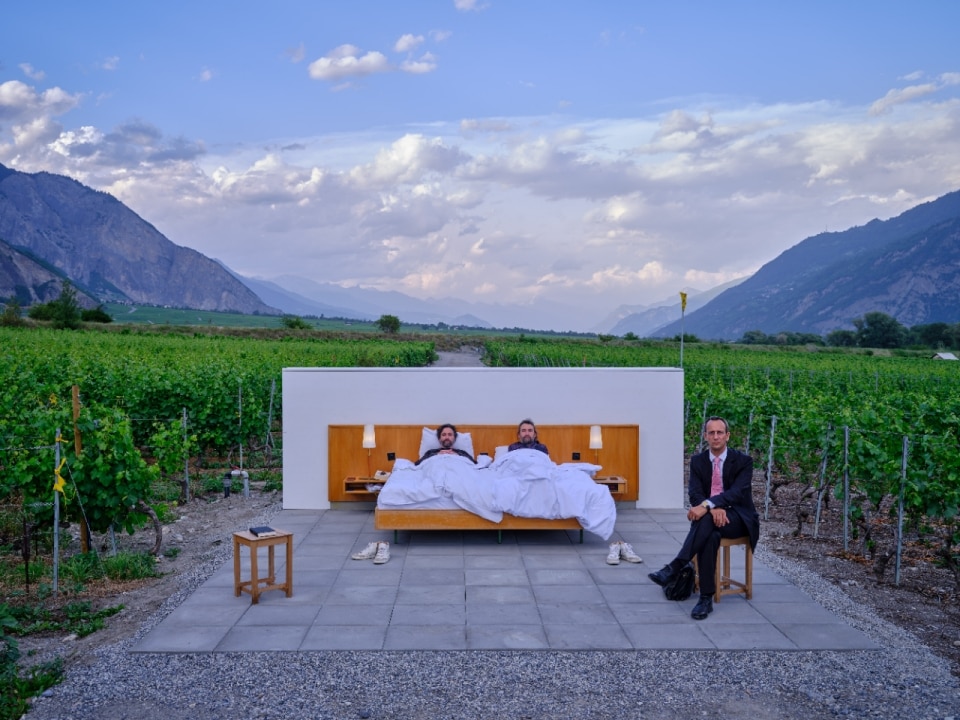
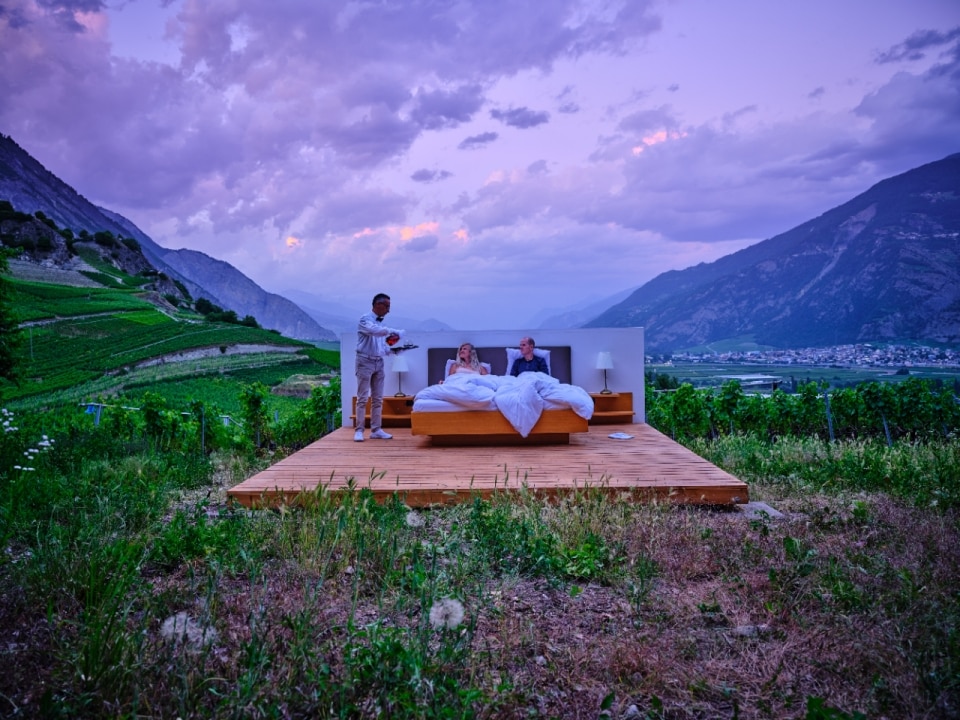
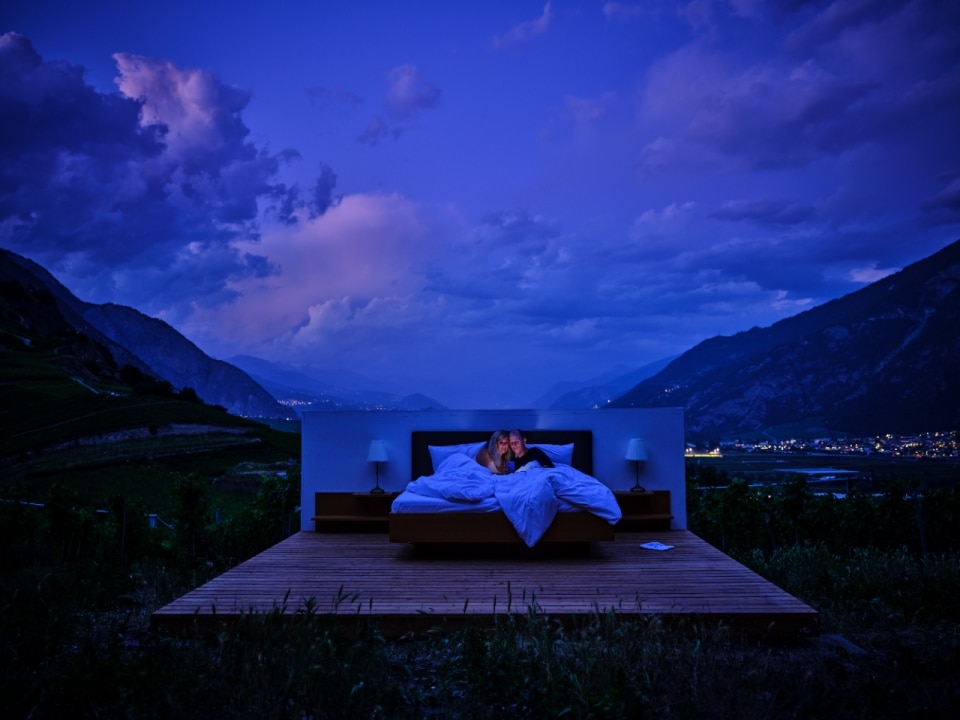
The Null Stern Hotel—literally, the “zero-star hotel”—was conceived in 2008, in the midst of the financial crisis, by artists Frank and Patrik Riklin together with hotelier Daniel Charbonnier. It all started inside a Cold War bunker in Sevelen. The set-up was minimal: a pair of beds underground, clean sheets, and Nordic-style furniture. More an art installation than a guest room, yet the place was fully booked. Everyone, even the wealthy, wanted to sleep below ground.
The project went viral in international media and was soon taken seriously: a critique of luxury tourism’s willingness to pay handsomely for “different” experiences, whether it be sleeping in a stilt house on Lake Titicaca or spending the night in a riad in Marrakech.
From elite tourism critique to Instagram sensation
At the same time, between the late 1990s and early 2000s, hotels like the Burj Al Arab in Dubai, the Emirates Palace in Abu Dhabi, or the Town House Galleria in Milan were making headlines, as were Trump’s casino-hotels. This was when the notion of the “seven-star hotel” emerged—a marketing invention without official recognition, promising never-before-seen levels of service.
Thus began the trend of elite tourism in search of exotic, curated experiences: a phenomenon satirized in The White Lotus and Triangle of Sadness, but also dissected in Michel Houellebecq’s Platform and The Map and the Territory.
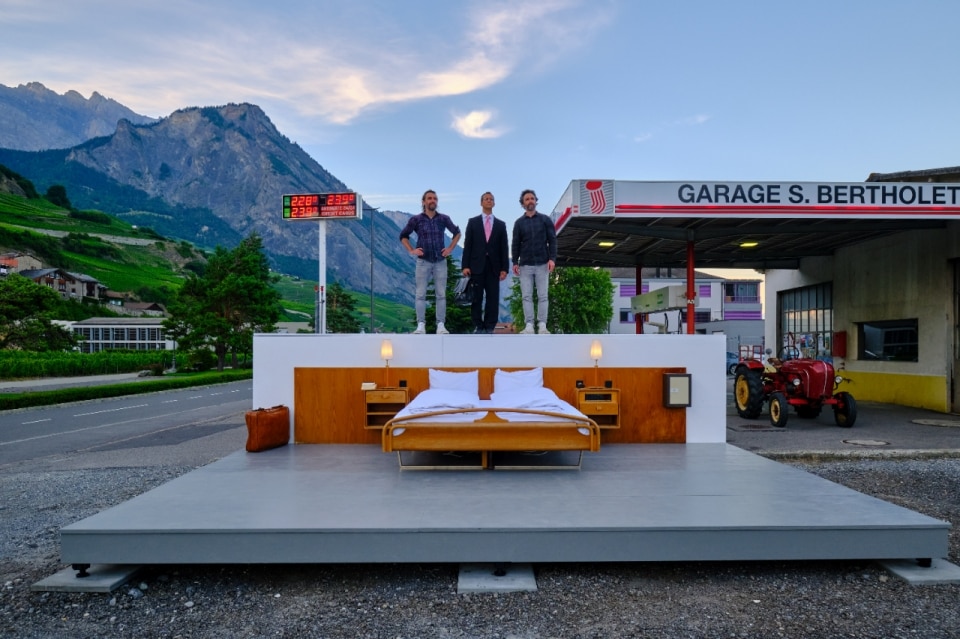
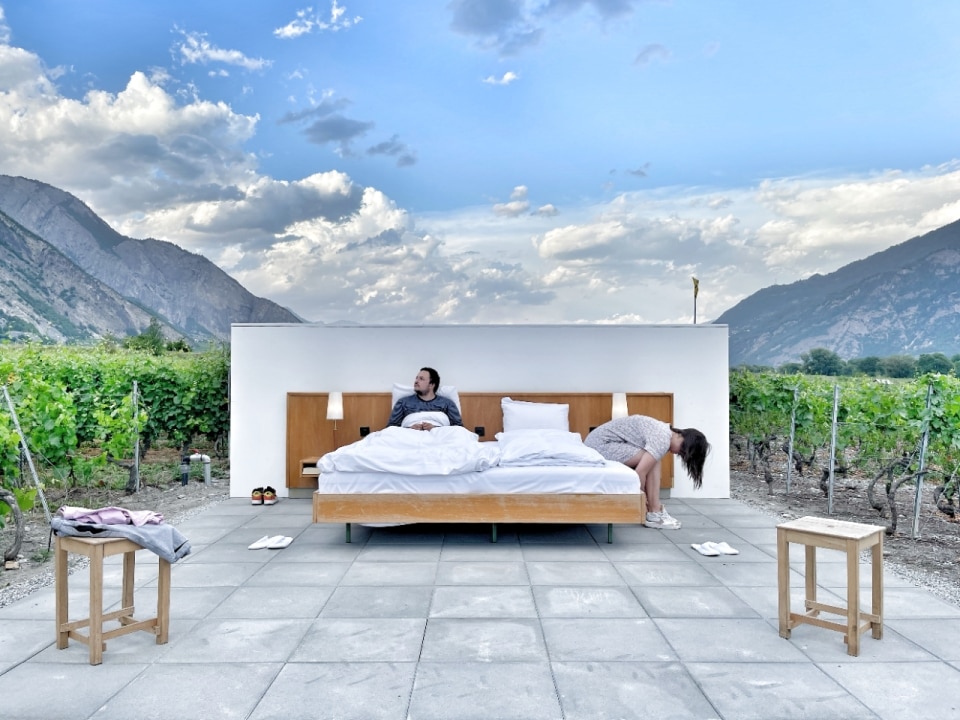
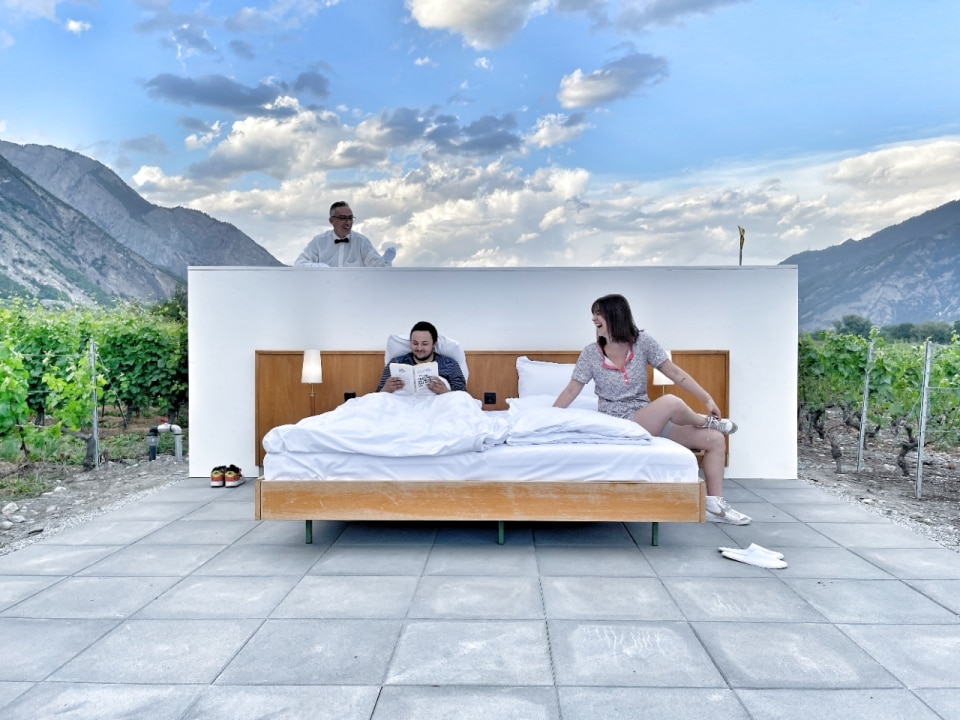
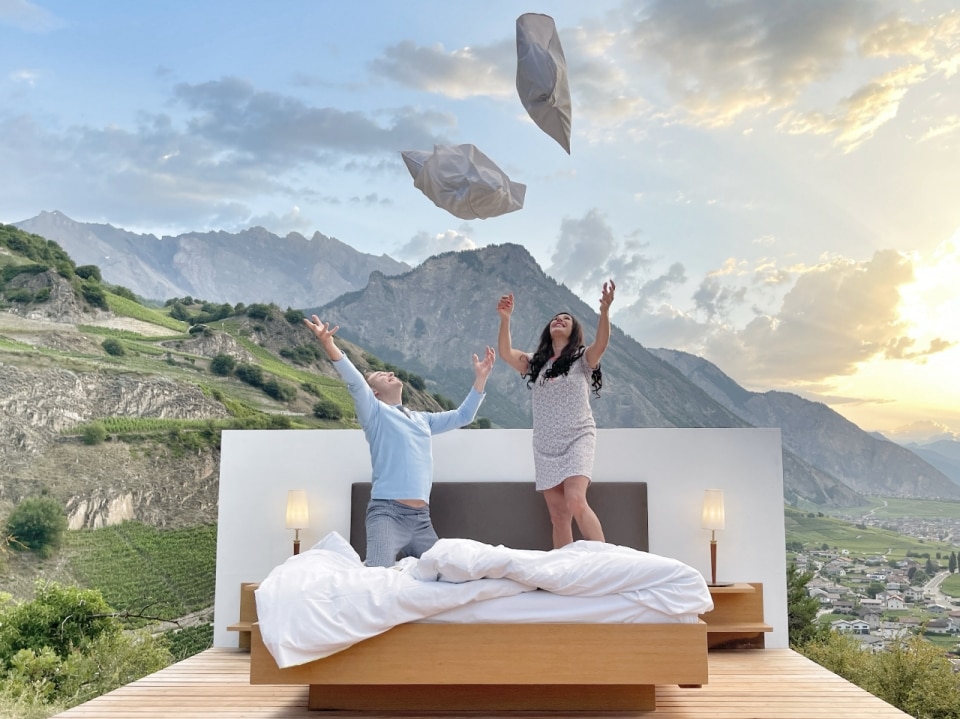
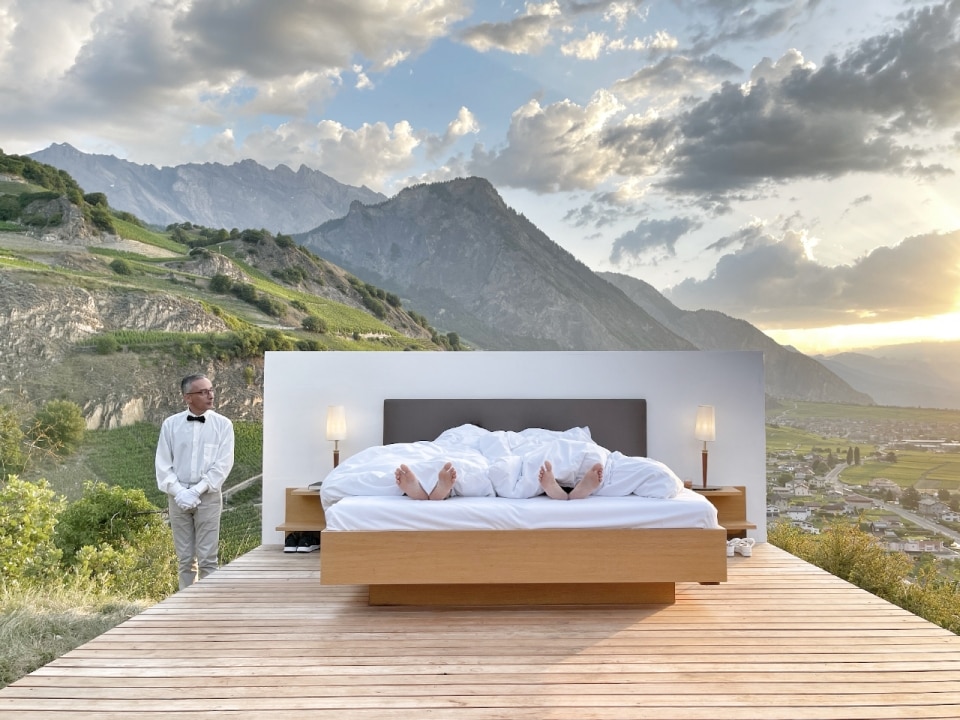
In 2016, the Riklin brothers and Charbonnier abandoned the underground version to bring the project above ground: the Null Stern Hotel as we know it today, somewhere between an art installation and an open-air bedroom without walls or a ceiling. Between 2017 and 2020, new versions appeared across Switzerland, often in rural settings.
The suite next to the gas station
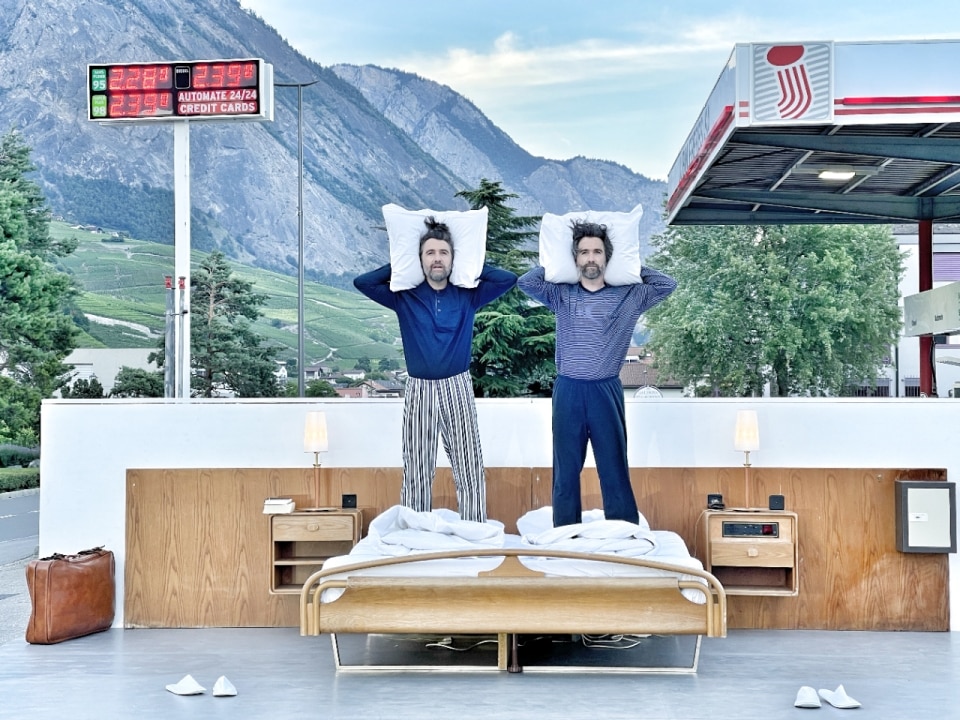
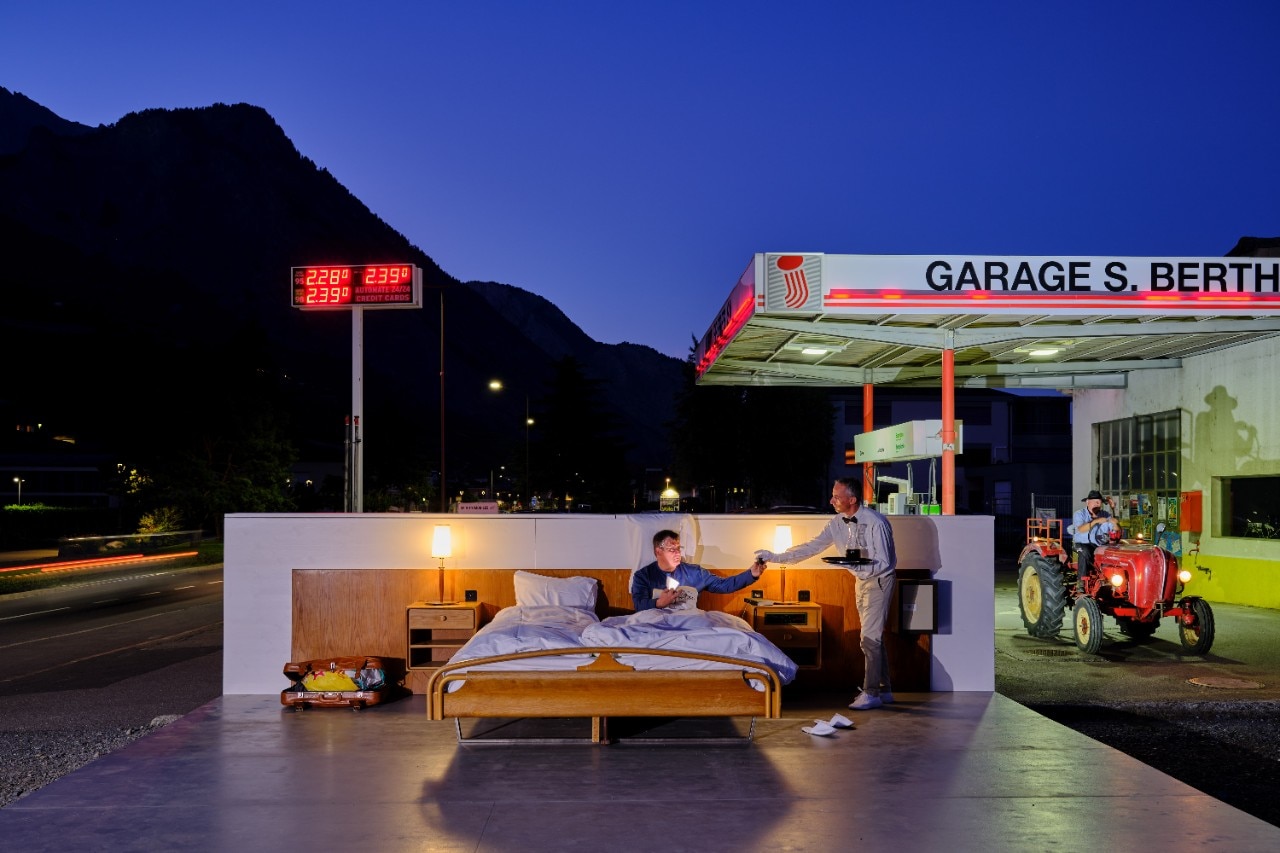
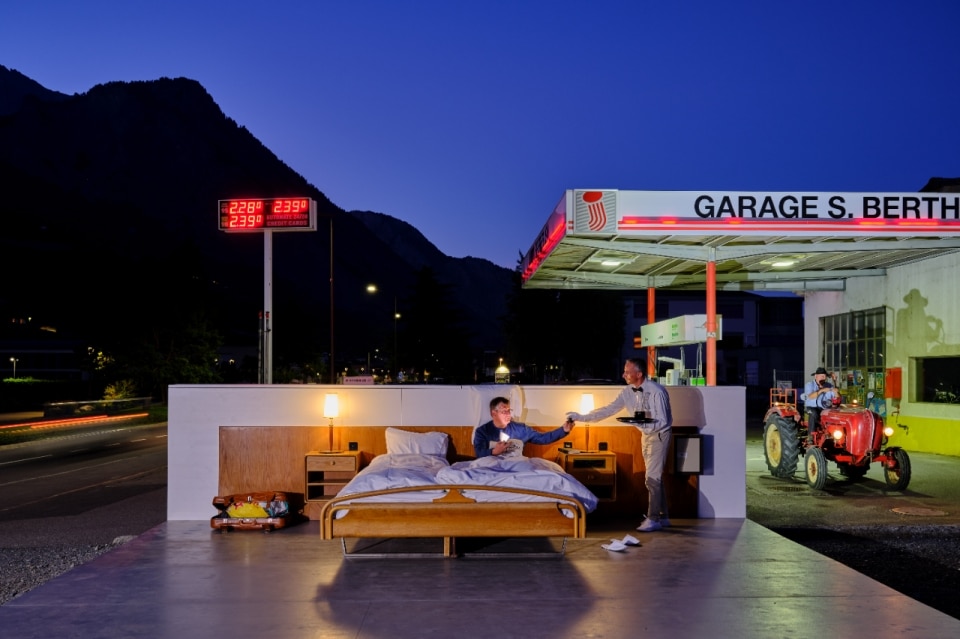
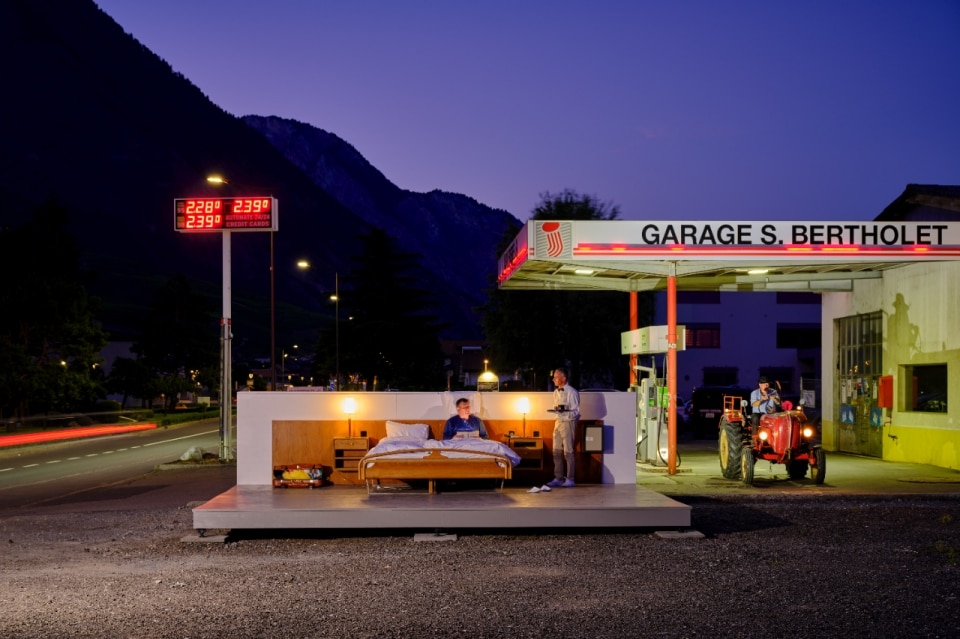
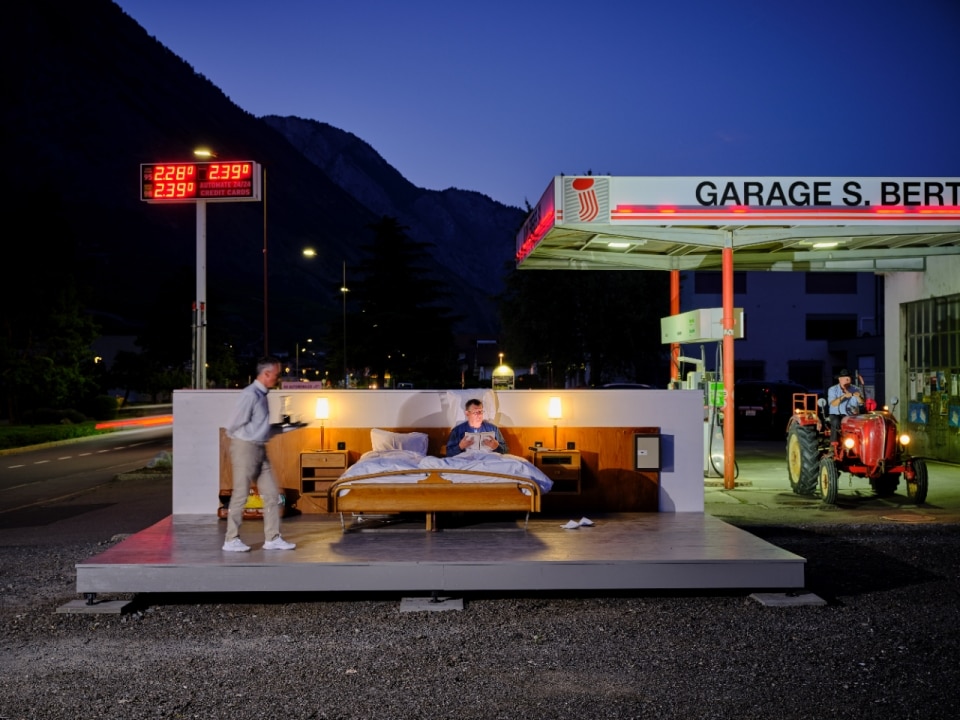
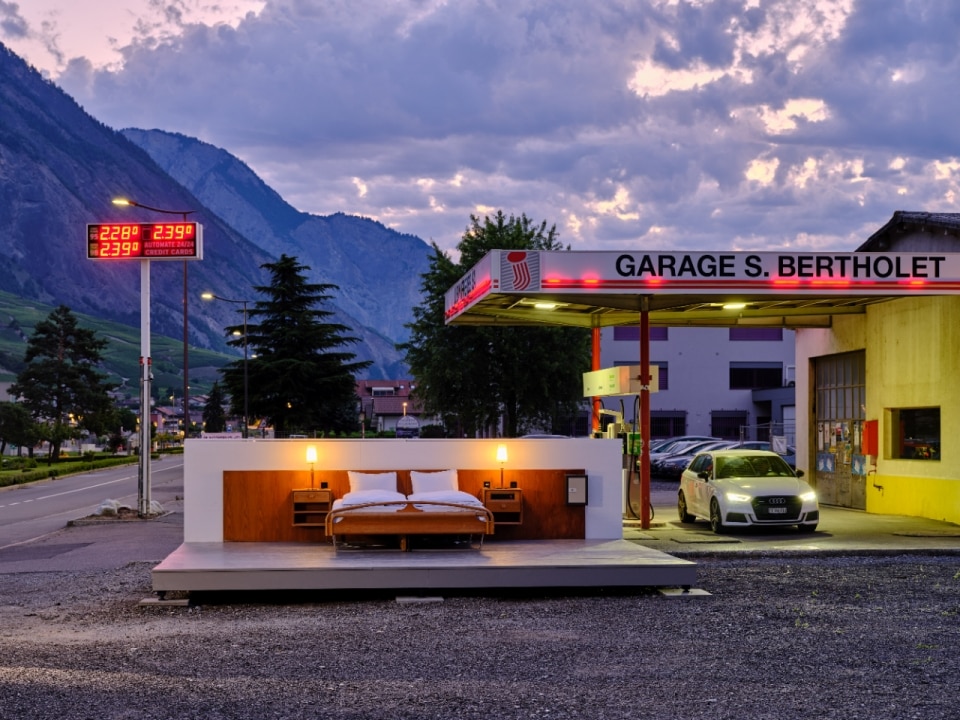
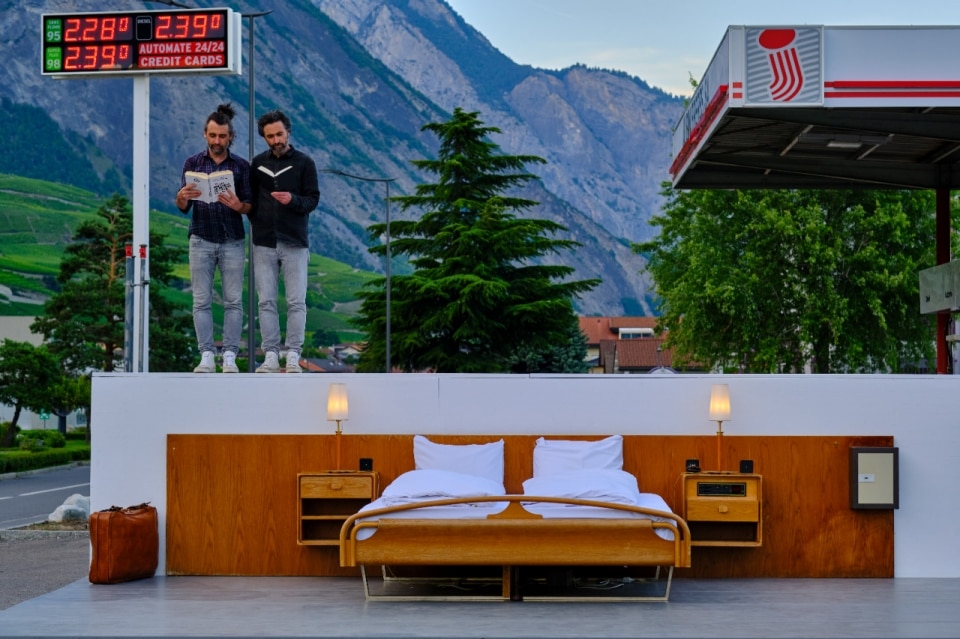
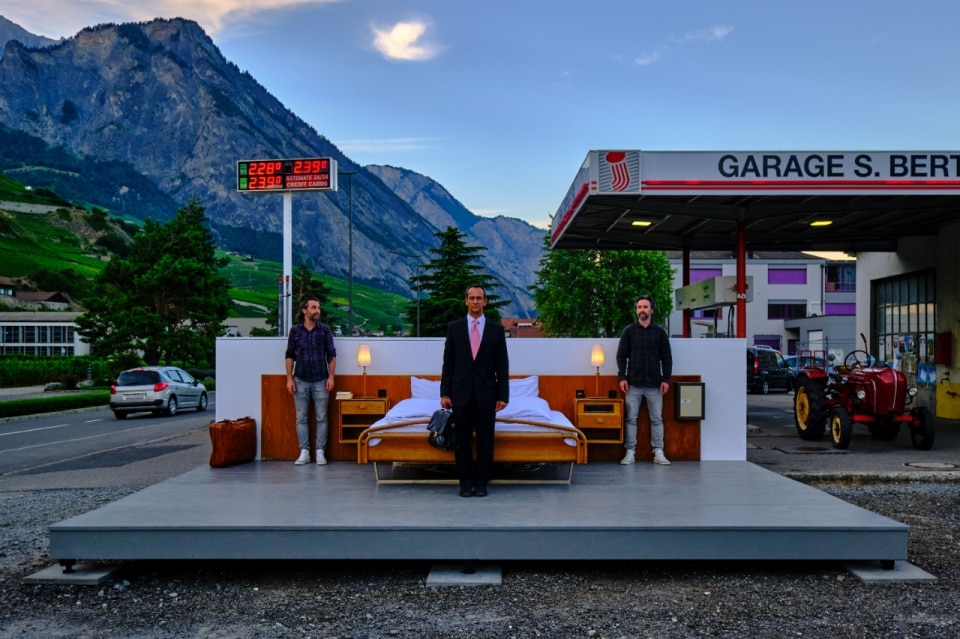
In 2022, Frank and Patrik Riklin unveiled their latest iteration: a room that seems to have fallen from the sky, but no longer in idyllic landscapes. This new version, created in collaboration with the municipality of Saillon, was set up next to a gas station. “Given the current global situation, it is not the time to sleep,” the founders commented.
It is indeed difficult to close one’s eyes when a sign announcing rising fuel prices and the stench of engines frame the experience, while a butler—straight out of a David Lynch film—stands at your side. Less a place of comfort than of reflection, where guests were invited to leave their thoughts under the mattress, as if in an apocalypse.
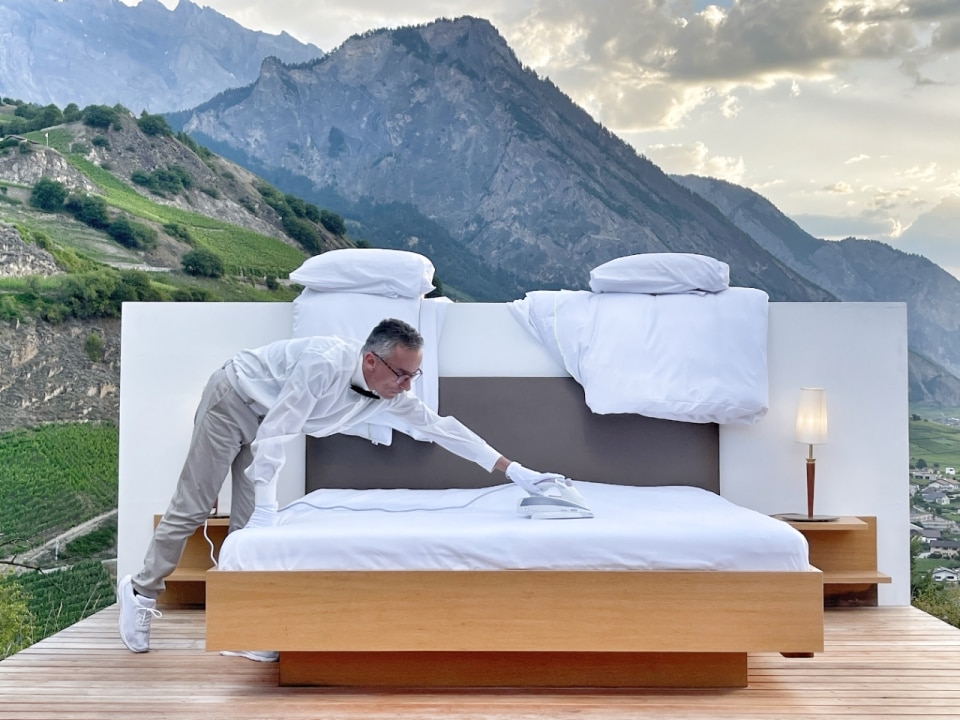
A luxury that invites reflection
In its latest installation, reflection on the state of the world becomes a service with a price tag. True seven-star comfort, the project suggests, is buying yourself time to face reality and to experience precariousness. “It is a stay that encourages unconventional thinking: an investment in yourself and in your reflections.”
It is often said that artistic subversion dies when it becomes demanded by the market—a truism more relevant than ever, at a time when social critique is a prerequisite for contemporary art. To avoid being buried, the Null Stern Hotel will have to change again, just as tourism—and the world—keep changing.