

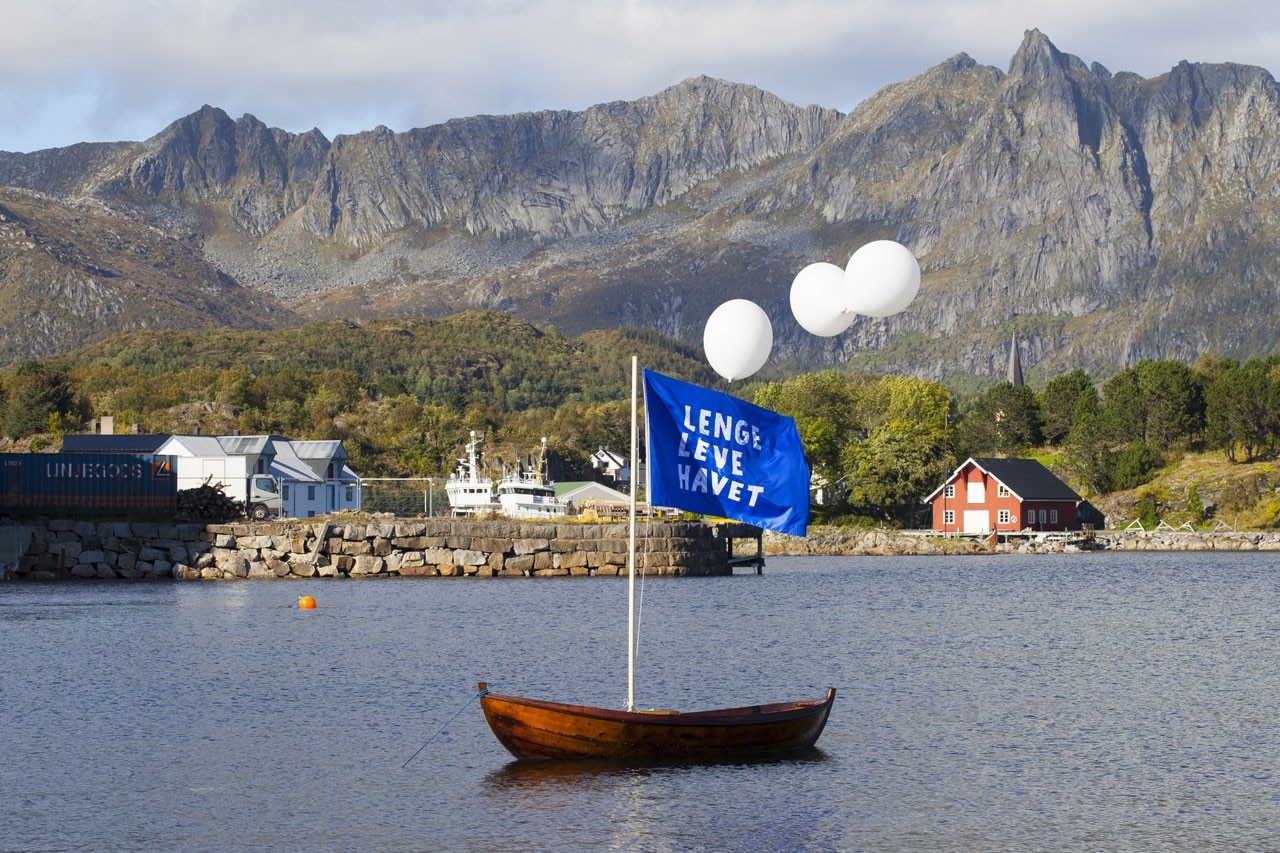

It is in such a very peculiar set that LIAF (Lofoten International Art Festival) – dedicated to promoting, commissioning and exhibiting contemporary artistic manifestations – takes place.


It is thus striking that the curatorial concept of this edition of LIAF was developed around the idea of collage, because such term alludes to an arrangement of things that are artificially positioned onto a previously existent background, which under such circumstances explores the problematics of combining curatorial practices with spatial and contextual matters.
Titled “Just what is it that makes today so familiar, so uneasy?”, the project rephrases Richard Hamilton’s 1956 popular (and early pop) collage Just what is it that makes today's homes so different, so appealing?, adapting it to a contemporary condition of suspension, discomfort and plight.

This choice raises some queries, such as how can a collage be the starting point for an exhibition project? Or what does it mean to do an exhibition like a collage? Is it assuming a form of antagonism, as there is a superimposition of diverse forces? Is it expressing the desire to add a sundry of elements that obscure the pre-existent background? Or is it considering the backing as a support structure to keep in place what is applied to it?
It appeared to be between the notions of suitability and contrast that the curators of LIAF 2013, Bassam El Baroni, Eva González-Sancho and Anne Szefer Karlsen, found some answers to the title they created, choosing a handful of non-institutional settings to locate works and projects.

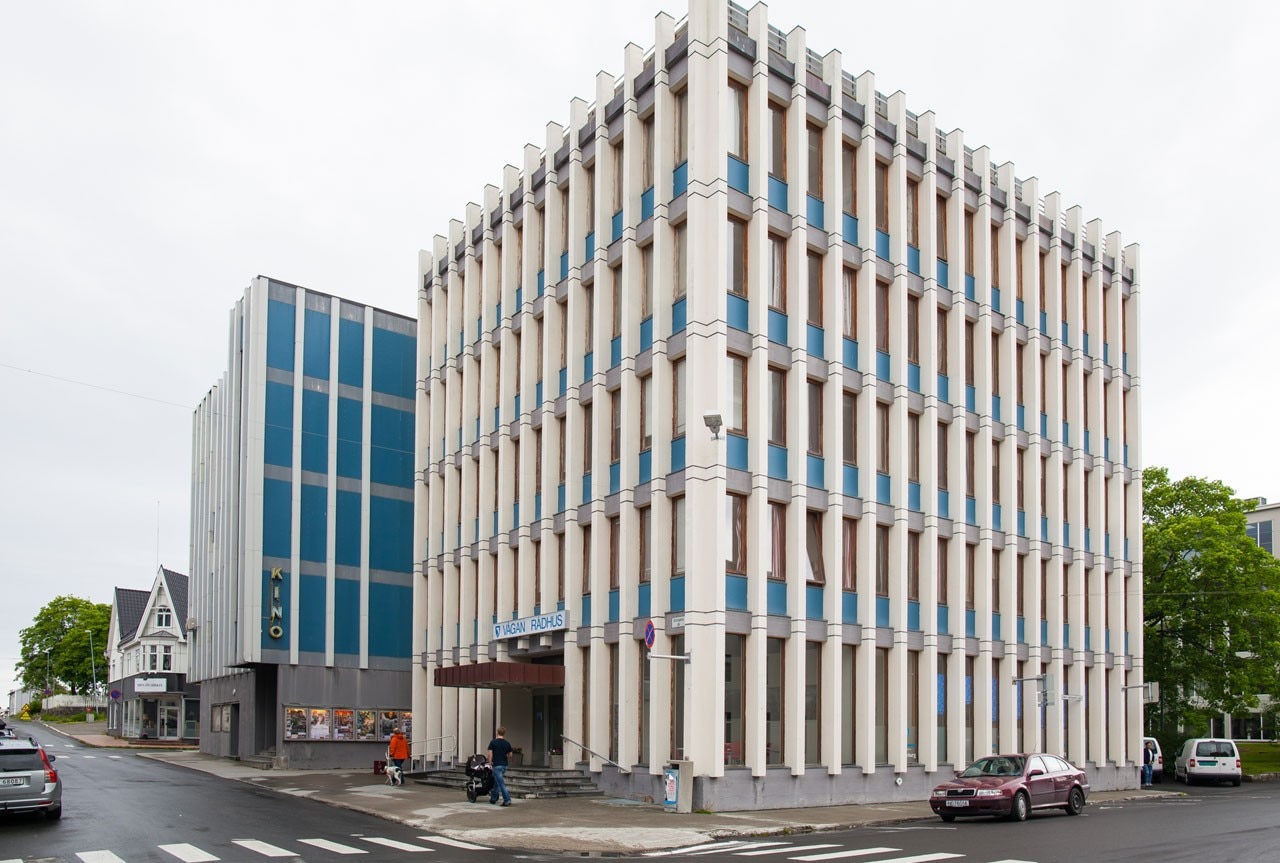
In the town of Svolvær, a public library, a shopping centre whose glory days are gone, a small war museum, a hotel and a cinema hosted a series of interventions that, in some cases, gave evidence to their identity and nature.
Ann Böttcher’s textile piece Transit Portal (2013), perfectly fitted within the chaos of memorabilia of the war museum, offered a secondary elaboration of its contents and links to Nazism. Likewise, Böttcher’s minute portrays of trees – located in the Vågan Library – allegorically alluded to the presence of the Gestapo in Svolvær, establishing a correspondence between culture and nature. Also at the Library, Sven Augustijnen’s IHT 20110831-20130831 (2013) consisted of a reprint of the International Herald Tribune.

Made out of a recombination of news published in different moments, it generated awkward back and forward movements in time, creating a feeling of absolute suspension.
Other works, such as Lisa Tan’s tribute to Clarice Lispector at the Thom Hotel; David Horvitz’s stock images of desperate individuals, presented in its repetitive format, and adapted to diverse discourses on depression and anguish at Per Pedersen’s house, or Badi Abidi’s film on the paradoxes of geopolitics at the Filmteater, further explored a dialectics of place and space, human experience and perception, which clashed against each other, producing excitement and suspension, as if something was on the edge of exploding, but kept being restraint and blocked in time. Could it be that such condition of impasse is what makes today so familiar, so uneasy?
