


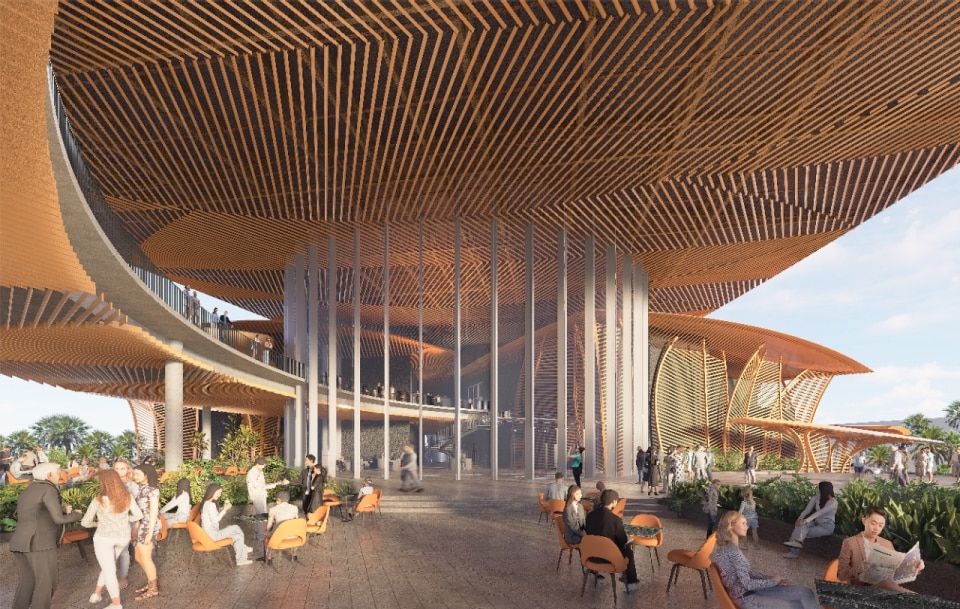
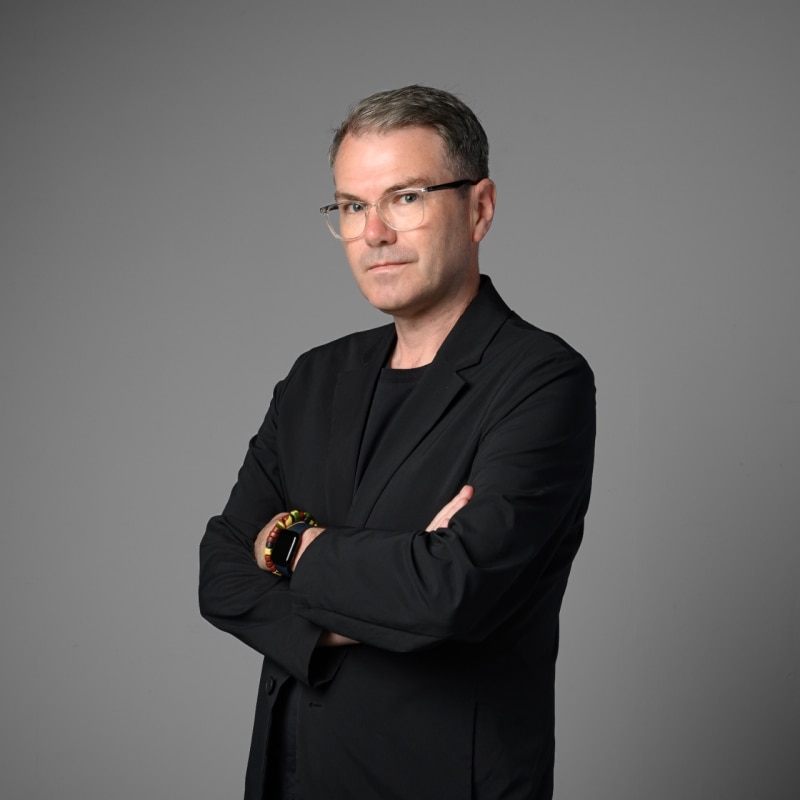
When Kulapat Yantrasast, an American architect of Thai origin, describes Kontempo, the new contemporary art center he is designing in Manila, at a certain point he stops talking about architecture to evoke forests and nature.
Yantrasast, founder in 2004 of the studio WHY Architecture with offices in Los Angeles and New York, is also the author of the reorganization of the Michael C. Rockefeller Wing at the Metropolitan Museum of Art, as well as Dib Bangkok — Thailand's first international contemporary art museum — the Grand Rapids Art Museum in Michigan, and the expansion of the Speed Art Museum in Kentucky. When recounting the journey that led to Kontempo, one of the most interesting contemporary art centers currently under construction, he chooses a precise image: “From tropical architecture to nature, from nature to leaves, from leaves to the forest.” A forest, indeed, not a museum building, not a simple container for art, not an urban landmark — even though Kontempo will actually be all of these. But first of all, a forest.
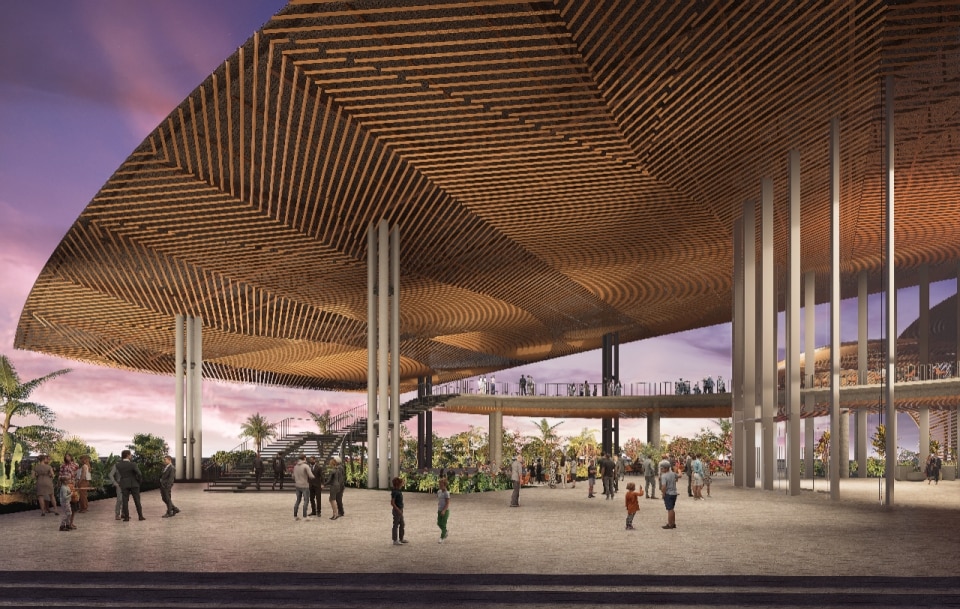
The center will rise along the Pasig River, in the Circuit Makati district of Manila, with an opening scheduled for late 2028. WHY Architecture is working in collaboration with local studio Lor Calma & Partners; the client is Ayala Foundation, the cultural and social arm of one of the Philippines' leading industrial groups. The project promises to redefine what a cultural institution can be in the 21st century — and the reasons to believe it are concrete.
The numbers give a first measure of the ambition: about 9,300 square meters, three large exhibition spaces, public areas, educational classrooms, and a significant presence on the waterfront. But it is the principles that truly tell its story. Kontempo will be a non-collecting institution: no permanent collection, no storage, no conservative logic. Only programs, exhibitions, events, and relationships. An art center in the most literal sense: a place that stands at the center of something, not one that accumulates.
Great art institutions must do more than exhibit works: they must foster human connection and cultivate empathy.
Kulapat Yantrasast
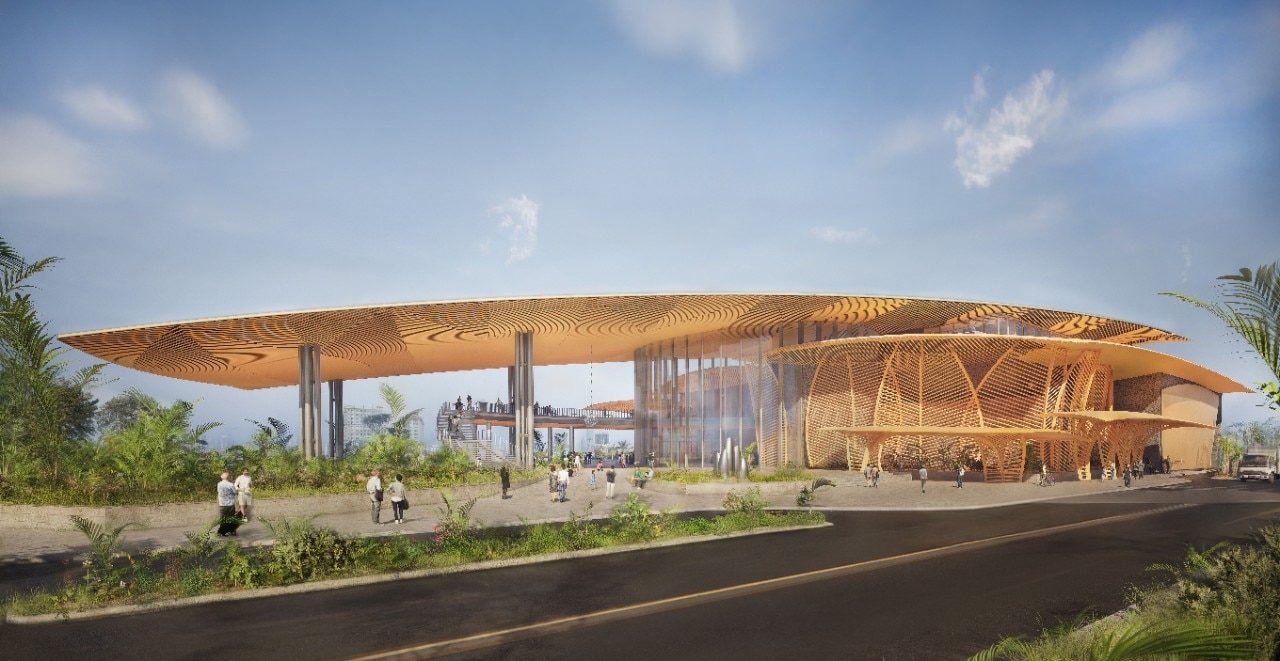
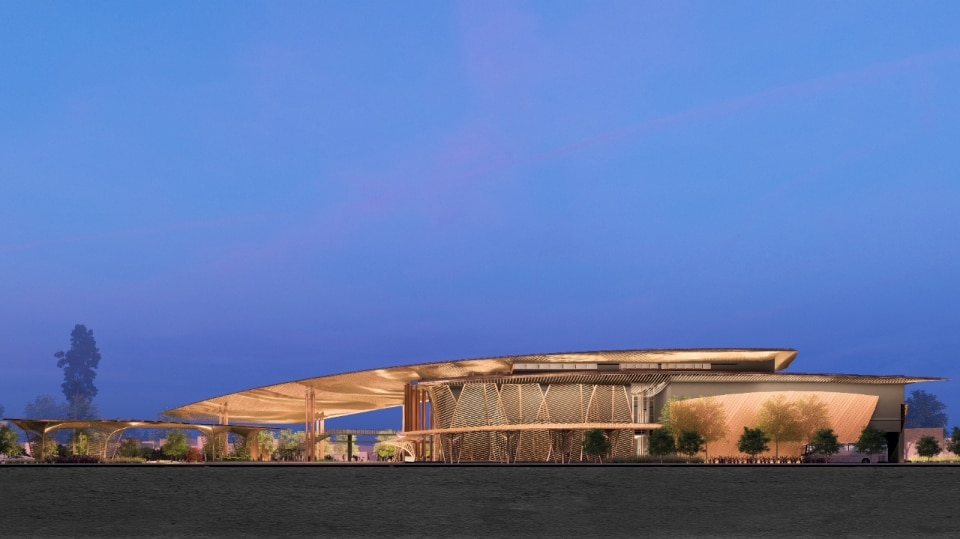
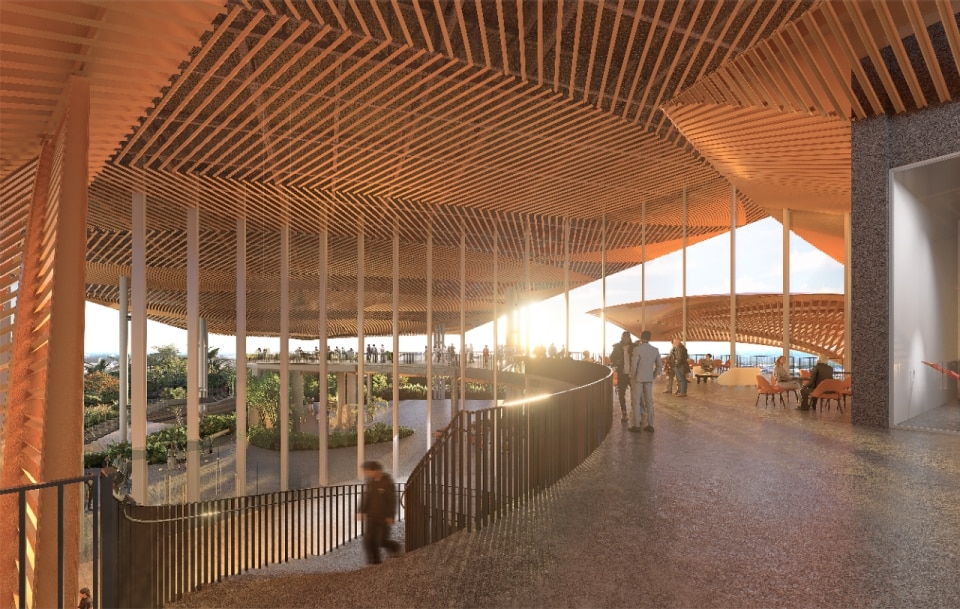
The structural heart is a large canopy inspired by the morphology of palm leaves: a series of lightweight steel “leaves” forming a porous roof, capable of filtering light, ensuring natural ventilation, and creating shade without enclosing. The roof does not separate interior and exterior: it connects them, overlaps them, and lets them interpenetrate. Beneath it, resting spaces, covered pathways, water basins, and tropical plants. “A single, generous roof under which life unfolds without boundaries,” says Yantrasast. “The roof gathers, holds, and invites. It is simultaneously a stage and a sanctuary.”
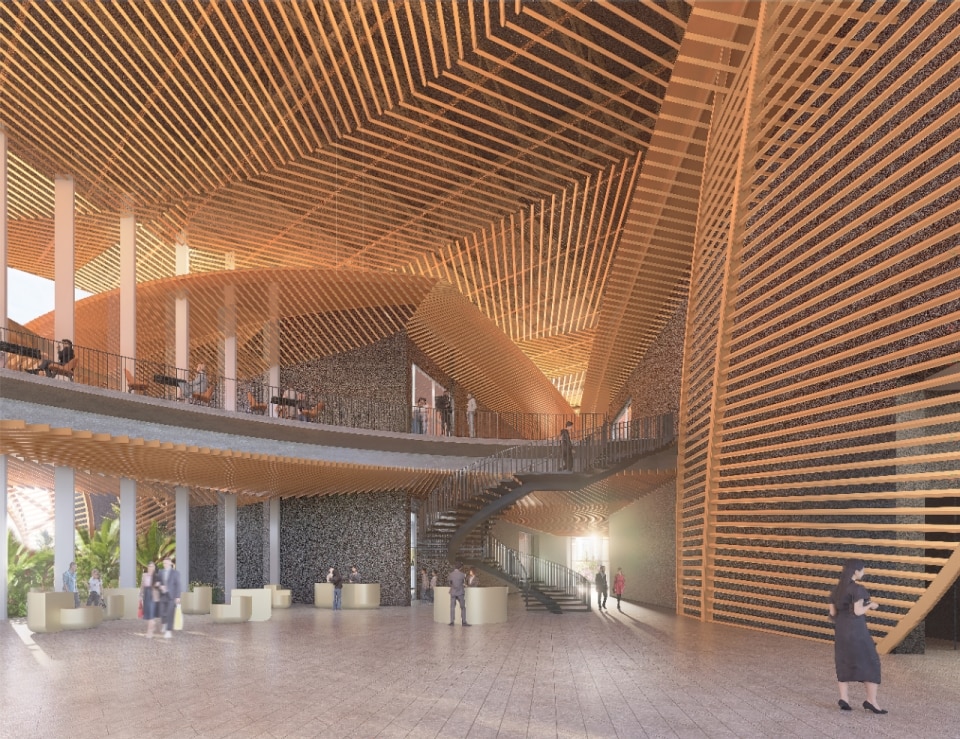
The facades of the exhibition pavilions echo traditional Philippine weaving techniques — abaca, piña, bamboo, palm fibers — reinterpreted in contemporary panels that function as a climate screen, reducing thermal gain while offering a precise material narrative. “This craft is a living, evolving language,” clarifies Yantrasast. “The result honors the past without being bound by it.”
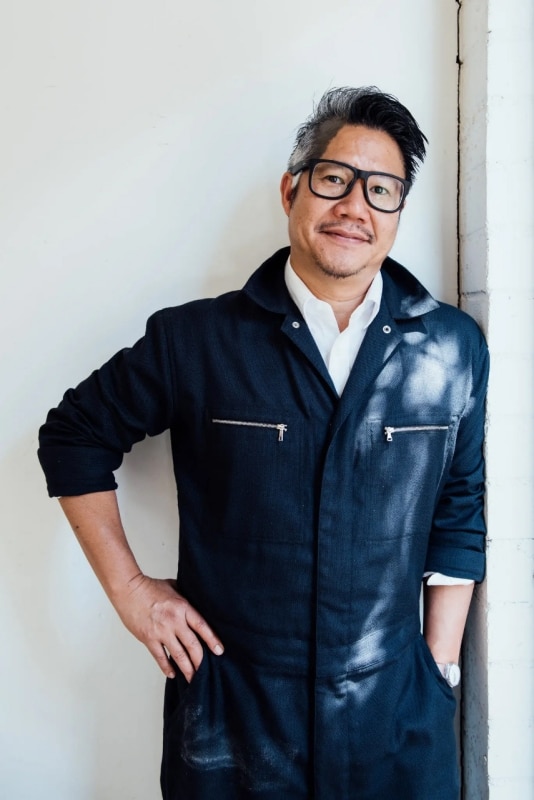
The relationship with the Pasig River is fundamental. The project does not just look out over the river, but seeks to absorb it, to make it part of the museum experience. “We want Kontempo to embrace the river,” explains Yantrasast, “and to breathe in its life and energy, pouring it back into the city.” An urban ambition as well as an architectural one: the institution as civic infrastructure, a hinge between the waterfront and the neighborhood.
Perhaps the most radical aspect concerns programmatic flexibility: galleries designed for exhibitions, digital installations, immersive environments, concerts, design events, and “experiences we haven't even imagined yet.” The architecture does not prescribe a single mode of encountering art: it keeps the space open, literally and conceptually. “Great art institutions must do more than exhibit works: they must foster human connection and cultivate empathy,” says the architect.
We want Kontempo to embrace the river and to breathe in its life and energy, pouring it back into the city.
Kulapat Yantrasast
When asked what the visitor will notice first, the response is simple: “Something that opens, rather than overwhelms.” Perhaps the river, perhaps an unexpected artwork. “Above all, I want visitors to feel the desire to explore everything the building contains — and what they can imagine inside it.” A forest, indeed, where one can voluntarily get lost.
Overview image: Why Architecture, Lor Calma & Partners, Kontempo, 2028, Manila, Philippines. Courtesy Ayala Foundation, Why Architecture and Lor Calma & Partners