



How heavy is a city? This is the question posed by the seventh edition of the Lisbon Architecture Triennale. It is no coincidence that the “epicentre” of the discussion is Lisbon, a city more than half destroyed by an earthquake in 1755 and then rebuilt around an illuminist-style grid.
According to the curators, cities are the tangible result of the greed that in the modern and contemporary era has made humanity the dominant force in shaping the planet for its own profit, foreshadowing the genesis of a new “geological” era: the Anthropocene.
Outside the dense and sometimes cryptic circuit of the exhibition, in Alcântara – a rough post-industrial neighbourhood undergoing transformation – architect Lenka Holcnerová (founder of the Lisbon-based architecture firm Atelier Holcnerova) and environmental historian Pavla Šimková shift the event's speculations from a planetary scale to that of a single apartment.

“The Anthropocene Apartment” is one of the projects selected through an open call among “independent” proposals: questioning the role of architecture in relation to the “less mass, more light” imperative raised by the Triennale, the initiative proposes to start from a small scale in order to understand it, by transforming a living space into an “atlas” of anthropogenic pressure (environmental, emotional and symbolic).
As Pavla Šimková states: “The Anthropocene is a useful concept, but it seems to me much too abstract. It is the "Age of Humans": but which humans? How can anyone imagine the environmental impact of the whole of humanity? This is why we tried to make the concept more relatable by scaling it down - to the level of a single apartment. We're also trying to imagine what a less wasteful and disruptive way of using resources might look like. This alone will not solve our current crisis but, without rethinking our way of life on the individual level, a solution can't even be attempted”.
The Anthropocene is a useful concept, but it seems to me much too abstract. This is why we tried to make the concept more relatable by scaling it down - to the level of a single apartment.
Pavla Šimková
Through a lucid and implacable “Cartesian” process of analysis and synthesis, the project examines the problem (how heavy is an apartment?) by decomposing its elements (tangible and intangible) and recomposing them into an architectural “ecosystem”. There are two operational directions: making the path of the invisible flows supporting the apartment intelligible; proposing a grammar of “circularity” that transcends the finite limit of the artefact's useful life cycle, in order to trace a visible “geology” of the living space made up of memory, stratification and continuity, which “weighs less” on the planet.

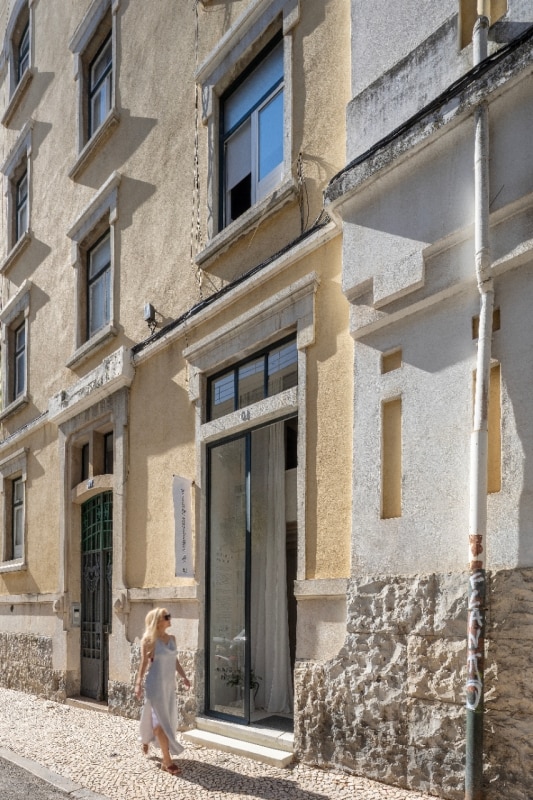
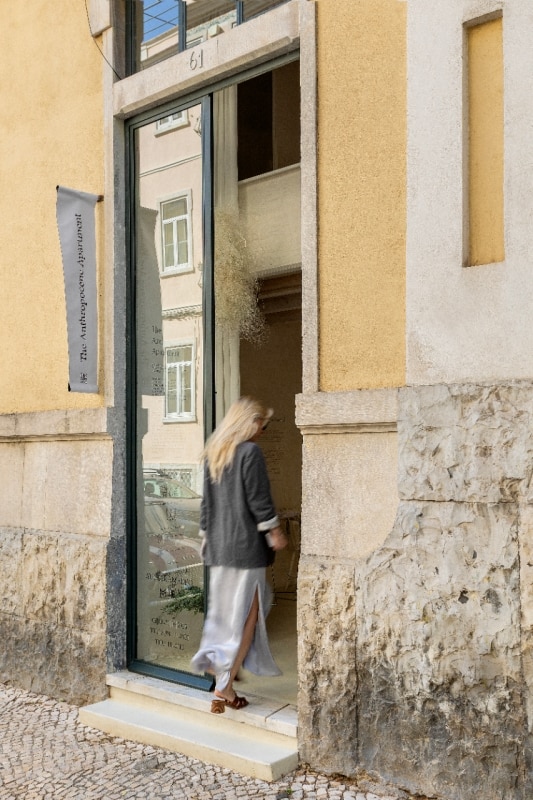
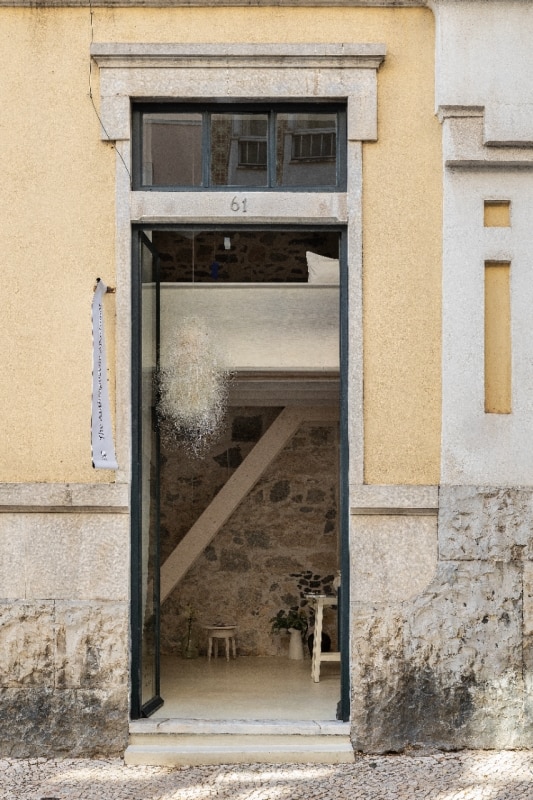
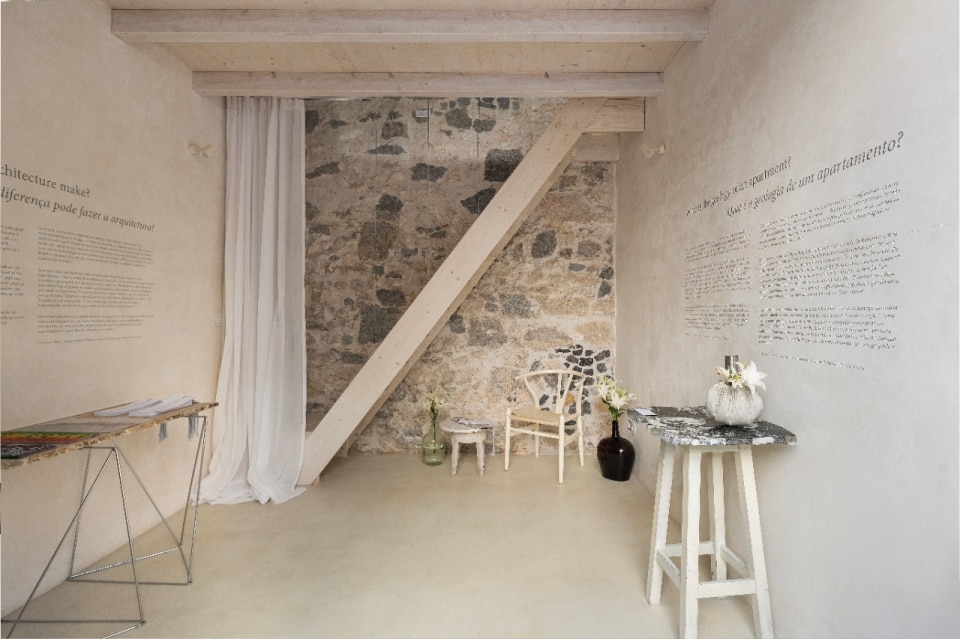
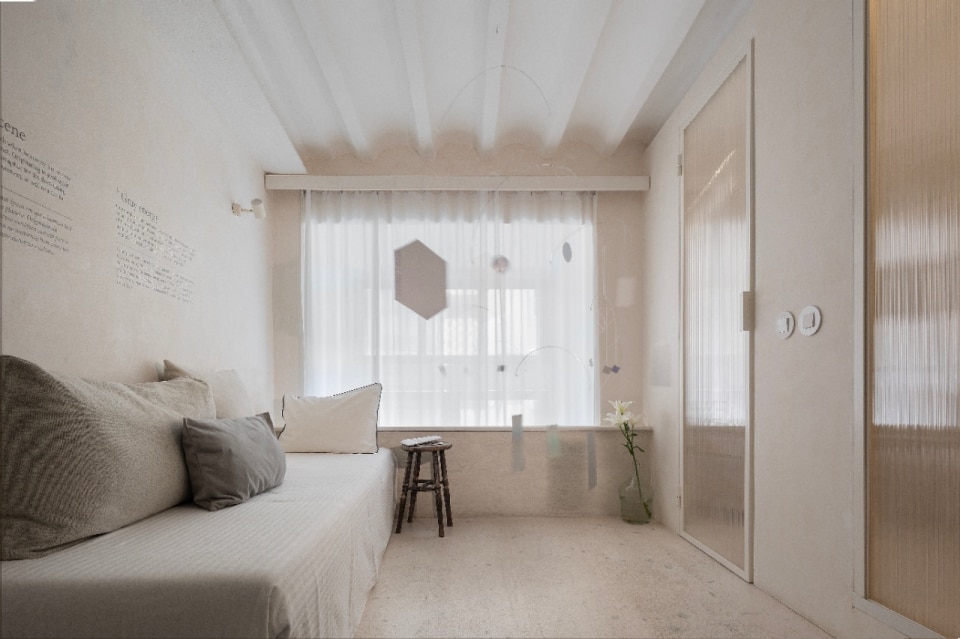
The tiny space (an "existenzminimum" for all intents and purposes) with many previous lives (warehouse, hairdresser's store, office...) is located in Rua Amadeu de Sousa Cardoso 61 and is reconfigured as a living space and a "satellite" for research and debate of the architect's studio, not far away.
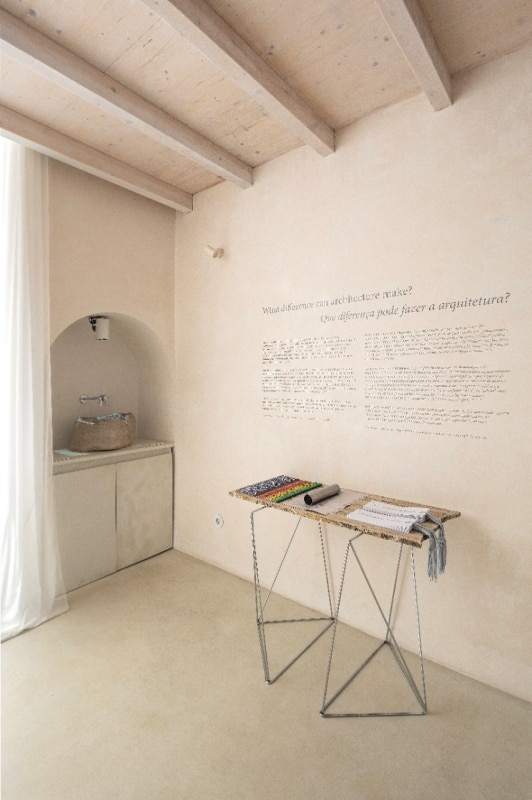
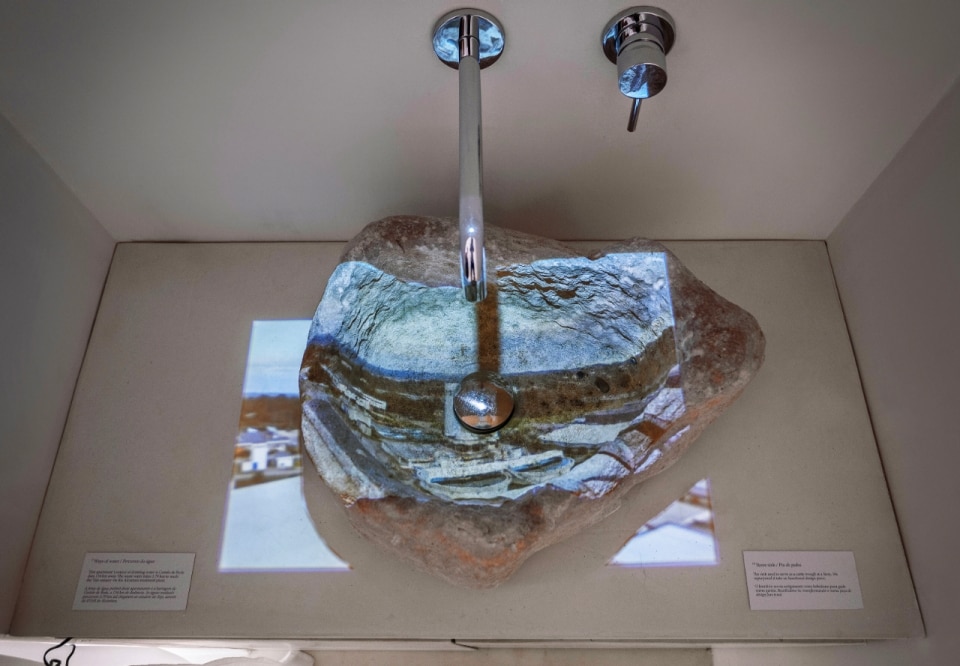
At the entrance, mappings and videos integrated into the exhibition narrative trace the actual trajectories of energy flows and the "hidden" infrastructure supporting the apartment: from the drinking water that comes from the Castelo de Bode dam 134 km away, to the wastewater that flows 5.79 km away to the Alcântara water treatment plant at the Tagus estuary, to the path of electricity mostly from renewable sources.

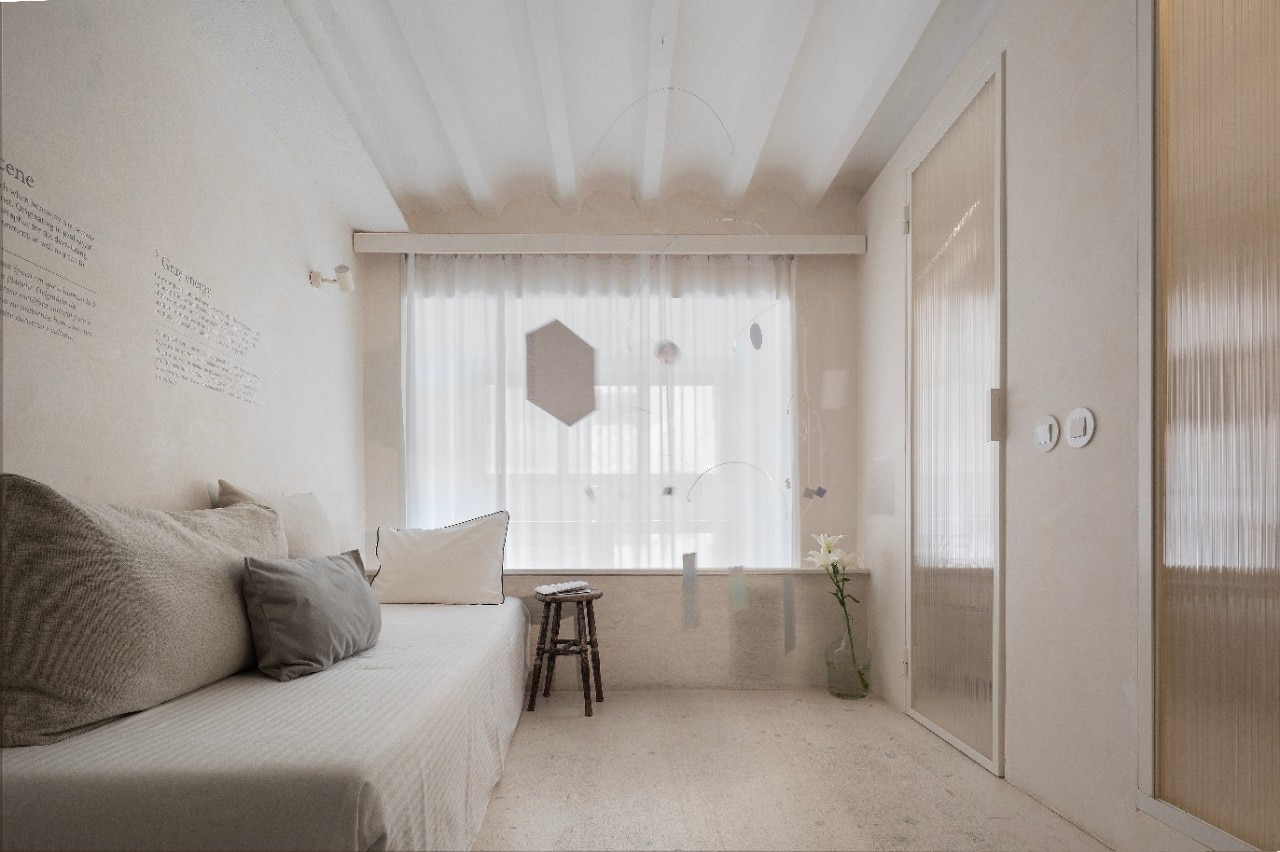
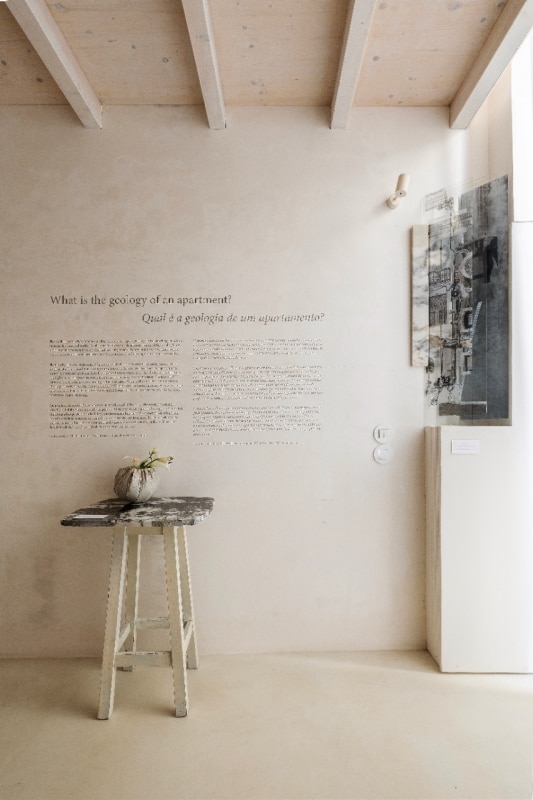
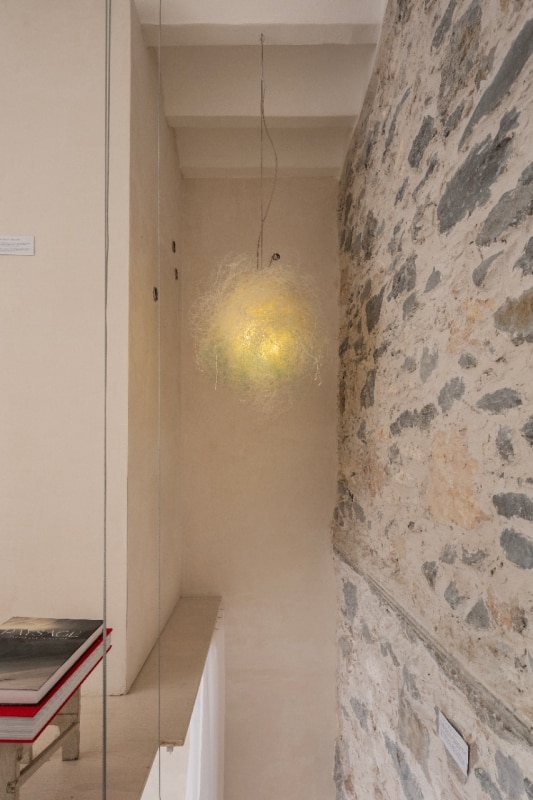
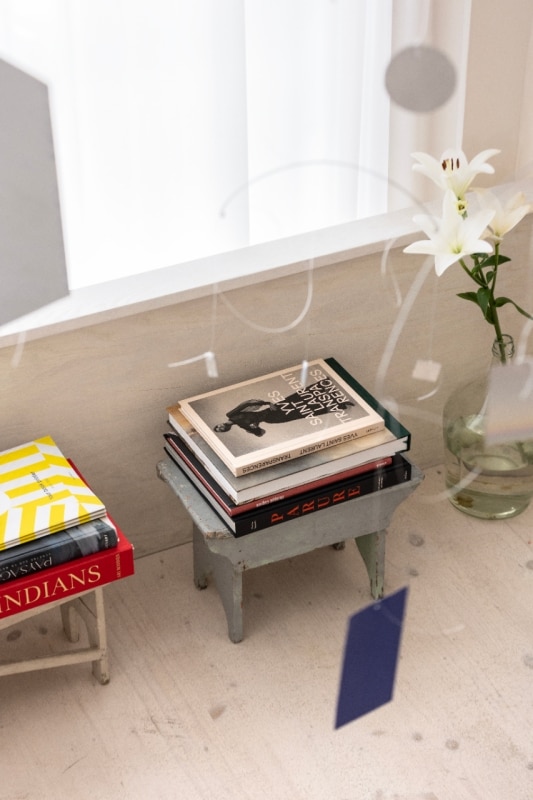
A feeling of straightforwardness characterises the space, revealed in its original material marks and dotted with recovered and reinvented furniture objects, preserving their grey energy (needed to produce, transport and discard any artefact) that would have been lost with their destruction, thus encumbering the planet in the form of waste.
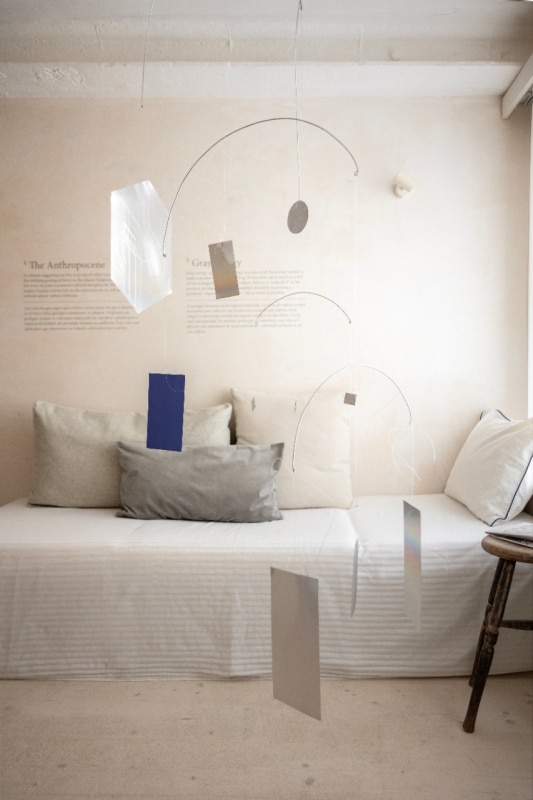
A lightweight structure made from recycled wood replaces the previous slab, which inhibited the use of the upper floor, and allows the dwelling to be doubled over two floors: living on the ground floor and sleeping on the upper floor. On the ground floor, a living-dining area is suggested by the marble table made from slabs once used as a kitchen floor and stools with legs made from eucalyptus broomsticks; “clouds” of fishing nets floating in the air make up the lamps that warmly illuminate the frugal but radiant room. Upstairs, a kinetic sculpture inspired by Alexander Calder's “mobile” represents the main stages in the life cycle of a building and its “weights”, interacting with the evanescent recycled plexiglas surfaces of the utility room doors.

As Lenka Holcnerová declares: “I believe the architect has a moral duty to question not only how but why and what we are creating. Rather than endlessly building anew, we should focus on reconstruction and reimagining what already exists. I aim to construct spaces that can outlast trends and interventions, able to adapt, be reused and quietly endure. The Anthropocene Apartment embodies these principles. As Toraldo di Francia of Superstudio warned, “it is the designer who must attempt to re-evaluate his role in the nightmare he has helped to conceive”.
A subtle but firm voice that, within the kermesse's conceptual and vaguely ethereal framework, brings the focus back to the value of the material and the architectural design as a concrete act to make the "entanglement" less indecipherable.