



St. Louis is a complex city for designers. In recent years, it has faced population decline, social inequality, and security issues that have drawn attention well beyond the borders of the United States. Not long ago, nearby Detroit was in even worse shape – yet today it appears on nearly every list of cities to visit this year. St. Louis, for its part, is also a surprisingly rich repository of significant architecture.
Here stands Eero Saarinen’s Gateway Arch, the emblem of the “Gateway to the West” and an enduring symbol of the city. In the Midtown district, the Pulitzer Arts Foundation by Tadao Ando sits alongside the Contemporary Art Museum St. Louis, which features works by Richard Serra. Still visible, too, are the traces of the 1904 World’s Fair – the grand exposition that helped shape the city’s monumental identity.
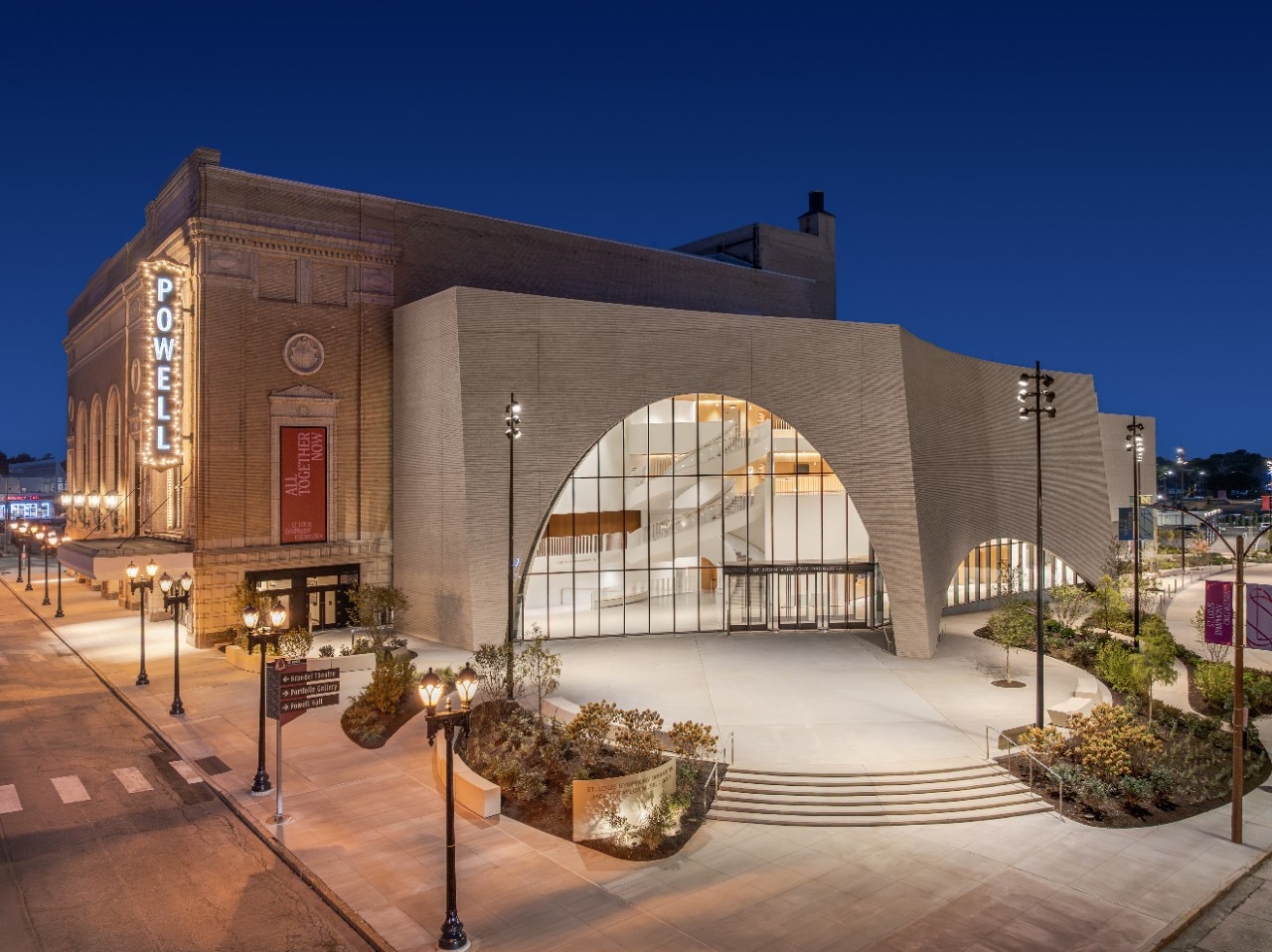
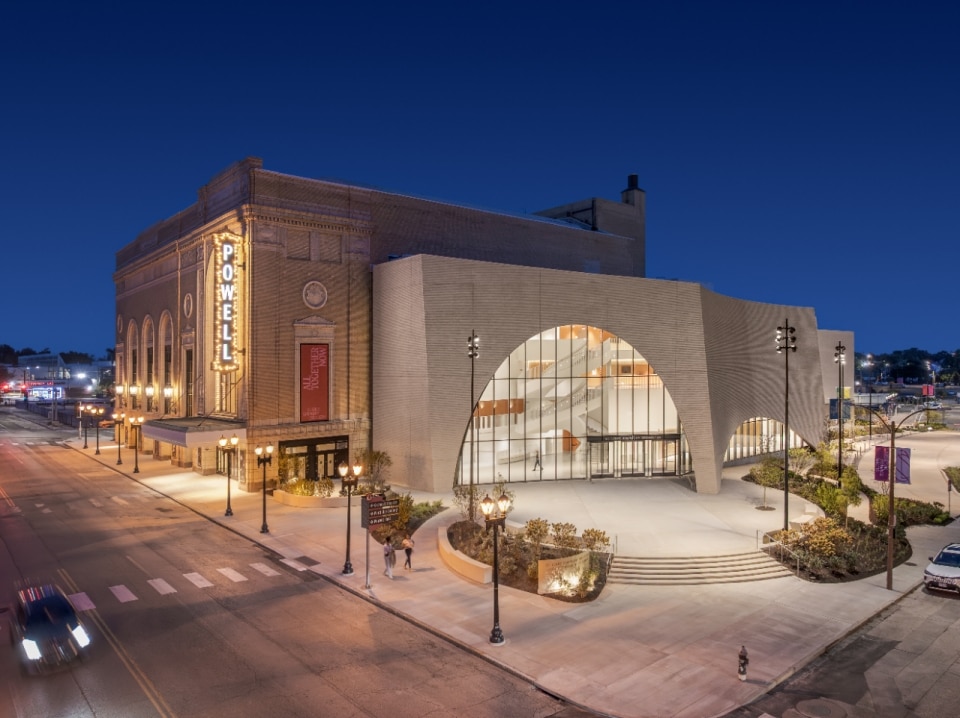
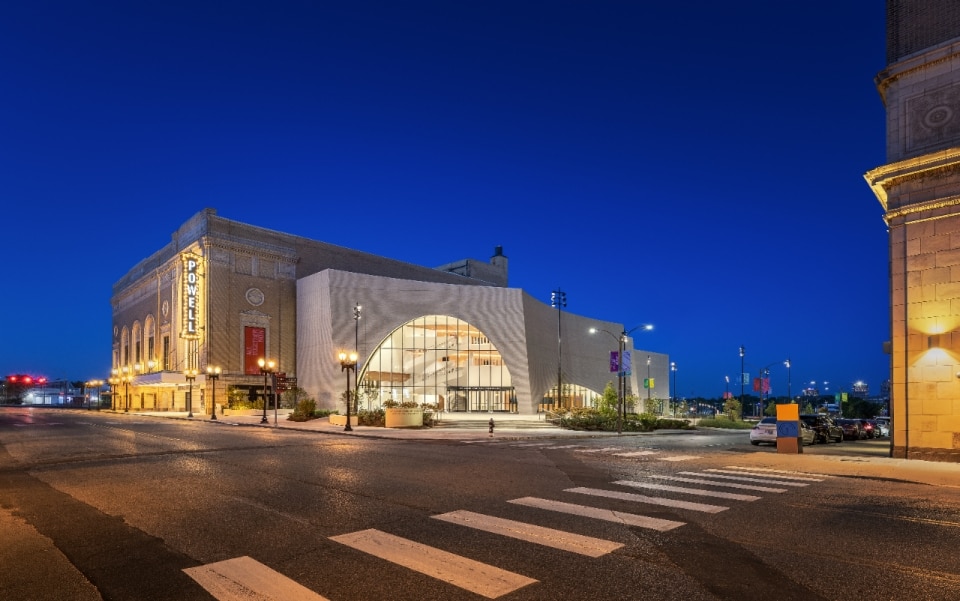
Against this backdrop, one of St. Louis’s landmark buildings has undergone a transformation of historic proportions. Powell Hall – the longtime home of the St. Louis Symphony Orchestra – has reopened after an extensive renovation and expansion led by the international architecture and design firm Snøhetta. The studio embraced the challenge of engaging with a venue that carries more than a century of cultural legacy.
“I remember when we first began, people told us, ‘Don’t mess it up, don’t mess it up!’ But at the same time, they wanted something new and exciting alongside it,” says Craig Dykers, co-founder of Snøhetta and the project’s lead architect. It’s understandable: founded in 1880, the St. Louis Symphony Orchestra (SLSO) is the second-oldest orchestra in the United States, after the New York Philharmonic – a fact of which the city’s residents are immensely proud. The building that houses it, its permanent home since 1968, has just celebrated its centenary. To mark the occasion, Music for All: The Campaign for the St. Louis Symphony Orchestra raised $155 million to fund the project.
The context and its contradictions
The original building stands in the heart of Midtown, in the same neighborhood as the Pulitzer Arts Foundation – Tadao Ando’s first project in the United States – and close to the Contemporary Art Museum St. Louis, as well as several historic theaters including the Fabulous Fox and the Sun Theater. The latter was renovated in 2014 for its own centennial, just as Powell Hall is now.
The old and the new work together like dance partners. When you’re dancing – cheek to cheek, at least – you want to complement each other, not step on each other’s feet.
Craig Dykers
To the north, the building faces Delmar Boulevard, a major thoroughfare that cuts across St. Louis from the western suburbs to downtown. Delmar still serves as a dividing line between the wealthier neighborhoods to the south and the more vulnerable areas to the north. The term “Delmar Divide” was coined to describe this socioeconomic and, above all, racial boundary. “Many people who lived on the other side of the street wanted to attend the symphony but never felt welcome,” notes Dykers.
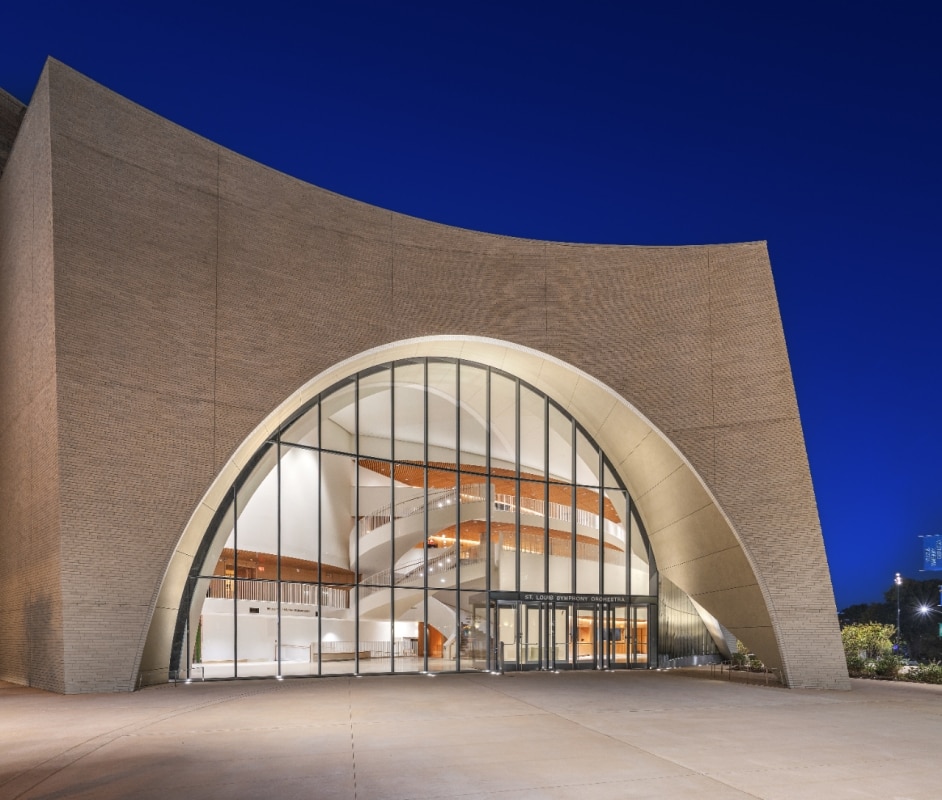
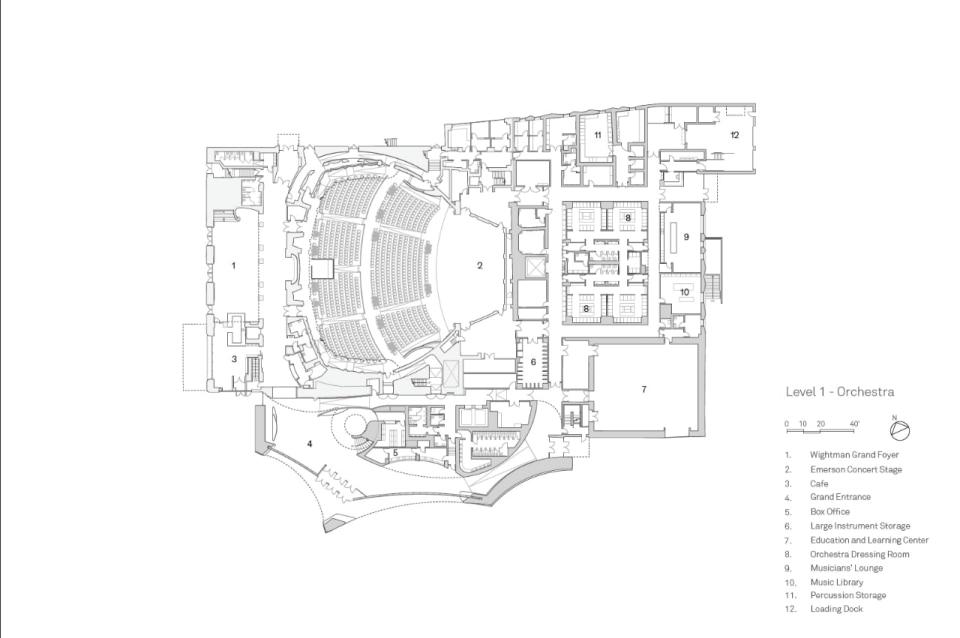
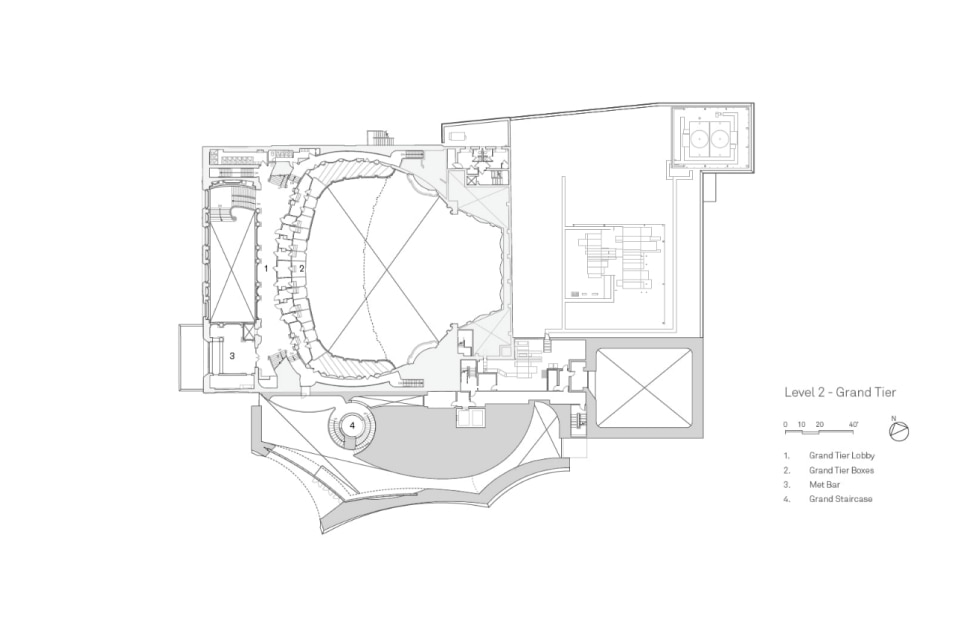
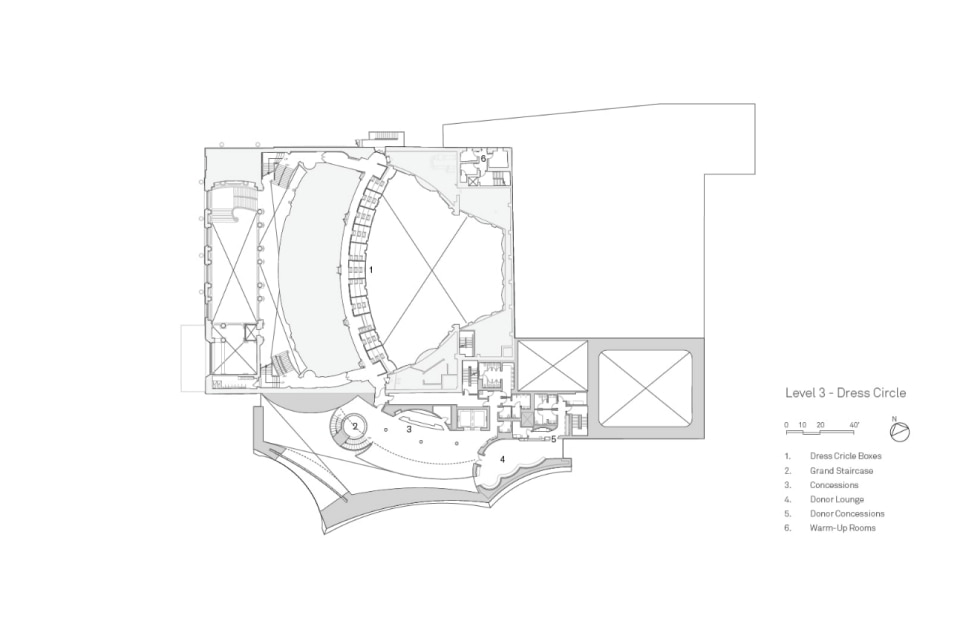
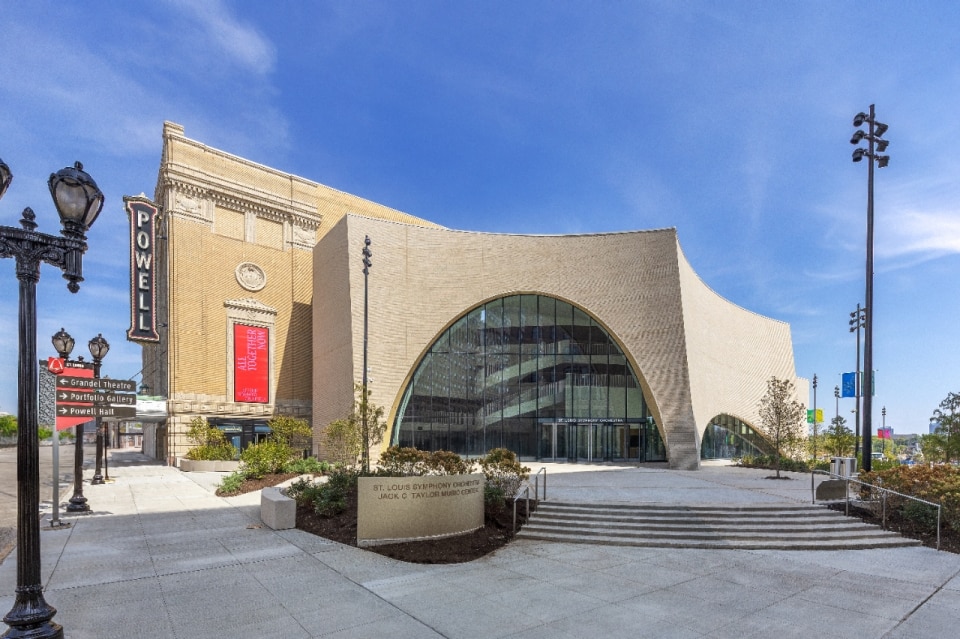
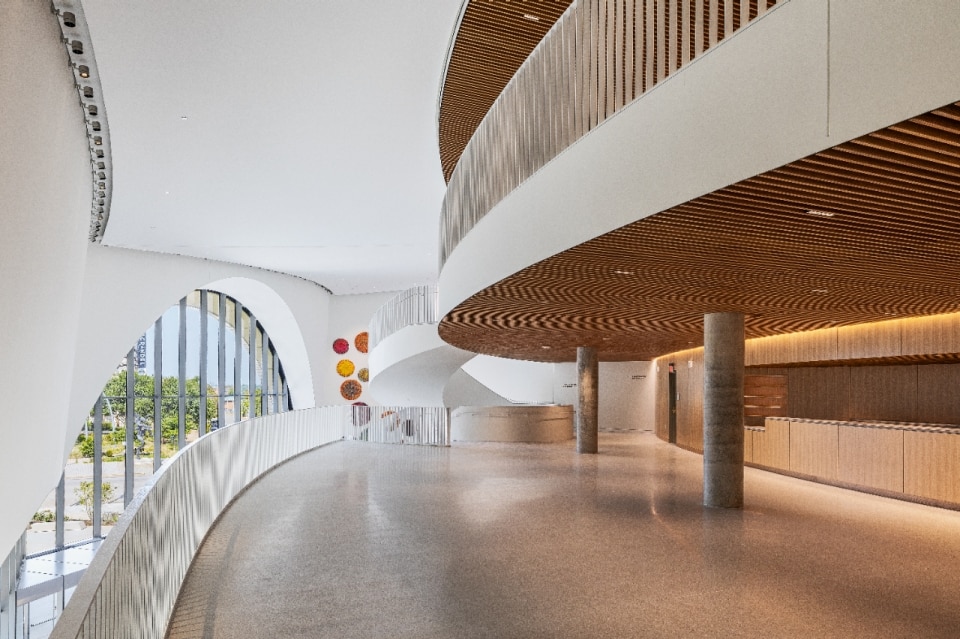
That’s why, in addition to preserving the main entrance, the firm designed two new access points: a larger one opening onto the southern plaza and leading directly to Snøhetta’s new addition, and another – for the first time – facing Delmar Boulevard. The two differ in function and visibility: the first framed by the sweeping arch of the new extension, the second located on the secondary façade of the historic building. Yet, as Dykers points out, the latter remains “a strong sign that everyone is welcome.” Like music itself, architecture here becomes a tool for connection – a building conceived to “welcome people from all walks of life into a place where music can connect them.”
Powell Hall beyond its historical legacy
Working on a building of such significance was no easy task. “In the U.S., it’s rare to find strong, well-made historic buildings that haven’t been demolished. In Europe, structures can last for centuries; in America, they’re often torn down and replaced quickly. So history resonates differently here,” says Dykers, reflecting on the intrinsic value Snøhetta sought to preserve – along with the memory of the place itself.
The firm therefore chose not to imitate but to be inspired – by the curve of an orchestral bow, the motion of a conductor’s baton, the shape of a violin, the color of the original bricks, and even the cliffs overlooking the Mississippi River. These fluid lines became the hallmark of the new intervention. “The old and the new work together like dance partners. When you’re dancing – cheek to cheek, at least – you want to complement each other, not step on each other’s feet,” Dykers explains, offering a metaphor that encapsulates the project’s spirit. The result is an addition that does not conceal the past, yet fully embraces a contemporary identity.
New spaces, greater accessibility, renewed functions
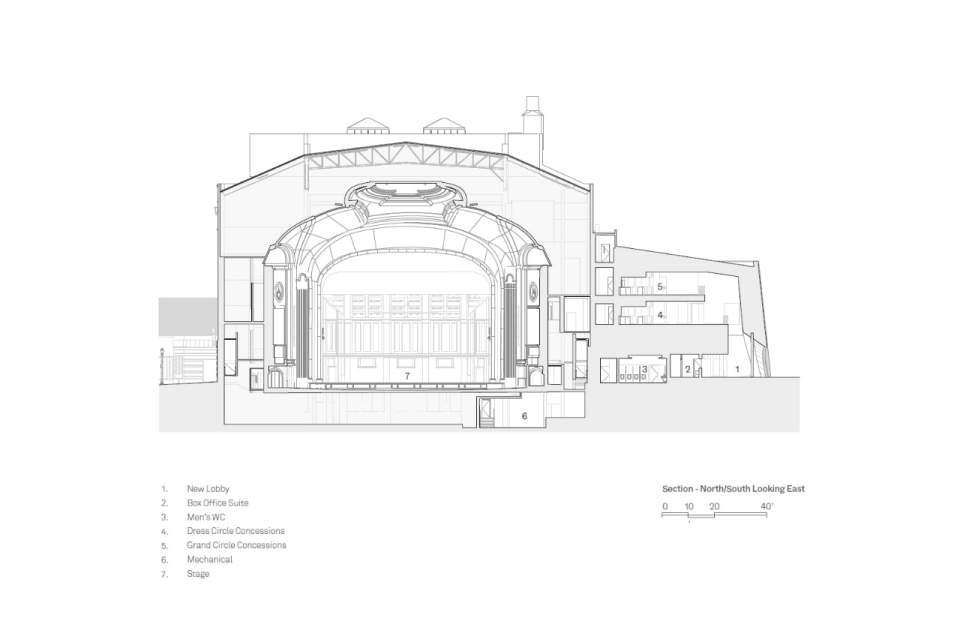
The complex now spans more than 17,000 square meters – significantly more than before – with expanded public areas as well as new spaces for musicians and staff. The extension reinterprets the colors and materials of the original structure through a contemporary lens: the bricks, for instance, are more elongated than the originals, creating visual continuity between old and new while avoiding imitation.
We changed a lot, but nobody noticed – and to me, that’s a good thing, because the building needed it.
Craig Dykers
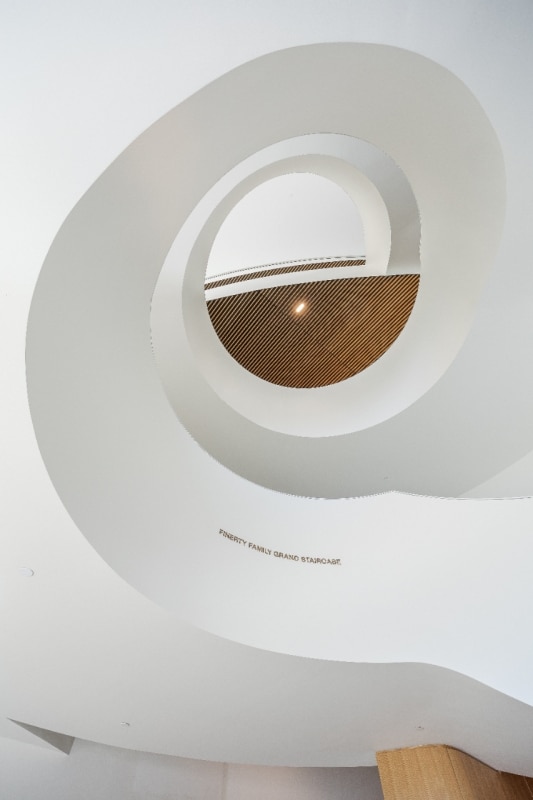
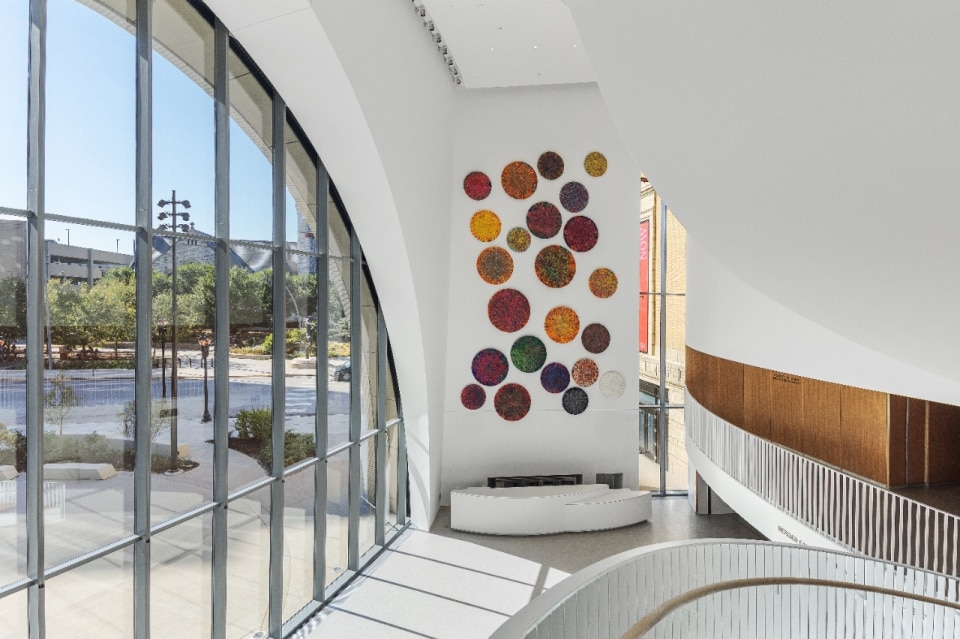
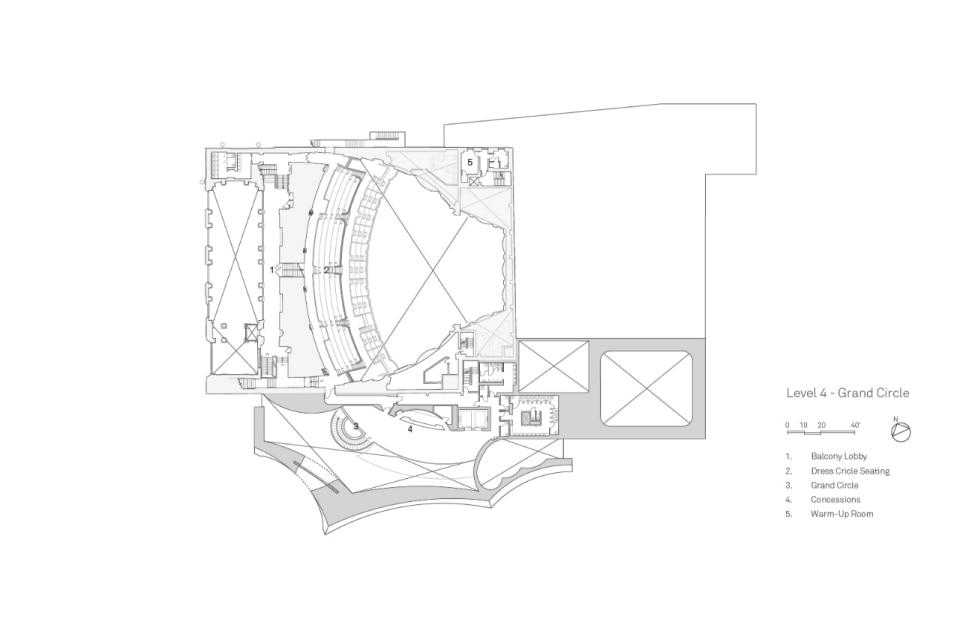
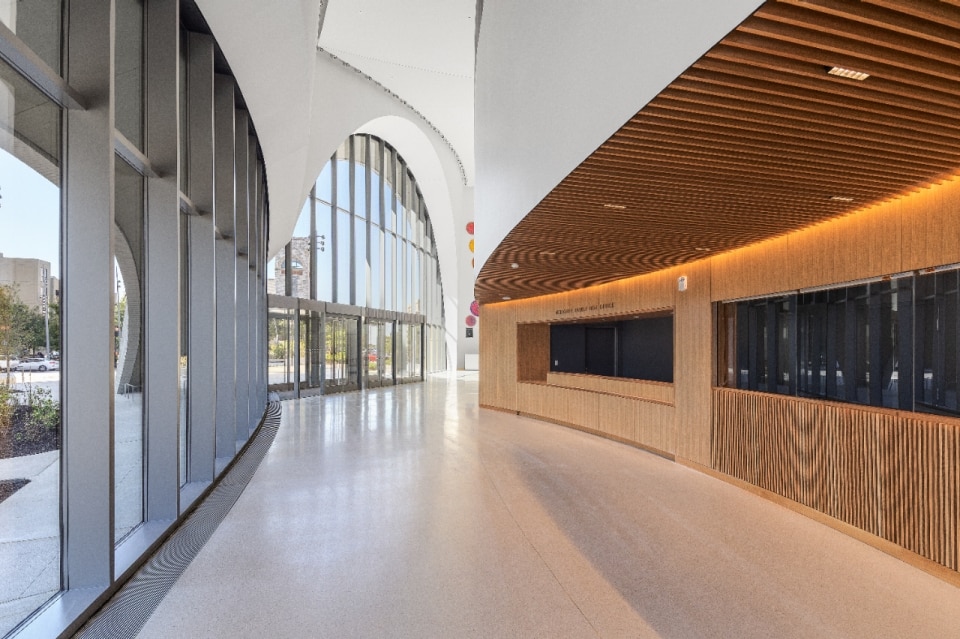
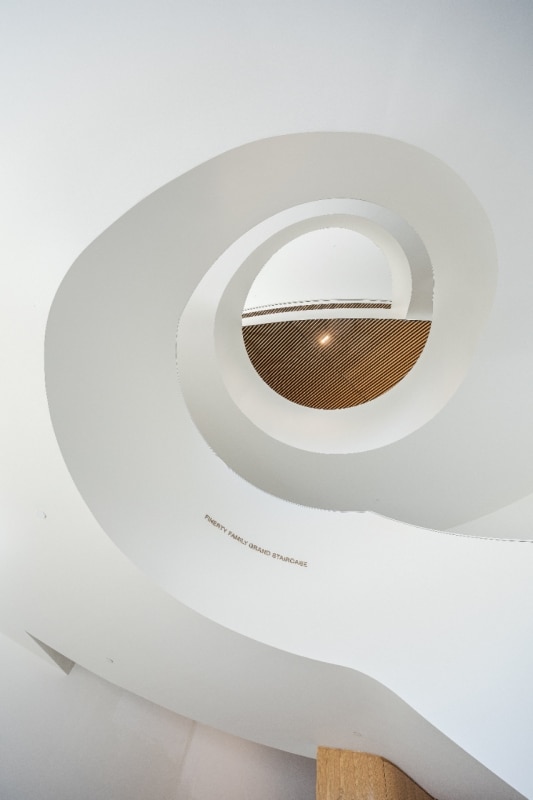
In addition to the new south entrance and the redistribution of internal circulation – marked by an impressive circular staircase, double-height spaces, and fluid pathways – Snøhetta also made substantial changes inside the historic building.
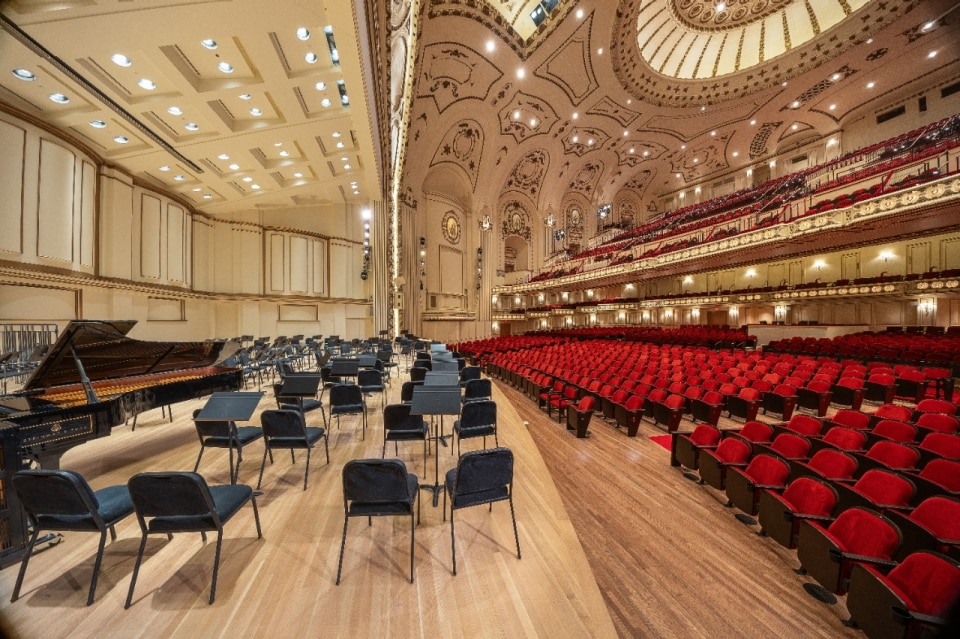
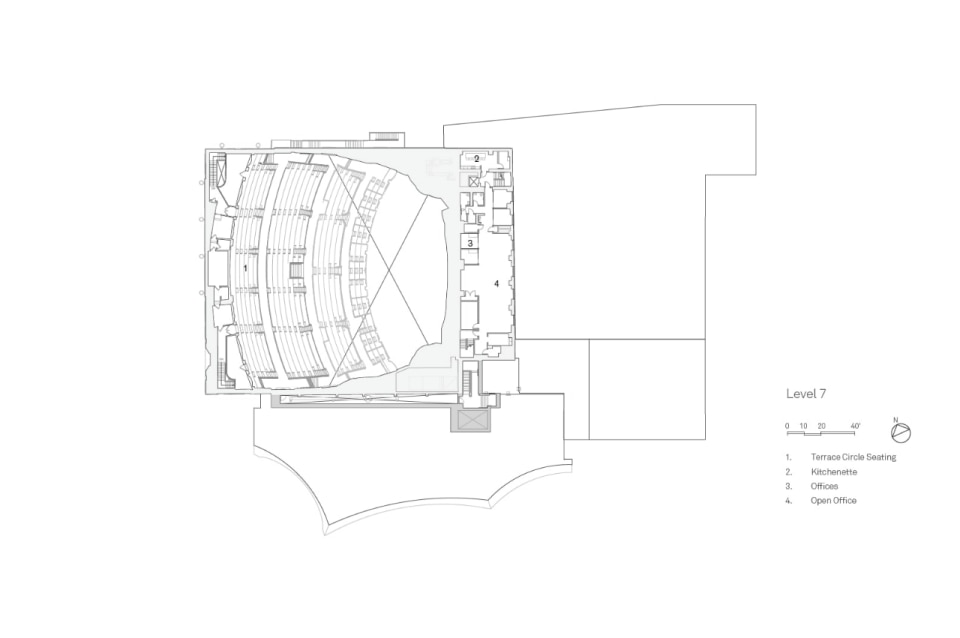
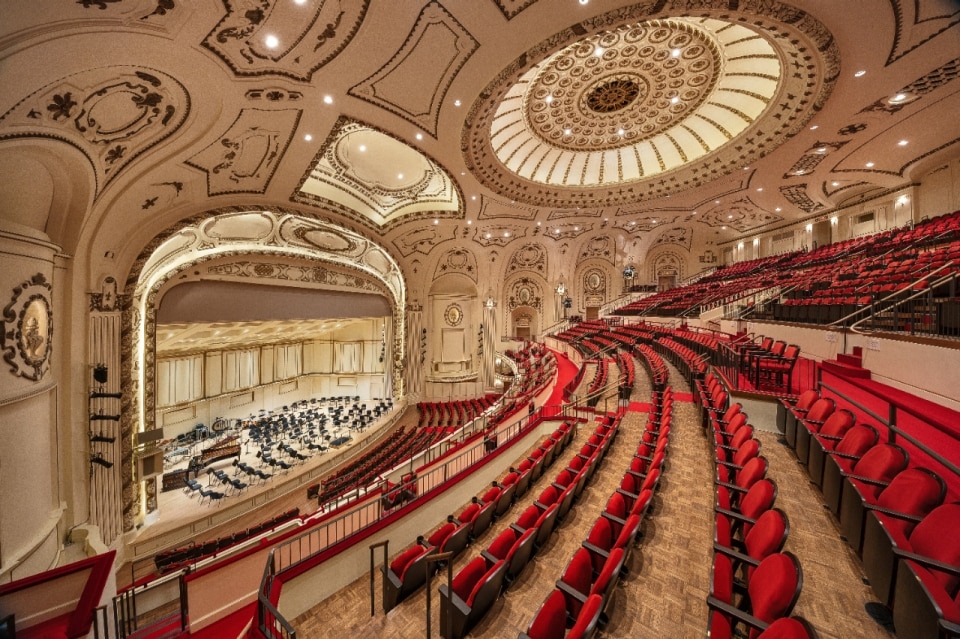
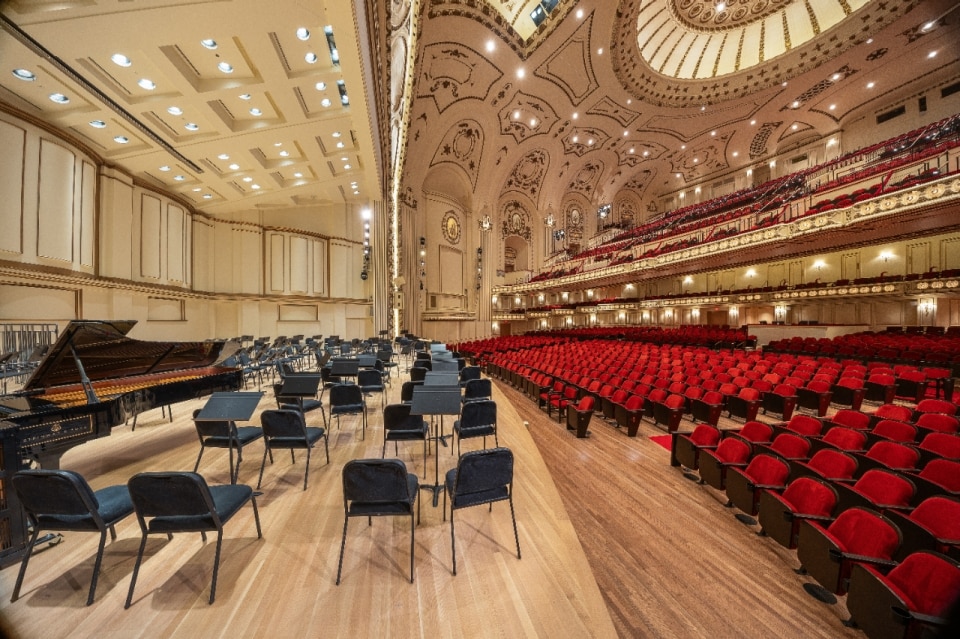
“Normally, when you build a symphony hall, it’s designed from the start for symphonic music. This one evolved over time, which is unusual,” says Dykers. Snøhetta had to adapt to that evolution, even at the cost of “sacrificing” something. The auditorium, for example, was reduced to 2,150 seats to enhance comfort and accessibility, with 29 seats reserved for people with disabilities. “We changed a lot, but nobody noticed – and to me, that’s a good thing, because the building needed it,” Dykers says of the public’s first impressions after reopening.
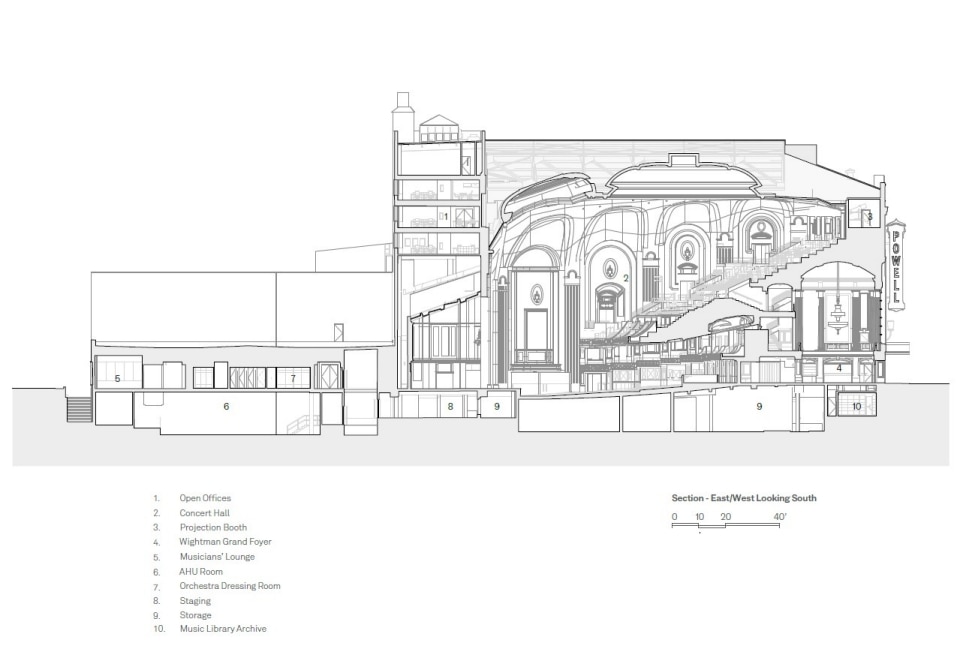
Beyond the expanded lobby and circulation areas, the renovation introduced an education center, twelve new rehearsal rooms, a music library, larger dressing rooms, five elevators, and nearly twice as many restrooms as before. Special attention was paid to staff areas. “We put a great deal of emphasis on the back of house, where people work every day,” Dykers explains, noting the presence of natural light in the rehearsal rooms and improved access to dressing rooms and offices.
“When the staff and the orchestra are comfortable, everyone’s going to be happy. If we’re going to talk about bringing communities together, then the whole community within the building has to be included – not just the guests.”
The reopening of Powell Hall marks a pivotal moment for St. Louis – not only for its musical life but for the city’s identity as a whole. Through Snøhetta’s restoration and expansion, the building renews its mission as a public space and a community symbol, bridging neighborhoods, generations, and cultures. “I believe this building will have a huge impact on St. Louis,” says Dykers. “I’m certain it will be well visited and will serve as a unifier in a city that has faced many challenges in recent years.”
Beyond its social impact, the redevelopment of Powell Hall also offers food for thought on how to engage with existing architecture today without erasing its original value. “One thing people often say about our work,” Dykers notes, speaking of Snøhetta’s projects, “is that they recognize it as ours, but it never looks like a repetition of a previous project.”
In this sense, the transformation of Powell Hall demonstrates how reimagining the built environment can become an act of continuity and openness – a way to create new connections, rather than simply new architecture.