


How did architecture become a language of freedom and modernity in a post-colonial world? MOMA’s Architects of Liberation: Modernism in Western Africa, on view in the Robert B. Menschel Galleries from July 5, 2026, to January 2, 2027, is the first large-scale exhibition to explore the relationship between modern architecture and the agendas of self-determination that shaped the region’s independence era.
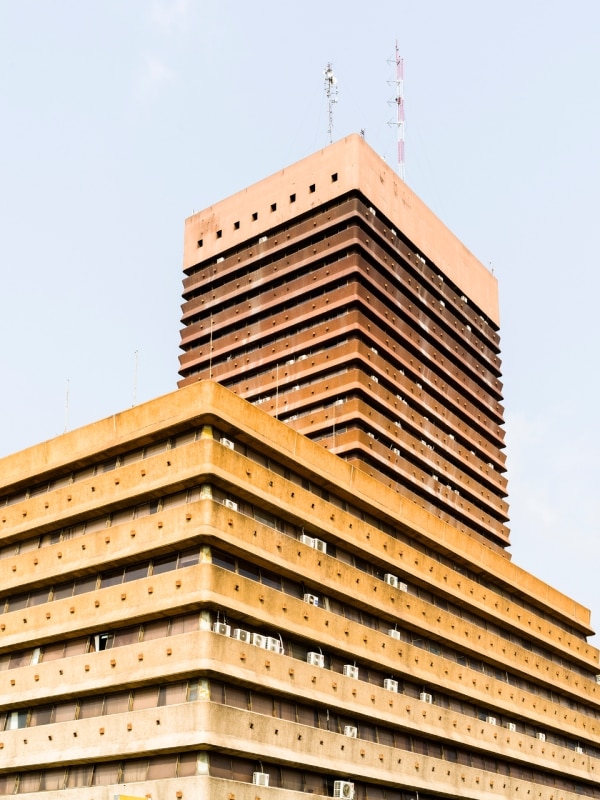
Between 1957 and 1960, Benin, Cameroon, Côte d’Ivoire, Ghana, Nigeria, Senegal, and Togo claimed independence. This sovereignty, coupled with rapid population growth, sparked massive infrastructure projects, from entirely new cities to restructured rural regions.
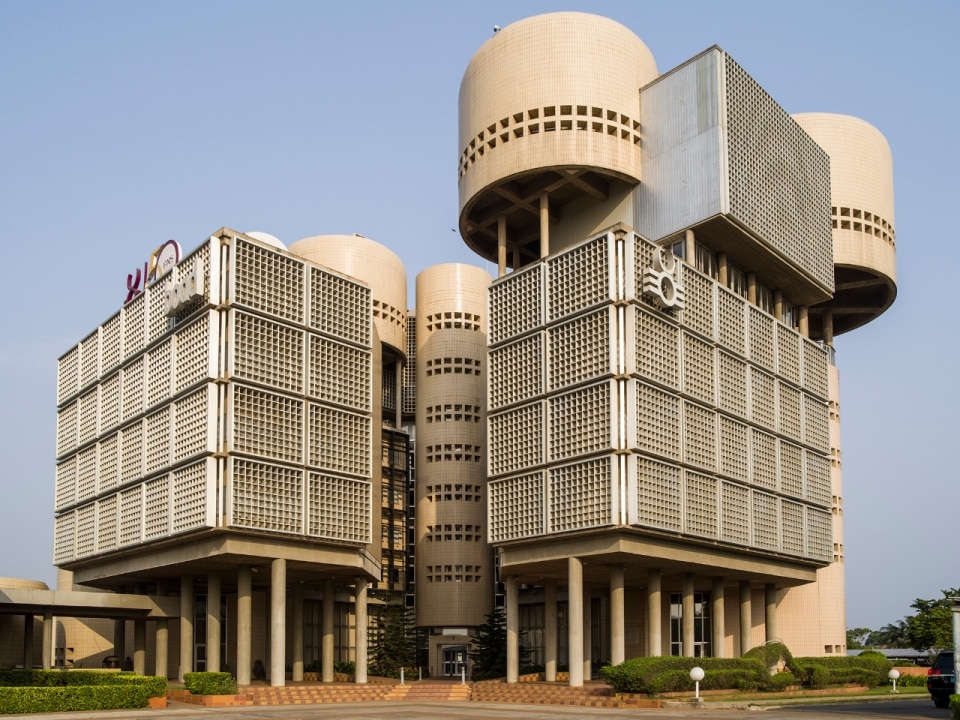
New roads, airports, and train stations emerged alongside hotels, business districts, civic buildings, and entirely new skylines synonymous with economic prosperity and aiming to mirror global financial capitals. Concurrently, event architecture like festivals and trade fairs emerged as bold announcements to the rest of the world, designed to boost trade, diplomacy, and cultural exchange.
Building the image of independence
In the post-war period, African leaders were soon confronted with the question of what this new infrastructure should look like. The principles of international modernism in architecture – with their monumentality, sleek lines, relative affordability, and technological advances – were particularly attractive and seen as a powerful tool to advance ideals of nation-building and modernity. First came the foreign-born, foreign-trained architects from Europe, who were among the first to receive commissions for architectural work in Western Africa.
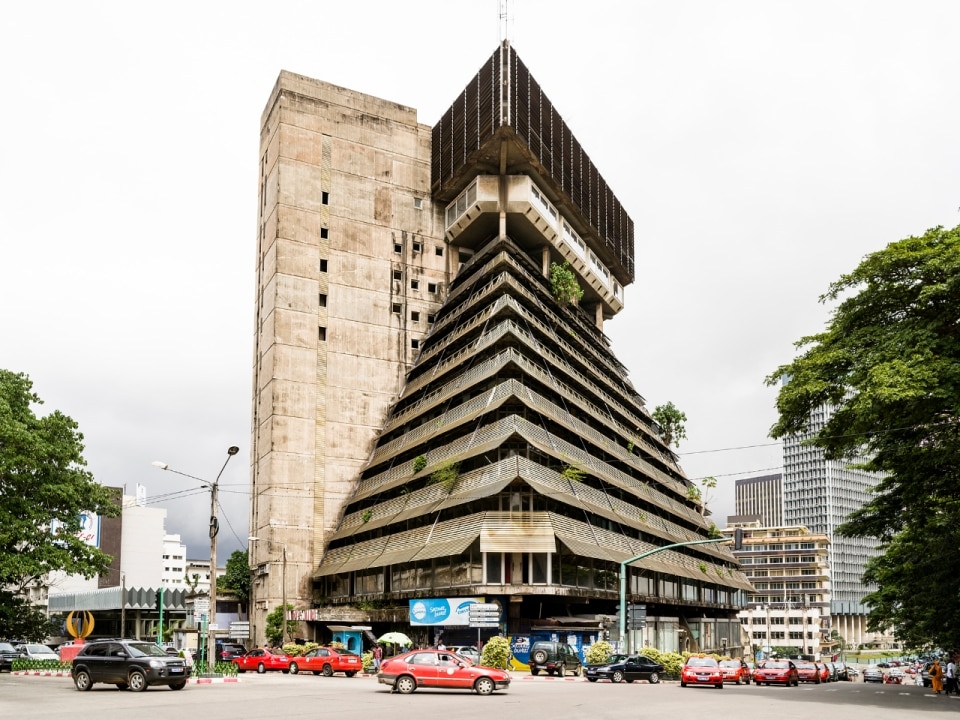
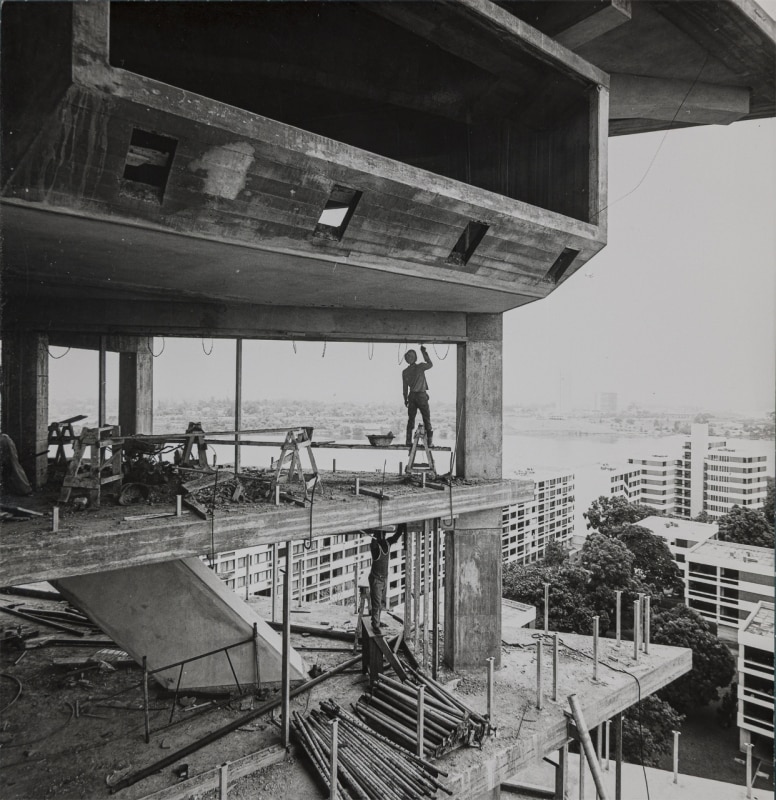
Abidjan’s La Pyramide, designed by Rinaldo Olivieri and completed in 1973, is a prime example. It once symbolized the “Ivorian Miracle” of the 1960s, aiming to capture the energy of an African market in a Brutalist style. One of the city’s first high-rise buildings, its mixed-use function meant that offices, commercial spaces, and restaurants coexisted with residential areas in the main body of the tower. La Pyramide is extensively shown through archival photographs, section and elevation plans, and a 2025 3-D model in the first few sections of the exhibition.
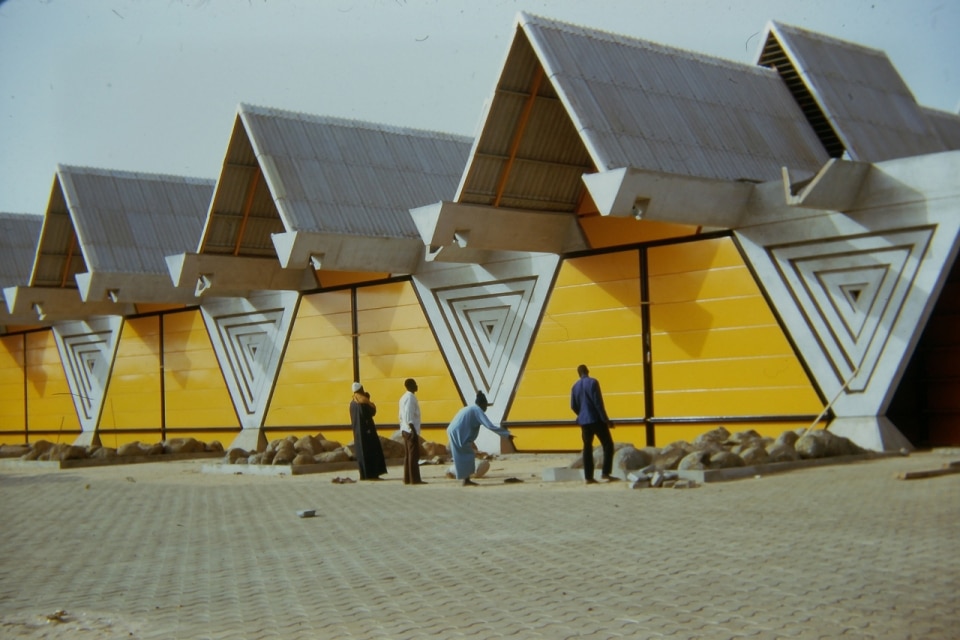
The Centre International du Commerce Extérieur du Sénégal (CICES) in Dakar, Senegal, designed by Jean-François Lamoureux and Jean Louis Marin and completed in 1974, is another large-scale commission by European-born architects. Its design relies on a triangular motif repeated at every possible level, from the general plan to the section of the handrails. The inclined triangular walls dramatically reduce the surface area directly exposed to the midday sun, while the geometric screens shade the glass windows beneath them, echoing the cooling logic of ancestral Sahelian huts.
Making modernism their own
The exhibition’s greatest strength lies in showing this gradual process of appropriation: how African-born architects absorbed, transformed, and localized international modernism by combining it with indigenous principles. “African architects in the post-independence era made modernism their own by adapting it to suit their needs.
Our exhibition argues that global modernism should be valued for its ability to adapt to different cultural, economic, and political settings,” says curator Martino Stierli. With education viewed as a key driver for decolonization, political leaders accelerated the creation of new architecture schools where rigorous research on indigenous building traditions and typologies was published. By encouraging and often mandating the employment of African and African-trained architects, state design offices like Ghana’s GNCC and Côte d’Ivoire’s BNETD actively reclaimed agency over their built environments, transforming modernism into a powerful visual language of liberation and hope.
The effort to reclaim and institutionalize African cultural heritage becomes especially clear in the work of key architectural figures highlighted across the exhibition.
Senegalese architect Cheikh Ngom, who won several public and private commissions over European architects, generally showed a commitment to classical elements of modernism while incorporating indigenous design elements into a number of his projects – most notably in the sketches that he made for the Musée National Léopold Sédar Senghor, ca. 1970-1980.
Jean Léon of Côte d’Ivoire studied architecture in France before returning to his home country in 1968 to participate in the independence era’s explosion of new construction. The spaceship-like auditorium he designed for a high school in Yamoussoukro, ca. 1978, exemplifies his radical use of concrete and his experimental approach to design, incorporating biomorphic and futuristic elements.
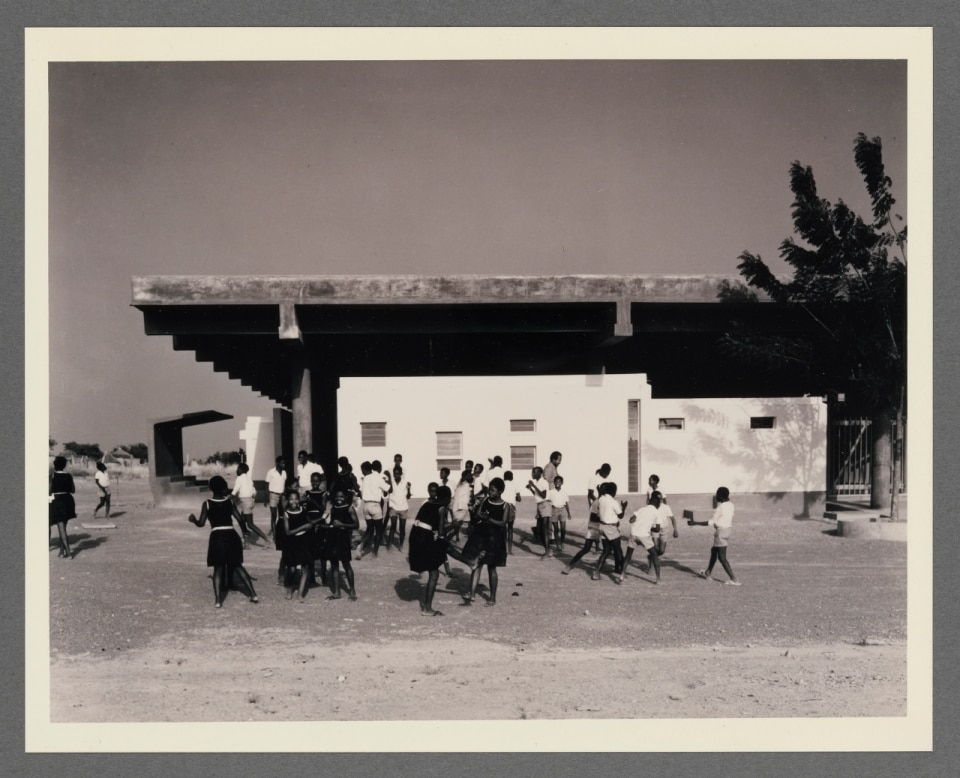
Architects of Liberation is organized around several thematic entry points – cityscapes, education, and housing – each revealing how architecture was used to express the aspirations of newly independent nations. As many as 450 objects are included in the exhibition, most of them never or rarely shown, testifying to the astonishing versatility of architectural production in the region during that period. Architectural drawings, models, archival photographs, and films from over 50 lenders across 17 countries transform the exhibition into a rich documentary panorama, which comes to life most successfully in an accompanying publication enhanced by expert research and unpublished archival material.
A fundamental lack of regional research infrastructure, missing archives, and incomplete cataloging led to over four years of preparation for the book and exhibition. Stierli explains that “rather than relying on pre-existing work, it often required basic, foundational research: identifying a comprehensive roster of architects, systematically searching their archives, and seeking out and contacting family.” Navigating such an archival void makes the result all the more commendable: a powerful, long-overdue chronicle of African design ingenuity that will serve as an indispensable research tool, paving the way for future investigation.
Opening image: Abidjan’s La Pyramide, designed by Rinaldo Olivieri, 1973
- Exhibition:
- Architects of Liberation: Modernism in Western Africa
- Place:
- The Museum of Modern Art, New York
- Dates:
- From July 5, 2026, to January 2, 2027