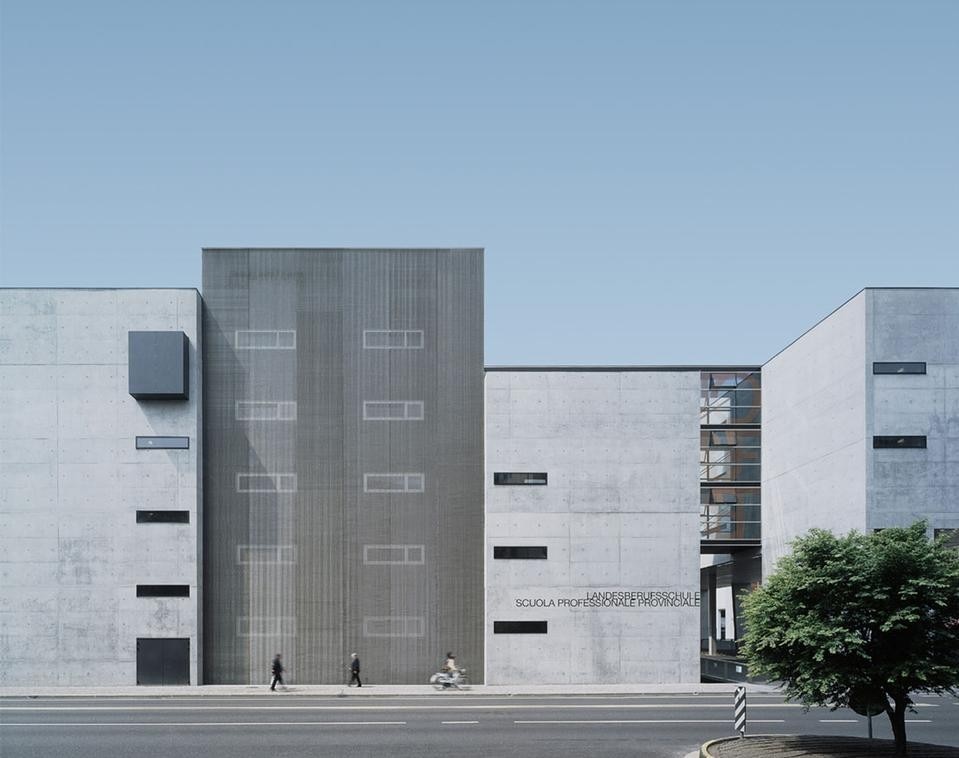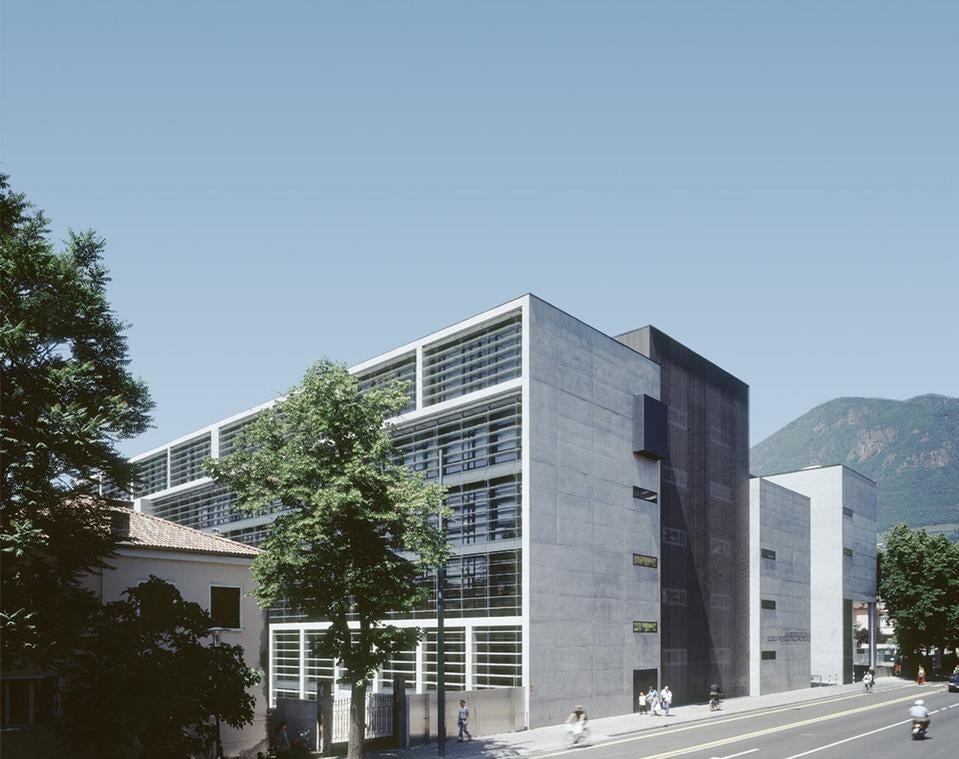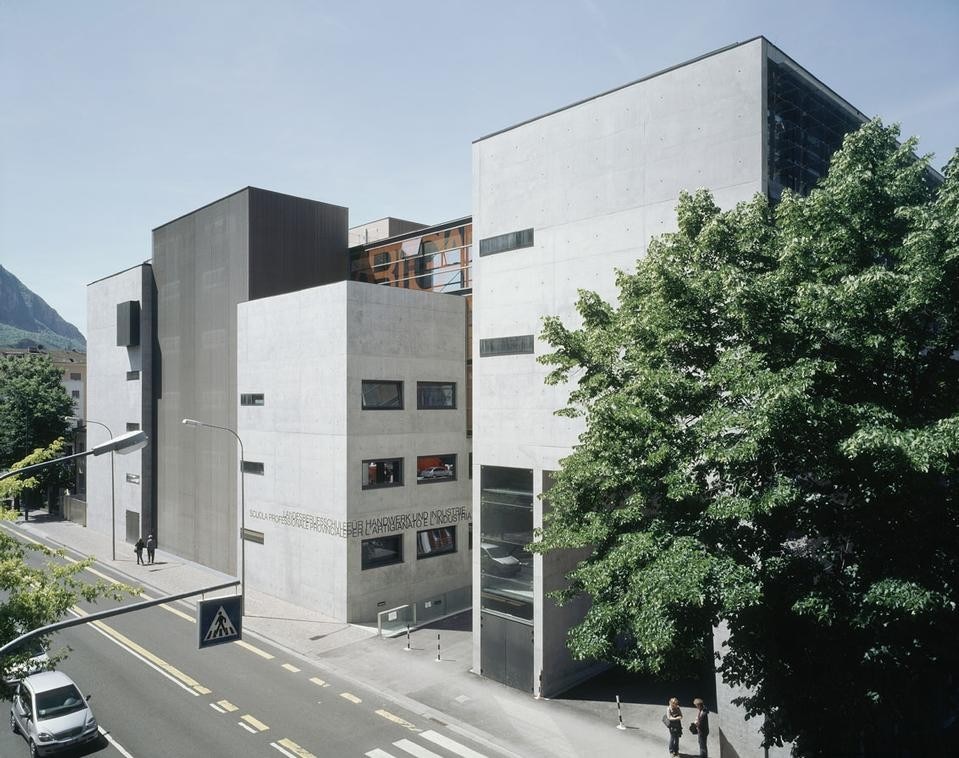
The relocation of the trade fair was however subjected to a series of delays and when work could finally begin, in 2000, a number of conditions had been radically altered. In the first place, it became evident that for structural reasons, it did not make sense to retain the 1950s school building. Furthermore, in the mid-1990s, the Comune di Bolzano had decided, in line with a revised town plan, to demolish the exhibition pavilion by Guido Pelizzari and Heiner Rössler. The new piazza on via Roma was not a happy option from an urban-planning point of view and still today is perceived as a structural hiatus in the building physiognomy of the district. Over the years, demands linked to professional training had also profoundly changed, a factor that meant increasing the building volume by about a third. The design scheme was therefore subjected to a series of variations, despite which the complex appears today as the result of a single idea: the strong structure in concrete exposed has in fact sustained the changes well.
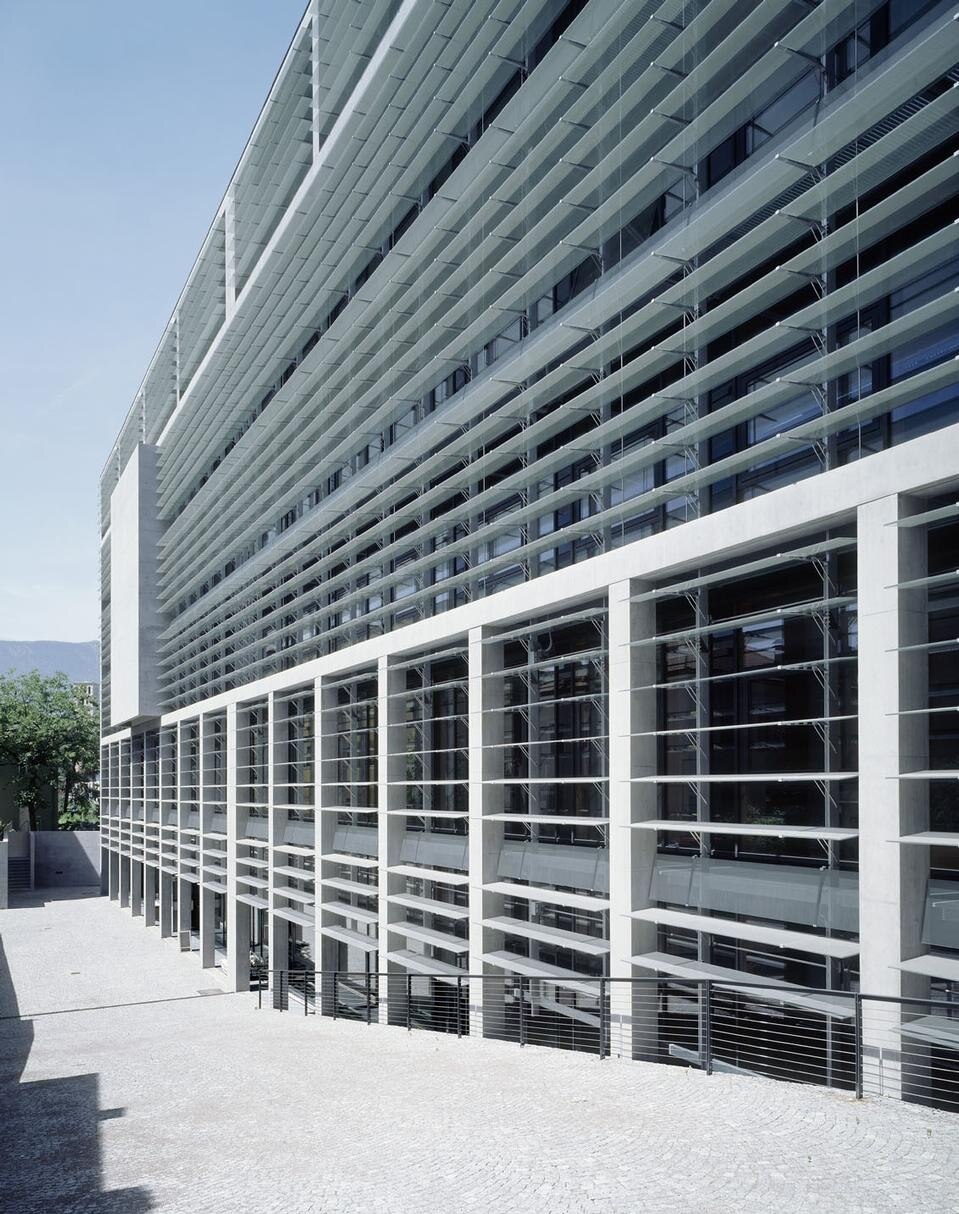
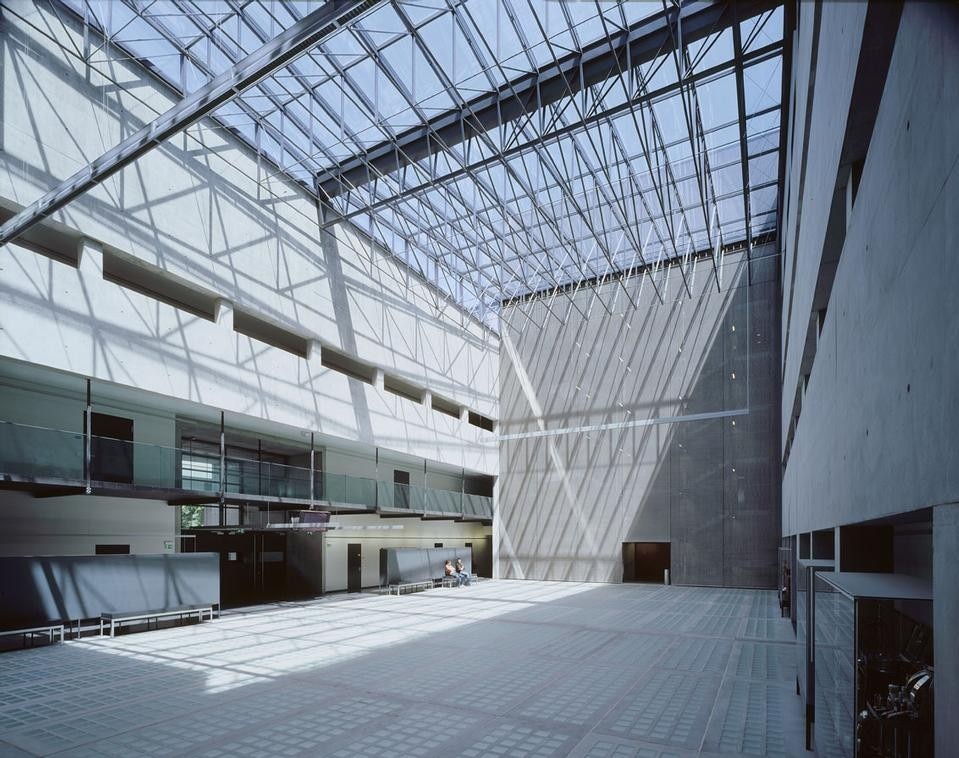
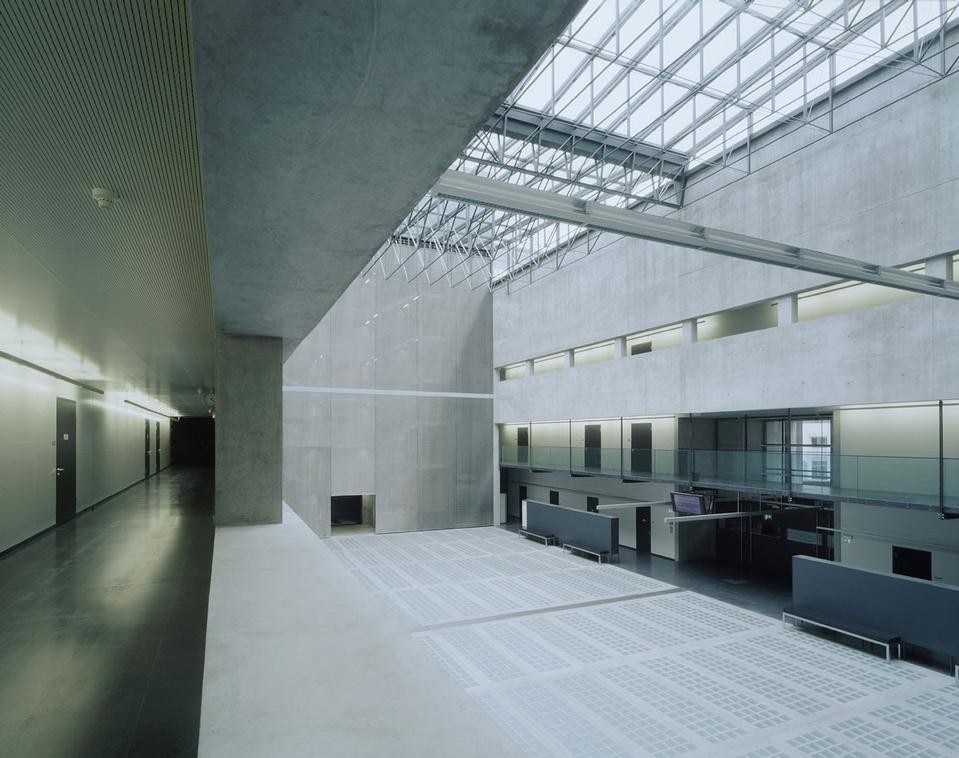
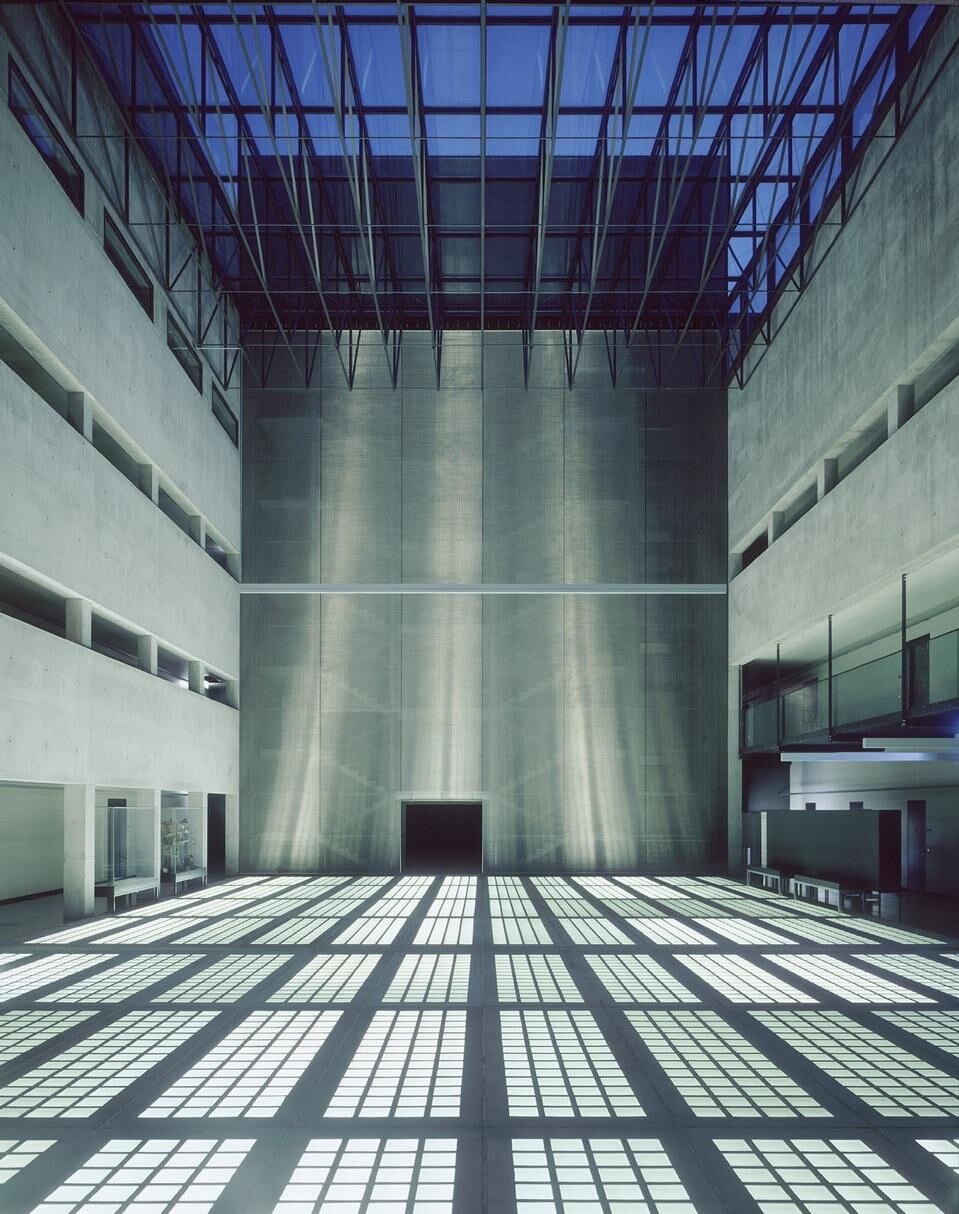
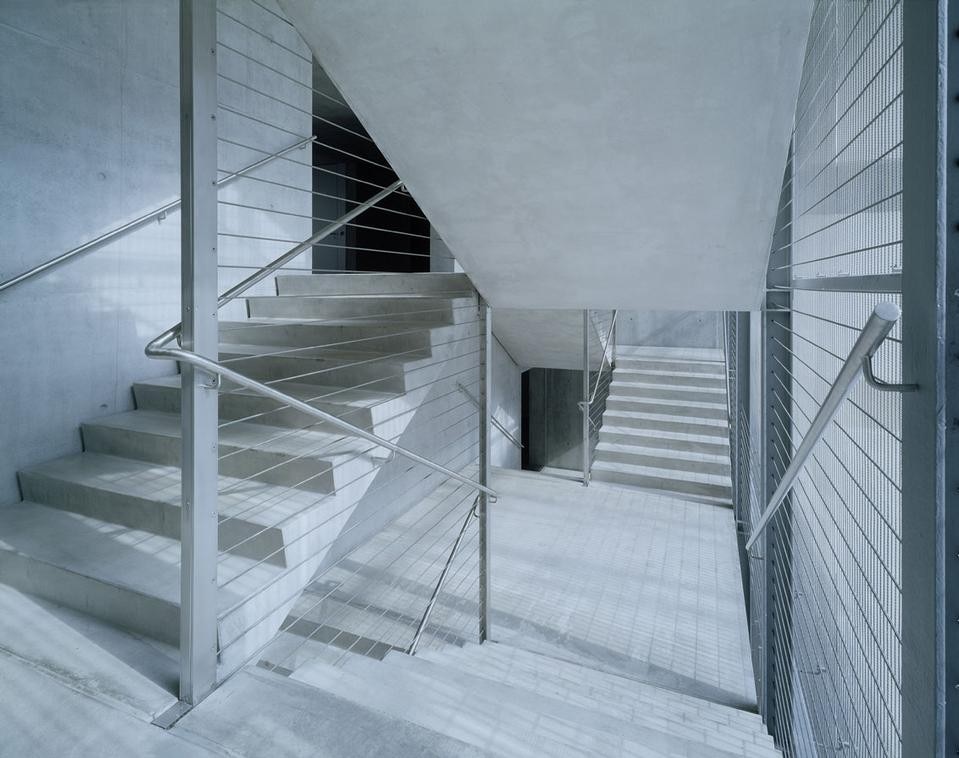
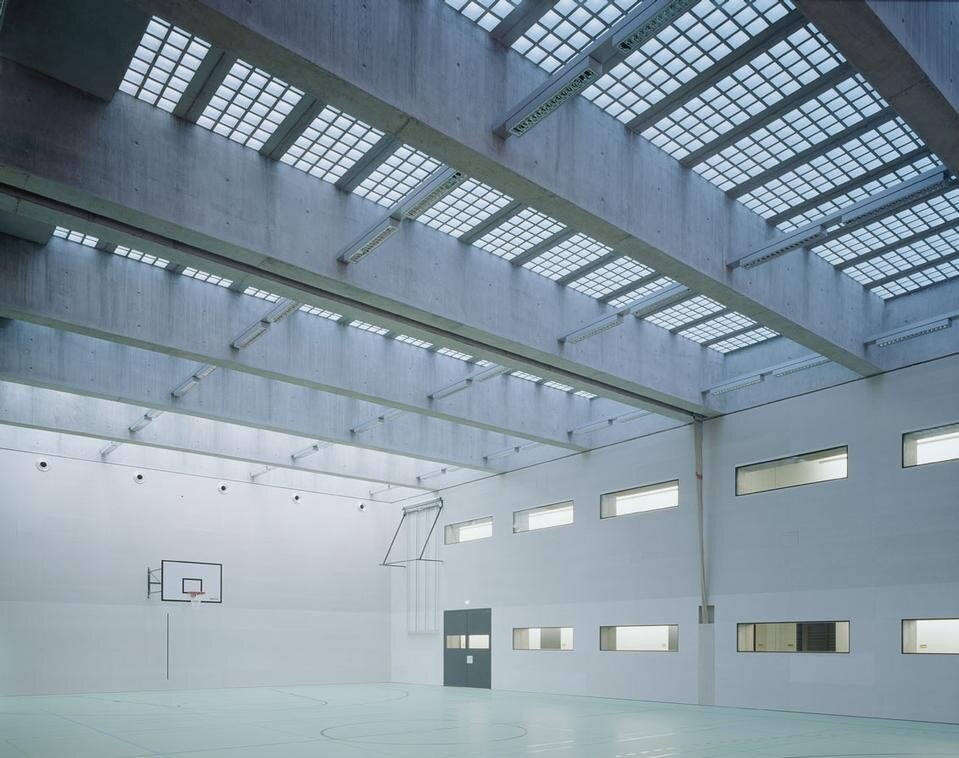
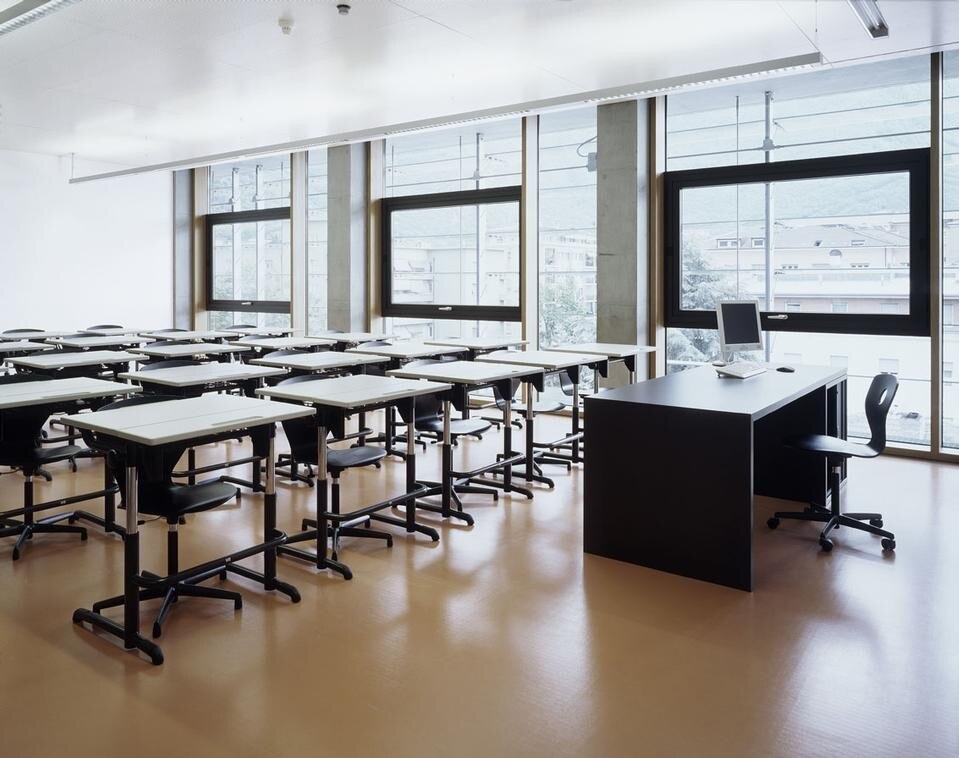
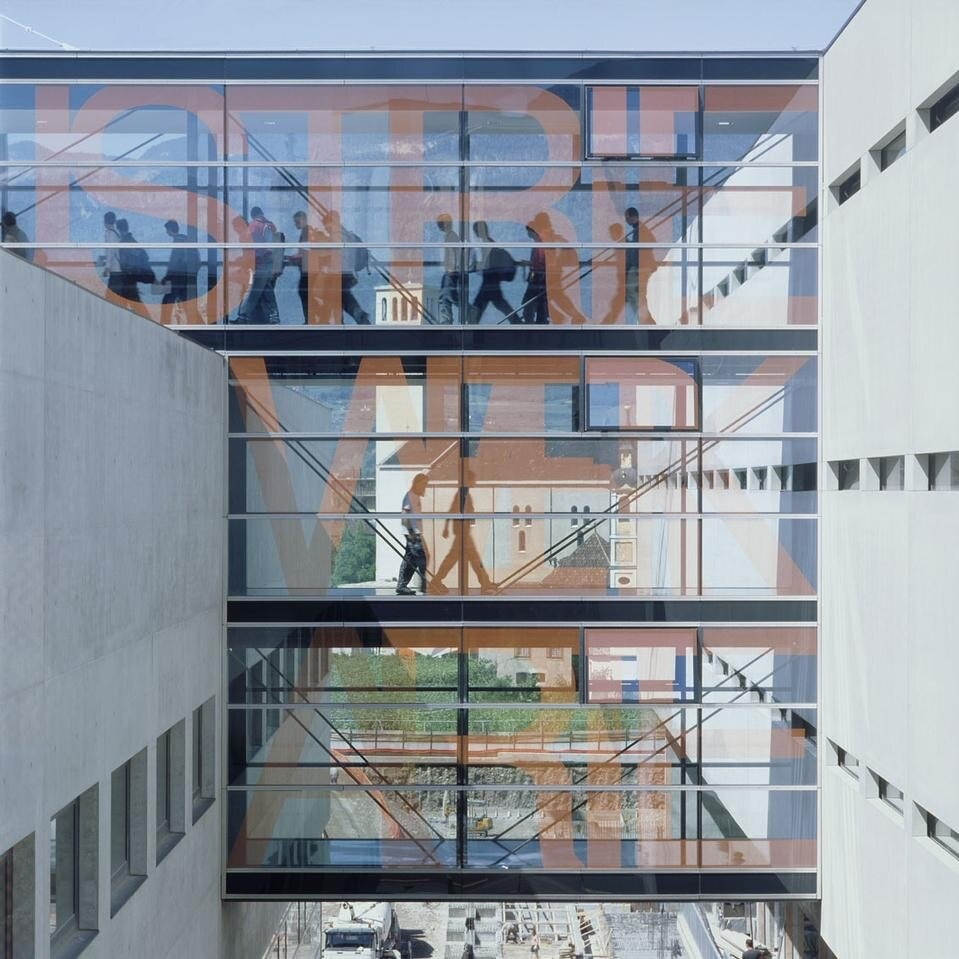
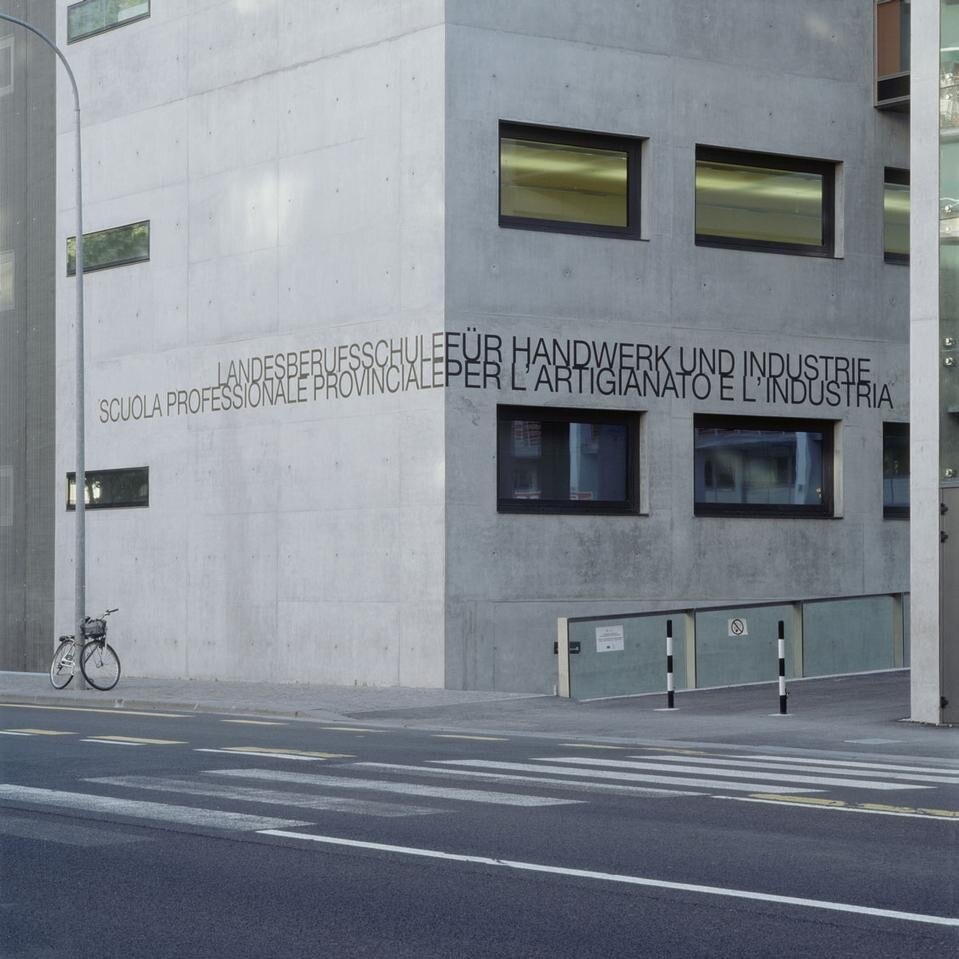
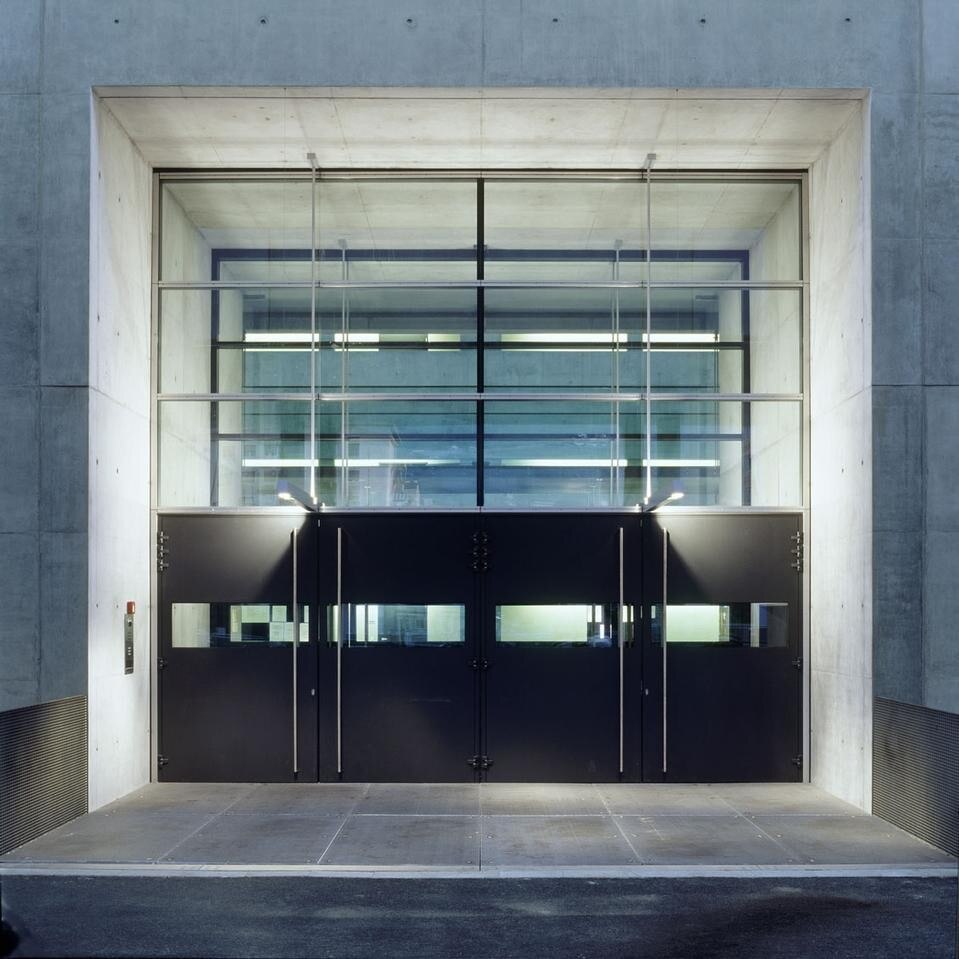
The architecture of the new school is, for its conception, functionality and skilful construction detail, a convincing deference to Modernism. Three parallel 'blocks' of different heights and lengths, are placed at right angles to via Roma. Backdrops in concrete or metal, closed and protective, delineate the space towards the road while the facades towards the north and south are open and clad only in a thin curtain of glass. The block on pilotis facing the piazza highlights the entrance to the school building. The "school courtyard" in a central position and with a glazed roof, is one of the most pleasant architectural surprises in Bolzano: inside a whale the visitor can comprehend the structure of the building, with the staircase blocks at the head screened by a dense metal mesh, while the presence of the gym is perceived under the glass-block floor. The central block houses all the communal spaces - canteen, administration and library - while the classrooms are in the outer blocks, connected crosswise by glazed walkways on which appear a series of ideograms, the work of Austrian artist Heimo Zobernig. The laboratories are located on the lower floors. A refined detail in the form of moveable strips features on the front of the classrooms, that can be adjusted according to the angle of the sun in such a way as to avoid the unpleasant effects of glare inside the rooms. In winter at night-time, while closed they form a second skin in the summer they remain open, favouring night cooling.
Professional school for craft and industry, via Roma, Bolzano
Design: Höller & Klotzner Architekte
Client: Provincia Autonoma di Bolzano
Building works: 2000 – 2007