In architecture, surfaces are often accused of decorative deviations, not to mention compositional “superficiality”: seductive skins entrusted with the task of speaking when the spatial composition doesn’t have the strength to do so. Therefore, according to an abused metaphor, “nothing underneath”.
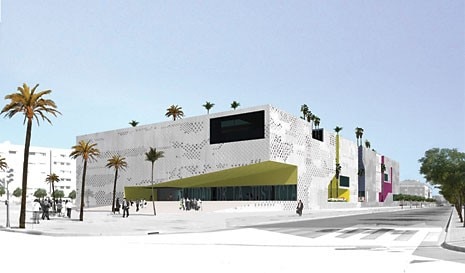
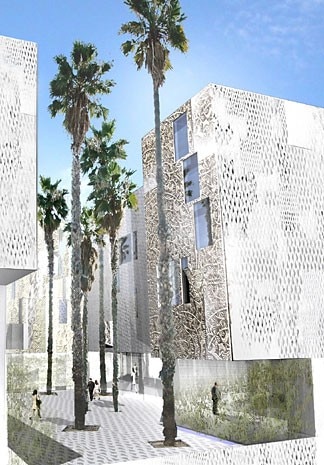
However, in the case of the winning project in the international competition for the new Palace of Justice in Cordoba, Andalusia (by Francine Houben of the Dutch practice Mecanoo), the treatment of the external surfaces – patterned like a fine embroidery – evokes other times and the finely engraved surfaces of a number of antique Spanish buildings, such as the Sinagoga del Tránsito di Toledo (1366) or the Alhambra palace in Granada (1366).
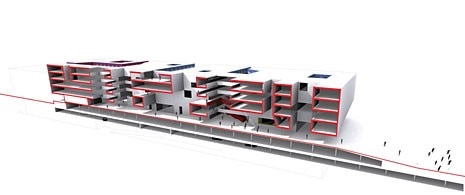
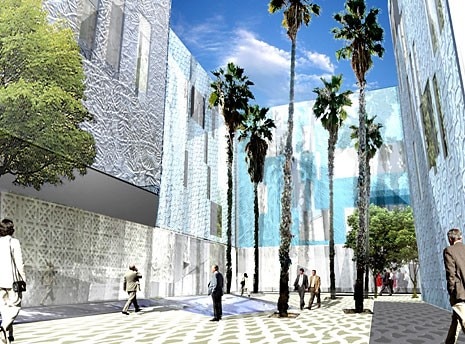
Light vibrates in a pattern of tiny shadows on the carved lacework that, in this project by the Delft-based architectural firm, is no longer seen as a pure decorative surface but combined with the design of a space articulated in a sequence of internal patios. As a result, the construction loses its compacted, almost monolithic appearance and is eroded in a sequence of walkways and open-air courtyards that change in section and are overlooked by most of the openings.
The design of this series of internal gardens, almost hidden from the outside, harks back to antique tradition where plants and vegetation, along with water pools and fountains, mitigate the effects of the torrid Andalusian summer. Realised in collaboration with the Spanish practice Ayesa, Cordoba’s new Palace of Justice will house 23 courtrooms in a floor area of over 50,000 square metres, requiring an investment of around 43 million euro.
Palace of Justice in Córdoba
http://www.mecanoo.nl