They were the years of Modernism (the Athens charter of Le Corbusier was laid down in 1943), economic boom and the dream of a ‘comfortable’ home for everyone – the fridge, the car, the fitted kitchen became consumer goods accessible to a wider public. The first large complexes emerged on the outskirts of the city (such as la Defense) and new materials were experimented with (plastic, polyethylene, nylon).
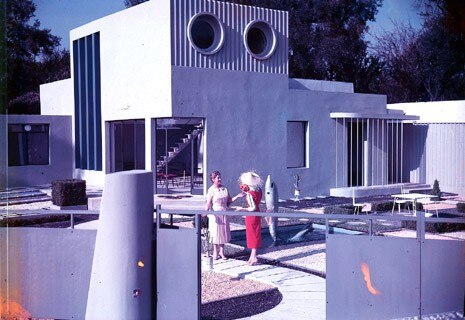
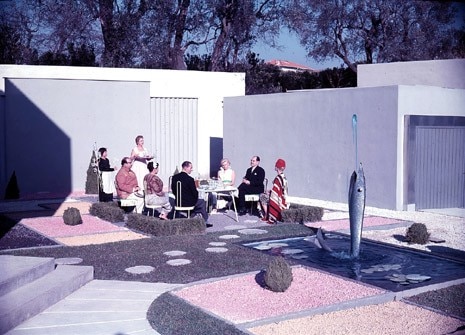
Tati, a careful observer of reality, shrewdly and humorously describes the social, architectural and urban setting of the time: from domestic modernity in “Jour de fete” (1949) to the white and aseptic world of the villa Arpel in “Mon Oncle” (1958) a real sample of the latest in technology for the home. But, alongside the whirlwind changes in the home, in ways of working and moving, Tati also describes the ‘revolution’ in leisure time, from the family run hotels in “Les vacances de monsieur Hulot” (1953), to the Tativille of “PlayTime” (1967), parody of mass tourism where different airports and city neighbourhoods become confused one with another and which sees, with the new white collar workers, the triumph of a new notion of the holiday, the “Club Med”.
As well as documentaries and films, there is also a display of images and drawings of scenes, architectural and urban projects from the specialised press of the period, advertising and interviews with the director and Lagrange on the theme of the city and architecture.
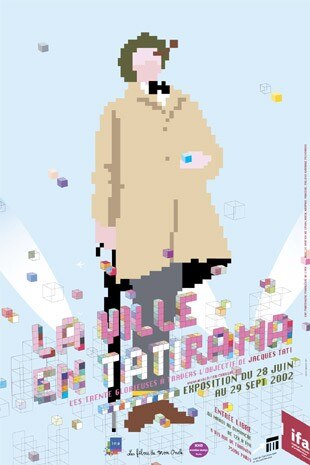
28.6.2002 – 29.9.2002
La ville en Tatirama. Les trente glorieuses à travers l’objectif de Jacques Tati
Galerie de l’IFA, 6 bis, rue Tournon, Parigi
http://www.archi.fr/ifa-chaillot