


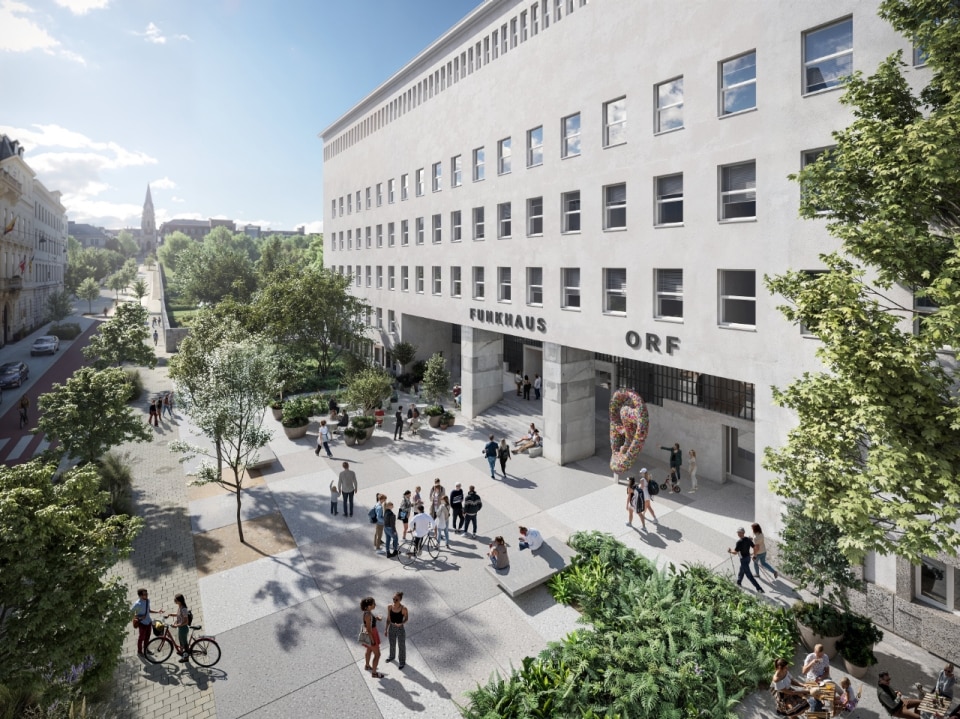
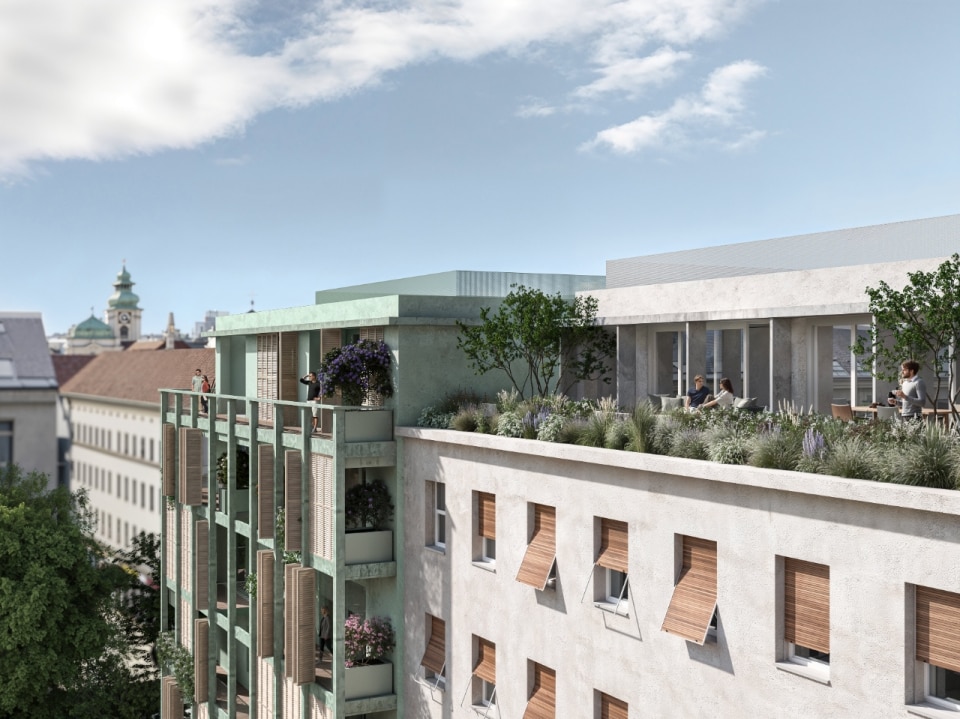
Built in the 1930s as a radio broadcasting facility, Vienna’s Funkhaus originally housed studios, control rooms, artists’ dressing rooms and a cafeteria. The large broadcast hall echoed with the voices of performers who had graced Vienna’s stages just minutes earlier. All of this took place in an austere building with a facade that gave nothing away about what lay within.
Now, however, this content is being transformed. Since 2021, BWM Architects has been working with developer Rhomberg on the conversion of the listed complex, aiming for continuity rather than creative demolition or spectacular overbuilding. The guiding question was not how much could be extracted from the building, but rather what the most appropriate use would be for a building of this nature.
The Funkhaus’s structural framework reveals an extraordinary foresight to those who can read it. The reinforced concrete frame — massive columns, beams and infill walls conceived from the outset as modifiable elements and pathways for utilities — was designed to allow for change. Those who built it in the 1930s knew that technology would evolve, so the building had to be open to transformation. This flexibility forms the basis of the residential conversion, enabling new ways of living to be integrated without altering the architectural DNA.
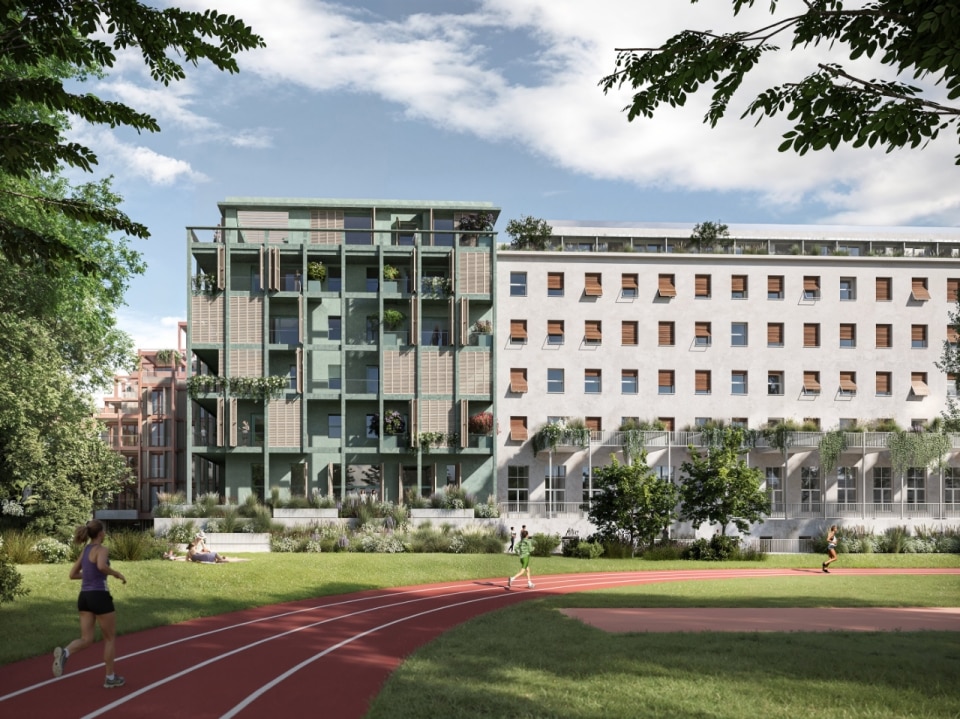
The façade has been restored to its original colour scheme and the proportions of the windows have been preserved. Characteristic elements such as the vertical sliding sashes, a natural ventilation system that circulates air between high and low openings and developed long before bioclimatic technologies were even discussed, are restored where possible and faithfully reproduced in wood where necessary, maintaining the same form while updating the performance. This attitude of respect permeates the entire project: preserve where possible and rethink only where absolutely necessary.
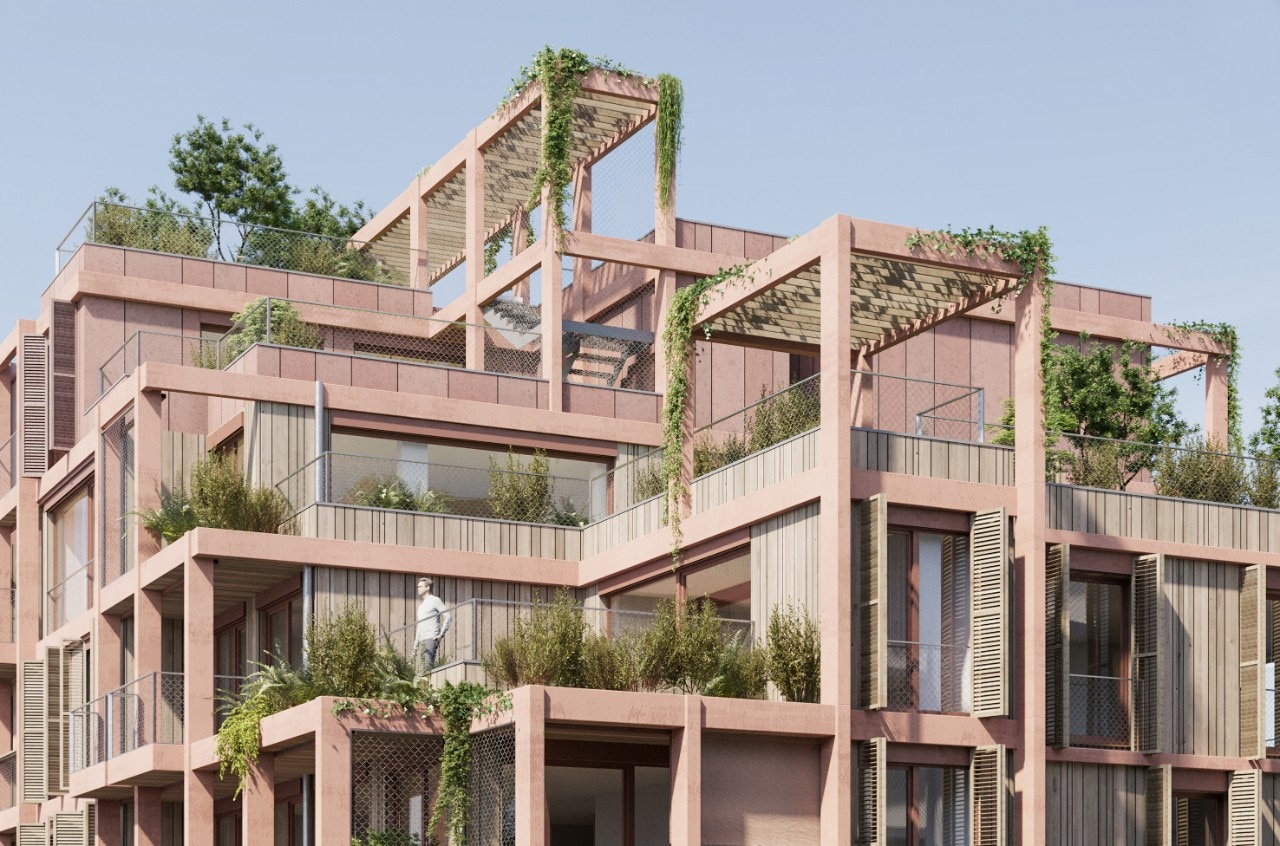
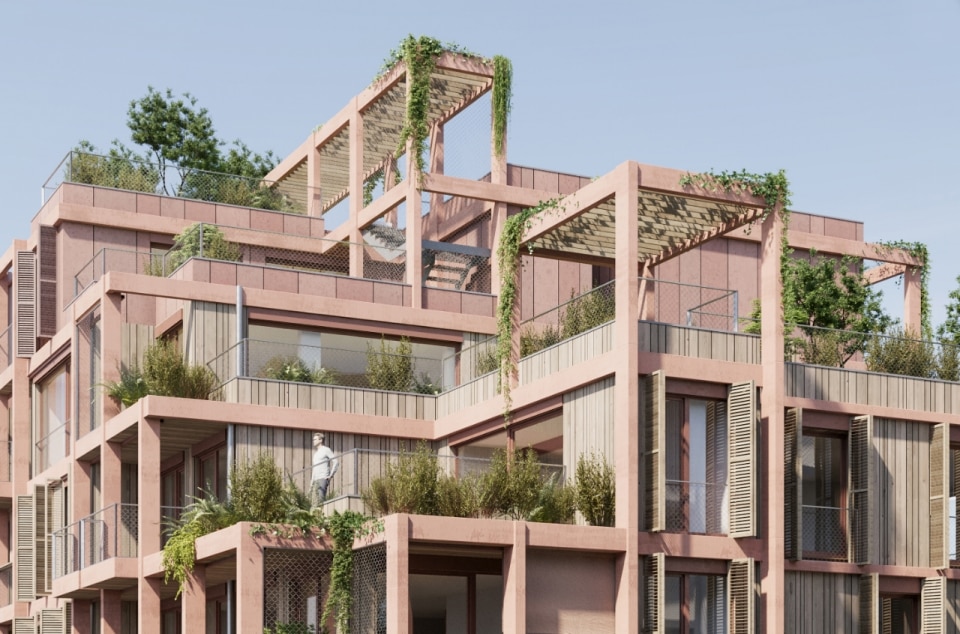
Within the historic framework, there are 22 apartments. The floor-to-ceiling heights, which reach up to 4.20 metres on the ground floor, lend the spaces a unique quality: light is distributed differently and the proportions feel more open. Facing the park are the townhouses, which have approximately 90 square metres of space on both the ground and lower ground floors. These flexible spaces could be used as a study, studio or private retreat and are bathed in natural light thanks to the slope of the terrain. They are also accessible directly from the park. The historic terrace, hidden for decades by successive additions, has been revealed. Private gardens and terraces open up along the entire length of the building, offering views of Theresianum Park — approximately 300 metres of visual openness, which is unexpected in such an urban setting.
The wing facing the street houses a hotel, a use that arises almost naturally from the existing layout. The former administrative offices, with clean lines and two windows per room, offer ideal conditions for spacious, distinctive guest rooms.