

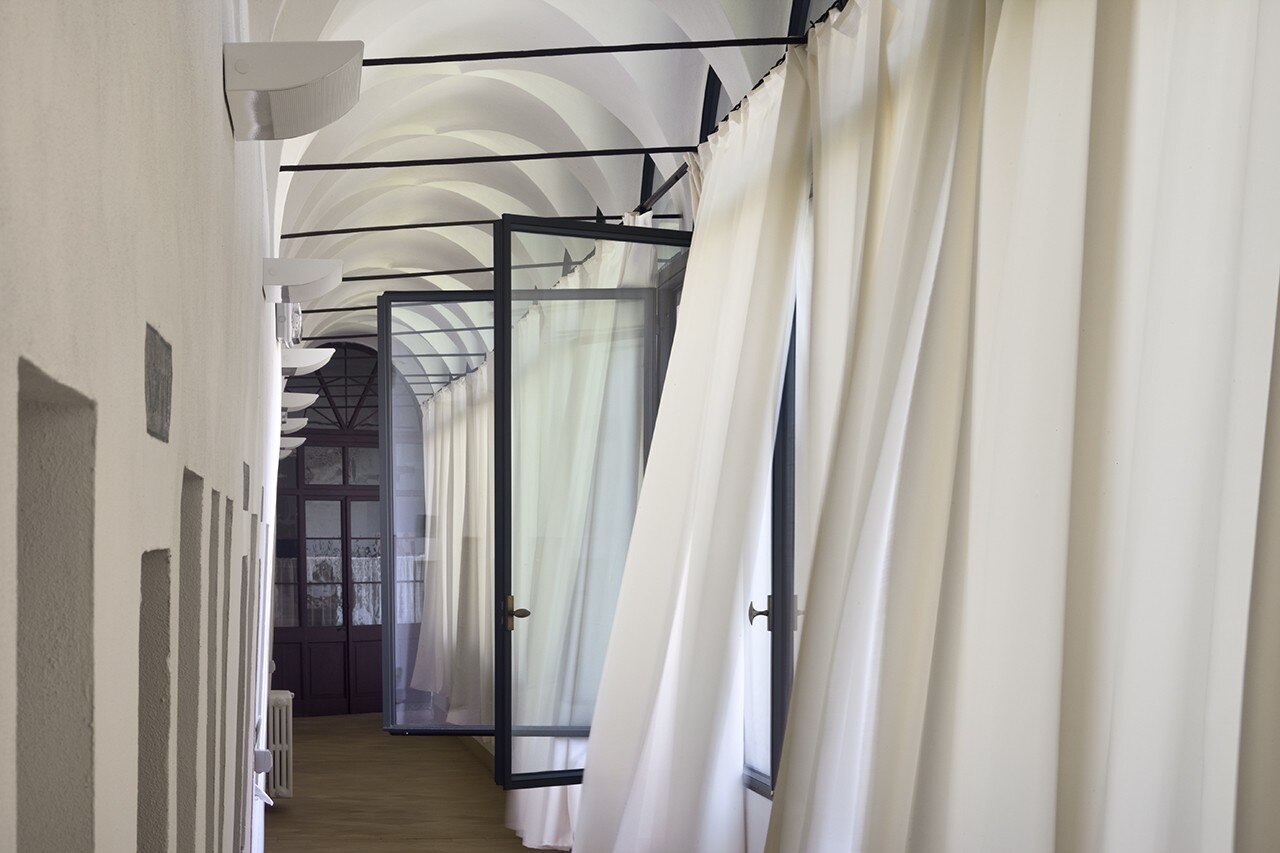

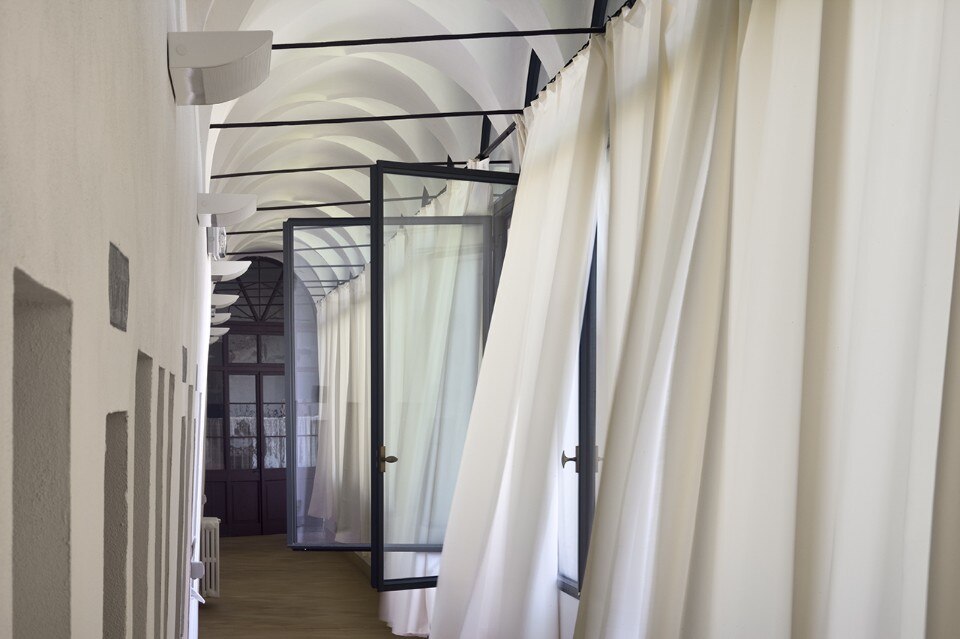


At the turn of the 15th and 16th centuries A.D., Princess Camilla Pio, niece of Pope Innocent VII, decided to become a nun and "travelling one day until sunset, when she already believed in Ferrara... she found herself near the walls of Carpi," where she built a place to retire. This is how the monastery of St. Clare was born, a structure that over time has undergone numerous interventions and modifications but which still houses the Poor Clare nuns.
In 2012 the convent was seriously damaged by an important seismic event, but after a careful and complex restoration project, developed by Studio Area Associati, it has now returned to its original splendour.
The intervention involved the consolidation of the structure, the reconstruction of walls and vaults and the replacement of the wooden planking of the attic. The roof trusses were also reinforced and the interior surfaces, plasters, floors and sacred furnishings were restored. Finally, new installations in compliance with standards were built and new windows and doors were installed.
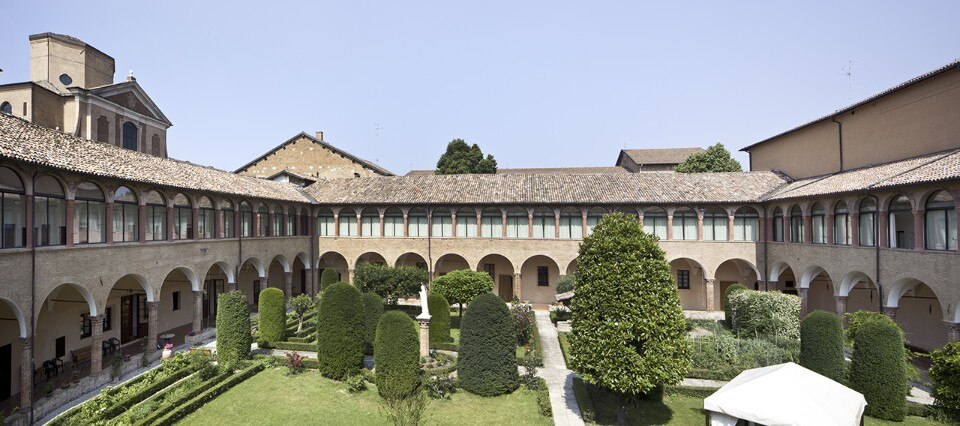
To replace the windows on the first floor, Secco Sistemi's OS2 system was chosen, which from an aesthetic point of view are similar to the original iron frames of the monastery, but which ensure high performance. When installed, the frame tends to "disappear", leaving the perception of the geometry of the façade and the pre-existing architectural elements unchanged.
OS2 is an extremely flexible system that, with 37 different profiles and three subsystems, allows an accurate design of the facades. These become a decisive part of the architecture, allowing the choice between coplanar or non-coplanar glass and visible or invisible openings.