

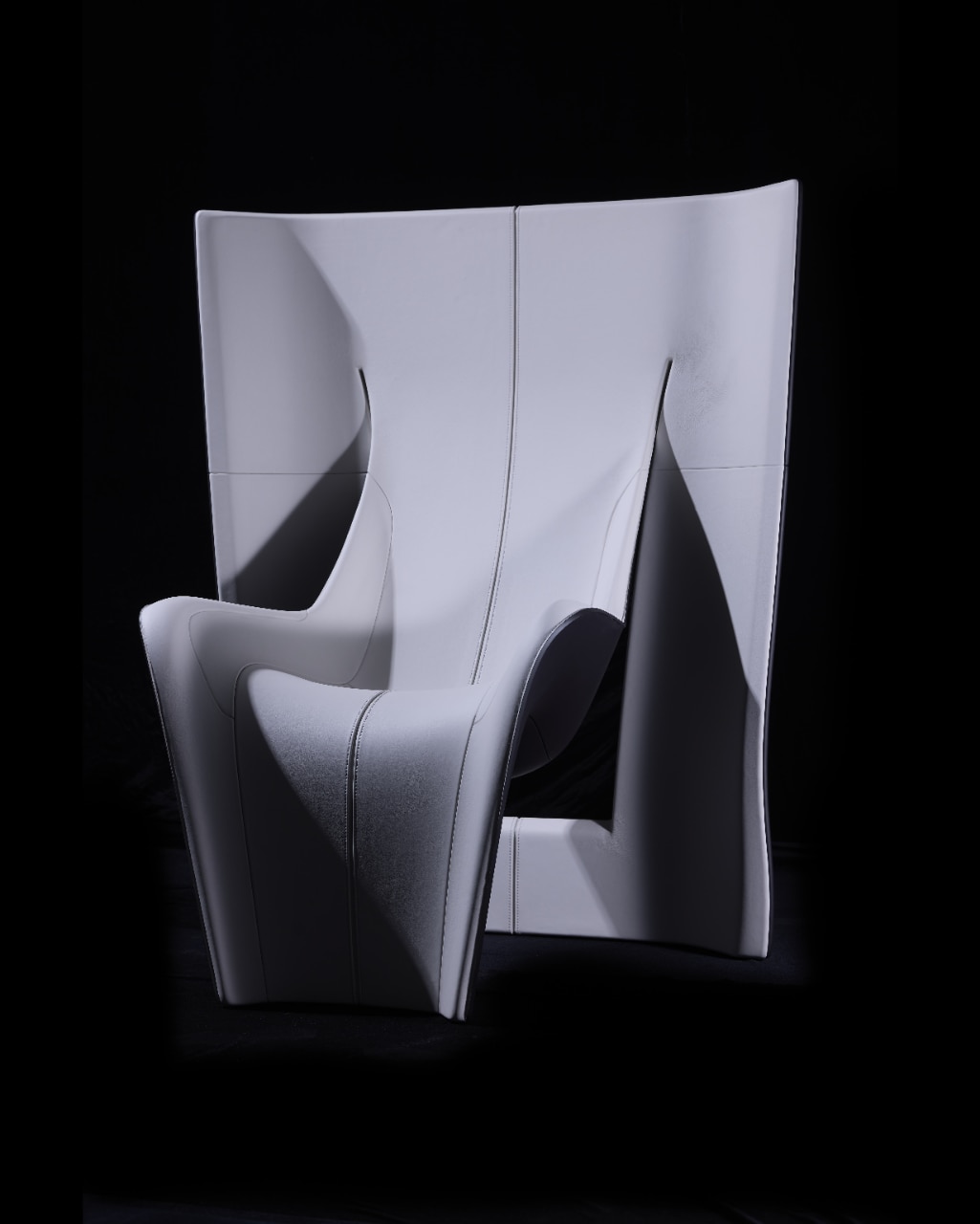

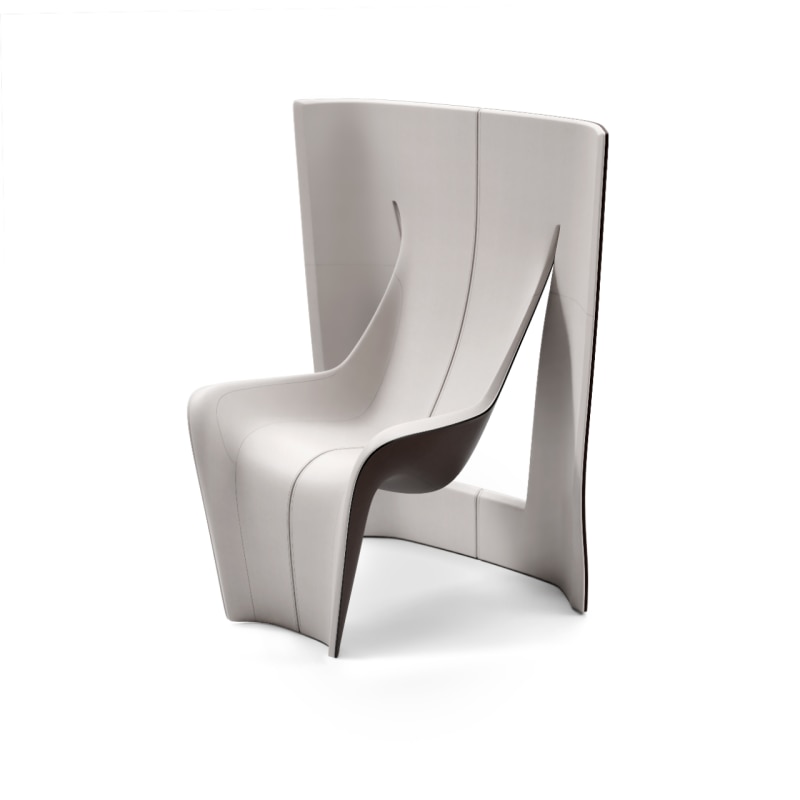
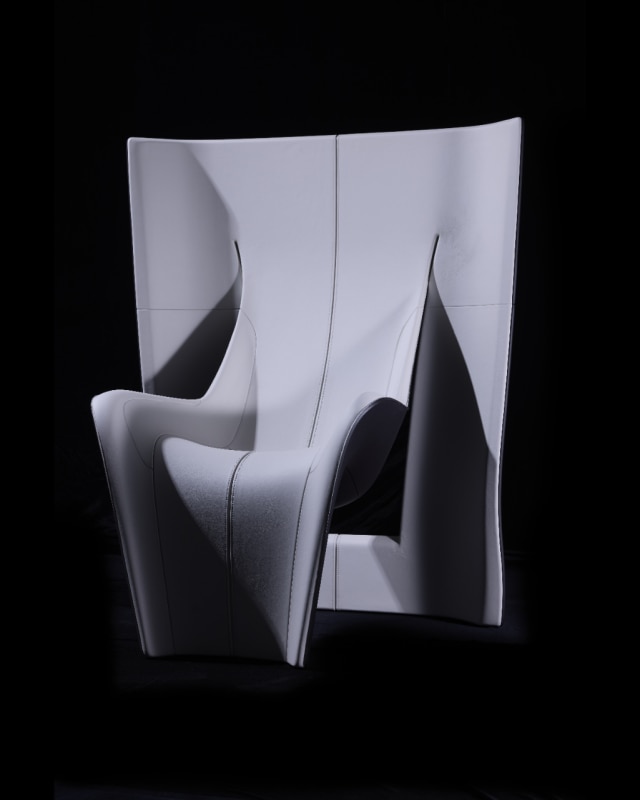
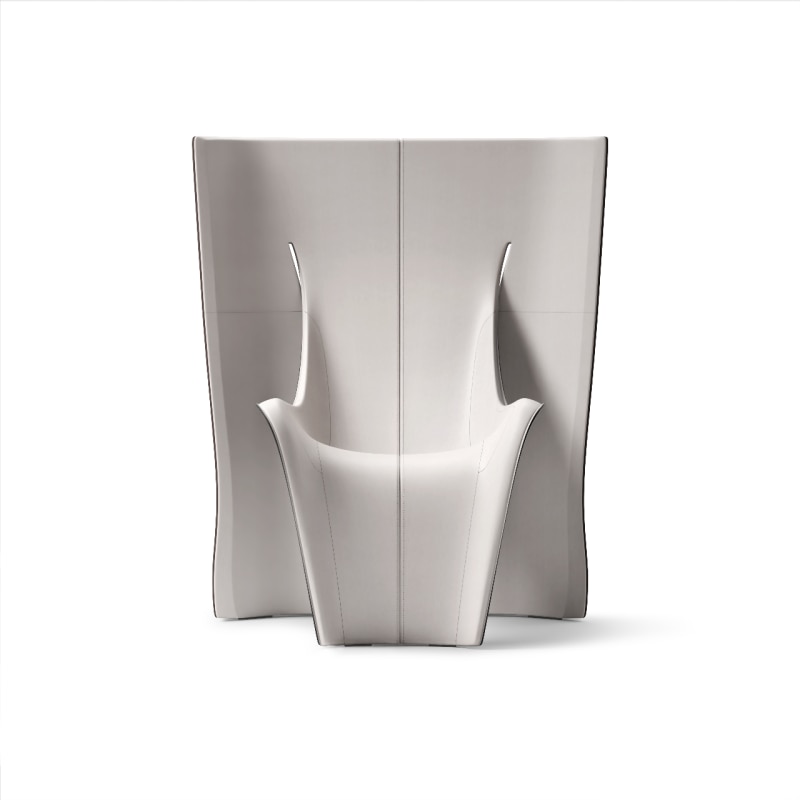
Gravity, the new chair designed by Satoshi Kan for Indigo Design, is a work that challenges the conventions of functional design, transforming gravity into a visual concept. Starting from a simple yet complex idea – giving form to an invisible force – the project manages to merge aesthetics and ergonomics into a sculptural object that plays with the contrast between force and lightness.
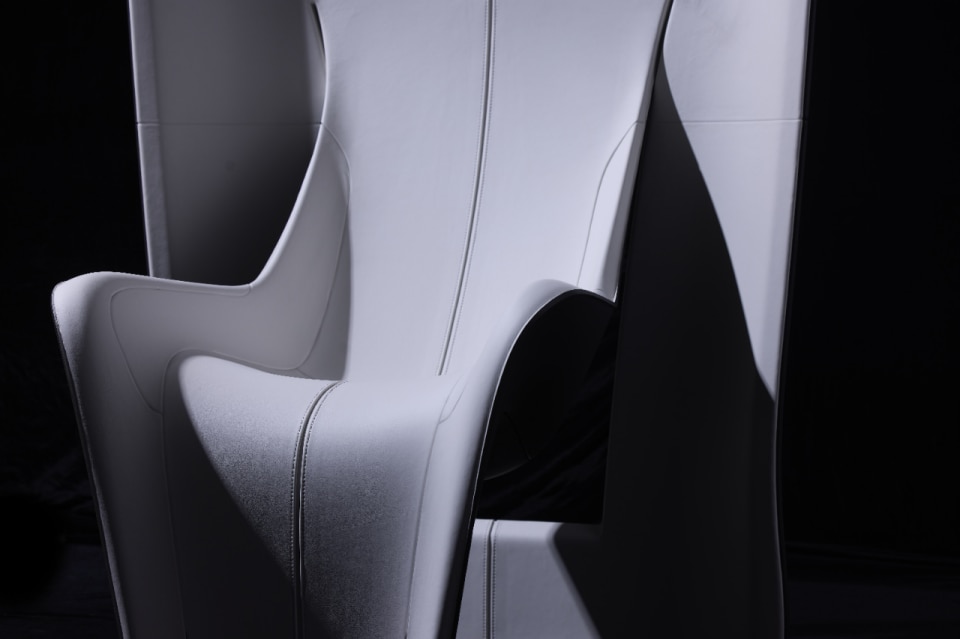
The chair’s structure is characterized by an essential form, yet with great visual impact, emerging from precise cuts and studied curvatures on a sheet of material. The result is a compact volume that, at the same time, appears light, giving form to the coexistence of the object's solidity and its apparent suspension. The two-tone leather, different on the front and back, becomes a key element in expressing the dual nature of gravity: on one hand, the weight and force that hold, and on the other, the lightness that allows release and suspension.
This chromatic contrast is not just a visual play, but represents a dialogue between two opposing forces, symbolizing tension and relaxation. The leather, with its soft finish, highlights the curves and the point of contact between the human body and the material, revealing a unique seating experience. When seated, the body is not only supported, but also enveloped in a sensation of controlled suspension, a perfect balance between the weight that distributes and the lightness that balances it.
Gravity is not just a functional piece of furniture but a reflection on gravity itself, not seen as a limit but as a design principle to explore. The chair thus becomes an experience, where the sharp geometry of lines and the fluidity of curves create a dialogue between fullness and emptiness, making gravity perceptible in space in a new way.
With Gravity, Indigo Design not only explores the potential of technology and materials but reveals an innovative approach to design, where each object is conceived to stimulate a dialogue between the body, space, and invisible forces. A project that goes beyond mere functionality, inviting a deeper reflection on our relationship with the environment around us.