

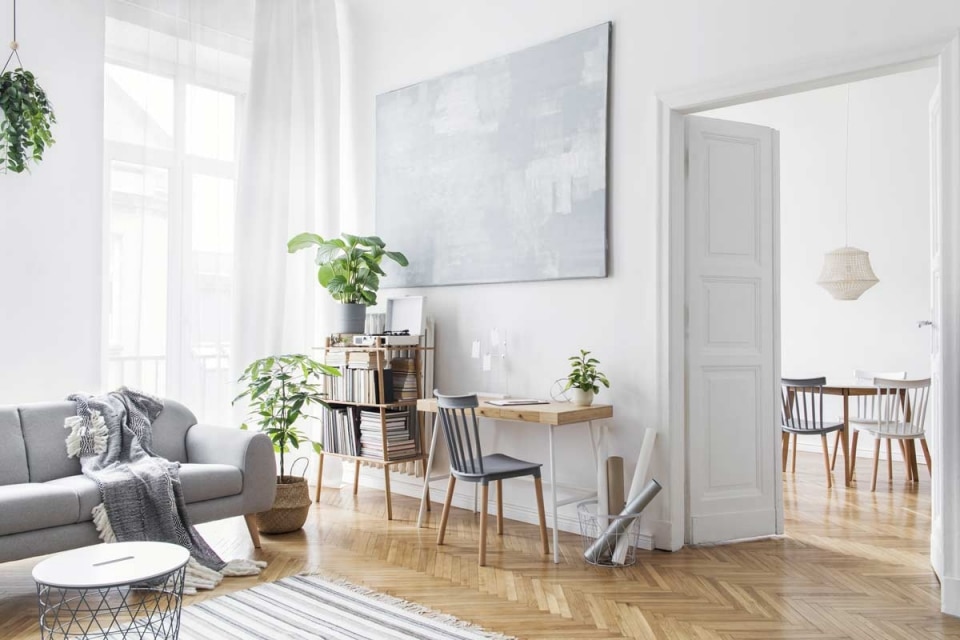
The intentional use of the expression “democratic design” can be dated without too much approximation: in 1995 Ikea presented its Post Scriptum collection at Milan’s Fuori Salone, marking a turning point for the brand. The premise of that special line of furnishings—at once authorial and affordable—was clear: to demonstrate the strength of the Swedish company, founded in 1943 by a seventeen-year-old boy, Ingvar Kamprad, in continuing to keep a “good design” within everyone’s reach. The idea of “create a better everyday life for the many people” has remained, after all, a mission that Ikea has never denied, shaping through countless small projects—as countless as the nearly infinite products in its catalog—an entire universe of practical serenity, inclusive not so much in terms of gender, but in its ability to address a fluid and inevitably vast generational spectrum.
Today there are many brands that, aligning themselves with this continuity, have shaped an offering that once again seeks to combine the aspiration to beauty with that of accessibility.
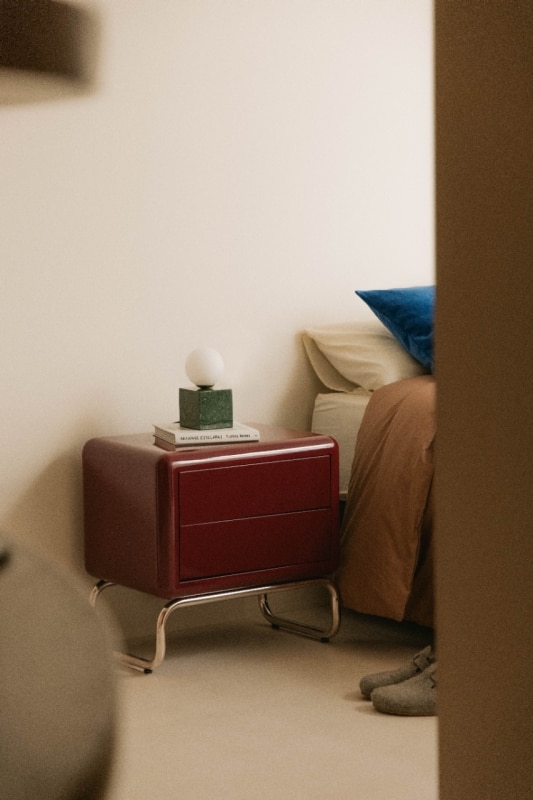
We would, however, be mistaken if we attributed this exercise in furniture for all exclusively to the Swedish brand. First of all, because the democratic aspiration toward accessible beauty is a legacy that Scandinavian design culture has carried with it since the late nineteenth century—when it comes to design, we are always giants on someone else’s shoulders. Secondly, because in the postwar period the debate between Scandinavian companies and consumer associations generated a lively dialogue on the necessity of a product we could today define as “human-centered,” capable of sensibly responding to the needs of an ever-changing daily life. Finally, because no legacy can ever be considered individual and definitive. Other countries and design cultures could at least partially lay claim to this sensibility, if only for specific movements or historical periods. And lastly, because today there are many brands that, aligning themselves with this continuity, have shaped an offering that once again seeks to combine the aspiration to beauty with that of accessibility.
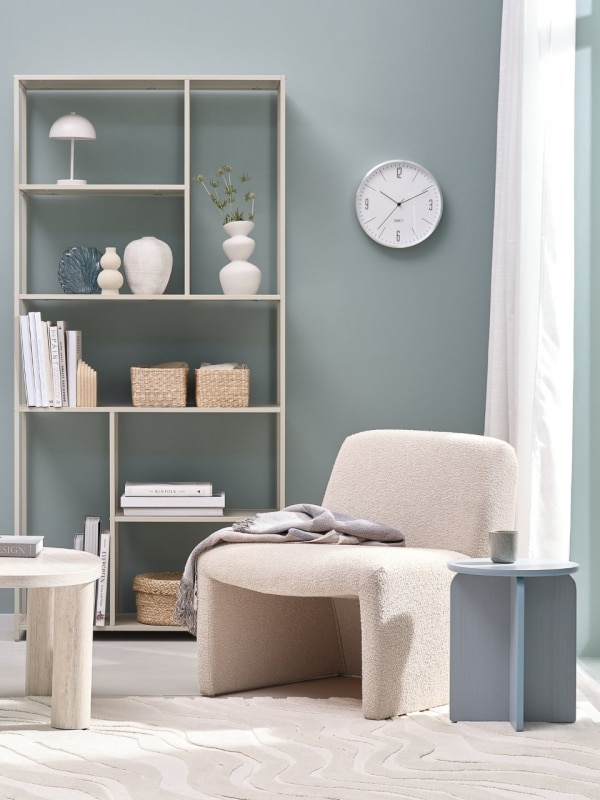
Google turns out to be the best tool for spotting these contemporary epigones. In a digital world that seems to have surpassed advertising and magazine pages, it is among the search engine’s shopping suggestions that we find proposals aimed at capturing our desire for affordable purchasing. And it is from the very Scandinavian countries that a first, formidable player emerges. The brand is Jysk, founded by Lars Larsen in 1979 and still family-run, despite operating in 50 countries with more than 3,500 stores. Defined as “the Danish answer to Ikea,” Jysk helps project the coordinates of Scandinavian design on a global scale—as its slogan, “a great Scandinavian offer for everyone,” suggests. Its aesthetics, never showy, indeed recall the prerogatives of Nordic design. The sobriety of lines and colors aims to maximize adaptability, relegating personalization of living spaces to accessories and décor.
The democratic aspiration toward accessible beauty is a legacy that Scandinavian design culture has carried with it since the late nineteenth century.
Leaving Scandinavia, the new wave of accessible brands instead arrives from Spain. By proximity and attitude, the young Iberian players adopt the integrated fast-fashion model in which Spain is a leader with the Inditex group. More than a proposal centered on the vision of a designer—almost never highlighted as a marketing asset—accessible brands shape their identity from the consumer side, metabolizing tastes and inclinations through purchase and browsing data. The Scandinavian aspiration to comfort and versatility in integration is not denied.
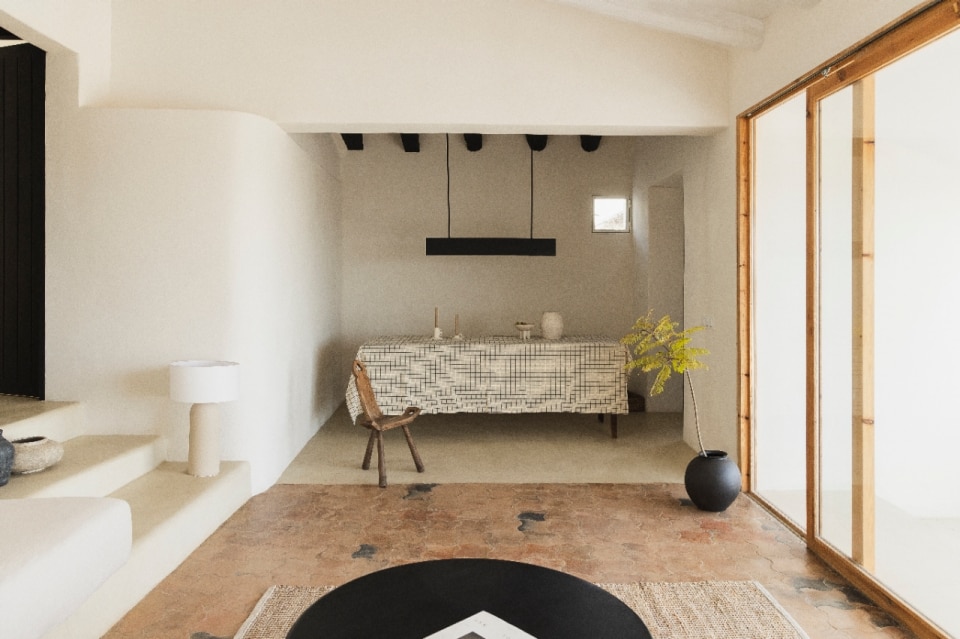
What changes, however, is the expression of a sculptural and organic minimalism—decidedly in vogue in recent years even among high-end consumers—that draws on Mediterranean identity to evoke a universe of comfort and warmth, empathic though without excess. It is impossible not to cite Kave Home as a reference, even if the Catalan brand looks toward the mid-high segment of the market: the company founded by Francesc Julià Gelabert in the 1980s was among the pioneers of e-commerce and initially succeeded by applying fast-fashion principles to furniture. Today it has a thriving online market and 146 stores across five continents, with a turnover that grew by 33% in 2024.
Playing with pop inclinations are the brands Sklum and TheMasie, both originating in Valencia. Their link with Nordic design is a partly claimed statement of intent—the name Sklum, after all, with its unlikely resonance in Spanish, is proof enough. What makes the difference, however, is above all their stronger use of geometric and material contrasts and their pronounced use of color, which in both cases animates a language made of essential but never severe lines, also through finishes such as micro-cement and lacquering. The playful character is also more accentuated, recalling the research on informal typologies carried out by Ikea’s experiments over the decades. In this context, the home surpasses the idea of a neutral backdrop, a simple functional container, and moves toward a more expressive and personal vision of living, an eclectic and increasingly aestheticized stage for everyday life.