


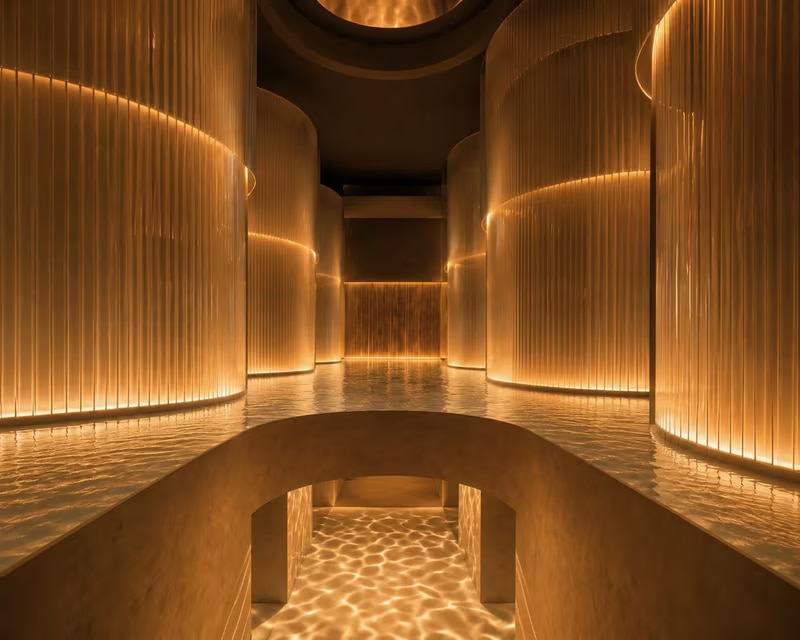


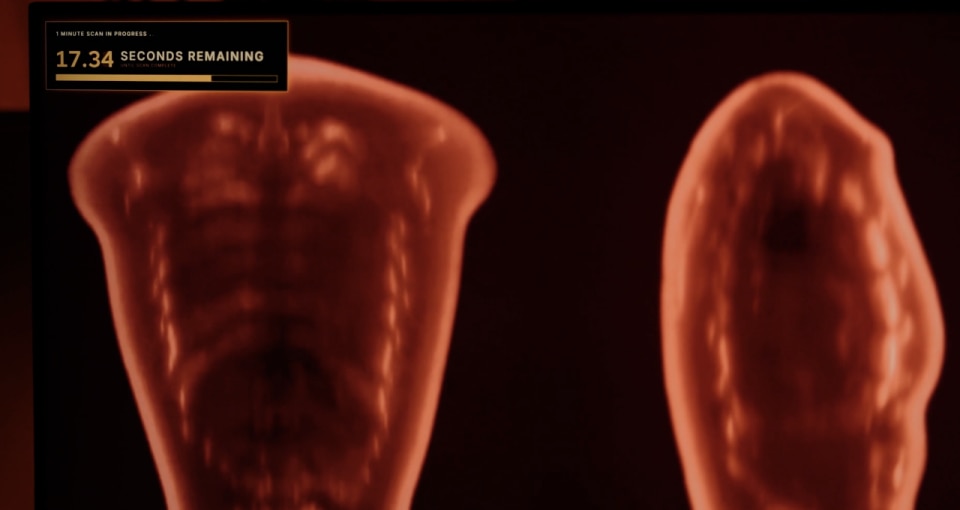


Midjourney, the startup developing one of the leading AI image generation models, has announced that it's building a new type of medical imaging machine, and that it will host it first in a spa in San Francisco, starting in 2027.
While it might sound like the kind of wild announcement you would expect from a company at the peak of a bubble (which can still be true), there's more to the project than fancy renderings. The pivot is tied to an unusual licensing deal Midjourney struck with Butterfly Network, a company developing ultrasound-on-chip technology.

Midjourney's medical scanner uses an array of these chips mounted on a cylindrical platform to perform a full-body ultrasound scan. The AI know-how plays a role after the scan, helping the machine make sense of a very large amount of sensing data. According to Midjourney, the goal is to reach a point where such a scan can achieve a definition comparable to that of traditional MRIs or full-body CT scans.
The aim is to develop a machine that can offer diagnostic imaging at a fraction of the cost, inviting people to experience such a test as part of a pleasurable routine during a visit to a spa-like center.
Hence the idea of the Midjourney Spa, where the company aims both to test the new devices and to experiment with the cultural shift needed to make them viable globally. “It starts by stepping into a shallow pool of golden light. You then begin to descend into the water. Your body passes through a ring of underwater sensors, each acting like a dolphin, using its echolocation,” says Midjourney Medical in its introductory blog post.
“The sensors send ultrasonic sound waves through your body from every angle. With enough waves, and enough angles, we form an image of what's happening inside your body. The goal is for this process to take no more than 60 seconds. You go into the water, you come out of the water, and you're done.”
Despite the typical Silicon Valley acritical optimism of the announcement and the tight deadline offered, Midjourney admits that turning the project from “vaporware” to reality still requires clearing several hurdles. The regulatory landscape for approving the machine for medical use is hellish, while the technology itself still needs several breakthroughs that remain quite fuzzy.
The claimed superiority of ultrasound scans compared to traditional MRIs is also still very much a subject of debate, given that ultrasound, for example, can't image tissues in organs filled with gas, such as lungs or bloated intestines, nor can it properly penetrate bone.

Midjourney’s marketing department has worked with great care to describe an imagined future where physics has been tamed by the will of progress – at least as it is understood today by the giants of the tech world – and ultrasound spas have become a common reality globally. The result, however, is a design approach that, just like the imagery, remains full of sci-fi clichés that are by now overused.