


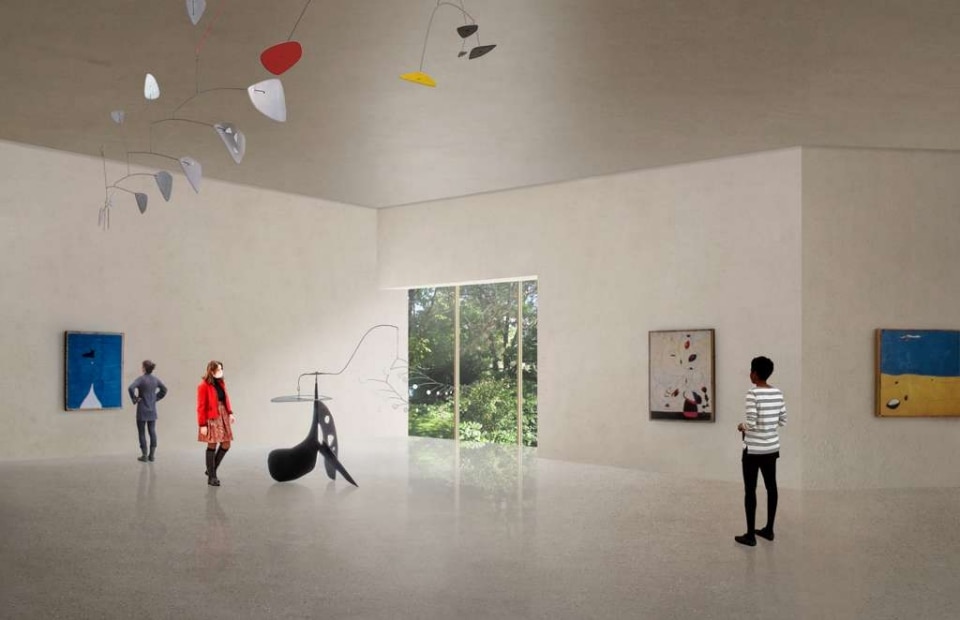
There is a sense of hushed tranquillity that greets visitors upon entering the Beyeler Foundation, the museum on the outskirts of Basel designed by Renzo Piano, where the works of art stand out as the undisputed protagonists of a rarefied space, shaped by natural light and open to views of the surrounding bucolic landscape.
Today, almost thirty years after its opening, the Beyeler Foundation is preparing for an extension driven by the need to accommodate increasingly complex exhibition, logistical and programming functions, yet without losing its character of measured but powerfully emotional architecture, in deep dialogue with the natural surroundings.
It is therefore no surprise that the expansion project has been entrusted to Peter Zumthor, who has always been an exponent of a "silent" architecture—refractory to emphasis yet deeply evocative—suspended between the tectonics of dense, almost telluric volumes and the intangible substance of light. A passing of the baton that, however, implies not so much a break as a subtle dialogue between two different sensibilities united by the same attention to the relationship between architecture, landscape and light: on the one hand, the almost evanescent lightness of Piano’s work; on the other, the material and sculptural presence of the new museum designed by the Swiss Pritzker laureate.
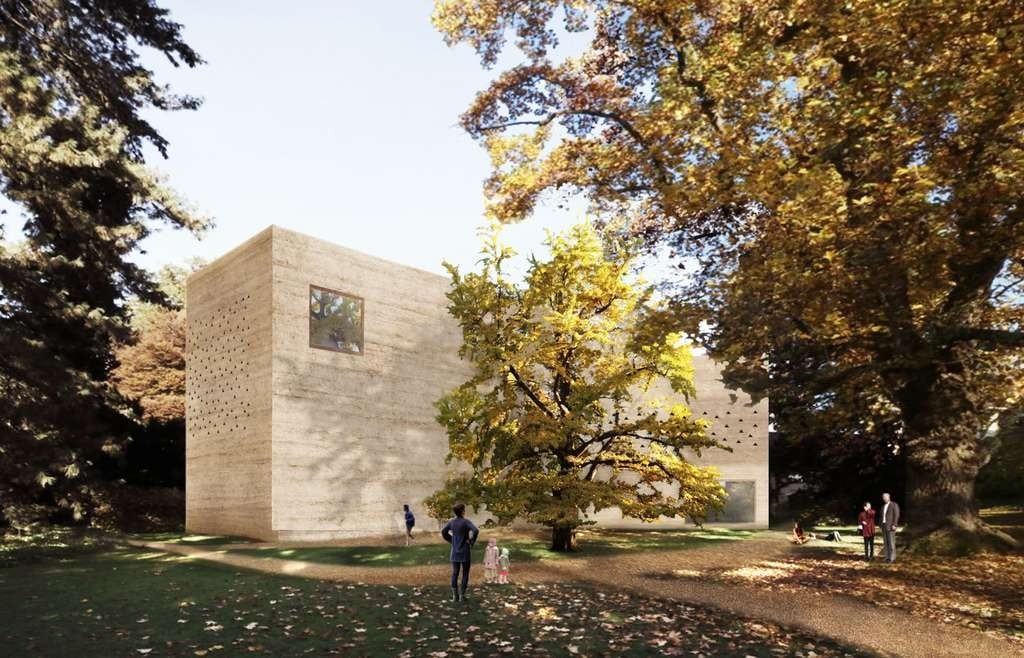
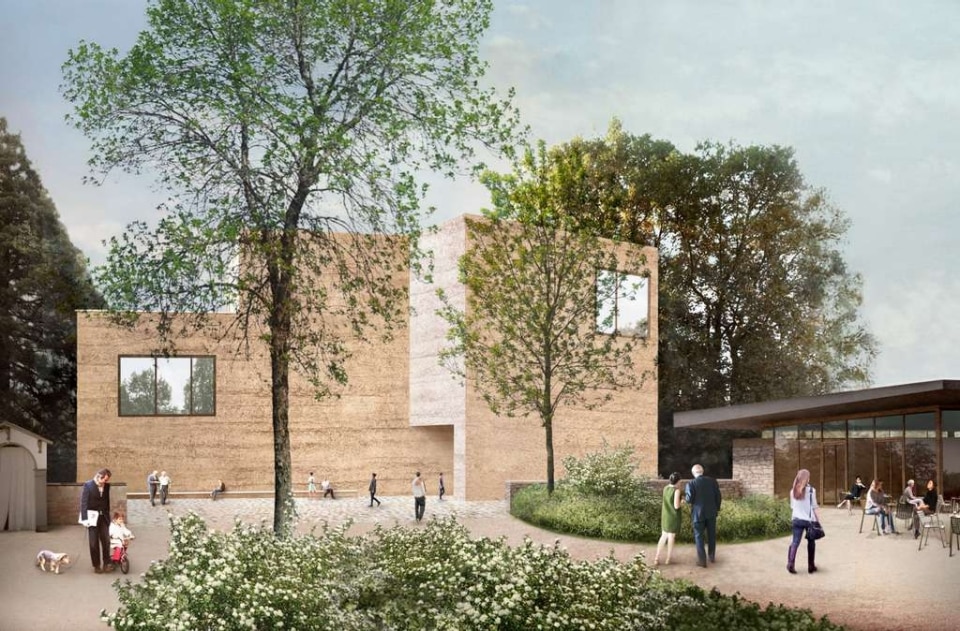
The project takes shape with the acquisition of the park situated to the south of the site already owned by the Foundation, an expansion that doubles its area and redefines its relationship with the surrounding landscape. To foster a more balanced relationship with the small scale of Riehen’s urban fabric, rather than condensing the programme into a single building, the project adopts a strategy of "architectural dissemination", introducing three new buildings set within the park.
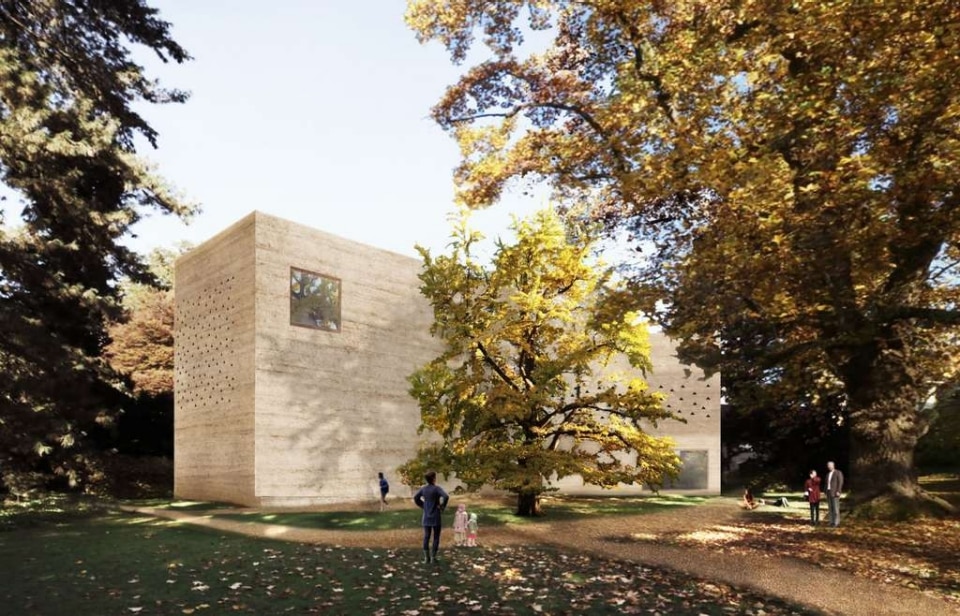
The centrepiece of the project is the new museum housing the permanent collection, a rigorous volume of approximately 1,500 square metres spread across three exhibition levels. Here, the compact mass of the concrete shell is pierced by glazed openings and material voids that filter natural light, evoking, in some ways, the porous textures of the Kunstmuseum Kolumba in Cologne (2007). Not far away, a transparent pavilion serves as a civic space open to the public for cultural events and public programmes; a third building, connected to the museum by an underground passage, houses storage areas, administrative offices and technical facilities.
The project is not limited to new buildings but also involves the restoration and repurposing of the historic buildings on the site to house workshops, a music room, a greenhouse and laboratories, thereby gradually expanding the Foundation’s scope beyond exhibition activities towards an increasingly pervasive involvement in the community’s daily life.