





Tick-tock, tick-tock, tick-tock.
This is how After the Hunt, Luca Guadagnino’s latest film, begins — with the relentless ticking of a metronome echoing through the muffled atmosphere of Yale University in Connecticut.
A ruthless reminder of time’s passing, or perhaps its suspension, sets the tone for the story of three characters: Alma Himoff, a philosophy professor at Yale about to secure her long-awaited tenure; Hank Gibson, her young and ambitious assistant; and Maggie Price, the inscrutable PhD student, caught between reality and fiction, between political correctness and girlsplaining.
The narrative, in which the relationships between the characters go well beyond the limits of toxicity, amplifies the hypocrisy and ambiguity that thrive in the corridors and classrooms of academia — ambitions of power and success, stories of self-determination, revenge, and submission. It exposes dynamics eerily similar to those that define today’s society, increasingly fractured by its inability to bridge generational divides.
If in architecture the task is to succeed in shaping the client's desires, in cinema (...) the spaces become true extensions of the characters.
Stefano Baisi
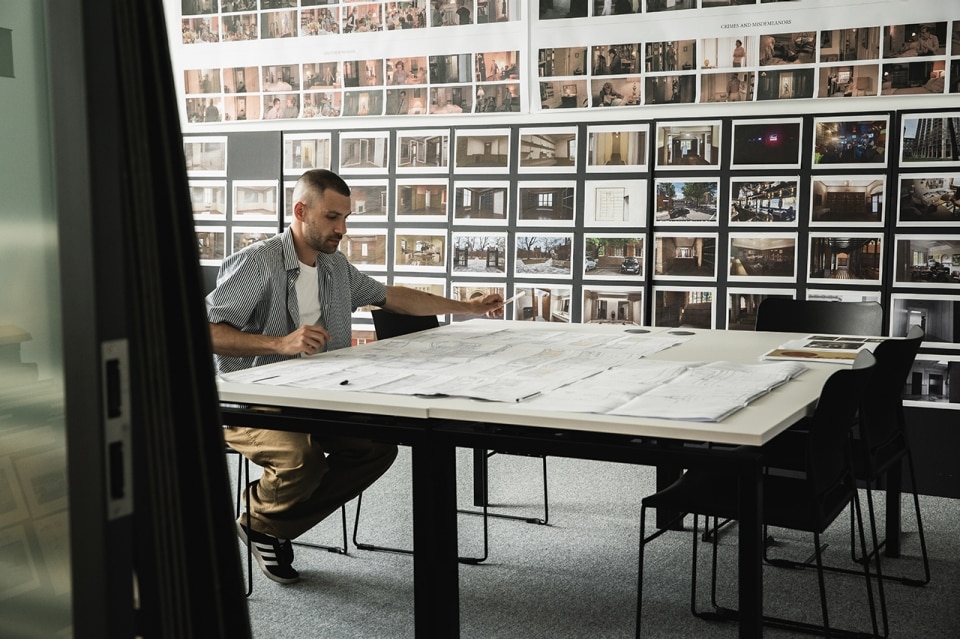
More than anything else, it is the spaces that effectively stage the film’s psychological and emotional threads — skillfully imagined by production designer Stefano Baisi, in his second collaboration with the Sicilian director after Queer (2024). We asked Baisi to tell us about the making of After the Hunt and how he developed his personal transition from architecture and interior design to film.
“In architecture, the task is to give form to the client’s desires,” Baisi explains. “In cinema, spaces are created in service of a story and its characters.” There is therefore “no pursuit of beauty for its own sake”: every spatial construction revolves around the characters and their psychology — “the spaces become true extensions of the characters.”
The first major distinction that reaches the viewer in After the Hunt lies in the contrast between the public and the private, sociability and intimacy, appearances and the exposure of the most fragile and sincere emotions.
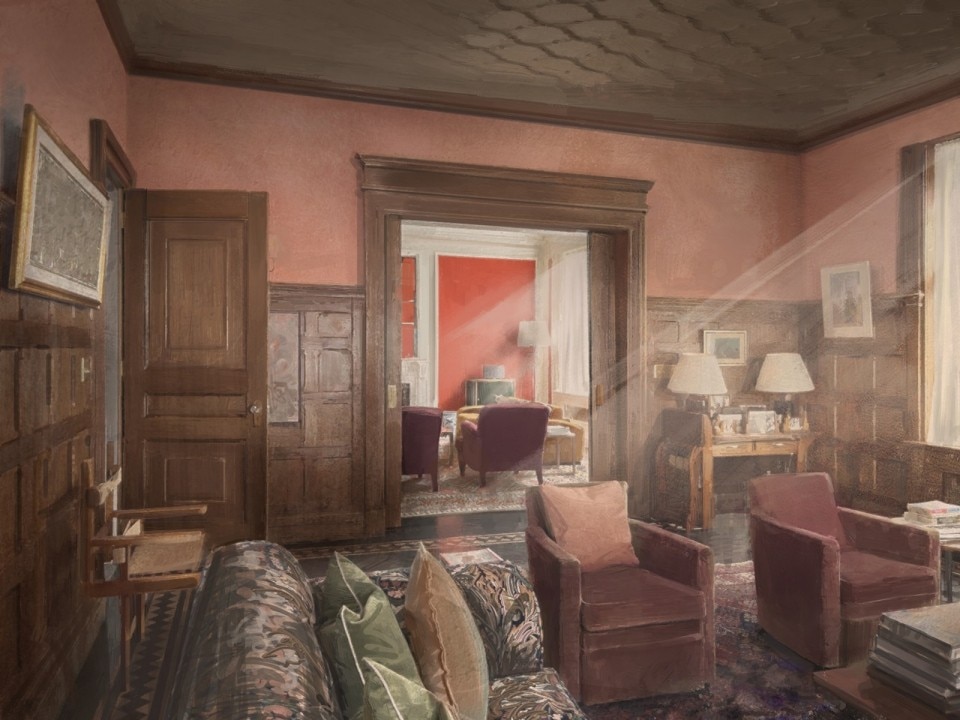
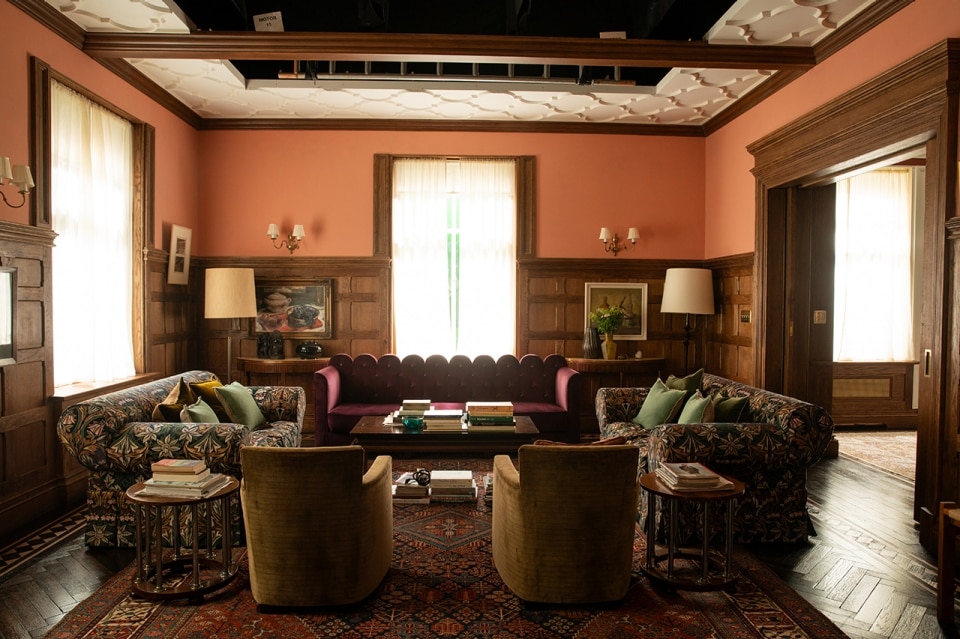
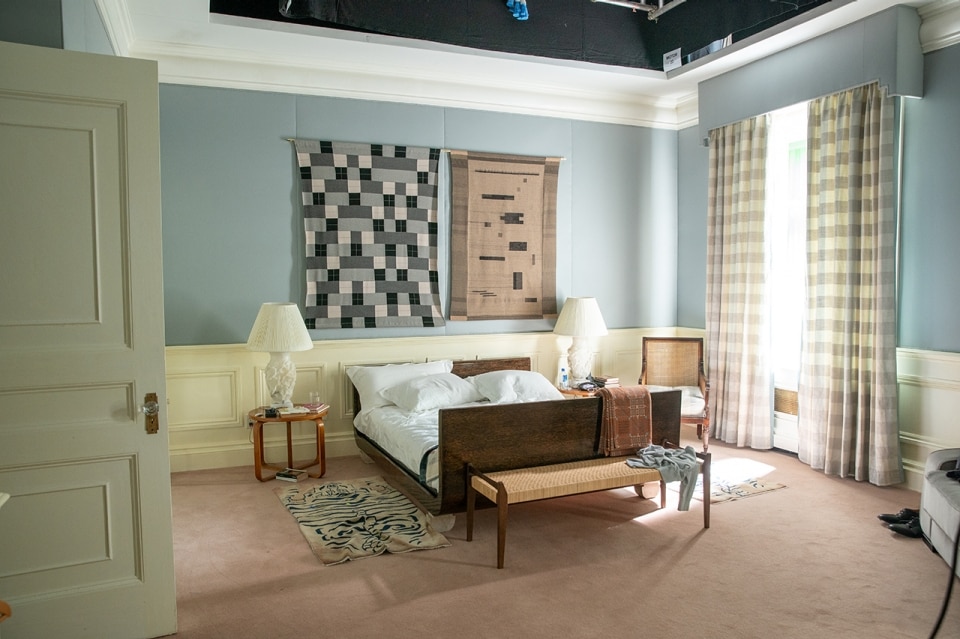
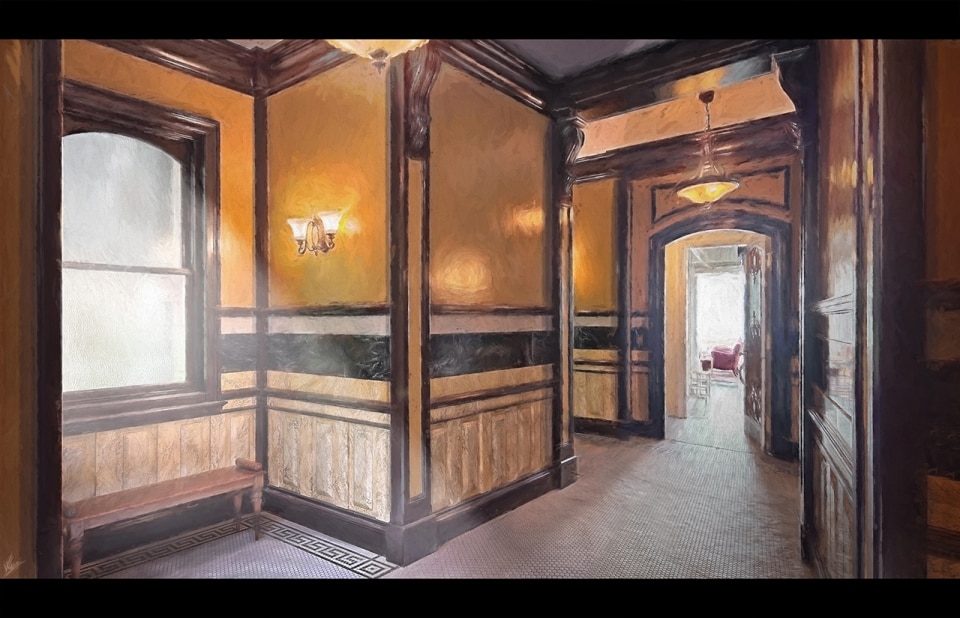
This duality emerges, for instance, in Alma’s house, where she lives with her husband Frederick — a psychoanalyst and obsessive music lover — in a home that perfectly embodies the intellectual bourgeoisie of America’s East Coast. What the immediacy of the film’s visuals does not reveal, Baisi explains: the entire set of Alma and Frederick’s apartment was built from scratch across the ocean, at Shepperton Studios in London.
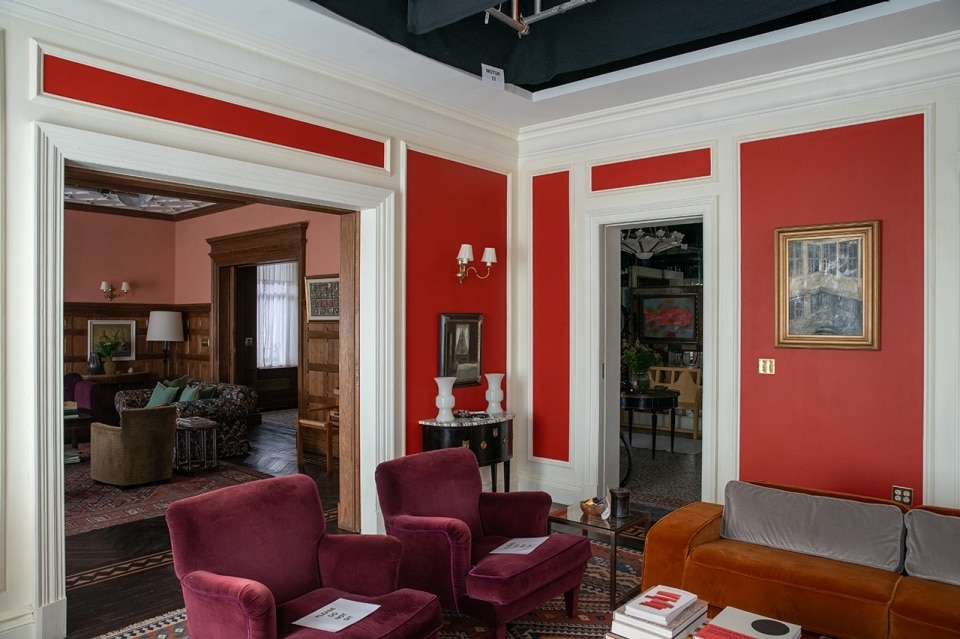
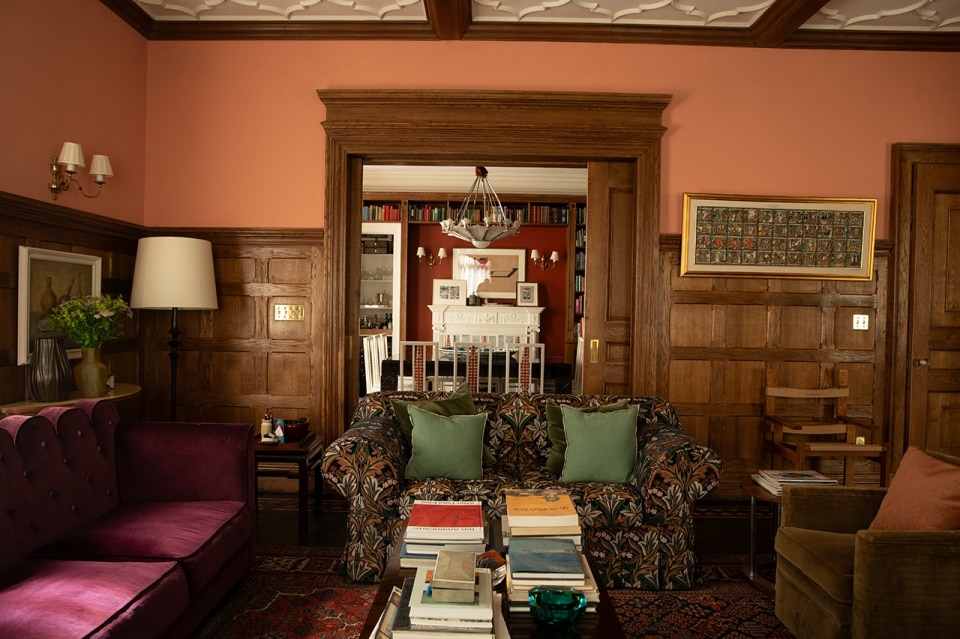
“To shape Alma and Frederick’s home so that it would mirror the complexity of their relationship with their environment, we needed strong horizontality and depth of field,” Baisi says. The team drew inspiration from typical East Coast and Upper West Side architecture, such as the Langham Building and the Dakota — the latter known as John Lennon’s final residence.
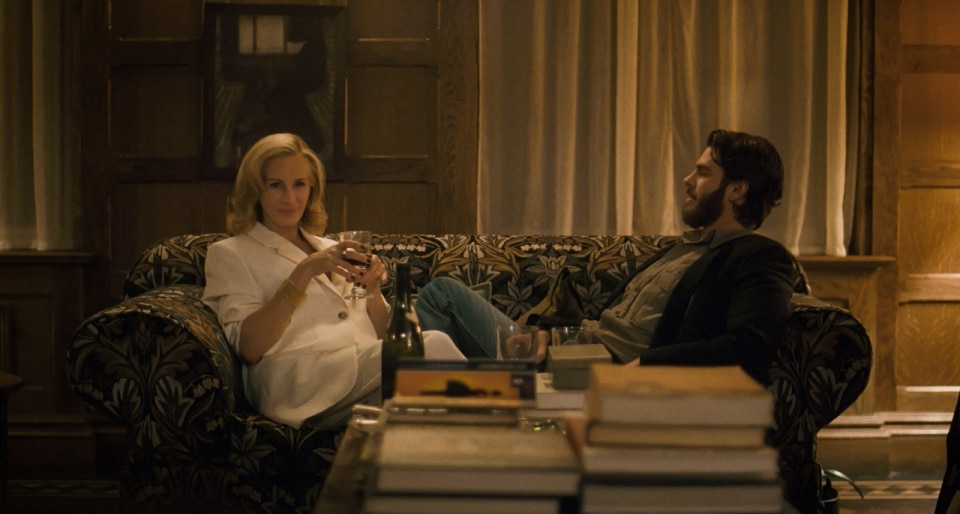
The couple’s status permeates every detail: floral-patterned sofas evoking William Morris’s famous designs, on which Hank and Alma sit with a casualness that suggests anything but a strictly professional relationship; wooden chairs and settees in the Arts & Crafts style, recalling Charles Rennie Mackintosh or, more directly, Frank Lloyd Wright’s furniture for his iconic American houses.
Baisi describes the apartment’s creation as a layering of lives — three generational strata, from Frederick’s grandparents and parents to the couple themselves. The first emigrated from Europe to America during the rise of Nazism; the second lived through the Kennedy era; the third, Alma and Frederick, embody the contemporary intellectual elite.
From here comes the mix of early twentieth-century European movements — from the Wiener Werkstätte to the Bauhaus — combined with the aesthetic of 1960s America and touches of ethnic art from Africa or Haiti, traces of the couple’s travels and experiences. “Three hundred square meters of entirely artificial space, every drawer truly filled,” says Baisi — and the set’s credibility depends precisely on this inventive realism.
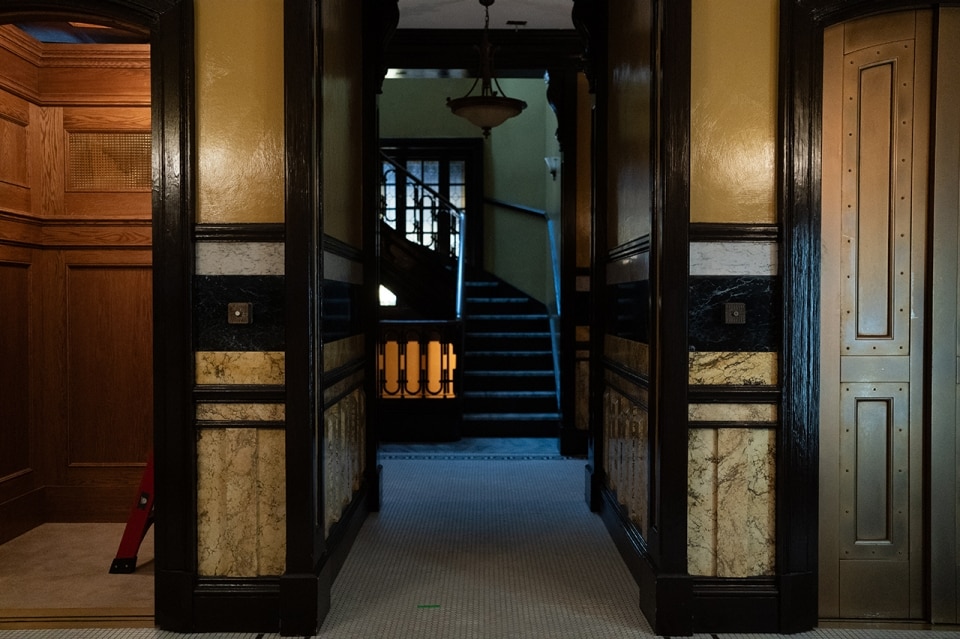
Yet it is precisely within Professor Himoff’s refined home that the film’s most revealing dialogues unfold — often in secluded corners, intimate and hidden, as if to mirror the secrecy of the characters’ confessions. From the opening “academic dinner,” when Alma spies through the peephole as Maggie and Hank pause on the landing before taking the elevator into the night where scandal awaits; to the moment when Maggie confides in Alma about that scandal, again in a liminal space — the hallway, the stairwell — as if to keep the sordid truth outside the sanctity of Alma’s domestic sphere.
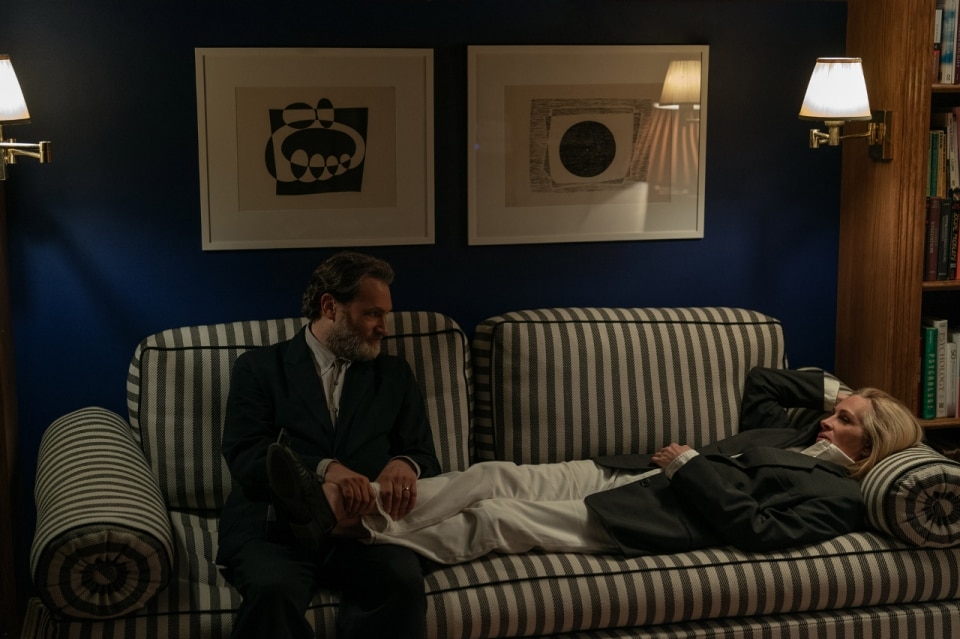
There is Alma confiding in her husband in his psychoanalyst’s study, lying on a black-and-white striped couch beneath two Josef Albers paintings, while Frederick gently massages her legs.
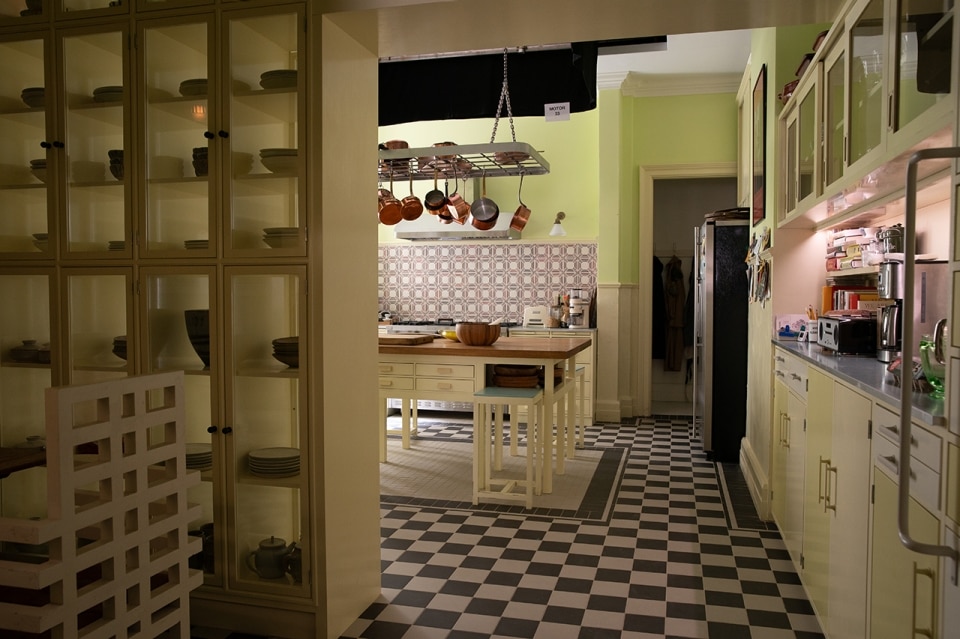
And Alma and Maggie again, dissecting the event in the kitchen — part confession, part academic debate — as Frederick interrupts them with the intentionally disruptive swing of the kitchen door, flooding the room with deafening music that makes it nearly impossible for the women to think.
Tic Toc Tic Toc Tic Toc.
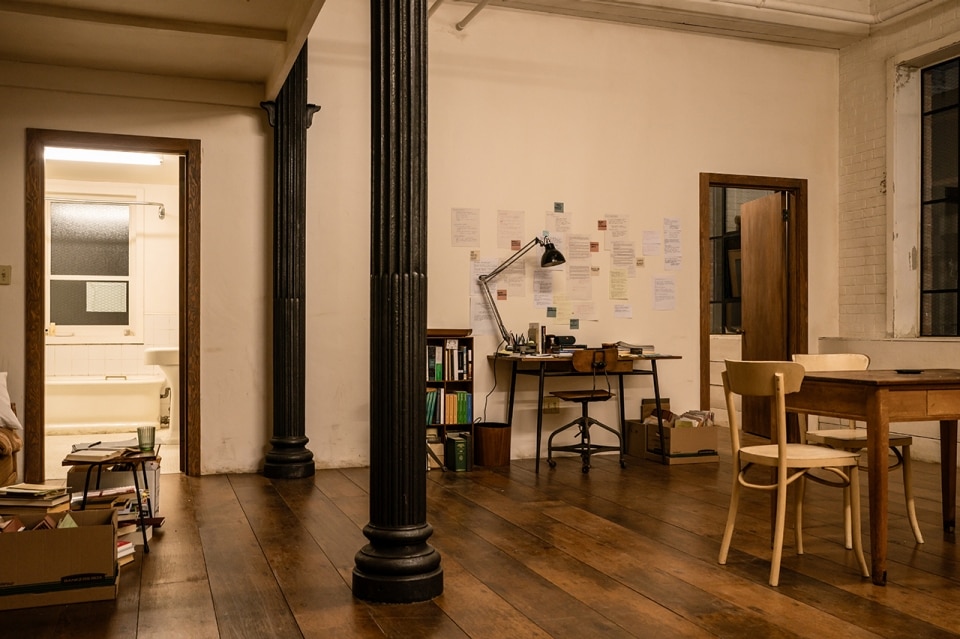
In counterpoint to the city home stands the house on the pier — “the Wharf,” as Alma calls it — a retreat that, in its bareness, stages the protagonist’s emotional authenticity. “It’s a mental space before being a physical one,” says Baisi. Disordered, unkempt, but precisely because of these socially unfit qualities for a respected Yale professor, it feels real. Here, Alma lets go — smoking, drinking, sleeping for hours, surrendering to her anxieties. And here she unexpectedly encounters Hank, who has entered using an old set of keys he never returned, seeking the same refuge from gossip and professional ruin. On the Wharf, everything socially inadmissible can remain safely submerged.
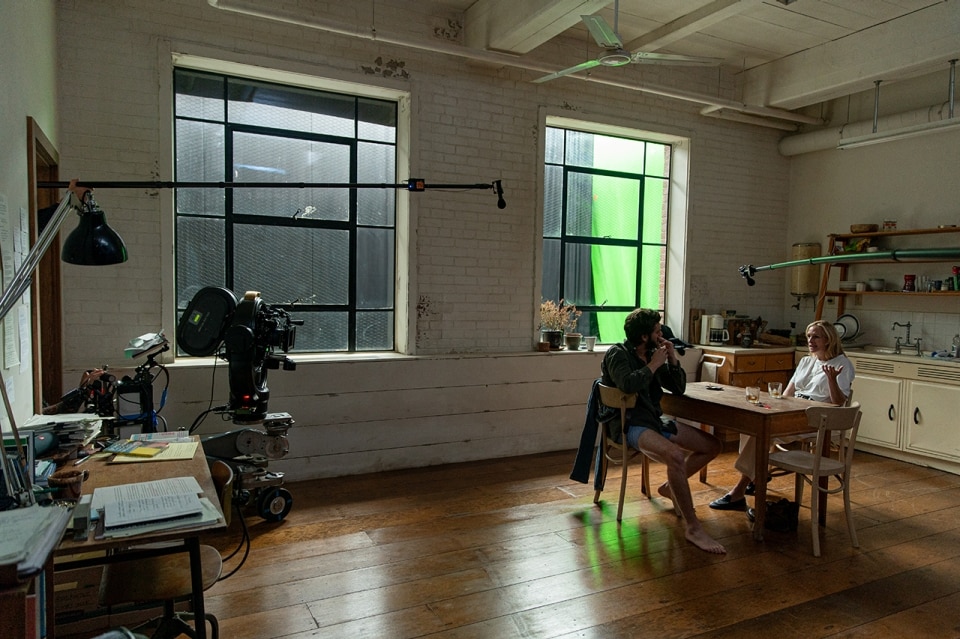
“It’s a useful house — no less sophisticated for that — but designed to provide a sense of safety,” Baisi explains. “It was intentionally imagined as belonging to the opposite side of New Haven, where the main landmarks are chimneys and industrial buildings.” The result, he says, “amplifies the distance between the two souls of the protagonist.”
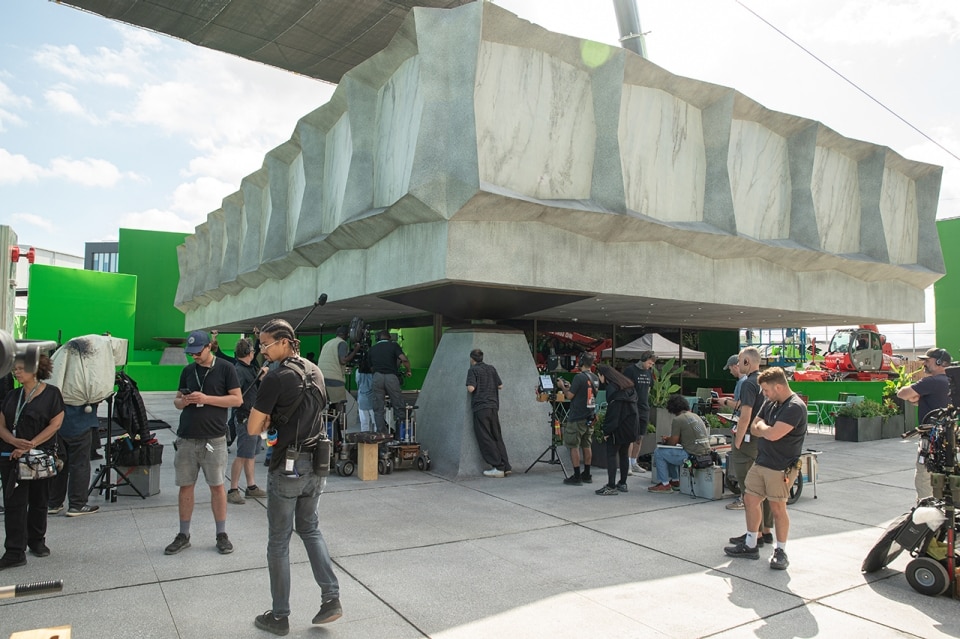
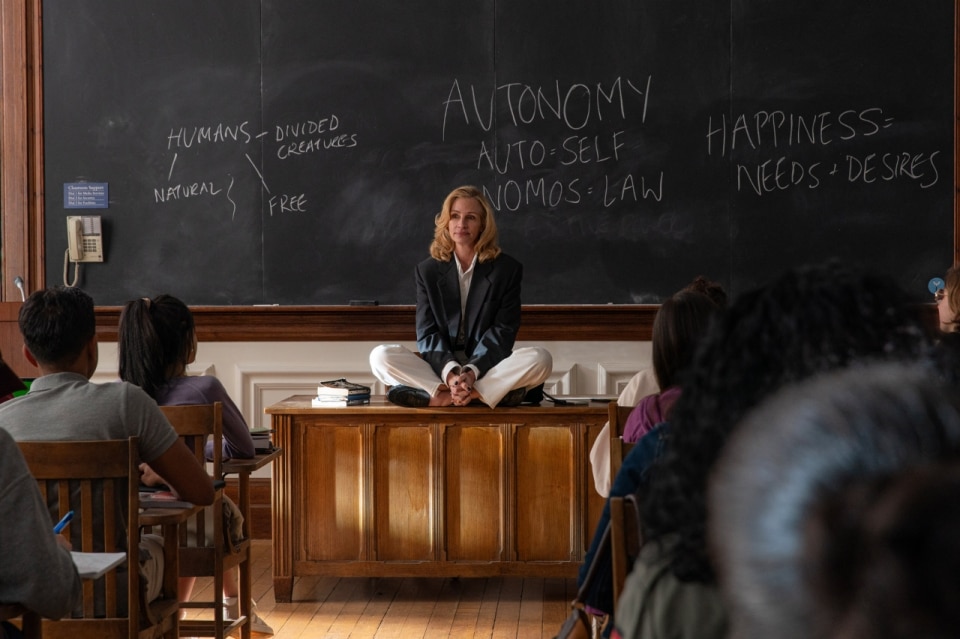
And then, there is Yale — its places and its iconic atmosphere. All of it, again, meticulously reconstructed.
Balancing stereotype and truth, the university is not a mere backdrop; on the contrary, it becomes the most hostile environment for the three protagonists — subjected to public shaming precisely in the place where their reputations should be untouchable.
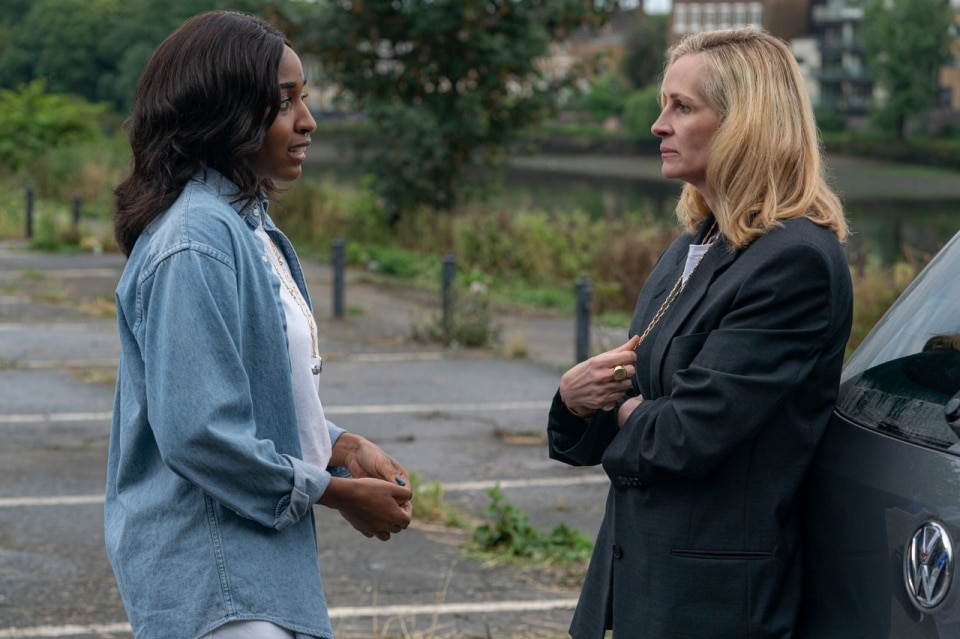
After the Hunt tells a story in which each character can be dramatically wrong one moment and miraculously right the next — where doubt itself becomes complicit in the most conservative instincts of society. The physical spaces are not just witnesses to human events; they take part in them, speaking their own expressive language, representing both what they are and what society demands of them — solemn even in their immorality, unmoved and immutable, long after the scandal fades away.
Tick-tock, tick-tock, tick-tock.
.
Opening image: Luca Guadagnimo, After the Hunt, 2025, Concept Art Stefano Baisi. ©Amazon MGM Studios.