

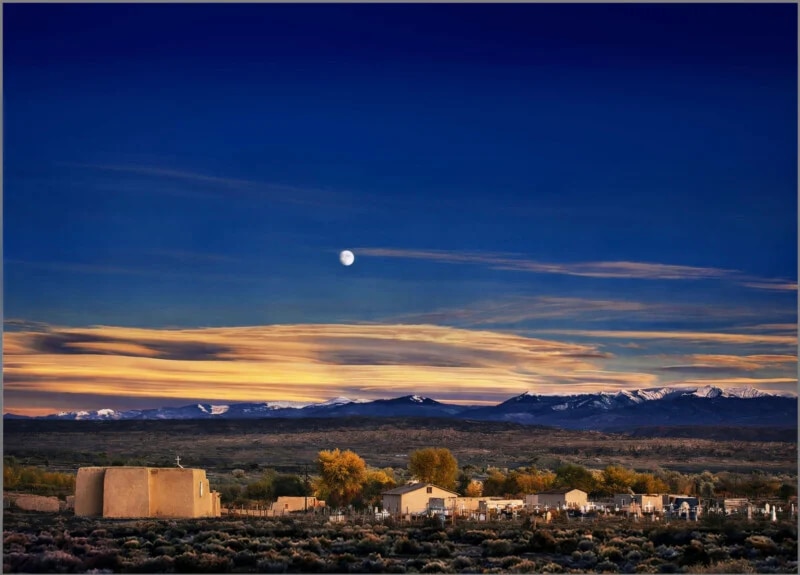
In April of this year, at the Danziger Gallery booth at the AIPAD fair in New York, a color version of Moonrise, Hernandez, New Mexico – the famous photograph Ansel Adams captured in 1941 from the shoulder of the highway running through New Mexico – was on display for sale. The label classified it as “A.I. Generated,” featuring the signature of a printer, an edition of ten copies across three sizes, and an indication of months of work involving regeneration and retouching in Photoshop. This sparked a dispute between the gallery and the heirs’ trust. Conspicuously absent, having passed away in 1984, was the photographer himself, Ansel Adams.
The Ansel Adams Publishing Rights Trust, the entity administering the photographer’s artistic legacy, released a public statement asserting that it had been neither consulted nor notified. They requested the immediate removal of the work upon learning of it, framing the matter as a question of artists’ moral rights rather than a crusade against artificial intelligence.
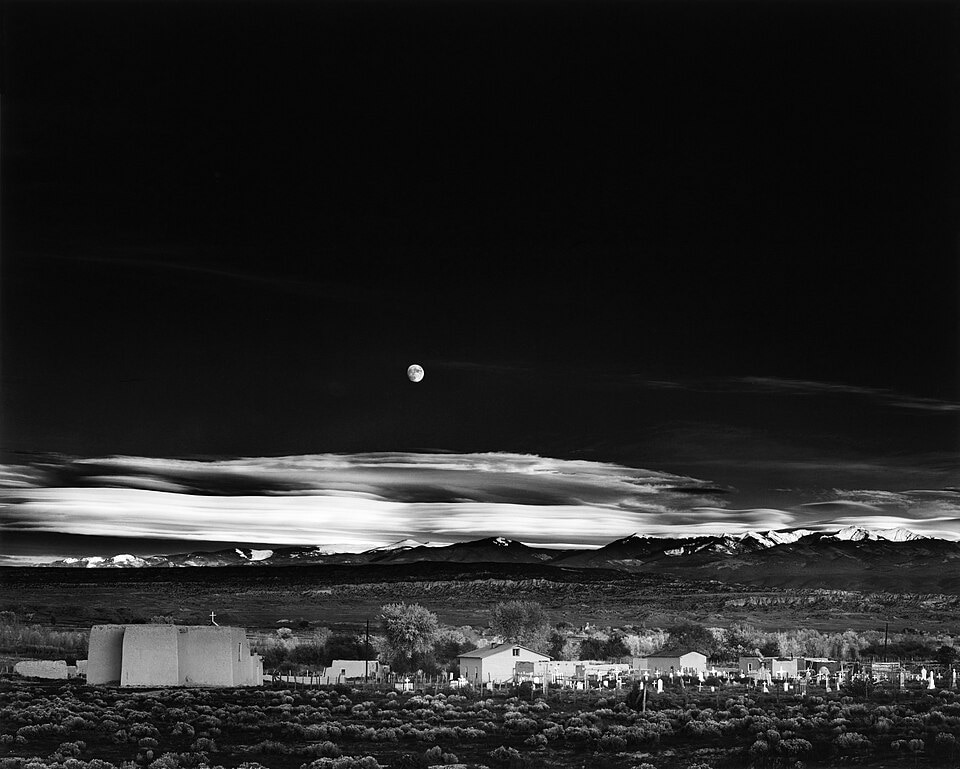
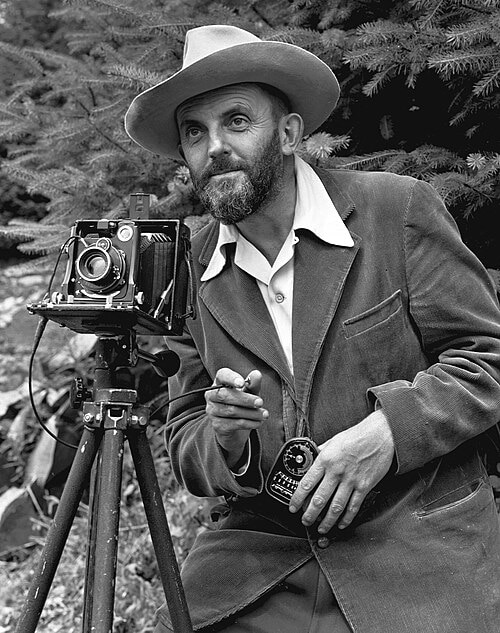
On the contrary, the Trust made a point to remind the public that Adams himself looked forward enthusiastically to what computers could do for photography. James Danziger fires back, arguing that Moonrise is now in the public domain and that he therefore had every right to create a new, transformative work; he claims to have consulted a lawyer and worked on the image for months, with care and affection for the original. According to the Trust, Danziger reportedly continued to use Adams’s name and even proposed a broader commercial colorization project that would involve the archives of other deceased artists.
There is no certainty regarding the public domain status. The copyright of the image, according to the timeline of its first publications, should have been renewed between the late 1960s and 1970, and no such renewal appears in the US registries. Moonrise is highly likely in the public domain.
If the image belongs to everyone, then Danziger’s defense on copyright grounds holds up, and the Trust knows it. So much so that its protest hardly ever mentions copyright over the work, focusing instead on name, reputation, and the exploitation of a legacy. That is to say, the dispute has shifted from the realm of the artwork to that of the trademark and what common law systems call the right of publicity. The fact that the contention has moved there suggests that the stakes are, as is often the case with rights, a matter of protecting a financial revenue.
The history of art is one of constant change and inspiration, and one is almost thankful that artists are not immortal: we would have much less variety and many more complaints.
The Danziger case confirms a broader dynamic. Copyright is almost always portrayed as if it were a natural extension of the artistic personality, an ontological bond between the creator and what has been created. Looking closely, however, it is a historical and economic mechanism, devised to regulate the commercial reproduction of printed texts and expanded, extension by extension, to its current limits. One need only think of the Sonny Bono Copyright Term Extension Act, which in 1998 lengthened protection in the United States to seventy years after the author’s death, precisely as the earliest Mickey Mouse short films were about to enter the public domain – an act some ironically dubbed the ‘Mickey Mouse Protection Act.’ If the duration of protection were truly intended to compensate the creator, it is hard to understand why it should extend so far beyond the creator’s lifespan. The explanation is that beneath the rhetoric of genius, market interests are at work.
Heirs are the exact point where this mechanism becomes most apparent. Years ago, commenting on the copyright infringement ruling against Robin Thicke for Blurred Lines – a song deemed ‘too similar’ to a Marvin Gaye track – I wrote that I found it absurd that the heirs were the ones complaining rather than the artist, given that the heirs had created absolutely nothing: they had merely inherited rights. The Moonrise case is similar, but not identical. The Trust administering Adams’s memory is an economic entity protecting an asset, not an artist defending their own work. An artist can say, “this betrays what I intended”; a trust can only say, “this erodes the value of what we manage.”
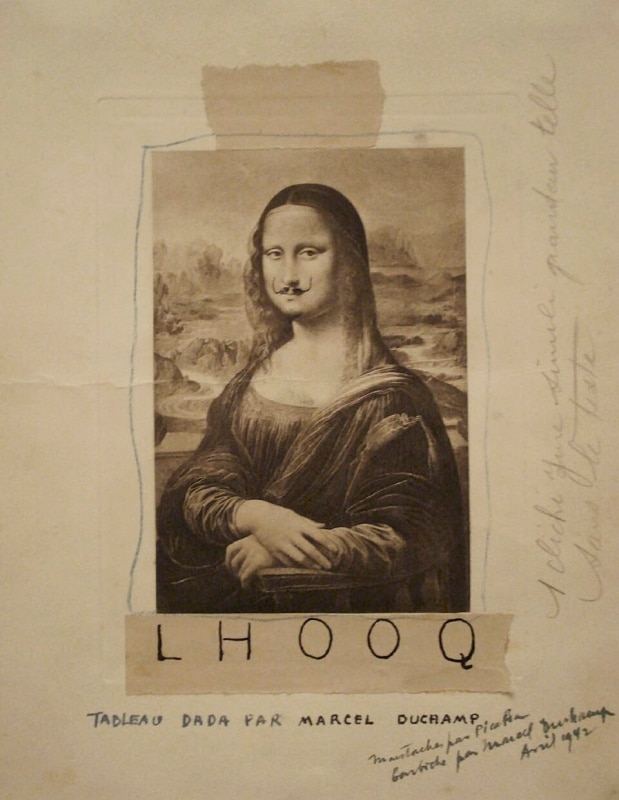
But even if the artist could speak, would it be right for them to hold total control over their work forever? If Leonardo were unhappy with reproductions of his Mona Lisa, should we eliminate them? What if he rejected what Duchamp did with his work? Did the medieval builders who repurposed Roman materials to erect churches do so against the will of the ancient Romans? Probably yes, but no one can complain anymore. Art history is a history of continuous transformations and inspirations, and one is almost tempted to thank the heavens that artists are not immortal: we would have far less variety and far more lawsuits.
Reinterpreting a work is entirely legitimate, and art history is largely built upon appropriation. For the most part, it involves more or less explicit inspirations, but we also find extreme cases: Sherrie Levine rephotographed Walker Evans’s images from scratch without altering a thing; Andy Warhol took the commercial graphics of a Brillo soap pad box and brought it into a gallery; we have already mentioned Duchamp. Regarding Warhol, an anecdote is worth recalling.
The Brillo box had been designed by an abstract expressionist painter, James Harvey, who supported himself as a commercial designer; yet, when he saw Warhol’s boxes selling for figures his own would never reach, Harvey was not angered but amused, because he understood that his own boxes were not artworks, whereas Warhol’s were. Every intervention upon a work alters its meaning and, even when it seems to kill it, actually contributes to that continuous dialogue between humans and non-humans that we call creativity. The colorization of a black-and-white icon belongs fully to this history: it is not a sacrilege, and the time spent creating it has nothing to do with its legitimacy.
There is, however, a difference. Levine, by rephotographing Evans, creates a new work that discourses on authorship and the copy. Danziger’s operation seems to move in the opposite direction, because the market value of the object does not stem so much from the contribution of the producer as from the revenue generated by the recognizability of the name ‘Ansel Adams.’ This does not mean condemning Danziger on a moral level, because what he did remains lawful; but on a cultural and artistic level, the operation is poor. If the colorization is worth its price, it owes it to someone else’s fame.
Artificial intelligence adds another layer of uncertainty. US jurisprudence tends to deny copyright protection to works ‘created exclusively by a machine,’ and based on this line of reasoning, Danziger’s image might turn out to lack protection altogether. The trouble is that the category ‘work created exclusively by a machine’ describes nothing real. There was a prompt written with a precise intention, there were discarded regenerations, Photoshop interventions, choices, second thoughts, and a final decision on what to print. The maker is present at every step. But even if there were only a single step, the generative model would be a tool no different, in principle, from a paintbrush, a Polaroid, or a pigment.
Creation is always a distributed process, in which tools and non-human causes also play a part. The law, by pretending that a work can exist without an author, fails to protect the human author making use of artificial intelligence. If Duchamp had added the mustache to the Mona Lisa with a prompt rather than by hand, would the work no longer be his?
The point is not to defend the gallery. Danziger’s operation is likely permissible on a legal level and defensible on a conceptual one, but it remains culturally thin, and the shadow of the serial project extending it does not make it any nobler. History, however, shows what the struggle for copyright becomes when viewed without the rhetoric of genius: an economic dispute between two parties in which the artist’s name is, all things considered, reduced to a commodity.
Overview image: AI version of Ansel Adams' Moonrise photograph. Courtesy Danziger Gallery