


On the Milan metro, headed toward the Santa Giulia arena: a girl in an oversized New Jersey Devils jersey layered over baggy jeans and black boots locks eyes with a boy wearing a vintage Colorado Avalanche top — the one with the old Quebec Nordiques logo. Around them, the carriage feels like a living catalog of National Hockey League crests. This isn’t Toronto. It isn’t Boston or Malmö. This is the heart of the world’s fashion capital, and the most coveted item isn’t coming out of any atelier — it’s a hockey jersey.
Hockey-core — the aesthetic that turns North American sports uniforms into urban style statements — is not new. Its roots go back to the 1990s, when oversized NHL jerseys left the arenas and entered the streetwear wardrobe.
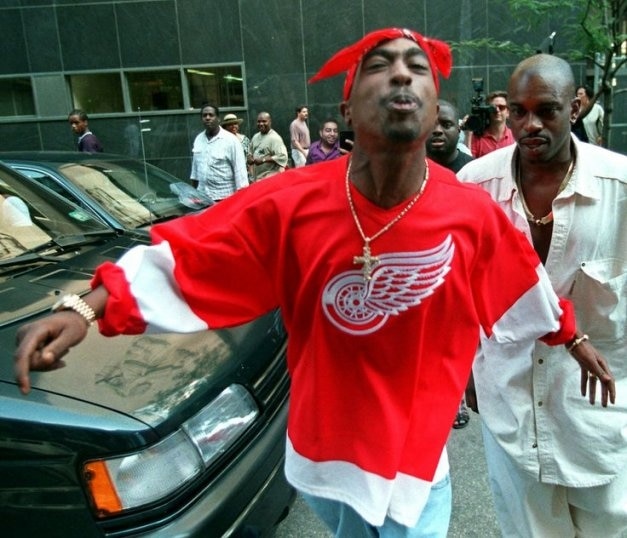
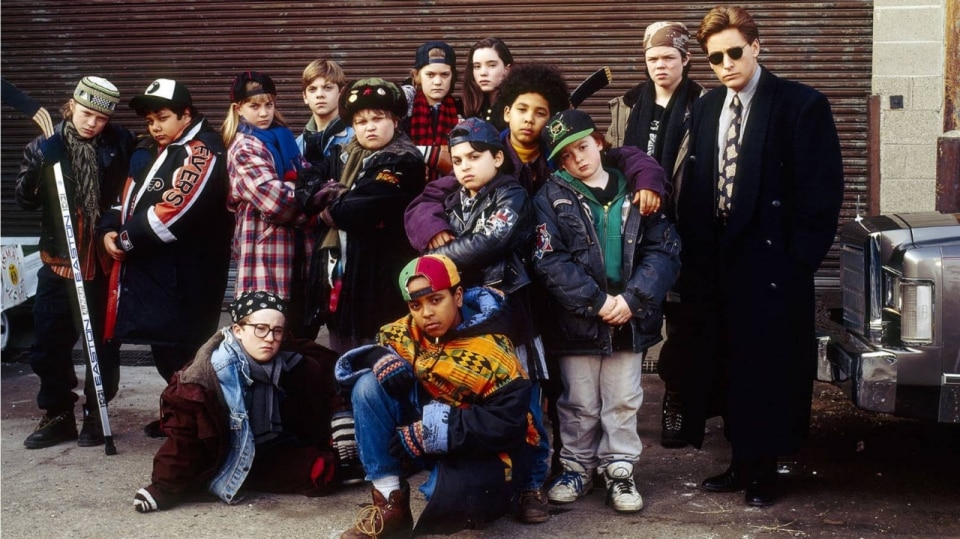
Paired with baggy pants and sporty jackets, hockey jerseys became standard uniform in hip-hop culture and streetwear between New York and Los Angeles — a phenomenon widely documented and cyclically revived in today’s Y2K nostalgia. Tupac was photographed wearing a Detroit Red Wings jersey outside a Manhattan courthouse; the Mighty Ducks of Anaheim became a cultural reference point thanks to The Mighty Ducks, long before their sporting success.
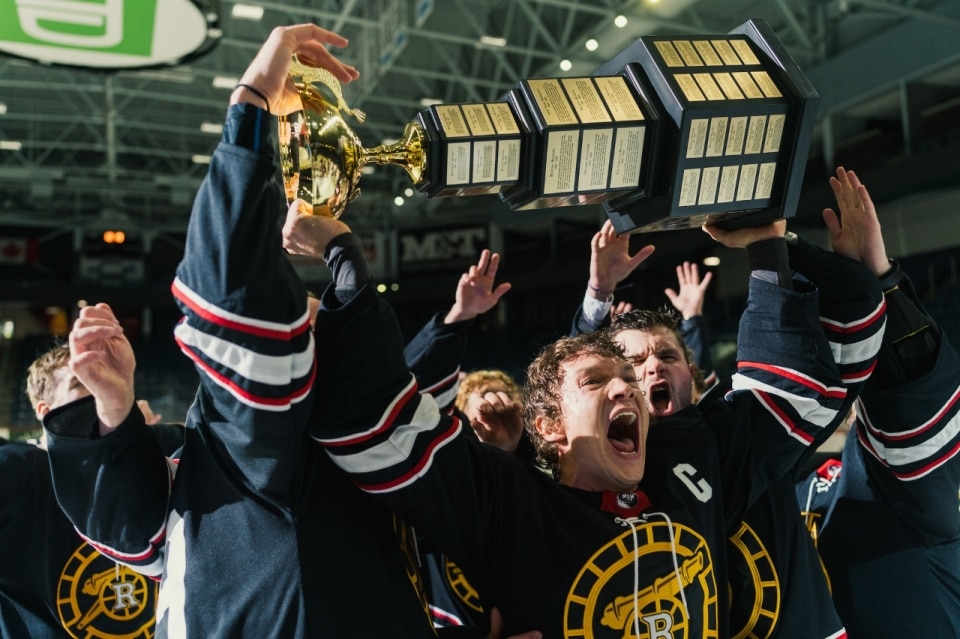
The Milano–Cortina 2026 Winter Olympics have reignited everything. For the first time in twelve years, NHL players will compete at the Games, while Canada’s national hockey team made headlines simply by taking the subway.
If Milan has provided the runway for this aesthetic, pop culture has supplied the script. It is impossible to ignore the role of celebrities in bringing hockey back to the center of the global conversation.
When Taylor Swift and Travis Kelce — already at the center of one of the most media-saturated crossovers between music and American sport (even if football) — showed up at the Stanley Cup Final between the Florida Panthers and the Edmonton Oilers, seated in a luxury suite at Amerant Bank Arena, hockey instantly reached a new audience. You didn’t need to know what a power play was. What mattered was the jersey, the setting, the atmosphere. The aesthetic, in other words.
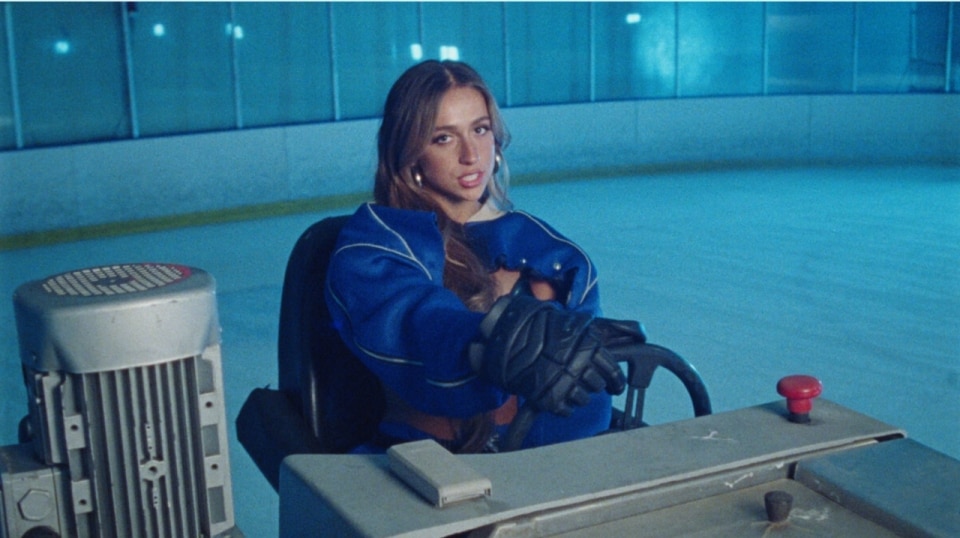
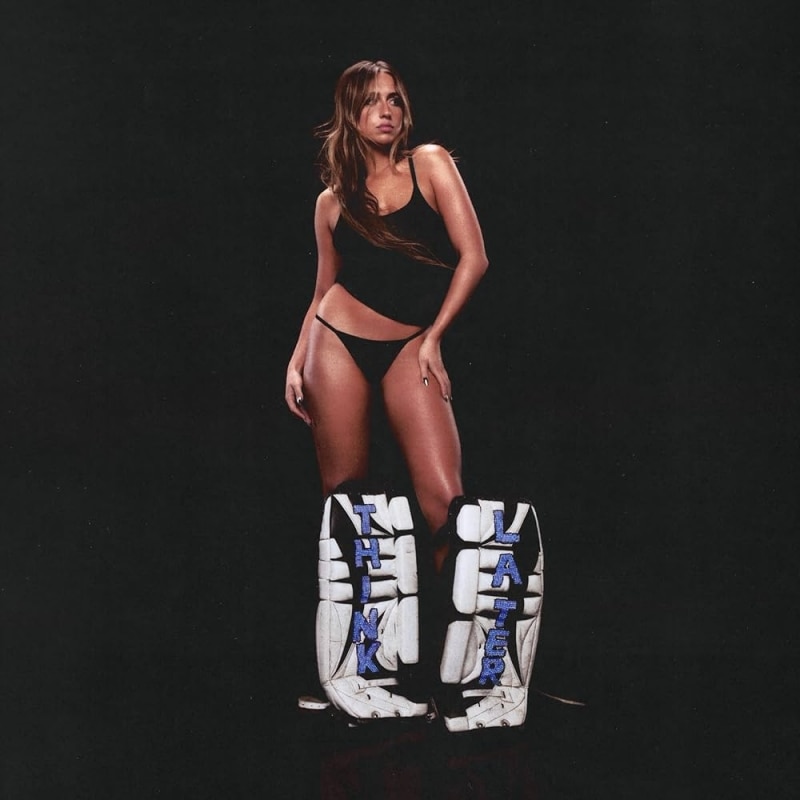
Then there is Tate McRae, the Canadian pop star who has turned hockey into an extension of her artistic identity. Raised in Calgary and an outspoken Flames fan, McRae has built an entire visual world around the sport: goalie gear on the cover of her album Think Later, a Zamboni — the legendary ice-resurfacing machine and a visual icon of hockey — in the video for “Greedy,” and a headlining performance at the 2024 NHL All-Star Game. She is also reportedly dating New Jersey Devils star Jack Hughes.
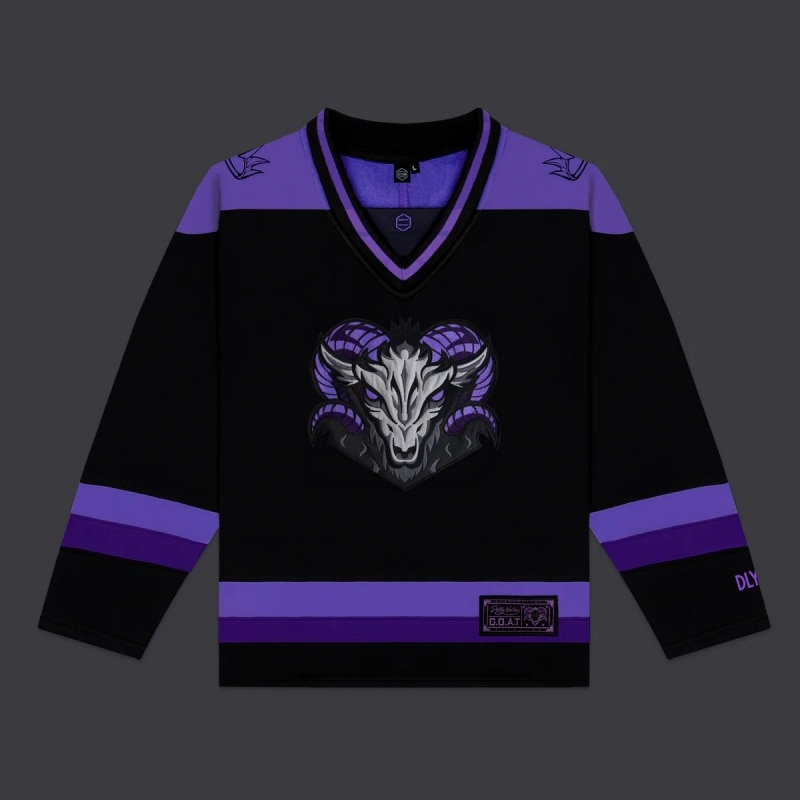
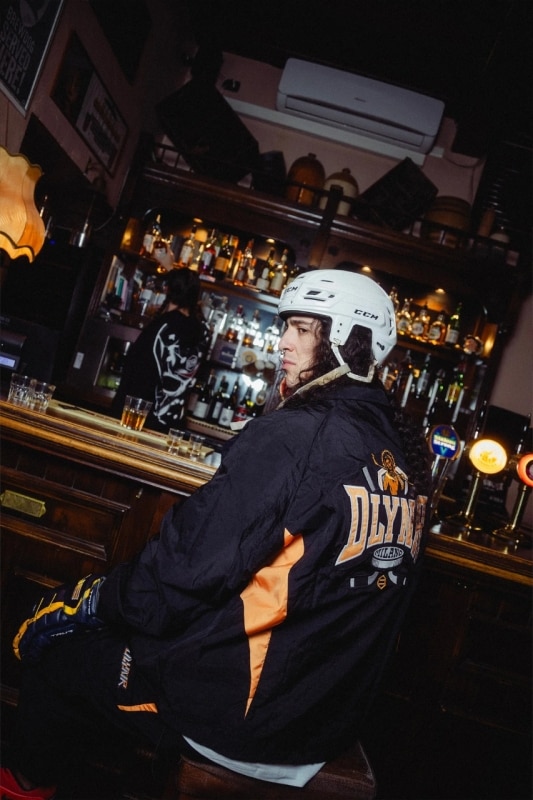
Proof that hockey-core is no longer just an imported trend comes from those who have translated it into product. Dolly Noire, the Milan-born streetwear brand, launched its Spring Summer 2026 GOAT Legacy collection with hockey as its reference universe. It’s not a sudden gamble: the brand had already explored similar territory with the Invictus capsule in 2018. But today the context is different — and the timing is perfect.

Oversized patch jerseys, aggressive lettering, graphics that fuse North American arena iconography with urban culture: the pieces reinterpret hockey classics — jerseys, coordinated sets, technical outerwear — adapting them to the city rather than the rink. The campaign backdrop is Milan itself, reimagined as an urban campus where sport leaves competition behind and becomes an identity code. Reinforcing this reading is the choice of face: not an athlete, but Gianmarco Tocco, aka Blur, a streamer and YouTuber with more than two million followers on Twitch.

But the real engine behind this growing passion — at least in Italy, where ice hockey has never enjoyed football-level popularity — is the name of a TV series. Heated Rivalry, Jacob Tierney’s show recently launched in Italy on HBO Max, is the cultural phenomenon that has turned sporadic curiosity into collective obsession.
Based on the novel by Rachel Reid, a well-known but far-from-mainstream romance writer, the series tells the story of the forbidden relationship between Ilya Rozanov and Shane Hollander, stars of two rival teams — one from Montreal, the other from Boston — who begin seeing each other in secret, terrified of the consequences for their careers.
Heated Rivalry has helped make hockey not only popular but also romantic, giving a face and a heart to a sport that, from the outside, once looked like nothing but speed and violence.
Opening image: Jacob Tierney, Heated Rivalry, 2025. Photograph by Sabrina Lantos/HBO Max