

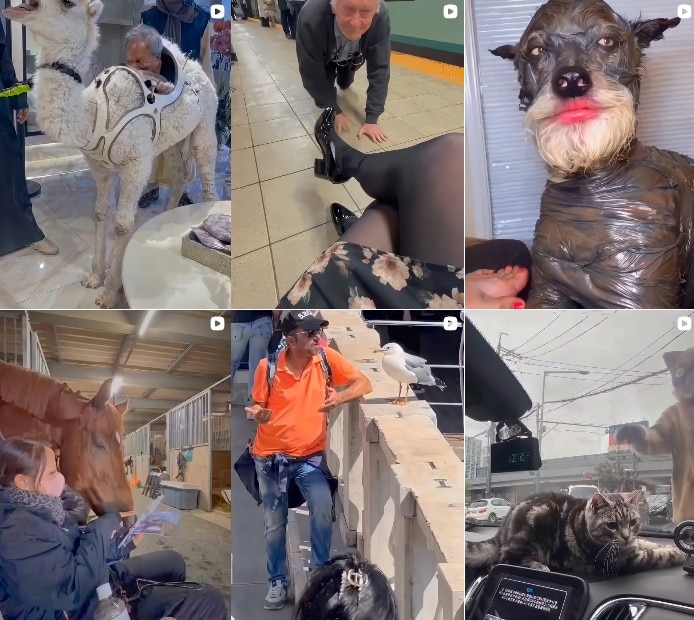
You scroll through your feed, tired, maybe a bit numb. Polished images, identical micro-stories, trends that evaporate within an afternoon. Then suddenly, something moves at the edge of the expected: a nearly human face warps as if made of liquid, an arm grows where it shouldn’t, an undefinable entity flashes in your timeline. It’s strange, disturbing, but impossible to ignore. It’s the work of Fullwarp, one of the most emblematic creators of an era in which artificial imagination is no longer the future but the cultural infrastructure of the present.
Behind the disturbing aesthetic that has captured more than 240,000 followers is a 23-year-old who describes his work with disarming simplicity: “Fullwarp is just a page I started because I wanted to learn how to make AI videos.” His practice is born more from obsession than planning: “I tend to get hyper focused on one thing at a time, and this year it has been AI.” And in this obsession lies the first clue to what makes his work so representative: a deep alignment with algorithmic logic – focus, iterative variation, continuous experimentation.
Before the videos, though, there was music. It’s telling that his turn toward synthetic imagery coincides with a historic shift in generative technology: “The turning point was right at the end of 2024, when I saw the sudden improvement in AI video. It looked like a lot of fun and I decided to immerse myself into it.” The gesture of sampling, which guided his musical tracks, survives in his visual practice: “I enjoyed sampling when I was making music, and now I do it with videos.” The logic is the same: taking fragments, vibrations, memories – human and digital – and recombining them into something uncanny yet familiar.
There’s always a sense of intrusion in my videos, as if the unconscious — human or artificial — were seeping through the polished surface of social media for a split second.
Fullwarp
That uncanny quality is his signature. Not explicit horror, but an “everyday eeriness” that slips in between a motivational reel and a cooking video. “I’ve always liked that aesthetic,” he says. “It’s something that most people are not used to seeing… it can definitely catch someone by surprise.” His videos carry a sense of intrusion, as if the unconscious – human or artificial – briefly leaked through the polished surface of social media. Even he admits the origin is hard to pin down: “I want to say it’s a combination of life experiences and media I’ve consumed which sink into the unconscious.” And then there’s the unexpected twist: “Funnily enough, although I’m known for doing body horror, I haven’t had that much experience with body horror movies.”
His imagery is not a direct quotation of a genre but something deeper: an amalgam of digital culture, glitch aesthetics, visual memes, soft traumas, and post-human fantasies.
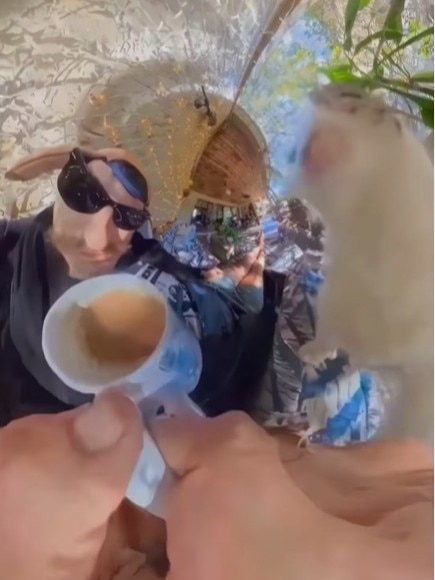
The success he gained within months raises a central question about today’s media dynamics: why do these contents hit so hard? His answer is surprisingly unstrategic: “I’ve always tried to make whatever is fun for me… I hope to have gathered an audience that has a similar taste to me.” Virality, then, is not an objective but a side effect of an aesthetic alignment between creator, algorithm, and community.
I never really saw myself as an artist… it’s more of a playful hobby. But in recent months some of my works have been shown in a festival, and that shift from reels to an exhibition space made me think.
Fullwarp
Then comes the question of art. An unavoidable one for someone like Fullwarp, who produces works that escape traditional categories yet exert clear cultural impact. He maintains an ironic distance from the label of “artist”: “I never saw myself as an artist… it’s more like a playful hobby.” Still, reality contradicts him: “Some of my works were shown recently in the OFF Bratislava festival.” The passage from reel to exhibition space is a symptom of this moment in history: what begins as ephemeral content becomes curatorial material, and the line between entertainment and art dissolves in the flow of technological hybridization.
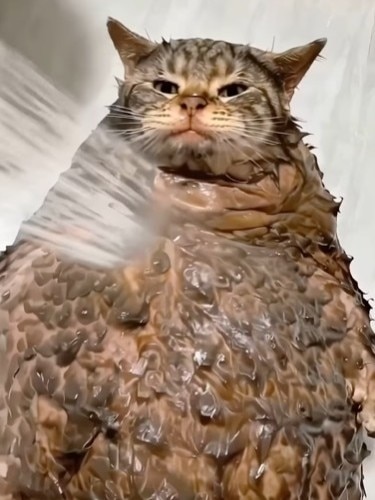
In the end, Fullwarp represents a new type of creator – one who does not merely use AI as a tool, but allows himself to be transformed by it. His videos are fragments of a collective imaginary that artificial intelligence brings to the surface, an aesthetic that manifests as emotional glitches within the continuum of doomscrolling. They are signs of a culture in which the synthetic is no longer an exception, but an emerging mother tongue. And Fullwarp, in his seemingly casual way, is one of the first to speak it fluently.
All images: Instagram / @fullwarp