Campus Redevelopment

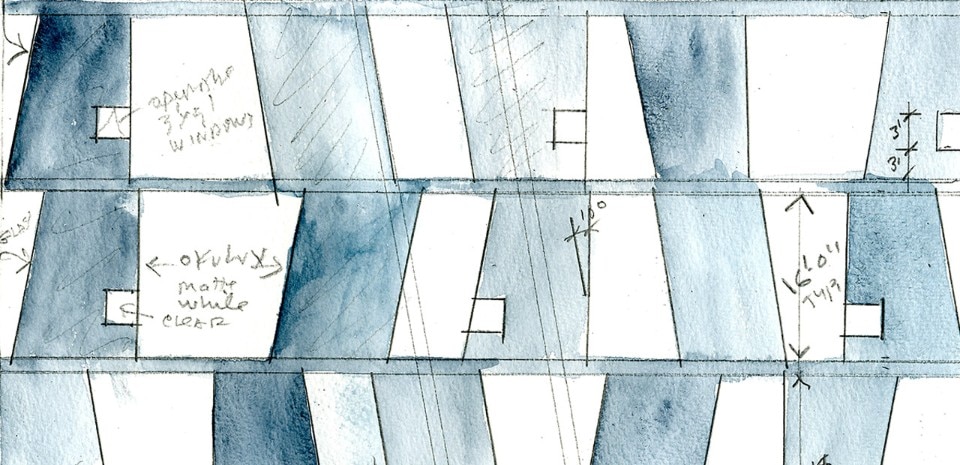
The Museum of Fine Arts, Houston, has revealed designs for a dramatic redevelopment of its 14-acre campus, including a unifying master plan, developed by Steven Holl.

Steven Holl, Museum of Fine Arts Campus Redevelopment, huston
The project developed by Steven Holl, beginning later this year and slated for completion in 2019, will transform not only the MFAH, but also its surrounding neighborhood, by making a major contribution to Houston’s overall efforts to improve the pedestrian experience of the city.

Building upon the Museum’s rich architectural legacy, the bold master plan will integrate the new structures into the campus, one already marked by a century’s worth of earlier buildings by William Ward Watkin, Ludwig Mies van der Rohe, and Rafael Moneo, and a sculpture garden by Isamu Noguchi.

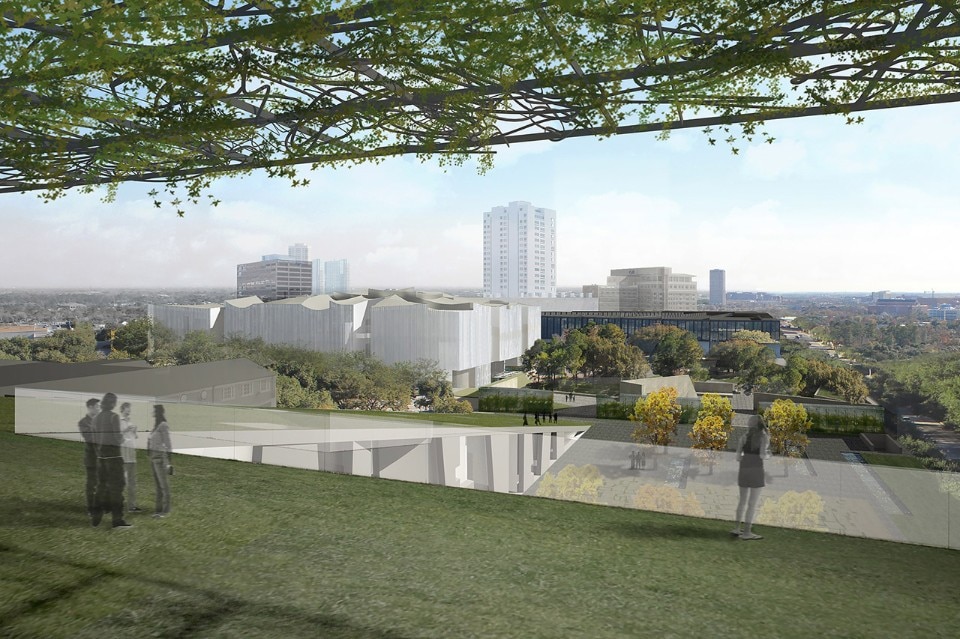
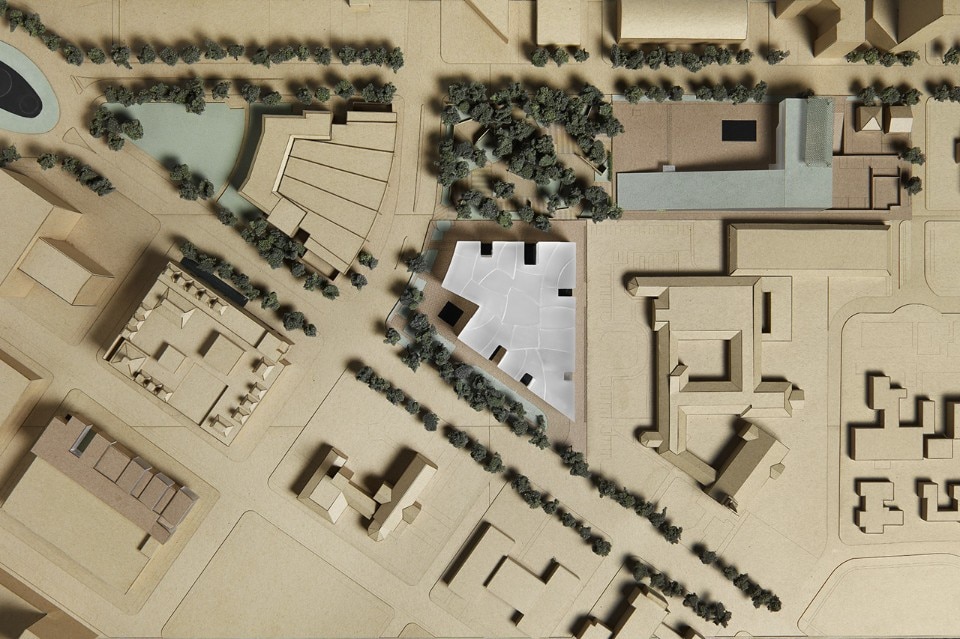
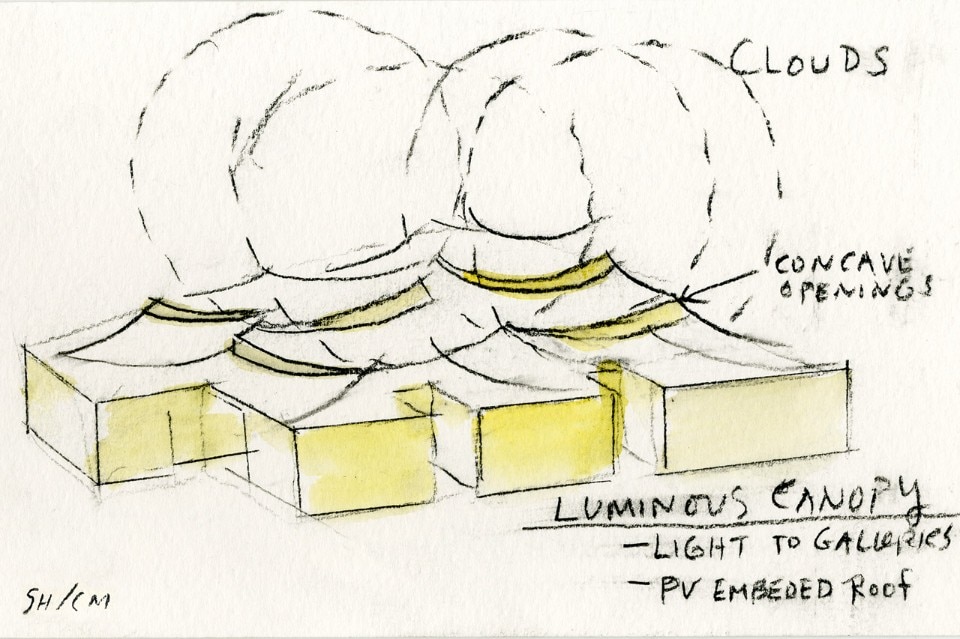
Overarching landscape plans will unify these distinctive architectural elements and create new public spaces, establishing a pedestrian-friendly urban campus that knits together the existing Modernist steel and glass, and Neoclassical limestone, with the translucent forms of Steven Holl Architects’ architecture, and the regional Modernism of Lake|Flato Architects, who will design the state-of-the-art conservation center.
Steven Holl, Museum of Fine Arts Campus Redevelopment, huston
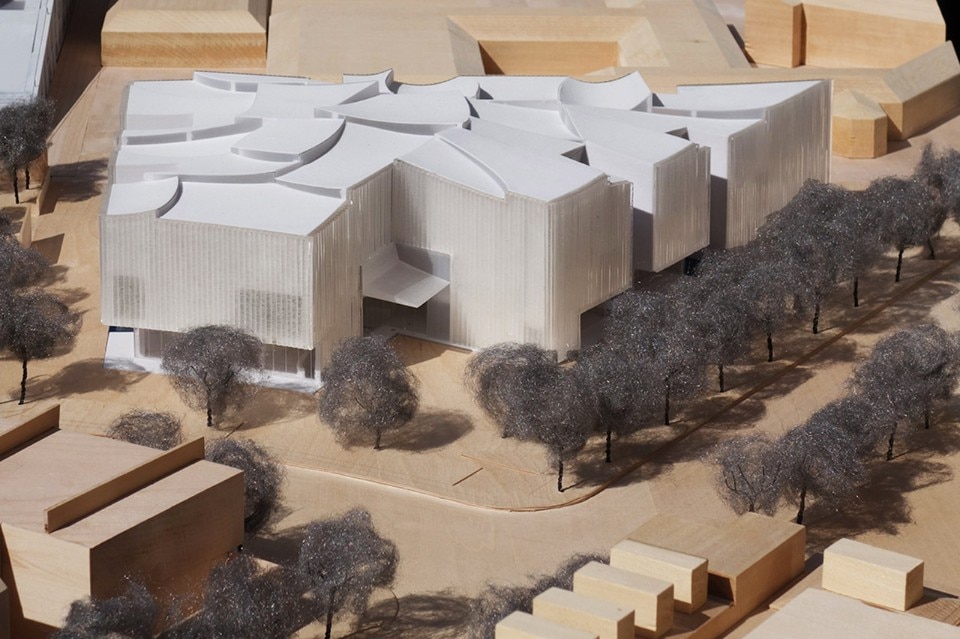
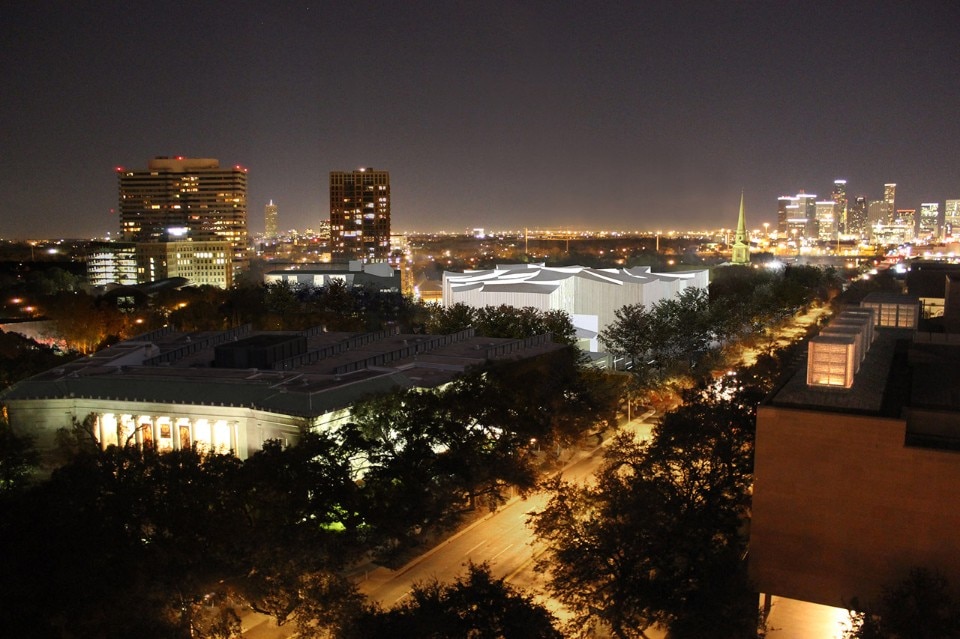
Aerial night view of the Fayez S. Sarofim Campus, with the Nancy and Rich Kinder Building and the Glassell School of Art. Courtesy of Steven Holl Architects
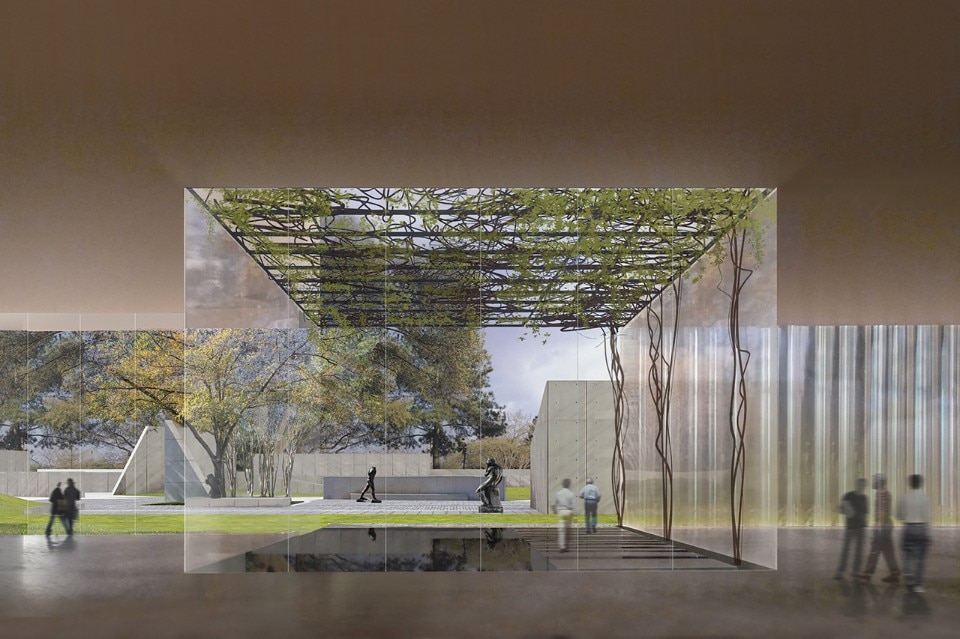
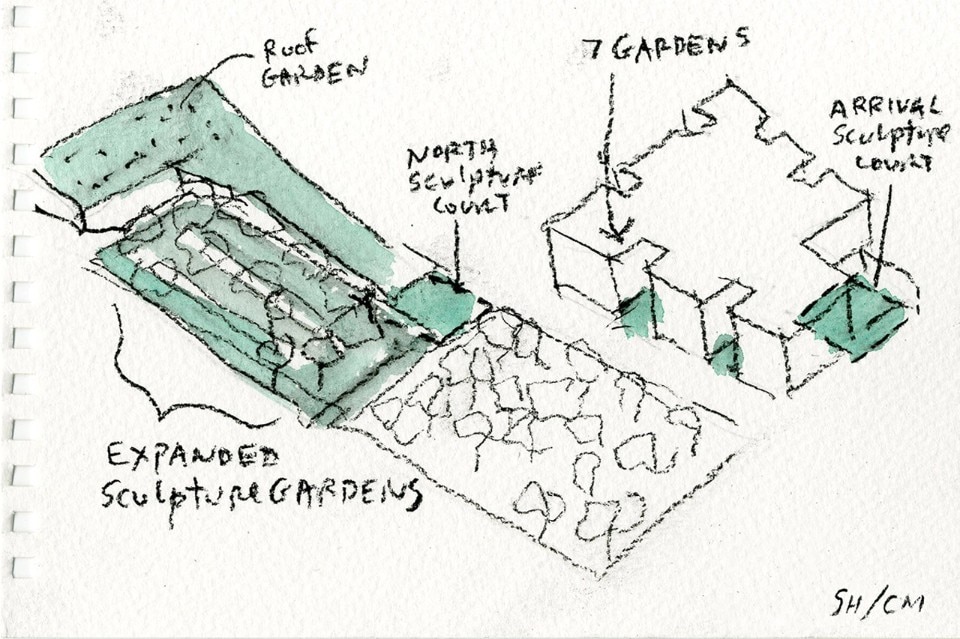
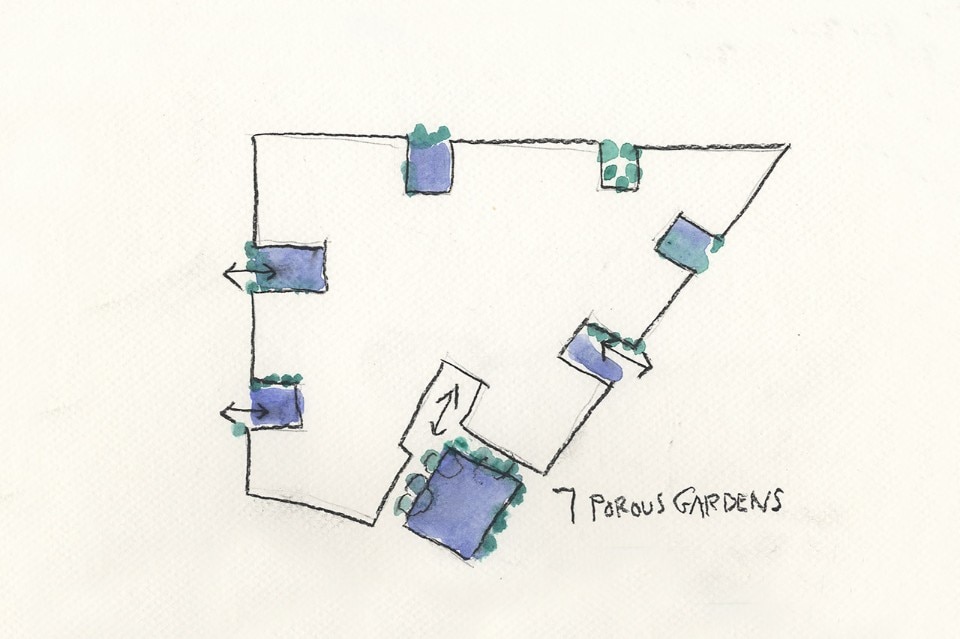
Encompassing 14 acres in the heart of Houston’s Museum District, the Fayez S. Sarofim Campus of the Museum of Fine Arts, Houston, will feature an array of public plazas, reflecting pools, and gardens, as well as improved sidewalks, street lighting, and way finding, the campus will provide an active setting for three significant new structures – a school, a gallery building, and a conservation center.
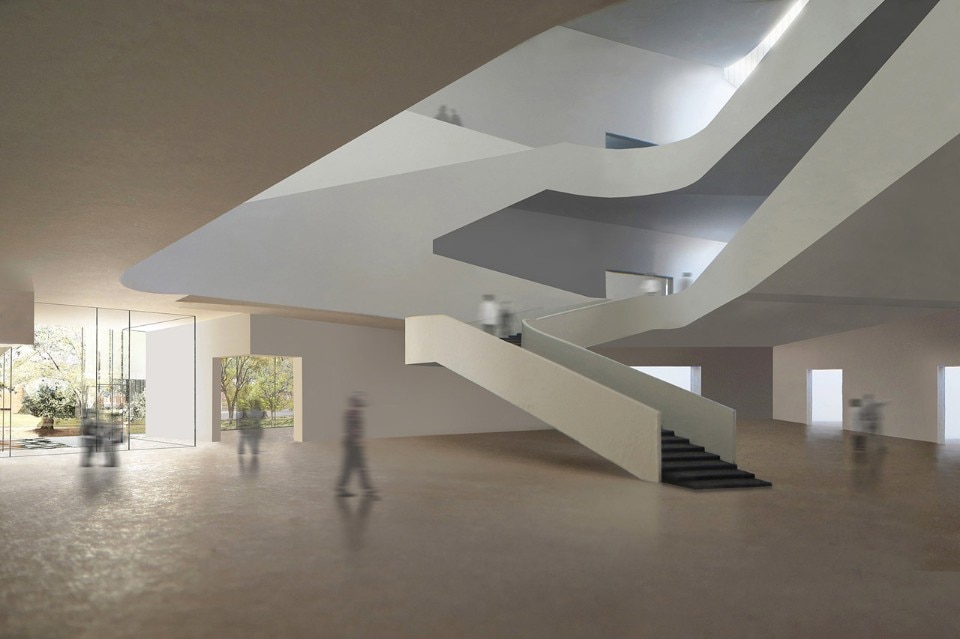
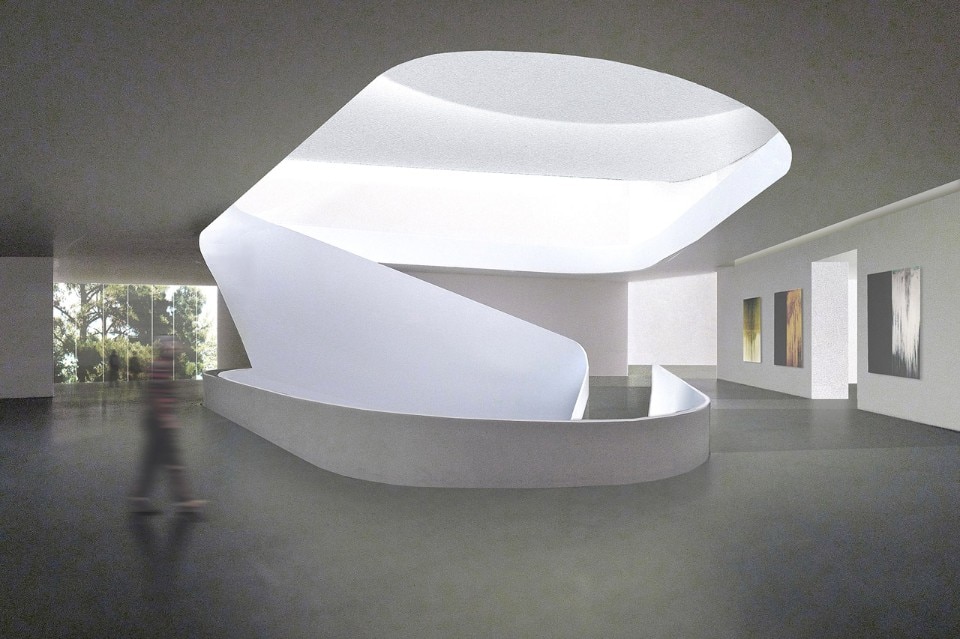
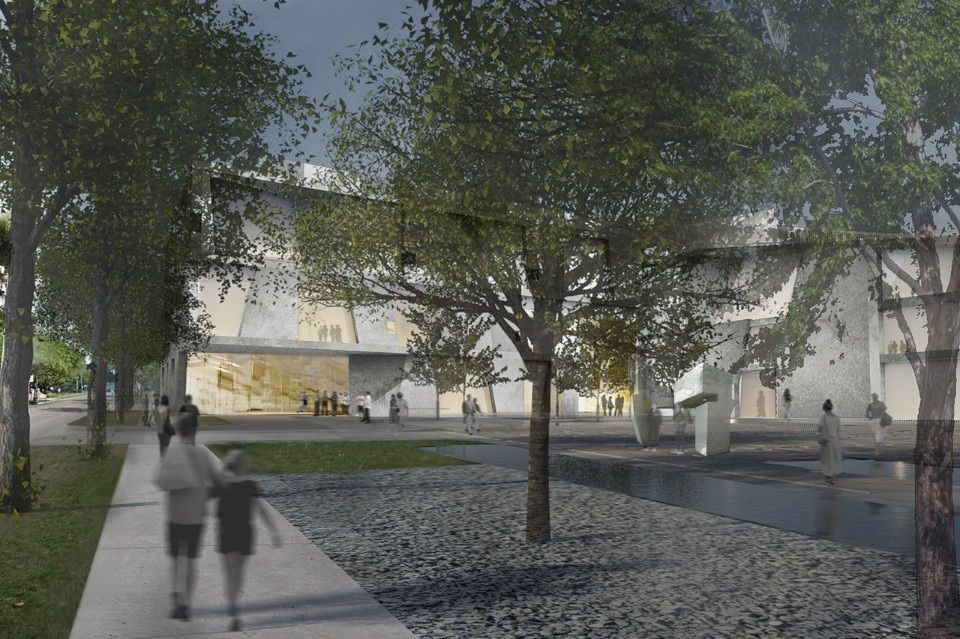
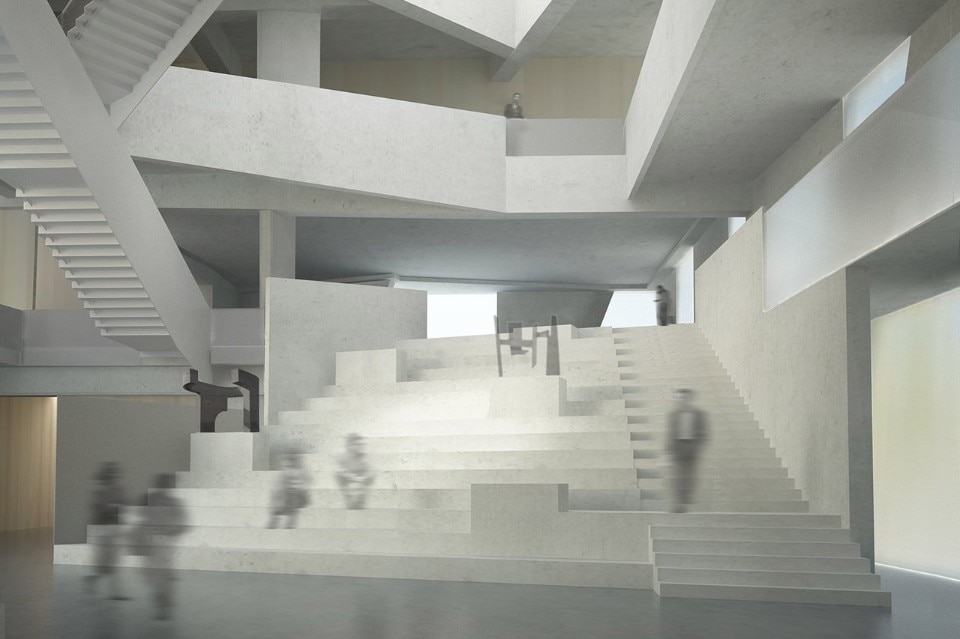
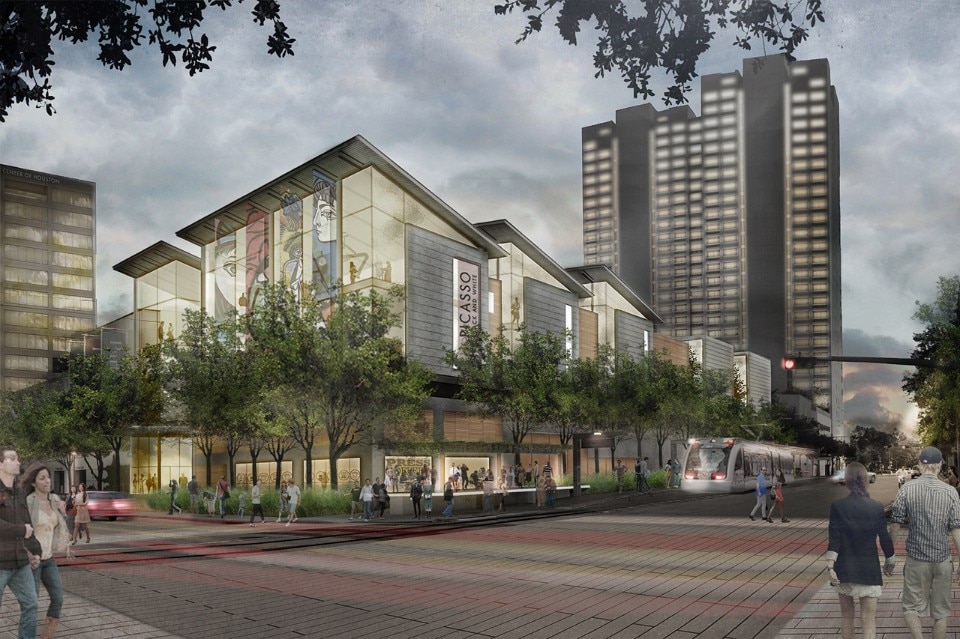
The two exceptional new structures at the heart of the Fayez S. Sarofim Campus – the Nancy and Rich Kinder Building for 20th- and 21st-century art and the Glassell School of Art, both designed by Steven Holl Architects – will be sited next to the new Brown Foundation, Inc., Plaza and the existing Lillie and Hugh Roy Cullen Sculpture Garden, designed by Noguchi and completed in 1986.
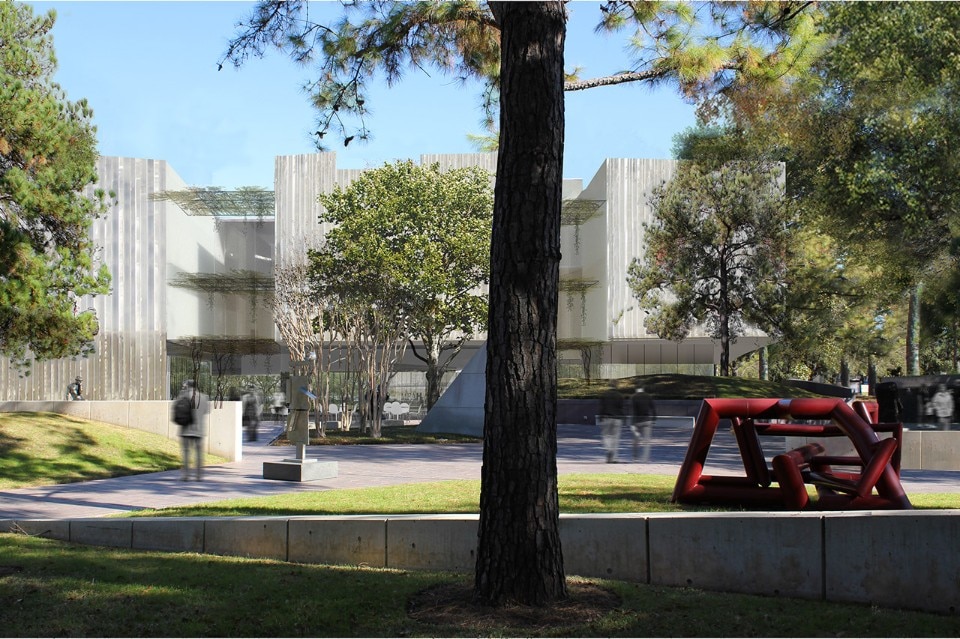
View of the Nancy and Rich Kinder Building Restaurant Entrance from the Lillie and Hugh Roy Cullen Sculpture Garden Courtesy of Steven Holl Architects
View of the Nancy and Rich Kinder Building Restaurant Entrance from the Lillie and Hugh Roy Cullen Sculpture Garden. Courtesy of Steven Holl Architects
Anchoring the eastern perimeter of the campus, across the street from the Moneo building, will be the Blaffer Foundation Center for Conservation, designed by Lake|Flato Architects and still in the concept phase. Constructed on top of the parking garage that opened with the Audrey Jones Beck Building in 2000, the glass rooftop structure will house state-of-the-art conservation labs and studios. Looking up from the north sidewalk, passersby will be able to glimpse the activity inside. A café will be installed on the ground level.
The redesign of the campus will take as its core focus the role the MFAH plays in the daily life of Houston – not only as a cultural institution, but also as an urban oasis that is open to all, invigorating the surrounding area and providing much-needed green space in the neighborhood. The redesigned campus is projected to have a significant impact on the city in the near term through job creation, and in the long term, over 20 years, the new campus is expected to generate nearly $334 million in economic activity, with more than $2.5 million in direct, indirect, and induced city tax revenues.

Latest on News

Latest on Domus

China Germany India Mexico, Central America and Caribbean Sri Lanka Korea icon-camera close icon-comments icon-down-sm icon-download icon-facebook icon-heart icon-heart icon-next-sm icon-next icon-pinterest icon-play icon-plus icon-prev-sm icon-prev Search icon-twitter icon-views icon-instagram