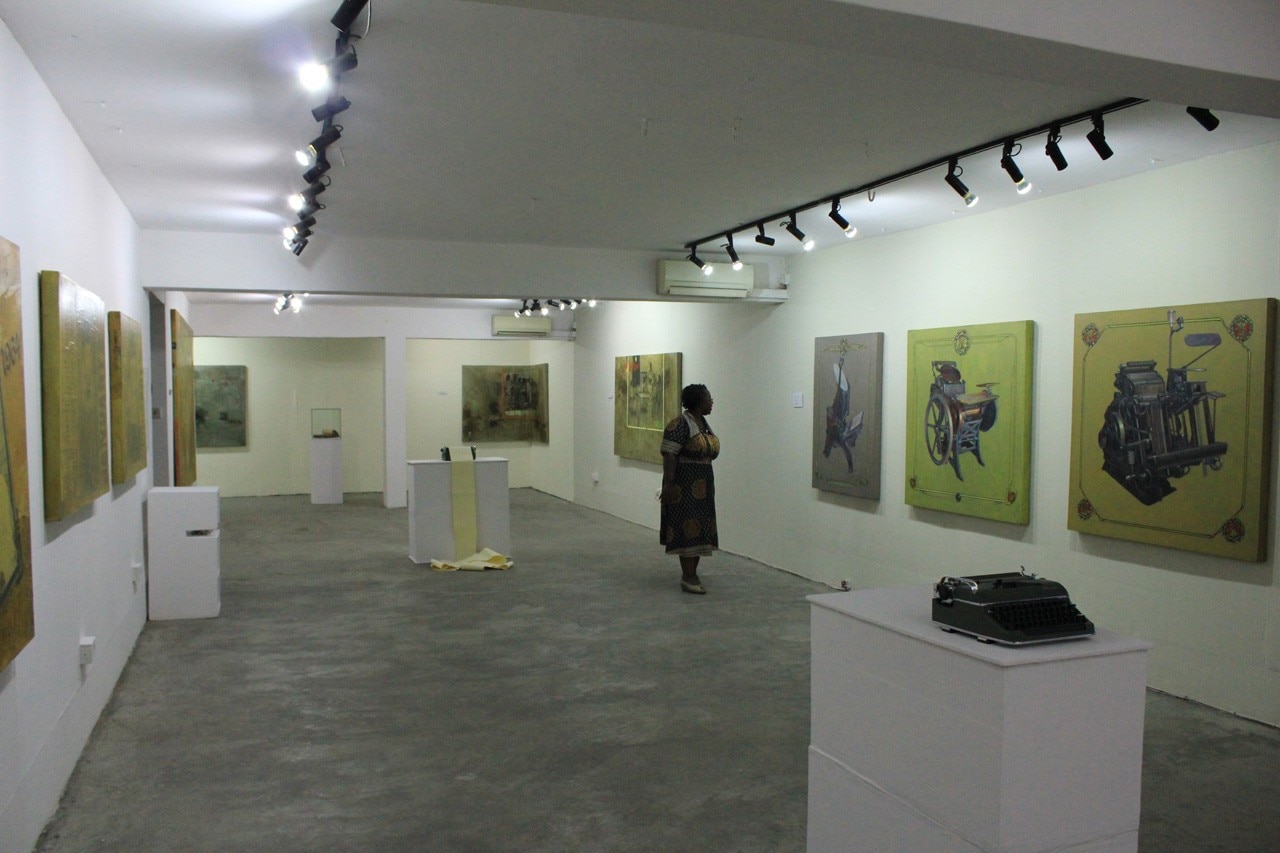
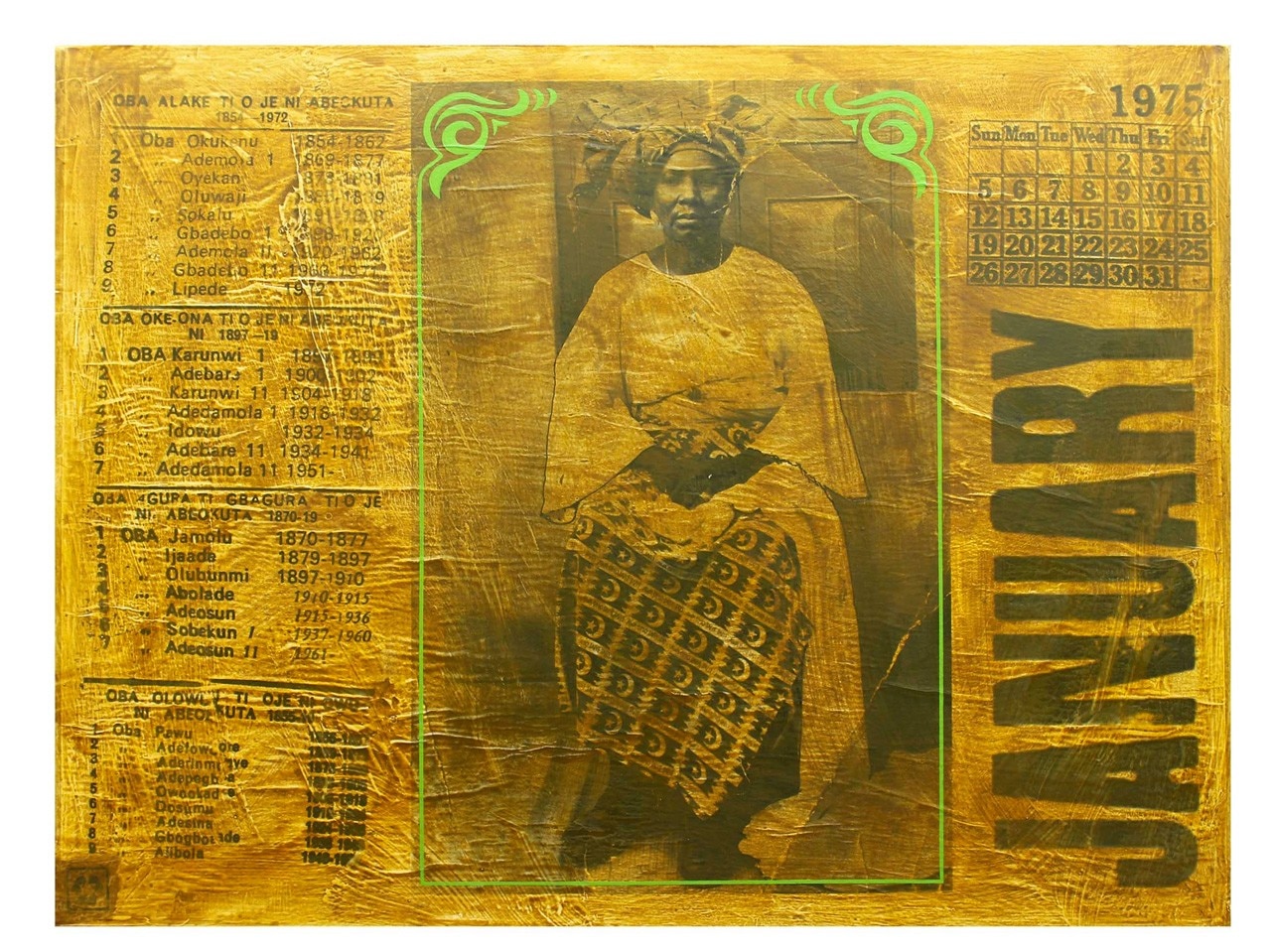
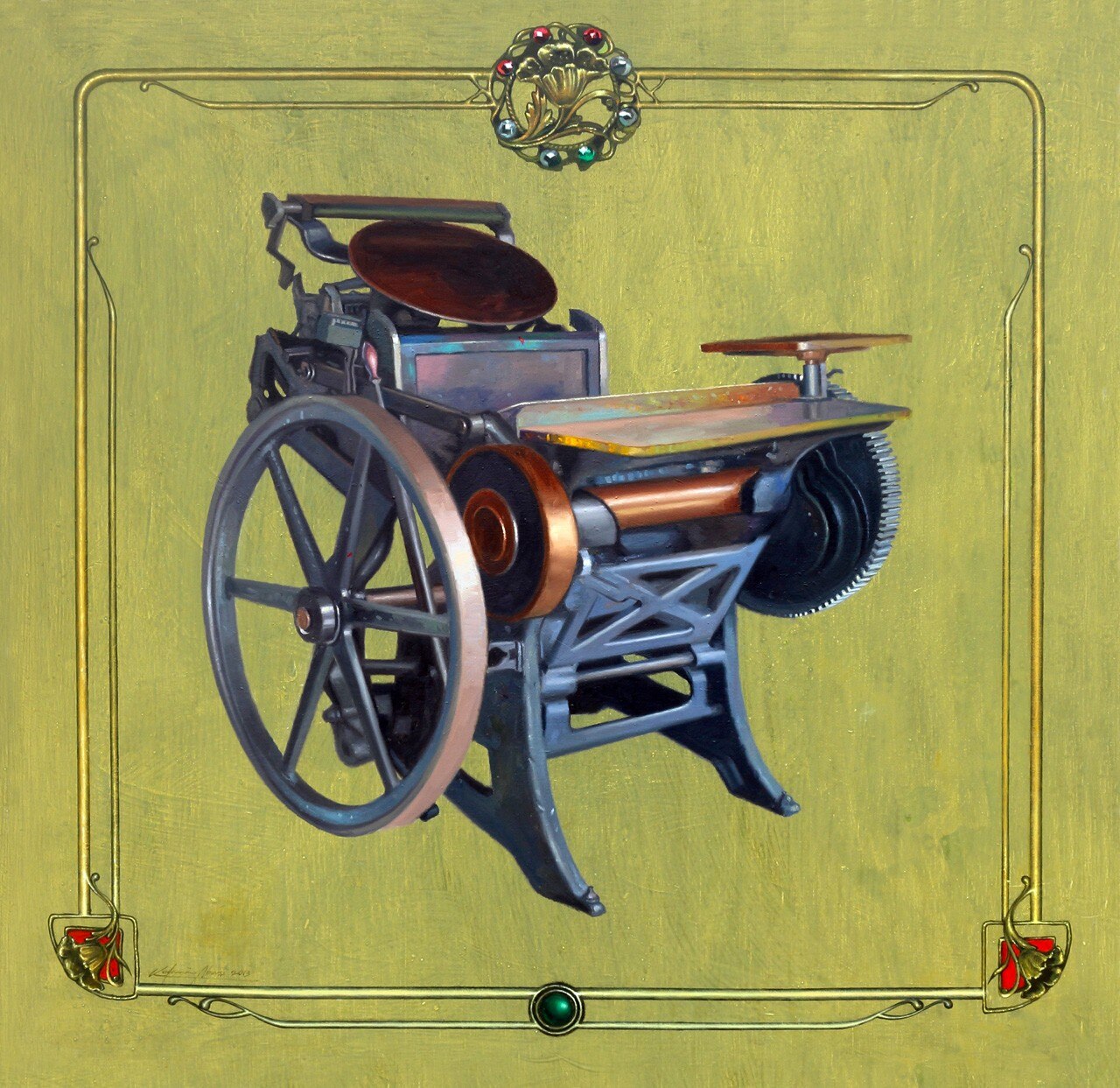
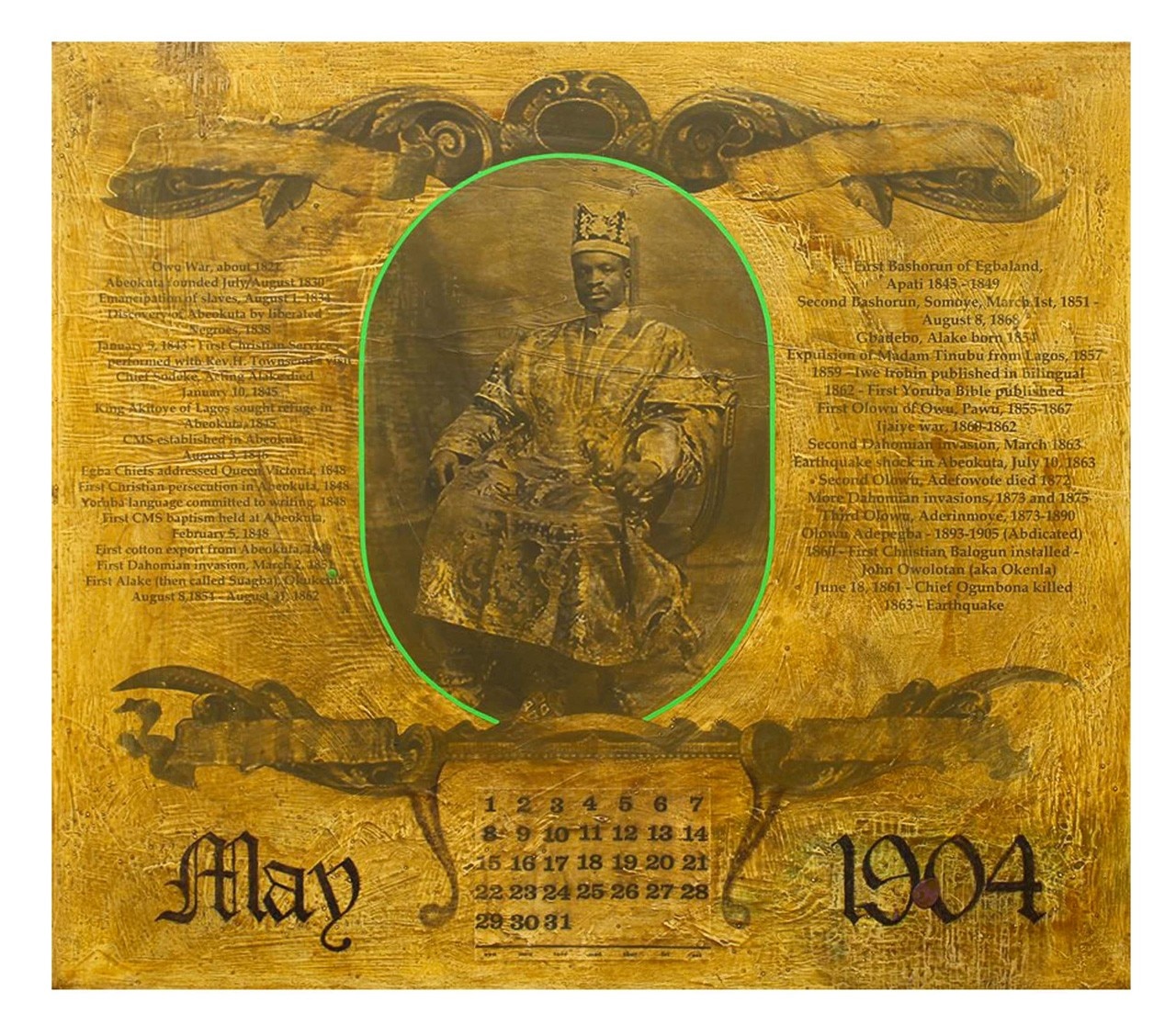
In the second body of paintings, the "Calendar" series, Kelani appropriates the template of the "Bomode Oku," an engaging way of telling stories and remembering events that have happened in a community. As a child, Kelani recalls clients coming to the family printing press with images of a loved one (usually deceased) and asking for a "Bomode Oku" calendar that highlights the story of their town and community.
Kelani pays homage to this form of archiving and remembering and uses it for his own purposes in the "Calendar" series by superimposing within the painting images of his late father, maternal grandfather, and grandmother to create his own family "Bomode Oku."
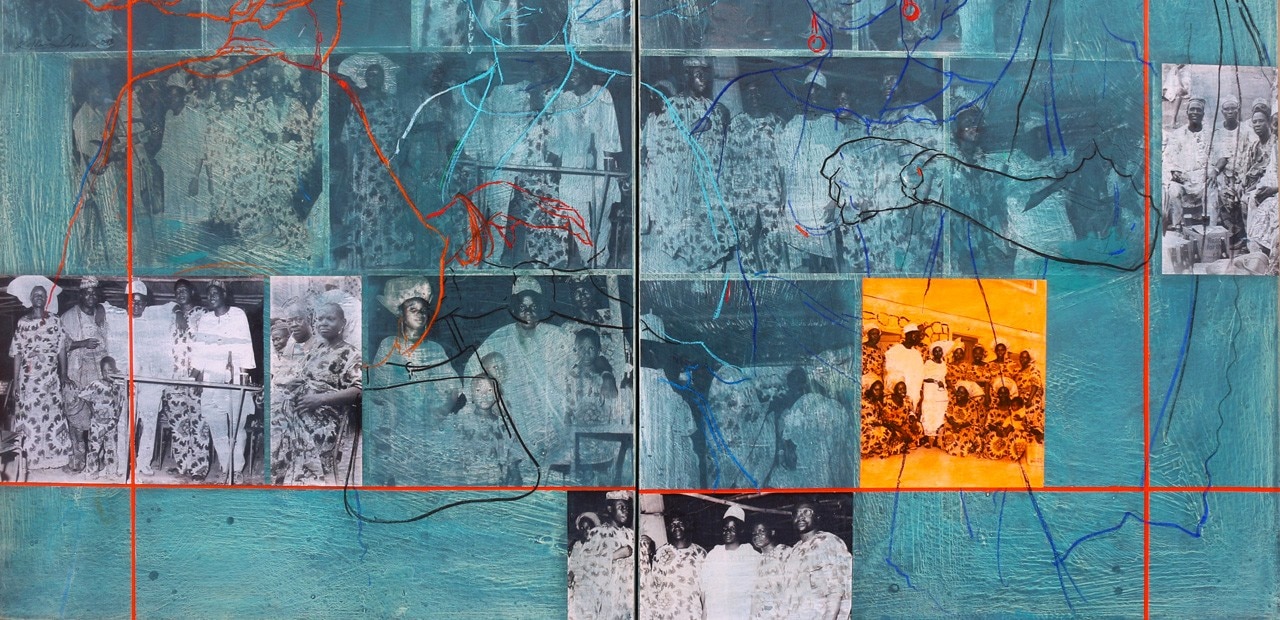
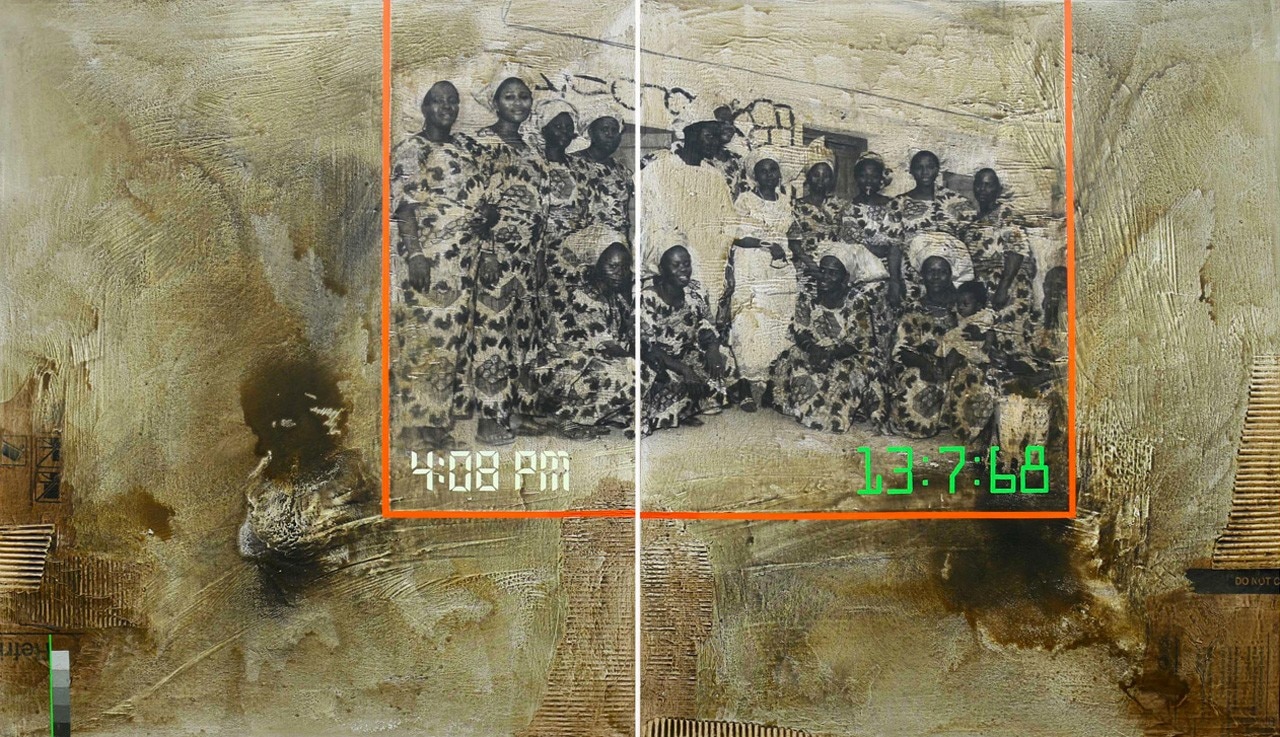
The last series, "Family Album," are large paintings embedded with photographs that place the nuclear family within the group at social gatherings and important events. By making a private narrative part of the social collective, he comments on the universal reality of his experience. In these paintings the images of the past and present, analogue and digital, painting and photograph coalesce seamlessly, conflating space, time, and medium.
Àsìkò, meaning time in Yoruba, is a nostalgic as well as a cathartic tribute to a father whose, despite the passage of time, memory remains embedded in the fabric of the present. This is most visible with the inclusion of a book of "knowledge," a material witness to the thoughts, ideas, encounters of the artist's late father, Alhaji Sumola Ajani Kelani.
until 21 December 2013
Kelani Abass
Àsìkò: Evoking Personal Narratives and Collective History
curated by Bisi Silva and co-curated by Jude Anogwih
Centre for Contemporary Art, Lagos
Lagos, Nigeria