The concept that Playing the City 2 realises, on various levels, is a continuation of the ideas of the major avant-garde movements of the twentieth century. In the early twentieth century, the Dada movement rejected “conventional” art and art forms as well as bourgeois ideals, taking to the street instead. It is also worth mentioning Guy Debord’s Situationism, which 50 years later still has a strong influence on the contemporary art scene, notably on “Public Art”, and which has inspired theoreticians such as Michel de Certeau to define space as a “practised place” and to locate its significance in the activities taking place within it. The urban researcher Armando Silva argues similarly, differentiating the city into the architectural fact and a performance consisting of human interactions. For artists of so-called relational aesthetics, processes such as intersubjectivity and interaction are both the starting and endpoints of their artistic work. According to Nicolas Bourriaud, the utopian potential in developing artistic spaces in this way lies in being able to provide alternative forms of sociality, critique and happiness. They have all turned away from the transformative potential of grand narratives, and instead see opportunity for change in the direct encounter with people.
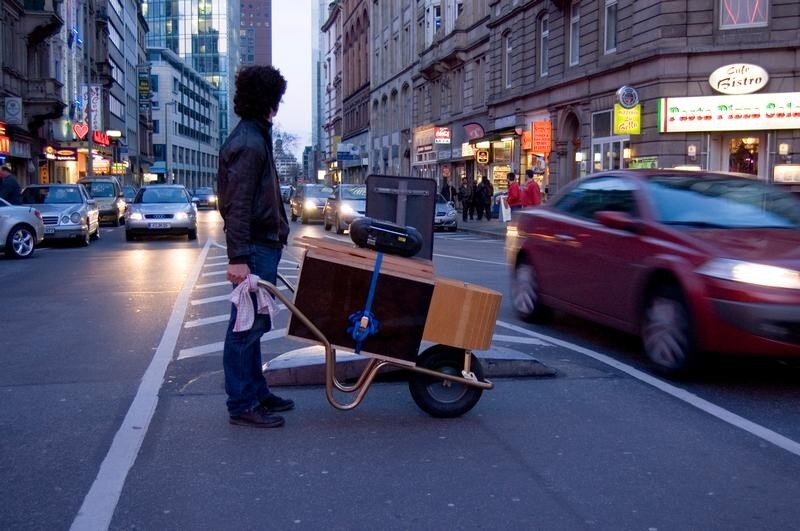
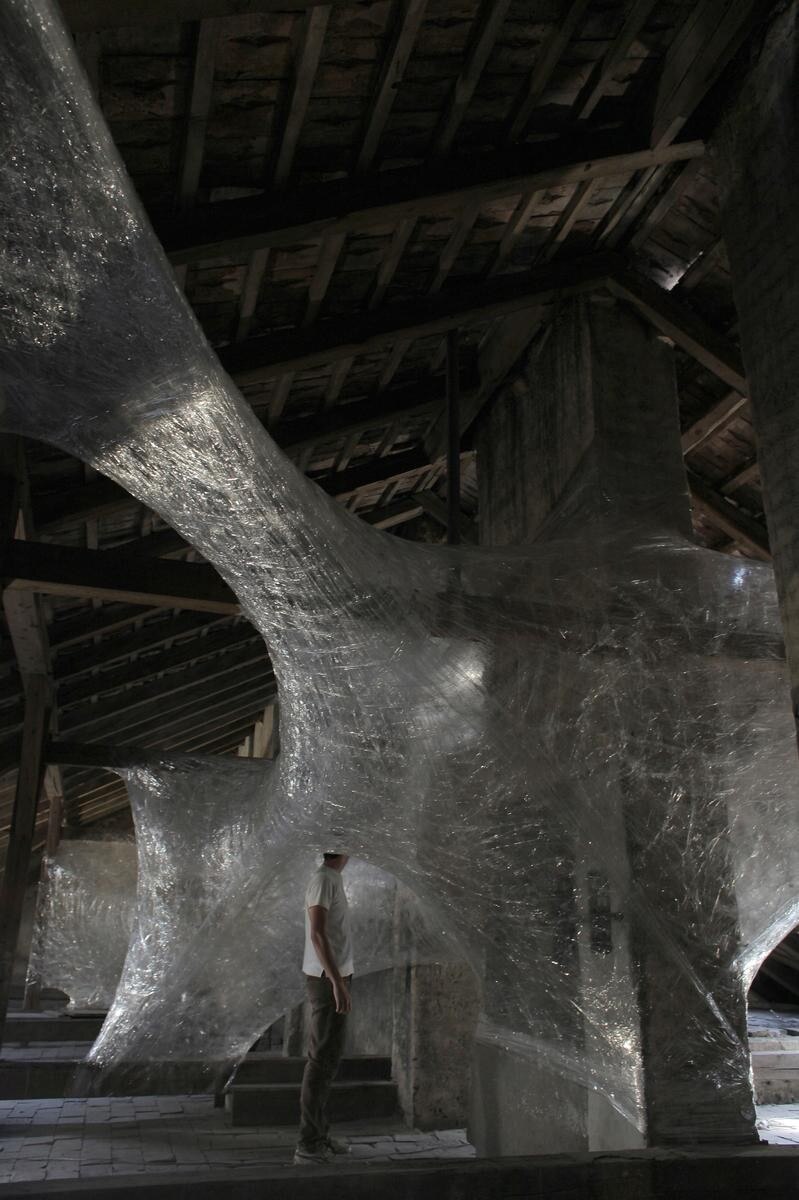
Playing the City 2 offers a look into the wide varieties of current participatory and collaborative art: one large-scale installation by the Austrian-Croatian design collective For Use / Numen fills the architecture of the Schirn with a walk-in cocoon of transparent adhesive tape. Since the installation can be experienced and entered, it becomes a fixed component and can be used as such by the inhabitants of public space. The installation by artist duo Michael Clegg & Martin Guttmann, “Open Debate Station, Frankfurt”, questions the structure and function of public debates. They design a discussion platform that, through fixed furniture and established rules of play, becomes a place for a public, structured and fair exchange of opinions. In this work, the two artists refer both to the tradition of Talmudic interpretation and to the history of the Frankfurt School. The Italian artist Paola Pivi will engineer unexpected situations on Frankfurt public transport as part of her work: during rush hour, an individual actor first starts to sing a song, and then gradually – apparently at random – more musicians will join in, singing or playing instruments, thereby disrupting the everyday situation of a silent trip by bus or tram.
The title of Annika Lundgren’s project, “The Stock Is Rising”, is a historical reference to a 1967 action, in which a group of 20,000 peace demonstrators led by Abbie Hoffmann gathered before the Pentagon in Washington D.C. and sang loudly to drive evil spirits from the building, as part of a protest against the Vietnam War. The action planned by Lundgren for Playing the City 2 is a response to the international financial crisis and will start by publishing information on the website www.stockisrising.com about the action, about Abbie Hoffman, about levitation as a form of parapsychological practice in which the pure force of thought overcomes the gravity of objects, and about the financial crisis. On 21 September 2010, between 15:00 and 17.35, participants in the action will gather in front of the Alte Börse (former stock exchange) in Frankfurt, and make the building hover. This action will be networked worldwide via the website.
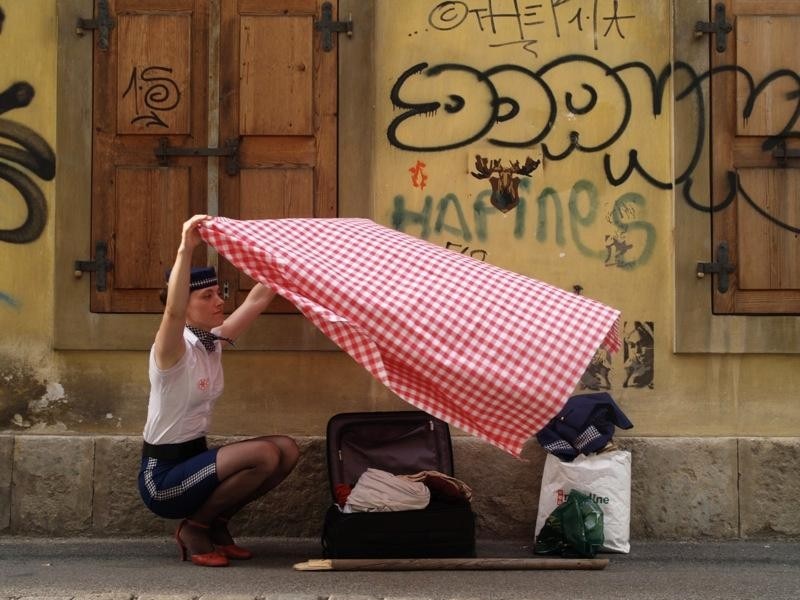
The remaining actions also use various means and media in order to intervene in urban space (e.g. Nina Beier, Vanja Vukovic and Julien Bismuth), to question social structures and processes (e.g. Ivan Moudov), or to set up forms of cooperation and interaction between the artists and the general public in Frankfurt (e.g. Clarina Bezzola, Lee Mingwei, Leonid Tishkov and Reactor). One important feature of the actions and activities is their time-limitation: when the project is over, the individual works will be documented through photographs and film on the website, while their traces in public space will gradually disappear.