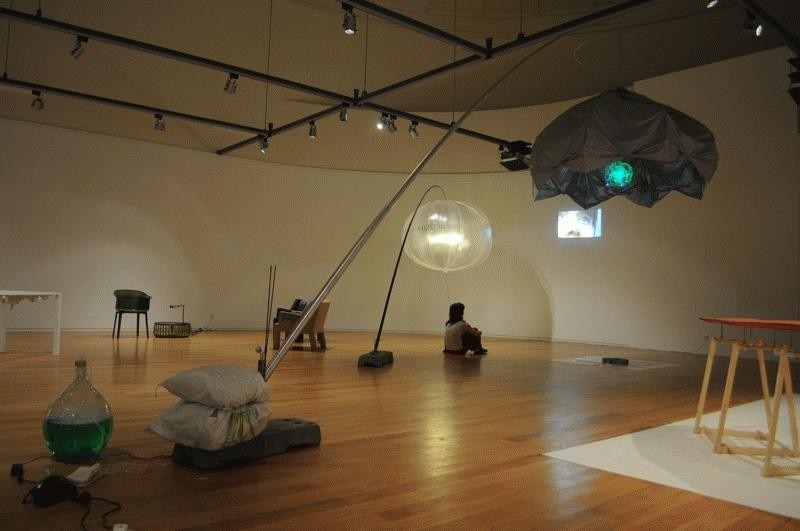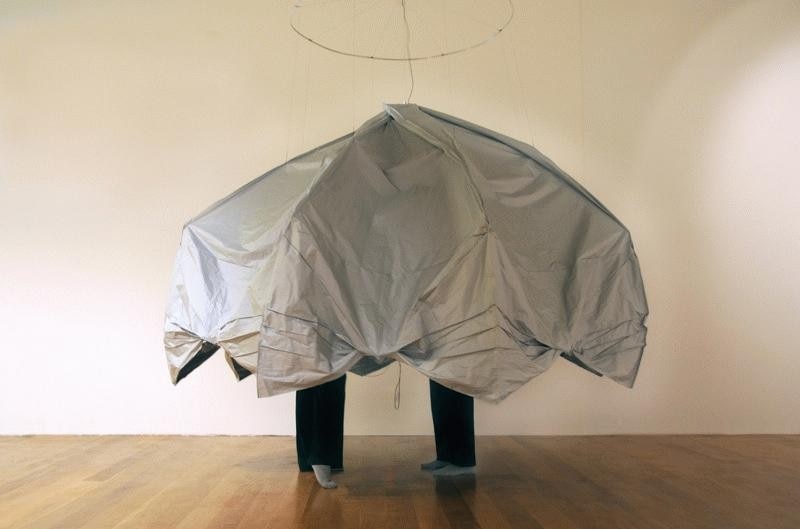
The design-scene is mostly focused on spreading a single image of a product, in a certain shape, colour and composition in which it’s photographed. It doesn’t even matter whether the product is real or not, mostly we only know the product by its image, as most of the people newer saw the actual. This is what I want to undermine through this project. The floating light project isn’t a single product, but an idea, or better, outcome of a lighting research. It manifests itself in a wide range of shapes, materials and sizes. How could light be present in space, in its purest and most effective way? The 1st generation floating lights consists of a regular bulb, indicating the inefficiency by catching its heat in a shielded volume. This creates a difference in heat and therefore volume of the inner and its surrounding air, which enables it to float. In the past years I created over 20 pieces, varying in material, volume and lighting, seeking for the perfect balance. In the very beginning I experimented with objects that were able to float, such as bubbles, helicopters and balloons. Nowadays I still find myself folding papers into wings and blowing bubbles the same as years ago, but out of a complete different perspective and knowledge. The newest piece I’m creating for ExperimentaDesign merges all concepts and ideas into a new light object, something like an inverted Big Bang. I’m creating a unity of all fundaments which lay behind this project; the application and development of efficient lighting by using LED’s, diffusing and reflecting without energy loss by using highly reflective textiles and prismatic micro bubbles. The piece, in a state between object and organism, was introduced by a group of dancers of the "Escola Superior de Dança" under supervision of the Portugese choreographer Nuno Almeida, carrying and installing all the organs, into an entity formed by pliés, indicating the need of incorporating growth and process in product design. Eric Klarenbeek