OK
Domus Domus
newsstand
SUBSCRIBE
  • Magazine
  • Digital Edition
  • Digital Archive
LANGUAGE
  • it
  • en
Hi Logout
Sign up / Log in
  • News
  • Architecture
  • Interiors
  • Design
  • Art
  • Archive
  • Products
  • Design Essentials
  • Design Stories
  • Submit your project
Sections
  • News
  • Architecture
  • Interiors
  • Design
  • Art
  • Archive
  • Products
  • Covers
  • Biographies
  • Architecture Firms
  • Sustainable Cities
  • Gallery
  • Design Stories
  • Domus for Design
Magazine
  • Subscriptions
  • Digital Edition
  • Current Issue
  • Guest Editor
  • Digital Archive
  • Nordic Design
Specials
  • Design Essentials
  • Modern Work
  • DomusAir
  • Milano Design Week
  • Worldesign
Current Issue

Domus 1106 hits the shelves

Follow us
LANGUAGE
  • it
  • en
Hi Logout
Sign up / Log in
newsletter Icon
results No results Please enter a long search term

      The essentials: 20 of the best bathtubs

      The essentials: 20 of the best bathtubs

      Next gallery

      Ambiguous architecture: Milan’s Palazzo di Giustizia turns 90 years old

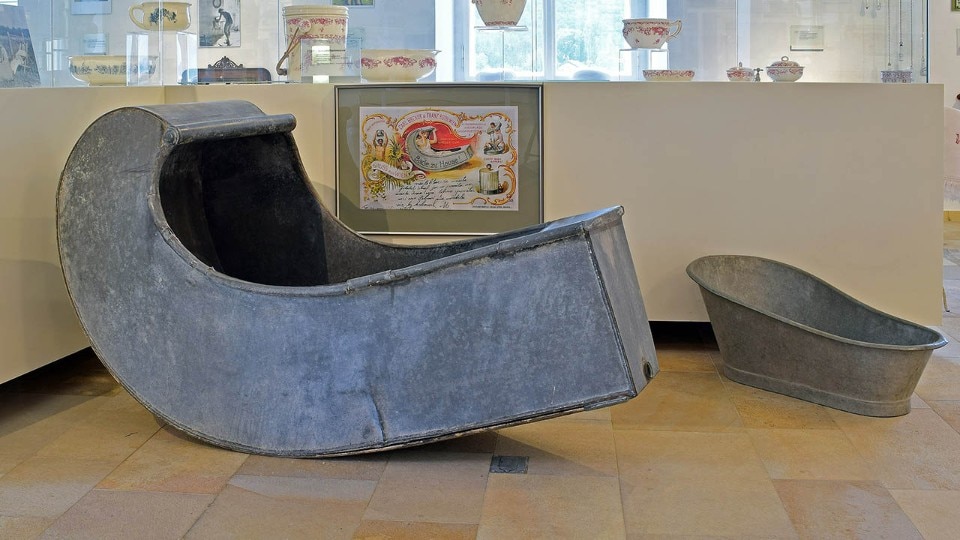
      Zinc bathtub, France, 1800s

      Filled by hand with buckets of water heated over a fire, zinc bathtubs were among the first popular models to mark the comeback of the habit of personal hygiene. Little more than a simple tub, in the poorer models, or equipped with decorated feet and rounded edges, they were generally characterized by a slightly raised headrest.

      View article
      View article
      • SHARE
      • PIN IT

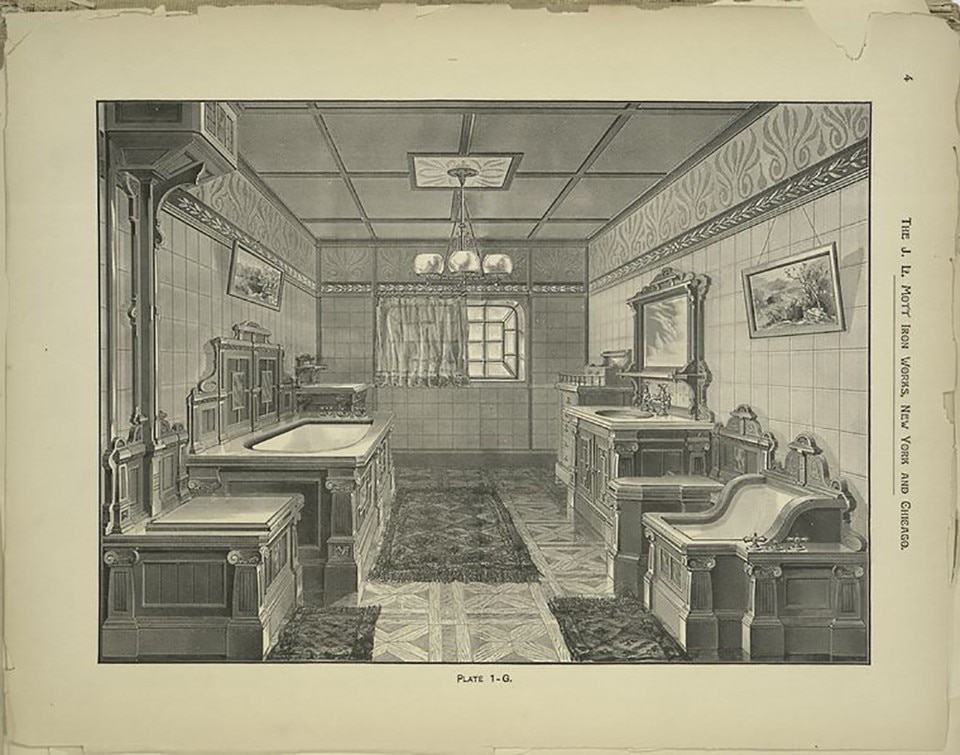
      Imperial, J.L. Mott Iron Works, 1899

      A historic New York company – rumor has it that Duchamp used one of their designs for his famous Fountain – mass-producing bathtubs and washbasins, J.L. Mott Iron Works became the symbol of the new levels of comfort that the bathroom of the early 20th century had reached. In its numerous advertisements, it was among the first to praise the hygienic benefits of porcelain and how easy it was to clean.

      View article
      View article
      • SHARE
      • PIN IT

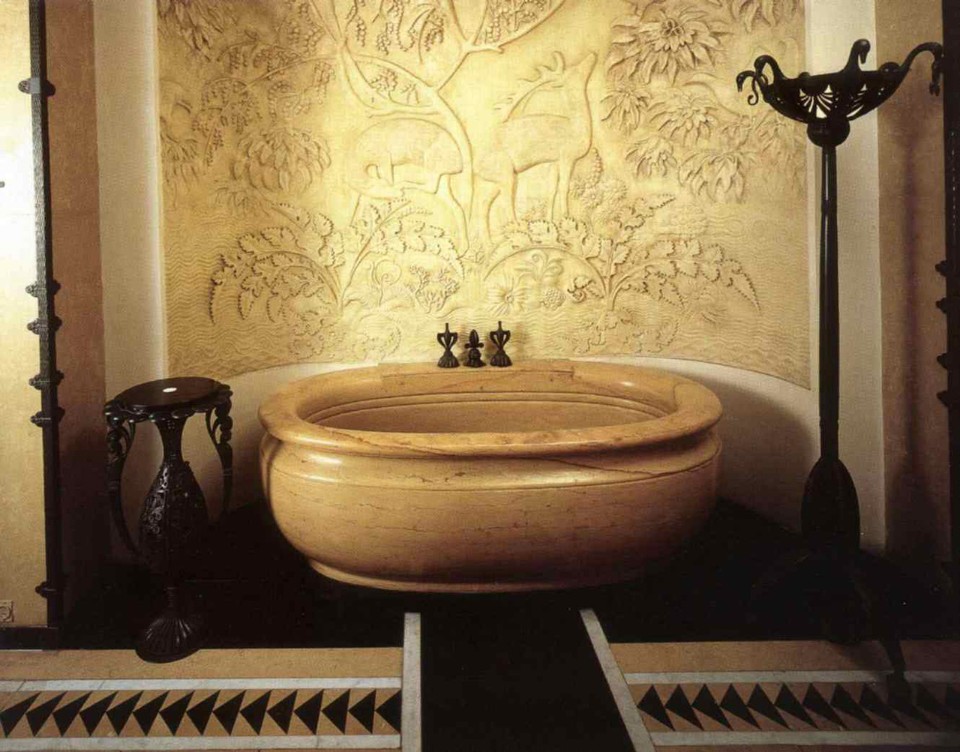
      Jeanne Lanvin bathtub, Armand-Albert Rateau, 1924

      For the bathroom of Jeanne Lanvin, fashion designer and founder of the Lanvin brand, the interior decorator Armand-Albert Rateau used the bathtub in a dramatic and majestic way. Made of marble, it was set in a stucco-covered niche and surrounded by furniture and accessories, providing a new idea of luxury and comfort in the Paris of the 1920s.

      View article
      View article
      • SHARE
      • PIN IT

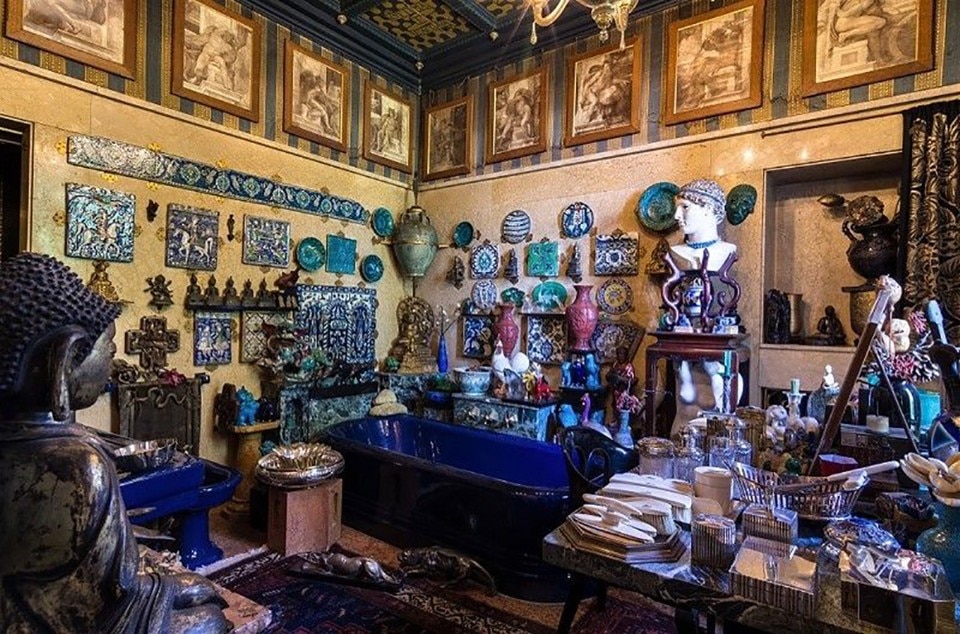
      The Blue Bathroom, Vittoriale, Giancarlo Maroni, 1931

      The famous blue bathroom at the Vittoriale – Gabriele D’Annunzio’s museum house overlooking Lake Garda – is best known for the 900 objects stored in that very room. And yet, in the crowded composition that distinguishes it, it is the intense shade of the sanitary ware that inspired its name.

      View article
      View article
      • SHARE
      • PIN IT

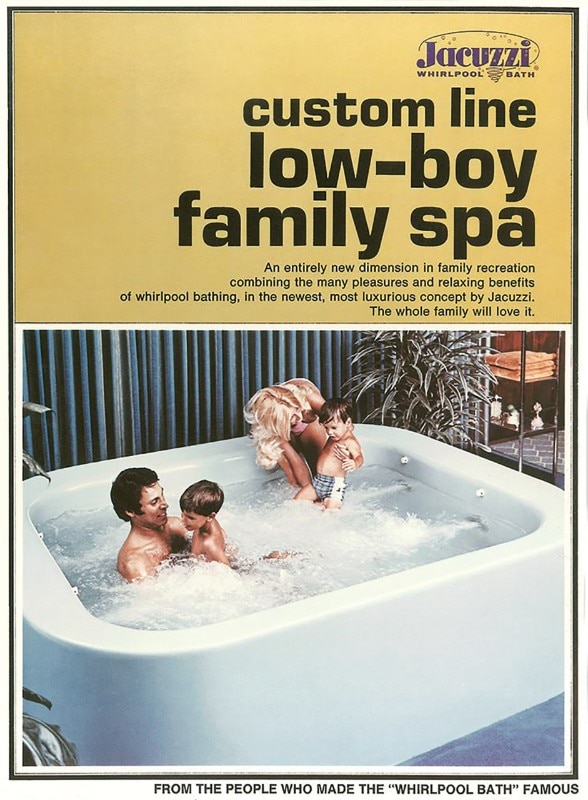
      Roman, Roy Jacuzzi, Jacuzzi, 1968

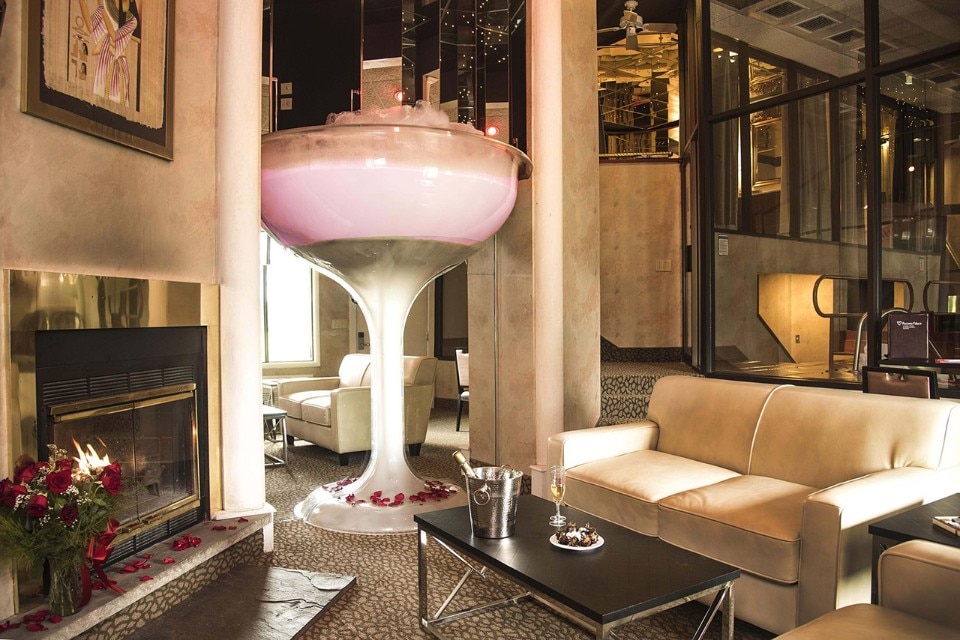
      The first whirlpool bath invented by Roy Jacuzzi was not the result of formidable business intuition, but rather a way to cure his son’s rheumatoid arthritis. Jacuzzi placed in the bathtub a pump mechanism capable of generating water jets and bubbles. The era of mechanised massage, in which Jacuzzi is still the leader today, had just begun. Having become a fashion phenomenon, the jacuzzi takes on hedonistic connotations and flirts with kitsch, creating improbable and sometimes hilarious models. This is the case of Champagne Glass, a high-altitude love alcove that, amidst the splendour of bubbles, plays with shine and a sense of hyperbole.


      View article
      View article
      • SHARE
      • PIN IT

      Champagne Glass tub, Jacuzzi

      View article
      View article
      • SHARE
      • PIN IT

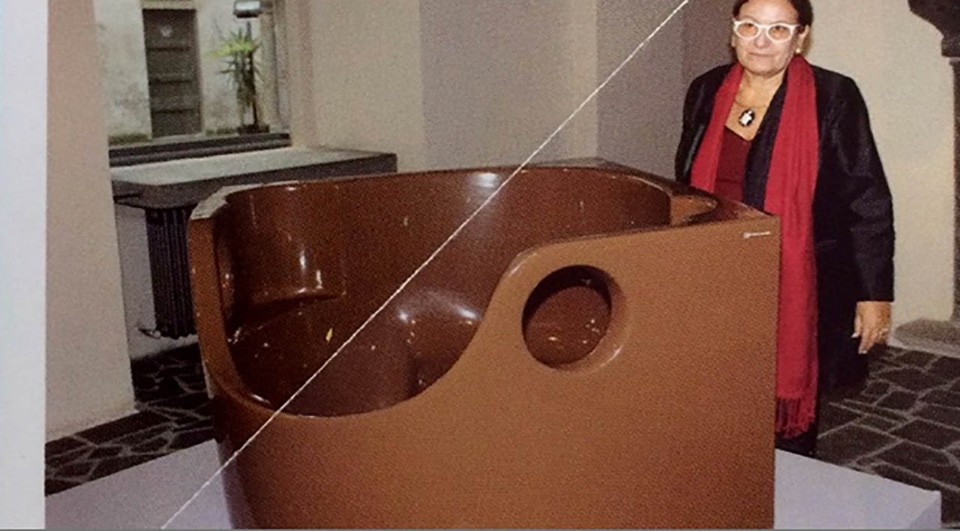
      Tinoccia, Antonia Campi, Pozzi Ginori, 1975

      This unusual and in some ways curious corner bathtub manages to renew the language of sanitary ware – in terms of colour and ergonomics – as Antonia Campi has done so many times throughout her research. The shape, similar to that of a tub, is characterized by a wide opening and an unexpected porthole. The seat, which is too high to be used when taking a bath, is instead perfect for footbaths.

      View article
      View article
      • SHARE
      • PIN IT

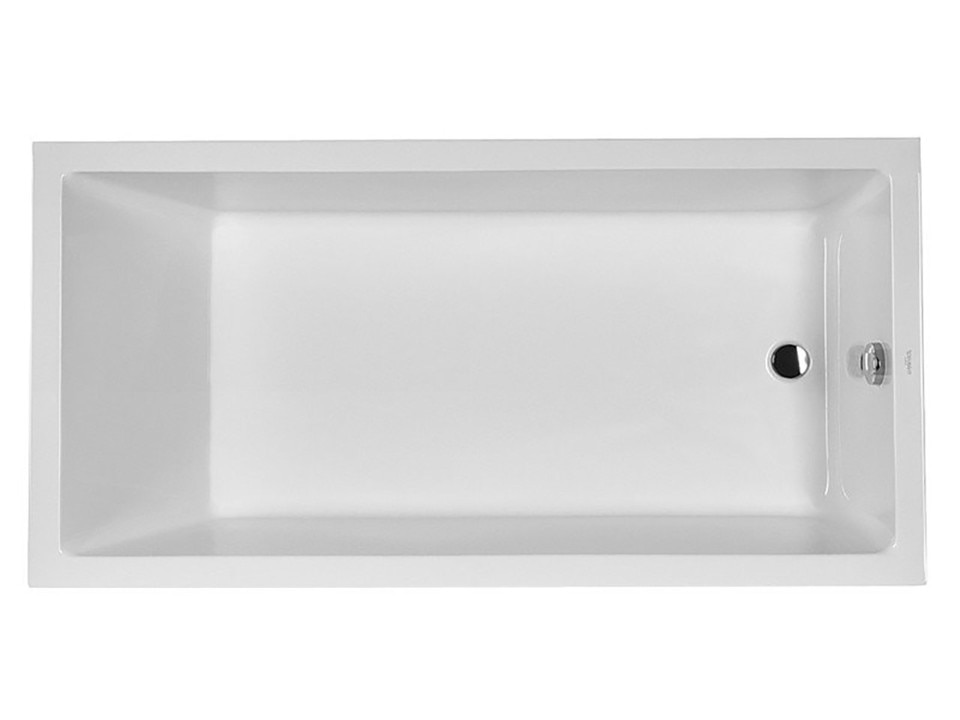
      Built-in bathtub, 1970s

      In the bathrooms of the 1970s, when fully tiled walls, colour and crazy patterns reigned supreme, the bathtub was camouflaged by a tile frame. This solution is still extremely popular today, especially in small bathrooms. The photo shows the Starck acrylic built-in bathtub for Duravit.

      View article
      View article
      • SHARE
      • PIN IT

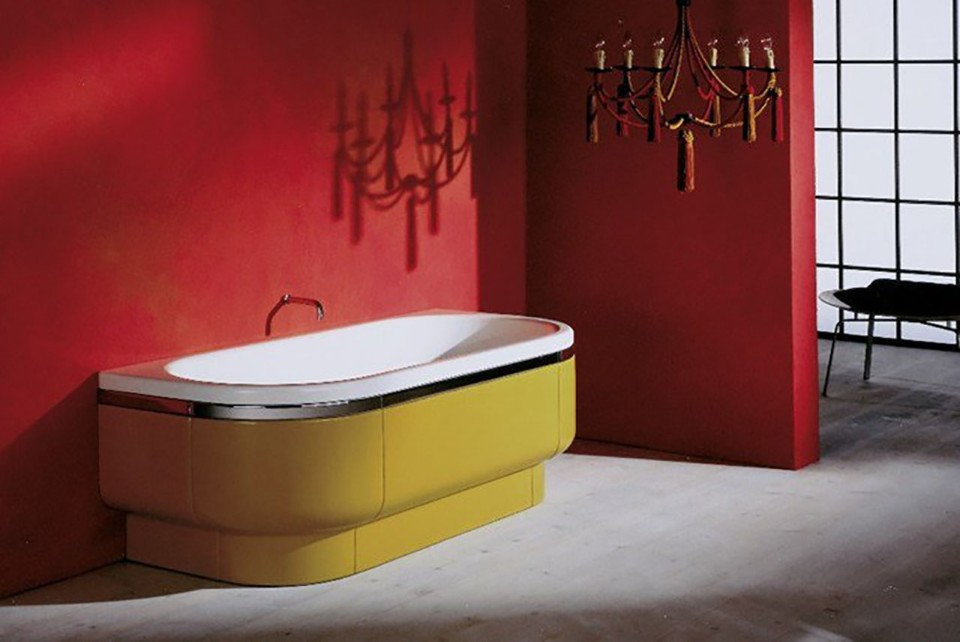
      Centroform, Ettore Sottass, Kaldewei, 1998

      Sottsass’s decade-long collaboration with the German brand has resulted in many models of sanitary ware, including bathtubs. One of the most original – and to some extent groundbreaking – results is certainly Centroform, with its rounded shape with a narrow base characterised by a metal band and an unusual use of colour.

      View article
      View article
      • SHARE
      • PIN IT

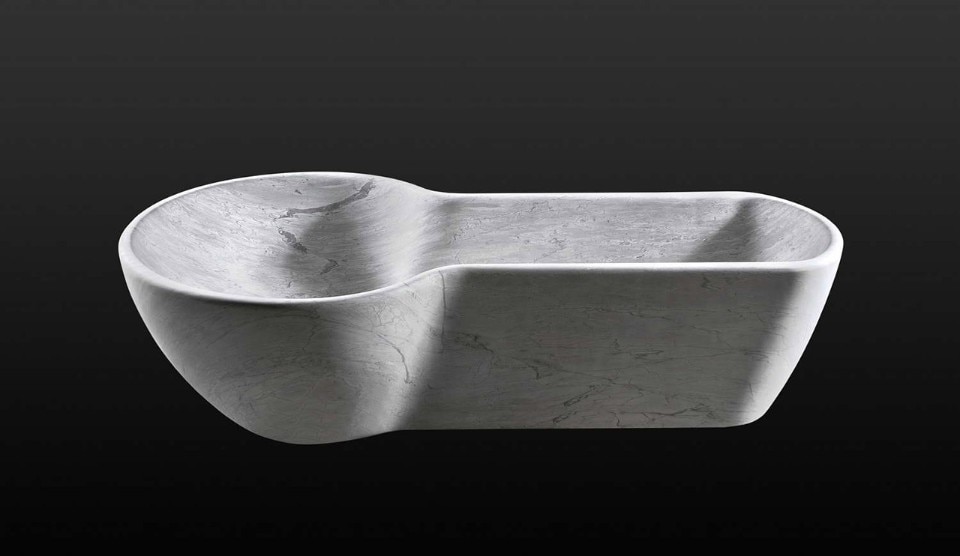
      La Pietra, Ugo la Pietra, UG Group

      An unprecedented combination of bathtub and shower, this 800 kg creation by Ugo La Pietra enhances the essence of the material by synesthetically restoring all the smoothness and sensuality of marble.

      View article
      View article
      • SHARE
      • PIN IT

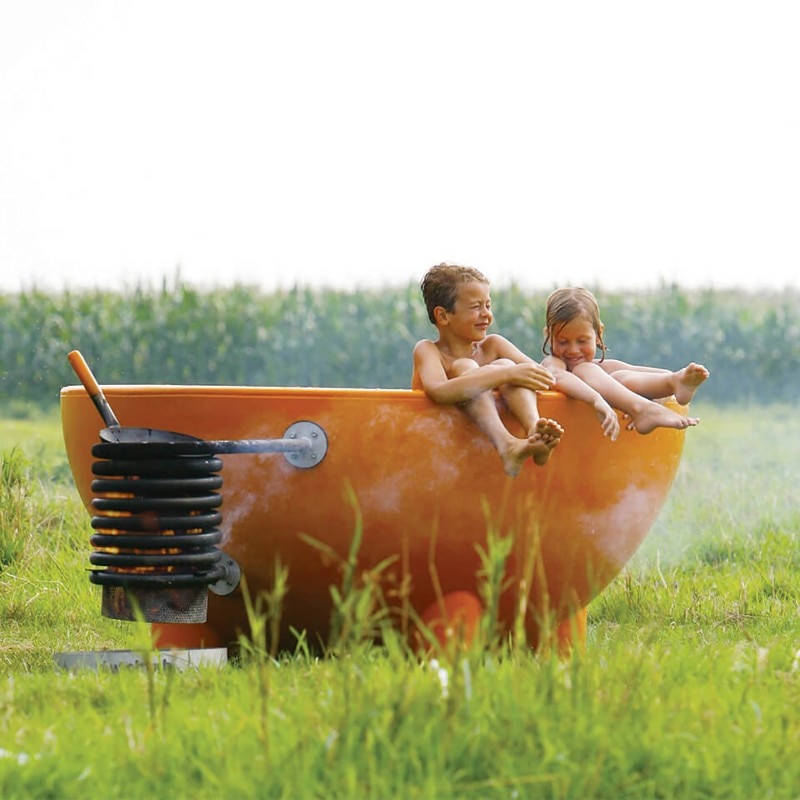
      Dutchtub Original, Floris Schoonderbeek, Weltevree, 2003

      A great classic among outdoor baths, Dutchtub Original turns a domestic ritual into an experience magnified by contact with the open air and nature. It does not require any electricity, as it is wood-fired. Easily transportable, it is made of fibreglass and can accommodate up to four people, turning into a relaxing tool for collective enjoyment.

      View article
      View article
      • SHARE
      • PIN IT

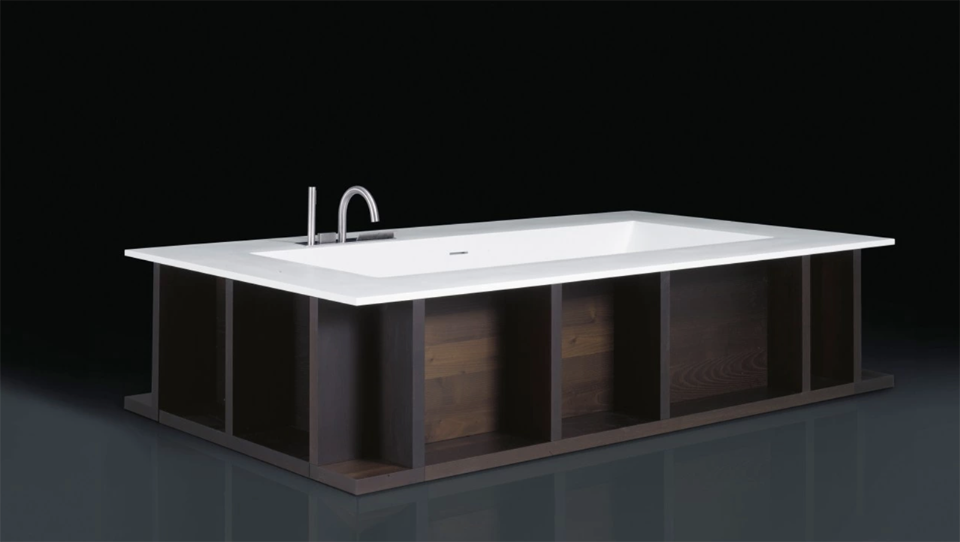
      SwimC, Lissoni&Partners, Boffi, 2003

      A veritable small bathroom architecture, SwimC works by subtraction, transforming its perimeter into a construction capable of sublimating the sense of emptiness and space. Available in four possible configurations – free-standing, peninsula, corner, built-in – in natural or white lacquered wood. The bathtub, featuring a double backrest, is made of Cristalplant®.

      View article
      View article
      • SHARE
      • PIN IT

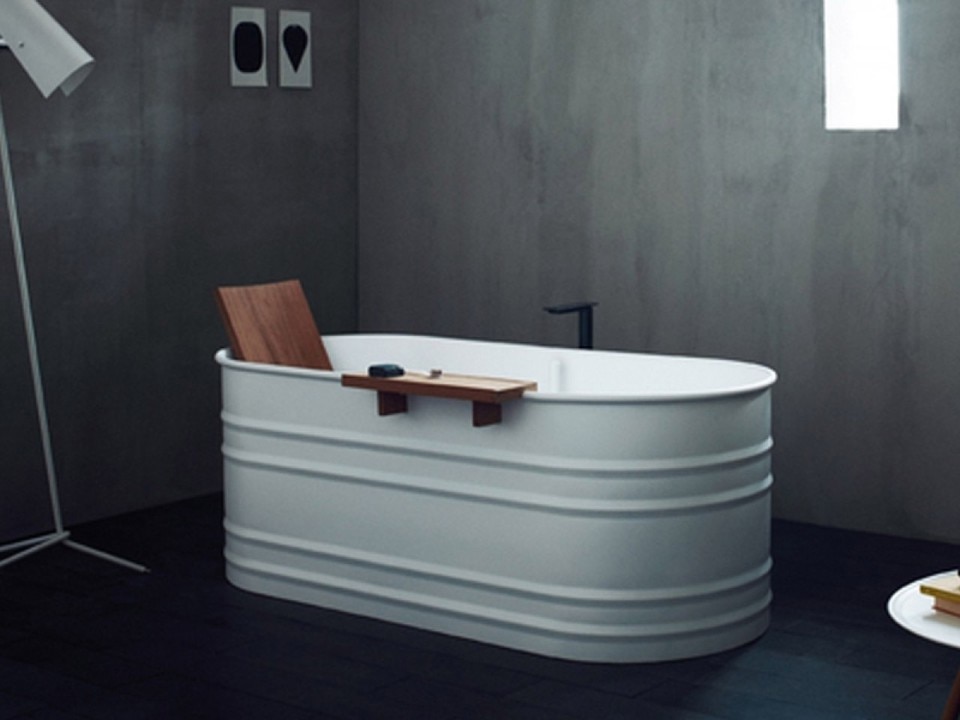
      Vieques, Patricia Urquiola, Agape, 2008

      A reinterpretation of the old metal bathtub, Vieques sublimates the popular model from which it is inspired through its rounded symmetry and the parallel lines that animate its volume. Accessories include a shelf to be installed on the edge of the bathtub and a backrest, both in iroko wood.

      View article
      View article
      • SHARE
      • PIN IT

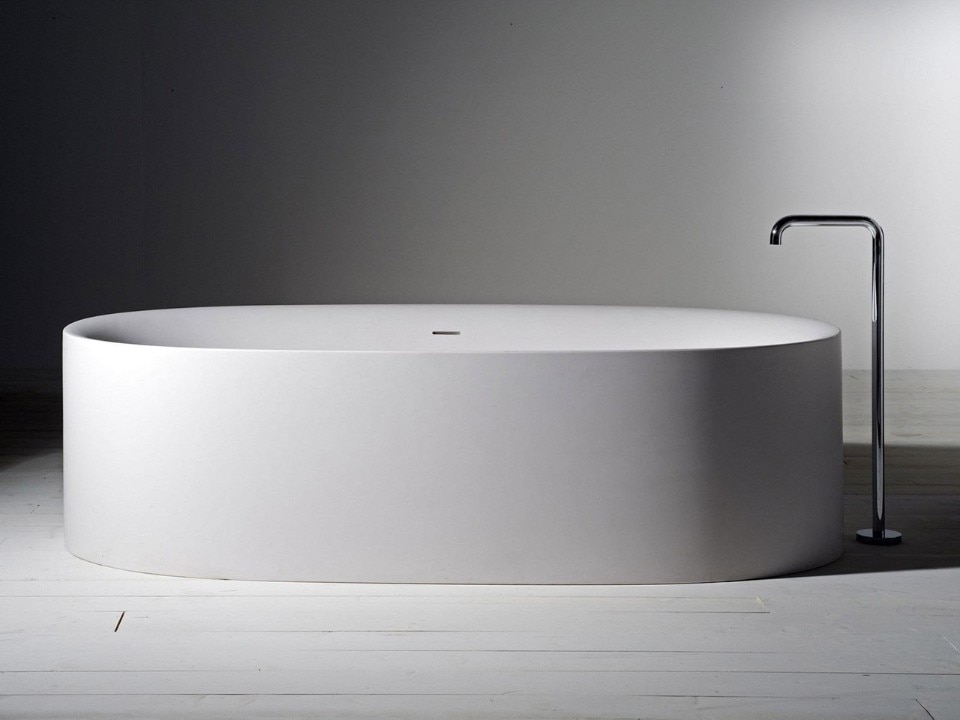
      Sabbia, Naoto Fukasawa, Boffi, 2008

      Characterised by absolute forms, Sabbia finds expressiveness through the detail of its smooth edges, thus underlining the softness of the lines made only possible by the use of Cristalplant®.

      View article
      View article
      • SHARE
      • PIN IT

      Morphing, Ludovica+Roberto Palomba, Kos by Zucchetti, 2011

      A freestanding bathtub also available in two-tone versions, black-white and red-white, Morphing finds inspiration in the classic models of the old bathtubs with feet, and reinterprets their lines through a few essential details - the thinness of the bathtub rim jutting outwards, and the soft touch of Cristalplant®. Honourable Mention at the 2014 Compasso d’Oro.

      View article
      View article
      • SHARE
      • PIN IT

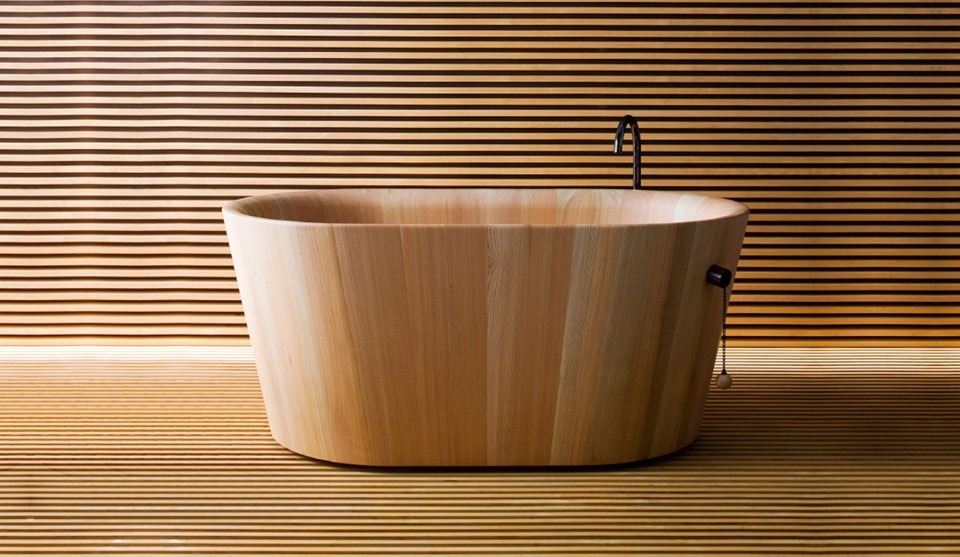
      Ofurò, Matteo Thun and Antonio Rodriguez, 2011

      The name itself is a tribute to an unforgettable type of bathtub of the Japanese tradition called Ofurò. Ofurò is inspired by the forms and rituals of the bath in the Land of the Rising Sun. Its unusual height allows you to immerse your whole body, multiplying the beneficial effects of hot water. The grains of solid larch wood from which it is made gives an impalpable decorative tone, helping to bring a warm note in the bathroom.

      View article
      View article
      • SHARE
      • PIN IT

      Paper, Giovanna Talocci, Teuco, 2011

      Giovanna Talocci’s deep understanding of the needs and technicalities of bathroom fixtures is unparalleled. She has been working in this field since the 1980s, and she has been awarded two Honorable Mentions at the Compasso d’Oro in the field of bathtubs. One of these was thanks to Paper, the result of yet another collaboration with Teuco. An unadorned parallelepiped, Paper transforms linearity into an opportunity to reinforce the presence of colour, which with this model enters the bathroom without any shyness.

      View article
      View article
      • SHARE
      • PIN IT

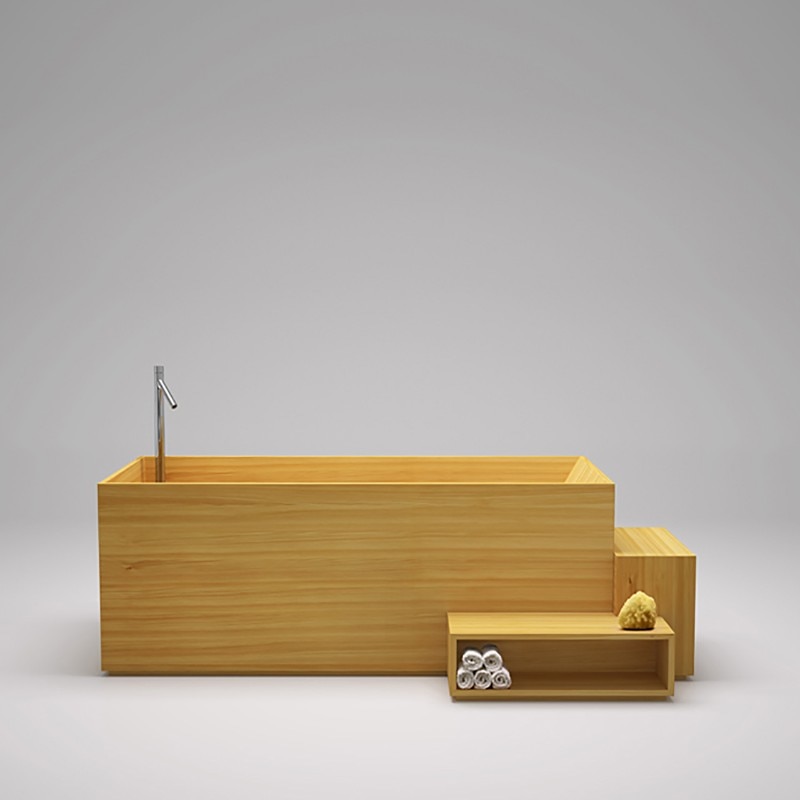
      The Nendo Collection, Nendo, Bisazza, 2012

      Studio Nendo’s reinterpretation of the Japanese bathtub for Bisazza chooses the path of simplicity enhanced by the juxtaposition of parallelepipeds with edges softened by the warmth of larch wood. The containers can be used for storing objects or as a step to get in the tub more easily.

      View article
      View article
      • SHARE
      • PIN IT

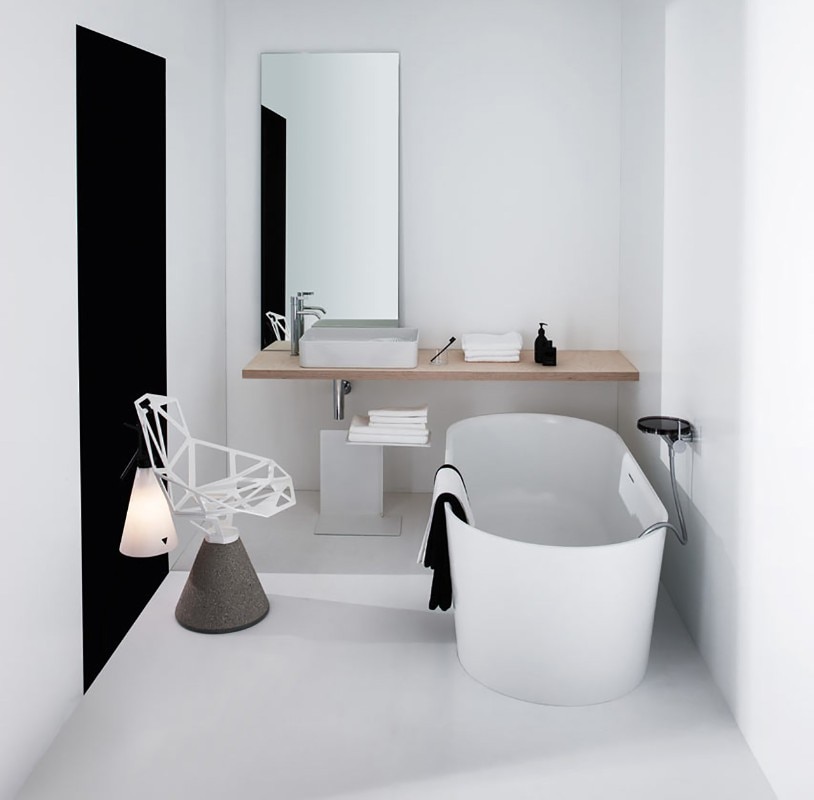
      Val, Konstantin Grcic, Laufen, 2015

      When Gric designed this bathtub made of Sentec, a solid surface material characterised by its low weight and pleasant feel, he focused on achieving an essential form, paying close attention to the thinness of the edges. In the same collection, the rectangular experiment with SaphirKeramik, a material with the same mechanical strength of ceramic, but half the weight.

      View article
      View article
      • SHARE
      • PIN IT

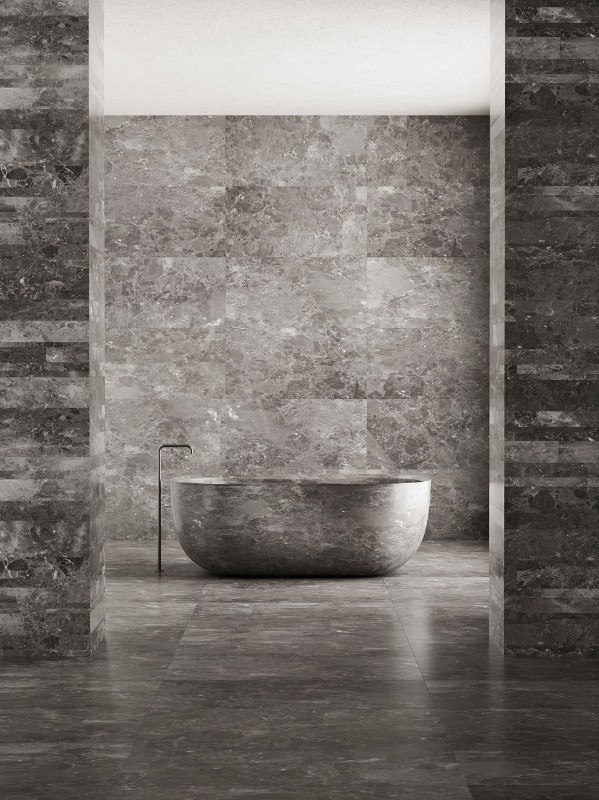
      Anima, Glenn Pushelberg and George Yabu, Salvatori, 2020

      An exercise in applying the sensibilities of clay to marble, as the Canadian designers of Yabu Pushelberg described it, the design of Anima is characterized by gentle curves in the central part of the tub evoking the effect of fingers pressing on clay. Available in Bianco Carrara, Crema d’Orcia, Pietra d’Avola and Gris du Marais®.

      View article
      View article
      • SHARE
      • PIN IT

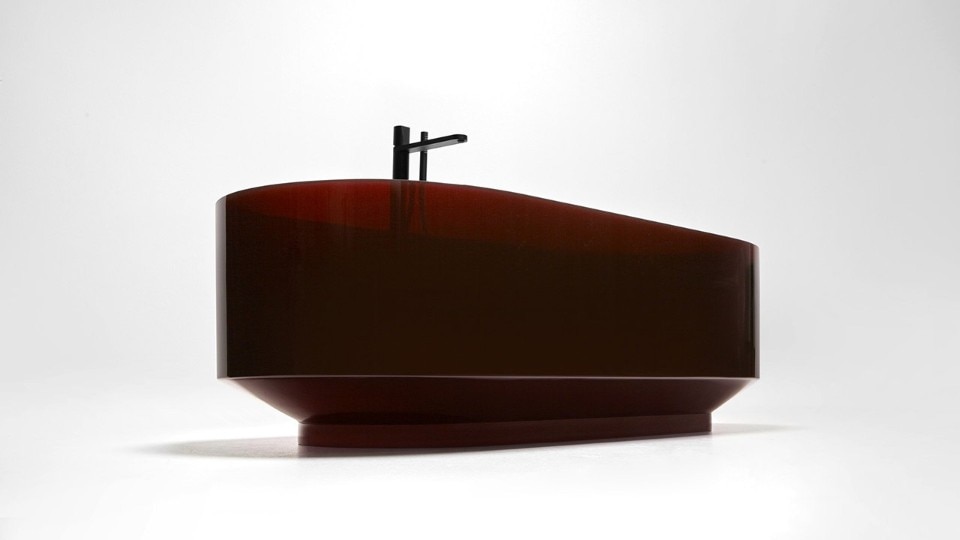
      Borghi, Gumdesign, Antonio Lupi, 2021

      Borghi stands out among all freestanding bathtubs thanks to its unusual use of colour, which we might say is reminiscent of a precious stone. When we look more closely at it, the calibrated design contributes to defining its personality thanks to the narrow base. Made of Cristalmood, the first bathtub designed by Gumdesign Studio can be paired with the homonymous sink characterized by a cork base.

      View article
      View article
      • SHARE
      • PIN IT

      View article
      View article
      • SHARE
      • PIN IT
      Loading
      Share
      • Sections
        • Design essentials
      • Keywords
      • News
      • Architecture
      • Design
      • Art
      • Opinion
      • Archive
      • Products
      • Foreign Editions
      • Biographies
      • Architectural movements
      • Buildings
      • Architecture Firms
      • Design Essentials
      • Urban stories
      • Gio Ponti
      • Contacts & Editorial Team

      • Follow us
      Legal Note

      Editorial DomusEditoriale Domus Spa
      Via G. Mazzocchi, 1/3
      20089 Rozzano (Mi) -
      Codice fiscale, partita IVA e iscrizione al Registro delle Imprese di Milano
      n. 07835550158
      R.E.A. di Milano n. 1186124
      Capitale sociale versato € 5.000.000,00 - All rights reserved - Privacy - Informativa cookie completa - Gestione Cookies

      China Germany India Mexico, Central America and Caribbean Sri Lanka Korea icon-camera close icon-comments icon-down-sm icon-download icon-facebook icon-heart icon-heart icon--mobile-logo icon-next-sm icon-next icon-pinterest icon-play icon-plus icon-prev-sm icon-prev Search icon-twitter icon-views icon-instagram