



As Italy’s first contemporary art fair, and the third in Europe after Art Basel and Art Cologne, Arte Fiera could rely on the sole strength of its longevity to maintain its prestige. Yet, the Bolognese event has never chosen to live on borrowed time. In recent years, under the artistic direction of Simone Menegoi, the fair has focused on a rigorous selection of galleries and a strong focus on the Italian twentieth century, without sacrificing an openness to emerging artists, spaces and research.
Having reached the end of his term, Menegoi passes the baton to Davide Ferri, former curator of the Pittura XXI section in the previous six editions, this year flanked by Enea Righi at the operational direction. As the artistic director explained to Domus, his goal was to embrace and strengthen a momentum that "I'm not ashamed to call national-popular [...] Bologna's is a big fair that is highly visited, it has a large audience that you never quite know how to manage: for me this is an asset."
The title
With an avowedly future-oriented gaze, Arte Fiera 2026 questions "What Will Be," with a title that pays homage to Lucio Dalla,widely regarded as one of Bologna’s cultural icons. The reference to the 1979 song of the same name allows Ferri "to look at the present and, at the same time, at the future, and to shed new light on the history of Arte Fiera": born in 1974, it is almost the younger sister of the song that ended up representing a generation and a collective feeling.
There is a relational dimension, a desire to meet, that is inescapable. Fairs are a crossroads, the time when we look and talk to each other.
Davide Ferri
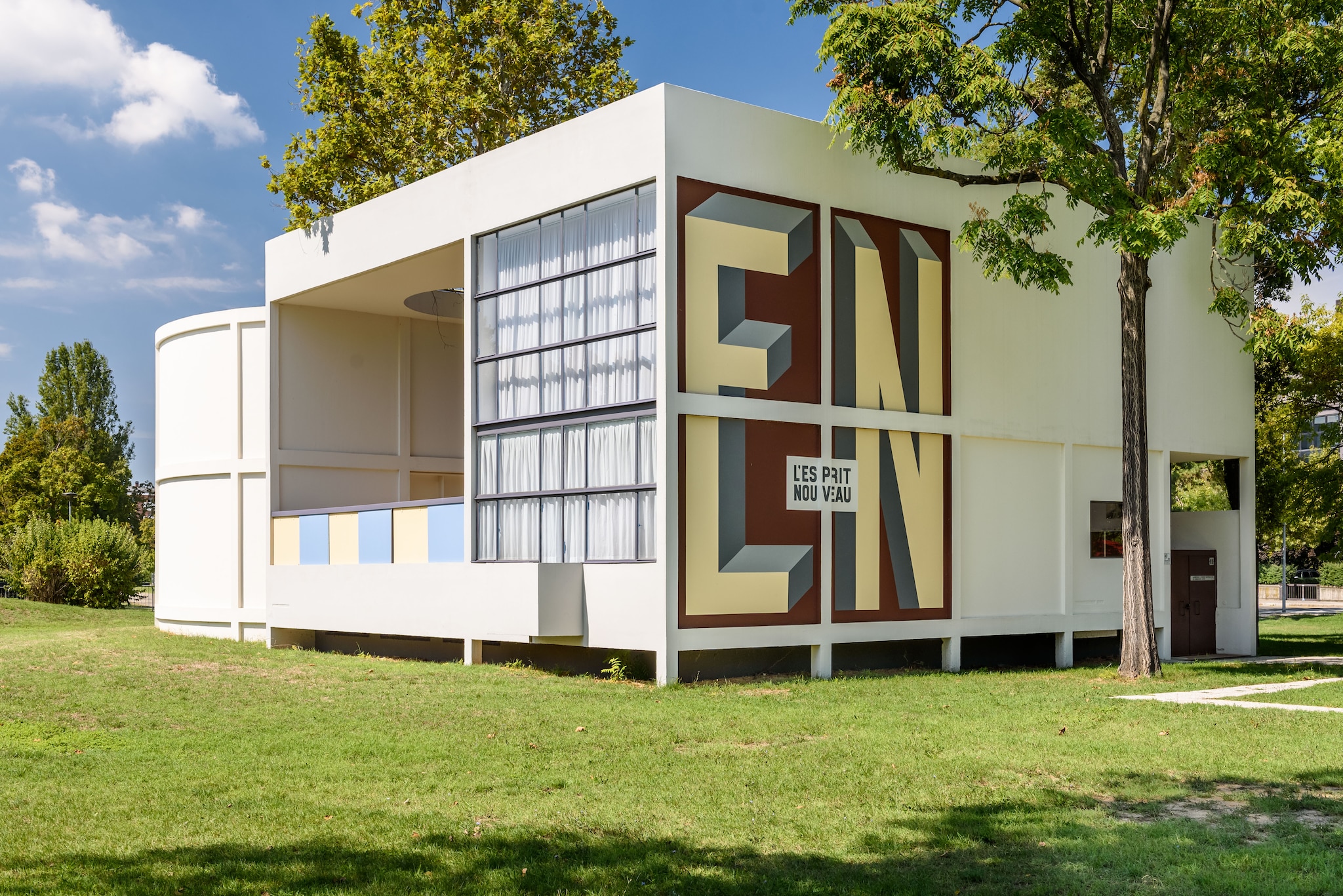
It is a dialogue between past and present that is also deeply physical and architectural. Ferri recalls the articulation of the buildings that stand near the Fair, from the Towers designed by Kenzo Tange to the former Gallery of Modern Art in the building designed by Leone Pancaldi, to the Esprit Nouveau pavilion, a faithful 1977 reconstruction of Le Corbusier's work, created for the 1922 Paris International Exposition. "I want the viewer to look at all of this when he or she enters the Fair, for me it is important to tell this articulation of such rich history, which for me is really physical, of material encounter, and which arises right around the Fair," explains the artistic director.


The performance
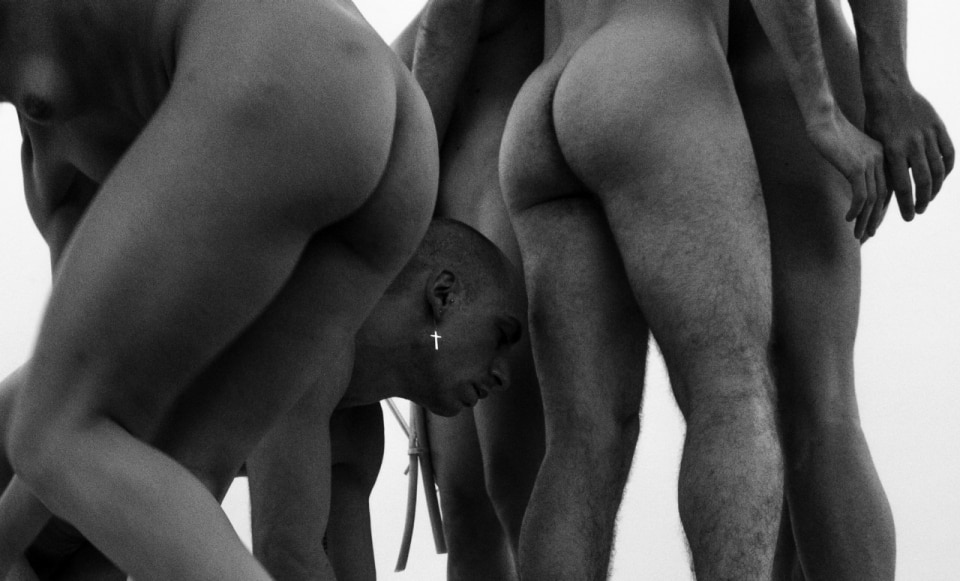
As every year, ample space is devoted to performance, an integral part of Arte Fiera's identity since 1977, when - just three years after the event's inception - the first International Performance Week was held. On that occasion, two nude bodies - those of Marina Abramović and Ulay - positioned on either side of a door forced the audience to pass between them to enter the Gallery of Modern Art, creating one of the most controversial and significant moments in the history of international performance.
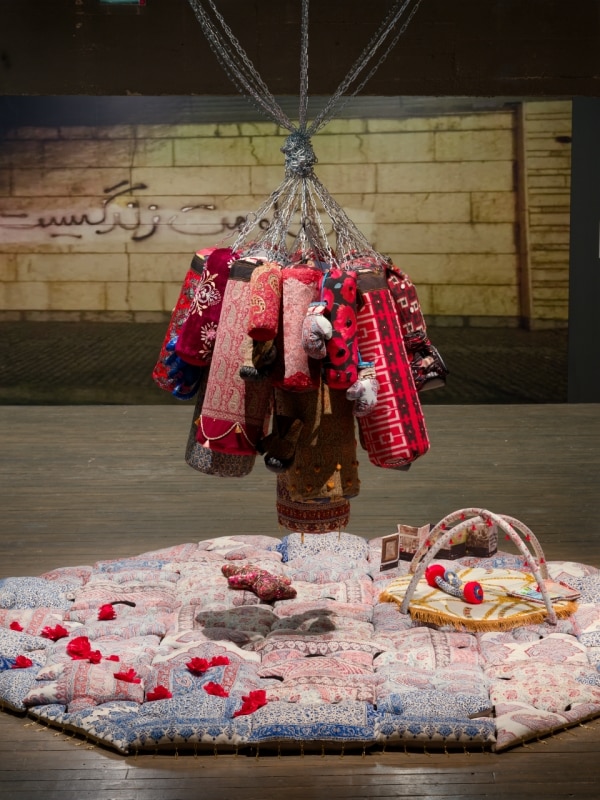
This year, the artist invited to intervene in the Esprit Nouveau Pavilion is Chalisée Naamani. The French-Iranian artist presents an installation-type action, created specifically for the Pavilion space in collaboration with Fondazione Furla. "A strong choice," Ferri calls it, "an encounter between the Persian world from which the artist comes and the pop elements of Western culture."
The new Twentieth+ section
Among the most striking new features of this edition is Ventesimo+, a new section curated by Alberto Salvadori and dedicated to private collecting. Also conceived as a bridge between the two pavilions - that of the historical twentieth century and that dedicated to the new generations - the section "points out paths and possibilities of collecting through a game of free associations, sometimes even risky, that a museum with a permanent collection cannot afford."
Twentieth+ is not only aimed at collectors, however: "Those who do not collect can understand what can be done in our homes-understood as private spaces, where the level of freedom is greater-and how art can be treated in a playful way, outside of rigid chronological patterns."
The relational aspect of the fair
The mechanism of art fairs is well-known and often repetitive: "The game is to have the best galleries and more collectors than other fairs. It's an outdated and quite worn-out format," Ferri explains. In this constant race to compare, however, there is a risk of losing contact with another audience: curious people, enthusiasts, tourists, people who wait in line even though they know they will not buy anything.
"To whom does the fair speak?" asks Ferri. He responds thus, "Those who have a responsibility should never show that the fair is somewhere else than its interlocutors, gallerists and visitors."
The one in Bologna is a big, well-visited fair, it has a large audience that you never quite know how to manage: for me this is an asset.
Davide Ferri
He recounts spending entire days, during the curating of Pittura XXI, walking back and forth in the pavilion, present, willing to meet and attentive to the commercial dimension as well. In short, "to make a fair like Arte Fiera you have to be willing to get your hands dirty."This is because the fair, even before being a commercial occasion, is a social event, made up of relationships, exchanges, observations and presence. "Art lovers organize their calendars around fairs, and they come to them with euphoria. There is a relational dimension, a desire to meet, that is inescapable. Fairs are a crossroads, the time when we look and talk to each other."
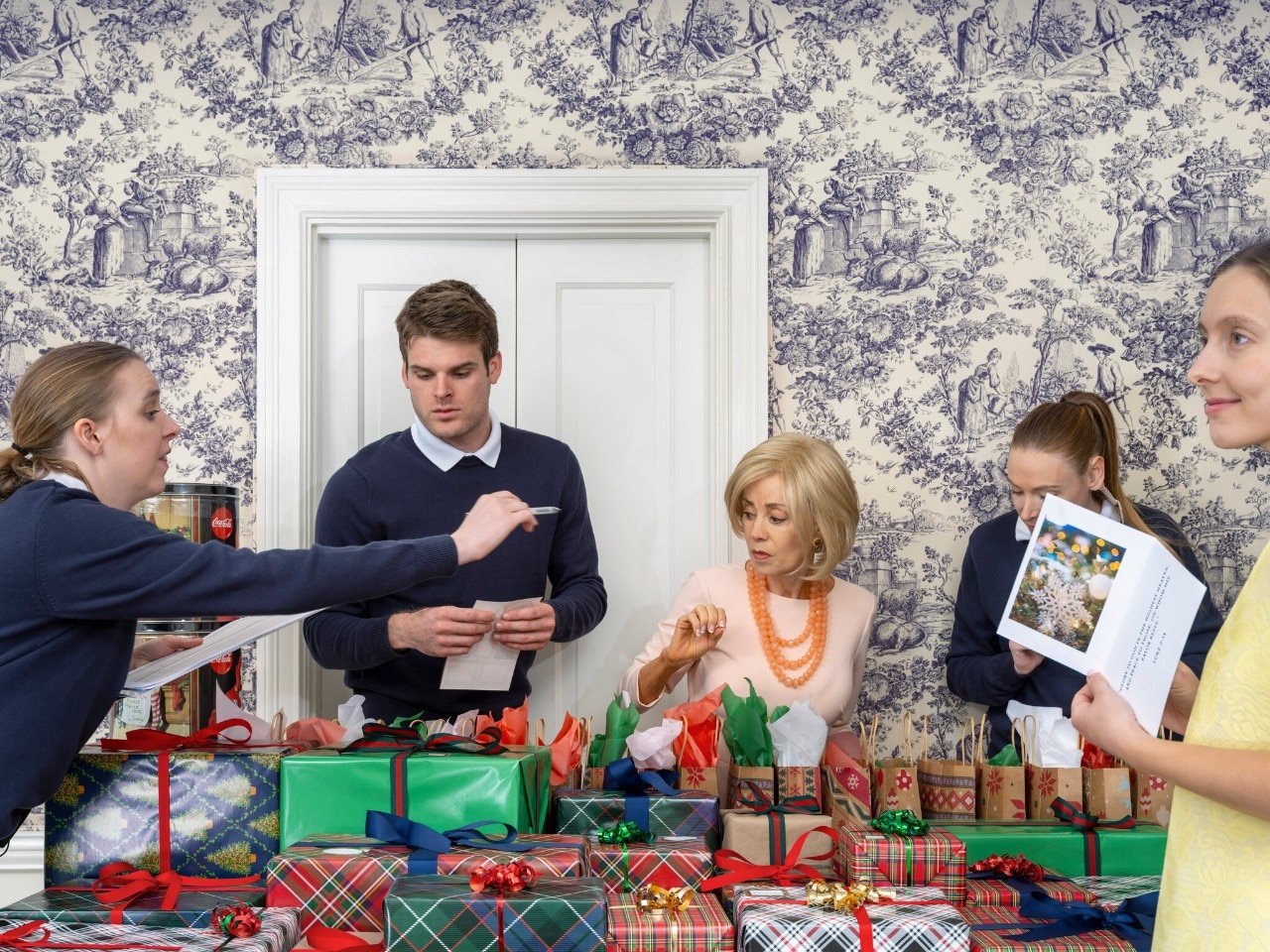
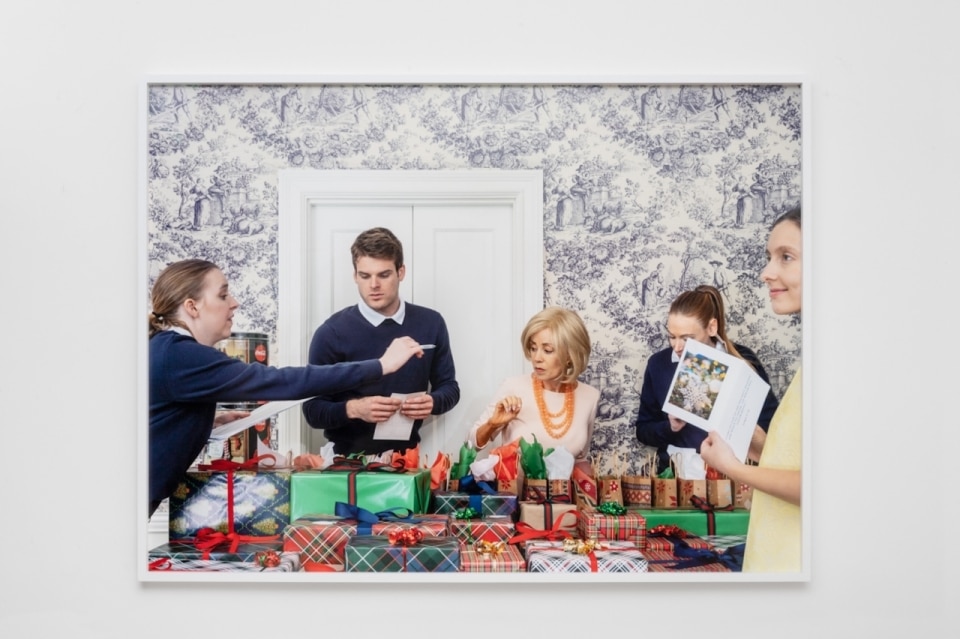
Opening image: Buck Ellison, Betsy and Elissa, Ada, Michigan, 2018. Courtesy Barbati Gallery
.