Histoires de voir

At the Fondation Cartier, 400 works on display in an exhibition designed by Alessandro Mendini exemplify that another way of looking at art is not only possible, it is probably necessary.

Another way of looking at art is not only possible, it is probably necessary.

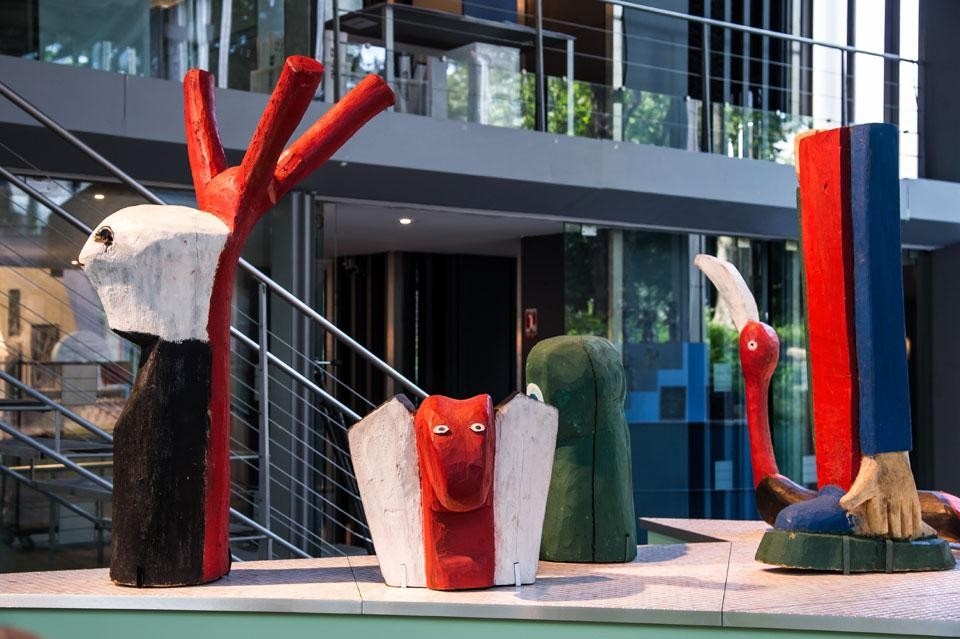
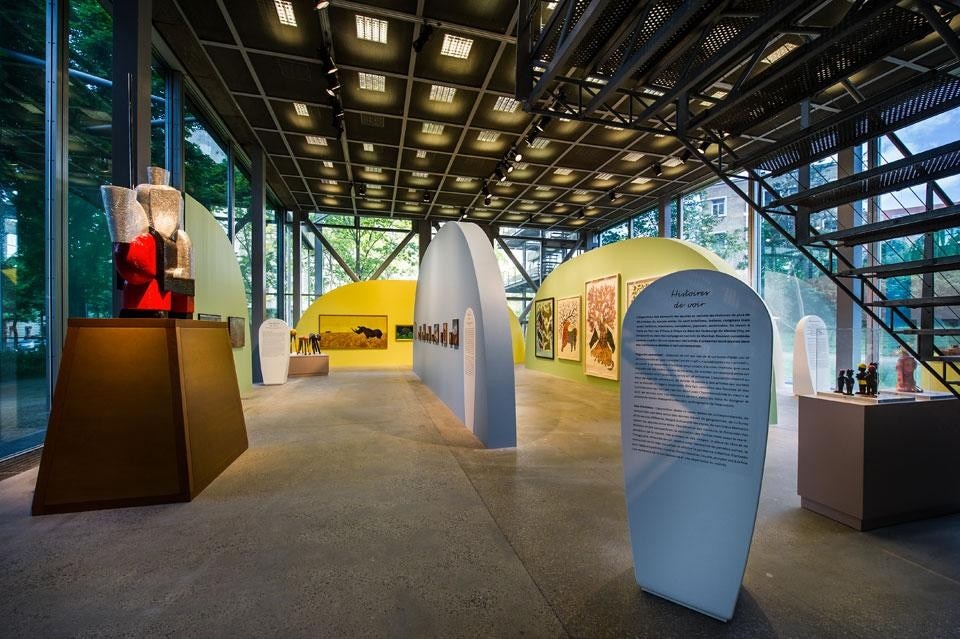
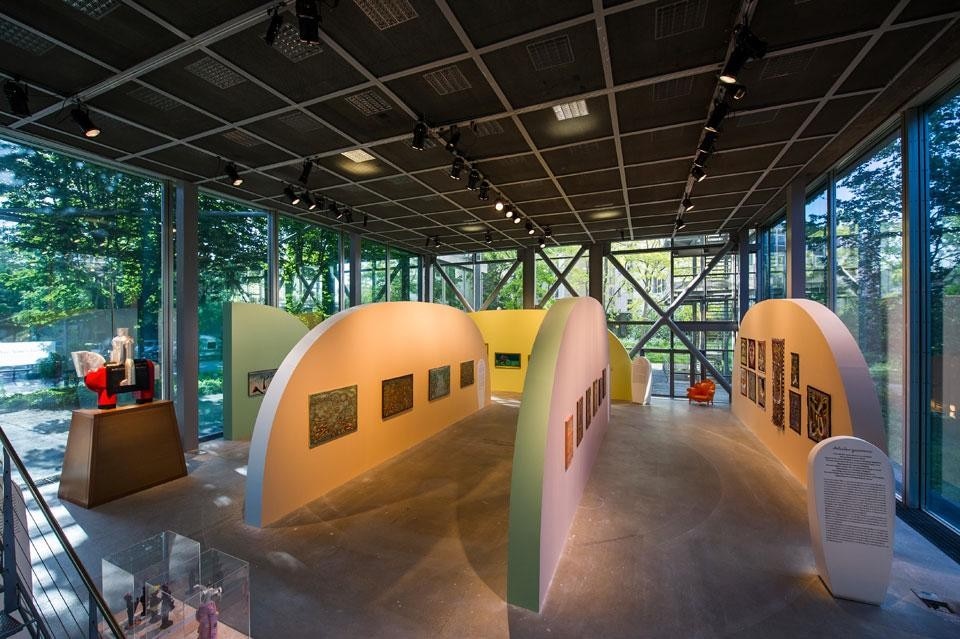
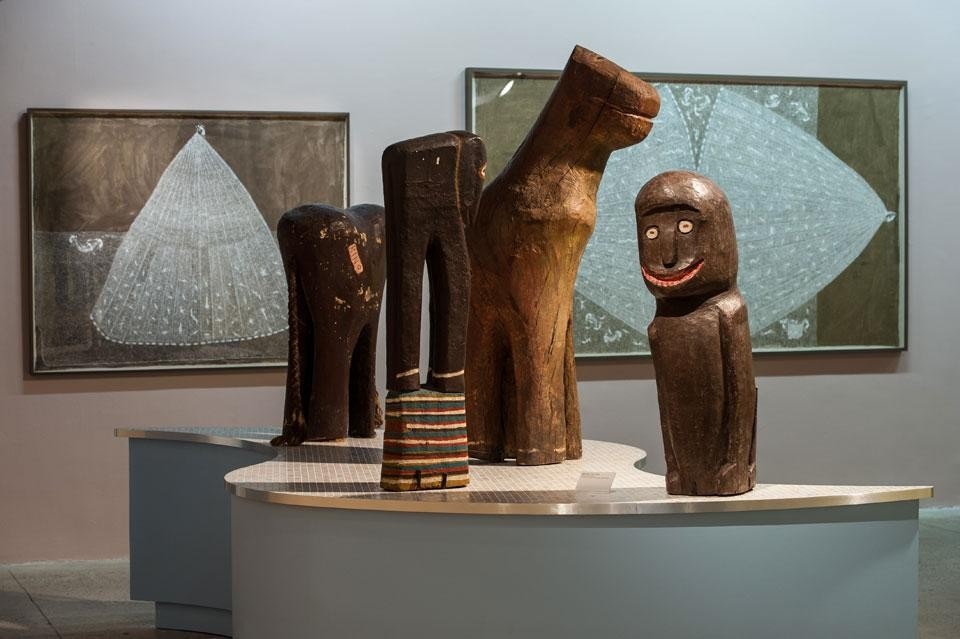
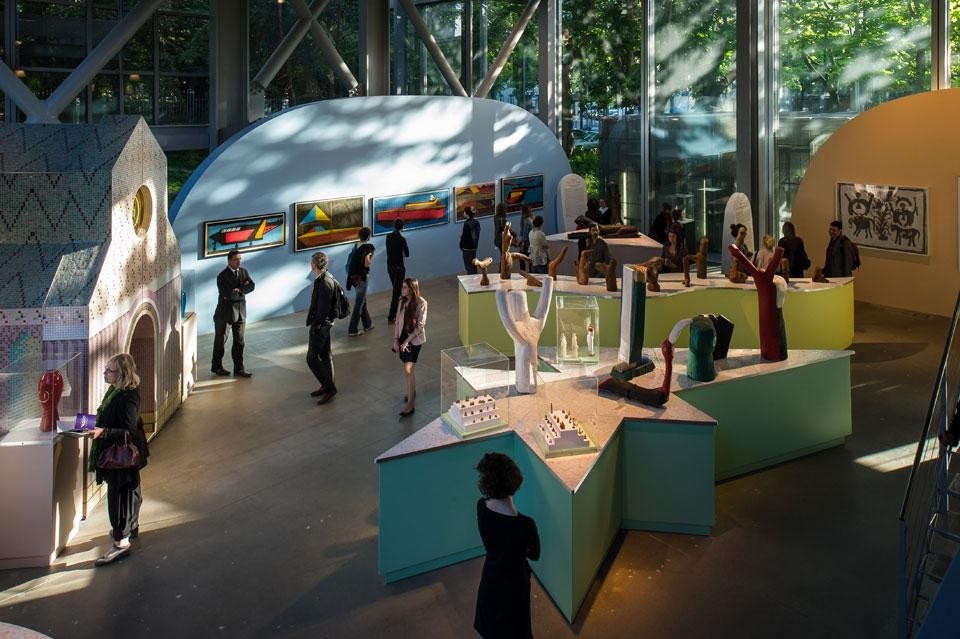
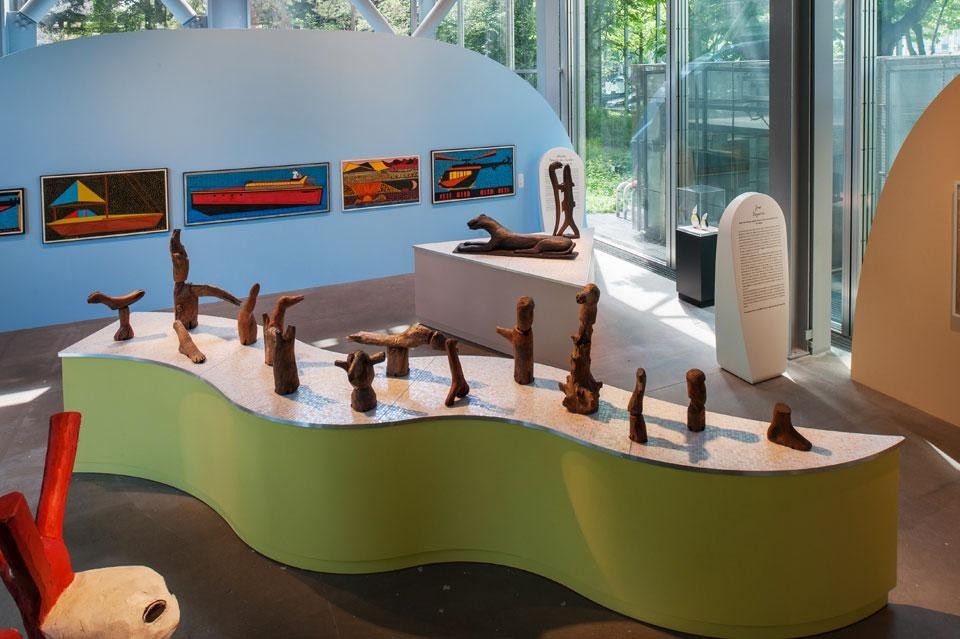
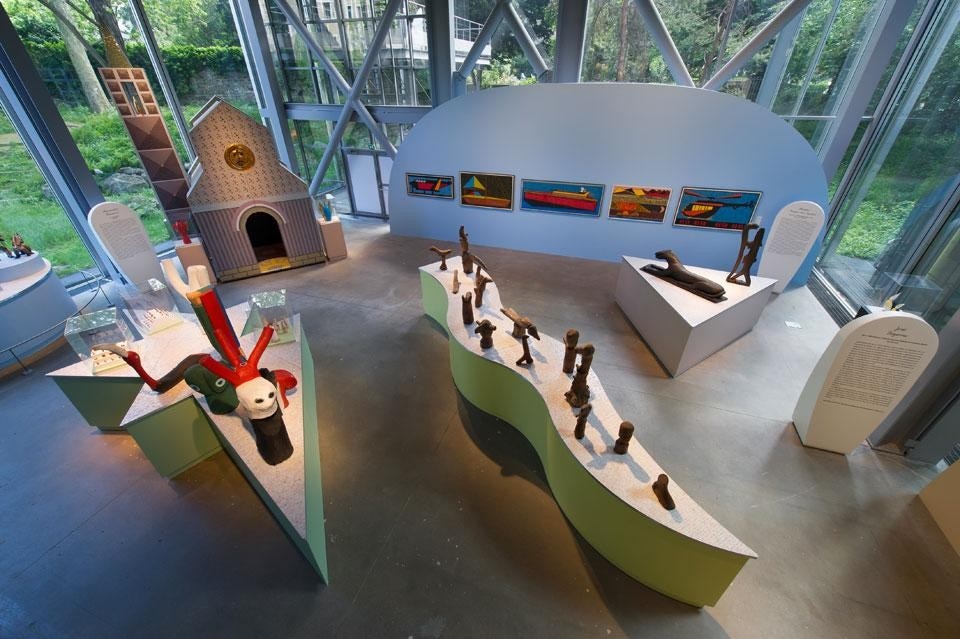
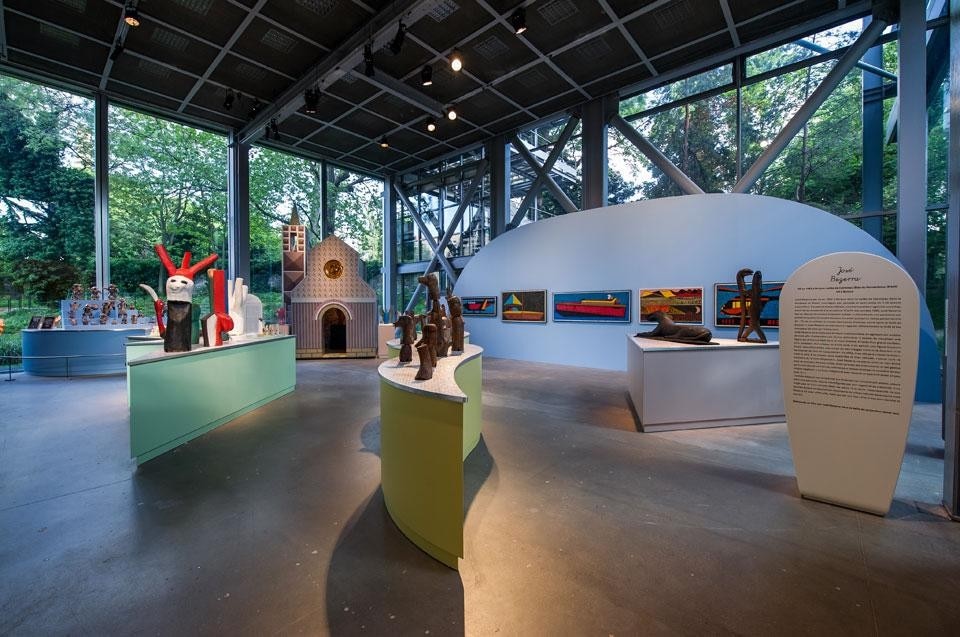
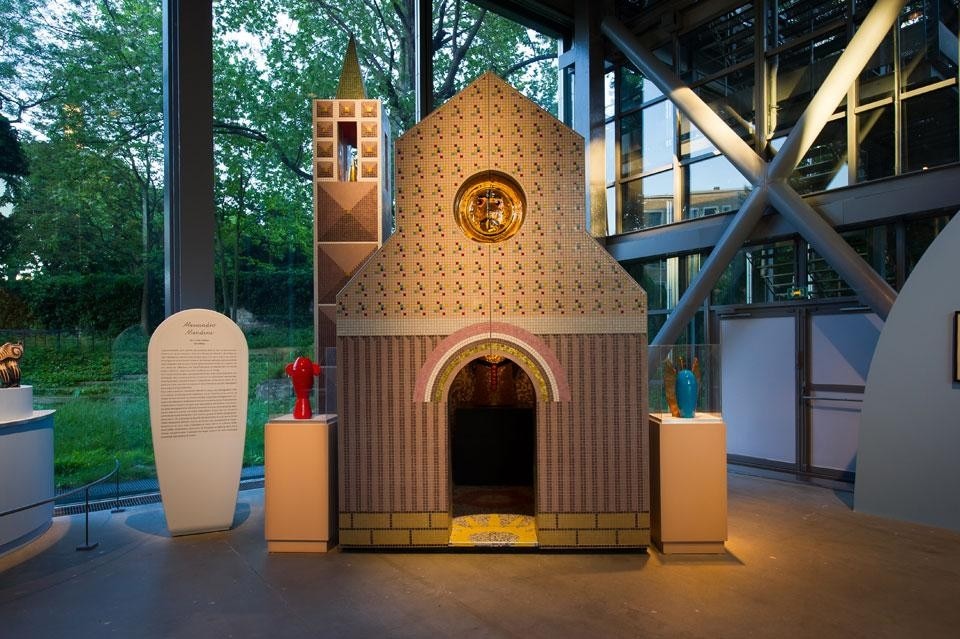
This is the premise, the secret and the success of the wonderful show entitled Histoires de voir that will be held throughout the summer at the Fondation Cartier; in this splendid shrine, these are the words used by Alessandro Mendini who designed the perfect and very delicate layout for the 400 works in the show. The artifacts are presented with monklike humility in a stunning exhibit that also includes some of his own works, which, transcending his happy and warm exhibition design, emphasize his enduring interest in the highest level of craftsmanship and the delicacy of folk art that speaks directly to the heart without succumbing to the cooling of contemporary art.

The operation unfolds with the evocative capacity of naïve and "marginal" art, recently revalued and presented as an antidote to the glossy images produced automatically by the consumerist rituals of the digital experience. The world we live in, in the words of Joseca, one of two indigenous Yaonomami artists in the show, is increasingly shrouded by and perceived through a veil of images.

The exhibition, curated by Chandés Hervé — who was assisted by an extended team of researchers —, offers an unforgettable journey through territories and regions that are considered new sources for emerging art — from India to Brazil, Iran and Africa; but with intentions that are completely different from today's ethnographic or conceptual agenda. The only geographical boundaries of these works, whose outlook is close to that of contemporary art, are the very urban Japan — transfigured by a great artist like Tadanori Yokoo, here involved in revisiting his own mythology in a series that borrows from the historicized folk artist Douanier Rousseau — and the African megalopolises meticulously and obsessively described by Mamadou Cissé.
<em>Histoires de voir: Show and Tell</em> at the Fondation Cartier, exhibition design by Alessandro Mendini. Installation view
Histoires de voir: Show and Tell at the Fondation Cartier, exhibition design by Alessandro Mendini. Installation view
An underground critique of the Paris that rode the wave of ethnography can be perceived throughout the exhibition; and another religion — nourished by the heresy of the self-taught genius — is celebrated in Mendini's very clear documentary display, sanctifying the artist's ability to find original plastic solutions in a state of universal beauty.

It is, once again, the miracle of direct experience; repeated — fortunately — as in the heroic years when Marcel Duchamp imposed Constantin Brancusi on modernism and when black art and the avant-garde merged into the most powerful artistic device representing a new sensibility.
<em>Histoires de voir: Show and Tell</em> at the Fondation Cartier, exhibition design by Alessandro Mendini. Installation view
Histoires de voir: Show and Tell at the Fondation Cartier, exhibition design by Alessandro Mendini. Installation view
There is no need for cultural mediation because all of the works are full of magic — in the anthropological sense of the word. They speak of and narrate a pantheistic and strictly autobiographical world, revealing the ties between raison d'être, the creative sentiment and the world, tout court.

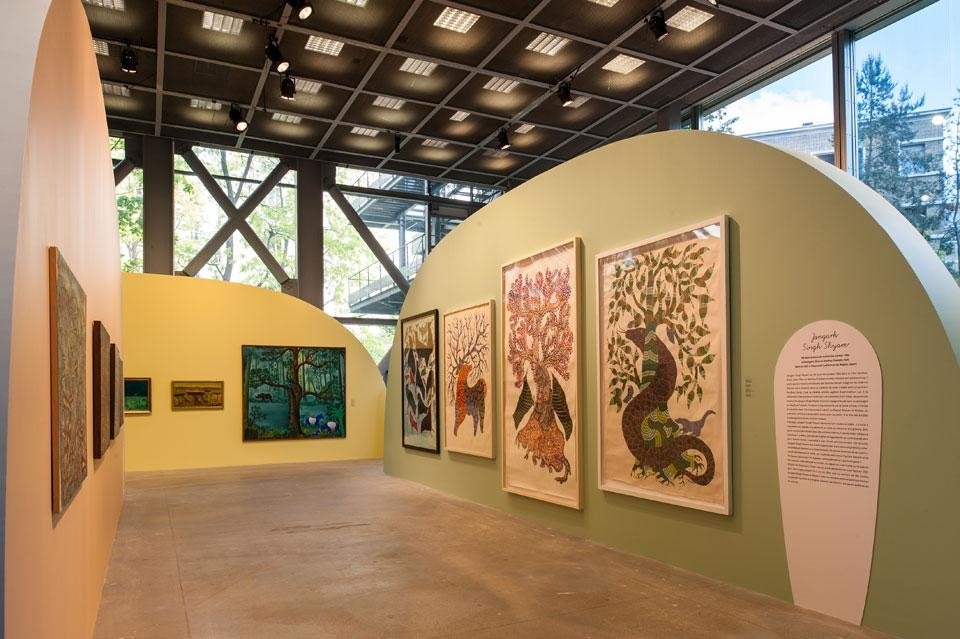
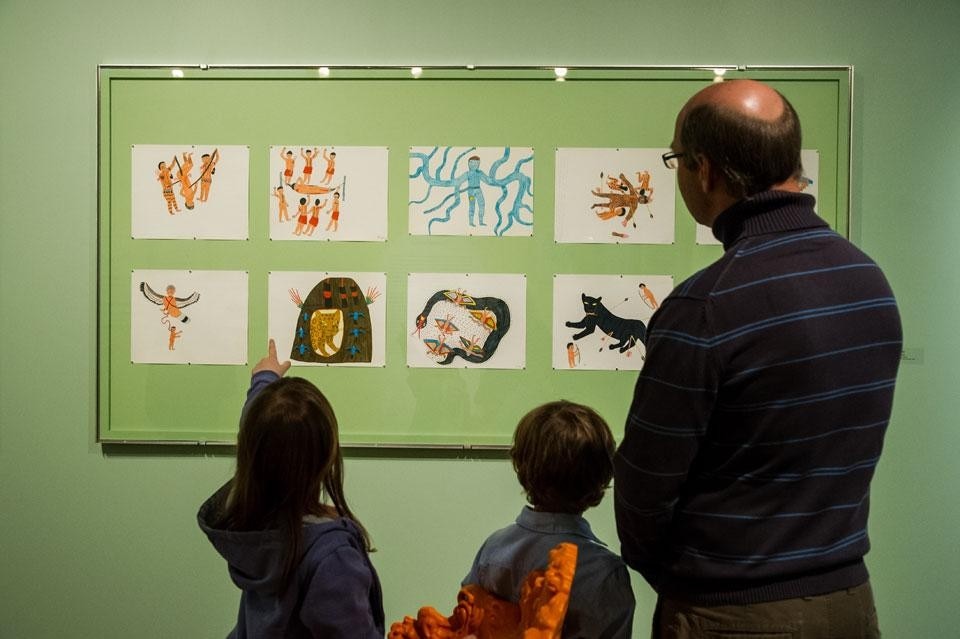
The detail of every single creative practice in the show is difficult. Tribal creativity interweaves with an Amazonian region in the process of disintegration — reinterpreted in Taniki's marker drawings on paper — which emerges and simultaneously dissolves within the power of his seismographic sign. Shamanism, and more generally, ritual, is a direct testimonial to the passage of experience from the glance to its crystallization in technique and image.
There is no need for cultural mediation because all of the works are full of magic — in the anthropological sense of the word
<em>Histoires de voir: Show and Tell</em> at the Fondation Cartier, exhibition design by Alessandro Mendini. Installation view
Histoires de voir: Show and Tell at the Fondation Cartier, exhibition design by Alessandro Mendini. Installation view
Plastic transfiguration comes about when moving through groups of works and continents through embroidery, ceramics or any other more-or-less ancestral technique, often hybridized with contemporary subjects but that can return, in beauty, the orphaned sentiment of creative violence. The complexity of the works does not pertain only to the esoteric or the cosmological. The show brings together distant practices: drawings by Huni kuï come from the territories of the caoutchouc, where local songs and traditions relating to hallucinogenic practices are kept alive; Haitian voodoo rituals with their raw cotton embroidered flags used for ceremonial altars and temples; and hundreds of individual testimonials from family or community workshops.
<em>Histoires de voir: Show and Tell</em> at the Fondation Cartier, exhibition design by Alessandro Mendini. Installation view
Histoires de voir: Show and Tell at the Fondation Cartier, exhibition design by Alessandro Mendini. Installation view
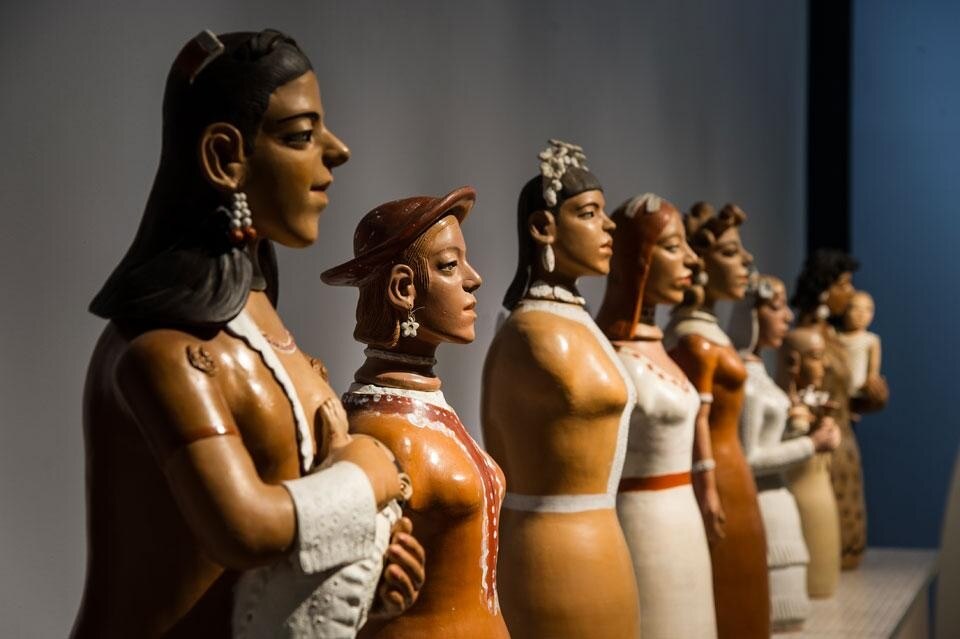
There is the very beautiful pottery by Isabel Mendes da Cunha who — from utilitarian everyday ceramics sold in local marketplaces — turned to artistic expression for purely economic reasons. Swept away by the industrial marketplace, the useful product no longer functioned.
<em>Histoires de voir: Show and Tell</em> at the Fondation Cartier, exhibition design by Alessandro Mendini. Installation view
Histoires de voir: Show and Tell at the Fondation Cartier, exhibition design by Alessandro Mendini. Installation view
In the general idea underlying the entire show, there is an enormous repertory of powerful figures — emblematic signs of the endurance of a world that is, to be precise, more authentic. It is a very sensitive map, a cardiographic tool in pastels, with a successful exhibition design that offers moments of discovery at every turn as long as one knows how to "listen to" the works and abandon preconceived notions regarding fundamentally different cultural identities but with a truly effective aesthetic charge. A beautiful selection of audiovisual materials regarding collective aspects and the production of the work by all the artists in the show explores the research thematically, punctuated by quick explanations and captions relating to each group of works. Among the other surprises in Histoires de voir is a true gem: the films by Ariel Kuaray Poty Ortega. An indigenous Guaraní, Ortega has bent cinematic technique for collective, but not strictly documentary, use. And the proceeds from his work are reinvested in reforestation near his village. And so, in the end, the light, liberty and epiphany of his work — and not only its conceptual intentions — regenerate the discussion regarding the effectiveness of contemporary art.
<em>Histoires de voir: Show and Tell</em> at the Fondation Cartier, exhibition design by Alessandro Mendini. Installation view
Histoires de voir: Show and Tell at the Fondation Cartier, exhibition design by Alessandro Mendini. Installation view
<em>Histoires de voir: Show and Tell</em> at the Fondation Cartier, exhibition design by Alessandro Mendini. Installation view
Histoires de voir: Show and Tell at the Fondation Cartier, exhibition design by Alessandro Mendini. Installation view
<em>Histoires de voir: Show and Tell</em> at the Fondation Cartier, exhibition design by Alessandro Mendini. Installation view
Histoires de voir: Show and Tell at the Fondation Cartier, exhibition design by Alessandro Mendini. Installation view
<em>Histoires de voir: Show and Tell</em> at the Fondation Cartier, exhibition design by Alessandro Mendini. Installation view
Histoires de voir: Show and Tell at the Fondation Cartier, exhibition design by Alessandro Mendini. Installation view
<em>Histoires de voir: Show and Tell</em> at the Fondation Cartier, exhibition design by Alessandro Mendini. Pottery by Isabel Mendes da Cunha
Histoires de voir: Show and Tell at the Fondation Cartier, exhibition design by Alessandro Mendini. Pottery by Isabel Mendes da Cunha
<em>Histoires de voir: Show and Tell</em> at the Fondation Cartier, exhibition design by Alessandro Mendini. Installation view
Histoires de voir: Show and Tell at the Fondation Cartier, exhibition design by Alessandro Mendini. Installation view

Latest on Art

Latest on Domus

China Germany India Mexico, Central America and Caribbean Sri Lanka Korea icon-camera close icon-comments icon-down-sm icon-download icon-facebook icon-heart icon-heart icon-next-sm icon-next icon-pinterest icon-play icon-plus icon-prev-sm icon-prev Search icon-twitter icon-views icon-instagram