-
Sections
-
Keywords
The Flatiron and its siblings: 10 stunning triangular-shaped buildings you need to know about
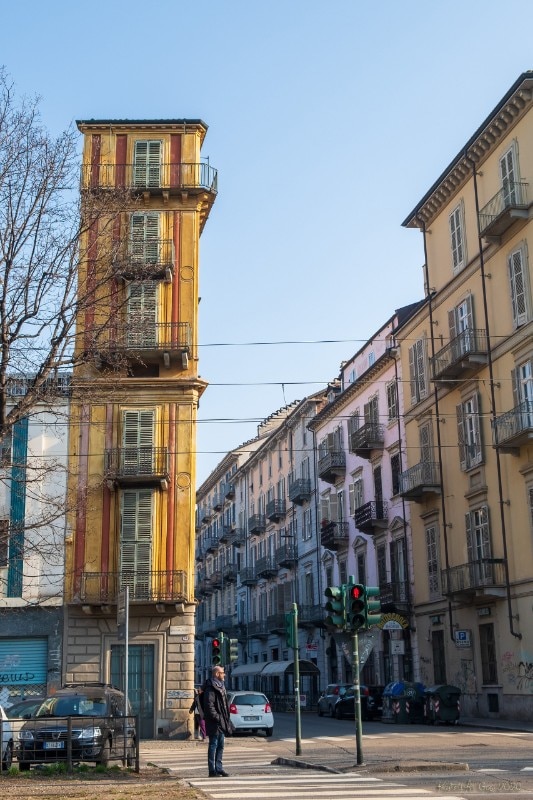
Alessandro Antonelli, Scaccabarozzi House, Turin, Italy 1840
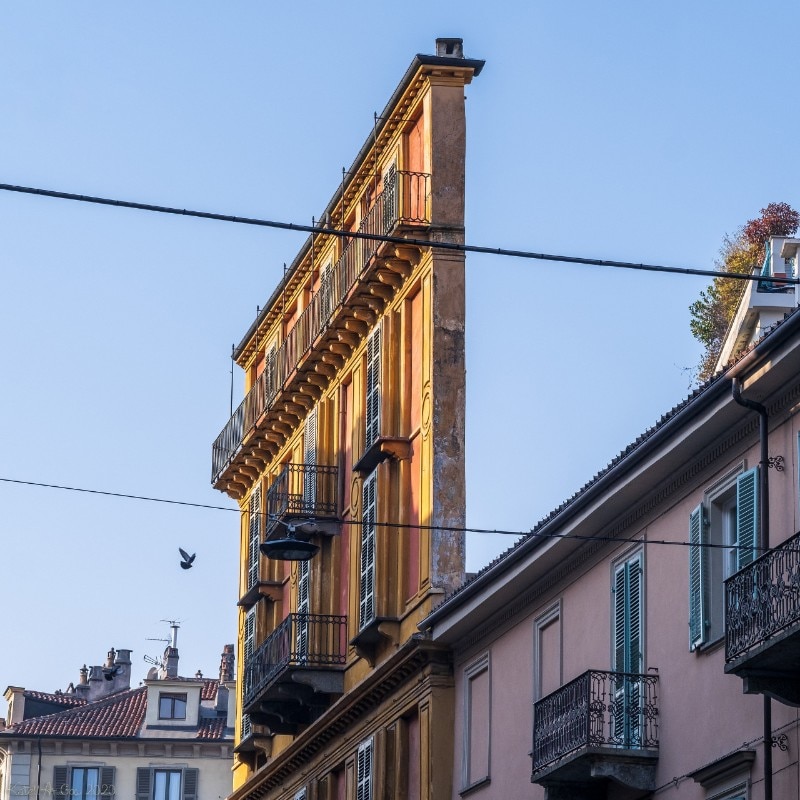
This singular building located in a triangular plot of narrow dimensions, nicknamed "fetta di polenta" (slice of polenta), is the result of the challenge Antonelli undertook to create a dwelling that would fill the limited floor space in height. The construction, raised in 1881, is therefore a sleek volume on a narrow base, characterised inside by rooms conformed to this shape with triangular rooms and custom-made furniture.
Photo Katell Ar Gow from Flickr
Alessandro Antonelli, Scaccabarozzi House, Turin, Italy 1840
Photo Katell Ar Gow from Flickr
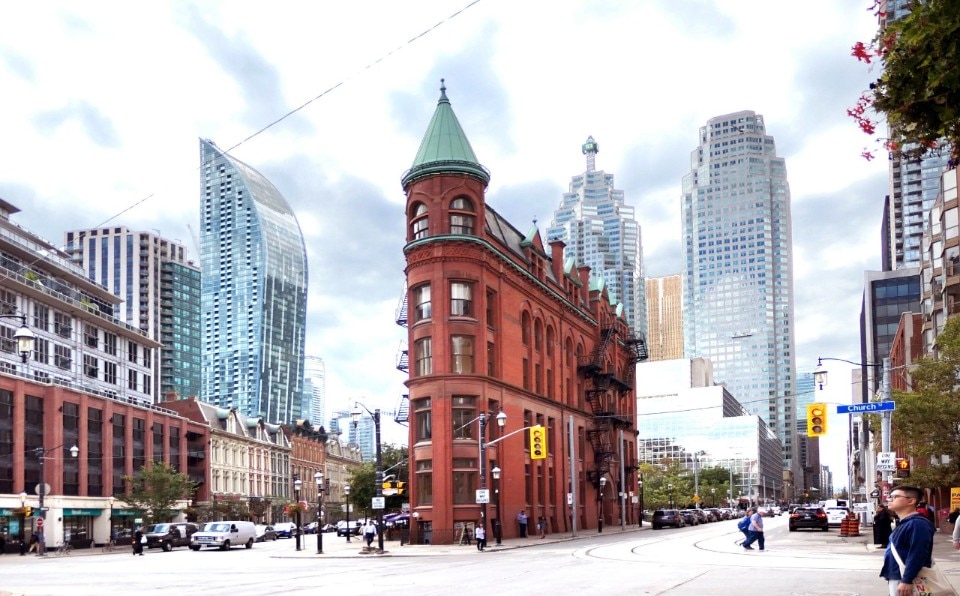
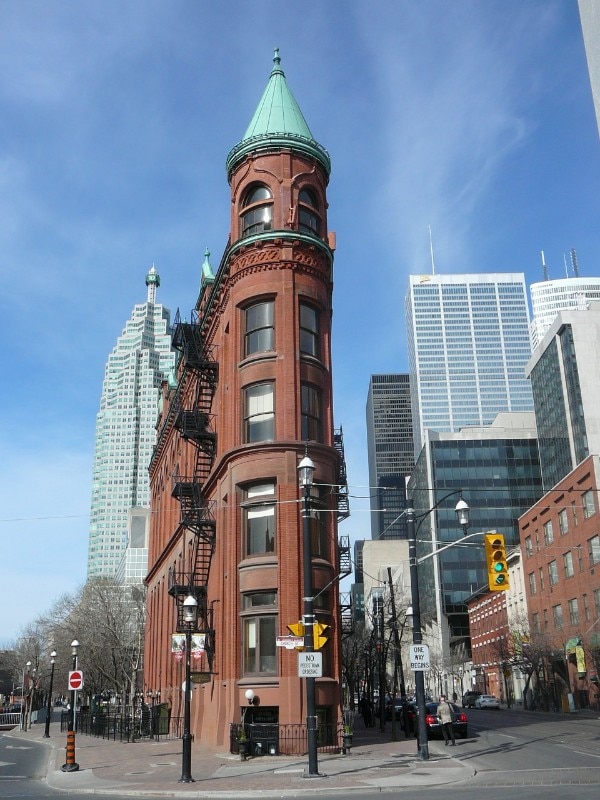
David Robert jr, Gooderham Building, Toronto, Canada 1892
Gooderham Building, nestled in a triangular lot between Front Street and Wellington Street in downtown Toronto, is one of the earliest examples of “flatiron” buildings in the city and the country. The massive volume of red brick and copper roofing with dormer windows and gables features eclectic suggestions.
Photo Bernard Spragg.NZ on Flickr
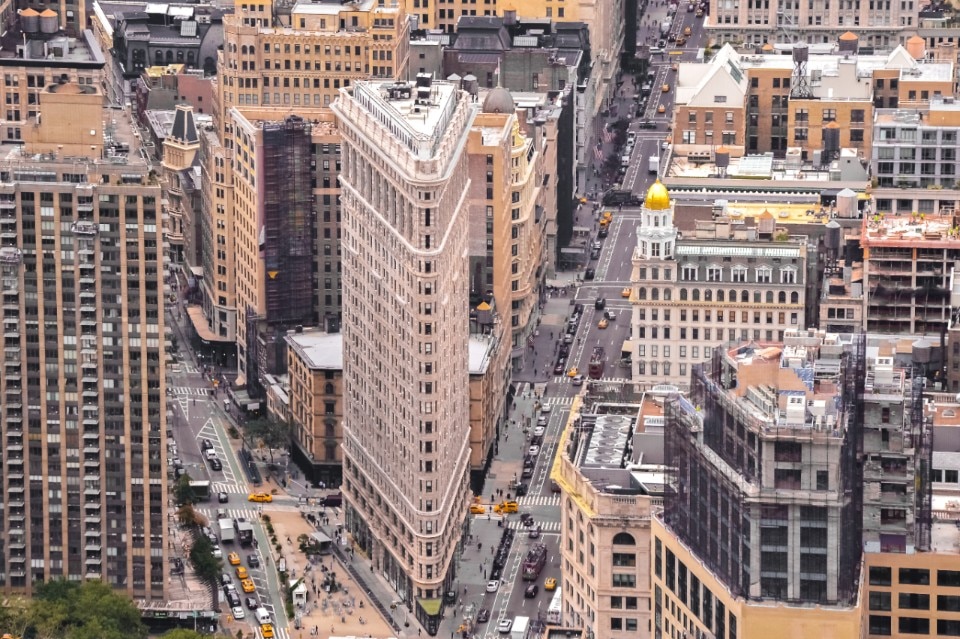
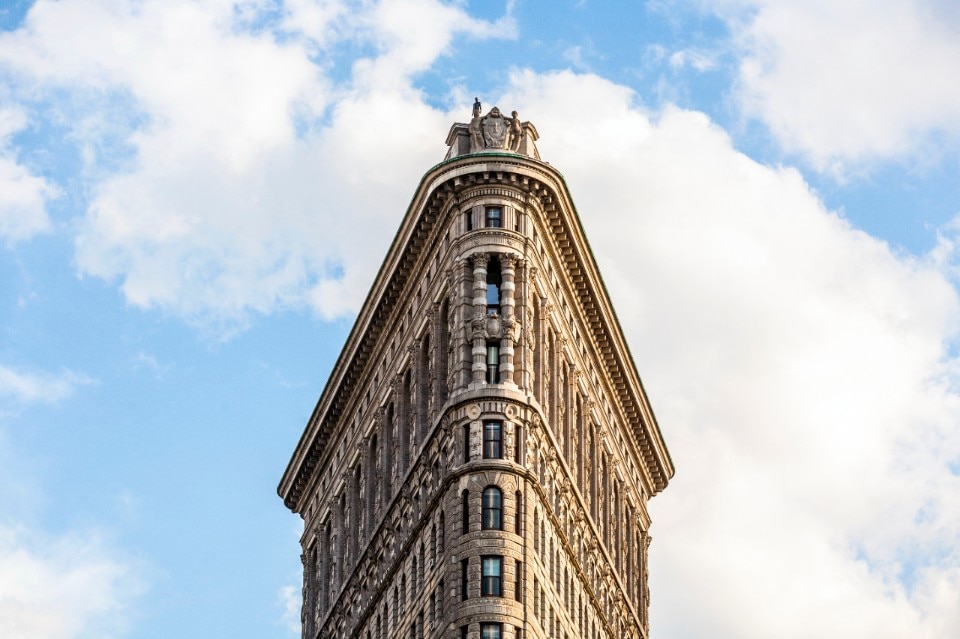
Daniel Burnham, Flatiron Building, New York, USA 1902
Considered one of Manhattan’s best known landmarks, the Fuller Building (better known as the Flatiron Building) with its pronounced triangular shape, its 87 m height and 22 floors of office space fills the area at the intersection of Fifth Avenue and Broadway. The building is characterised by limestone and terracotta façades mounted on structural steel frames, in accordance with the type of construction common at the time of the first skyscrapers.
Photo Alberto Giron on Adobe Stock
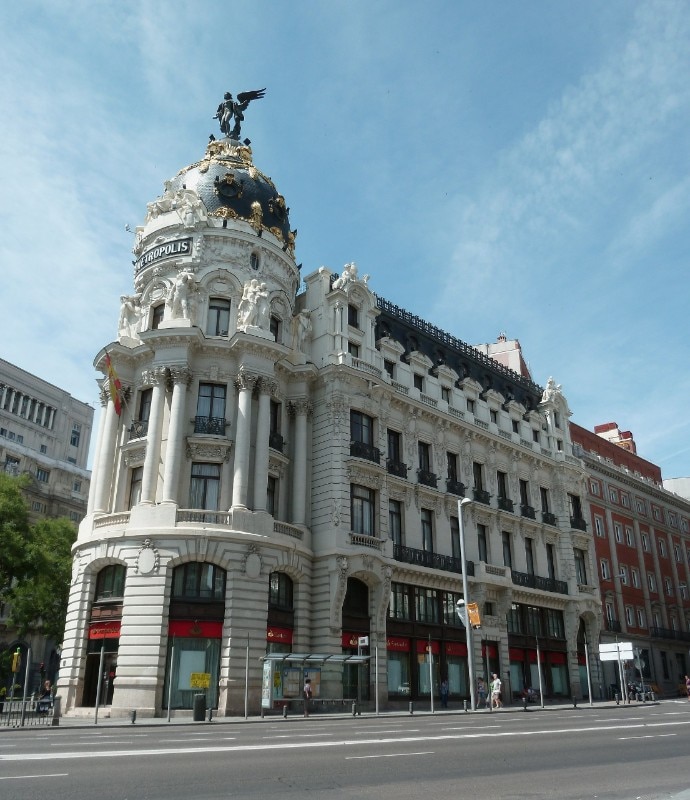
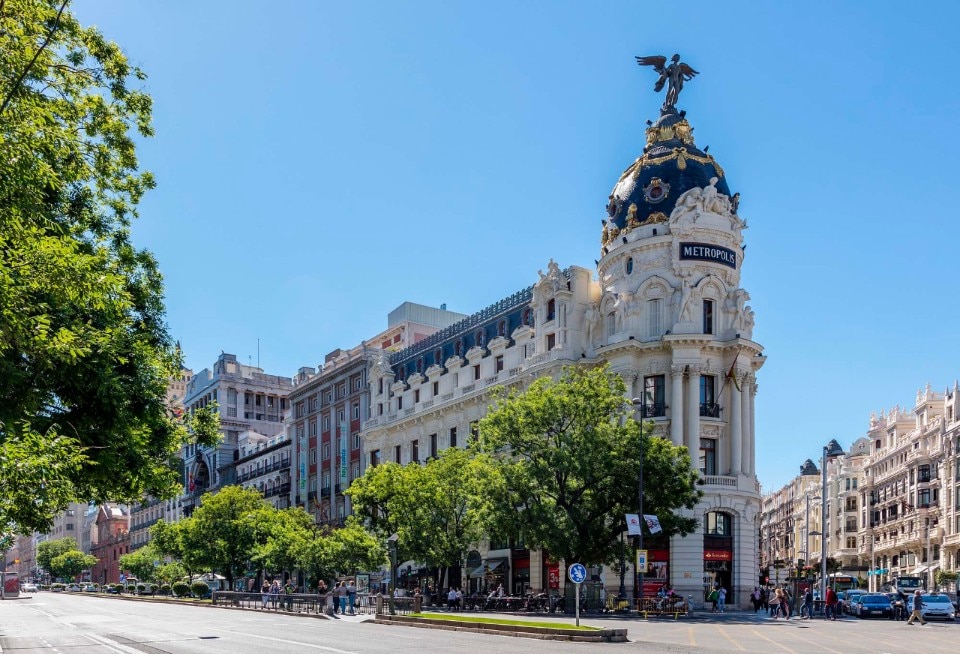
Jules and Raymond Février, Esteve Fernández-Caballero, Metrópolis, Madrid, Spain 1911
The five-storey building between Gran Via and Calle Alcalà in the centre of Madrid, originally designed to house the offices of an insurance group, is characterised by a Beaux-Arts style with fronts supported by imposing Corinthian columns and allegorical sculptures, and surmounted by a slate dome with gold leaf trim and a winged victory.
Photo Luis García su wikimedia commons
Jules and Raymond Février, Esteve Fernández-Caballero, Metrópolis, Madrid, Spain 1911
Photo Diego Delso on wikimedia commons
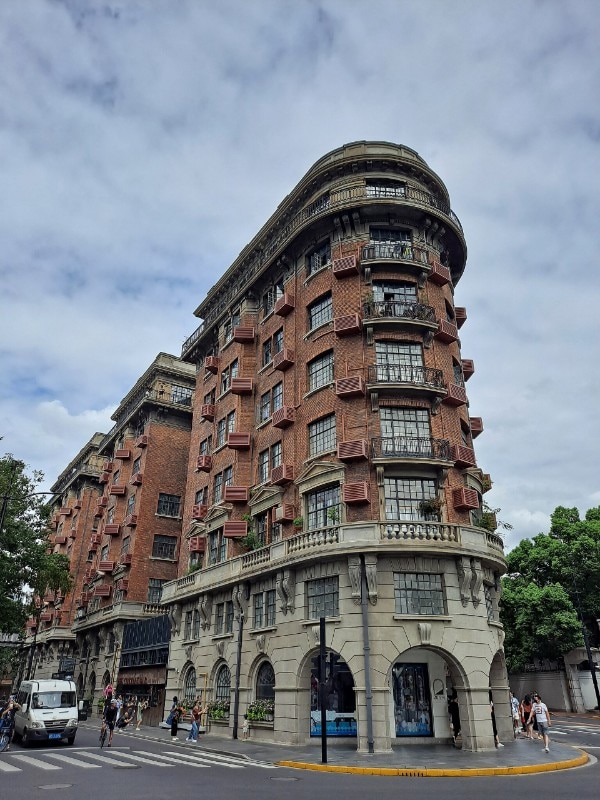
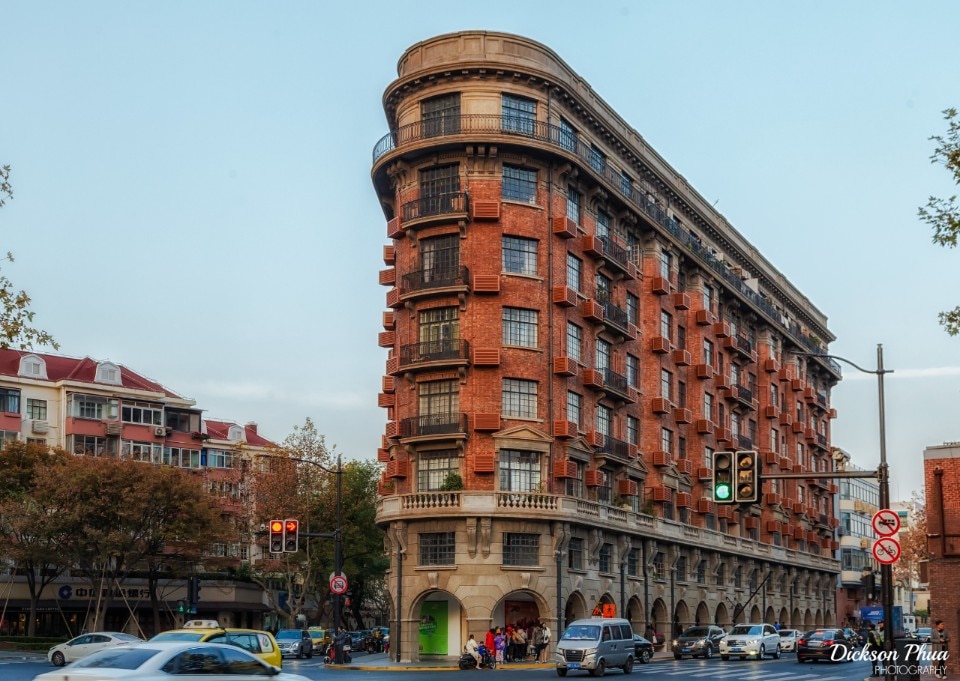
László Hudec, Wukang Mansion, Shanghai 1924
The Wukang Mansion is a residential complex that originally housed 63 flats and 30 servants' quarters, designed by Hungarian-Slovak architect László Hudec, a famous name in Shanghai. The unusual wedge shape – due to the conformation of the lot located at the southern end of Wukang Road, at the corner with Middle Huaihai Road – and the 30 m high concrete and masonry volume make it a clearly recognisable element in the context. It has been home to several celebrities over time and still retains its residential function today.
Foto 钉钉 on wikimedia commons
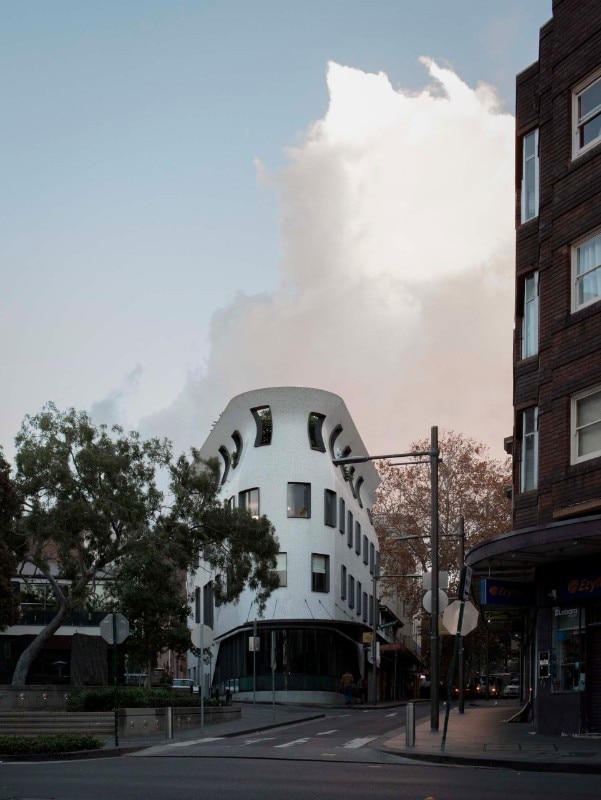
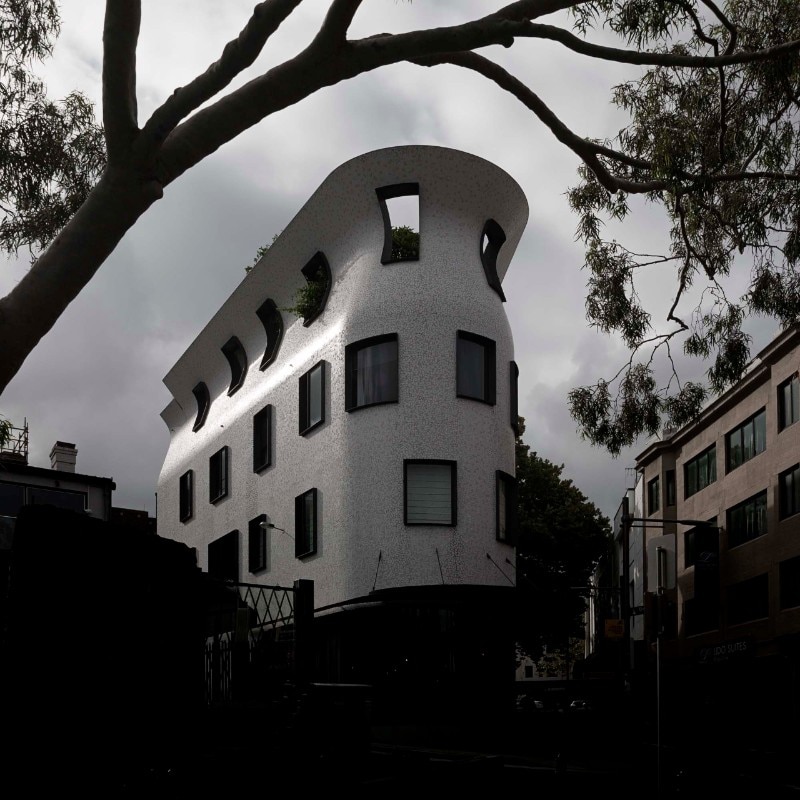
Durbach Block Jaggers Architects, 5 – 9 Roslyn St, Sydney, Australia 2009
The triangular shape and small size of the site dictated the plan-volume layout of this four-storey commercial building in Kings Cross, which houses a restaurant on the ground floor and a green roof terrace. The design choices intentionally detach the intervention from the current typology of masonry buildings typical of the area, favouring a plastic volume with a vaguely expressionist flavour, covered with variegated tiles, glossy and matt, white and beige, on which the surrounding environment is reflected.
Photo Julia Charles
Durbach Block Jaggers Architects, 5 – 9 Roslyn St, Sydney, Australia 2009
Foto Julia Charles
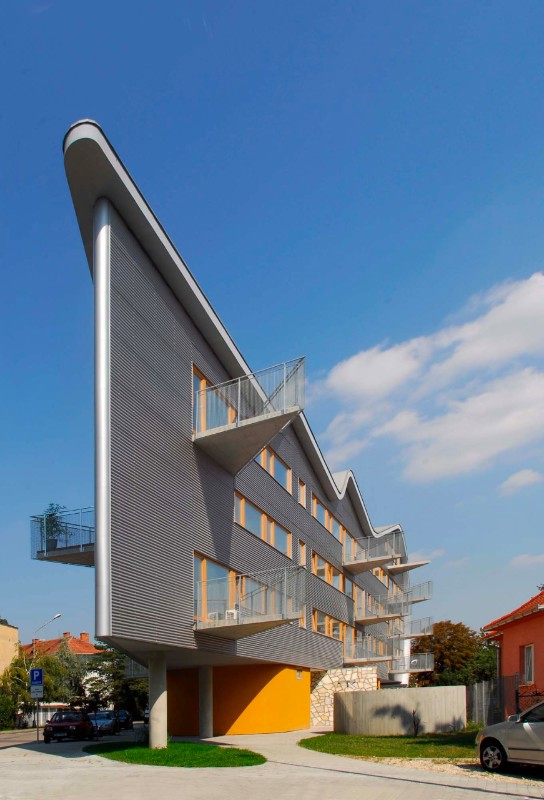
Sebastian Nagy | architects, Triangolo, Spojovacia, Nitra, Slovakia 2009
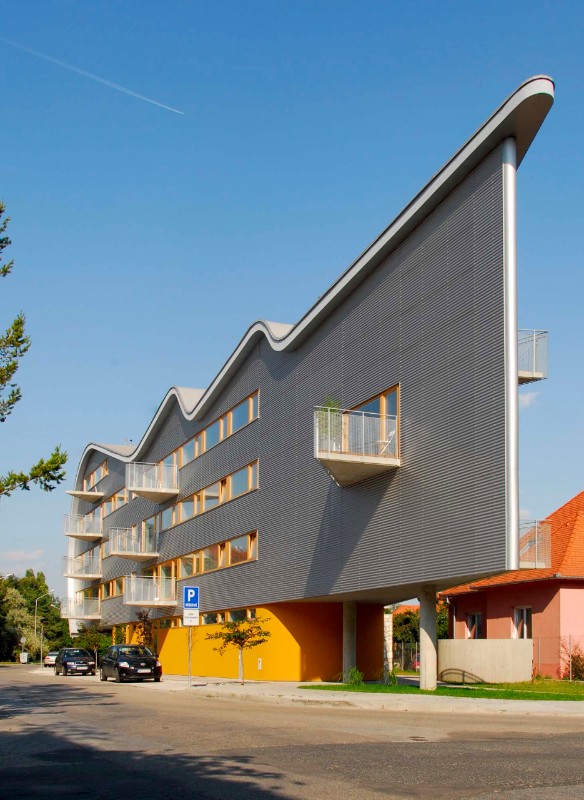
The triangular apartment building combines the rigorous and essential character of the elevation, with its monomaterial fronts, with the sinuous and lively course of the roof that celebrates the surrounding landscape of Zobor, of the Nitra Plateau and the homonymous river.
Photo Bobo Boška
Sebastian Nagy | architects, Triangolo, Spojovacia, Nitra, Slovakia 2009
Photo Bobo Boška
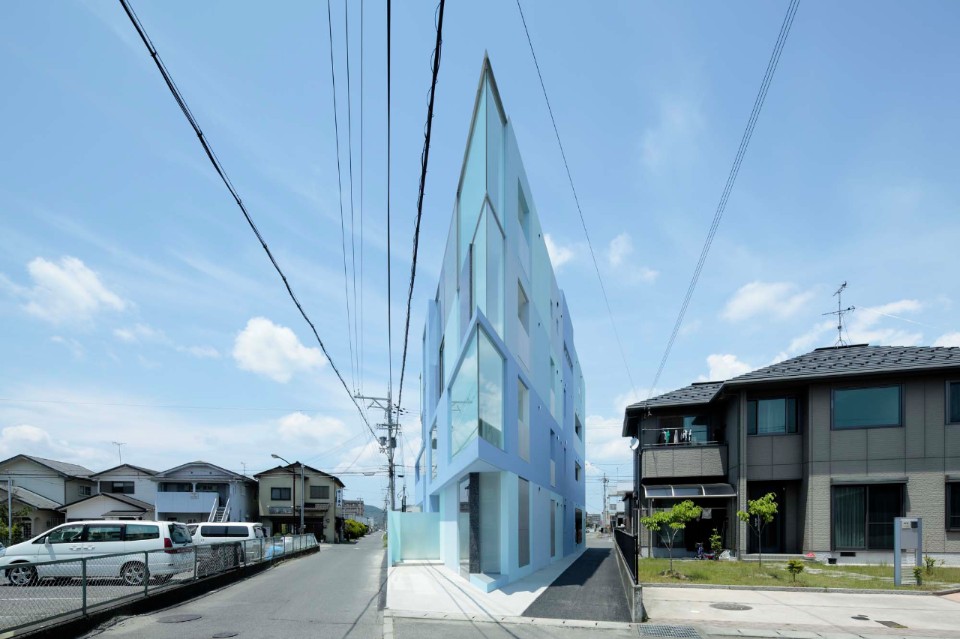
Eastern Design Office, On the Corner, Shiga, Japan 2011
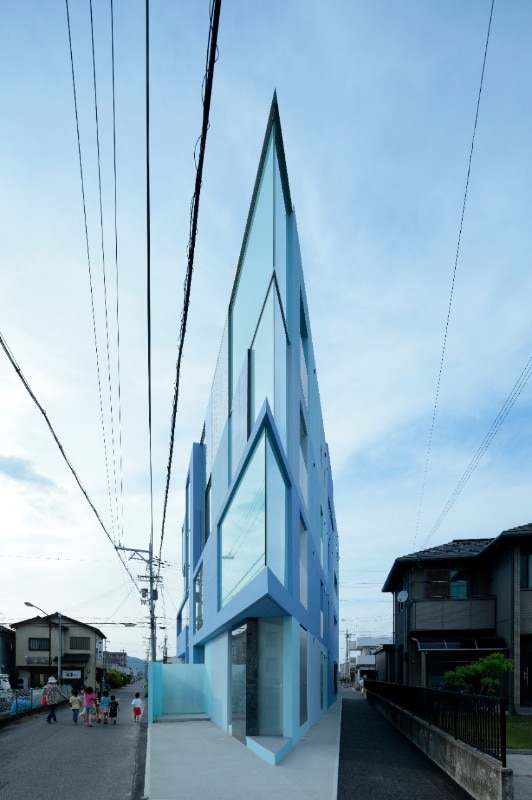
Situated in the Youkaichi district, in a mixed-use area – industrial and residential – frequented by immigrants and commuters, the building with seven rental flats is located in a plot long abandoned due to its pronounced triangular shape, considered unattractive to the market. The intervention brings the peculiar urban space back to life, redeeming it through an architectural operation with a strong visual and vaguely surreal impact, amidst intentionally accentuated sharp edges, material textures of stone, cement and glass and lively chiaroscuro effects.

Photo Koichi Torimura
LAN Architecture, 40 Housing Units, Paris, France 2014
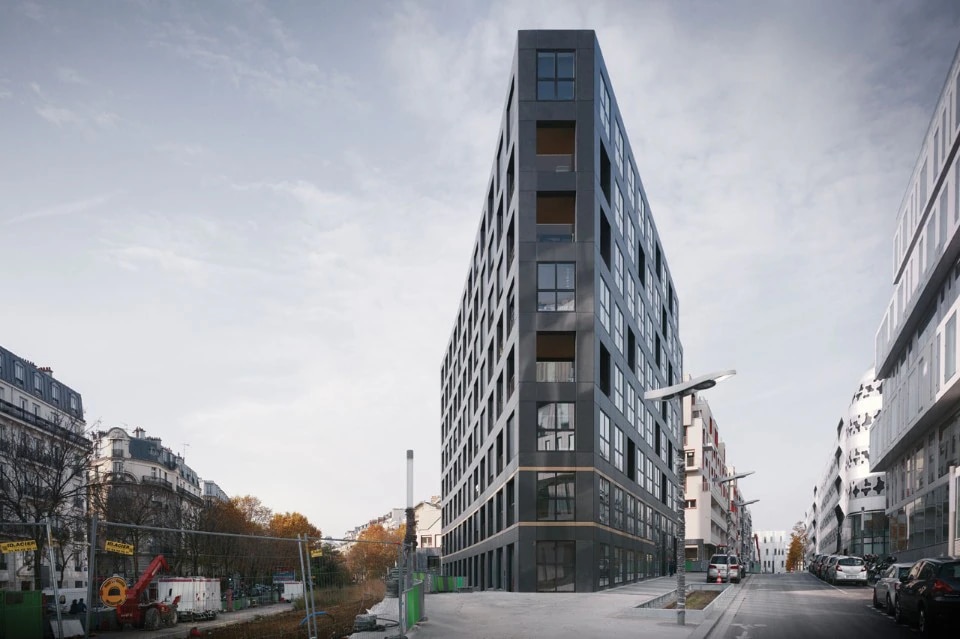
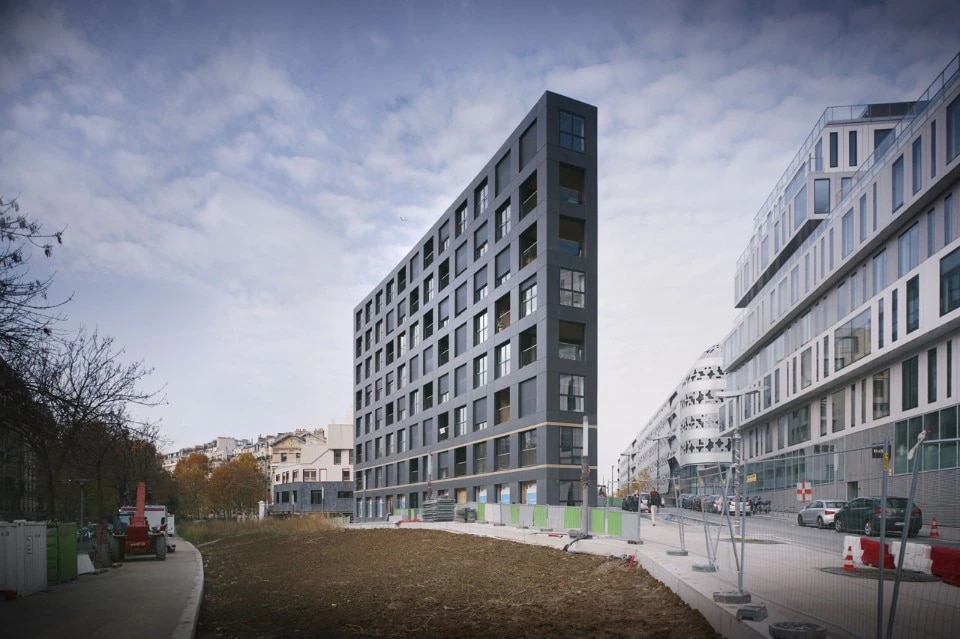
The intervention located in the new Clichy-Batignolles mixed development area is a homage to 19th century Paris, to the urban transformation planned by Haussmann in particular, with the new major circulation axes generating new forms and typologies for blocks and buildings at their intersections. The volume fits into a triangular plot, whose geometry it recovers and exploits the spatial potential. The spaces allow for complete reversibility from residential to tertiary use. The façades are characterised by a palette of simple and sober materials - polished concrete dyed black for the prefabricated panels of the façade, black lacquered aluminium for the window and door frames, glass for the windows, and steel for the railings - and are marked by a tight rhythmic pattern of regular openings that gives the complex a unified connotation.
Photo Julien Lanoo
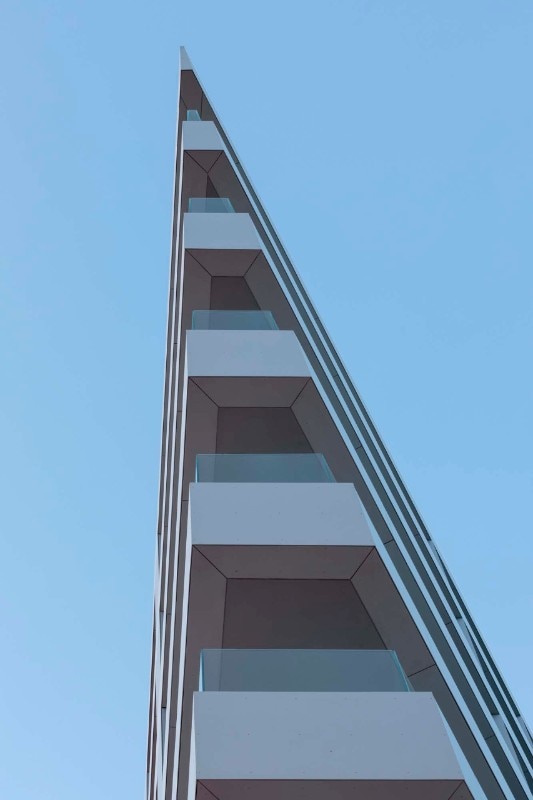
STARH, Eos, Varna, Bulgaria 2022
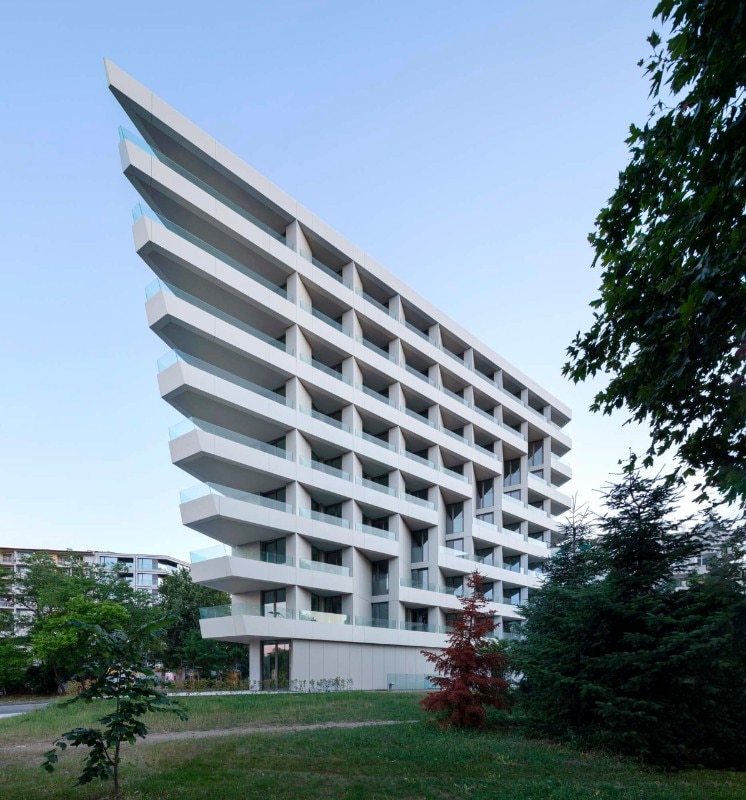
The mixed-use project – shops on the ground floor, offices on the first and second floors, residences from the fourth to the ninth floor – is set in a triangular plot that has conditioned the building's plan-volume layout. The marked horizontal course of the structural slabs, the daring overhangs of the prestressed concrete balconies in the acute-angled end – up to 8 m long on the highest floor – the whiteness of the ventilated fibre cement façades lend a plastic and sculptural character to the architecture.
Photo Dian Stanchev