OK
Domus Domus
newsstand
SUBSCRIBE
  • Magazine
  • Digital Edition
  • Digital Archive
LANGUAGE
  • it
  • en
Hi Logout
Sign up / Log in
  • News
  • Architecture
  • Interiors
  • Design
  • Art
  • Archive
  • Products
  • Design Essentials
  • Design Stories
  • Submit your project
Sections
  • News
  • Architecture
  • Interiors
  • Design
  • Art
  • Archive
  • Products
  • Covers
  • Biographies
  • Architecture Firms
  • Sustainable Cities
  • Gallery
  • Design Stories
  • Domus for Design
Magazine
  • Subscriptions
  • Digital Edition
  • Current Issue
  • Guest Editor
  • Digital Archive
  • Nordic Design
Specials
  • Design Essentials
  • Modern Work
  • DomusAir
  • Milano Design Week
  • Worldesign
Current Issue

Domus 1106 hits the shelves

Follow us
LANGUAGE
  • it
  • en
Hi Logout
Sign up / Log in
newsletter Icon
results No results Please enter a long search term

      5 forgotten architectures you probably don’t know

      5 forgotten architectures you probably don’t know

      Next gallery

      Living on the margins: 11 symbolic places in the Italian periphery

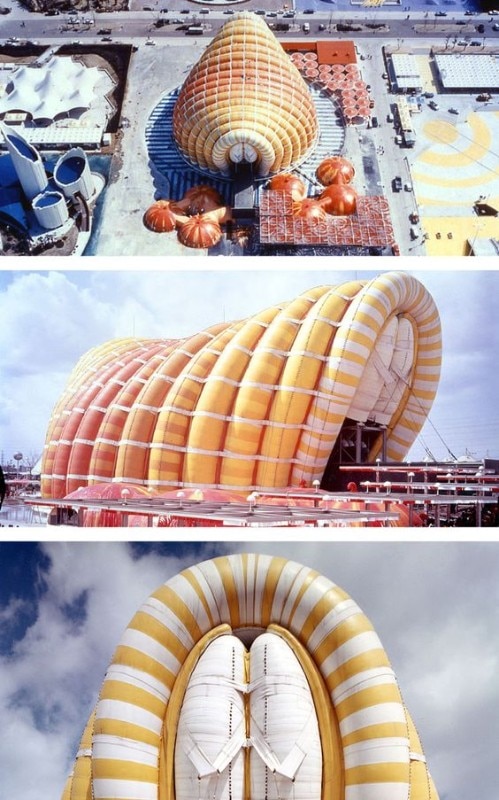
      Yutaka Murata, Fuji Group Pavilion, Osaka, Japan, 1970

      Chapter ephemeral architecture  

      The 1970 Osaka World Expo, the first held in Asia, has gone down in history for the high degree of experimentation and inventiveness of the pavilions designed by architects. Entitled “Progress and Harmony for Humanity,” the event’s goal was to show the public the application of modern techniques while also partly emphasizing the negative impact that industrialization and scientific progress had on the global ecological system.
For Expo 1970 Yukata Murata, with Mamoru Kawaguchi, designs the large pneumatic structure of the Fuji pavilion. The pavilion has a base formed by a circle 60 meters in diameter, is 30 meters high, and consists of sixteen huge pneumatic tubes joined together to form the vault of the roof - these were inflated on site to the exact position defined in the executive project.

      “Ephemeral projects, that is, projects whose life cycle is very short, are the architectural type that is most easily forgotten. In particular, the projects made for the great Expos, although of great quality, during the twentieth century have had a temporal success only to remain victims of the oblivion of memory.”

      Exhibition: Expo 1970, Osaka (Japan), 15 March-13 September 1970. Project: temporary pavilion for Universal Exposition. Image credits: Dante Bini. Reported by: @Bianca Felicori

      View article
      View article
      • SHARE
      • PIN IT

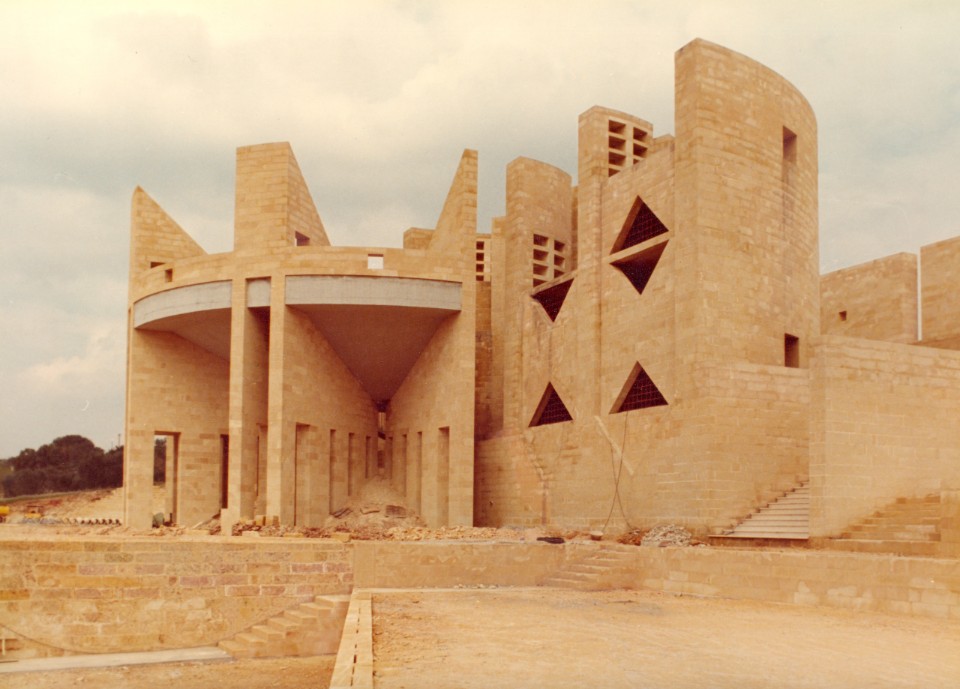
      Alessandro Anselmi and Paola Chiatante, Municipal Cemetery of Parabita, Lecce, Italy, 1967-1982

      Chapter cemetery architecture

      Between 1967 and 1982 Alessandro Anselmi and Paola Chiatante designed the new municipal cemetery of Parabita, in the province of Lecce, conceived as a set of buildings linked together in a unitary spatial design. “The project of the cemetery of Parabita” says Anselmi “was born in an atmosphere of comparison and controversy in the situation of Italian and European architecture of those years [...]. Our obsession was with two categories that we considered constitutive of the conceptual dynamics of architecture: geometry and history, the rigor and coherence of form, that is, the image that form had assumed in particularly significant moments of human development [...]. We, therefore, operated a manipulation of the archetype, a distortion of the image utilizing a simple formal act: that of the dimensional leap, the leap in scale”.

      “The same fate befalls cemetery architecture, particularly cemetery extensions made during the twentieth century, but for other reasons. In particular, this architectural category is the victim of a legacy of the past that reduces death to a taboo, which is why including cemeteries in architectural discourse is still quite difficult today.”

      Address: Via S. Pasquale, 73052 Parabita (LE). Coordinates: 40°03'18.8 "N 18°07'29.7 "E. State of affairs: existing, in good state of preservation. Project: cemetery extension. Image credits: SAA&A, Studio Alessandro Anselmi e Associati. Reported by: @Anna della Tommasina, @Ilaria CZ, @Gian Marco De Vitis

      View article
      View article
      • SHARE
      • PIN IT

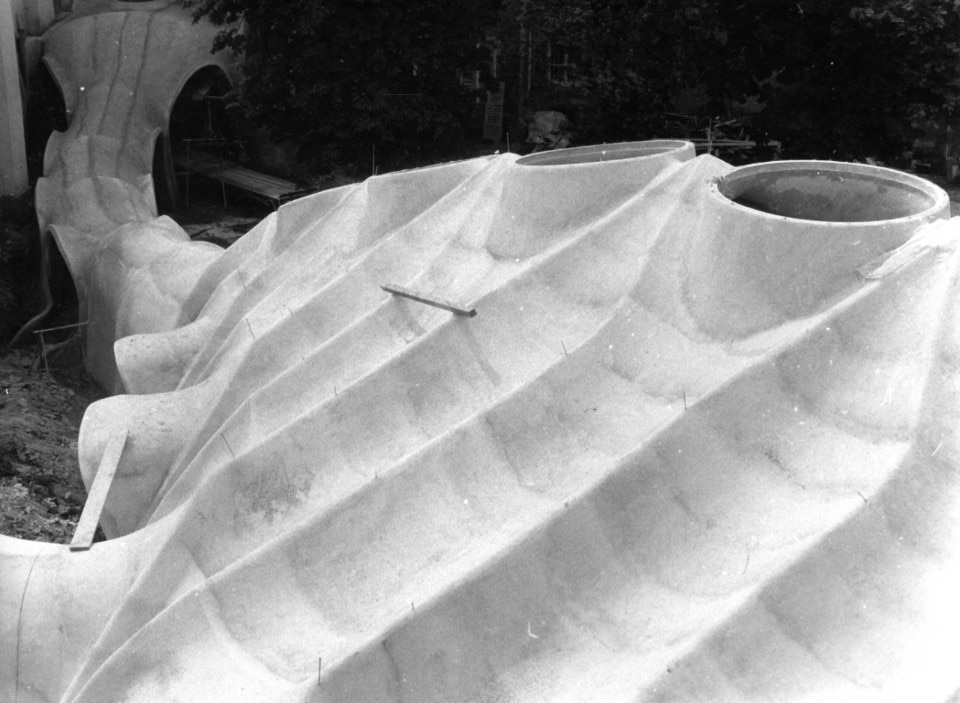
      Günther Domenig with Volker Giencke, Multipurpose school building in Graz-Eggenberg, Austria, 1974-77

      Chapter animal architecture and for animals

      The entire oeuvre of Günther Domenig is characterized by an overwhelming break with the traditional canons of modern architecture towards a new interpretation of the discipline linked not only to the study of a new style - often defined as “organic mannerism” - but also to an introspective and psychological journey into the personality and private sphere of the architect himself. Between 1974 and 1977, Günther Domenig and Volker Giencke and the engineer Otto Thaller designed a multi-purpose building for a school for nuns to house a canteen, a conference room, and a theater. The result is an all but anonymous shell, a complex organism whose surface is freely modeled and in whose execution the workers themselves participated creatively, involved by the architects in the gestation process of the work.

      “Organic and biomimetic forms such as those designed by Domenig were, in the 1970s, a revolutionary response to the rigidity of the Modern Movement, not always appreciated by critics and architectural history.”

      Address: Georgigasse 84, 8020 Graz, Austria. Coordinates: 47°04'33.7 "N 15°23'45.3 "E. Project: multipurpose building for a school. Status: still in use and in good condition. Photo credits: Atelier Giencke & Company

      View article
      View article
      • SHARE
      • PIN IT

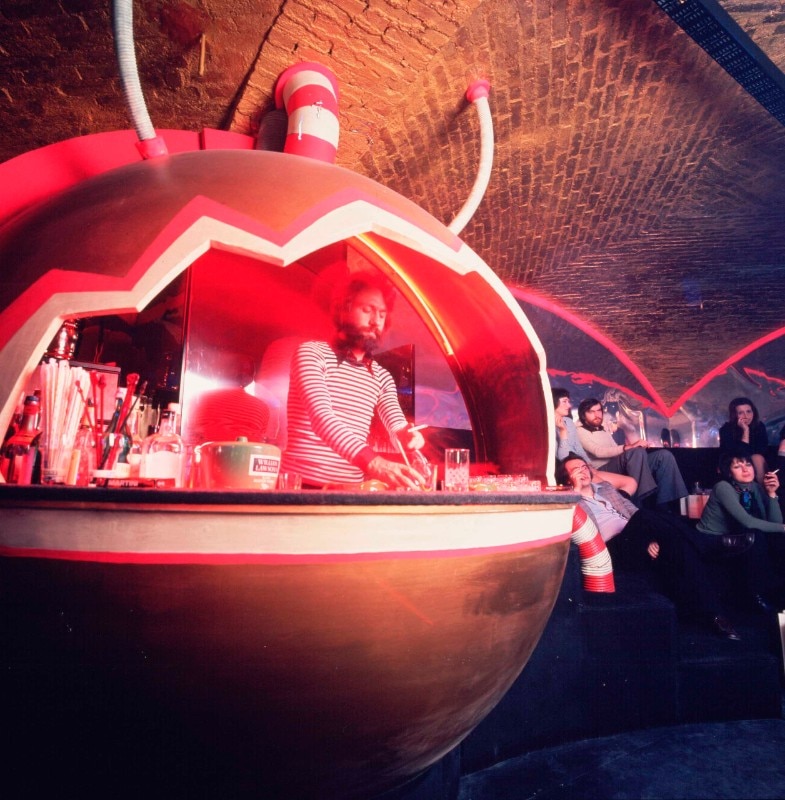
      Studio 65, Barbarella disco, Dubbione di Pinasca, Turin, Italy, 1972

      Chapter leisure architecture

      “Come in, messieurs et madames, to the music-filled barn, to see an authentic sidereal fleet, back from millennial voyages, to listen to the melodies of other cosmos, other planets, and star systems flying to the sound of the mazurka, of meteors swaying with the fox-trot.” This is how Studio65 describes, in 1972, their project to furnish a discotheque in the Turin area. The underground club is accessed through a tunnel that leads to the underground space, a square space with an amphitheater from the outside. The disc-jockey’s cabin and the bar are two spaceships; the ceiling is made of “fake” gold. There are some segments of ionic columns, archaeological finds of ancient terrestrial civilizations for tables.

      “Clubs, resorts, cruise ships, after the Second World War with the economic boom in Europe and America was born a new architecture dedicated to leisure and human well-being. In the seventies, the principles of such architecture were taken to extremes thanks also to a process of revision of the architectural principles, leading to the birth of a new architecture called then fantastic, radical, and visionary, of which we still tend to talk too little.


      State of affairs: dismantled. Project: fitting out of a discotheque. Photo credits: Studio65 Historical Archive - photographs by Paolo Mussat Sartor. Reported by: @Ste Lik, @Renzo Scotto d'Abusco

      View article
      View article
      • SHARE
      • PIN IT

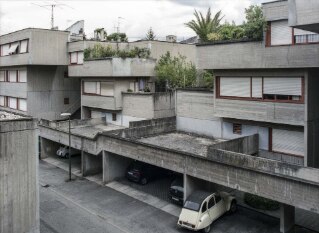
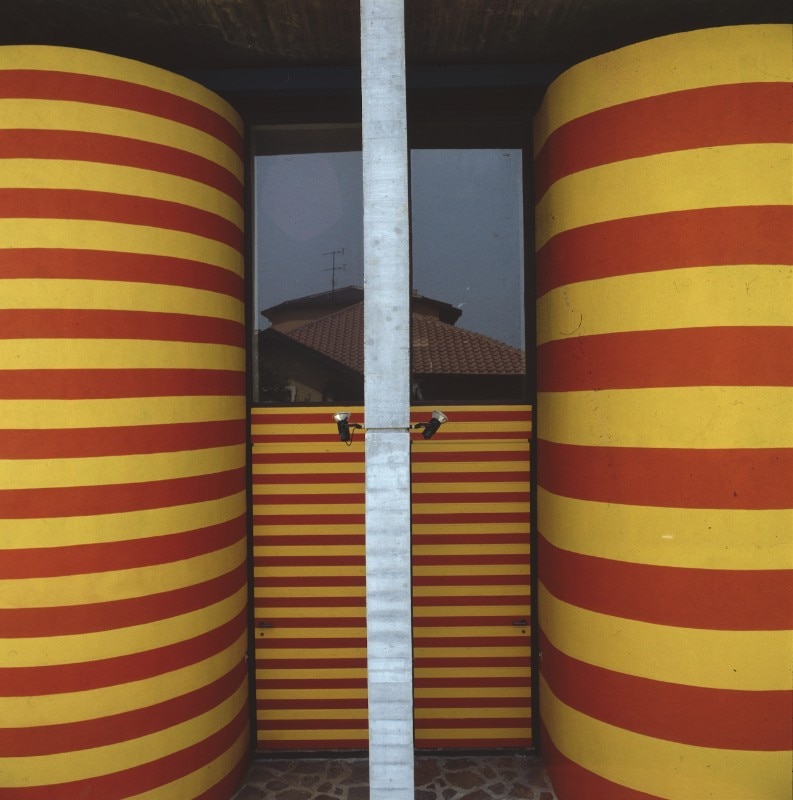
      Alberto Salvati and Ambrogio Tresoldi, House in Lissone, Lissone, Italy, 1978

      Chapter residential architecture


      The two-family house in Lissone designed by Alberto Salvati and Ambrogio Tresoldi is a mature example of applying the principles of overcoming rationalist architecture. Salvati himself considers it one of their most interesting works, thanks above all to the use of color and shapes in the design at the entrance that breaks the symmetry of the building. Their research on a new concept of living space here also translates into an intense relationship between the interior and exterior of the house, in which the warmth of the domestic space is announced in the main elevation precisely by this immoderate use of color and geometric forms, both in terms of decorative motifs and volumes.


      “The sixties and seventies are also the years in which architects revise the principles of the modern movement towards a new conception of living space. Salvati and Tresoldi began to think about a new conception of architecture that overcame the functionalist limits of rationalism toward the inclusion of the immateriality of spiritual aspects in architectural design. The interior spaces they designed were spaces of freedom, not refuge spaces, nor machines, nor caverns, but stages open to the spectacle of everyday living”.

      View article
      View article
      • SHARE
      • PIN IT

      View article
      View article
      • SHARE
      • PIN IT
      Loading
      Share
      • Sections
        • Architecture
      • Keywords
      • News
      • Architecture
      • Design
      • Art
      • Opinion
      • Archive
      • Products
      • Foreign Editions
      • Biographies
      • Architectural movements
      • Buildings
      • Architecture Firms
      • Design Essentials
      • Urban stories
      • Gio Ponti
      • Contacts & Editorial Team

      • Follow us
      Legal Note

      Editorial DomusEditoriale Domus Spa
      Via G. Mazzocchi, 1/3
      20089 Rozzano (Mi) -
      Codice fiscale, partita IVA e iscrizione al Registro delle Imprese di Milano
      n. 07835550158
      R.E.A. di Milano n. 1186124
      Capitale sociale versato € 5.000.000,00 - All rights reserved - Privacy - Informativa cookie completa - Gestione Cookies

      China Germany India Mexico, Central America and Caribbean Sri Lanka Korea icon-camera close icon-comments icon-down-sm icon-download icon-facebook icon-heart icon-heart icon--mobile-logo icon-next-sm icon-next icon-pinterest icon-play icon-plus icon-prev-sm icon-prev Search icon-twitter icon-views icon-instagram