


By Matteo Pirola
Photo Francesco Secchi
Piazza della Repubblica, one of Italy’s largest “non-squares,” sits at the threshold between the historic heart of Milan and its modern expansion. Walking across this vast open space, one traces the city’s evolution from the mid-19th century, when the countryside beyond the medieval walls began to urbanize with the arrival of new transport infrastructures.
Milan’s former main railway station, opened in 1862, stood about a kilometer closer to the Duomo, along the city’s central axis. It was a through-station running south to north, just east of the old bastions. Porta Venezia lay below, its lazaretto in transformation; Porta Nuova above, home to Milan’s very first railway station (1840) for the Milan–Monza line — still recognizable today, though absorbed into the city fabric.
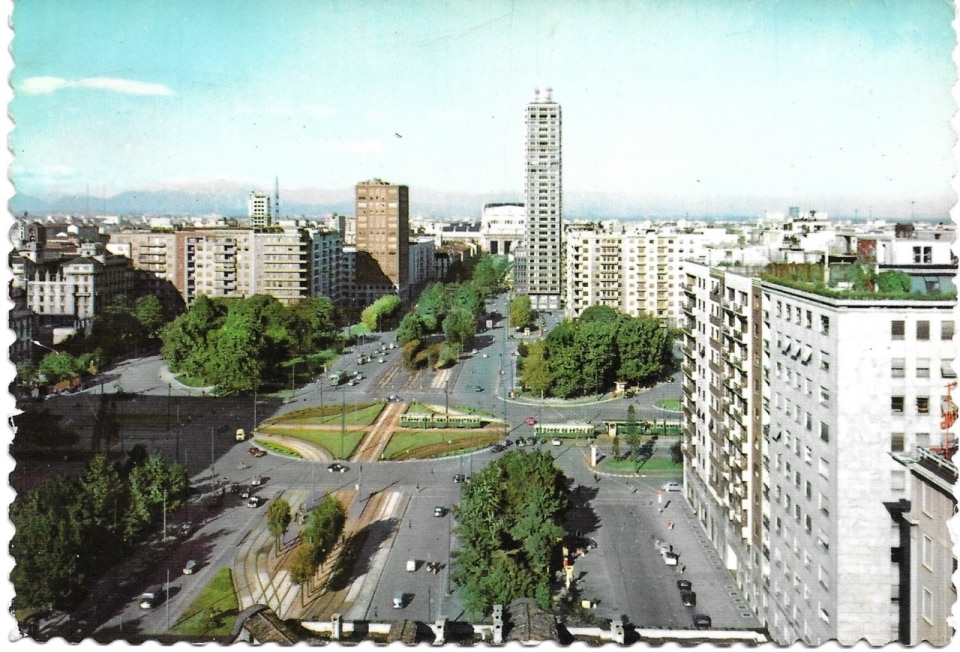
At the dawn of the 20th century, as “the rising city” pushed outward, a new terminal station was planned at its current site. Architect Ulisse Stacchini — also designer of the first San Siro stadium — won the 1912 competition. Delayed by the First World War, his monumental station finally opened in 1931: late for the modern era, yet majestic enough to satisfy the nostalgia of its time.
We will not linger on it here, but we must still nod to Gio Ponti’s Pirelli Tower, rising slender and luminous above the skyline — a true obelisk of modernity, long celebrated in the pages of this magazine.
1. Enter Milan’s “downtown” with the city’s first skyscrapers
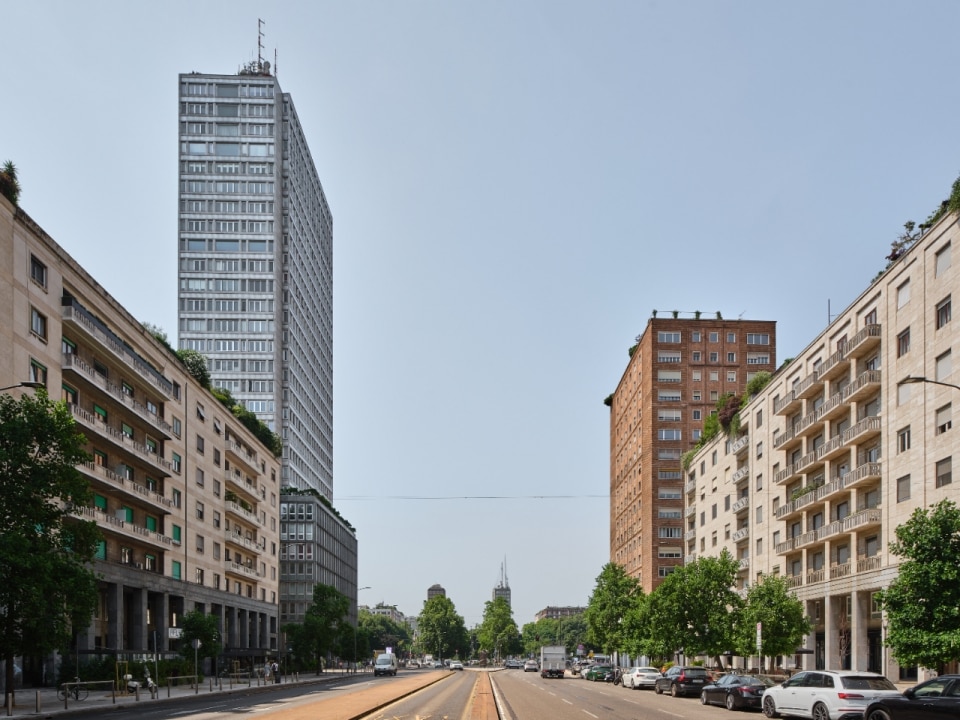
Via Vittor Pisani, the axis linking the Central Station to Piazza della Repubblica, became a laboratory of modern architecture. Conceived as a broad visual corridor — almost an open-air gallery — it connects the two eras of Milan’s growth.
Here stand the city’s first skyscrapers, the early signals of Italy’s vertical ambition. Slightly further north, these pioneering towers have evolved into the new business district of Porta Nuova. The elongated square — more an urban clearing than a traditional piazza — is framed by four landmark towers at its corners, marking the axis from the Station to the Duomo.
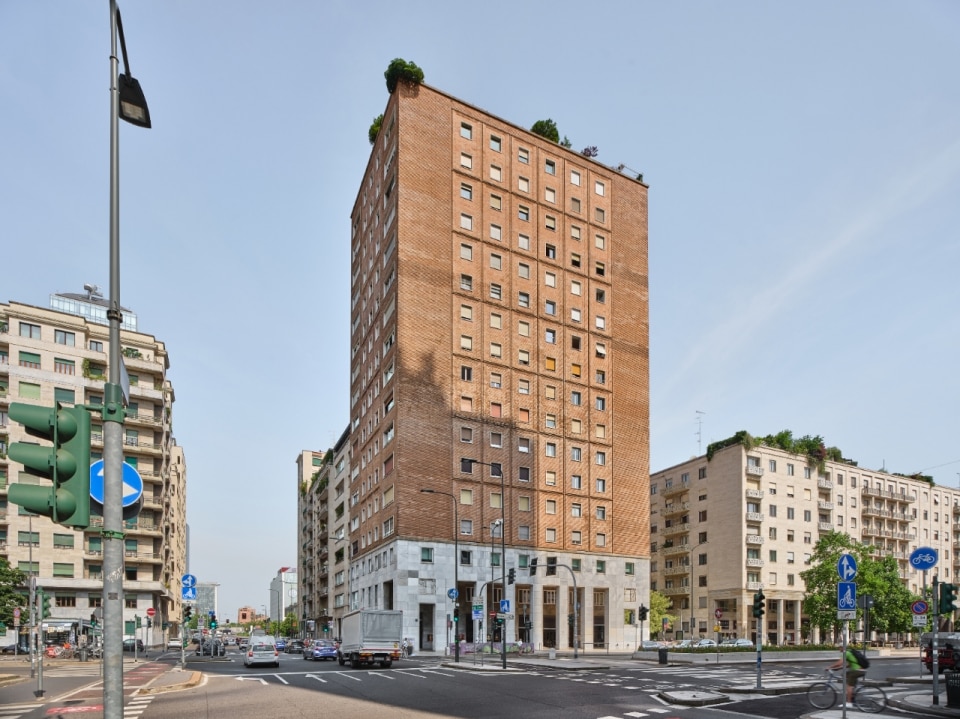
Mario Baciocchi, Torre Locatelli (1936–39), Piazza della Repubblica 27
The oldest of the group dates to the late 1930s and was designed by Mario Baciocchi, a moderate interpreter of the Fascist-era monumental style. His architecture expressed the language of the regime — symmetry, volumetric compactness, marble-clad porticoes, and, in residential cases, exposed brick façades with fine ornamental cornices. This 64-meter tower was originally conceived as one of a pair, framing the gateway to the new Central Station. Only one was built, while its intended twin became instead a “bigger sister” that spoke the modern language of the postwar years.
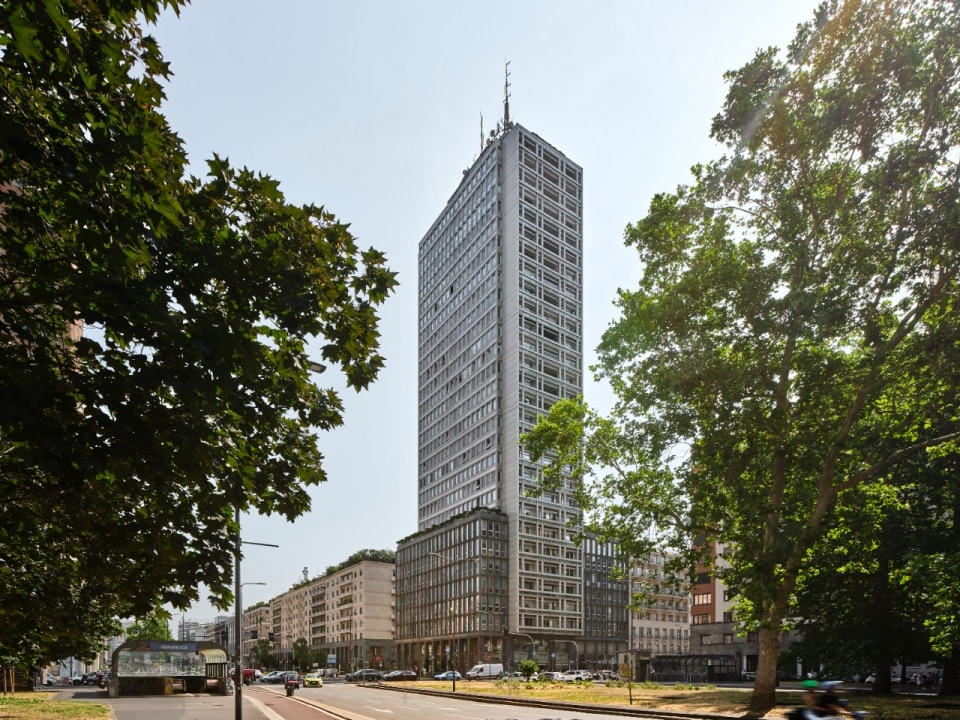
2. The first true skyscraper in Milan: Torre Breda
Luigi Mattioni with Ermenegildo and Eugenio Soncini, Grattacielo di Milano, or Torre Breda (1950–55), Piazza della Repubblica 32
This was Milan’s first true skyscraper — in fact, its developer’s name was literally Grattacielo di Milano (“Skyscraper of Milan”). At 116 meters, it was the tallest building in Italy at the time, and the first symbol of the International Style that would define vertical architecture in the postwar world.
The complex is composed of two distinct volumes: a lower, porticoed block housing offices and shops over eight floors, and a taller, slender tower with 21 floors of apartments, capped by a panoramic penthouse. The façade facing the square is particularly striking — a grid-like structure where a projecting vertical blade descends dramatically to the level of the portico.
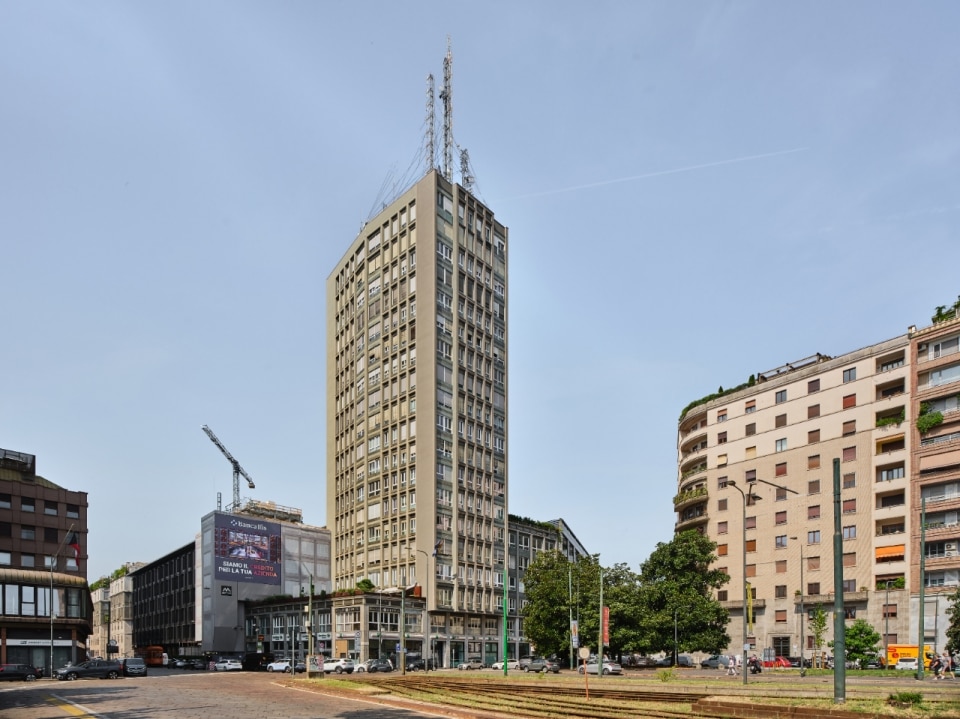
Luigi Mattioni, Torre Turati (1958–60), Via Turati 30
At the opposite corner of the square, Mattioni designed the north-western tower of a pair of “twin but different” buildings. Their floor plans and base structures are identical — a horizontal podium with tapering vertical shafts — but each reflects the language of its author, resulting in distinctly individual appearances.
Mattioni’s new tower recalls his earlier one nearby: a regular grid of marble, concrete, glass, and metal defines its façade, with the glazed volume slightly recessed behind the structural frame.
3. Giovanni and Lorenzo Muzio’s many buildings around Repubblica
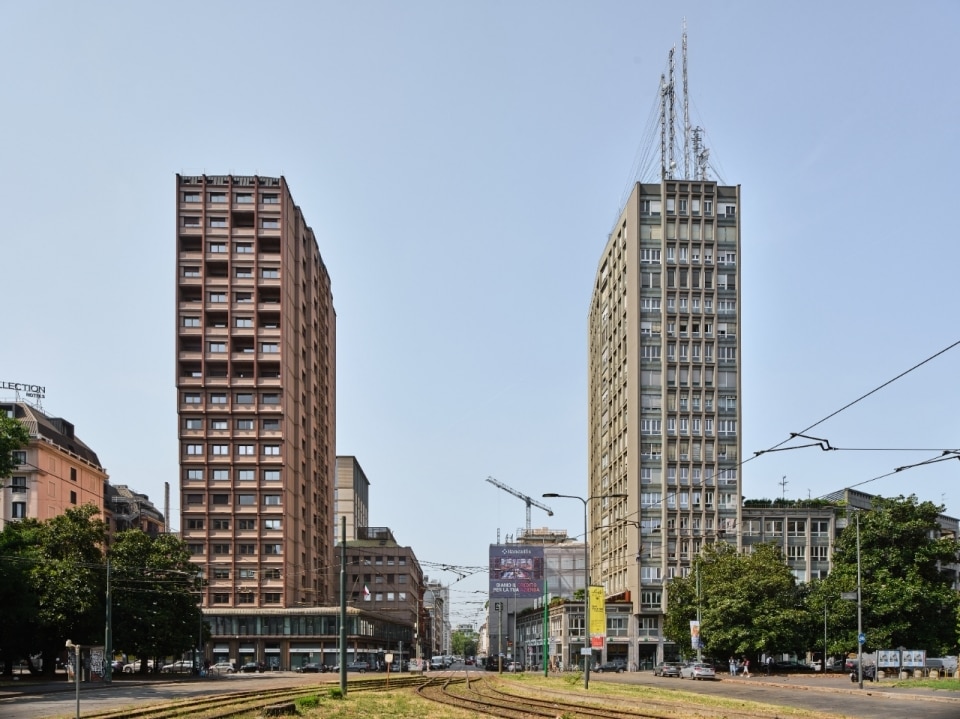
Giovanni and Lorenzo Muzio, Torre Turati (1963–68), Via Turati 40
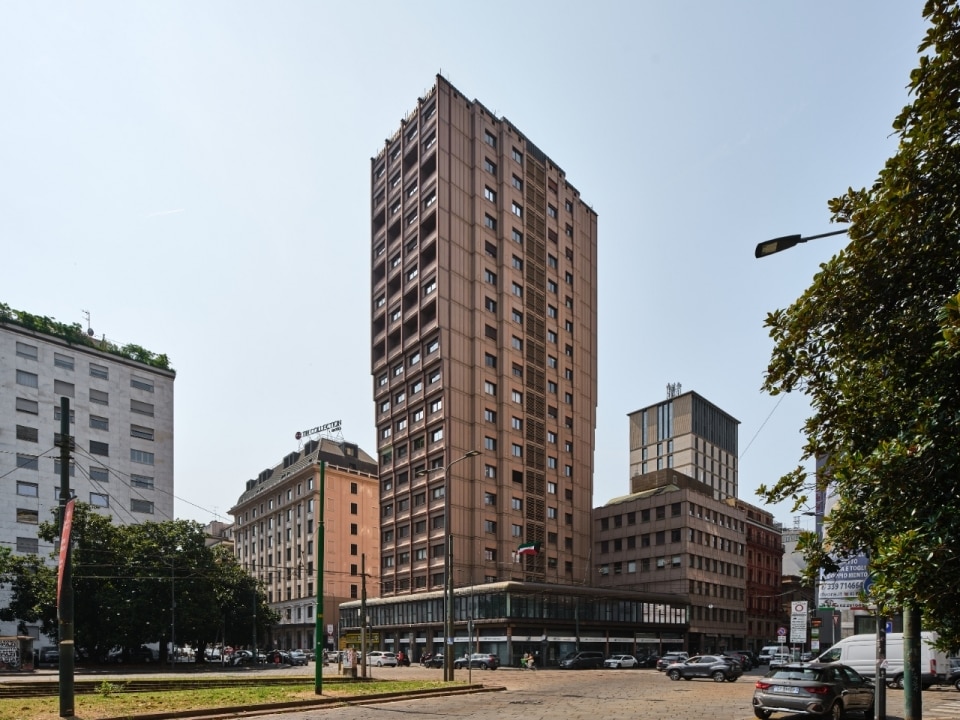
The Muzio tower, parallel to Mattioni’s, uses completely different materials: prefabricated reinforced concrete panels clad in reddish marble aggregate reminiscent of Lombard brick, creating a compact, monolithic façade.
Toward the top, the profile widens unconventionally with reversed steps that form bold projecting ledges. The result recalls both the expressive massing of the Torre Velasca (1955–57) and the warm brick tones of Baciocchi’s earlier tower.
For admirers of Giovanni Muzio, this neighborhood offers a rich open-air portfolio: from his early masterpiece Ca’ Bruta (1919–23) to the Angelicum Convent (1939–42), and several residential works around Piazza della Repubblica, including the Case Malugani and Bonaiti (1935–36) and the Condominio dei Giornalisti (1934–36).
Vito and Gustavo Latis, Residential Building (1953–56), Piazza della Repubblica 11 – Via Monte Santo 2
On the north side, Vito and Gustavo Latis designed a corner apartment building that takes advantage of its position to create a double façade. The lower, more compact volume faces the street, while the taller 11-story block opens toward the square. Above a base of offices — featuring a rare mosaic by Roberto Sambonet — rises a vertical structure with a continuous metal-framed loggia, punctuated by bay windows at irregular intervals.
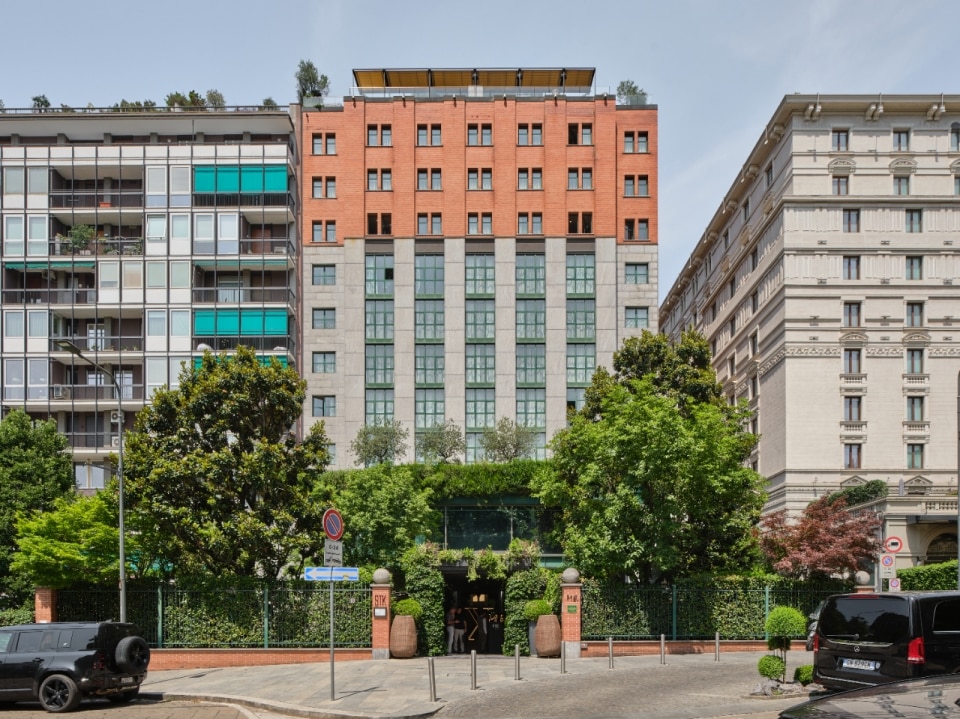
Aldo Rossi, Hotel Duca (1988–91), Piazza della Repubblica 13
Next door stands Aldo Rossi’s Hotel Duca, a renovation and extension project awarded through a national competition launched by Metropolitana Milanese and the City of Milan during the construction of metro line M3. Essentially a façade project, it incorporates Rossi’s unmistakable language — familiar and celebrated worldwide, yet surprisingly rare in his native city.
Speaking of hotels, one cannot overlook the historic Hotel Principe di Savoia, one of Milan’s most luxurious, built at the end of the 19th century near the first railway station as a temporary residence for the city’s elite. It has undergone numerous renovations and expansions over the past century, while preserving its timeless, classic character.
Gigi Ghò, Mixed-use Building (1955–56), Piazza della Repubblica 12, and “Assicurazioni d’Italia” Office Building and Garage (1965–70), Piazza della Repubblica 14–16
On the opposite side of the square, architect Gigi Ghò designed two adjacent buildings almost twenty years apart, effectively tracing the evolution of his career.
At the corner stands a 13-story residential tower with trapezoidal balconies projecting toward the green areas of Porta Venezia — a sort of urban observatory for its inhabitants. Next to it, a darker, more austere office block of iron and glass creates contrast: the façade is animated by a horizontal recess at the base and an asymmetrical central projection that gives the composition a subtle pulse.
4. Final stop: the monument to Mazzini by Pietro Cascella and Vico Magistretti
Pietro Cascella with Vico Magistretti, Monument to Giuseppe Mazzini (1970–74), Piazza della Repubblica
At the center of the vast square lies a sculptural work that can rightfully be considered architectural. Few notice it, which is part of its quiet charm, but once understood, its significance becomes evident — especially to those wandering the city in search of art and space.
This “monument-path,” designed by Pietro Cascella with the urban layout by Vico Magistretti, is a 38-meter-long stone walkway composed of abstract carved blocks and figurative reliefs in bardiglio marble, culminating in a bronze statue of Giuseppe Mazzini standing before a chair — the first gesture of inhabiting.
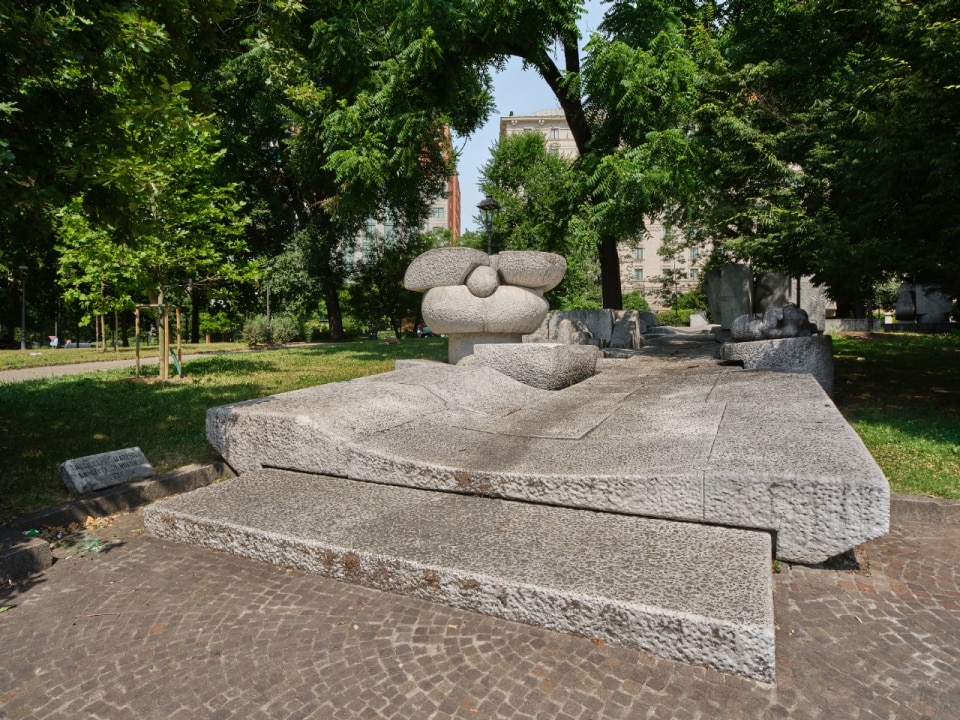
Architecture is truly understood only when lived, or at least seen, or better yet, walked. Domus’ architectural walk could hardly end more fittingly — along a sculptural path that concludes with a chair, a symbol of dwelling itself.
Opening image: Torre Turati by Giovanni and Lorenzo Muzio