The tea room-museum

In Moriyama City, the descendent of an ancient master ceramist has taken the teachings of Taoist virtue with his design for a special building. Design Raku Kichizaemon. Text, photos Sergio Calatroni.

Raku Kichizaemon is the fifteenth descendent of Chojiro, the first master ceramist to take the title Raku (which means comfort or ease) and the man who revolutionised the techniques and aesthetics of ceramic art in Japan at the end of the sixteenth century. His successor has taken the teachings of Taoist virtue and the traditions of his family to their very end with his design for the Raku Kichizaemon- Kan building at the Sagawa Museum in Japan. I had already been to Raku Kichizaemon’s house in Kyoto the previous year and visited his family museum in the company of his wife Fujiko, who is also a ceramicist, like their older son. The performance of the tea ceremony in the Raku household was powerful and unusual. I was in the place where, for more than 500 years, the famous bowls had been made for the ceremony dedicated to the art of tea. They are by far the most distinctive and important of their kind in Japan. I savoured the nectar of the thick green liquid from a personal black and white bowl, Master Raku Kichizaemon’s favourite. Fujiko had told me then about the coming opening of the Raku Kichizaemon-Kan on the shore of Lake Biwa.

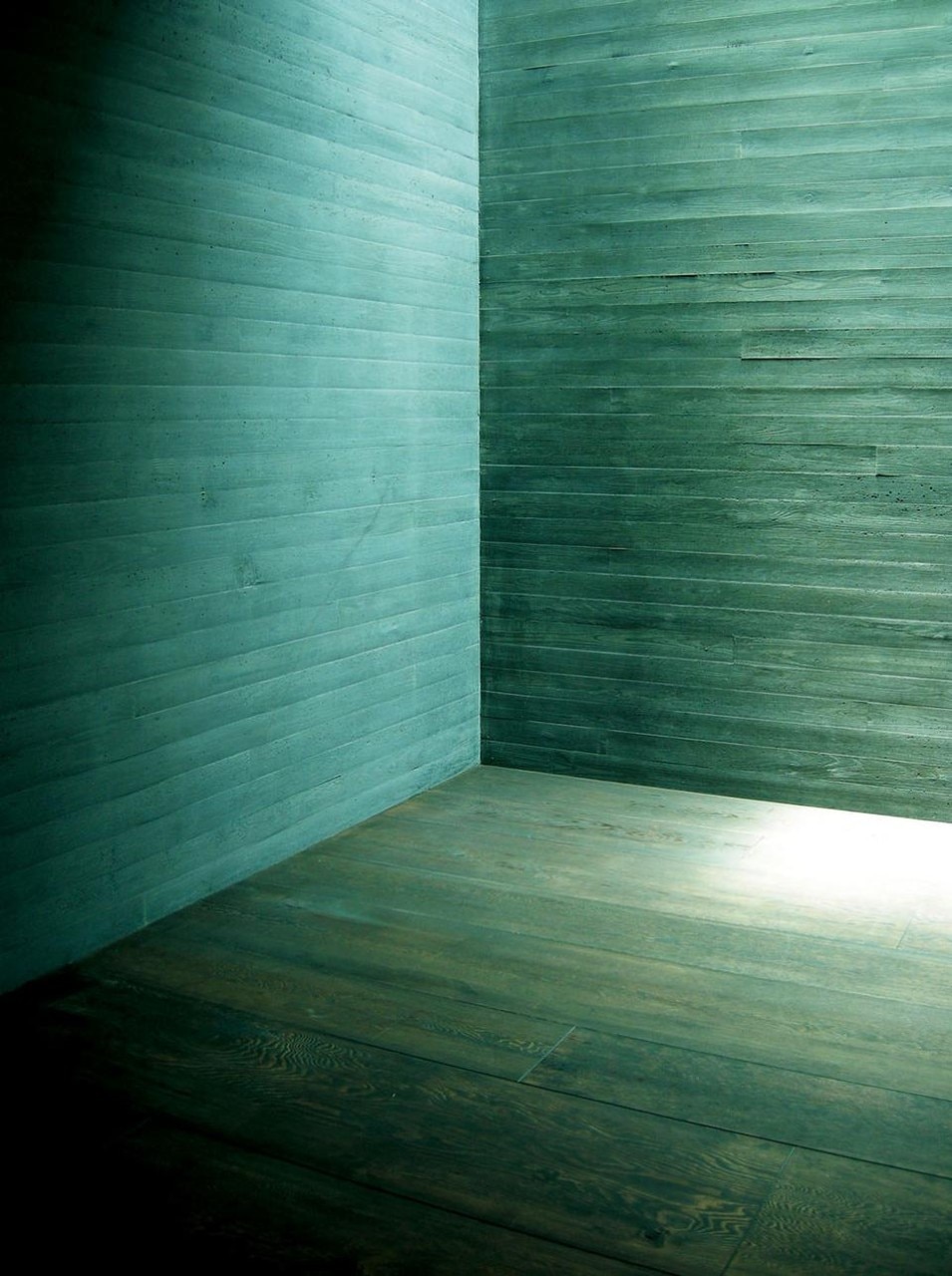
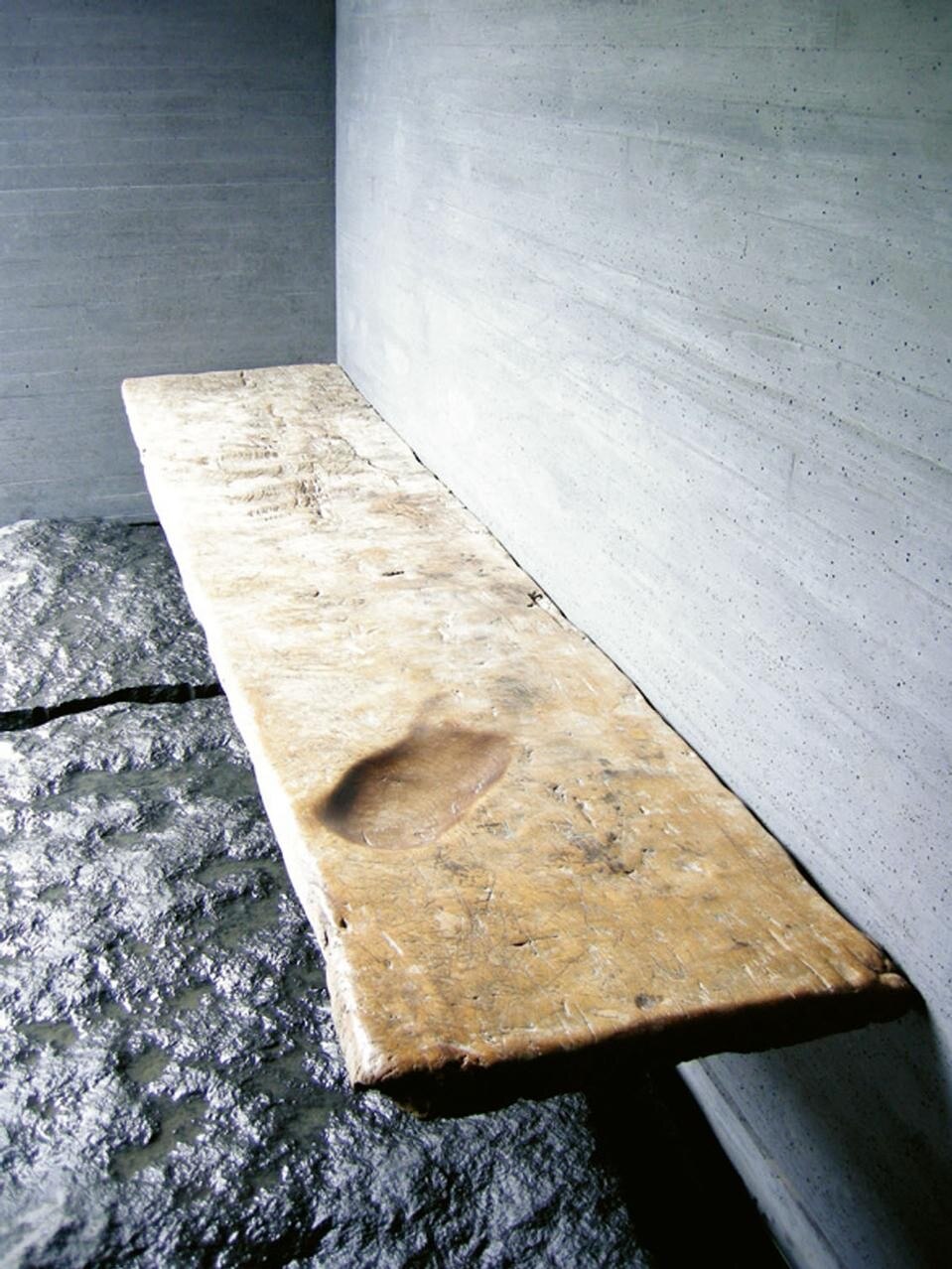
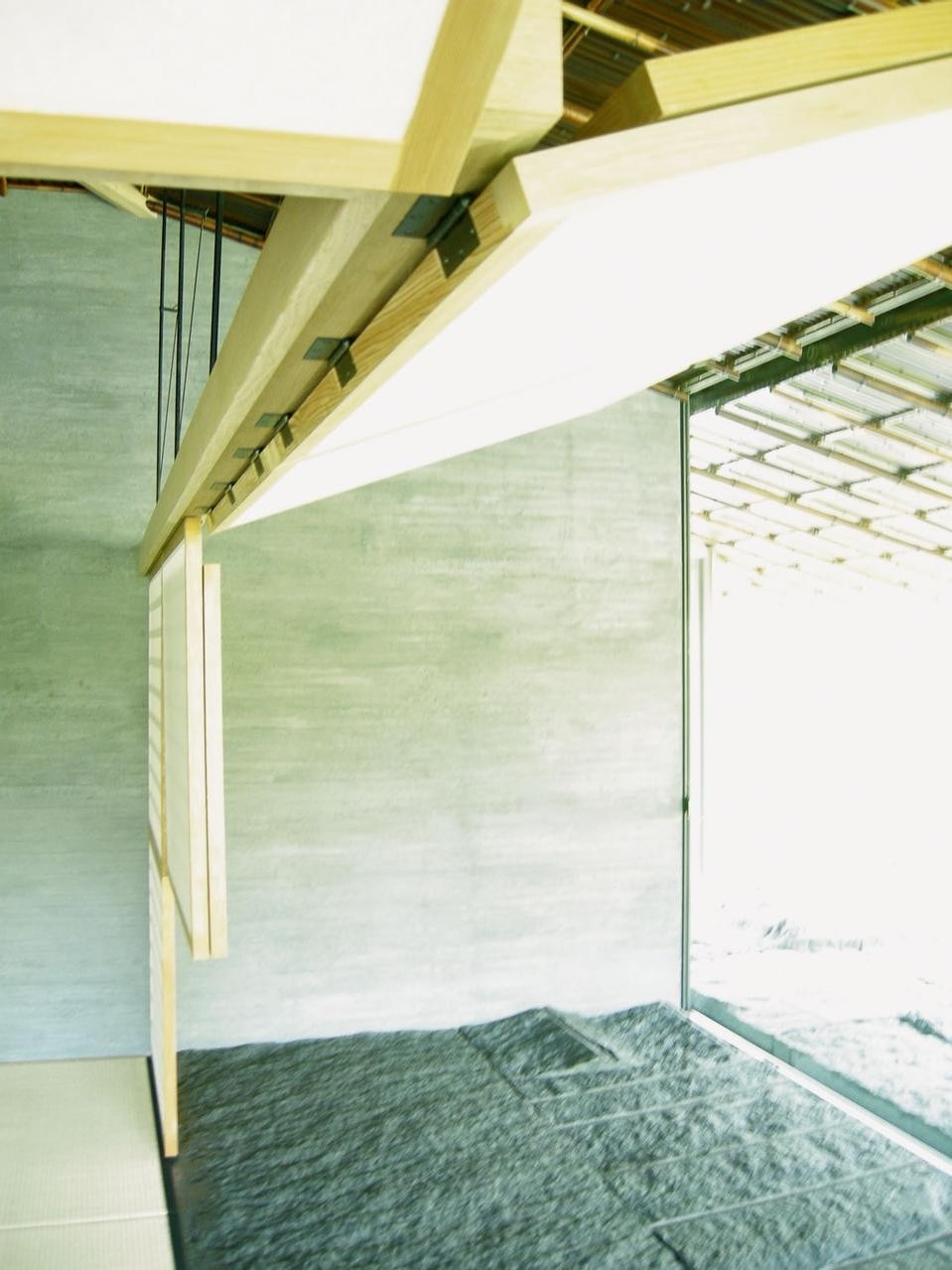
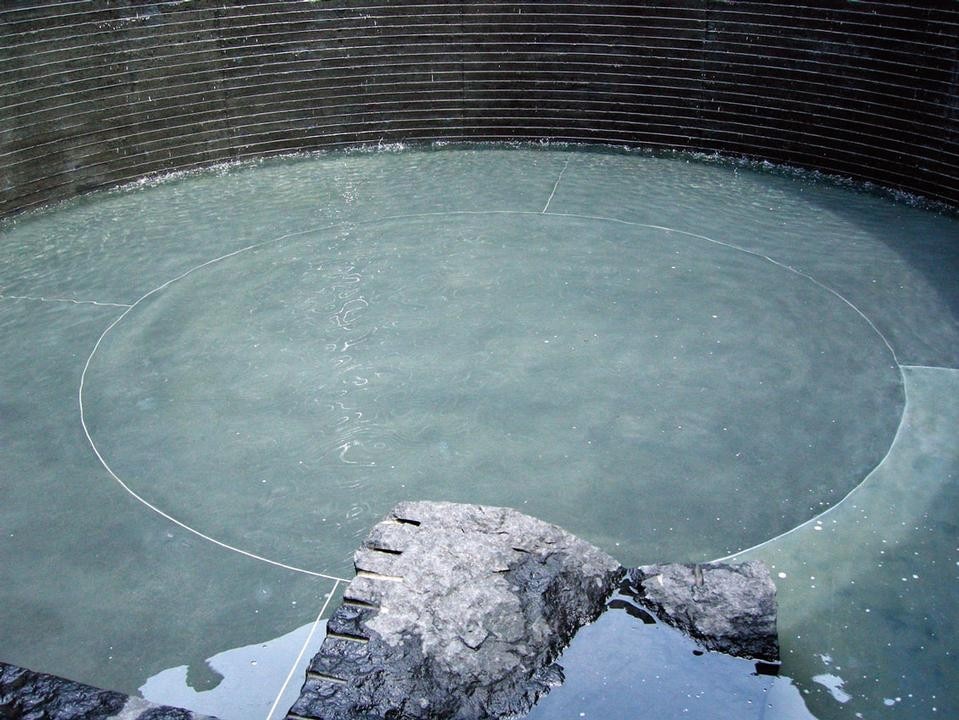
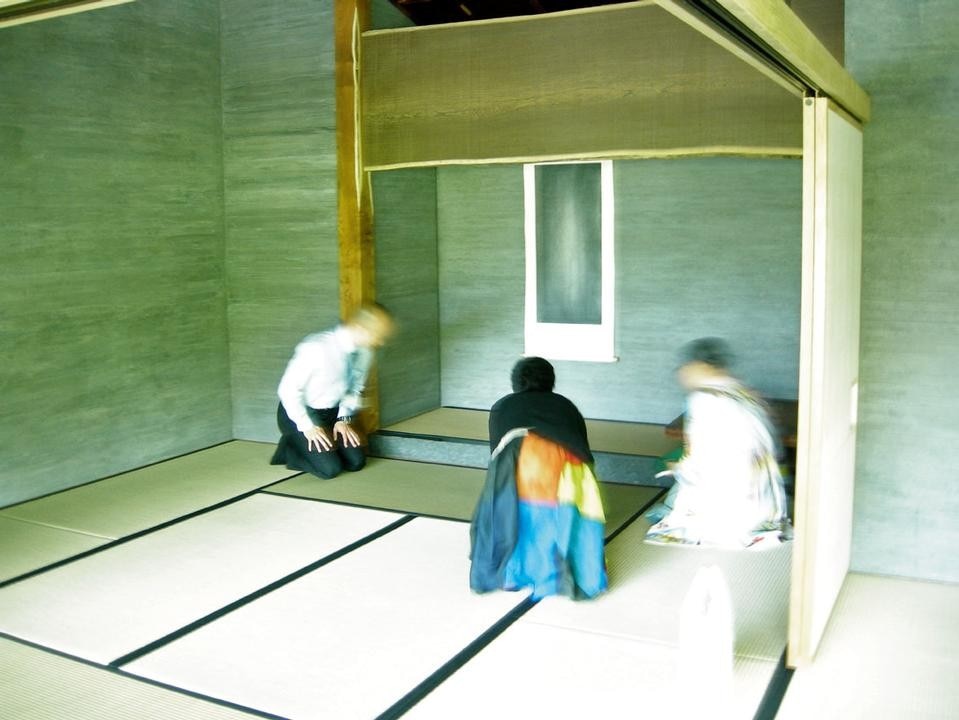
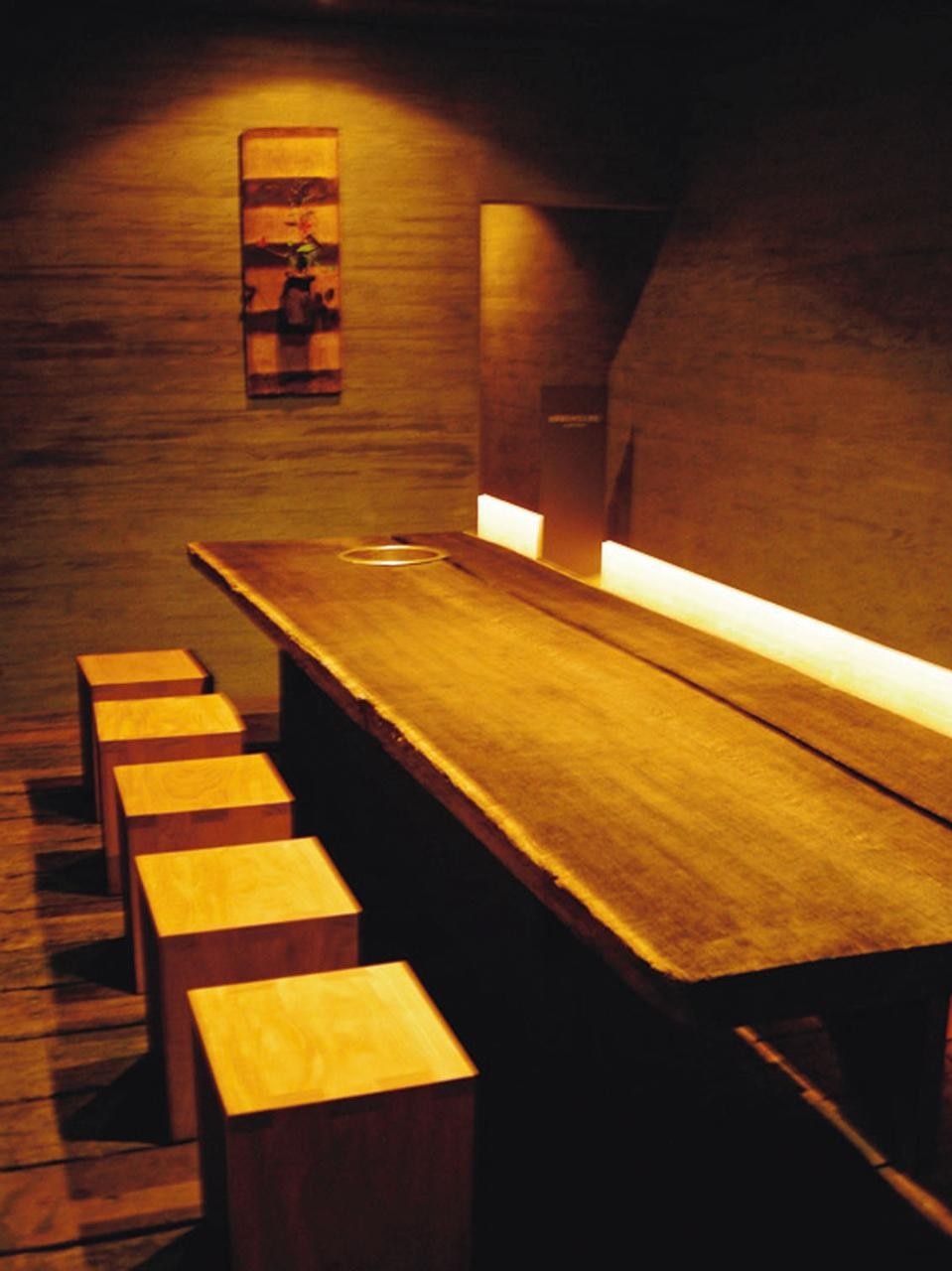
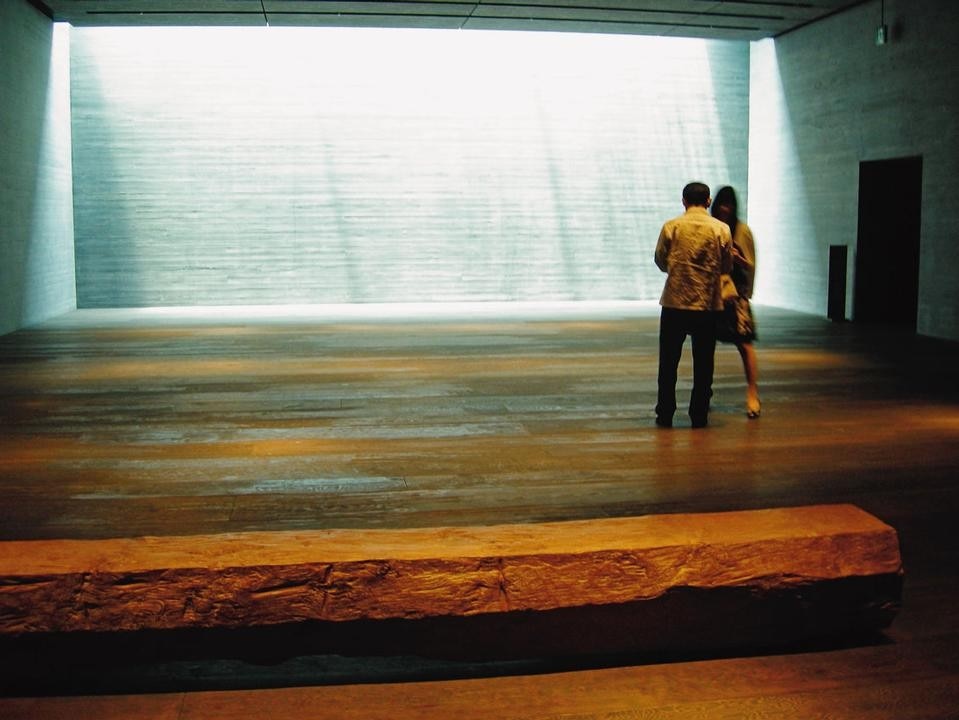
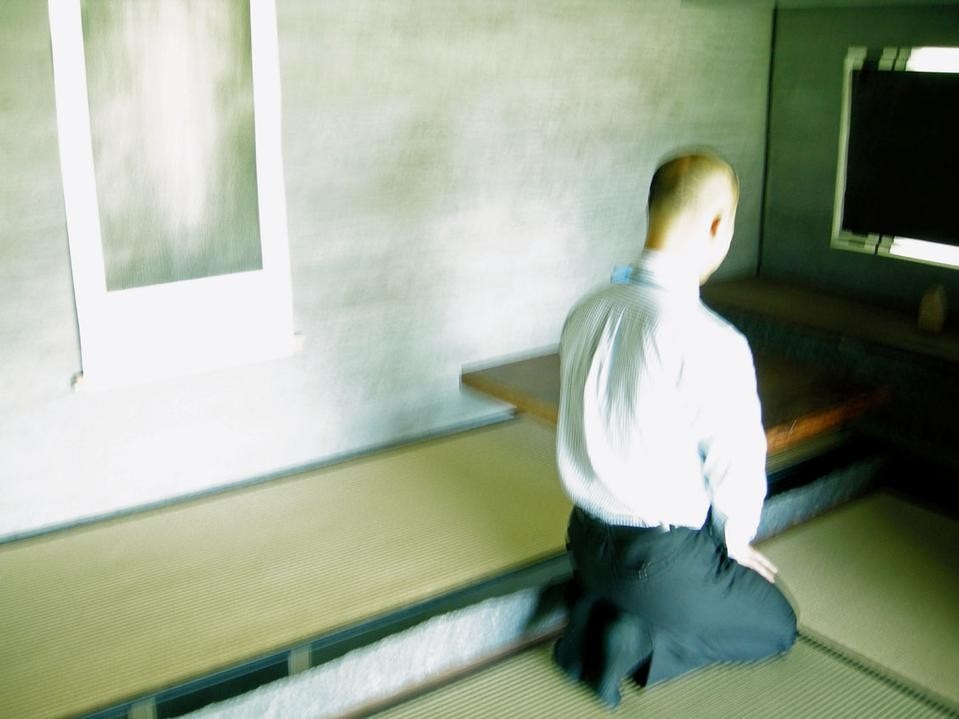
When I reached the underground entrance tunnel, designed by Raku Kichizaemon himself, which leads to the rooms of the Raku Kichizaemon-Kan, I realised that I was also beginning a journey into a very different dimension of time and spirituality. The place is enshrouded in darkness. The cement walls are painted in a shade with that dove-grey that appears only in Japanese chromatic scales. They seem to have traces of vertical wood grain produced by the moulds. The route leading from the waiting room to the tea ceremony room, and then to the exhibition of Raku Kichizaemon’s work, winds its unpredictable way ten metres below the surface of the lake between compelling objects: black granite from Zimbabwe, monoliths of oriental wood, rice paper, wheat straw, plexiglass, water, crystal, and natural and artificial light. In this place, you perceive the weight of time, and the pale physicality of the natural light that filters down from above. The light brings with it the motion of the water in the lake: it draws with moving, endlessly varying shadows the walls of a large room with a rough log floor. The place has enormous power2. The spaces for waiting and purification before a ceremony tell you this. There is a sense of being elevated. You feel the tenuousness of appearances, the transience of time and of human existence, and the beauty of nature that you can sense but not see. There is a feeling of ritual and Buddhist philosophy. Raku Kichizaemon dedicated five years of his life to the planning of this special building3. He designed everything in detail. He travelled to different countries to select all the materials. He made an accurate scale model of the building and the museum spaces. Finally, he laid his work in the showcases and placed a gardenia flower in a bamboo cane hanging at the entrance.
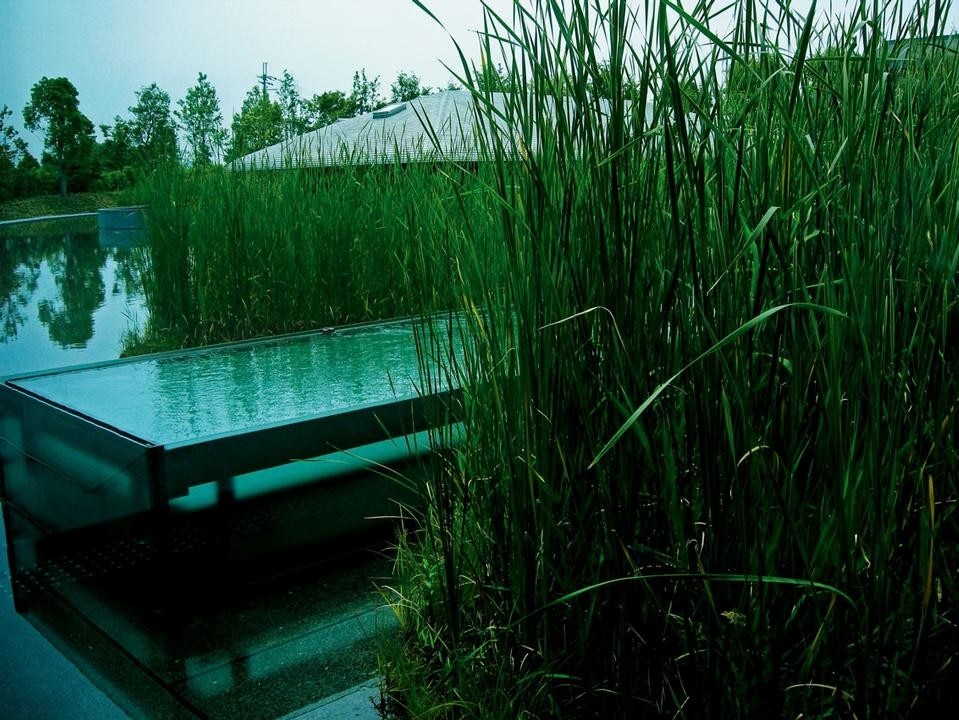
The water garden that
surrounds the Sagawa
Art Museum
The water garden that surrounds the Sagawa Art Museum
The path “of waiting
and purification” that
leads to the two main
rooms of the raku
kichizaemon-kan is
ten metres under the
level of the water
The path “of waiting and purification” that leads to the two main rooms of the raku kichizaemon-kan is ten metres under the level of the water
In the large room the walls
are made from clearly
visible cement
In the large room the walls are made from clearly visible cement
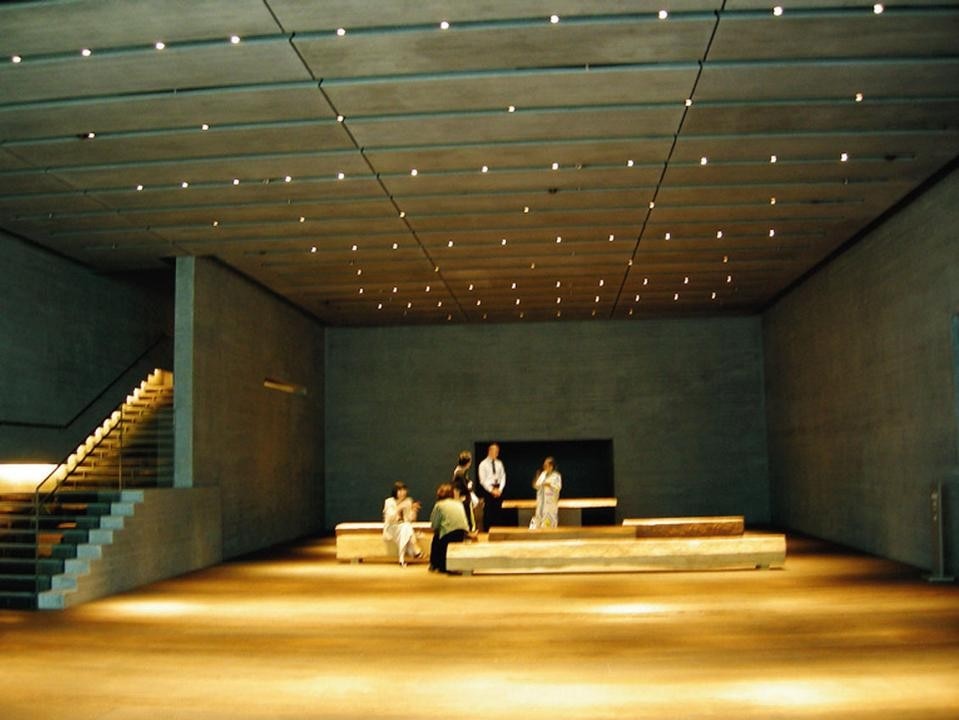
The underground space
is reached via a large
flight of steps
The underground space is reached via a large flight of steps
The flight of steps opens out onto
the large darkened
room. Natural light
filters down into it,
carrying with it the
mouvement of the water
The flight of steps opens out onto the large darkened room. Natural light filters down into it, carrying with it the mouvement of the water

Latest on Architecture

Latest on Domus

China Germany India Mexico, Central America and Caribbean Sri Lanka Korea icon-camera close icon-comments icon-down-sm icon-download icon-facebook icon-heart icon-heart icon-next-sm icon-next icon-pinterest icon-play icon-plus icon-prev-sm icon-prev Search icon-twitter icon-views icon-instagram