results
No results
Please enter a long search term
Showroom in New York
A courageous project by the
Japanese architect proposes a
building sliced in two. Design Junya.ishigami+associates. Text Florian Idenburg. Photos Iwan Baan.
The opening of a new Yohji Yamamoto
boutique in Manhattan in early February went
almost unnoticed by the progressively more
architecturally minded New York public. The
reports of Junya Ishigami’s subtle but brilliant
renovation of a triangular one-storey brick
structure were lost among announcements of
yet another luxury high-rise development by a
big-name architect.
Maybe this was because Ishigami’s talent
is still unknown outside Japan or because of
its unassuming location – not in the heart but
rather on the edge of the increasingly popular
Meatpacking District. More likely it is because
the intervention takes
place on the scale
of the city and the
architectural detail,
deliberately ignoring
a scale in between
– the scale typically
considered that of the
architectural project,
at least in New York.
Through a simple
but decisive cut, the
old building is split
into two new parts.
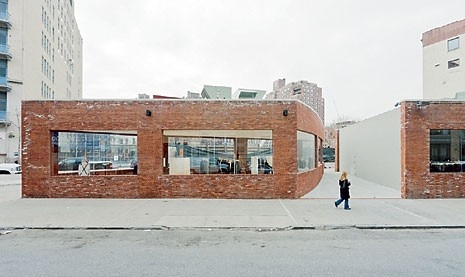
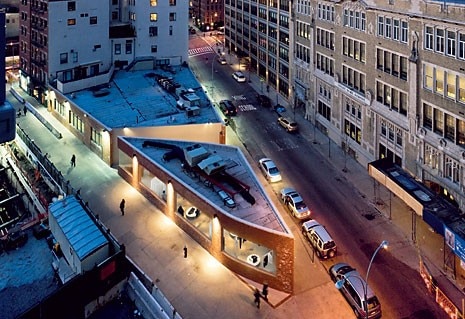
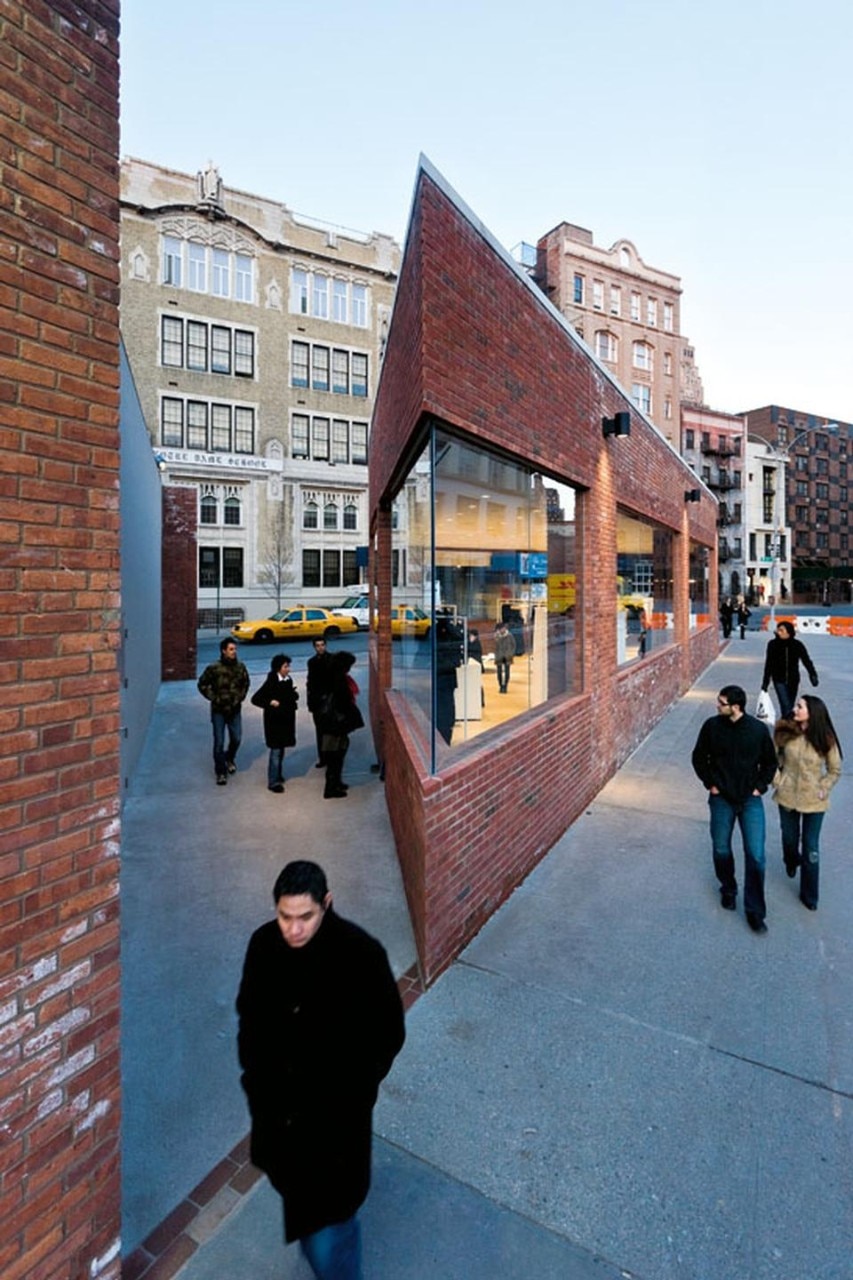
A generous slice out of the north facade
along the lively West 13th Street creates an
inviting opening, clearly splitting the building in
two. In the quieter, southern Gansevoort Street
the continuity of the street frontage is maintained.
A minimal cut creates an inconspicuous
alley. A final slice where the two streets meet
sharpens the building into the shape of a scissor
blade.
The independent glass and brick pavilion
generated through these incisions is both soft
and spiky. It sits at the intersection, somewhat
dazzled having been cut loose from the fabric
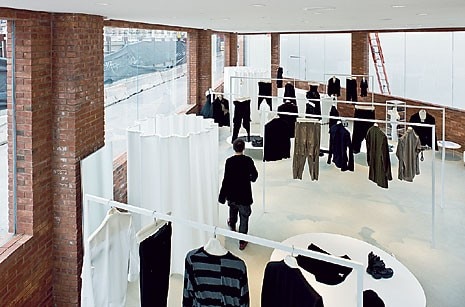
of the city. The interior is austere, with slender
steel display rods and freestanding dressing
rooms shaped as frozen curtains. Through
its large open windows it presents a carefully
curated – and constantly changing – selection
of Yamamoto’s collection.
Yet this beautiful open structure does not
operate in complete autonomy. The alleyway
also creates a functional split between the
service and served spaces. Employees need to
cross the alley to access the stockroom.
Reshaping the building was an involved
procedure. The formerly painted brick walls were
disassembled from top to bottom, vigorously
cleaned, and reassembled into a new shape. This
process allowed for new
embedded window frames
in the facade. Through this
move, the structure’s large
glass panes, some of them
curved, effortlessly seem
to disappear into the walls.
A dramatic brick cantilever
hovers over the sharp glazed
corner at the junction of the
new alley and Gansevoort
Street. These sophisticated
and delicate operations
give the structure its mystifying
character.
Renovation typically
entails the reconfiguration
of the interior plan for a new use. This reassembly
of a mundane industrial building into a slice
of refined architecture shows us a completely
new way of dealing with the city’s existing fabric.
The interior is merely created by manipulation
of the exterior. The sharpening of the point
and accentuation of the triangular shape make
the space fluid; the interior escapes into the
city, and with it, everything it embraces.
Manhattan’s grid and the shape of its
buildings are the result of a series of realestate
transactions. The Yamamoto shop shows
that the shape of the city can be more than this.
Apart from a refined selection of garments, the
project displays optimism and generosity by
giving a street back to the public. As a subtle
hint to this thoughtfulness, a trace of brick
embedded in the sidewalk traces the form of the
building’s previous, more ordinary life.
The incision
made in the one-storey
brick block creates a
new public passageway
The interior of the shop
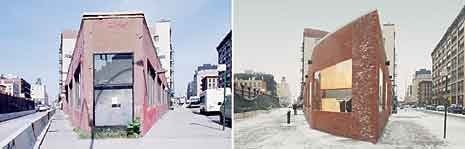
Two views comparing
what it was like before
the project and the
new building