

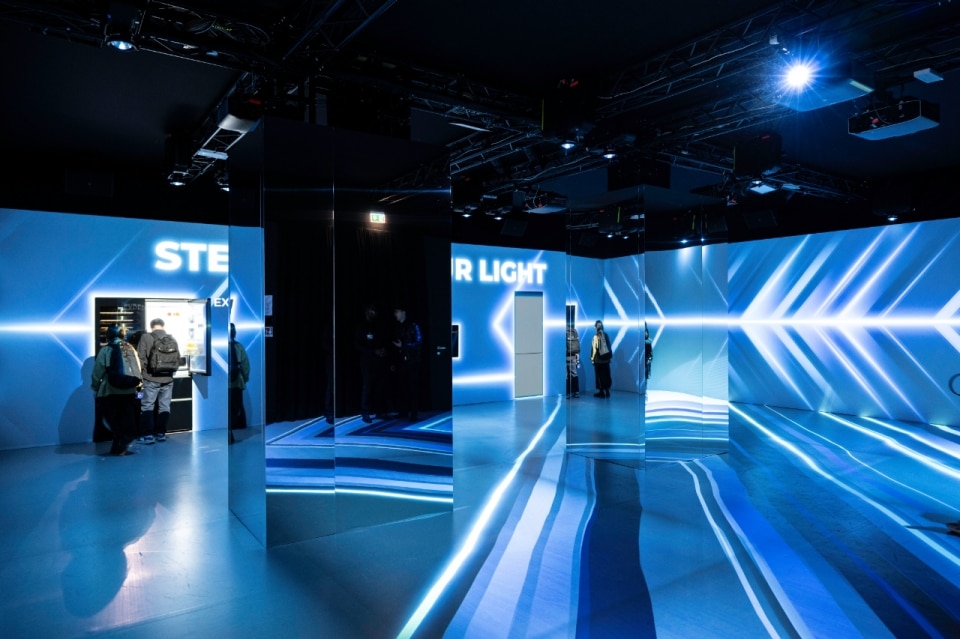
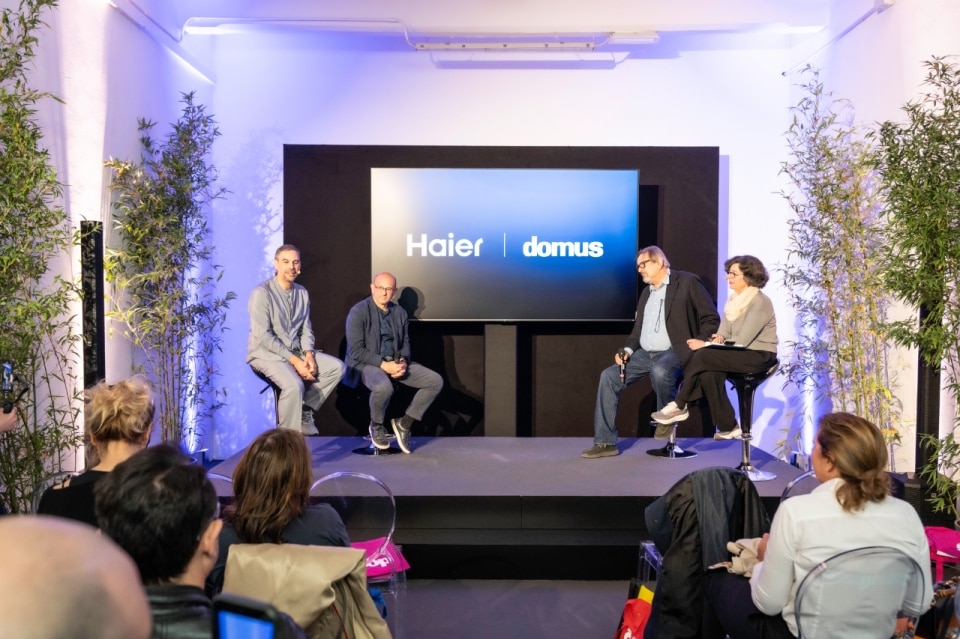
At Milan Design Week 2026, Domus and Haier present “What a Kitchen!”, a talk tracing a century of transformations in kitchen spaces. Between design culture, technology, and social change, it maps a shift from the kitchen as laboratory to today’s dispersed domestic landscapes.
For nearly a century, Domus has been writing about kitchens. Our archive tells a dense, multifaceted story, crowded with protagonists, conflicting visions, and constant twists. From this long narrative, during this year’s Milano Design Week, we set out to frame a conversation with Haier on the future of one of the most crucial spaces in contemporary homes, one that remains highly sensitive to even the slightest shifts in society and its evolution.
Take a milestone such as the Frankfurt Kitchen of 1928, as Domus’s Simona Bordone recalls: meticulously calculated, fully integrated, and packed with drawers for products still sold loose at the time. Or Piero Bottoni’s Casa Elettrica for the 1930 Triennale, featuring a kitchen of freestanding objects and even a super-appliance with 14 functions, to be purchased separately: an early glimpse of plug-in logic. These were the first steps toward a vision of the kitchen as a “laboratory”, as Marco Zanuso would later define, in 1944. Yet by the postwar years, the kitchen was already shifting. It became a central room, as in Marcel Breuer’s Connecticut house; a context for artworks, as in critic Lea Vergine’s home; it merged with living spaces in increasingly radical ways, from the Californian visions of Ant Farm and Frank Gehry to Dutch experiments imagining end-of-millennium kitchens designed by children, where vegetables would enter the space directly from where they were grown. Fast forward to today, and we find ourselves in a data-driven landscape, applied to haute cuisine and amidst a renewed prominence of freestanding elements.
 View gallery


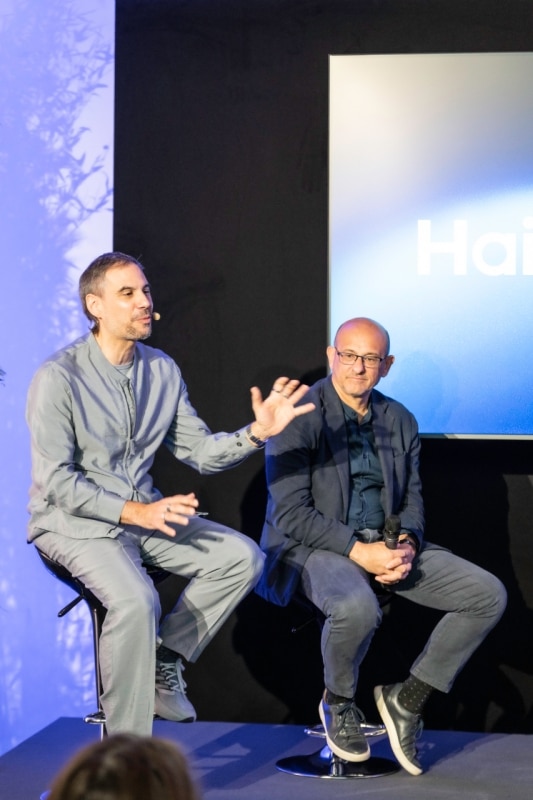
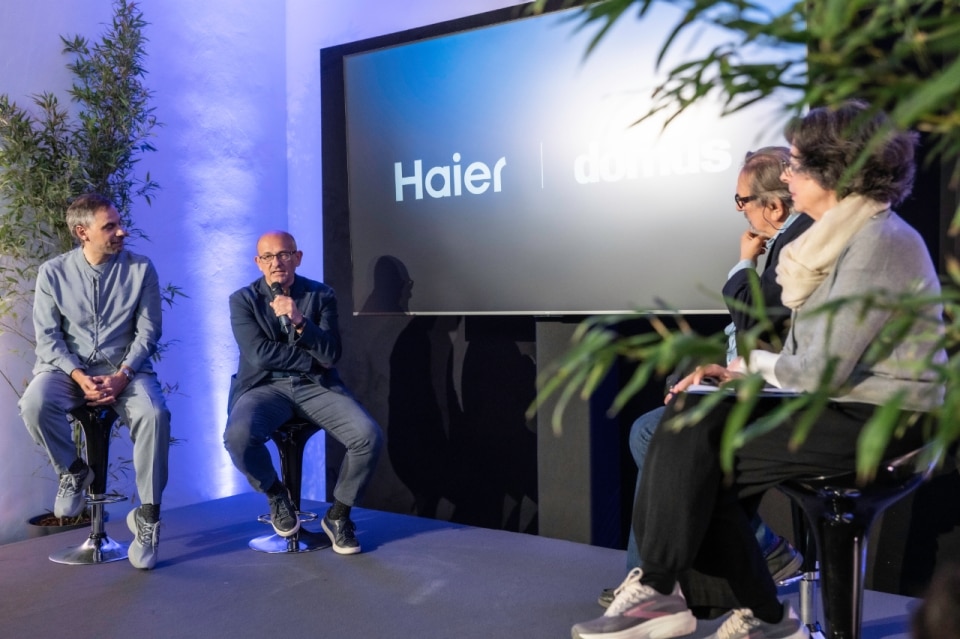
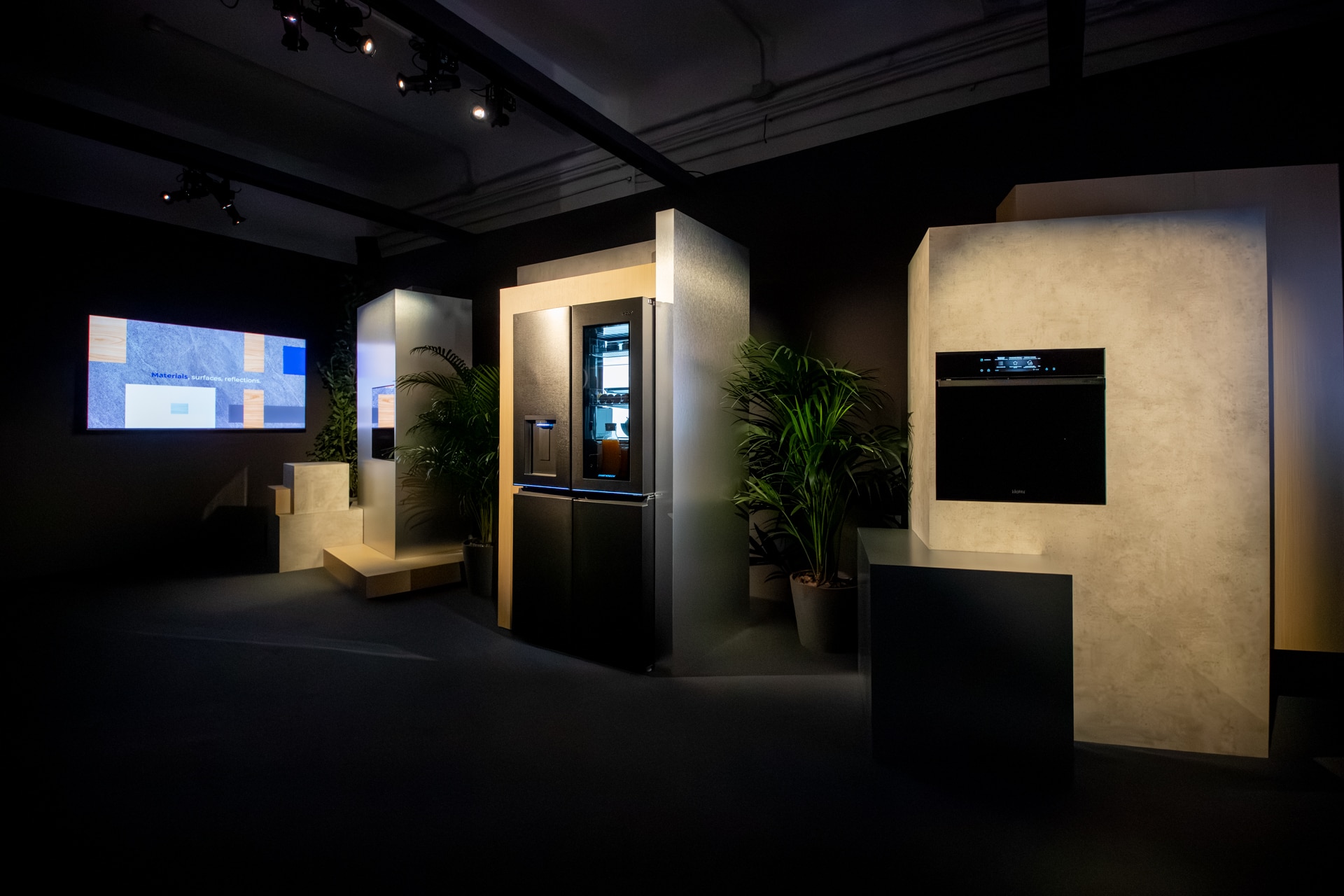
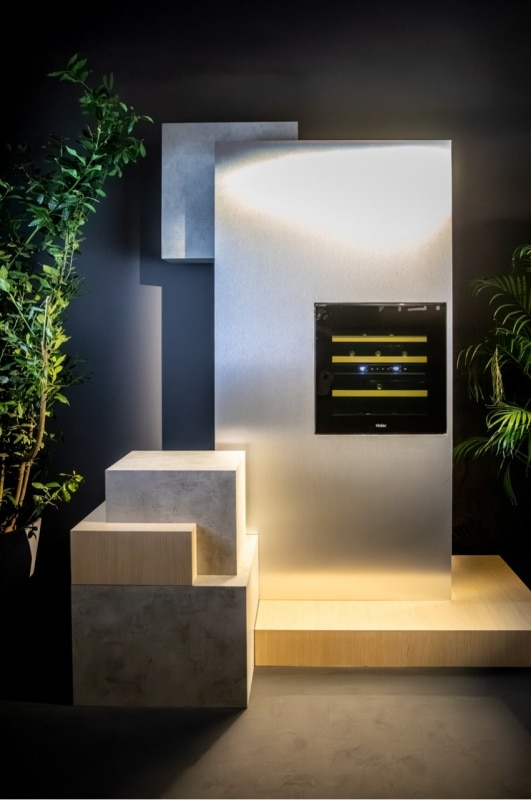
This is precisely where we stand now, as Federico Ferretti, Head of Design Milan Experience Design Center of Haier Europe, confirms: “to design a good product, you have to start from space – a distinctly Italian approach.” And as of today, space itself tells a story – like Haier’s Fuorisalone installation with its “deconstructed kitchen” – of functions migrating across different environments, of an industry diversifying accordingly, with kitchen manufacturers expanding into bathroom design, for instance.
A complex process, echoes Camillo Botticini, creative director for architecture at DVArea. By vocation and functional philosophy, “the kitchen is a compact place, designed to bring all elements into synergy.” Yet today it is fragmenting, also because, quite simply, people cook less at home.
Here is where a new territory opens up. For historian Enrico Morteo,this is what the Domus archive precisely reveals, and what current reality proposes: a turbulent evolution shaped by seemingly dichotomous tensions. Cooking together, once a radical practice, is now the hallmark of high-end experiences, complete with the display of professional tools and equipment. Expansive, dispersive models are countered by unprecedented miniaturization; modernist integration meets the return of freestanding elements.
Another factor comes into play, Botticini adds: the need to design for increasingly smaller domestic spaces, and to determine whether integration or deconstruction offers the most effective response. “Larger, less ‘finished’ spaces” are what we need, Morteo might argue, like Jean Nouvel’s Nemausus or the polycarbonate winter gardens by Lacaton & Vassal.
But if that proves unfeasible, can technology step in? For Ferretti, the answer is unequivocally yes – provided it is conceived and deployed through an emotional lens, sensitive to how different cultures receive it. This is what Haier calls “emominimalism”: the materialization of Naoto Fukasawa’s idea that the best design dissolves into gestures. A stance that accommodates even those who resist relinquishing the physical dimension of the kitchen, those unwilling to unlearn what a machine can learn, even if it is just how to cook spinach properly.
At the same time, others will gladly embrace a refrigerator that shops online, freeing up an extra hour to study Beethoven, an opinion voiced by a participant from the audience. “But if Beethoven hadn’t had a relationship with the seasons” Morteo replies, “he would never have written the Pastoral”.
It is precisely within that margin of imprecision – where connections, digressions, and ideas emerge – that Morteo locates the space for meaningful experimentation and real evolution. The conversation remains open. And looking back at the century-long narrative that brought us here, one might expect that from now on, plot twists will only become more numerous, and more frequent.
- Brand:
- Haier
- Web site:
- https://www.haier-europe.com