


The European regulatory framework, which includes the Ecodesign for Sustainable Products Regulation (Regulation EU 2024/1781, in force since 2024), is redefining the very concept of construction material, which is evolving from a simple technical or visual component to become the heart of a chain to be assessed throughout the entire life cycle of the finished product. LCA (Life Cycle Assessment), traceability, durability, repairability and origin of resources are becoming essential parameters in design.
The aforementioned regulation, together with others on safety (Regulation EU 2023/988) and on environmental responsibility – including the recent Packaging Regulation EU 2025/40), which renders companies fully responsible for the impact of their packaging – marks a shift in paradigm: it is not only a matter of what one produces, but what it entails over time.
Carlo Tirelli, the director of CATAS, an international testing, analysis and certification laboratory for the wood and furniture industry, stresses how the European regulatory framework needs to be interpreted as an ecosystem of interconnected measures: “Product sustainability and design, and thus safety, need to be considered together. This is, however, not something to be taken for granted. I often use, as an example, the adhesive sector, which is experiencing a paradox: we have gone from the dogma of absolute resistance to the need for disassembly.
However, sustainability is also a matter of durability: we cannot create ‘time-restricted’ adhesives that sacrifice safety. The solution is not to weaken the adhesive, but rather to rethink the design of the object, distinguishing its structural components, which need to remain intact and durable, from its modular components, designed to be repaired or substituted. Therefore, in order to comply with sometimes conflicting regulations, companies need to foster an integrated view of sustainability through shared means of analysis, in particular the LCA, first and foremost creating a complete picture of their products, materials and processes in order to understand the nature of real urgencies and where they need to intervene”.
The matter is of particular relevance for the sector of furniture and interior materials, which is currently trapped between varying regulations: on the one side is the new regulation on construction products (Regulation EU 2024/3110, the CPR – Construction Products Regulation) and on the other, the Ecodesign Directive, which focuses on finished products. “These are two worlds”, as Matilde Ceschia, engineer for CATAS specialising in LCA, stresses, “characterised by different logic and requirements. In the case of constriction materials, LCA is the recommended method for demonstrating material sustainability; Ecodesign, instead, operates from a ‘life-cycle perspective’, and is not formally imposed.
Product sustainability and design, and thus safety, need to be considered together.
Carlo Tirelli, direttore di Catas
However, it represents the leading operational principle for responding to new regulatory demands in terms of durability, recycled content, energy consumption, repairability and recyclability. There is no such thing as a material that is ‘more sustainable’ in absolute terms: it depends on provenance, the supply chain, transport, useful lifespan, recyclability and end-of-life. Even within a single category of material, for example a recycled polymer rather than a virgin one, the result can change according to the performance and the useful life of the product. The sustainability of goods can only truly be assessed by their manufacturers, who are the only ones with knowledge of the suppliers, processes, logistics and final use of the materials”.
As Tirelli stresses: “The key is to establish priorities and timescale for alignment, because the regulations - from Ecodesign to product safety, from REACH (Registration, Evaluation, Authorisation and Restriction of Chemicals) to the EUDR (European Union Deforestation Regulation EU 2023/1115) and to the regulation on packaging – are coming into force almost simultaneously, and they require differing investments. Companies are required to ‘accelerate and slow down’ according to deadlines, each time choosing what aspects to deal with first on the basis of risks and deadlines. This is why it is important to adopt a single data-collection system, such as LCA, capable of bringing together environmental, technical and supply chain data”.
This approach is shared by Carlo Proserpio, professor and researcher at the Politecnico di Milano, who believes that this tool plays a decisive role in overcoming preconceived ideas of materials. “We should not focus on the impact of an individual material”, he observes, “but rather the characteristics that the material brings to the life cycle of the product. The most common error is to compare materials on the basis of their impact per kilogram, without considering the role they play. A kilo of cardboard has a much lower impact that a kilo of steel or polymer, but if you use that cardboard to make a chair that will have to be replaced numerous times, its sustainability changes completely”. This is where the concept of the “functional unit” (FU), a fundamental measurement in the Life Cycle Assessment process, comes into play. The focus of the assessment is not the product in itself, but rather the function it guarantees over time. Durability, longevity and repairability thus become elements that are more environmental than technical.
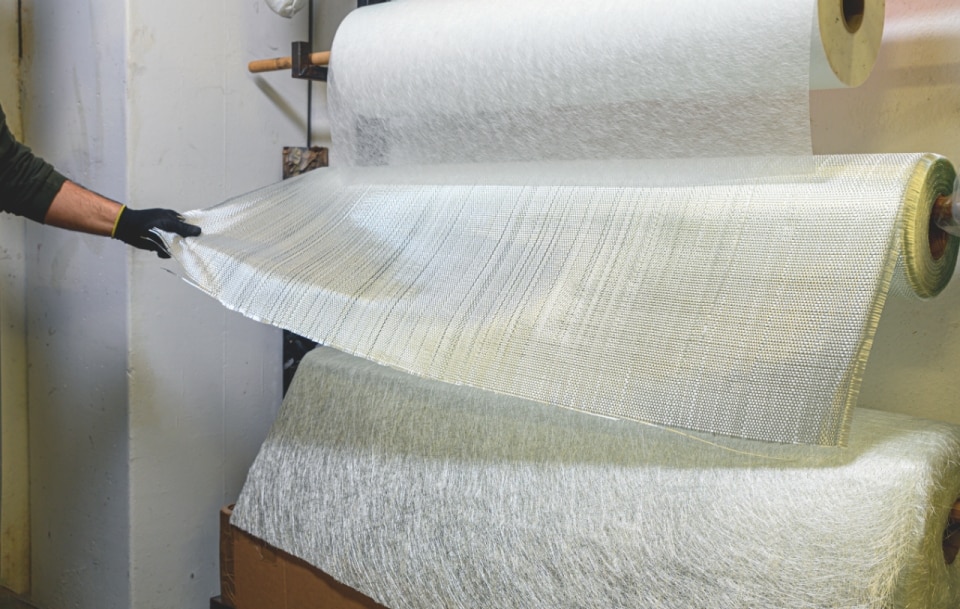
Fibreglass and composite materials are perhaps the most representative materials: they are often seen as “unsustainable”, above all because they are difficult to recycle, but for certain applications, they can offer significant benefits. “There is no such thing as a good or a bad product”, claims Proserpio, “but there are good or bad applications. For example, in the mobility and light structure sectors, fibreglass allows for weight reductions that lead to lower energy consumption during use. The critical aspect remains end of life because these materials are hard to recycle. However, the growing responsibility placed on producers by recent legislation may encourage new chains for recovery and exploitation”.
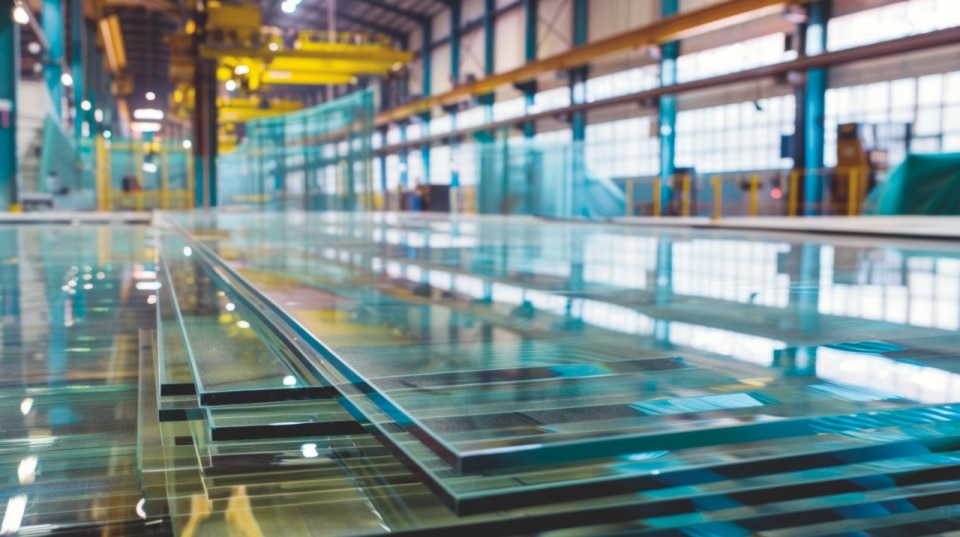
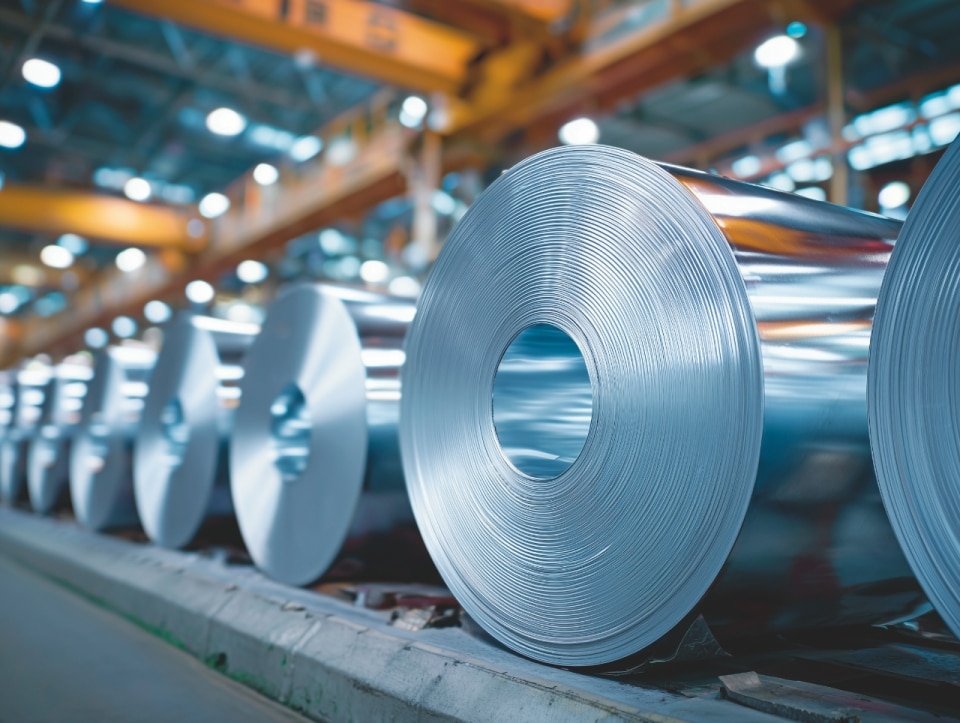
The wood supply chain, instead, represents an advanced case in terms of traceability. “They have acted well in advance”, observes Proserpio, in reference to FSC and PEFC certification, “but even in this case it is not a linear matter: the speed of growth of the wood, the local availability of raw materials, transport and cultural habits, i.e. the speed of consumption, all have a significant effect on the true sustainability of the material”. Aluminium and glass, on the other hand, demonstrate the potential of well-developed recycling chains: secondary raw materials offer performance that is extremely similar to virgin materials but with extremely lower energy costs. However, while glass is extremely recyclable, it suffers the problem of weight in terms of transport.
“The decisive aspect in terms of the sustainability of our production model”, concludes Proserpio, “concerns, above all, the underlying economic model. Many requirements of Ecodesign – such as longevity, repairability and updatability – prove to be incompatible with market logic based exclusively on an increase in sales. Thus, a crucial step will be the evolution towards circular service systems and models, for example no longer selling a chair, but rather renting out a service: ‘comfortable seating’. The same goes for lighting, which could become a pay for lux service. With these alternative models, the economic interests of the company are finally aligned with a reduction in impact: increased durability, lower consumption, efficient substitution, recovery of materials and constant maintenance become competitive advantages rather than additional costs”.