

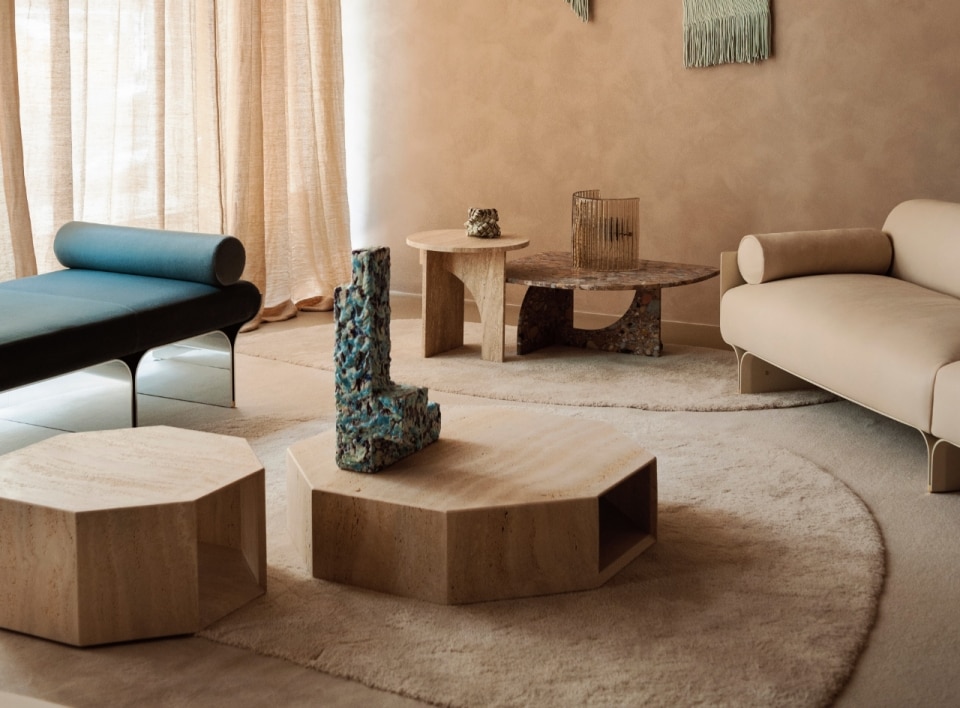
A point of dialogue between concept and experience, between vision and lived reality. Interior finishes have evolved from being purely functional elements that, at most, serve a decorative role, and are now seen as a fundamental element in the overall planning of spaces, in both domestic and retail settings, and from hospitality establishments to corporate environments. In a period in history in which architecture and design is led by user experience, the materials, colours, textures and relationships that surfaces foster through visual, tactile, olfactory and auditory sensations represent the elements that define the difference between space and environment, between a simple volume and a setting that can be inhabited and that expresses emotion. As highlighted by Mario Bisson, associate professor at the Department of Design at the Politecnico di Milano, where he promotes the interdepartmental EDME (Environmental Design and Multisensory Experience) Workshop, “the relationship between individual and architecture – be it an object, an environment or a system – is always expressed through a surface”. According to Bisson, there was a lengthy period during which the world of design saw finishes as one of the final phases of a process, almost as though they were an aesthetic addition to previously defined technical choices. Now, however, the opposite is true, with emotive and perceptive aspects dictating choices. “Function has become a given: when we purchase an object – a mobile phone or a car – the fact that it ‘functions’ is obvious. What makes a difference is the emotion that it generates within us. This also goes for spaces”.
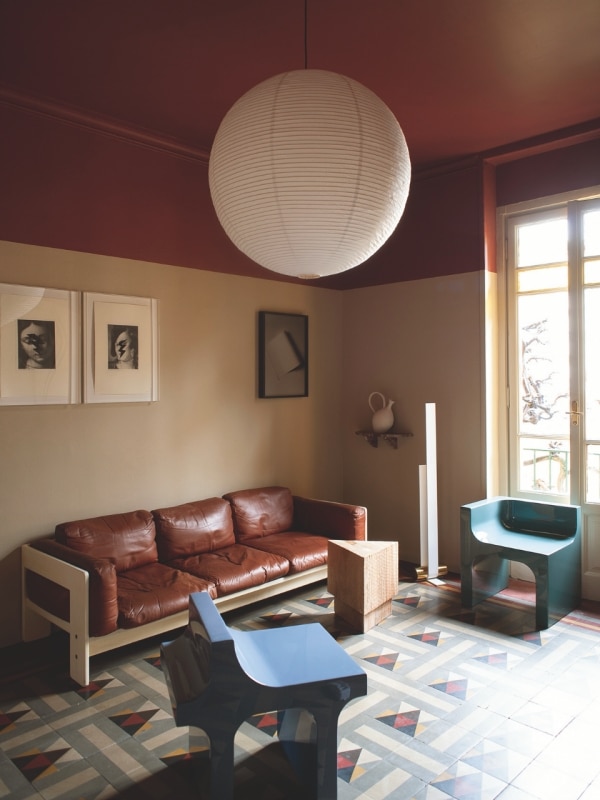
It is a transition that has profound implications for the material industry. While the field of surfaces used to be dominated by technical parameters – resistance, chemical composition, performance – added value is now measured by the capacity to create sensory and narrative relationships with the user. The extensive sector of finishes has thus become fertile ground for innovation. From ceramics to laminates, from resins to cement surfaces, companies are investing in technology that is capable of evolving the potential of materials in terms of expression and performance.
Bisson observes how the creativity of the Italian industry continues to stand out in this field: “Italy has brought forth figures such as Clino Trini Castelli and Andrea Branzi, who as early as the Seventies were working on CMF (Colour, Material, Finish) design. We have a wealth of industrial and general culture that, for companies that are considered small in comparison to global giants, represents a true competitive advantage that is not to be lost and that should, on the contrary, be fostered. If we take ceramics as an example, we can see how, in recent years, the sector has reached extraordinary levels: printing and moulding systems that allow for variations in colour on individual tiles, three-dimensional surfaces and superstructures. The same goes for laminates, or for new techniques that allow materials to be transferred onto surfaces, creating textures of up to three millimetres in depth”.
These innovations are not only in response to aethetic demands. They are increasingly accompanied by a significant focus on sustainability: recycled materials, low-environmental-impact production processes, and surfaces that are capable of improving air quality or reducing the energy consumed by a building. The result is a new generation of hybrid, high-performance materials that combine technology and sensoriality: surfaces that react to light, change over time and invite physical touch, and that, at the same time, guarantee both considerable durability and reduced maintenance.
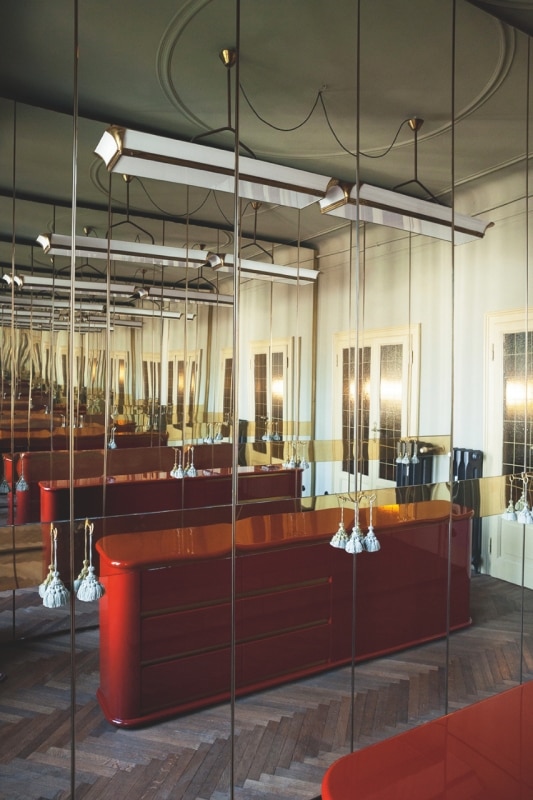
For designers, the theme of interior finishes represents, above all, a question of composition of space. Arianna Lelli Mami, founder, together with Chiara Di Pino, of Studiopepe, uses a fitting term to describe the result of this process: the harmonious composition of the “shell”. In other words, the “combination of the three essential variables of an interior: space, light and finish, which represent 80 percent of an interior project. If the shell is weak or of poor quality, any object or item of furniture introduced successively, even if it is of the finest quality or refinement, will fail to compensate”. Walls, floors and coverings thus constitute the sensitive structure of the environment, the aspect that defines character over time. Lelli Mami explains, for example, how interesting it is to work not only with fine marbles, but also with less noble stones – breccia, ceppo and granite – enhancing them with matte finishes or hydrojet processing that highlight material characteristics. “The difference no longer lies in the prestige of a material, but rather in how it is worked. A humble stone can become extraordinary if treated with a process that is capable of practically transforming it into a sculpted surface”.
This attention to processing is also reflected in a resurgent focus on smaller, modular formats for flooring or for wall cladding: 20 x 20-cm tiles, exposed grouting, rhythmic compositions that transform the visualisation of a space into an element of design. Aspects that were once considered to be limitations or defects – the presence of grouting, discontinuity of materials – are now seen as graphic or architectural features.
Alongside materials, colour is another significant constituent element. According to the designer, we are seeing a trend towards softer palettes dominated by natural half-tones: “There is a widespread demand for cosier environments. Colours have thus shifted to muted, almost Morandi-esque hues: rust, mud, dusty pink. These are by no means neutral shades, but rather colours that work in harmony with light and materials”. Another positive device is to then enhance these compositions with an unexpected element – a shiny surface, a stronger chromatic accent – that is capable of upsetting balance and creating visual tension.
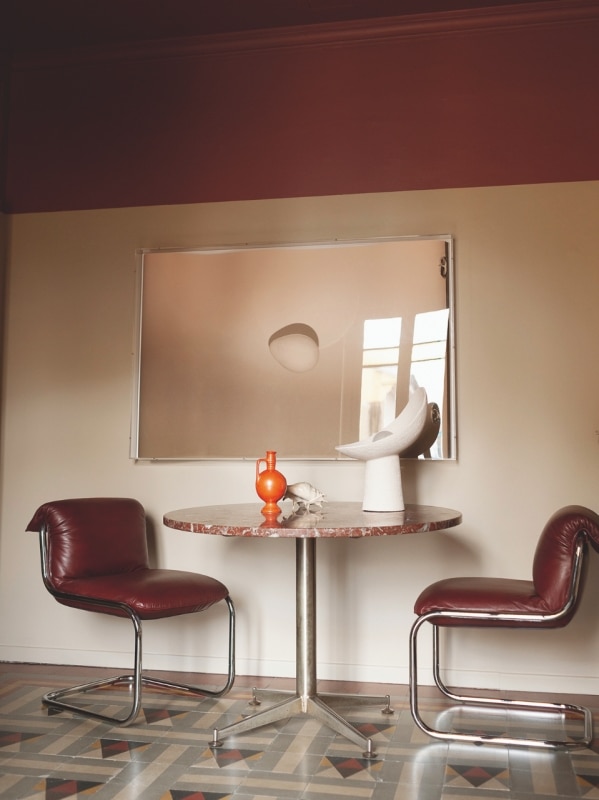
The growing complexity of materials has facilitated an increasingly intimate dialogue between aesthetic quality and technical performance. While in the past, certain surfaces – such as resins or cements - were considered fragile or difficult to maintain, production techniques have significantly improved their performance. The theme of durability remains central. In an era dominated by rapid consumption and fast design, many designers are once again focusing on authentic materials that are destined to age well. This tension between the evocative dimension of surfaces and performance is an aspect that also guides the reasoning of Britt Moran, the co-founder with Emiliano Salci of Dimorestudio: “A material needs to function and to last, but we cannot sacrifice emotion for the sake of technical considerations”. The task of a designer is to identify solutions in which aesthetics and performance are mutually beneficial. “Nowadays, innovation in finishes is focused above all on materials: hybrid, sustainable, tactile and optically dynamic surfaces that interact with light or that shift over time”, continues the designer. “The predominant trends reflect a focus on authenticity and materiality: artisan textures, reinterpretations of natural surfaces, deep colours and finishes that invite touch. Innovation is not just technique; it is also poetic: examining the capacity of a material to alter the perception of a space and the experience of those who inhabit it”.