Vincenzo Latronico, Armin Linke, Narciso nelle colonie. Un altro viaggio in Etiopia, Quodlibet Humboldt, Macerata / Milan, 2013 (168 pp; € 18,00)
The first volume in the "Travel Books" series, co-published with Quodlibet by recently-founded publishing house Humboldt, is in some ways its manifesto. A journey through Ethiopia in words and images (and sounds), Narciso nelle colonie lays the critical groundwork for possible narrations of an elsewhere — with the awareness of the limits and potential of the genre — based on post-colonial thought and on the inevitable partiality of different points of view.
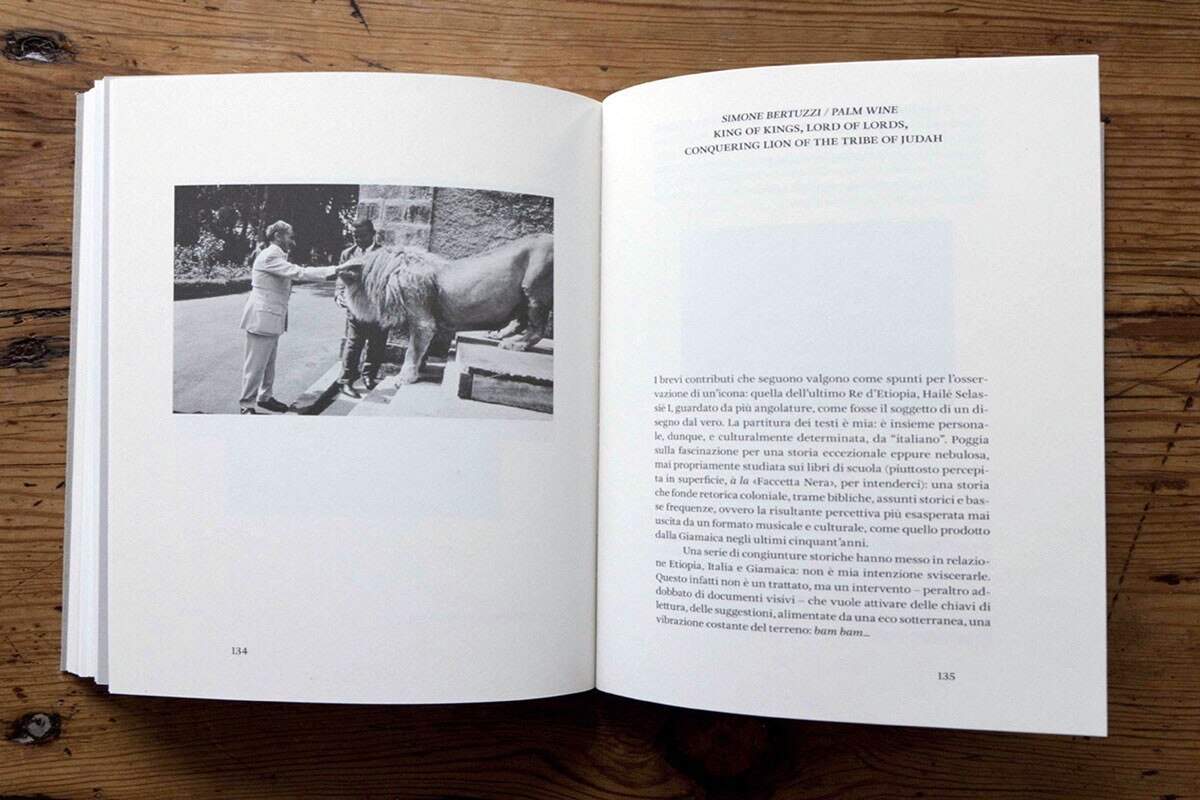
Born out of a collaboration between writer Vincenzo Latronico and photographer Armin Linke, the book creates a mosaic of complex historical and topical suggestions and notations regarding the East African nation. The volume contains a series of multi-faceted contributions: Angelo Del Boca’s testimony of his encounters with Emperor Haile Selassie, the legendary Ras Tafari; a photo album dedicated to him; Simone Bertuzzi’s thoughts on the legacy of his myth in the musical and artistic world; a Amharic dictionary of Italian words edited by Graziano Sava; a final chapter containing useful travel information.
What does travel mean today? How can one be “critical” when walking in a tourist’s shoes? The book is based on the suggestion, and stimulus, of posing questions right from the outset, making it possible to look beyond the surface of the things and paths explored, offering very personal directions and perspectives that can truly comunicate to the reader because of their roots in a very “particular” narrative.
It is perhaps no coincidence that the series’ first book is devoted to Ethiopia, a place “removed” from Italy’s colonial history, and that Vincenzo Latronico tells the story. His family’s history is very closely tied to the country whose railway connecting Djibouti to Addis Ababa Latronico’s great-grandfather, exiled from Russia, helped finance at the beginning of the 20th century.
The book poses questions right from the outset, making it possible to look beyond the surface of the things and paths explored
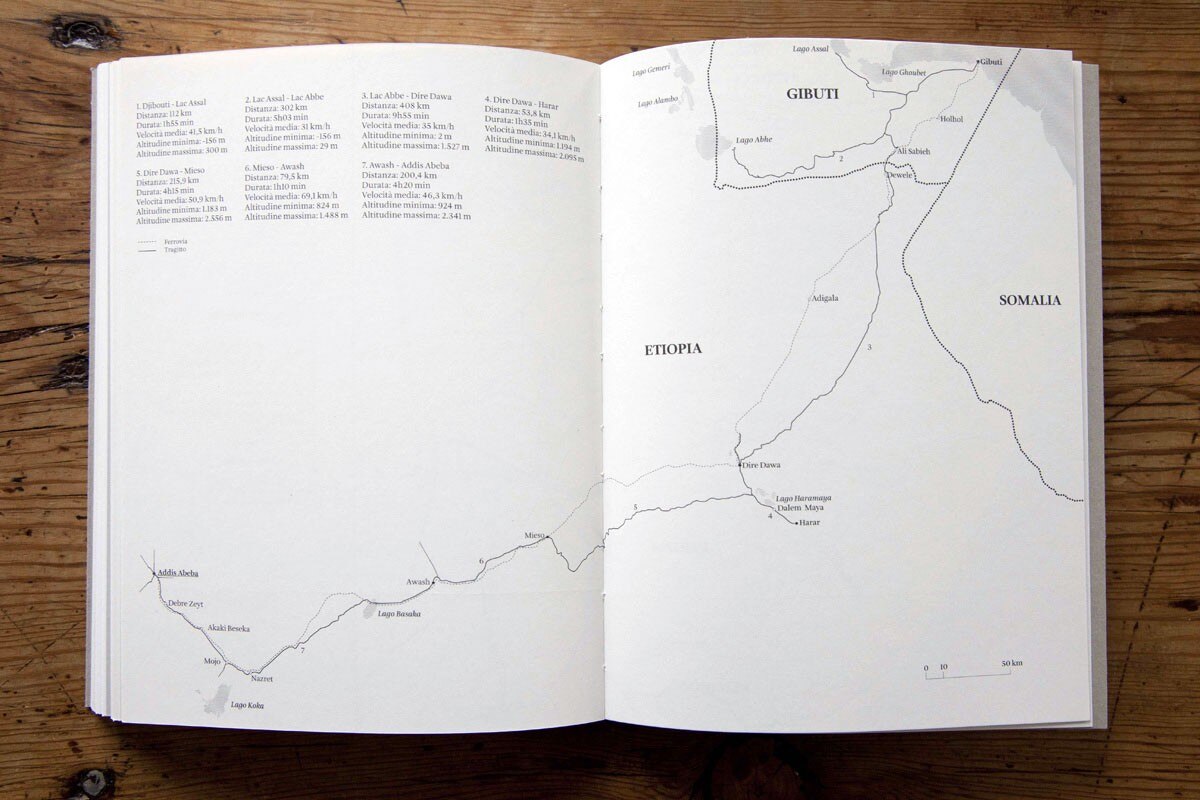
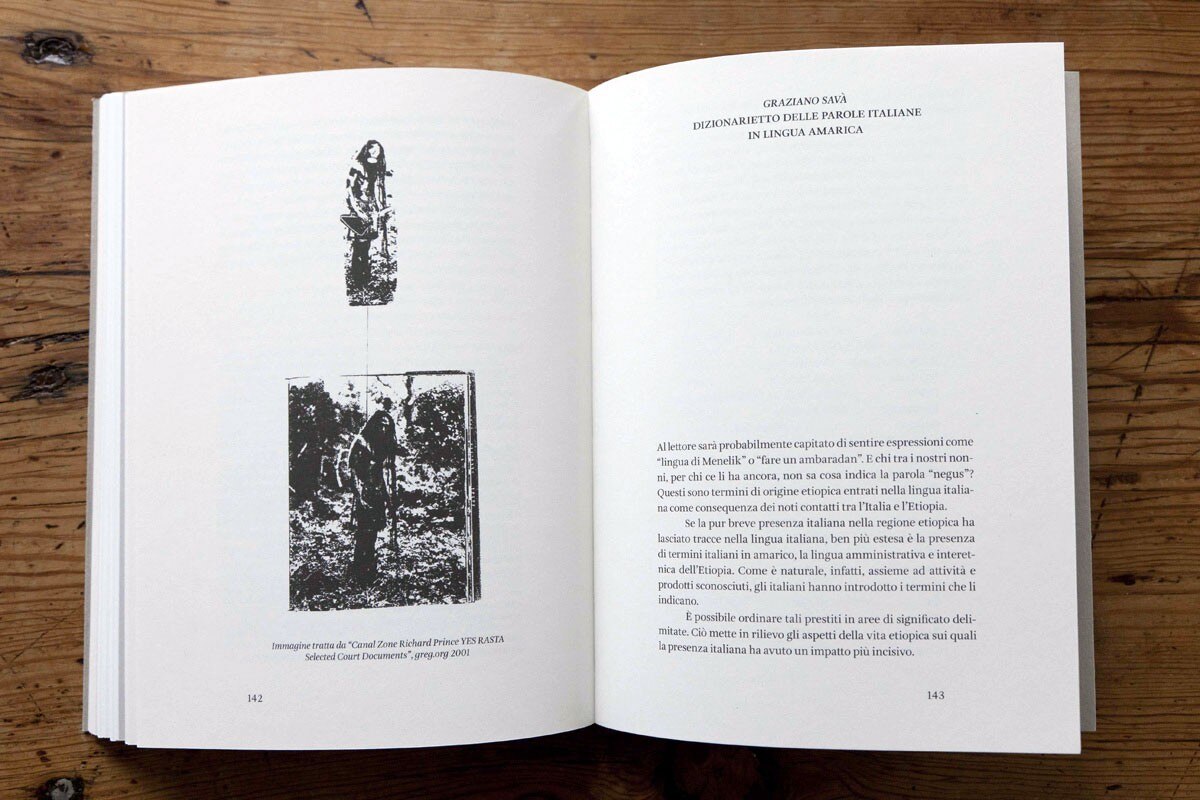
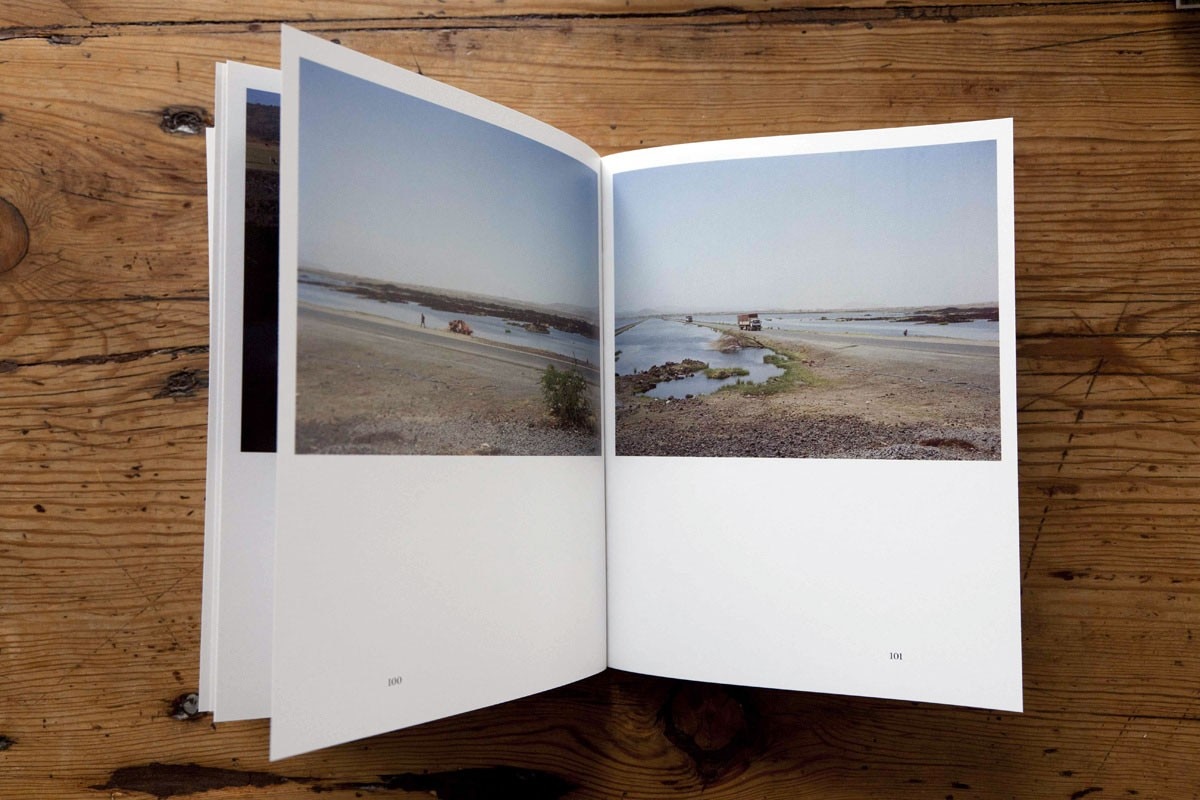
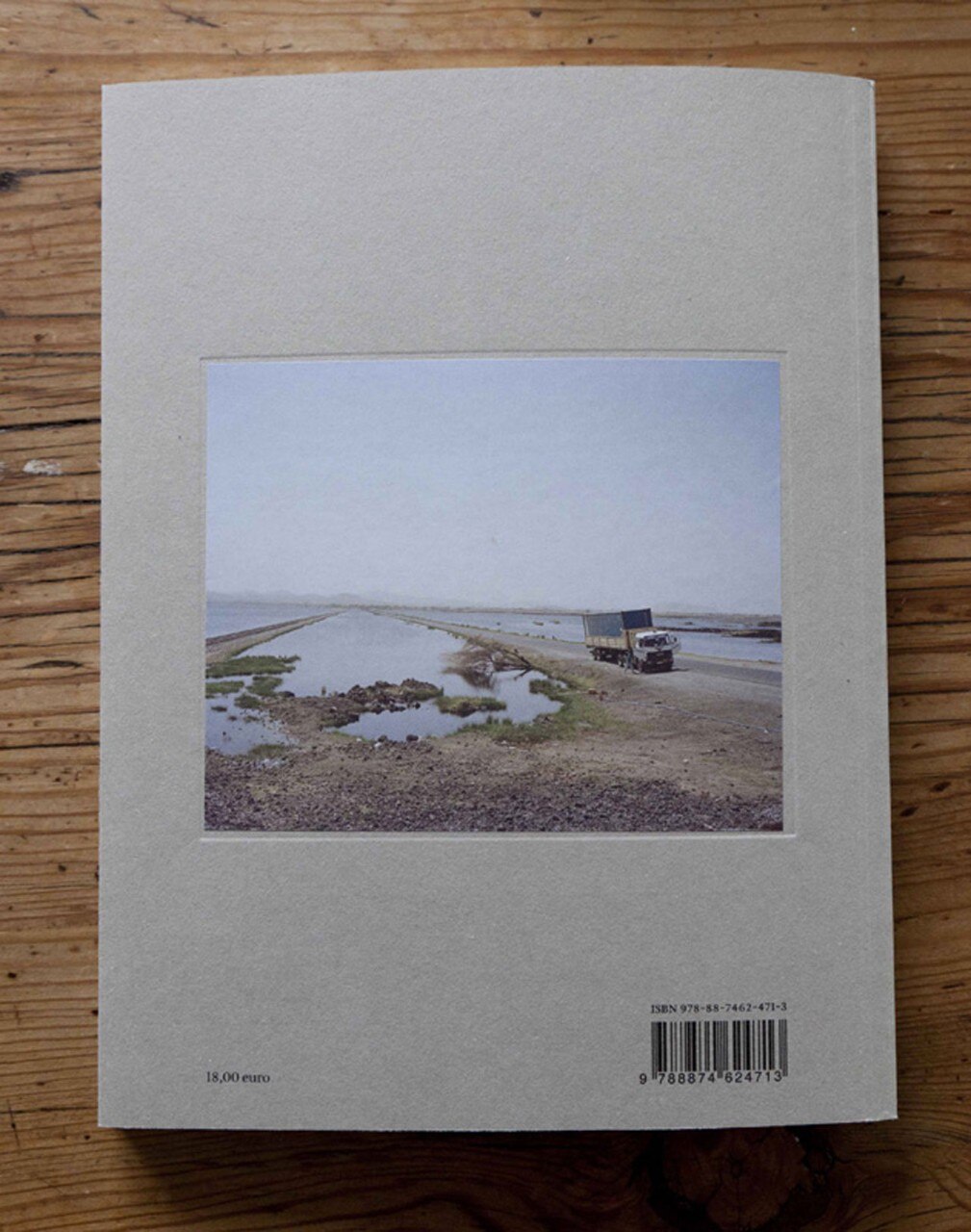
Macro and micro-stories follow. The book is divided into chapters that trace the main stops along the railway line, with long or accelerated rhythms depending on the thought process and the descriptions of the various places. The text is punctuated by Armin Linke’s photos, which complete the story.
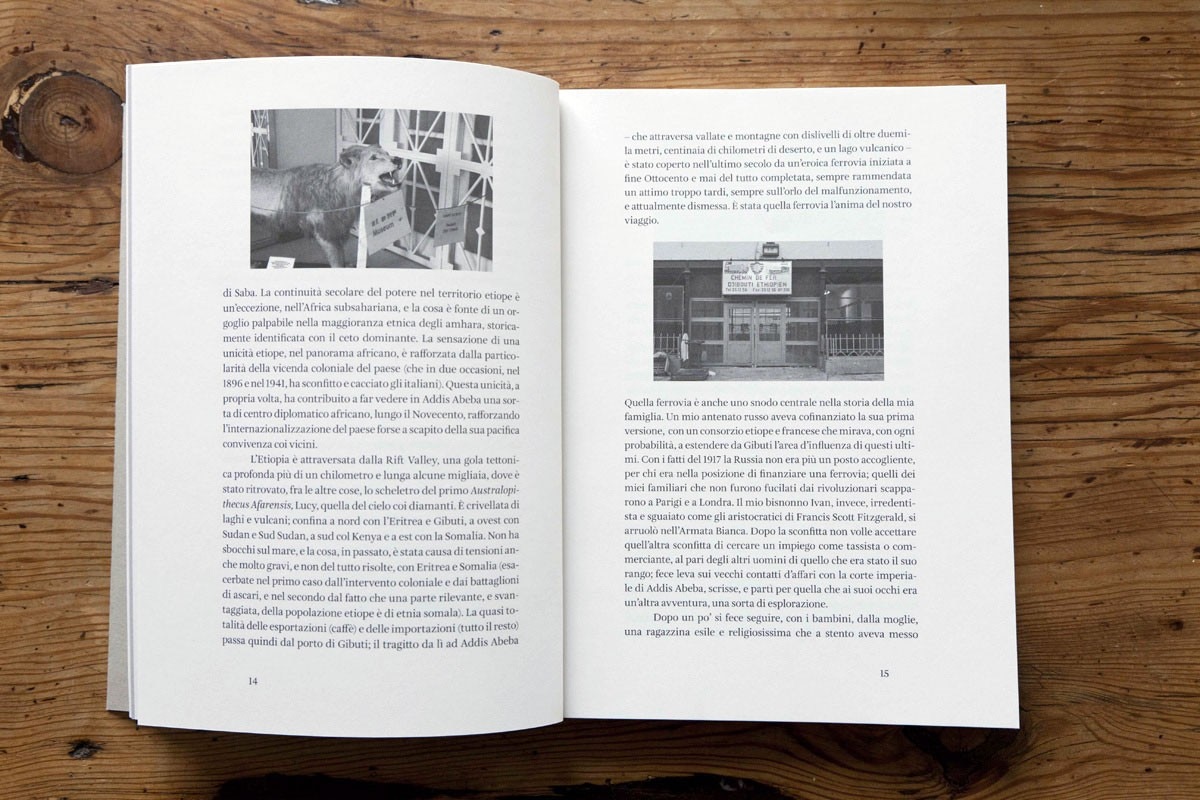
The passage from text to image is particularly successful. The evocative power of Latronico’s words is reflected in Linke’s images, activating a visual narrative that accompanies the written one. The images emerge from the text to make some parts of the story “real”: a swimming pool in Djibouti; Lake Assal; a museum in Harar; a fascist colonial sculpture in Addis Ababa “rectified” with a lion, the national symbol beloved by the Negus.
The layering of stories, regimes and architectures makes Ethiopia particularly attractive from an socio/anthropological point of view regarding the natural and urban landscape. The reader becomes synaesthetically involved through the book’s website, which contains study materials relating to the journey as well as a rich playlist — curated by Simone Bertuzzi from Invernomuto — that acts as a sound bridge between Africa and Jamaica.
It is a beautiful journey that should be retraced, even critically, as in Latronico's words: "I don’t know what can be written about a place that is visited in three weeks ... We basically started with the most colonial spirit. We went to Ethiopia as Europeans looking for an image of ourselves .... Like Narcissus, we started out in the colonies, convinced that there was, in essence, a mirror, and that we already knew the image that would be reflected. But it turned out to be a prism, if anything, and I don’t know what I saw." Anna Daneri