

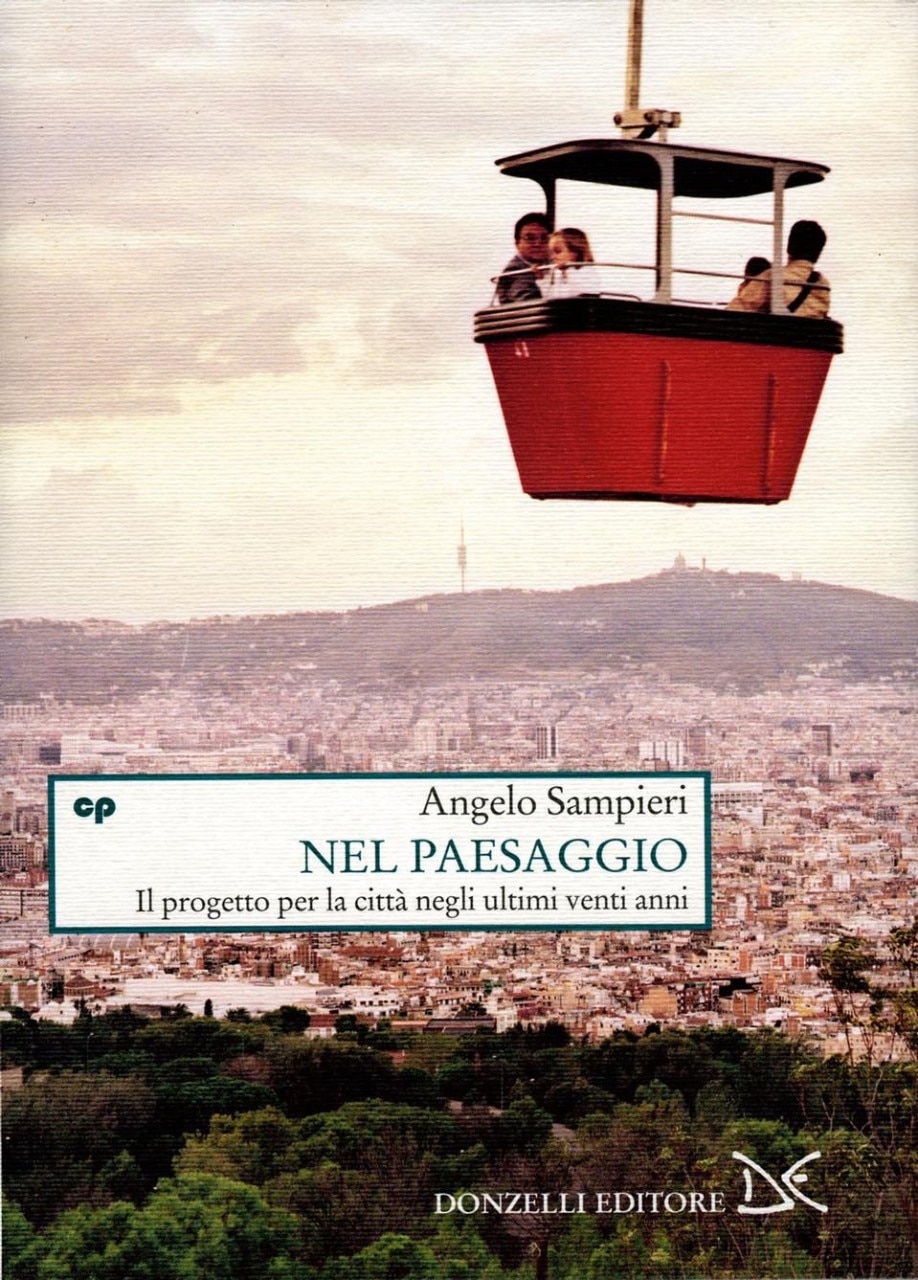
Nel paesaggio. Il progetto per la città negli ultimi venti anni
Angelo Sampieri, Donzelli Editore, Roma 2008 (pp. 160, € 25,00)
In recent years, architectural design has often merely reiterated what constitutes the city and the territory. The writings and pictures published describe the forms and characteristics of the phenomena underway, while mischievously adopting a typically avant-garde rhetoric. The ensuing portrayals sway giddily between two extremes. On the one hand, abstract conceptualisations on a geographic scale (overhead visions) serve to convey how globalisation is changing space and living habits. On the other, closeup observations and descriptions of conduct (accounts and pictures) are offered as fragments of circumstantial research yet to be perfected that drastically simplifies the issue of the relationship between the physical form of space and the conduct that distorts it. The result is a feverish search that seems to have the sole objective of constantly forcing the architectural project to redefine its role and its tasks. “Landscape” has become the word most frequently used in all discussions about living habits.
Angelo Sampieri’s essay – valuable both for its rigorous construction of the scientific hypothesis and for the wealth and depth of its sources – retraces what has been said about the city in the past 20 years, dwelling on the significance that the constant references to the landscape have adopted each time. He points out that the word is employed with a vague and approximate meaning that alludes to a generic exterior, half nature half artifice, which becomes the focus of collective expectations and anxieties regarding sustainability, the quality of the environment and energy saving. A landscape design is expected to give a reassuring portrayal of new residential settlements that will win consensus and in which a stereotyped nature is presented with the methods of advertising. Distorting its role, common awareness expects landscape design to produce persuasive images and not a project that, along with the buildings, will also define the form, size and character of the open spaces on the various scales, intended as places for interaction – a stage for the multiple and constantly changing relationships between the city’s private and public spheres. The idea of city is replaced with a concept of landscape in which the cultural and symbolic dimension of reality is superimposed on the material and perceptible one, as seen in the European Landscape Convention.
This shift is carefully analysed. In the meaning adopted by the convention, landscape is a portion of territory that, although described as a habitat in relation to human life, also conjures up essential images and representations for the creation of a place’s cultural identity. The convention states that in every country the legal recognition of the landscape as an asset-resource must embark on a public decision-making process that starts by raising the local population’s awareness and ends with a series of actions generically described as landscape interventions. In this process, the work of the architect seems to stem naturally from the relationship between an area and a culture, in conditions in which all critical distances between the project and its object and between architecture and its public are zeroed. As a result, the role played by theory and criticism in defining the project’s “possibility intervals” is inevitably weakened.
What emerges are the cultural and political shortcomings of an approach that may well declare its willingness to understand the concrete processes underway, but then affirms the need to use totally new instruments for a current time that is seen as unpredictable and radically new. As a result, the present suspends the instruments and categories of urban design, intended as an act that is both cognitive and transforms places. The many views, identities and landscapes perceived, along with a confusion of scales and measurements, are the arguments systematically adopted to avoid essential issues concerning the responsibilities and the role of design with regard to the city and what J. Habermas describes as the “public sphere”, being levelled out in a sort of adaptation. This theme is well explored in the afterword by Cristina Bianchetti, who recently also addressed this issue in a book in the same series.