

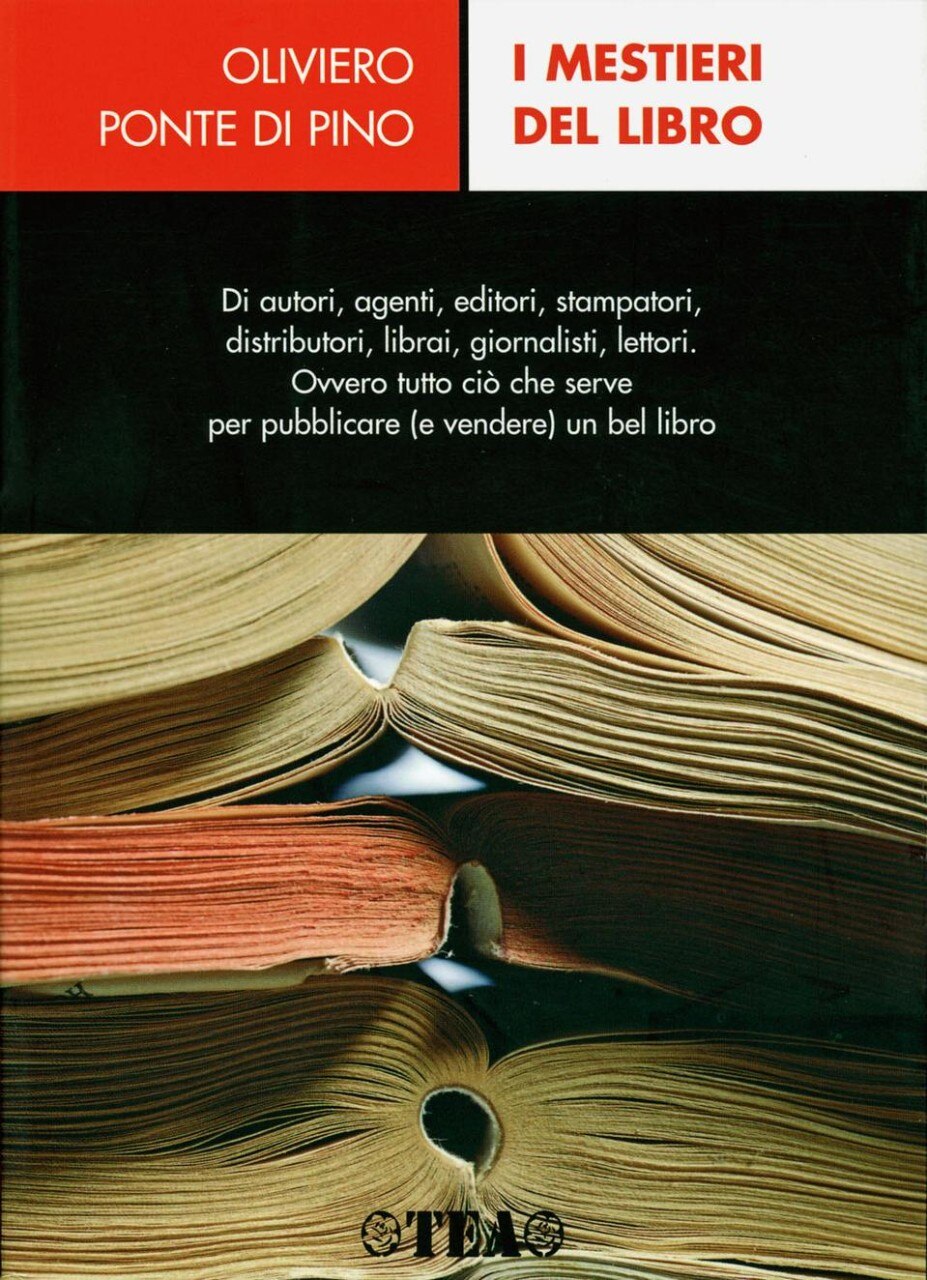
I mestieri del libro.
Dall’autore al lettore
Oliviero Ponte di Pino, Tea, Milano 2008 (pp. 238, € 9,00)
With their highly accessible linguistic style, the fine old Hoepli manuals delineated a field of knowledge, a profession or an approach to information, serving as an essential introduction to specialist practice or, often, as informed reading for the curious. It is hard to find anything like them today in the wild proliferation of guides, handbooks and texts of this genre. Consequently we should welcome the appearance of publications that can effectively tackle the fluctuating diversity of the contemporary world.
A good example is provided by Oliviero Ponte di Pino’s intelligent and engaging pocket guide to publishing, entitled I mestieri del libro. Dall’autore al lettore (“The mysteries of the book. From the author to the reader”). Aimed at the uninitiated, it competently reveals the great variety of techniques, forces and sales targets that inhabit the universe of the publishing industry. After all, despite its romantic image, the publishing sector is still part of the economy and as such it must generate profits as well as producing culture.
Given the complexity of the vested interests, a book’s publication depends on the uncertain outcome of complex compromises regarding quality and quantity. This is nothing new to Ponte di Pino, who looks down from his prestigious position as managing editor of the Garzanti publishing house and boasts more than 30 years’ experience in the field.
The well-balanced structure of the author’s lively text is tailormade for its intended readers, who are identified not only as “young people preparing themselves for tricky and exciting professions related to books”, but also those who may already work in the trade but are unfamiliar with the sophisticated mechanisms of the whole sector. More than 170,000 people work in the publishing industry in the Europe Union alone, without counting the hosts of external collaborators. Indeed, as the title of one of the book’s chapters says, “Writing may well be a solitary art, but publishing is a collective undertaking.”
So how does this undertaking work? The picture of the publishing machine painted by Ponte di Pino’s book is as detailed as possible and must be praised for not merely providing technical job descriptions, as many similar texts do. With great precision and clarity, and accompanied by a large dose of (self-) irony, the author traces out a historical journey that is extremely helpful for anyone attempting to contextualise the appearance of new book types (fast sellers, coffee-table books, desktop publishing) and the meaning of new figures in publishing (account managers, scouts, literary agents). Alongside this taxonomy of objects and subjects typically linked to production, Ponte di Pino also offers a fascinating set of more pragmatic chapters focusing on the fate of books after the printing phase. In these he discusses marketing strategies, copyright and fee negotiations, distribution agreements and even the display techniques adopted by booksellers. The eclectic meta-story of this book about books comprises several narrative levels that mix anecdotes with statistics and enlightening professional phenomenology. We thus become acquainted with the obscure and ill-paid job of the proof-reader, the number of bookshops in Italy (4,142), the incredible percentage of Italians who have not read a book in the past year (57 per cent in 2005), Céline’s edifying opinion of publishers (“They are pimps”), how to decipher the underlying assumptions of book-fair English, the “ten false myths of publishing”, and more besides. Ponte di Pino’s book is a necessary and brilliant read, recommended for those who want to approach the world of publishing with curiosity and passion.