Luigi Cosenza. Architettura e tecnica, Giuseppe Giordano e Nunzia Sorbino, Clean Edizioni, Napoli, 2003 (pp. 143, Euro 20,50)
Clean’s “Architecture and Technique” series has published a book on Luigi Cosenza, a significant figure who transformed engineering works into artworks. Engineers do more than just design facades; they also tackle broader architectural problems and never neglect planning’s basic issues. Materials science, structural rationality and definition of perspective are the core of Cosenza’s architecture. However, he never set aside the conviction that to build is to create a harmonious environment for humankind, conceived for its contingent reality, needs and social status.
Cosenza graduated in 1928 from the Bridges and Highways School at Naples Polytechnic. His first commission, the Naples Fish Market (1929-30), boasted a pared-down architectural language that endows the structures with dignity and expressiveness. This was a functionally contemporary work in line with the European avant-garde, which was committed to offering social architecture for the community.
After becoming well known, he collaborated with the Casabella group in Milan. According to Argan, the members shared the same theory and critical attitude toward Italy’s provincialism, but their positions often differed. Their ideals were very similar, but the contexts in which they worked were quite different. The Milan-based group worked for exponents of enlightened capitalists, a little tainted by paternalism, so they had a particular social orientation (like Adriano Olivetti).
On the contrary, Cosenza’s milieu was far more traditional, paying attention to popular architecture, the setting, the region and the complex relationship to managing a strong historical heritage. Rather than linear, it was complex and contradictory. These were the themes addressed by Cosenza in the late 1930s. The Oro House (with Rudofsky) and the Savarese House confirmed his rationalist bent, which the authors point out was not absolute; the structures relate enchantingly to their settings, possibly inspired by Mediterranean vernacular architecture. He later carried out several studies on Neapolitan urban questions, and he served in the army from 1940 to 1942. During that time, he started study (later published in Casabella) of the master plan for a military town.
In 1945 the war ended, and he was appointed to the study commission for the Naples master plan. In 1947 he started the Experimental Building Centre, in tune with the Milanese movement that led to the design of Bottoni’s QT8 Experimental district for the eighth Triennale. He made significant experiments on innovative housing technologies: the Posillipo Torre Ranieri experimental district (1949-51) comprises 16 structures, each representing a possible study model melding the rationales of form and prefabricated building.
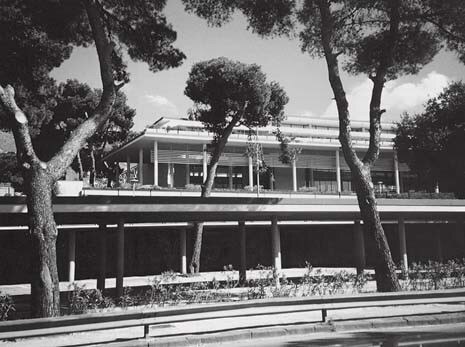
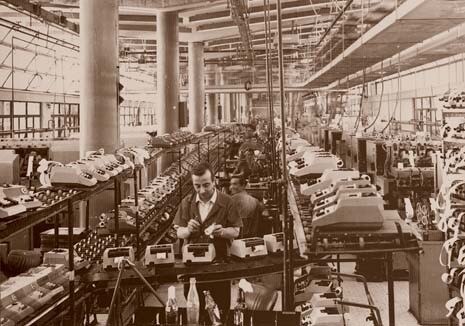
In 1949 Cosenza began to teach architecture and architectural design; from that pulpit he protested against the climate of indifference and incapacity and denounced speculation: ‘it voids town planning and architecture of their cultural content’. He resigned in 1959. During the 1950s he worked on his major creation: the layout of the Olivetti Pozzuoli factory and its housing, with its aim of reconciling the exigencies of construction and the important landscape of the Phlegraean Fields.
A brand-new factory concept was generated: ‘formerly, there was the traditional method of interlinking a set of spaces within the exterior form of a single enclosure on which one designed the various competing moments of the whole structure. Now there is the syntax of multiple forms, each having its own function; moreover, the factory was inserted in a complex setting’. Previously, the checklist was closely tied to manufacturing, but now the plant became the place where people live when they work, not merely a place for producing work. Climate control and sunlight were carefully analyzed and resolved in various ways: architecturally (pergolas, canopies and overhangs), mechanically (special electronically controlled windows) and orientation of luxuriant greenery.
The measured counterpoint of the setting and the artificial work, note the authors, contributed to Cosenza’s early popularity, as Argan pointed out. The landscape where he located his buildings was ‘a landscape conceived for the humanity that lived, worked and dwelled there’.
Giordano and Sorbino’s publication paints an excellent portrait of an individual who sought to blend technique and art, without losing sight of the social mission of those who create spaces for humanity’s needs, desires and multifaceted exigencies. The authors emphasize Cosenza’s important, highly reputable intellectual role: he sought to forge connections with the world of Lombard and Central European rationalism without leaving behind his deep Neapolitan roots. Ultimately, Naples represented the limitation and utopia, design, dream, disappointment and suffering of a figure who opted for painful isolation.
Claudio Camponogara is an architect