


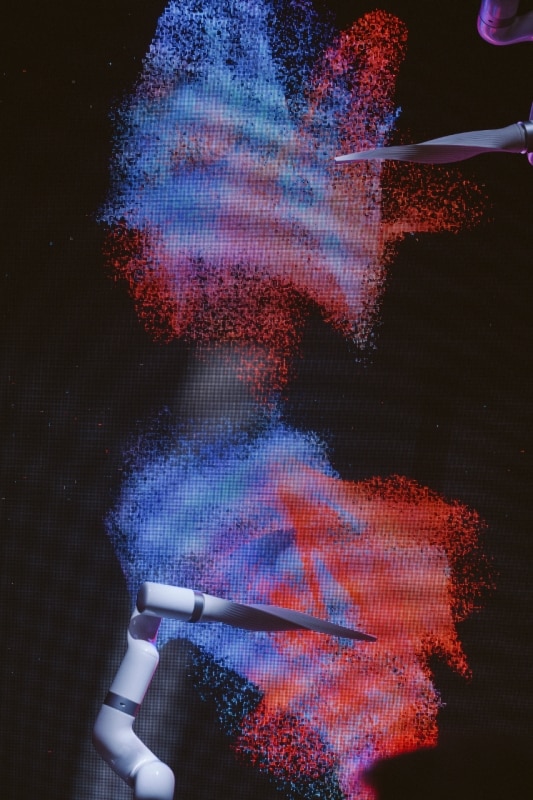
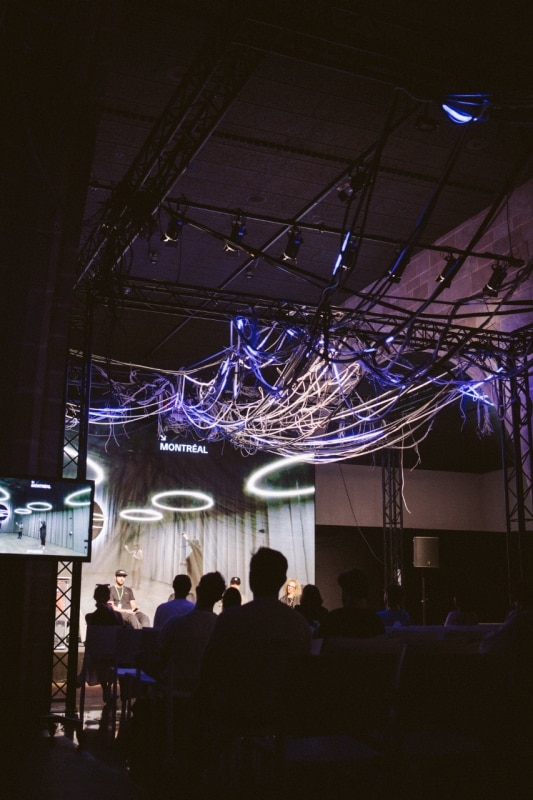
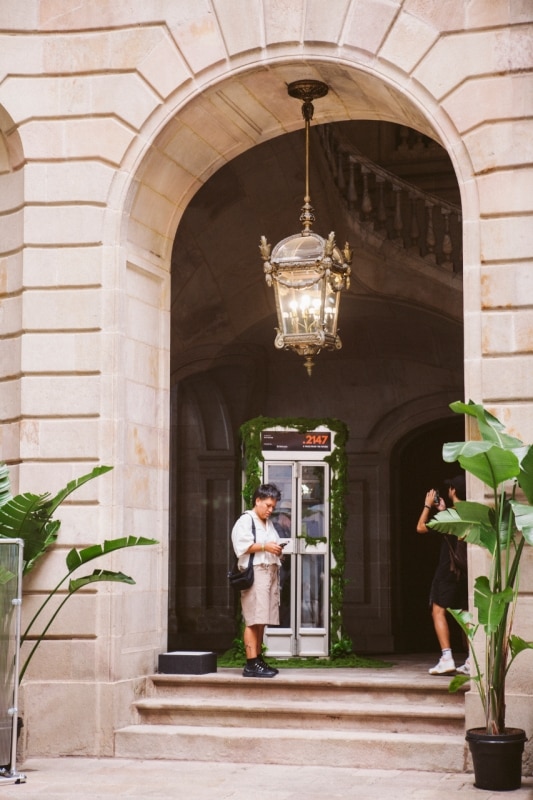
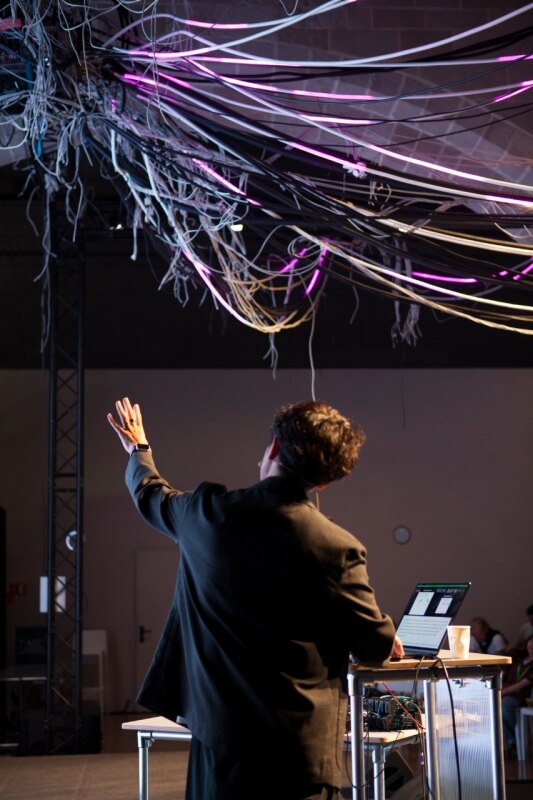
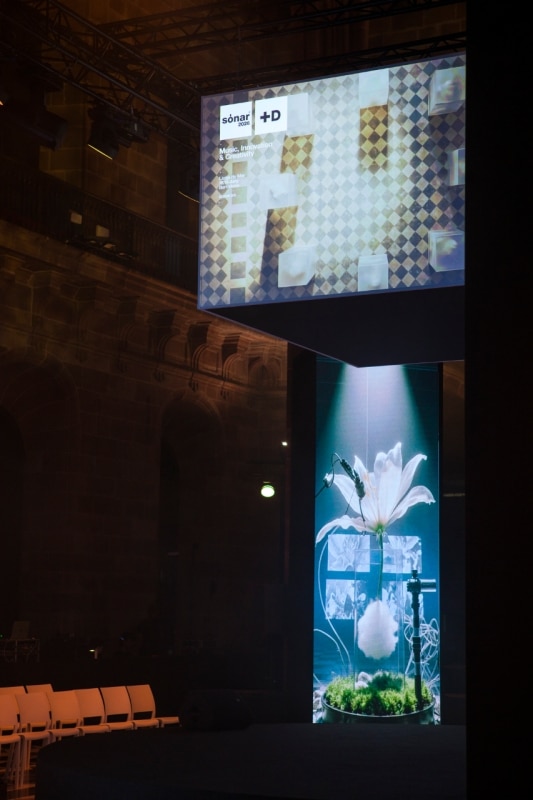
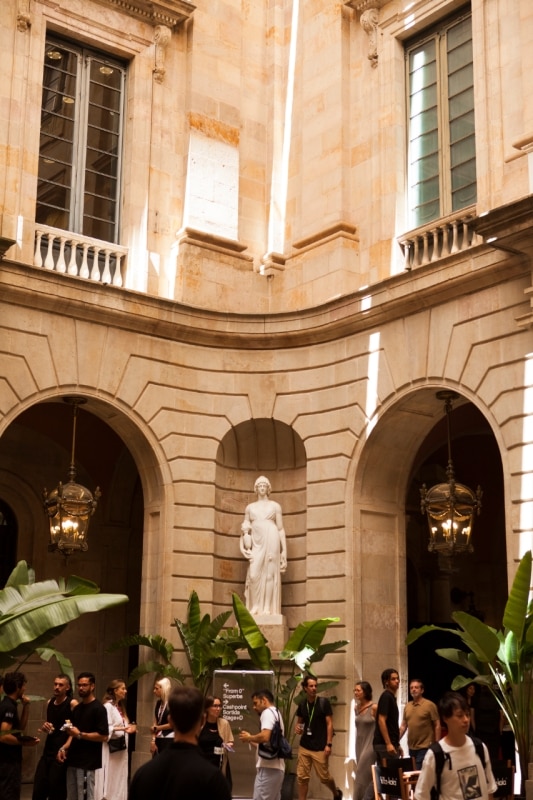
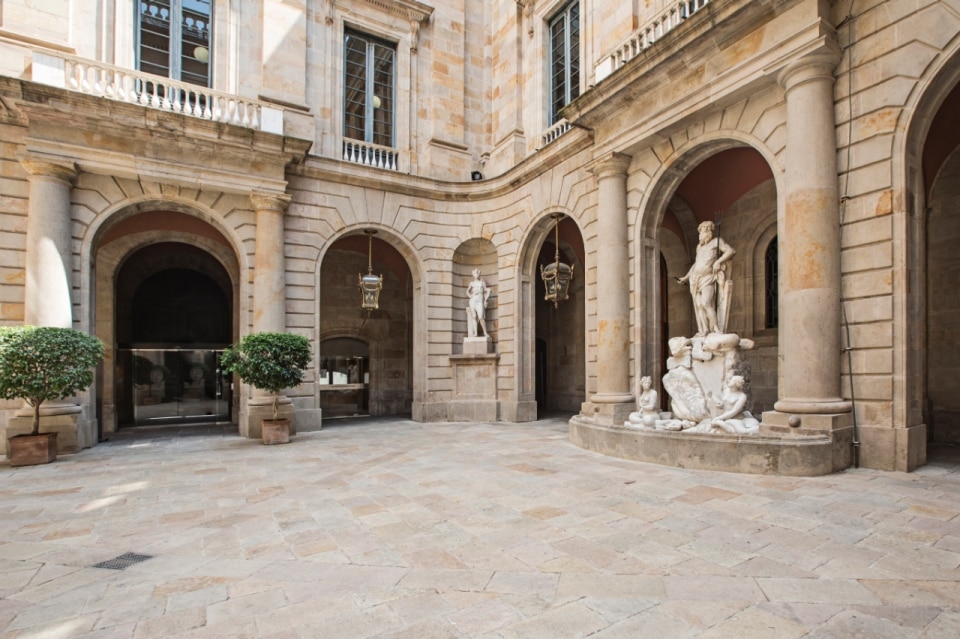
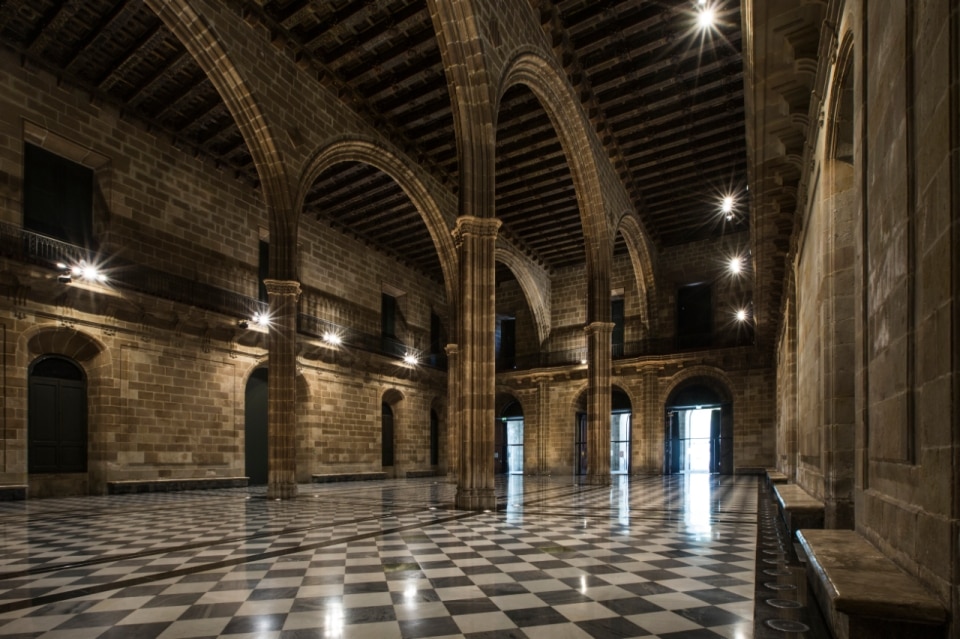
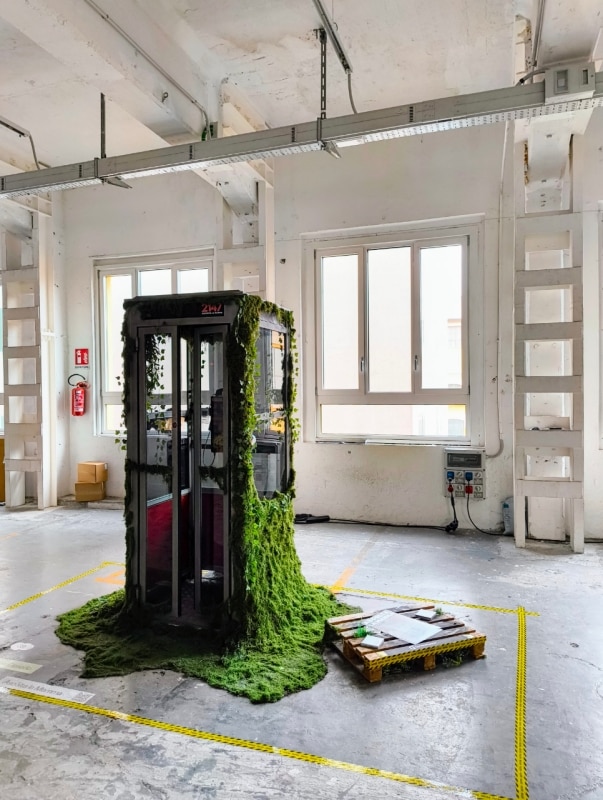
You enter the grand courtyard of the Llotja de Mar and everything seems as it always has been. The arches, the stone walls, the arcades, the murmur of people sitting at café tables. A stage has been set up in one corner. But then you notice something new. Two robotic arms dance in front of a gigantic LED wall, framed by one of the arcade arches, moving like living creatures as they generate fluid, ever-changing forms in space. It is Astral Twin, one of the central works of Sónar+D 2026. Opposite it stands a strange telephone booth covered in grass, at the foot of the staircase that rises towards the upper floor. It is the sight that makes you realise that, for a few days, one of Barcelona’s oldest buildings has become a place where the future is trying to take shape.
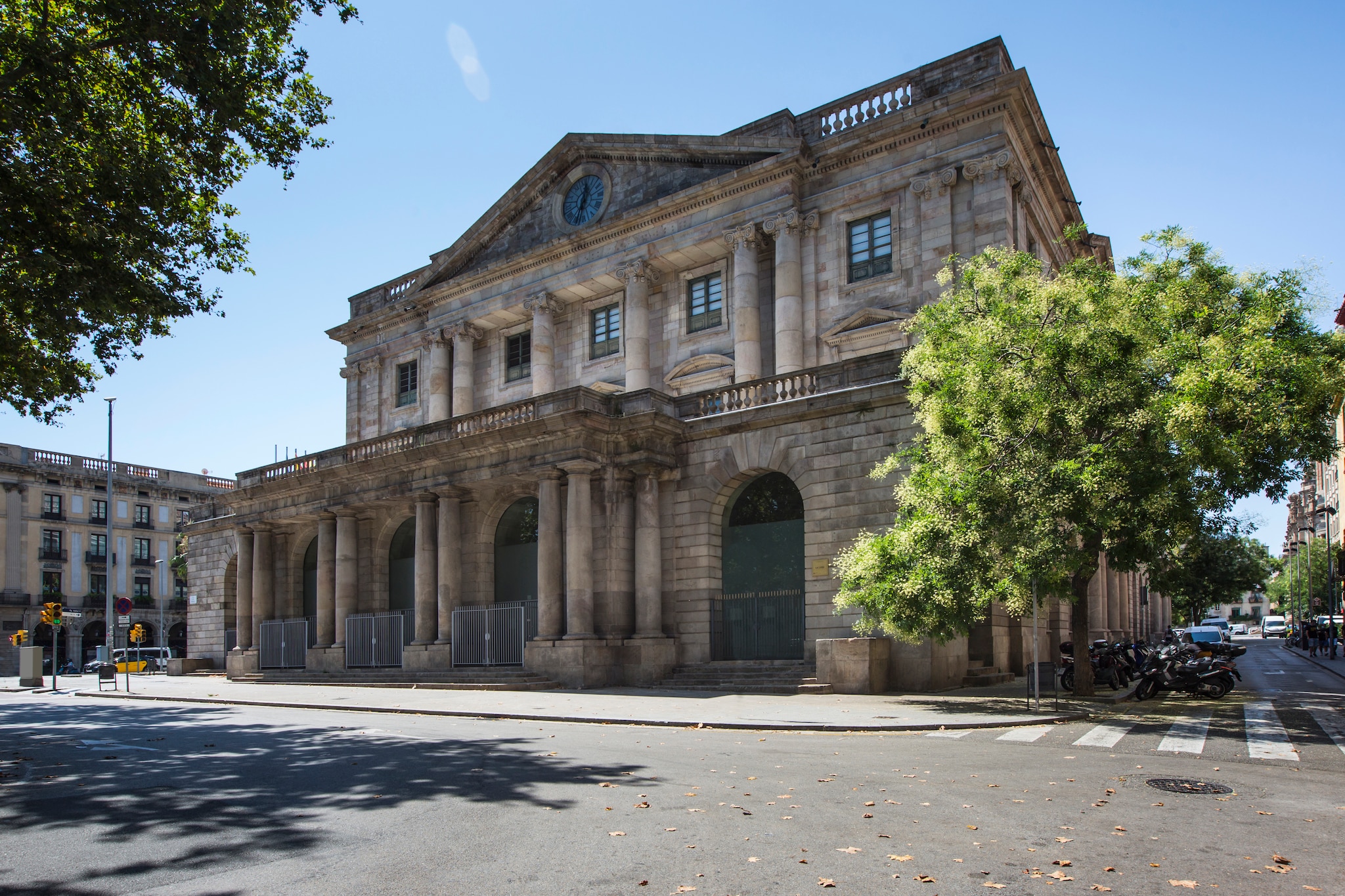
“Bardo is a kind of in-between state,” explains one of the exhibitors, a Korean woman, pointing towards a series of videos that scroll like TikTok or Instagram feeds. Their protagonists are pixelated Buddhas immersed in memes, endless feeds and digital content. The work explores the distance between the physical and virtual worlds, but also the fact that we now live constantly between the two. It would be difficult to find a better definition for what is happening throughout the rooms of the Llotja during Sónar+D. For one weekend, the building that for centuries stood as one of the Mediterranean’s most important commercial and economic hubs becomes a suspended space between past and future, stone and algorithm, physical experience and digital culture. The work, titled Bardo, was created by Korean artist Jihyo Eom, who travelled from Seoul specifically to present it in Barcelona.
When Machines Learn to Listen
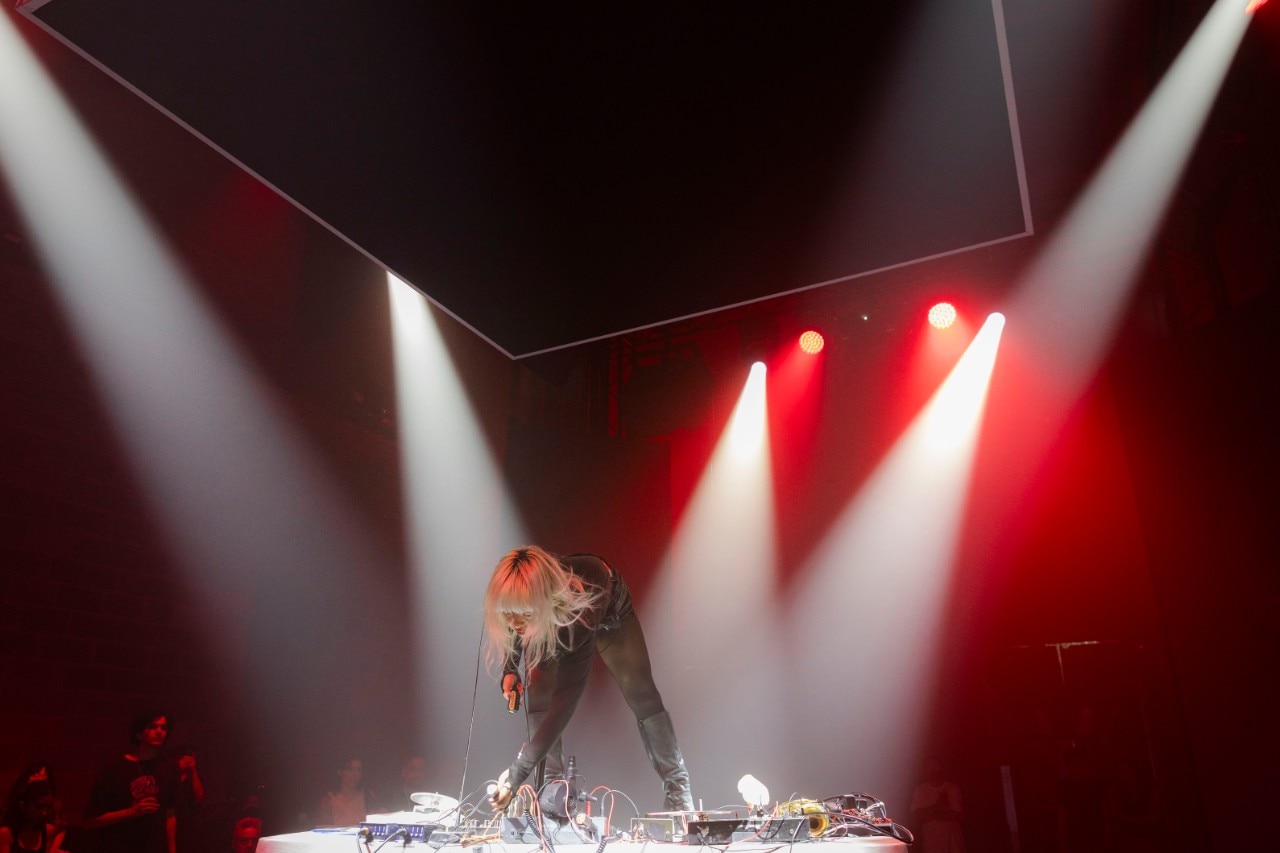
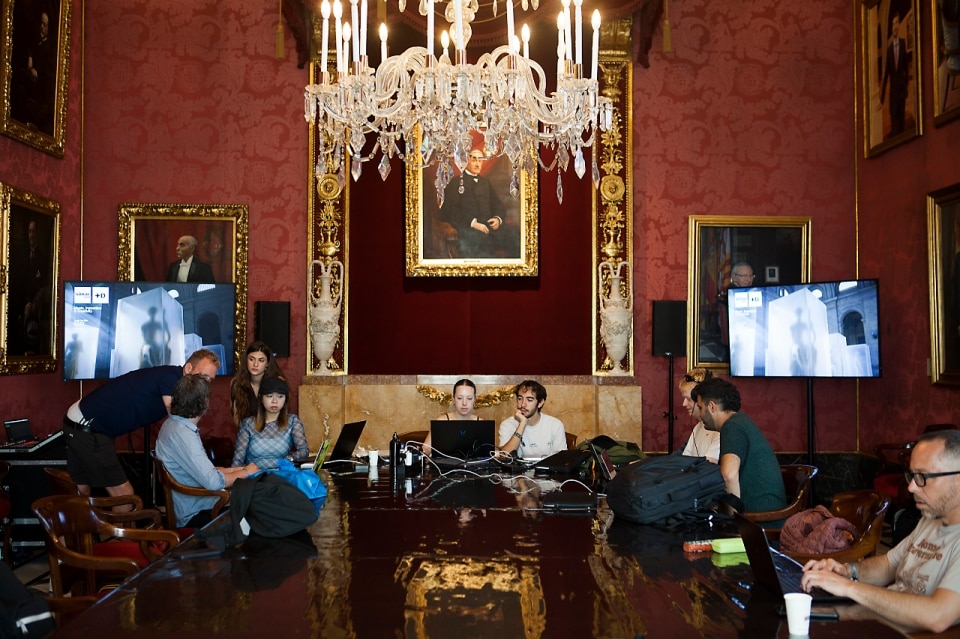
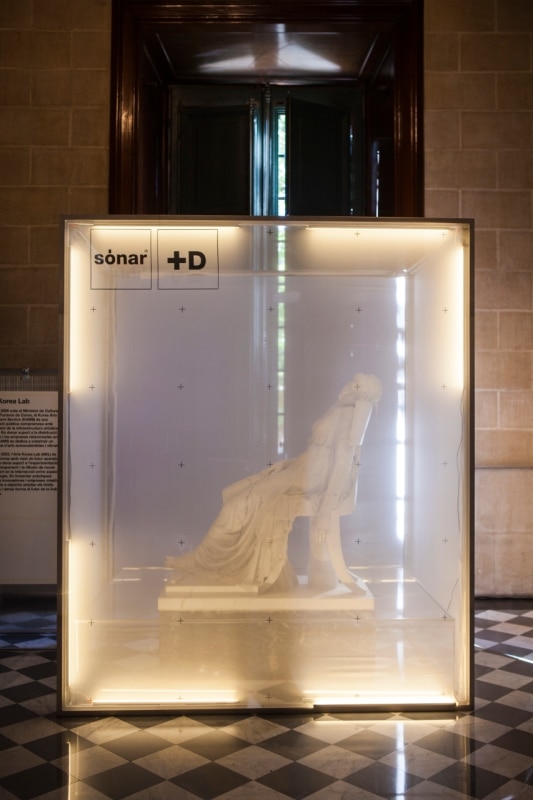
Sónar+D is the platform of the famous Barcelona festival dedicated to the intersection of creativity, technology, and digital culture; for years, it has been exploring these hybrid territories, as we’ve previously reported in Domus. While in the vast halls of the Fira Gran Via, Sónar continues to be above all a musical machine that brings thousands of people to Barcelona to dance until dawn—from The Prodigy to Kelis, from Skepta to the audiovisual shows of artists like Reinier Zonneveld—at the Llotja de Mar, the focus shifts. Here, the focus shifts to the relationship between physical space and digital space, between memory and algorithms, between ancient rituals and new forms of artificial intelligence. It is the place where the festival pauses for a moment to stop wondering what the future will sound like and begins to ask how we will inhabit it.
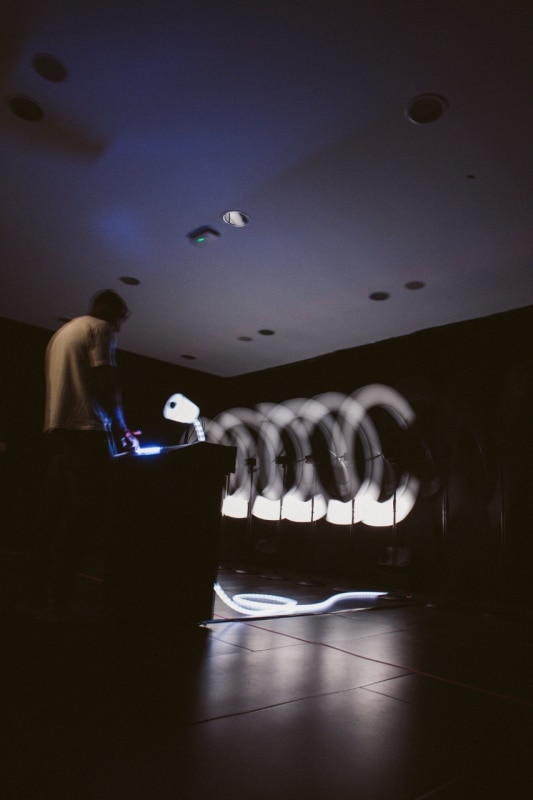
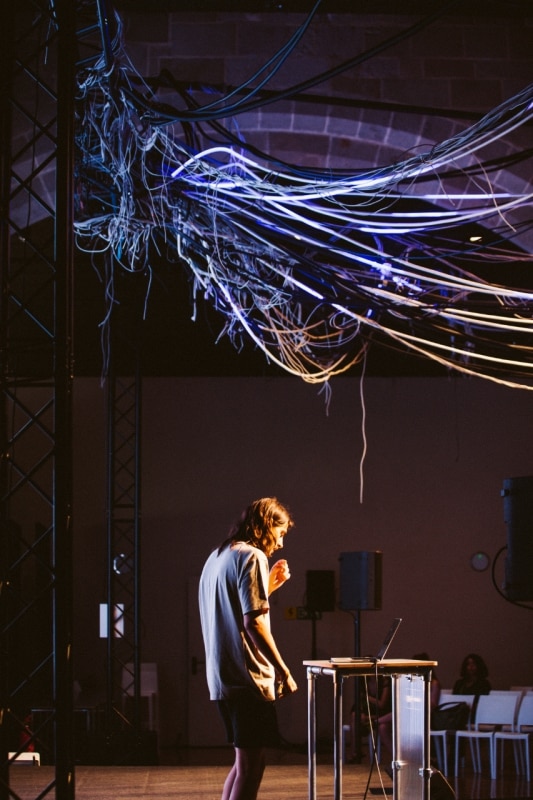
Many of the works on display seem to share the same question: what happens when deeply human activities are reinterpreted by machines? Sometimes the result is surprisingly poetic. “When you are talking, you are already making music,” explain Superbe, the creators of From0, one of the strongest installations in the exhibition. Visitors’ voices are broken into sixteen fragments and assigned to a series of pendulums that slowly return them as rhythm, harmony and movement. Words dissolve, but sound remains.
 View gallery
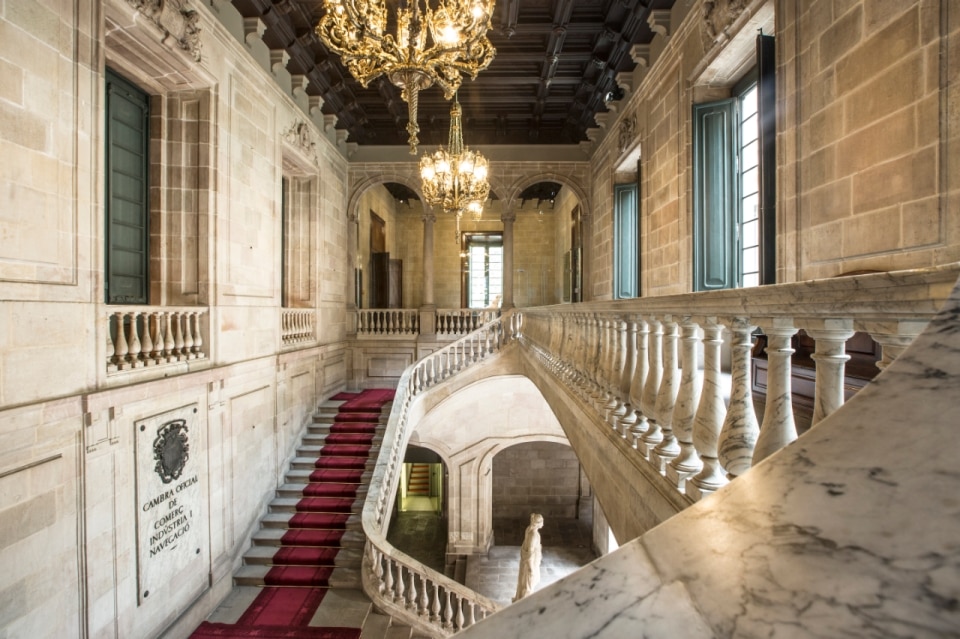


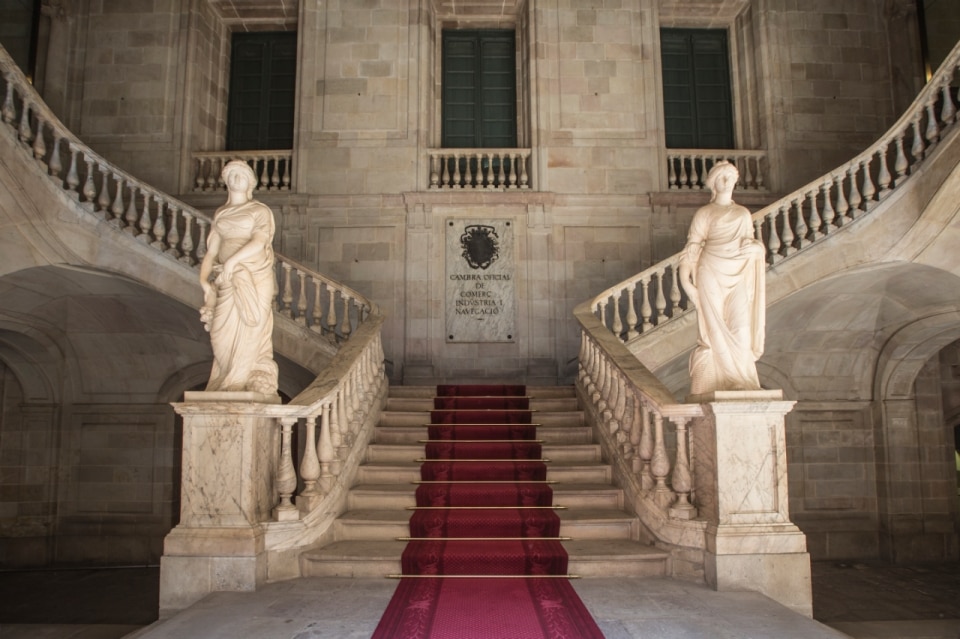
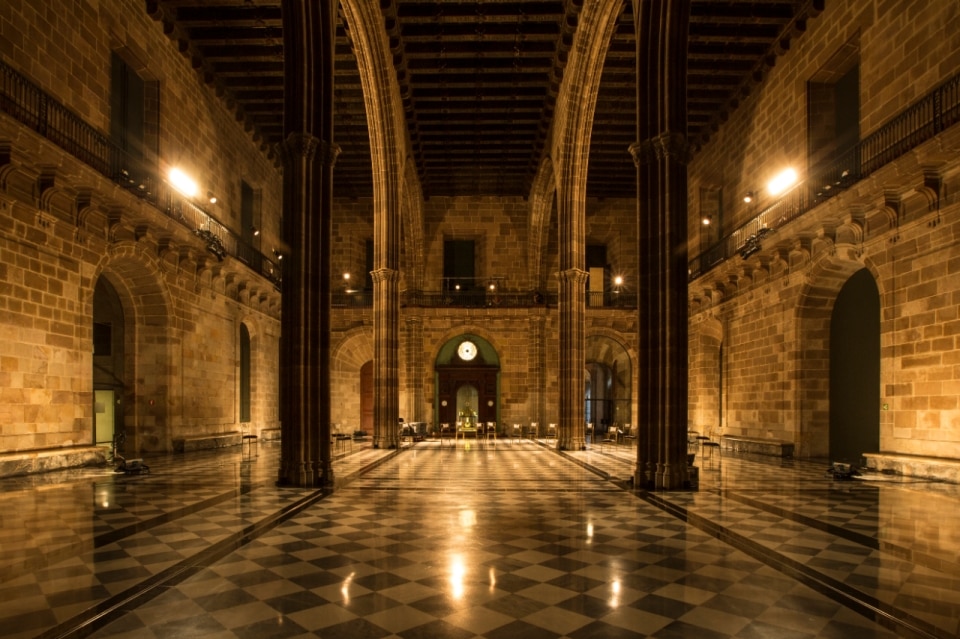
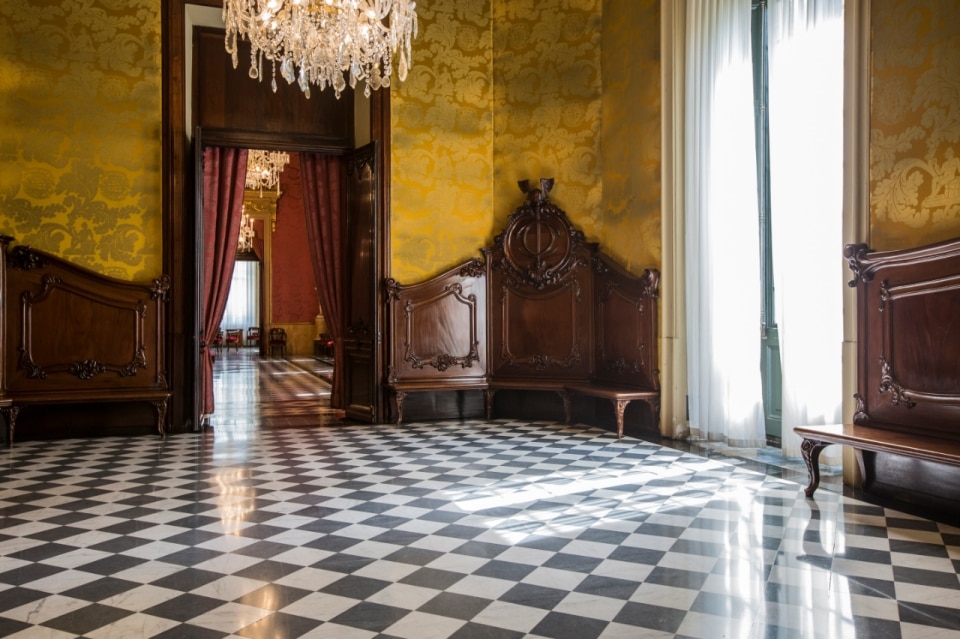
In other rooms of the palace, the relationship with technology becomes more intimate. There is a confessional. But without a priest. The responses come from AI — or rather, from an AI reinterpretation of Rosalía, the musician who in contemporary Barcelona comes closest to a secular deity. The purpose of this AI confession is not to receive advice or comfort, but to reflect on an increasingly widespread habit. “The machine is not gonna judge you,” explains Lola Liñán Fernández, creator of Divine Device. And perhaps that is precisely why more and more people choose to tell machines about their fears, doubts and vulnerabilities.
Right next to it stands a small white cube connected to a screen and a series of devices. Witness Node by Marta Minguell Colomé reinterprets West African divination practices through computer vision, sensors and generative systems. An algorithm produces sequences of signs that visitors are invited to interpret as personal messages. The reference is Ifa, a tradition practiced in Ghana and Nigeria that uses combinations of symbols to generate interpretations and predictions. Some of the logics we now associate with computation already existed, in different forms, long before the invention of computers.
How the Future Will Try to Remember Us
Not all the works at the Llotja, however, look towards the future. In a wood-panelled room filled with CRT monitors, yellowing keyboards and a giant copy of the World Wide Web Yellow Pages from 1996, Banner Depot 2000 feels almost like a time machine. The project recovers advertising banners, personal webpages and fragments of the 1990s internet through the Wayback Machine archive. More than an exercise in nostalgia, it serves as a reminder of how different the web once was: smaller, messier and more human. A place that many still imagined as a frontier to be explored rather than an infrastructure dominated by platforms, algorithms and endless feeds.
Viewed in this light, the room also tells the story of the end of an utopia. The dream of an open, decentralised network that many internet pioneers believed would become a space for freedom and experimentation. It is difficult not to think of the words written by John Perry Barlow in his famous 1996 Declaration of the Independence of Cyberspace: “Governments of the Industrial World, you weary giants of flesh and steel, I come from Cyberspace, the new home of Mind.” Thirty years later, as Sónar stages AI confessionals, algorithmic oracles and artificial intelligences reconstructing lost faces, that promise feels very distant. Yet perhaps for that very reason it remains so compelling.
Linaje Recursivo by Sara Gallego-Alarcón imagines a kind of archaeology of the future. Its creator begins with a disturbing prediction: in an internet flooded with artificially generated imagery, photographs taken by human beings may become artefacts. “These pictures will be considered as the last human traces,” she explains. Through thousands of compression cycles, images of friends and family are progressively degraded until they become digital fossils. At that point, artificial intelligence steps in, attempting to reconstruct them much as an archaeologist would reconstruct a fragment of the past.
Featured photo: Cecilia Díaz Betz