

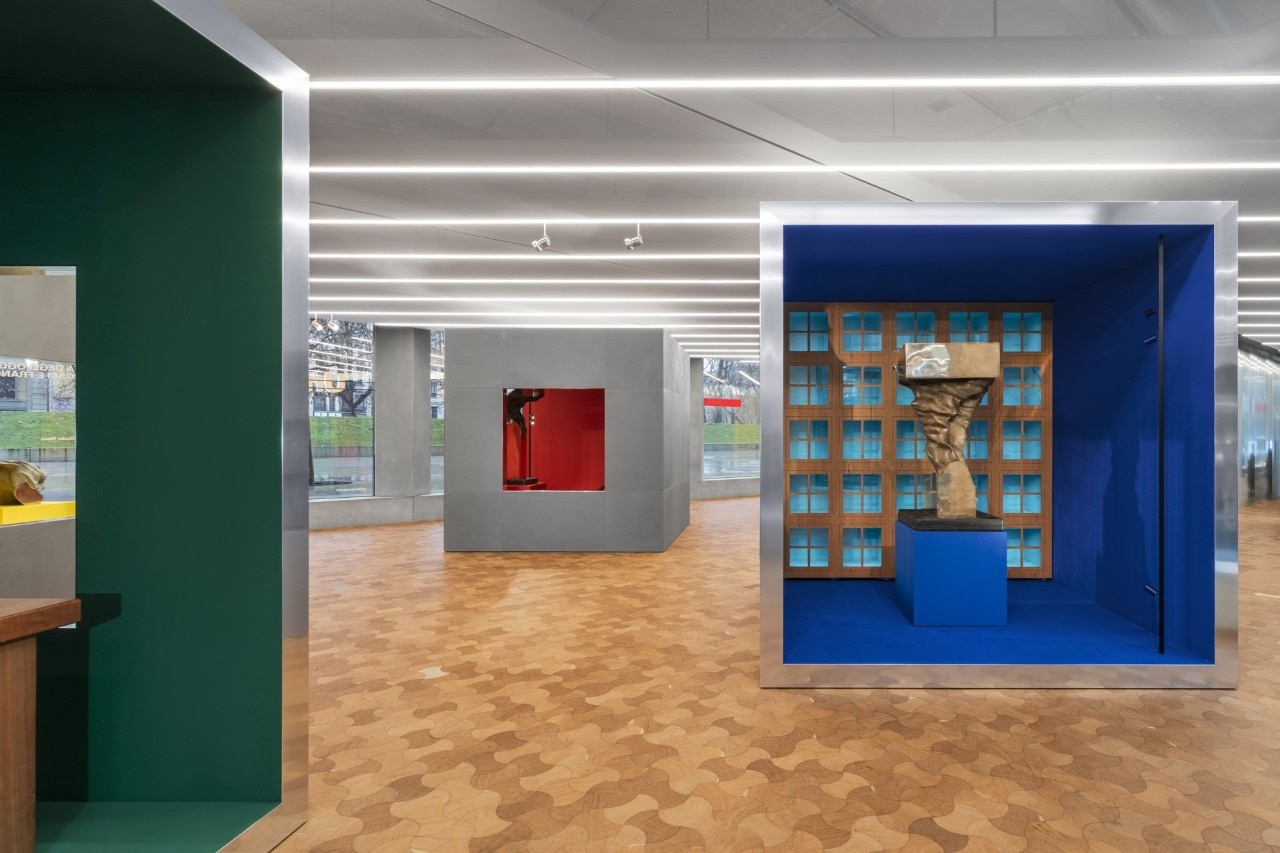

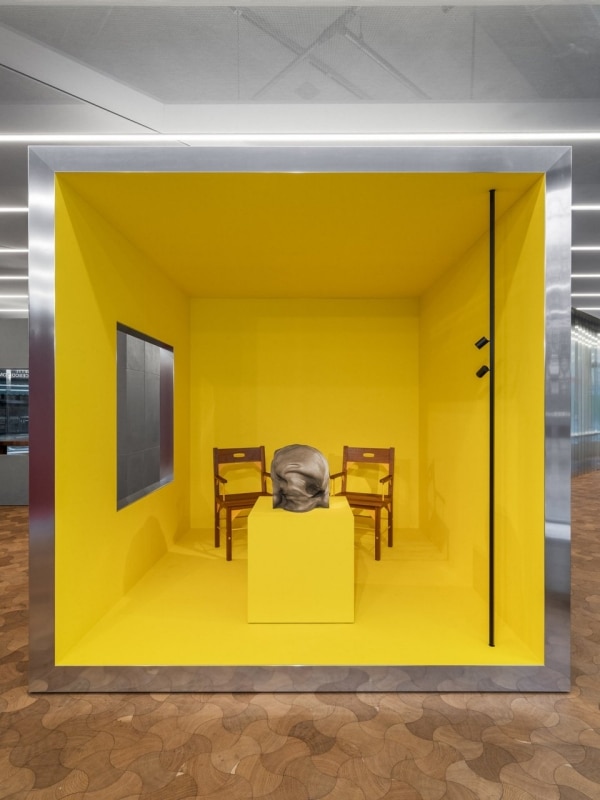
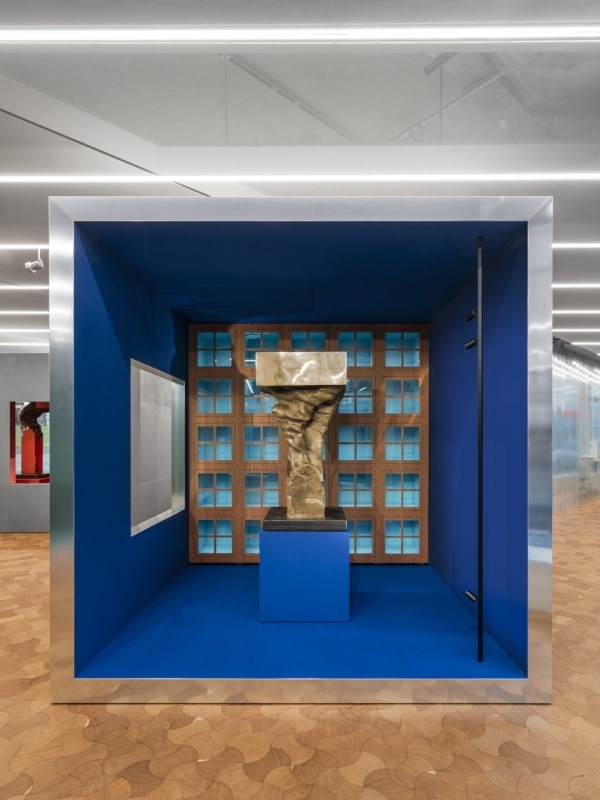
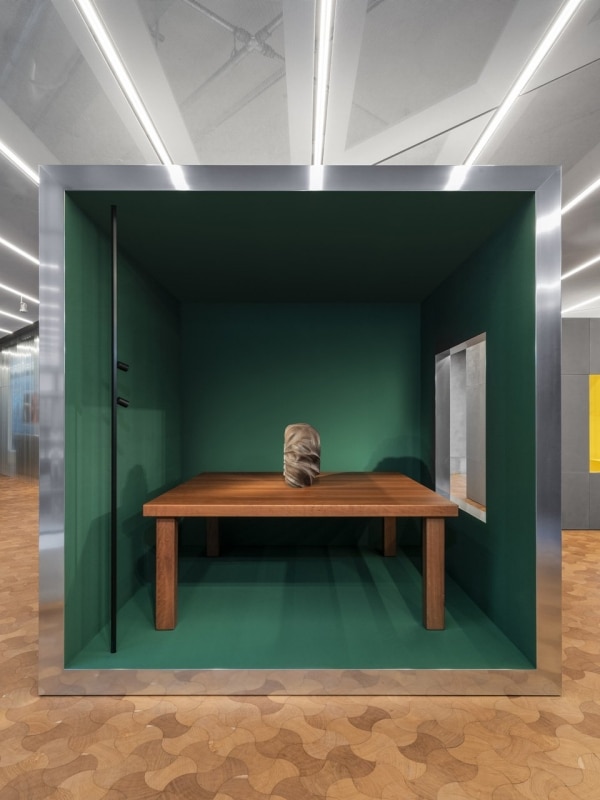
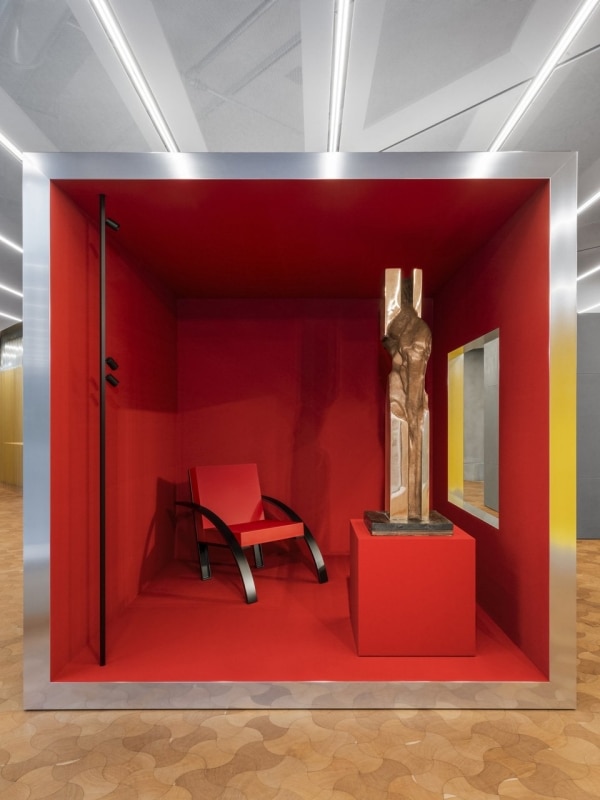
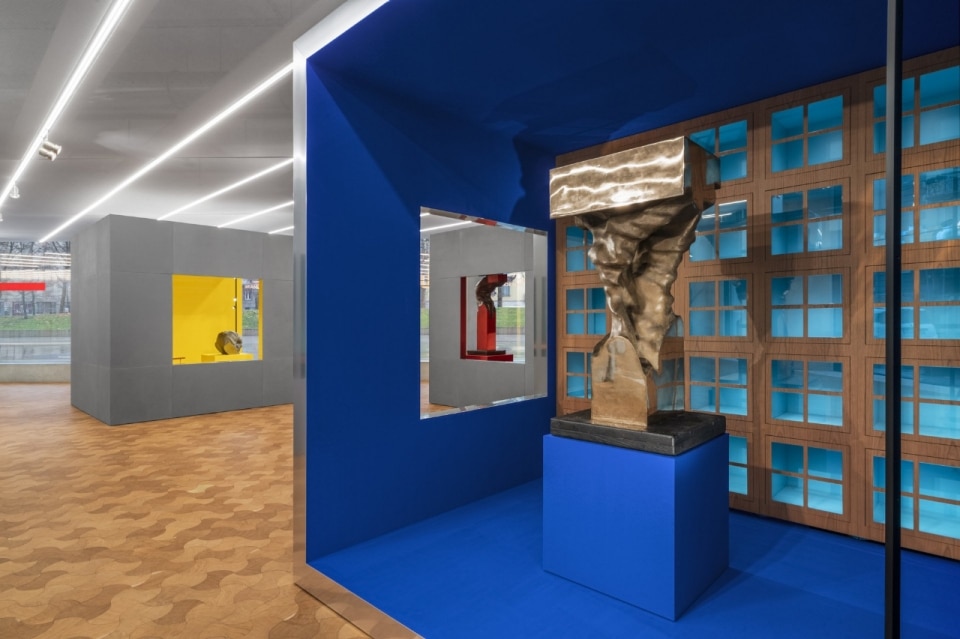
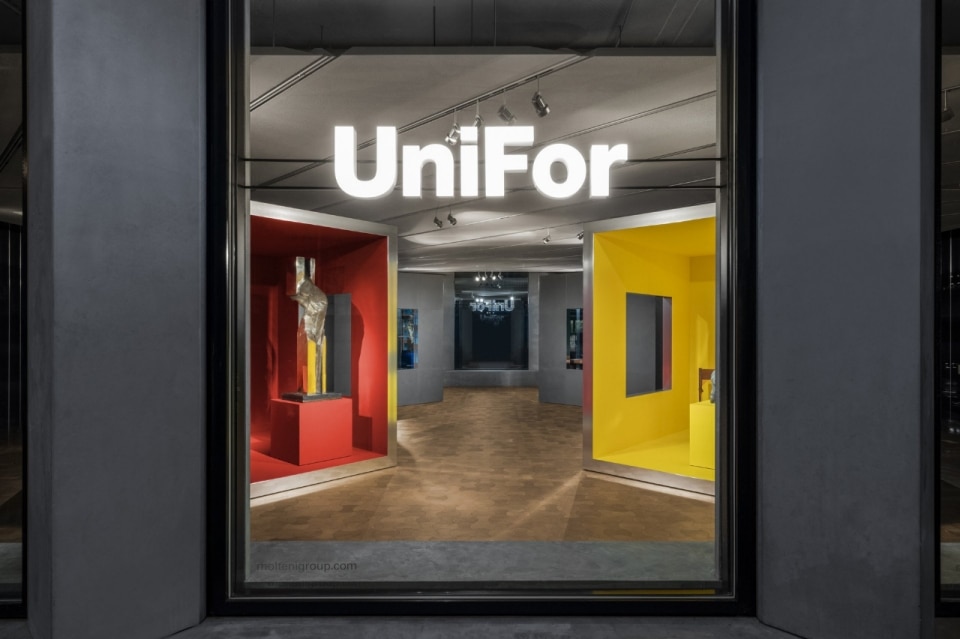
As part of Milan Museocity, UniFor transforms its space and storefront, in the large Herzog & de Meuron building on Via Pasubio, into a reflection on the city. “La città degli oggetti” puts Francesco Somaini’s sculptures in dialogue with four key pieces of furniture from the UniFor catalog: Descartes, Council, Paris and Museum, furniture designed by Aldo Rossi, the architect who most successfully put the city in architecture and architecture in objects.
In a similar vein, in the 1970s, Francesco Somaini conducted an investigation of the city, identifying sculpture as a central means of mending urban architecture. Today those furniture and sculptures come into relationship in an installation curated by Studio Klass with the Francesco Somaini Sculptor Foundation.
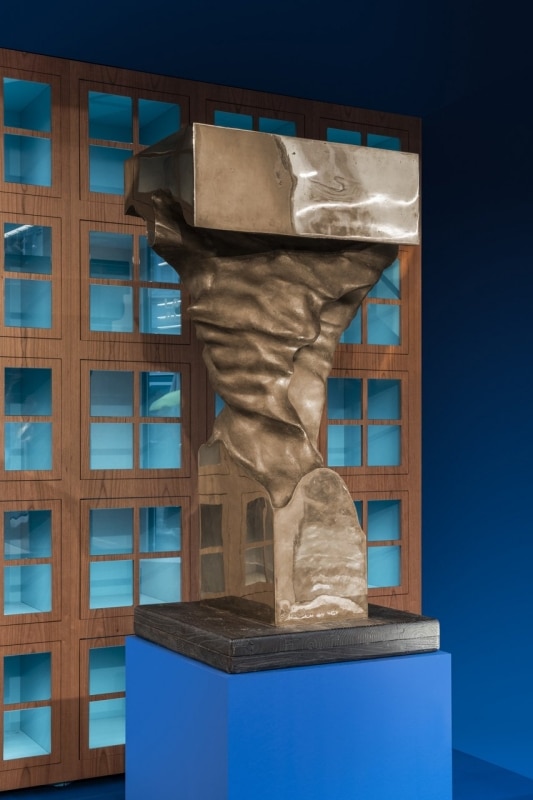
Four large cubes become monochromatic rooms, colored with hues traceable in Rossi's work and conceived as small museum architectures in which a certain "urbanity" can be recognized, translated in the scale of the sculptures and those furnishings that in 1994 were recounted in Domus 766 as follows: "light wood is the protagonist, combined with colors dear to the designer: goosebeak yellow for the chair's joining elements, China red or Madonna blue for the bookcase. The latter consists of a series of cubic boxes made of painted sheet metal (45 cm spacing), aggregated at will in both height and width, joined with rivets to each other, braced by tie rods placed between the rows of elements and closed by a windowed facade. This sort of curtain wall is obtained by cutting a single plywood panel, the design of which is therefore preserved. The glazing is flush with the outside of the frame and is dry-fitted. The sides are made of painted corrugated sheet metal."
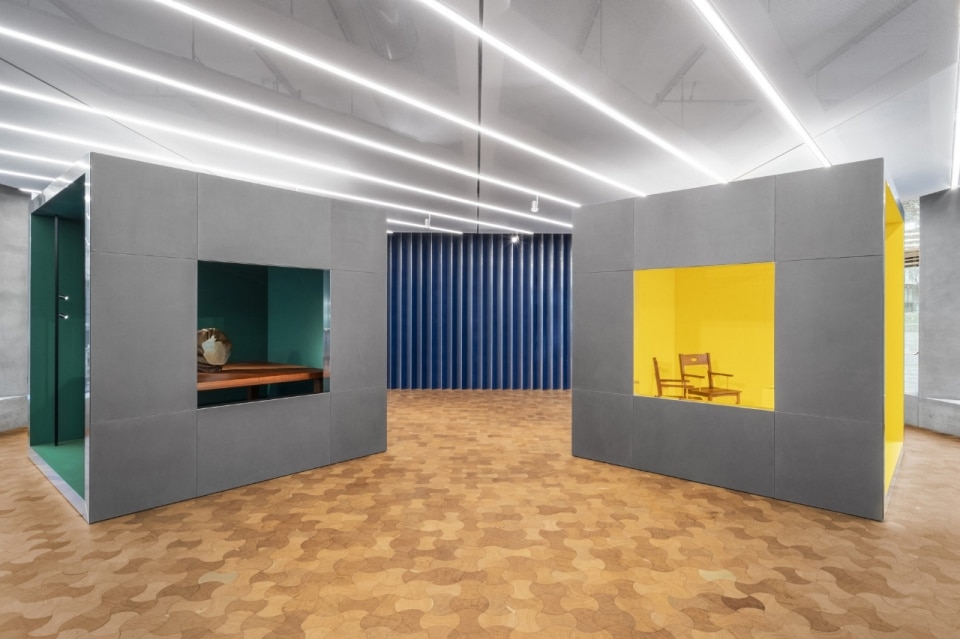
The visitor's viewpoint becomes a privileged overlook of facades, squares and architecture: a miniature urban scene. The space occupied by the four blocks housing the "urban landscapes" multiplies the city blocks within the showroom, ideally extending the grid of the urban fabric. This layout contributes to the construction of an analogous city, built through a novel interpretation of Rossi and Somaini's work.