

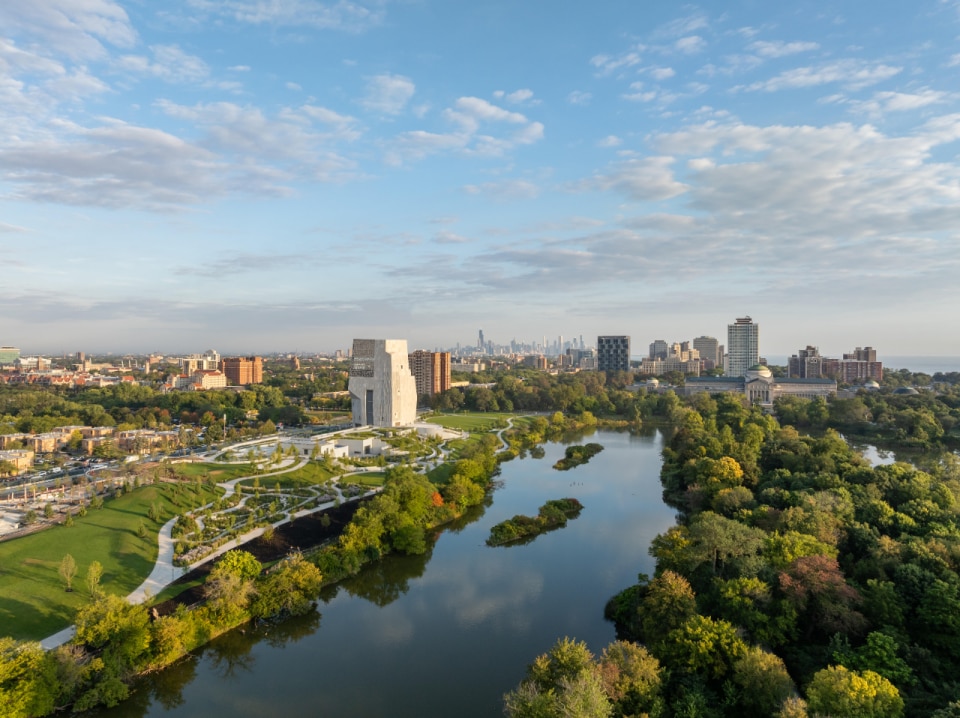
So now Obama has his own, too. Or rather: he has his own campus. The Obama Presidential Center, set to open on June 19 on Chicago’s South Side, was in fact conceived as a reinterpretation of the concept of a presidential library, transforming an archive of memory into a place dedicated to encounter, culture, and civic participation.
Building one’s own library at the end of a term as President of the United States is not a novelty, but a true tradition. The first to do so was Roosevelt, who in 1938 announced the construction of his library within the family estate in Hyde Park. Since then, fourteen have been built, in line with the provisions of the Presidential Libraries Act. This act stipulates that the buildings must be privately funded (and thus constructed where and how the former president wishes) and maintained by the government, which guarantees everyone access to and consultation of their contents: historical documents and materials, from letters addressed to citizens to dossiers on political decisions that shaped the functioning of the government, down to ceremonial and personal objects linked to both the public life and private dimension of each president.
Obama chose to build his center on the South Side of Chicago, where his political career began and where Michelle Obama was born and raised. This is not merely a biographical choice: the project returns a new cultural and civic hub to the neighborhood, destined to become one of the city’s main public spaces. “It’s more than a landmark—it’s a new space of possibilities,” reads the center’s website.
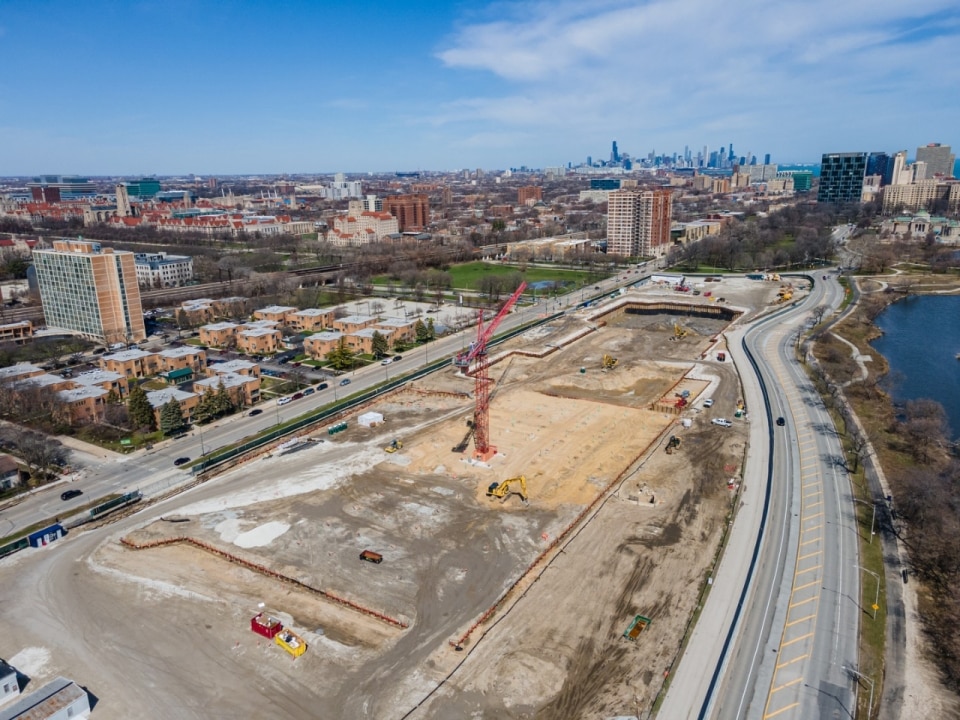
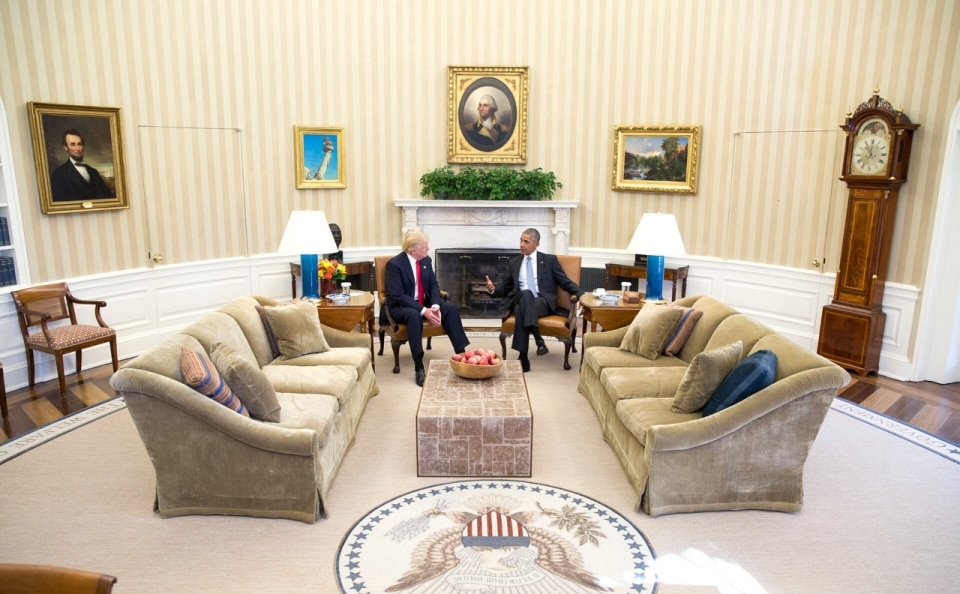
The project appears ambitious even when judged solely by the spaces it provides. A museum, an auditorium, event areas, sports facilities, dining options, gardens, and a panoramic sky room form a program that resembles a civic center more than a traditional library. There is even a faithful replica of the Oval Office as it appeared during the Obama presidency. While the complex was conceived to safeguard a political memory, it does so through a formula that primarily targets participation and public life.
The New York-based firm Tod Williams Billie Tsien Architects was responsible for the project, conceiving it by fragmenting it into several architectural bodies, all accessible from the same green level. The designers speak of “story-making” rather than “story-telling”: not just a place that tells a story, but a space designed to produce new relationships, encounters, and activities. Although self-celebration and self-narration inevitably occupy a significant part of the program, the intention to generate a center capable of inspiring and connecting people clearly emerges from the distribution of functions, which transforms the complex into a sort of active and scattered village.
Here, indoor environments alternate with open spaces such as the Women’s Garden or the Wetland Walk. According to the architects, the intervention integrates into the park, growing amidst the vegetation and bringing greenery onto the roofs and terraces; indeed, the architecture stands out without the slightest difficulty, asserting itself decisively over its surroundings.
The main building
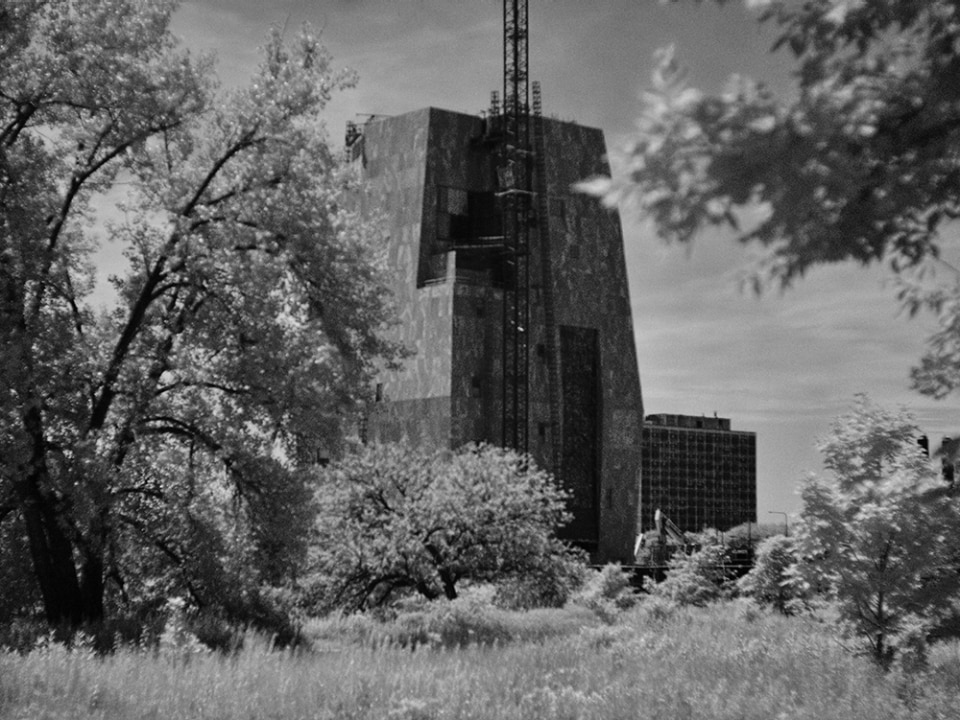
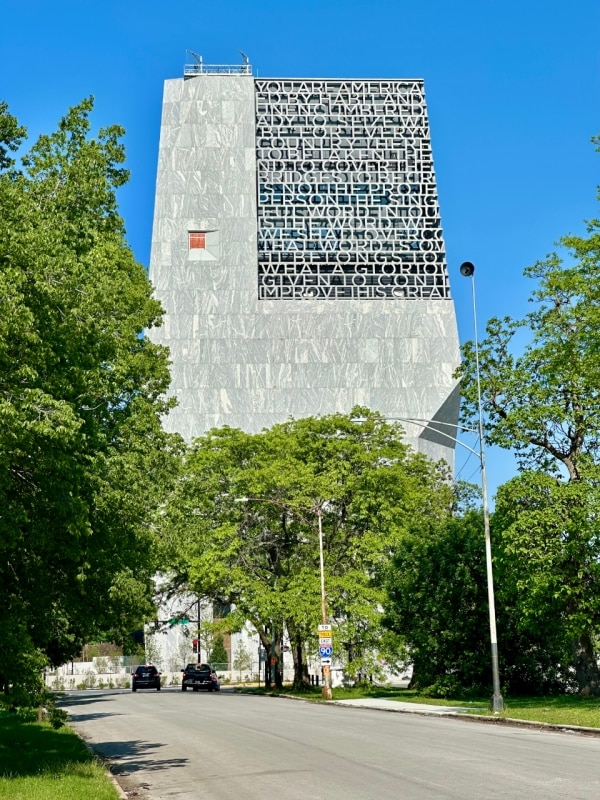
Dominating the area is an imposing building clad in granite, already dubbed the “Obamalisk.” It features a system functioning as a brise-soleil composed of huge letters, each 1.5 meters high, which form an excerpt from the famous You are America speech, delivered by Obama in Selma in 2015 on the fiftieth anniversary of the Selma-to-Montgomery marches.
Inside this structure, the museum’s exhibition path unfolds. Dedicated to the work of Barack and Michelle Obama, it is built around the motto “Yes We Can”, the leitmotiv first of the electoral campaign and later of the entire presidency. The layout develops through a rich multimedia apparatus that includes films, images, tactile devices, and an installation gathering over 400 buttons used during the presidential campaign.
The auditorium and sports field
The campus also accommodates the Forum and the Home Court. The former, articulated on two levels, is conceived as a civic space intended to host conferences, debates, musical performances, and theatrical plays; the functional program is completed by a large hall, a restaurant, and seven rooms dedicated to workshops.
It is not only a biographical choice: in fact, the project gives back to the neighborhood a new cultural and civic hub destined to become one of the city's main public spaces
A sports infrastructure could not be missing, understood according to Obama’s vision as a fundamental tool for community building. The exterior of the building features a cladding in metal and silk-screened glass panels that evoke the texture of a net: a metaphor for both the basketball hoop and the connection between individuals. The design of this part of the complex was entrusted to Moody Nolan, the largest African American-owned architecture firm in the United States, nationally renowned for its sports and community centers.
The outdoor spaces
Guided by the same values that inspire the buildings, the design of the outdoor areas has given life to spaces intended for every type of activity: gardens, picnic areas, playgrounds, spaces for debate, and a sloping area that will be used for snow activities in winter.
At the foot of the central building, the John Lewis Plaza pays tribute to one of the symbolic figures of the civil rights movement, while a vegetable garden dedicated to environmental education and the knowledge of the plant world bears the name Eleanor Roosevelt Fruit & Vegetable Garden.
A fountain designed by architect Maya Lin pays tribute to the former president’s mother. Completing the system of open spaces are the Women’s Garden, the Wetland Walk, and the Promenade, a pedestrian and bicycle path overlooking the Jackson Park Lagoon and Wooded Island. The entire management of the area was guided by criteria of environmental sustainability and accessibility.
The opening to the public
The project, which received funding from, among others, Columbia University in New York, the University of Chicago, the University of Illinois, and the University of Hawaii at Mānoa, will open its doors on June 19, on the occasion of Juneteenth, the holiday commemorating the liberation of African American slaves.
When it opens to the public, the Obama Presidential Center will enter the long tradition of American presidential libraries, but with a different ambition: not to limit itself to preserving the past, but rather to transform into a civic platform capable of generating new activities, relationships, and opportunities for the city that saw the beginning of the political history of Barack and Michelle Obama.
Opening image: Photo © The Barack Obama Foundation