OK
Domus Domus
newsstand
SUBSCRIBE
  • Magazine
  • Digital Edition
  • Digital Archive
LANGUAGE
  • it
  • en
Hi Logout
Sign up / Log in
  • News
  • Architecture
  • Interiors
  • Design
  • Art
  • Archive
  • Products
  • Design Essentials
  • Design Stories
  • Submit your project
Sections
  • News
  • Architecture
  • Interiors
  • Design
  • Art
  • Archive
  • Products
  • Covers
  • Biographies
  • Architecture Firms
  • Sustainable Cities
  • Gallery
  • Design Stories
  • Domus for Design
Magazine
  • Subscriptions
  • Digital Edition
  • Current Issue
  • Guest Editor
  • Digital Archive
  • Nordic Design
Specials
  • Design Essentials
  • Modern Work
  • DomusAir
  • Milano Design Week
  • Worldesign
Current Issue

Domus 1106 hits the shelves

Follow us
LANGUAGE
  • it
  • en
Hi Logout
Sign up / Log in
newsletter Icon
results No results Please enter a long search term

      The essentials: 20 of the best pens

      The essentials: 20 of the best pens

      Next gallery

      Metal shingles and a roof terrace in The Zam cultural centre

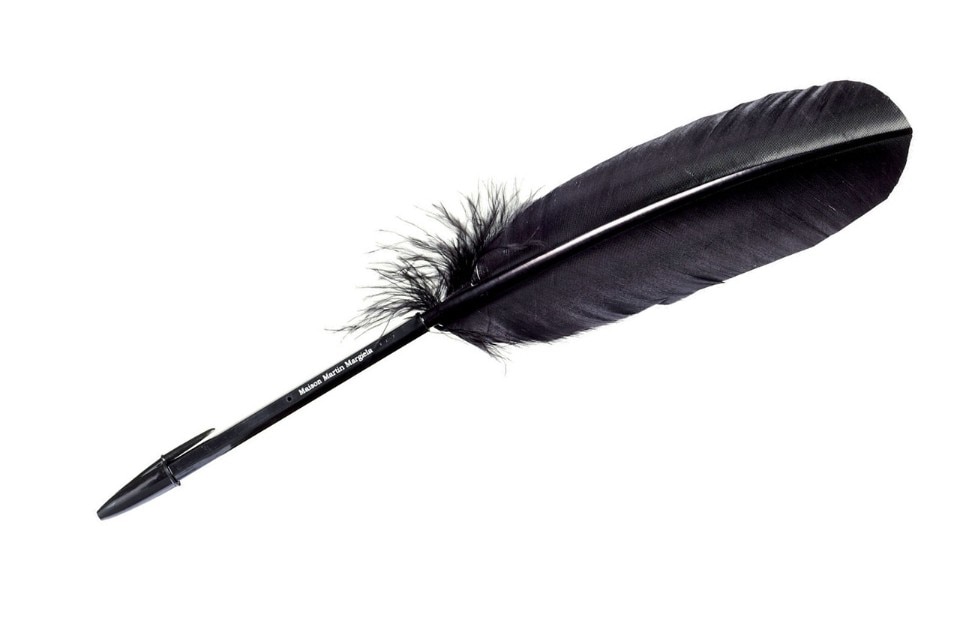
      The quill

      The principal writing instrument from the Middle Ages to the modern age, the quill gradually began to replace the calamus, whose pointed end glided less easily over parchment, from the 6th century. The length and flexibility of the quill, as well as the fat that naturally covered it, allowing the ink to adhere more easily, made it the preferred writing instrument, with a flourishing market that especially from the regions of Pomerania, Lithuania and Poland exported quill throughout the West.

      In the picture, a revisiation of the quill from Martin Margiela

      View article
      View article
      • SHARE
      • PIN IT

      2. Fountain pen, Waterman, 1884

      The first company to introduce a multi-channel feeder capable of facilitating ink channeling thanks to its lateral engravings, New York-based Waterman is considered the first fountain pen manufacturer and the only one to have survived the turbulence and acquisitions of the market: a classic par excellence.

      View article
      View article
      • SHARE
      • PIN IT

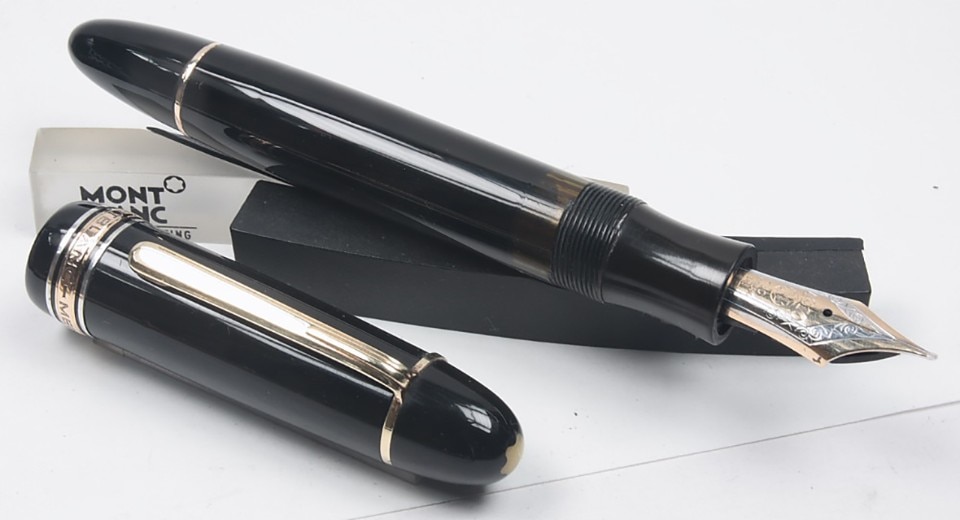
      3. Meisterstück, Montblanc, 1924

      The name is certainly a declaration of intent: in German Meisterstück means masterpiece (as Mont Blanc is the highest peak in the Alps), evidence of the consideration of the first pen to be sold with a lifetime warranty. More than to designate a specific model, Meisterstück will occasionally be used by the German company to indicate the top of the range pens of the production. It will be among the first models, along with those of Kaweco, to use a safety filling system to prevent ink leakage.

      View article
      View article
      • SHARE
      • PIN IT

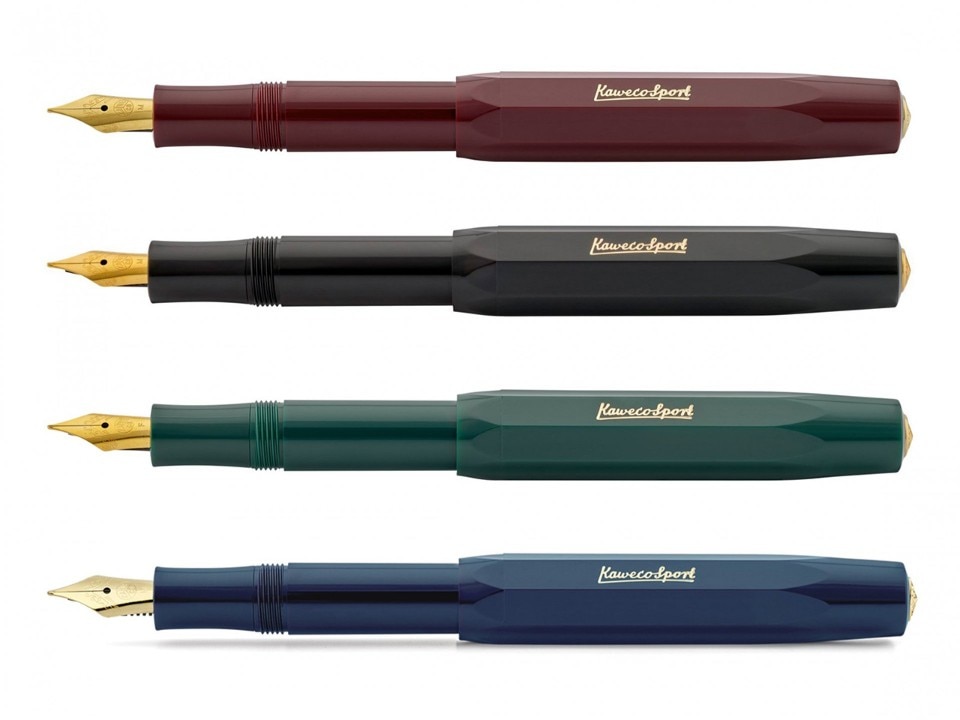
      4. Classic Sport, Kaweco, 1935

      Launched by the German brand as the pen for sportsmen (as well as sportswomen and ladies!), it is characterized by a particularly large octagonal base - "small in the pocket, big in the hand" is the claim with which it is advertised - and by a very long cap that screws onto the body of the pen, which still make it one of the most compact models on the market.

      Ebonite or resin, stainless steel. Dimensions 10,5 x  1,3 x  1,8 cm.

      View article
      View article
      • SHARE
      • PIN IT

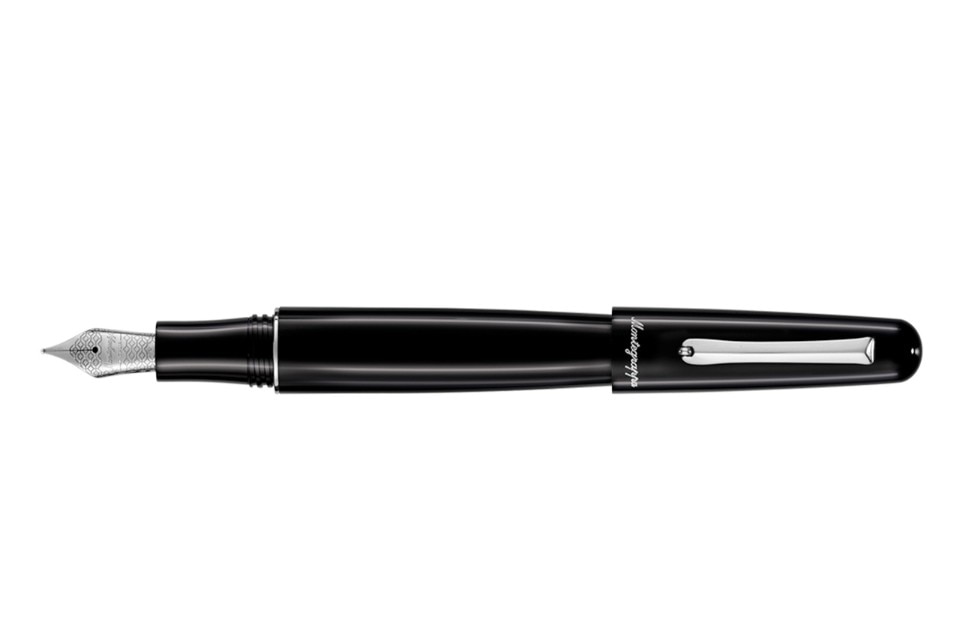
      5. Elmo 01, Heinrich Helm, Montegrappa, ’20/‘30

      Ernst Hemingway's cult pen produced by the first fountain pen manufacturer in Italy, it features a compact, rounded shape that recalls not only the lines of the Bauhaus, but also the democratizing spirit of the German movement.

      Resin. Dimensions 14.2 x 1.6 x 1.6 cm.

      View article
      View article
      • SHARE
      • PIN IT

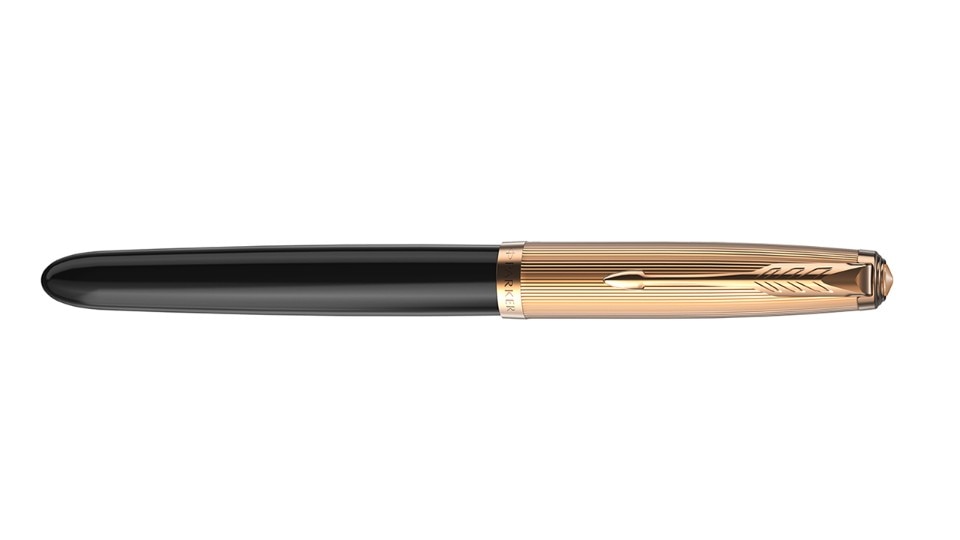
      6. Parker 51, Parker, 1941

      Designed to work with a proprietary fast-drying ink, the famous arrow-clip pen was distinguished at launch by its fairing nib, which would leave the tip almost completely covered allowing the body to take on a more tapered shape. In 1954 the Parker 51 will leave the field to the famous Parker Jotter, first ballpoint pen with a large refill.

      Lucite, gold plated cap. Dimensions 14,3 cm x 10,9 mm (barrel) and 12 mm (cap)

      View article
      View article
      • SHARE
      • PIN IT

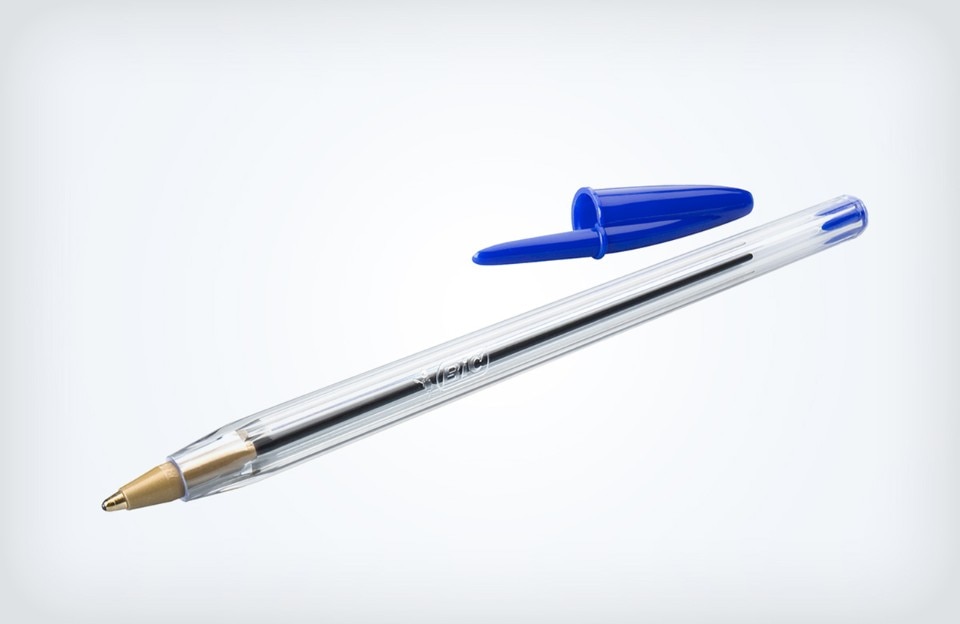
      7. Bic Cristal®, Décolletage Plastique Design Team, 1950

      Leader of the disposable pen, as widespread today as in the years after its launch, owes its birth to the intuition of Lazlo Josef Birò, the Hungarian journalist who, observing a marble rolling on a puddle and leaving a black trace on the road, imagined a pen capable of working thanks to a metal ball. The intuition of Birò, who was forced to flee during the war years because of his Jewish origins, cost him the patent, which was sold to Marcel Bich, a naturalized French Turinese marquis, who started production in 1950. Since its launch, more than 100 billion Bic pens have been produced and distributed worldwide and 15 million pens are still sold every day. A curiosity about the hole in the cap: it was introduced to prevent choking in case it was swallowed by a child.


      Polystyrene and polypropylene plastics, tungsten carbide. Dimensions 15 x 1 x 1 cm.

      View article
      View article
      • SHARE
      • PIN IT

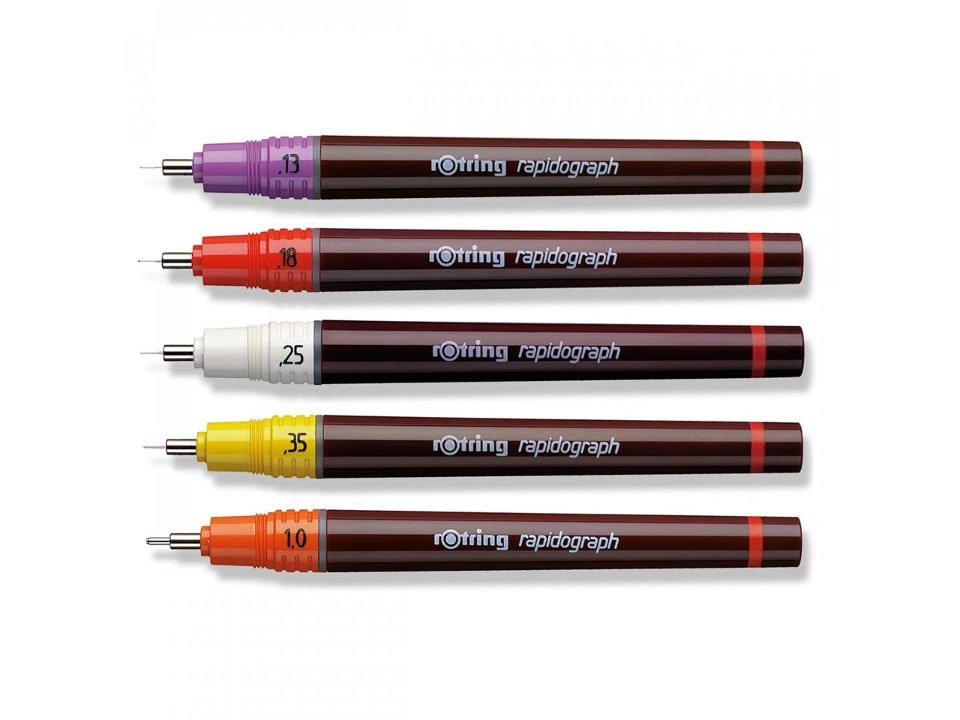
      8. Rapidograph, Rotring, 1953

      An evolution of the Tintenkuli, a 1934 model with a tubular steel tip and a body that allowed the amount of ink remaining to show through, the Rapidograph would be the first pen to provide accurate control of stroke width by standardizing the nib in four sizes (0.35 - 0.5 - 0.7 -1.0). Adopted by engineers and architects in place of the ruling pens for technical drawing, the "Rappi" will allow unparalleled control, writing speed, and stroke durability.

      Dimensions 18,5 x 110 x 43 cm

      View article
      View article
      • SHARE
      • PIN IT

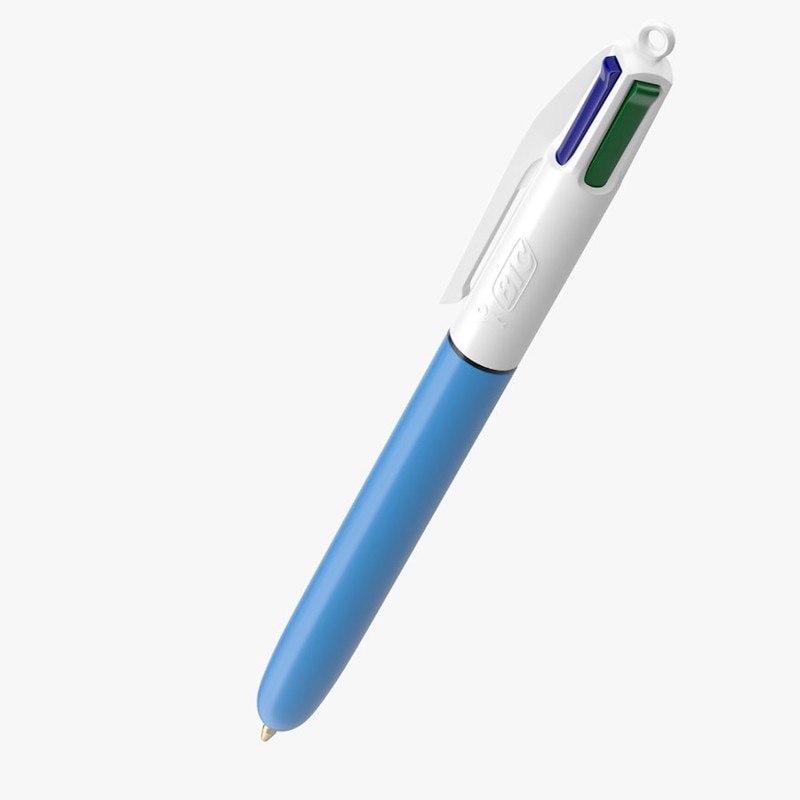
      10. Bic 4 colors, Bic, 1970

      Evolution of Bic Cristal, will be the first to introduce in a single pen the coexistence of four different colors of ink, to be activated with a simple pressure of the hand associated with a "tic", a small clicking sound, unmistakable and indelible. It will open the way to multi-functionality as well as gadgetry of writing, turned into a game tool to decorate any sheet in an intuitive way.

      Translucent polystyrene barrel. Dimensions 14,9 x 1,2 x 1,2 cm.

      View article
      View article
      • SHARE
      • PIN IT

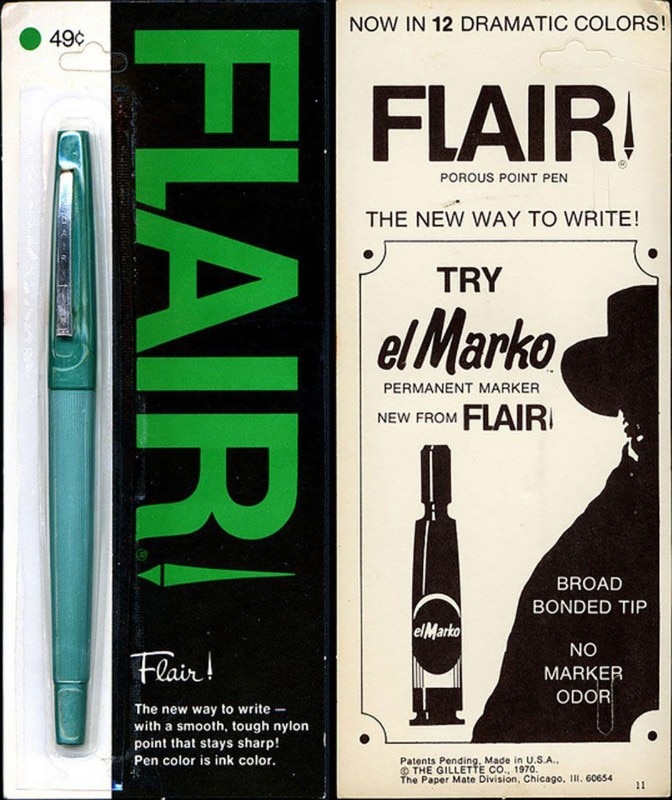
      9. Paper mate, Frawley Pen Company / Gillette, 1966

      A felt-tipped pen with a soft writing style, it has not changed its iconic cigar shape over the years, which still gives it an unmistakable vintage feel.

      Dimensions 18.4 x 2.5 x 21.6 cm

      View article
      View article
      • SHARE
      • PIN IT

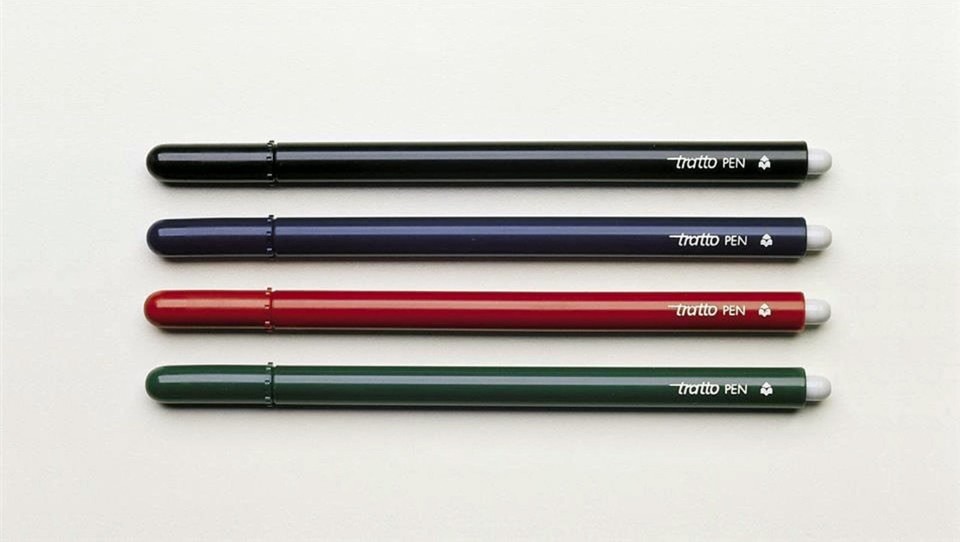
      11. Tratto Pen, Marco Del Corno, F.I.L.A., 1975

      Minimalist but not severe, thanks to its roundness and the small teeth that, like a crown, outline the base of its cap, it can be considered, by virtue of its democratic nature, the pen-marker par excellence, the first able to combine the pleasantness of the stroke with the precision of writing. Developed from a Japanese patent and inspired by Marco Zanuso's Hastil pen for Aurora, it will be launched at the Chibi Cart stationery fair in Milan, where it will receive two million orders on the launch day alone. It was awarded the Compasso d'Oro in 1979.

      Polypropylene, fiber tip and water based ink. Dimensions 20 x 10 x 13 cm.

      View article
      View article
      • SHARE
      • PIN IT

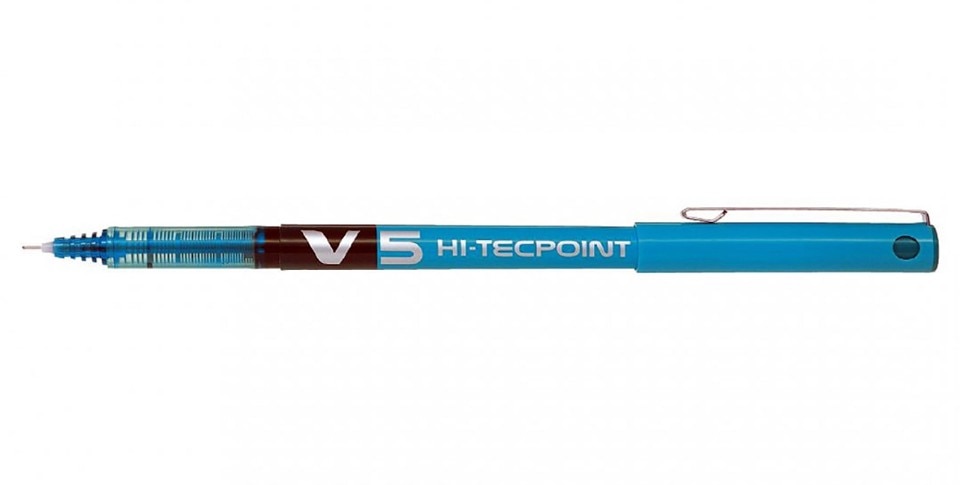
      12. Hi-techpoint, Pilot, 1980

      One of the most commercially successful products of the Japanese brand Pilot, the Hi-techpoint is a refillable liquid ink multiple-needle ballpoint pen featuring an airtight closure system, which eliminates any ink intake problems.

      Plastic 71% recycled. Dimensions 13.5 x 1 x 1 cm.

      View article
      View article
      • SHARE
      • PIN IT

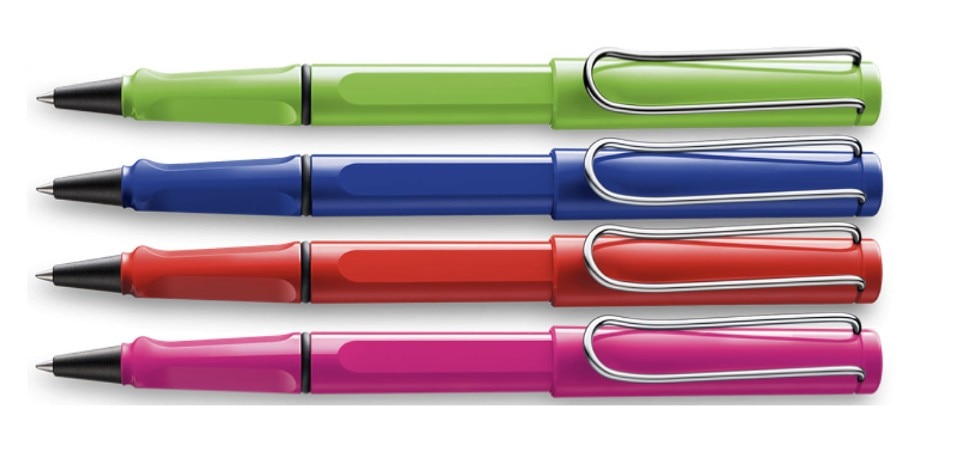
      13. Lami Safari, Wolfgang Fabian, Lamy, 1980

      An economical yet extremely contemporary fountain pen, it stands out for the large diameter of its body and the prominent spring clip that gives it a distinctly graphic line. A small cult at the time of its launch, it is now one of the great classics of Lamy production and is the only pen under 50 euros to have seven nibs.

      ABS or aluminum, chromed steel. Dimensions 16 x 3 x 3 cm.

      View article
      View article
      • SHARE
      • PIN IT

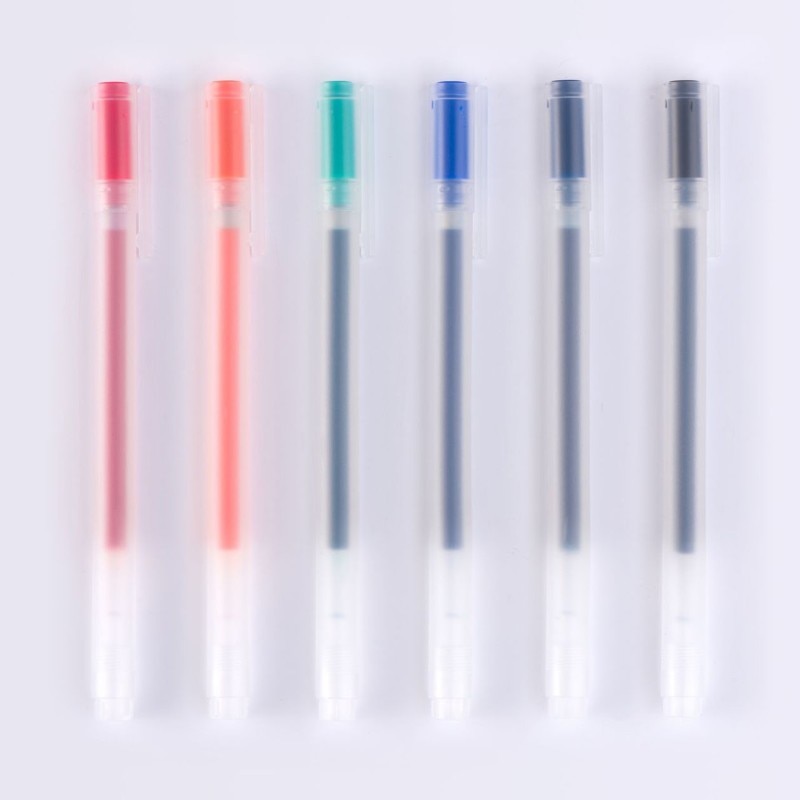
      15. Muji Pen, 1984

      Emblem of the discreet and humble pen, far from any claim to status symbol as claimed by the identity of the "anti-brand" Japanese brand, it combines a translucent plastic body that lets the color of the stroke shine through with a refillable gel ink, renowned for the quality of its writing.

      View article
      View article
      • SHARE
      • PIN IT

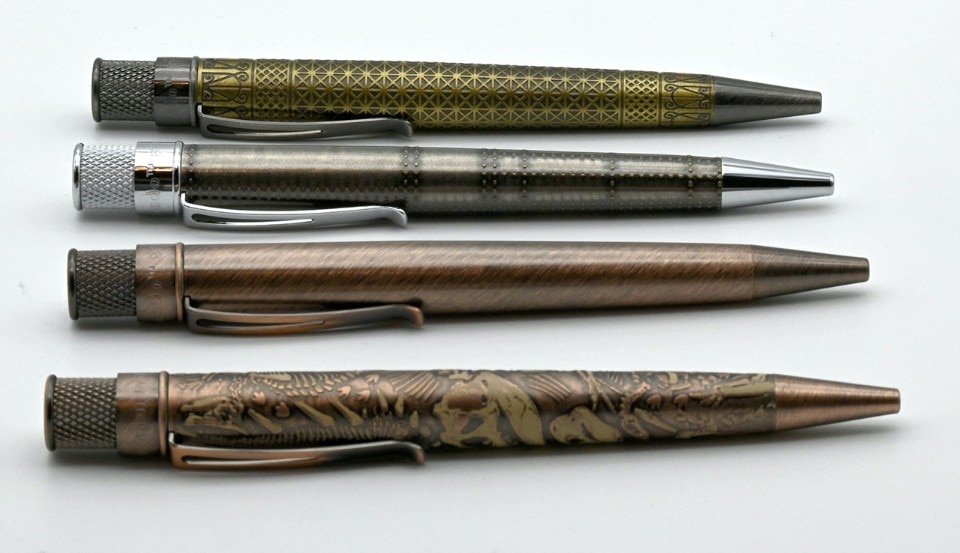
      15. Retro 51, Tornado, 1997

      Fountain pen against the trend, born in years when this typology seemed condemned to live only in its most classic models, it soon established itself as a cult pen thanks not only to its vintage look, but also to the renowned ink yield on paper. Numerous versions and customizations will make it stand out for its elaborate graphics, which in any case will affect the cap decorated with small diamond-shaped engravings.

      Lacquered metal barrel with chrome finish and Iridium-tipped steel Schmidt nib. Length 13,9 cm.

      View article
      View article
      • SHARE
      • PIN IT

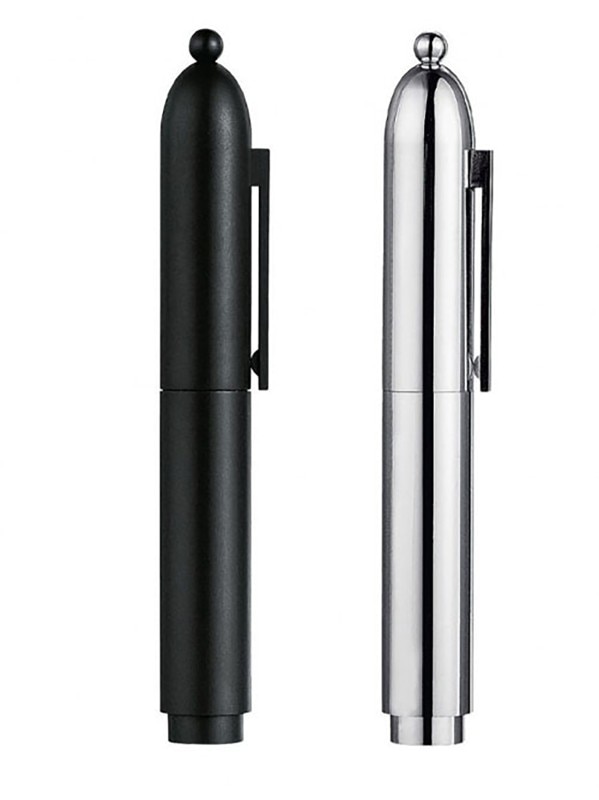
      16. La Cupola pen, Aldo Rossi, Alessi, 2008

      Definitely less known than the famous coffee maker from which it has taken not only the name, but also the shape, the Cupola pen is the replica intended for the world of stationery produced by Alessi in collaboration with Uniball.

      View article
      View article
      • SHARE
      • PIN IT

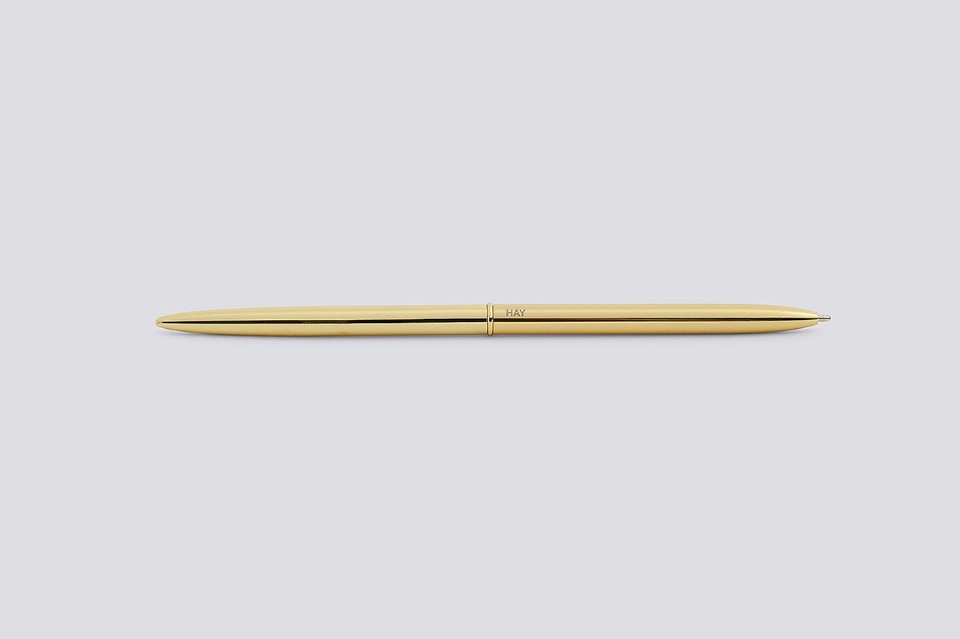
      17. Bullet Golden, Hay, 2014

      A ballpoint pen with a sculptural and essential shape similar to a slender torpedo - or a bullet as the name suggests - it is designed to promote writing comfort: made of metal to restore the heaviness of a fountain pen, it is easy to grasp thanks to its slender and thin body.

      anodised paktong. Lenght 16 cm.

      View article
      View article
      • SHARE
      • PIN IT

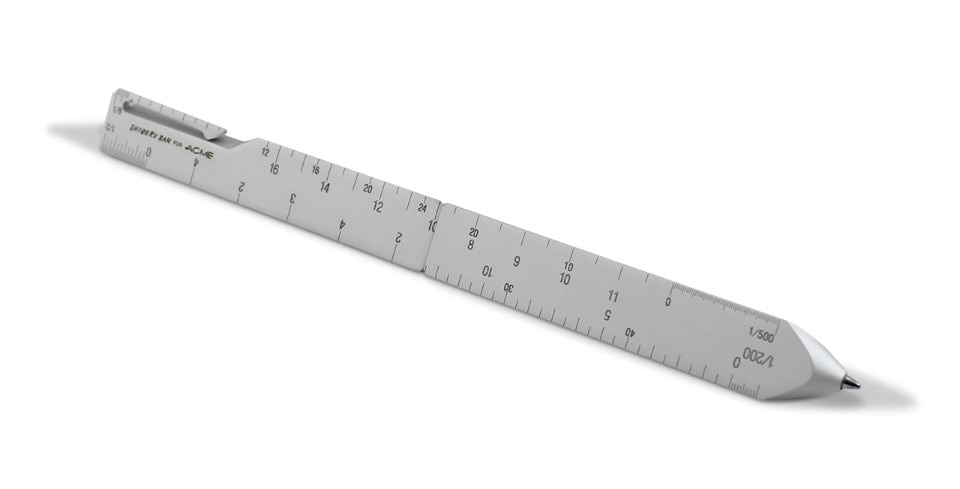
      18. Retractable roller ball pen, Shigeru Ban, Acme studios, 2016

      Indisputable architect pen signed by the master Shigeru Ban, it is distinguished by a triangular base body designed to accommodate the comfort of the grip. The three sides offer three rulers that function as a practical scale, while the ballpoint pen retracts with a twist of the pen, giving an even more compact object.

      Aluminium. Dimensions 16 x 1,4 x 1,4 cm.

      View article
      View article
      • SHARE
      • PIN IT

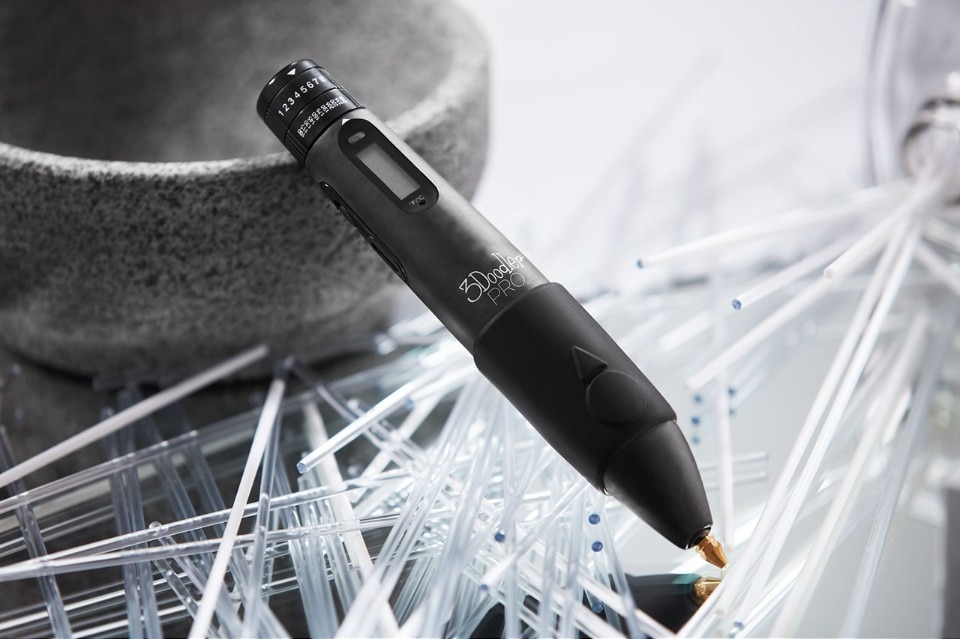
      19. 3Doodler Pro, WobbleWorks, 2016

      Developed since 2013 through a very successful crowdfunding on Kickstarter, it is the first pen-shaped extruder to emit a thin plastic filament capable of solidifying quickly and assume the unusual shapes conferred by the movement of the hand in the air: a small revolution in the field of pens, which takes its cue from the maker culture to give an object capable of standing out for its innovative and almost magical potential.

      View article
      View article
      • SHARE
      • PIN IT

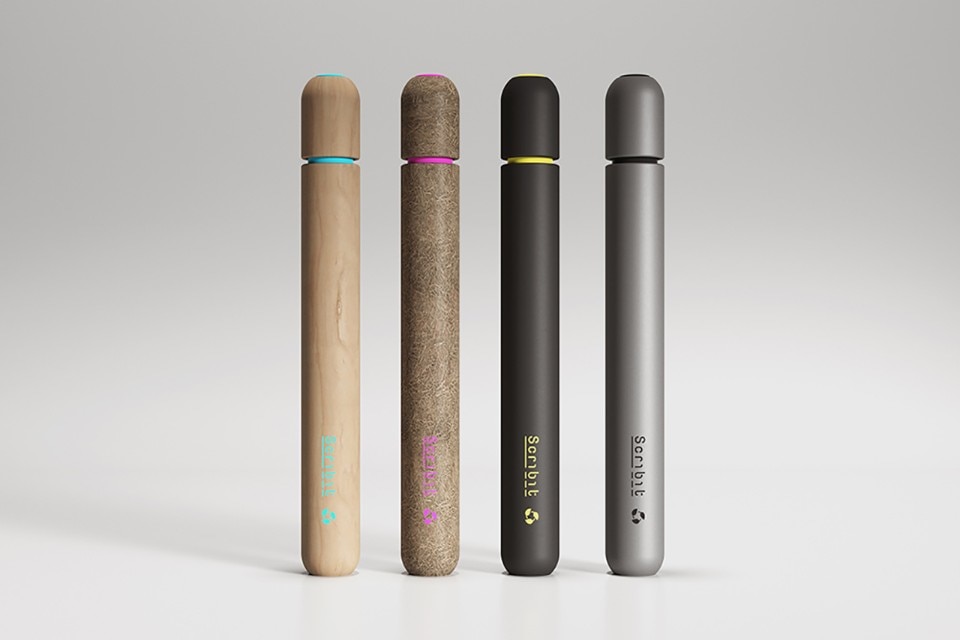
      20. Scribit pen, Carlo Ratti, Scribit, 2020

      The first fully compostable marker, Scribit pen has a cartridge made of natural fibers, a pen body made of anodized aluminum, biodegradable plastic or wood, and makes use of a non-toxic water-based ink. Developed as a stand for the eponymous drawing robot developed by the Scribit brand, it is also a circular response to the appalling number of pens that end up in landfills, an estimated 35 billion per year.

      View article
      View article
      • SHARE
      • PIN IT

      View article
      View article
      • SHARE
      • PIN IT
      Loading
      Share
      • Sections
        • Design
        • Design essentials
      • Keywords
      • News
      • Architecture
      • Design
      • Art
      • Opinion
      • Archive
      • Products
      • Foreign Editions
      • Biographies
      • Architectural movements
      • Buildings
      • Architecture Firms
      • Design Essentials
      • Urban stories
      • Gio Ponti
      • Contacts & Editorial Team

      • Follow us
      Legal Note

      Editorial DomusEditoriale Domus Spa
      Via G. Mazzocchi, 1/3
      20089 Rozzano (Mi) -
      Codice fiscale, partita IVA e iscrizione al Registro delle Imprese di Milano
      n. 07835550158
      R.E.A. di Milano n. 1186124
      Capitale sociale versato € 5.000.000,00 - All rights reserved - Privacy - Informativa cookie completa - Gestione Cookies

      China Germany India Mexico, Central America and Caribbean Sri Lanka Korea icon-camera close icon-comments icon-down-sm icon-download icon-facebook icon-heart icon-heart icon--mobile-logo icon-next-sm icon-next icon-pinterest icon-play icon-plus icon-prev-sm icon-prev Search icon-twitter icon-views icon-instagram