


by Alessandro Scarano
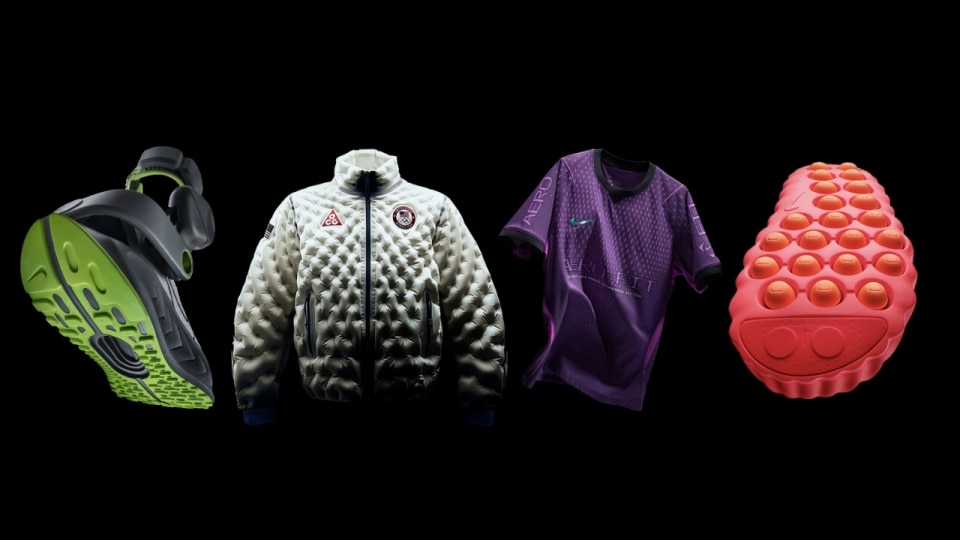
In Oregon, on America’s West Coast, October belongs to Halloween. In Portland, the Green State’s largest city, pumpkins and skeletons seep into the urban landscape. But in nearby Beaverton, home to Nike’s campus, the atmosphere shifts: this is science fiction. These are the days when the world’s biggest sportswear company presents its innovations, advancing into previously unexplored territory.
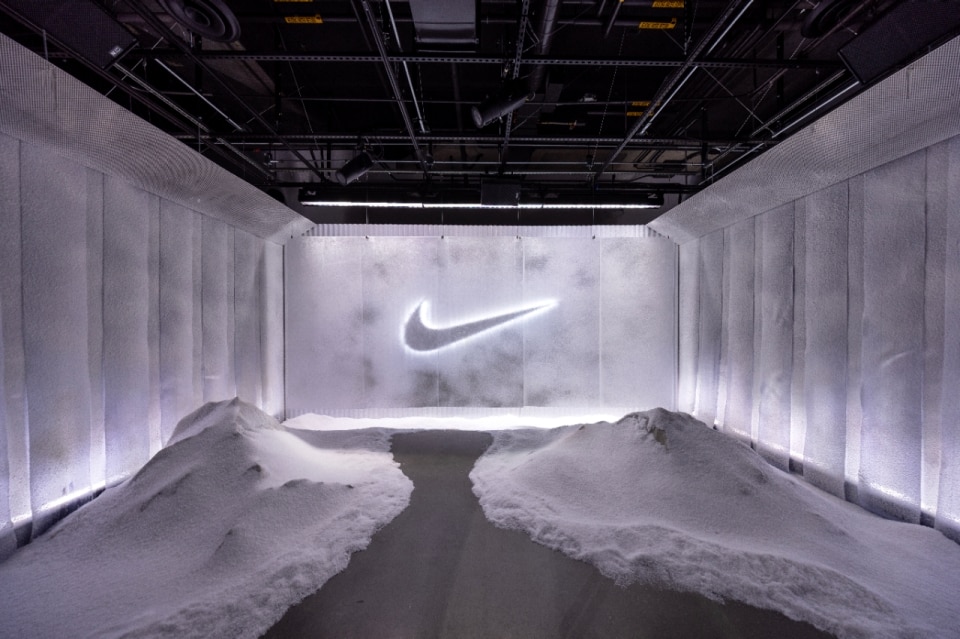
To tell this story, Nike built installations worthy of Milan’s best design week: more a contemporary art path than a press launch. The message is delivered first through sensation, to a very small group of invited journalists. From Italy, Domus.
It happens in the rooms on the first floor of the Serena Williams Building, one of the largest “houses” on the vast 14,000-employee campus, which in these very days has been dedicated to co-founder Phil Knight — now named the Nike Philip H. Knight Campus.
Innovation for Nike is what it’s always been: serving athletes. The way we innovate has changed, but the core of why we do it hasn’t.
Phil McCartney
On arrival, these staged environments introduce the crucial frictions between athletes and optimal performance. Which are, in fact, the frictions of being human today: the mind and stress, the body and environment, climate and comfort on a planet that accelerates and seems locked in permanent crisis. A fine teaser, but the premise — later confirmed — is clear from the start: Nike is expanding its definition of performance — from physical optimization to mental focus, emotional balance, and adaptive technology.
Nike Mind, the shoe that calms the mind
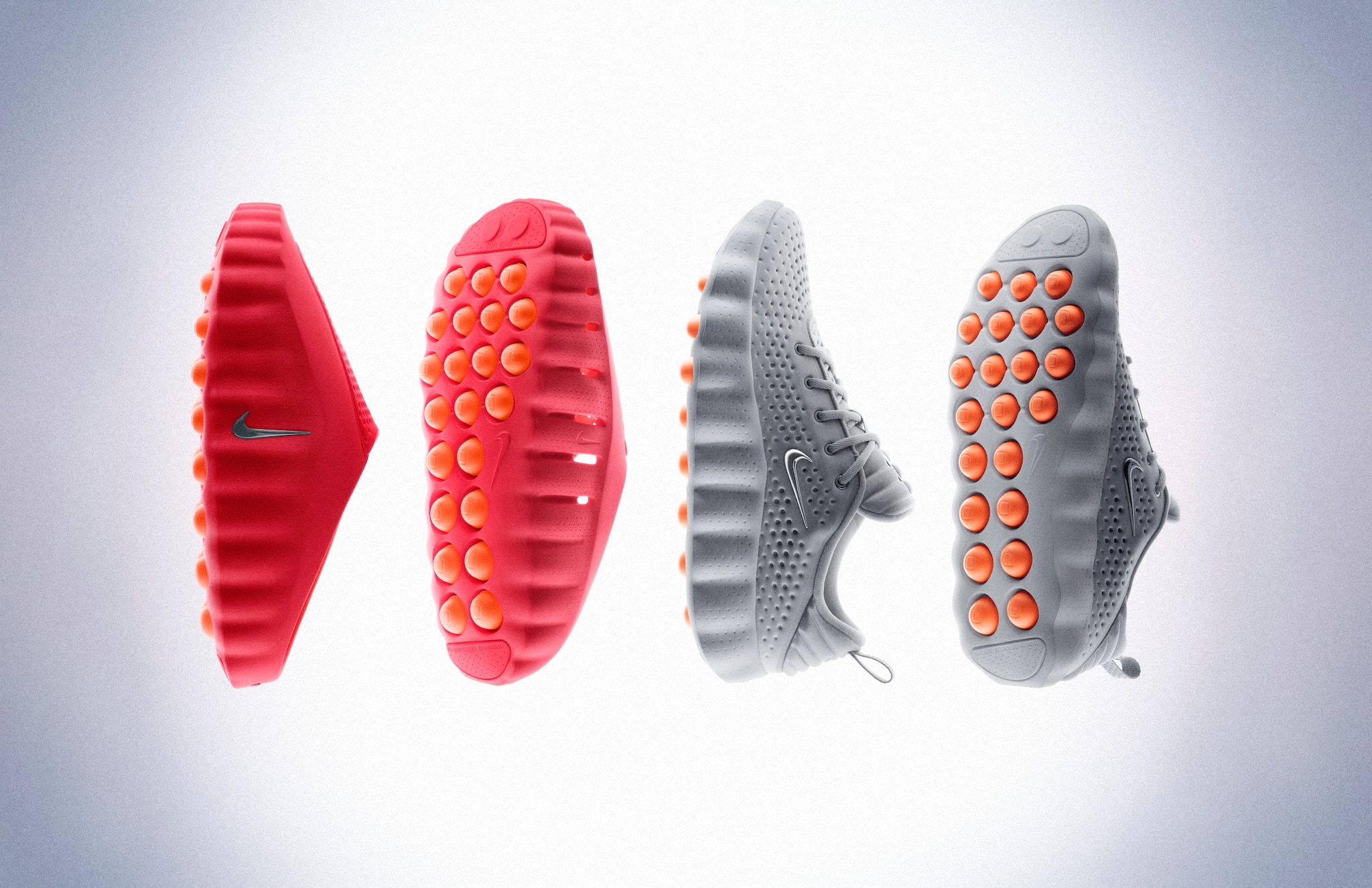
Those same rooms are then repopulated with “solutions” — innovations in product form — the following day. Starting with Nike Mind, due to debut in stores at the beginning of next year. “A shoe designed around the mind,” Nike says: “not to make you faster, but to help you focus and recover.” Nike Mind is built on the mechanoreceptors under the foot. “For the first 45 years, Nike’s research focused on the body from the neck down. The next forty-five will include the brain.”
Nike Mind is a product, but also a mood: a “calm” technology that helps you find yourself. Light-years from the breathless disruptive tempo that, in the age of AI, dominates Silicon Valley’s narrative — symbolically distant yet only a few hours’ drive from here.
 View gallery
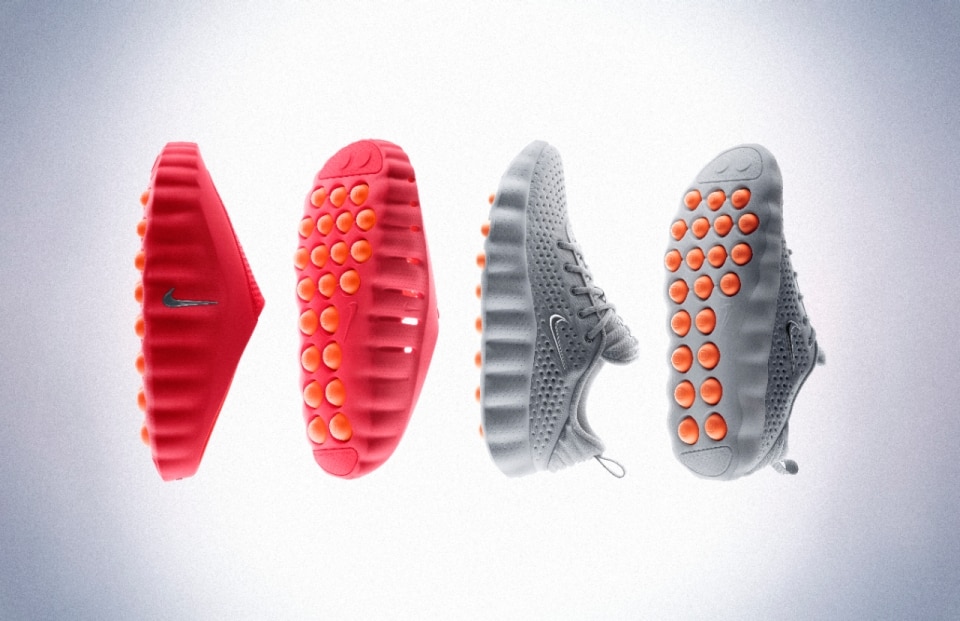


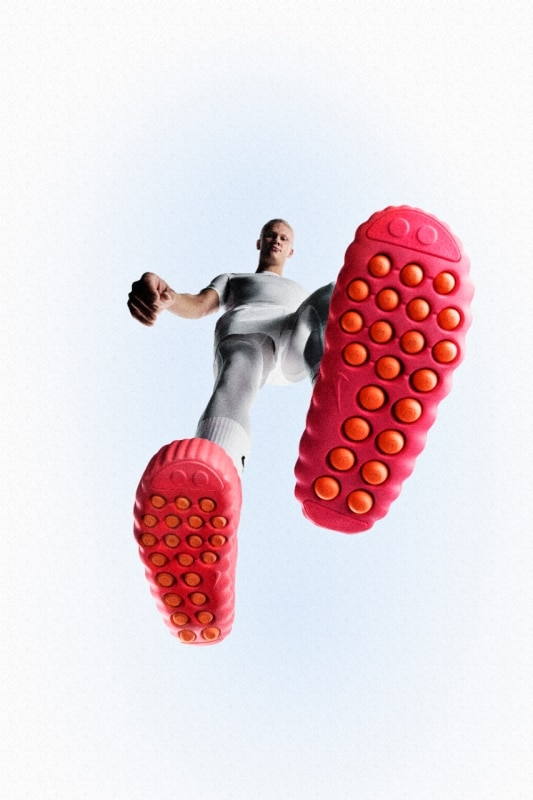
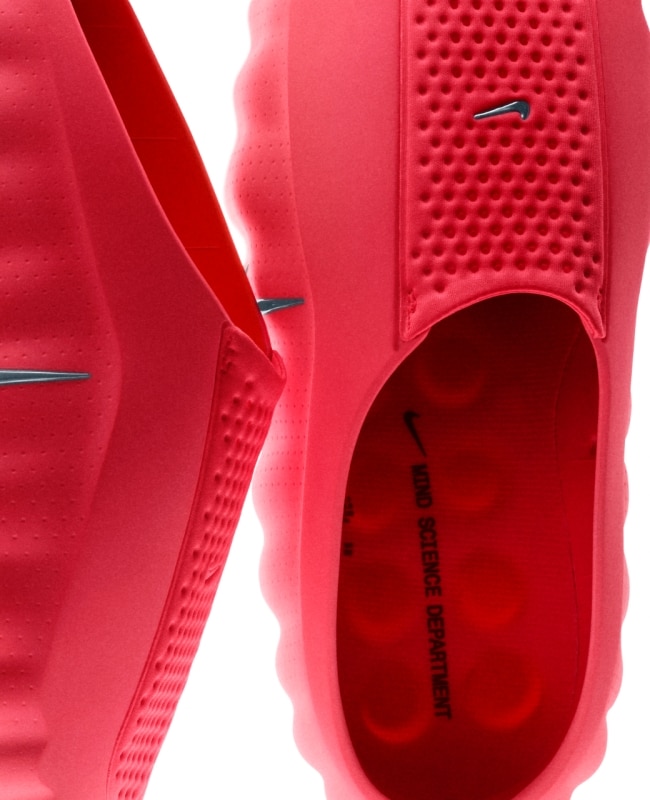
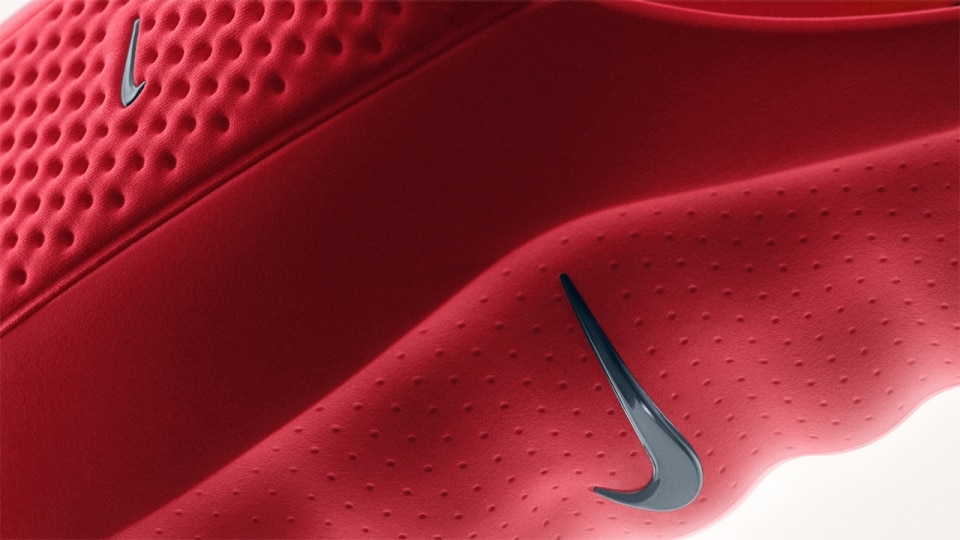
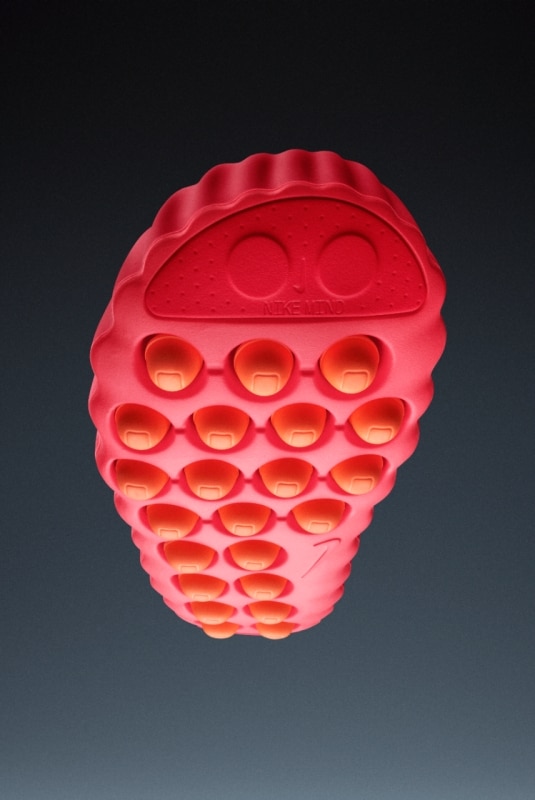
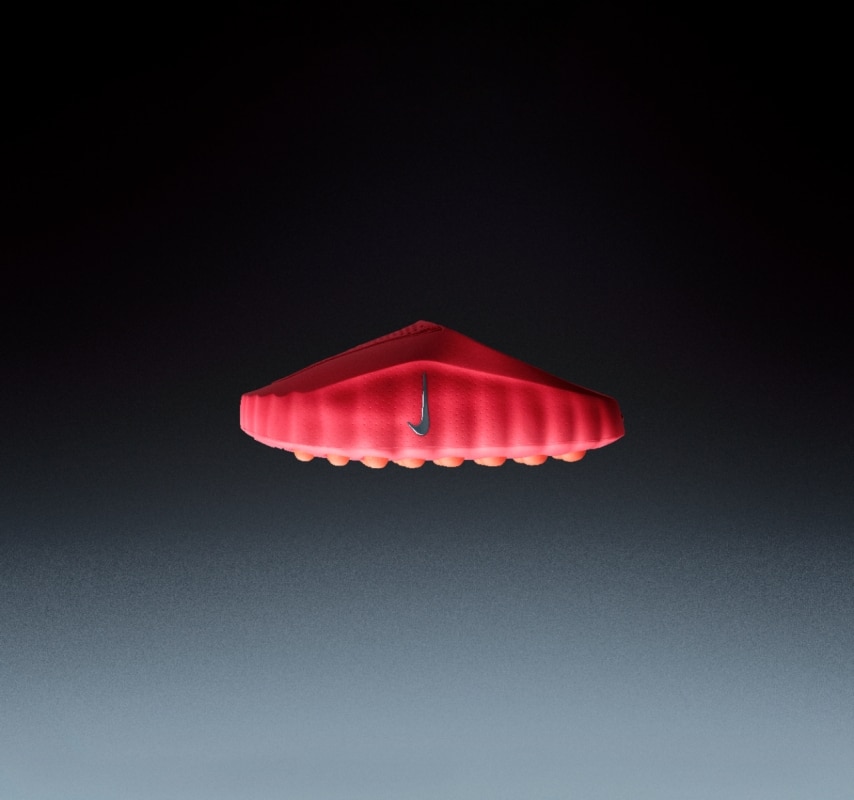
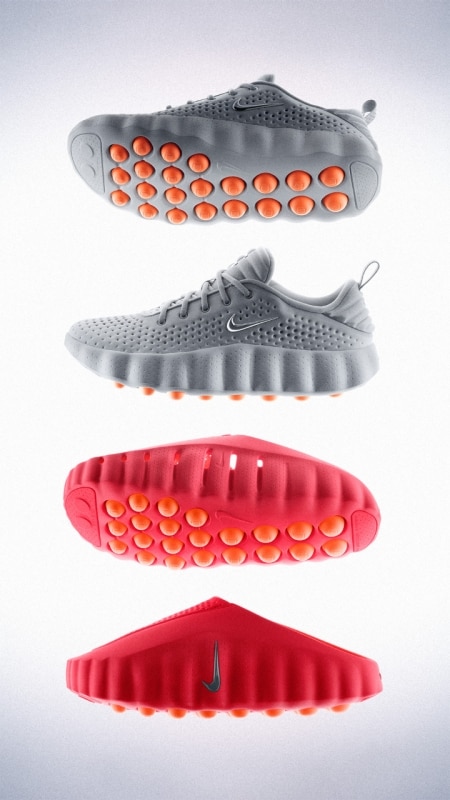
“Being calmer is good for everyone,” Phil McCartney, Nike’s EVP and Chief Innovation, Design & Product Officer, tells Domus. This is only the first step in a broader idea of preparation and recovery, he adds — hinting that with the two shoes, Nike Mind 001 and 002, available in January, a new spectrum of possibilities opens up.
What it means to innovate at Nike
“If you want to be conservative and incremental, that’s not us. You have to be trusted and coveted — and unexpected,” McCartney tells Domus.
At the same time, innovation here in Beaverton has always run on a fixed track. “Innovation for Nike is what it’s always been: serving athletes. The way we innovate has changed, but the core of why we do it hasn’t.”
And who is the athlete? McCartney’s answer is unequivocal: “If you have a body, you’re an athlete.” Which is why Nike “innovates for eight billion people.” In other words: we’re all athletes.

“Innovation starts with a question: who are you trying to make better, and what are you trying to make better?” echoes Tony Bignell, Nike’s Chief Innovation Officer — even their accents mark a small British enclave within Nike’s West Coast innovation arm: Bignell from London, McCartney from Newcastle.
We meet at the LeBron James Innovation Center, where data piles upon data, in rooms that can emulate any climate on the planet, with a basketball court, a small-sided football pitch and a running track — “probably the most high-tech in the world” — where athletes train while their performance is analyzed and quantified.
The truth is not all science and not all design: the magic is in the middle.
Tony Bignell
Amplify, the project that “amplifies” movement
“Sometimes you need to be bold,” says Bignell. “You come to Nike because you want to be pushed — to try new things.” And the boldest of the four innovations shown is also the most experimental and futuristic — still without a clear application. Not designed for pros, but for the eight billion “bodies” McCartney referred to: Amplify.
“When I first tried Amplify, I thought: ‘This is wild, this is something totally new.’ But then I realized the most powerful thing about it wasn’t the tech — it was that I could go for a run with my mum. She’s never been able to run with me before.” With this emotional story, Bignell captures Nike’s first “powered” footwear project — an exo-shoe that synchronizes with your movement.
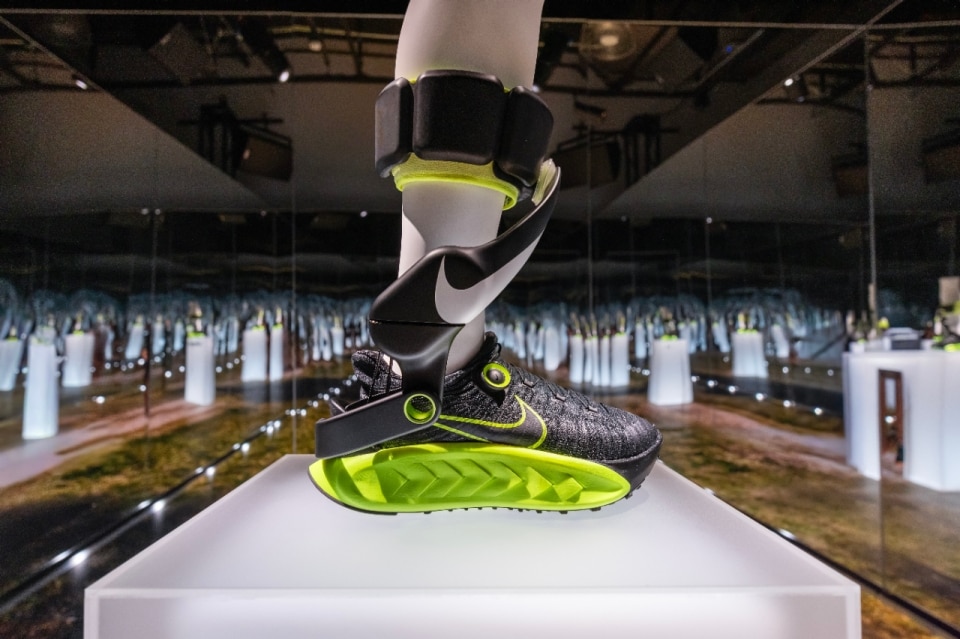
Amplify is designed to help you walk and run farther with less effort. “It’s an e-bike for your foot,” explains Michael Donaghu, VP, Create the Future, Emerging Sport & Innovation — a Nike veteran here in Beaverton — while showing multiple prototypes developed over the years in collaboration with robotics company Dephy. The first dates back to 2021. The challenge, he says, is minimizing battery size and overall weight.

Donaghu stresses how Nike has spent decades “minimizing energy loss,” and is now working on something that can “give you more.” It’s a new route for Nike: robotics and the augmentation of athletic performance.
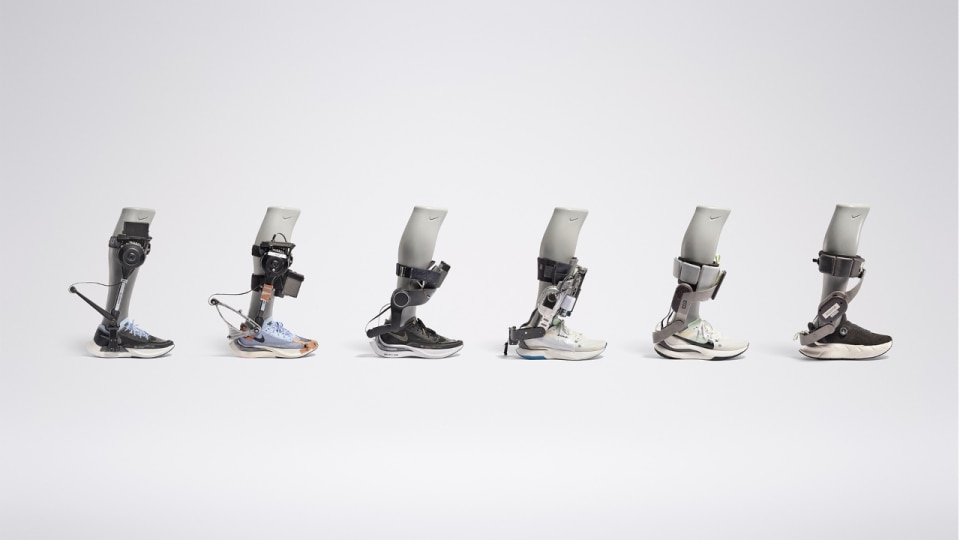
Take Nike Mind, take Amplify: it’s clear there’s no attempt to impose aesthetic coherence across Nike’s innovations. There is, rather, a philosophical unity: they are all experiments, they all respond to concrete problems, they all redefine what it means to innovate the body today. “The truth is not all science and not all design: the magic is in the middle,” Bignell confides. And this holds true for the other two novelties as well: a new high-performance apparel system and an inflatable jacket for Team USA at the Milano-Cortina Winter Olympics.
“We exist to serve the athlete”
Energy radiates even from a single step by Elliott Hill, who switches to Italian the moment I mention I’m from Milan. “My grandfather was from a town near Palermo: they were very poor.” He joined Nike as an intern more than thirty years ago and has, in recent days, officially become the company’s new CEO.
“I hope that you walk away from here with a better feel for where we are as a company — and, more importantly, where we’re going in the future,” Hill tells the room of journalists.

What does that future look like? These innovation-focused days — in which Hill appears for a brief address — describe a company that does not abandon its founding values: “We exist to serve the athlete,” and we’ve been doing it for 54 years, Hill reiterates. To keep doing so, Nike is now running toward new frontiers: mind science and robotics, first of all. There’s also a shift in the very idea of performance, which now includes qualitative parameters: perception, focus, mental health, feeling. Will the future of the world’s largest sportswear company be biotechnological?
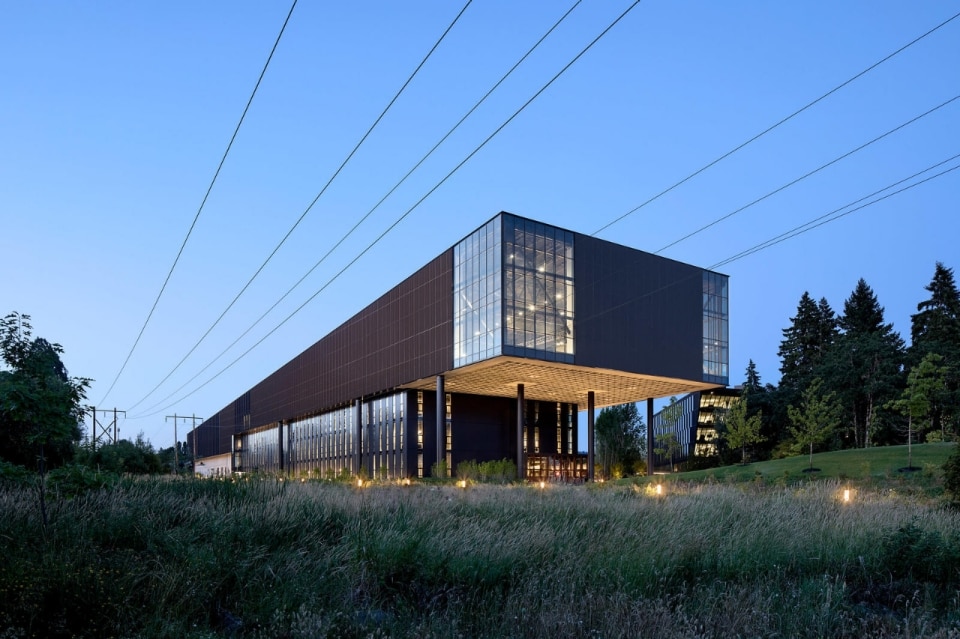
The feeling is that Nike is no longer designing mere products, but systems — living, adaptive, learning with their users. Nike now designs states of being. And it does so “with some of the most crazy innovators, creators, dreamers, scientists, and engineers,” as Hill says. Calm, presence, movement, energy: these are at the center of the innovation shown in Beaverton — with a deliberate dash of creative madness.
Aero-FIT: air becomes fabric
Air is central to Nike’s identity. Aero-FIT is the latest evolution of Nike’s FIT platform, built to outfit athletes and on the market for 30 years.
“It all started with an obsession for airflow,” Nike explains — and with the challenge posed by climate change. Made entirely from recyclable inputs thanks to new processes, Aero-FIT distills Nike’s circular thinking.
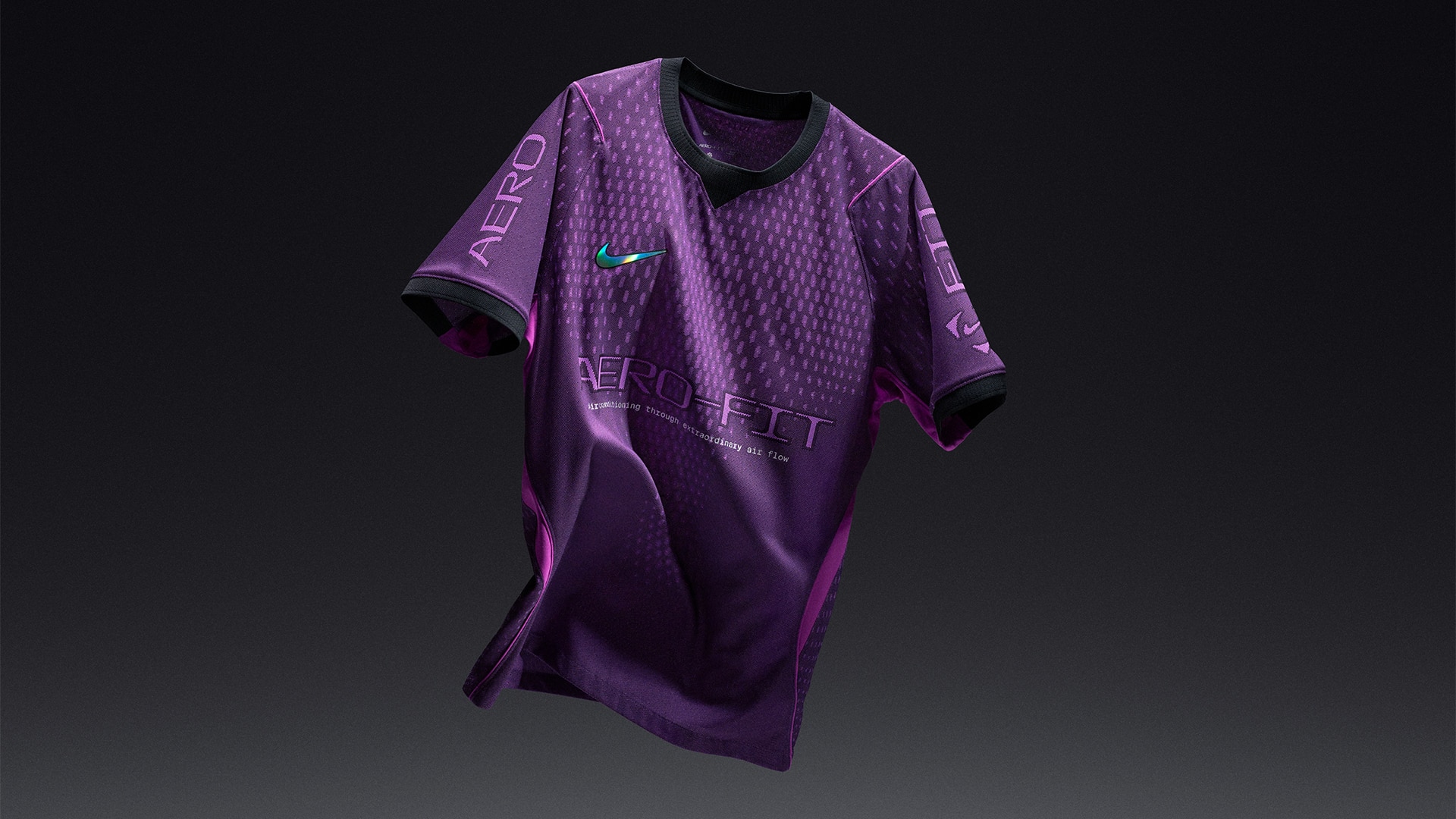
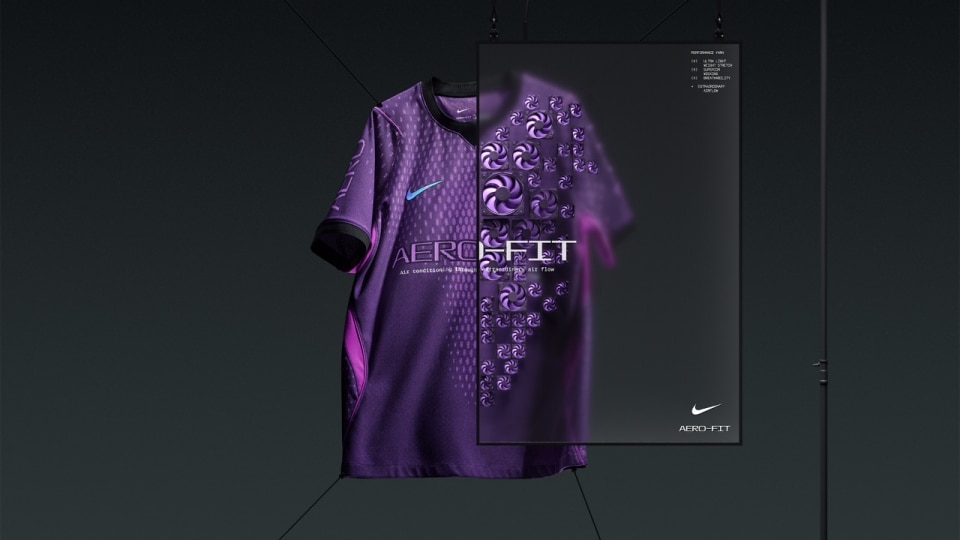
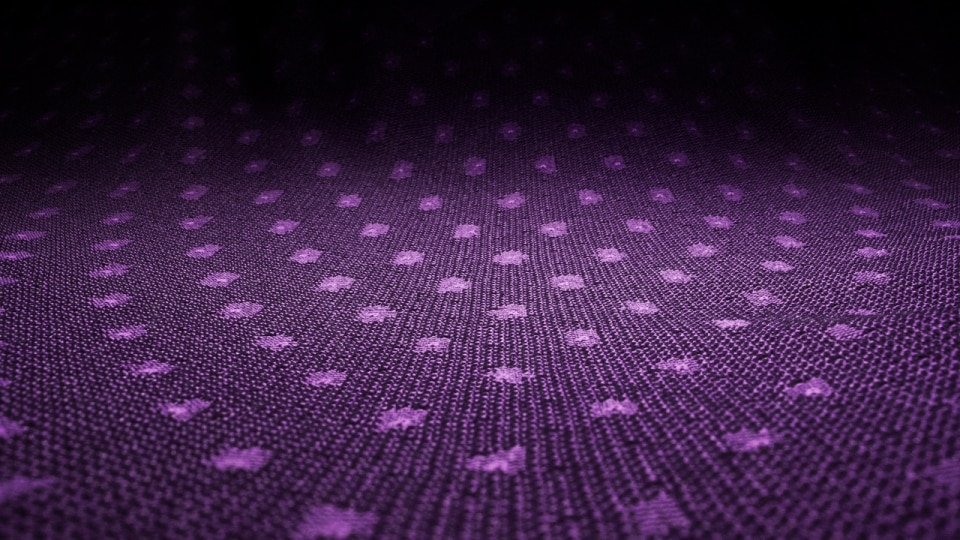
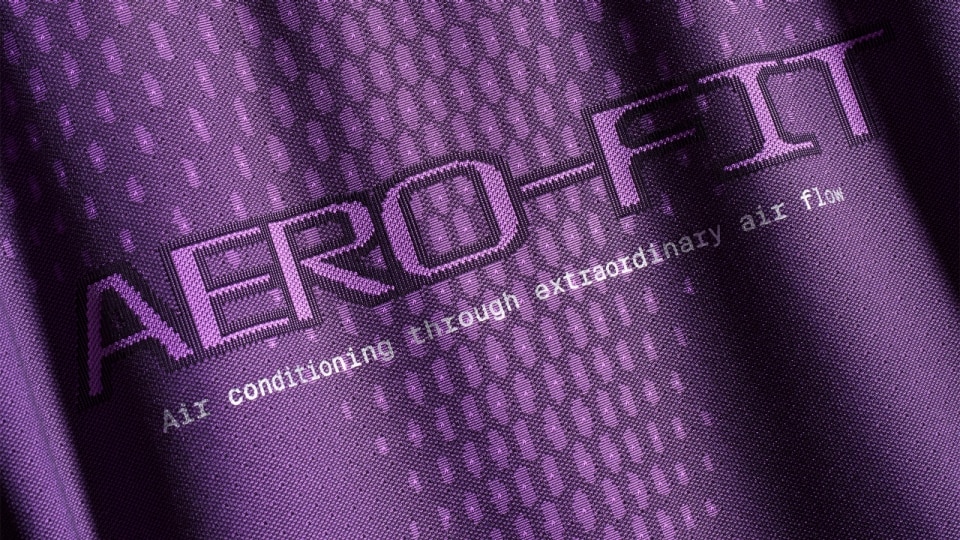
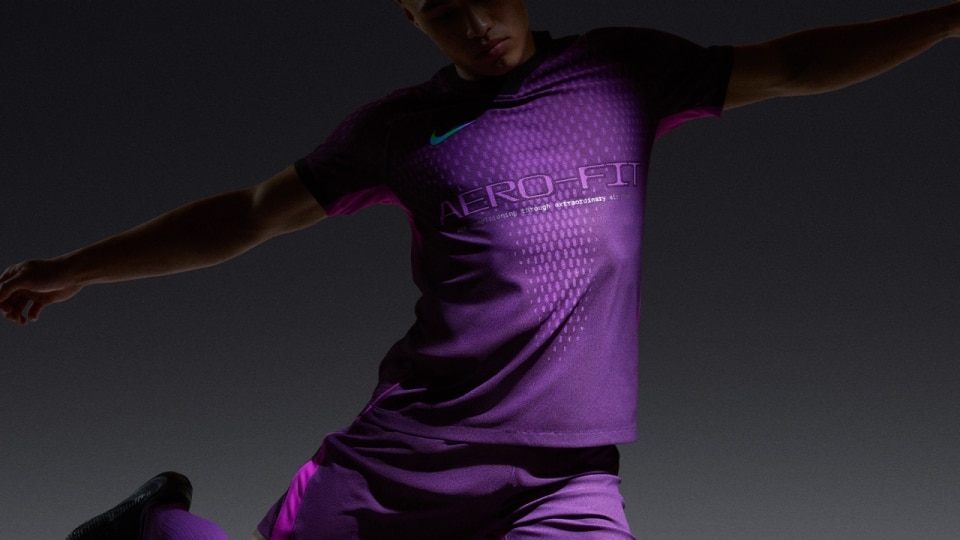
“Aero-FIT keeps you cool through extraordinary airflow. It’s made from 100% recycled textiles and outperforms what came before,” Nike says. “Athletes told us they could literally feel the air coming through the jersey.” The first launch is slated for next summer, with eyes on the Los Angeles Games.
Therma-FIT Air Milano: from cold to heat, with a puff
From heat back to cold — from Los Angeles to the Milano-Cortina Winter Games. “We’re bringing joy back into innovation. The Milano Jacket is a good example: it solves a functional problem but does it with fun,” says Phil McCartney, wearing a striking black Aero-FIT England national-team prototype with the three lions boldly in view, as he introduces the latest chapter in Nike’s long — and never sufficiently celebrated — history of inflatable outerwear.
Therma-FIT Air Milano. Courtesy Nike
The Therma-FIT Air Milano jacket is a garment with dynamic thermal regulation: by inflating it, you move from hoodie-warmth to puffer-warmth without changing clothes. “By using air as insulation, we solved the problem of layering,” Nike explains. Developed largely in digital, it marks the first time Air becomes wearable.
For Nike, Air is an eternal metaphor — and with this jacket it is no longer simply a cushioning system, but a language of adaptability and lightness. As McCartney puts it: “Air needs to look like Air, like Nike Air: that mix of science and human touch is what makes it work.” And so Air becomes A.I.R.: Adapt. Inflate. Regulate.
Designed for Team USA and part of the revival of the much-loved ACG line ahead of the Olympics, aesthetically this jacket is Nike to the power of ten: bright white, unabashedly Space Age in its references, with reflective accents and a large printed lining. Even the orange, minimal electronic pump is a statement. As is the double-layer laminated material: light, elusive, yet tough — ready to stiffen when inflated.
We’re bringing joy back into innovation.
Phil McCartney
In Colorado, hundreds of athletes have skied, hiked in snow, even fished in it — to test and improve it. It echoes a refrain we kept hearing these days on the Phil Knight campus: there is no exact science; you test, experiment, take it apart and rebuild it until it “sounds right.” We saw it in the Amplify prototypes, in the many “river runs” nearby used to test them, and in the iterations of Nike Mind. In the body studies translated into the new Aero-FIT platform. At Nike, failure has been turned into a winning design method. Perhaps the most important innovation is precisely this: turning constraint into advantage. From brain to foot, from mind to air: the new Nike no longer makes objects, but embodied states of mind.
All images: Courtesy Nike