


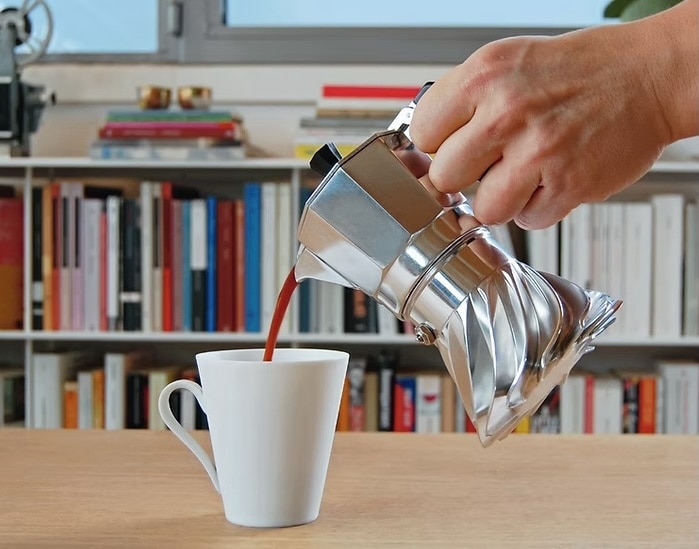
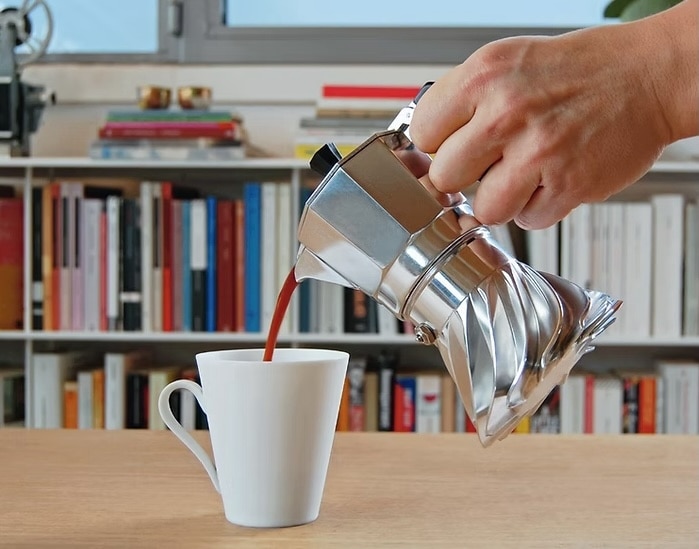
Almost one hundred years after its appearance, the moka Bialetti is a cult object in the history of industrial products. Its design - at least as ingenious as the communication strategy that made it famous - synthesizes an indispensable function in an imperfect form, from which nothing can be taken away and nothing can be added. It is an icon that invented a ritual and a name for the entire category that counts examples signed by the greatest designers.
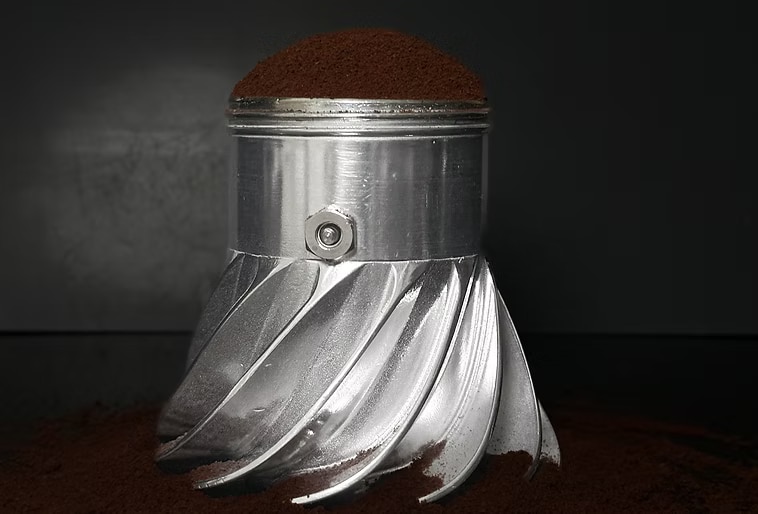
And yet someone recently wanted to discuss its efficiency and propose an alternative. "We were not thinking of a revolution, but an evolution," says Matteo Frontini, the Turbo Moka designer who is working with the rest of the team to add to the three-cup aluminum model, already available, a larger six-cup model and another in steel.
The Turbo Moka, pandering to the principles of thermodynamics, provides faster brewing with less energy consumption. Same flavor in less time, with less gas.
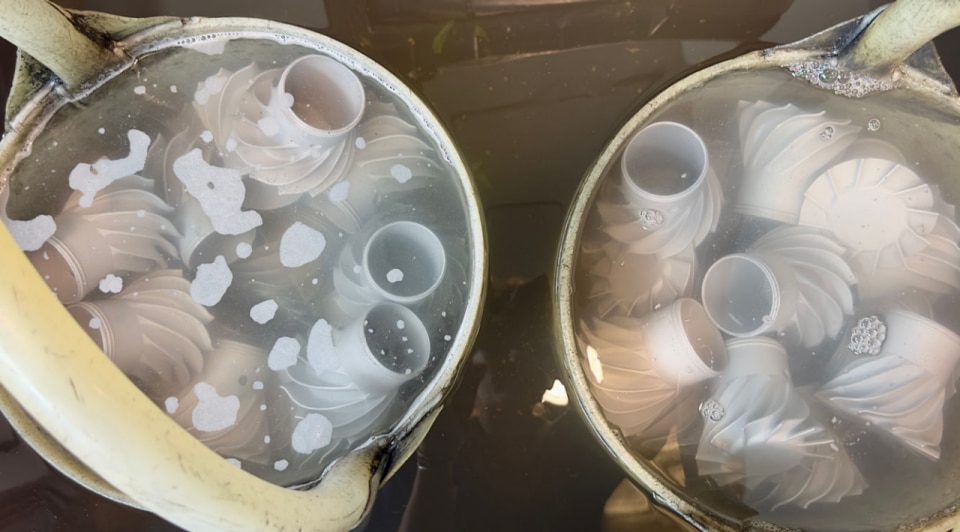
The product whose name is reminiscent of a postmodern project is made in Italy 100% and aims to celebrate and preserve an almost centuries-old tradition by adapting it "through intelligent and sustainable design" according to the needs that drive design in the modern day.
The Turbo Moka, pandering to the principles of thermodynamics, ensures faster brewing with less energy consumption. Same flavor in less time, with less gas. The design of the base is based on that of the turbines used by engineers that transform fluid energy into mechanical energy, and it guarantees the taste of traditional moka in less than two minutes, ready in the reservoir that exactly cites the well-known and beloved one that Alfonso Bialetti thought up for his coffee maker.
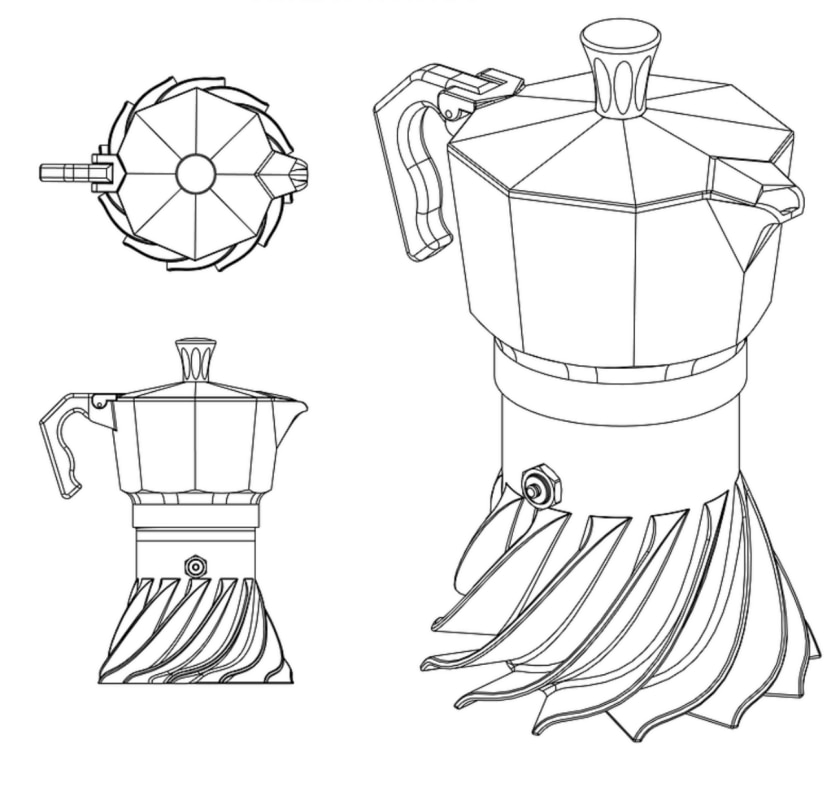
So the Turbo Moka may mark the beginning of a new era for "analog" coffee aficionados by boldly betting on a practice constantly threatened by new, increasingly technological products.