



In 2021 the Bourse de Commerce opened in Paris and Ando became guest editor of Domus, beginning with two questions: “What do the creators of our time seek to express through light? What are their expectations?” Five years later, “Claire-obscur”, open until August 24, seems to finally offer some answers.
The Rotonde designed by Tadao Ando immediately became the symbolic and iconic center of the Bourse de Commerce, but never as in the exhibition “Claire-obscur” has the now-iconic concrete cylinder shifted so clearly from monumental backdrop to active device of vision. Here, at the center of the Parisian building transformed to host the Pinault Collection, the architecture of the Japanese master does not impose its own image; instead it allows itself to be reflected, contradicted and reactivated by the artworks, entering into resonance with the exhibition’s central theme, chiaroscuro: a technique for shaping light beloved by sixteenth-century Mannerist and Baroque painting, and a central condition in contemporary art — as the exhibition program shows — but one that has always profoundly belonged to architecture, and first and foremost to Ando’s.
The Rotonde has always demonstrated its effectiveness. Recent exhibitions, such as those dedicated to Arte Povera and Minimalism, found here a natural, orderly and even eloquent setting, but still in a way that could belong to any large museum space that is well designed and endowed with spatial nobility. Even another instant icon, Clinamen by Céleste Boursier-Mougenot, with its circular basin of water and porcelain bowls colliding to produce accidental sounds, last year exploited the specificity of the site by transforming it into a contemplative landscape. With “Claire-obscur”, however, something different happens: the Rotonde no longer simply hosts artworks, and becomes the place where the exhibition clarifies what is really at stake.
When the artwork gives space back to architecture
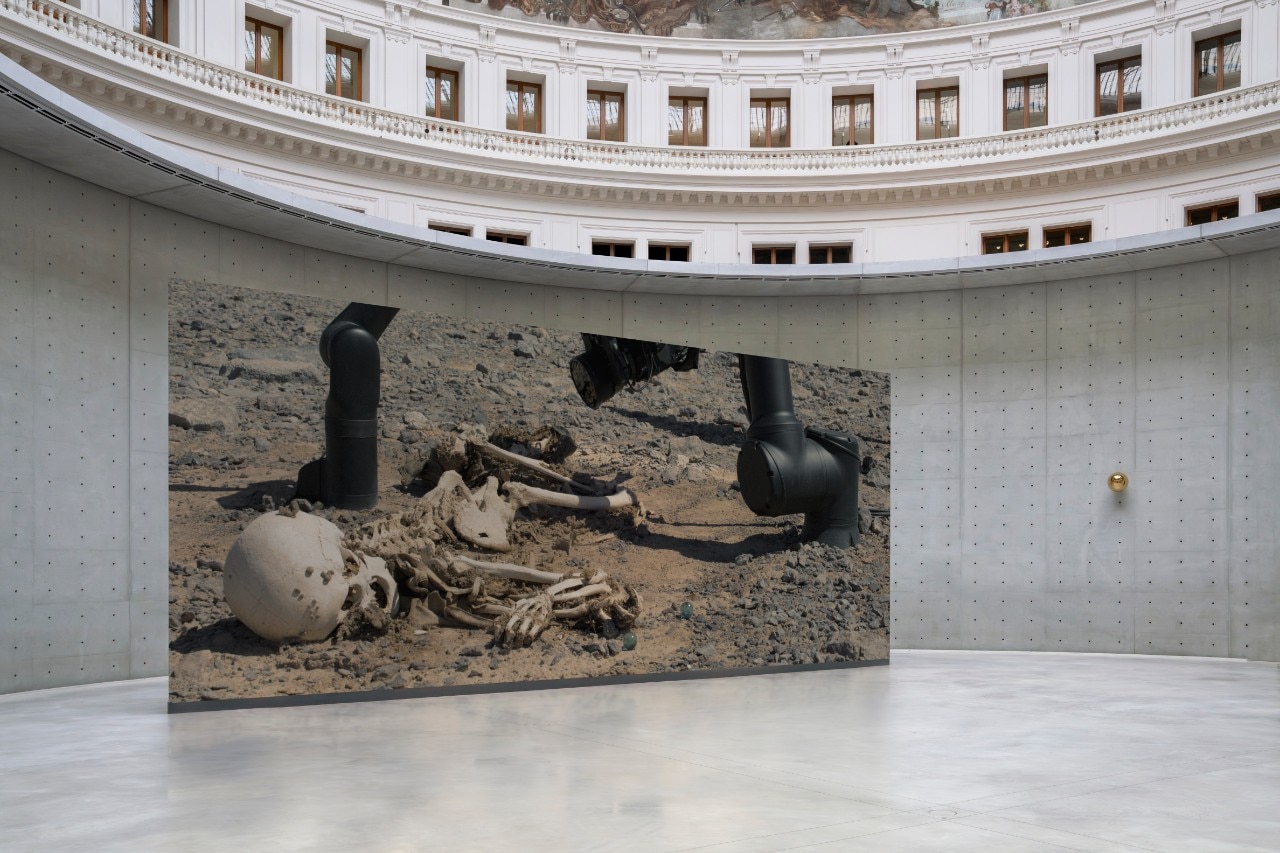
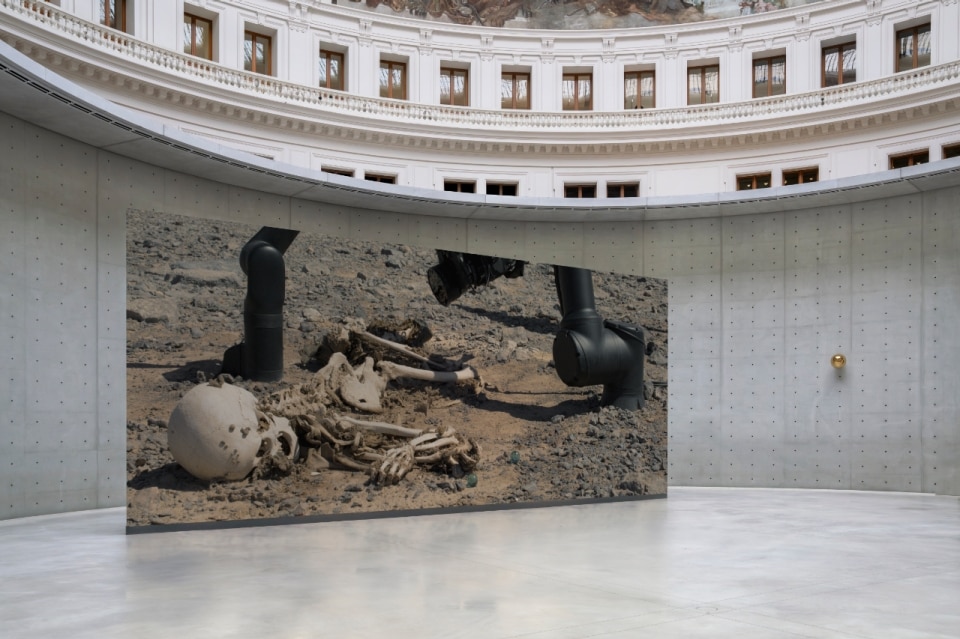
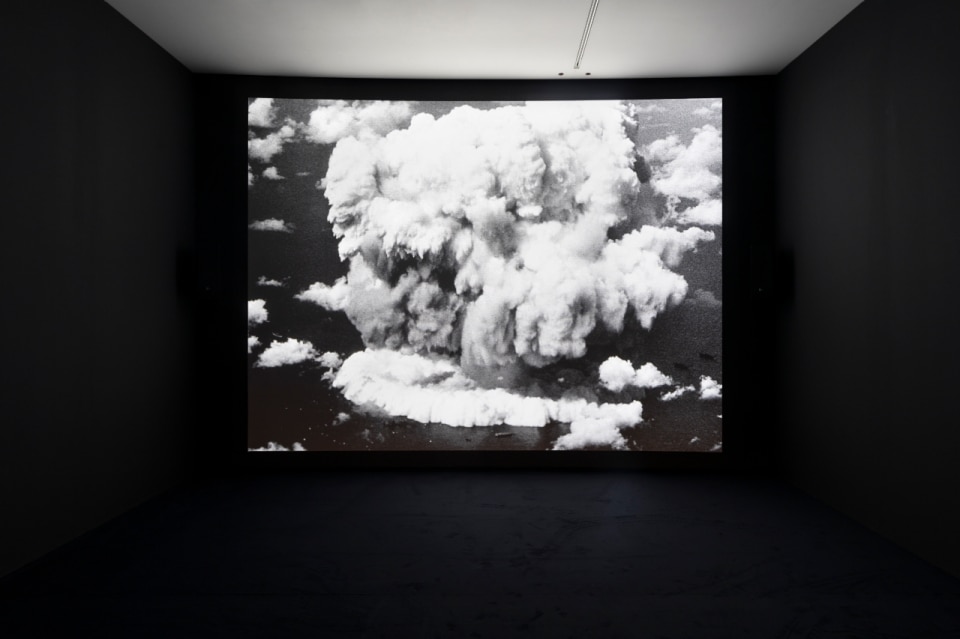
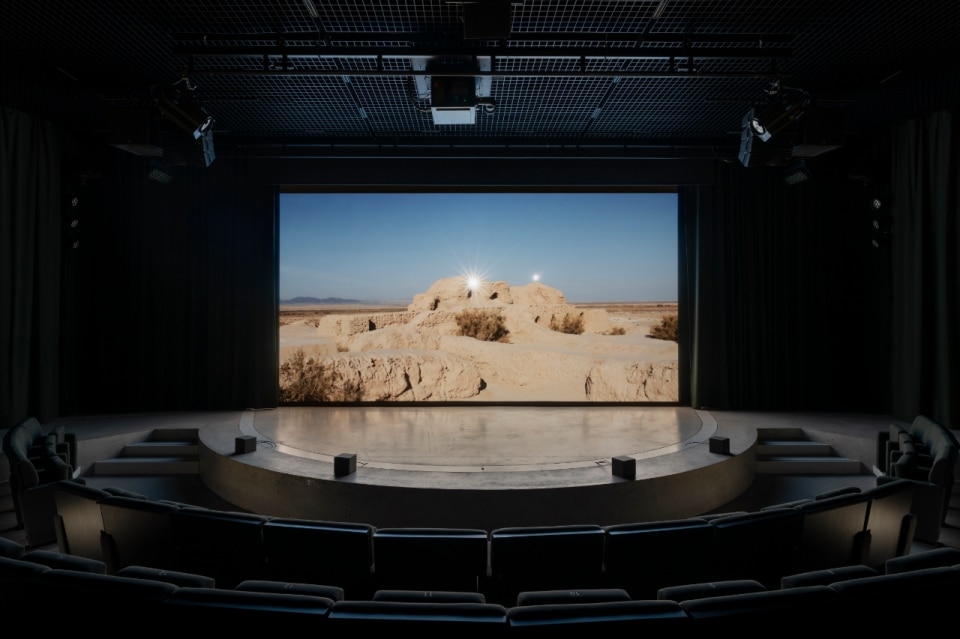
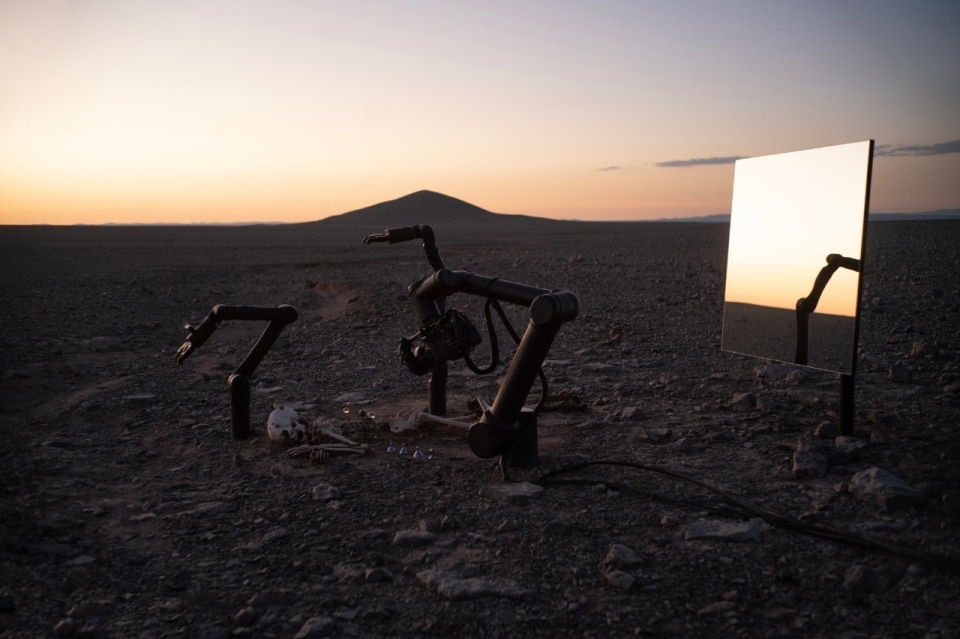
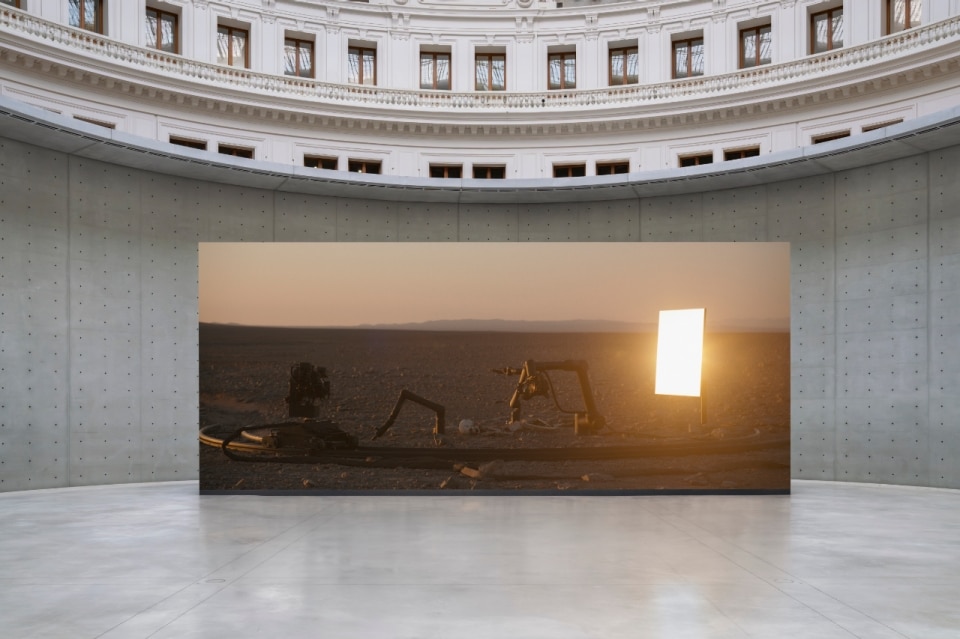
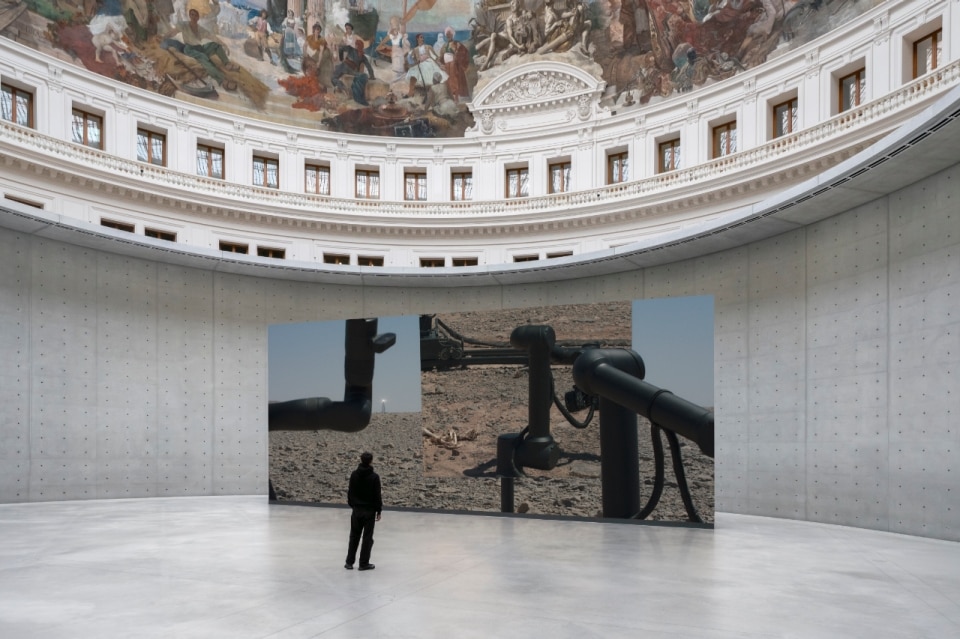
This shift begins with Camata (2024) by Pierre Huyghe. At first glance the work almost seems to ignore its context: on a massive screen, about twelve meters wide, sharp images show a set of robotic arms performing operations around a human skeleton in the Atacama Desert; objects and fragments are arranged according to incomprehensible rules. The footage, generated and edited in real time by machine learning, leads to no outcome and avoids any narrative. One passively observes an aseptic and inscrutable ritual, a promise of meaning that never quite materializes.
If you ask me what the archetype of space is, my answer is the volume and direction of light.
Tadao Ando
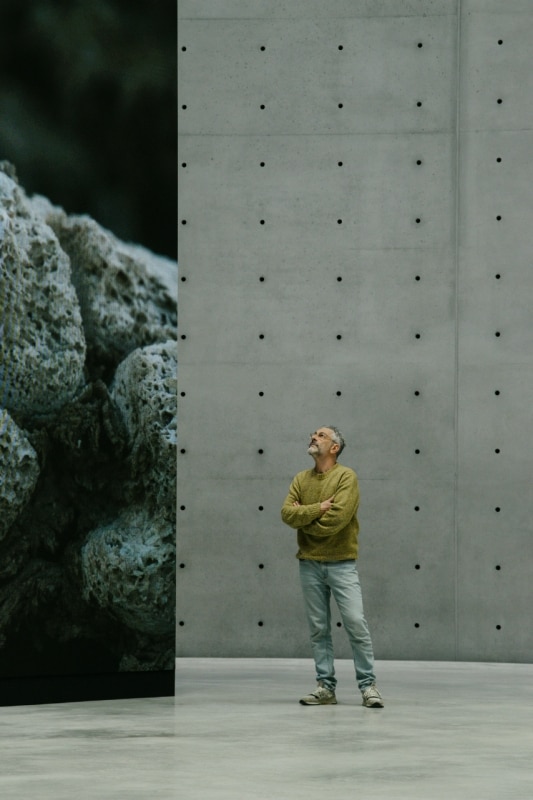
Yet precisely this apparent indifference to place and viewer produces the opposite effect. Rather than occupying the Rotonde, Camata returns it to perception and sensation. The frontal presence of the screen, with the opacity of its content, redirects attention toward the architecture that contains it: Ando’s cylinder, with its pure form and polished concrete, ceases to be a simple frame and becomes a chamber of resonance. The work does not saturate the space; instead it presents itself through its very elusiveness, allowing the surrounding void to become a co-protagonist. The visitor thus finds themselves suspended between two orders of abstraction: on one side the non-human ritual of the video, on the other the geometric nakedness of the cylinder, beneath the zenithal light of the dome that Ando restored while preserving its essence.
Yet before 1889, before the glass dome, the interiors of the Bourse were darkened by an early nineteenth-century copper dome, itself preceded by a wooden structure. Earlier still, when the building was first constructed in the eighteenth century as the Halle aux Blés, the roof was pierced at its center by an opening conceptually similar to the oculus of the Pantheon. Ando is fully aware of this lineage and cites it as an original reference, with its “streams of light constantly changing according to the movements of the sun [that] radiate through an oculus”. In this contemporary reincarnation of that archetype, the flat screen of Camata acts almost as an altar: it concentrates a world of opaque meanings, while the historic architecture and Ando’s new intervention make the experience possible — and memorable.
But the exhibition will undergo an almost symmetrical transformation on June 3, when Camata will be replaced by the fog sculpture Cloud #07150 by Fujiko Nakaya. If Huyghe appears to isolate the artwork in order to give space back to architecture, Nakaya’s fog will do the opposite: it will make them impossible to distinguish clearly. Her Fog Sculpture, produced through high-pressure pumps and rows of nozzles releasing microscopic droplets, does not appear as an autonomous object but as an atmospheric condition. Precisely because it is difficult to identify, the fog filters our perception of its container. It will absorb together the historic building and Ando’s contemporary insertion, the fresco, the glass and the concrete, the hemisphere and the cylinder.
It almost seems to contradict the philosophy of separation on which the Bourse de Commerce project is based: “The core of this intervention formed between two concentric circles, between the old and the new. […] They are not fused or mixed together; rather, they confront each other,” as Ando wrote in an article for Domus when the museum opened.
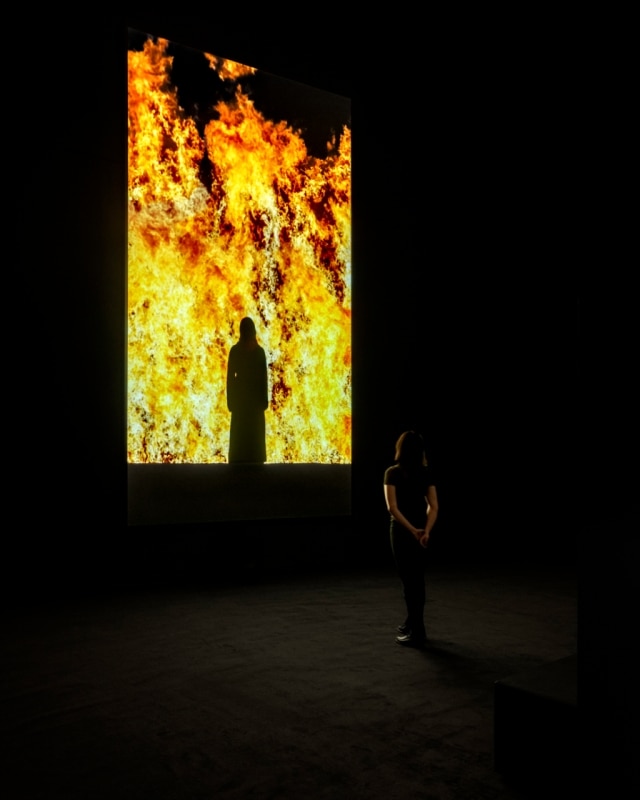
In the opposing frictions between artworks and architecture, “Claire-obscur” reveals its most precise meaning. The title obviously refers to the tradition of chiaroscuro, the technique that — from the lessons of Albrecht Dürer to Caravaggio — made light into a dramatic and cognitive principle. But in the exhibition chiaroscuro is far more than a historical reference: it becomes a perceptual condition, a reflection on what appears and what withdraws, on the visible and the invisible, on the “materiality of light” and the “shadow zones of the unconscious,” as curator Emma Lavigne describes it.
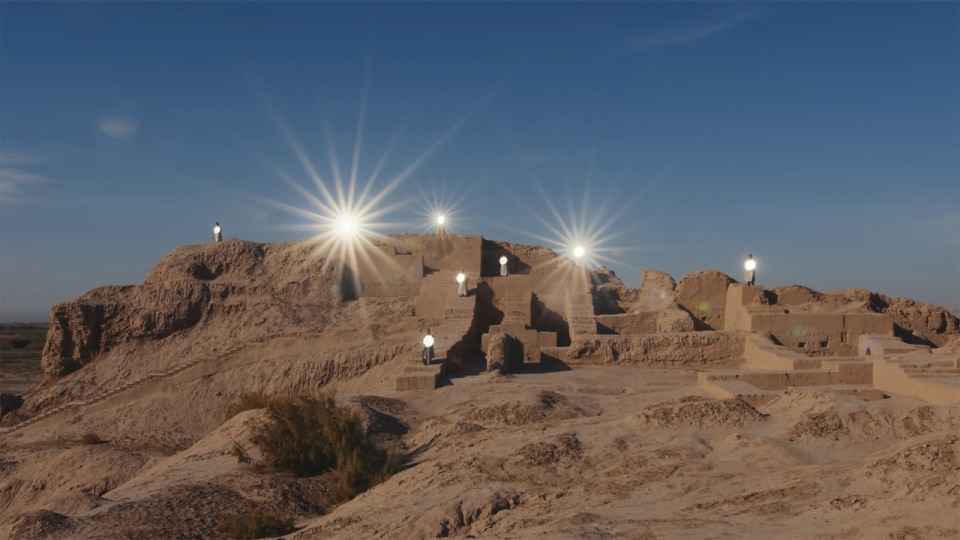
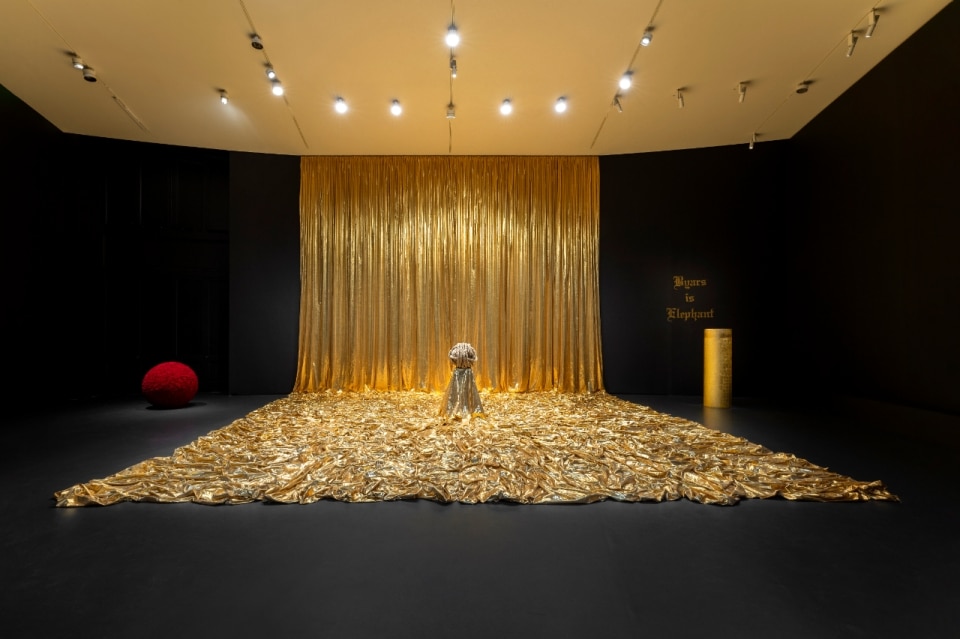
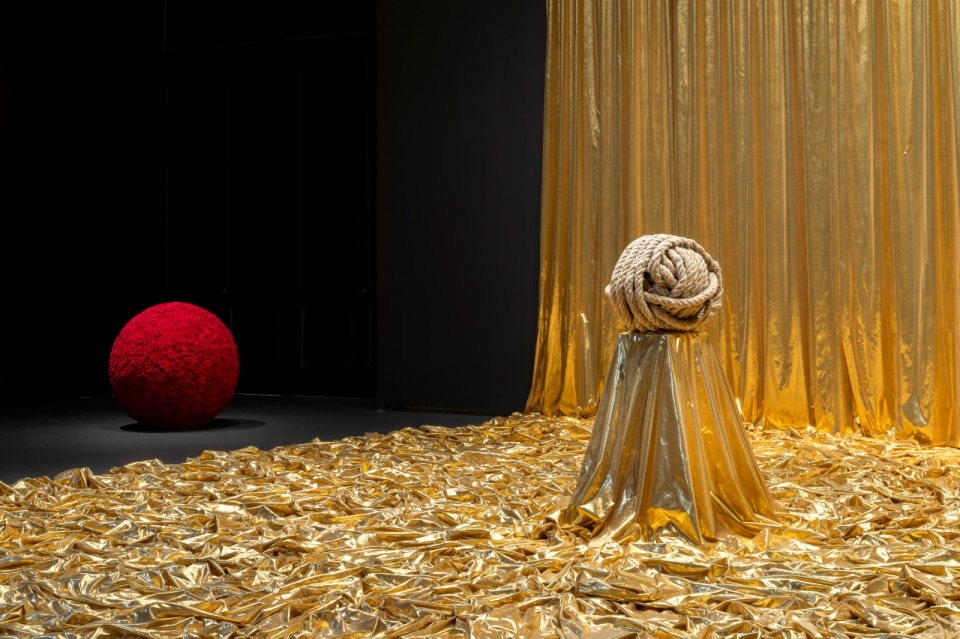
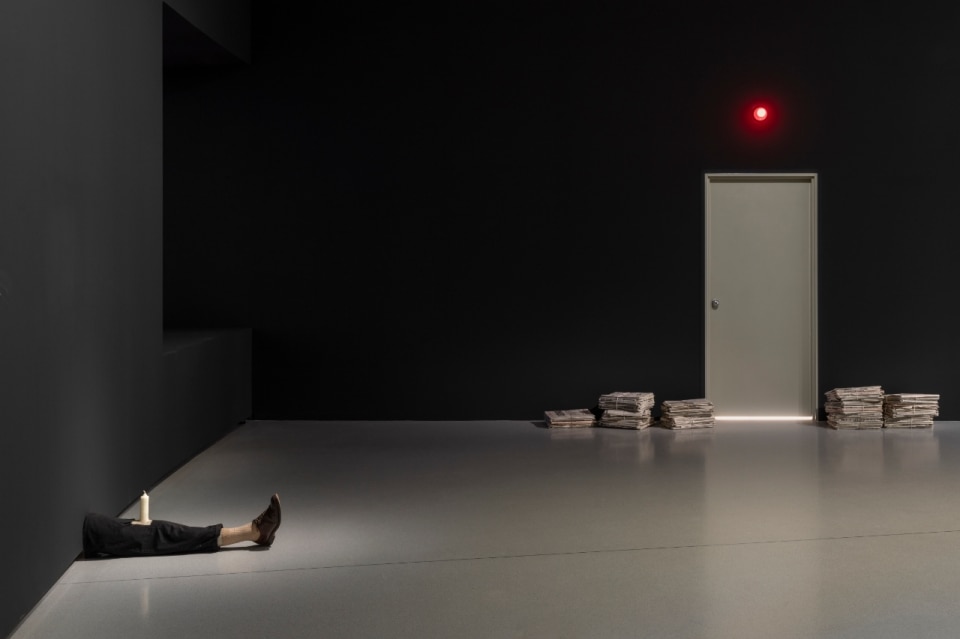
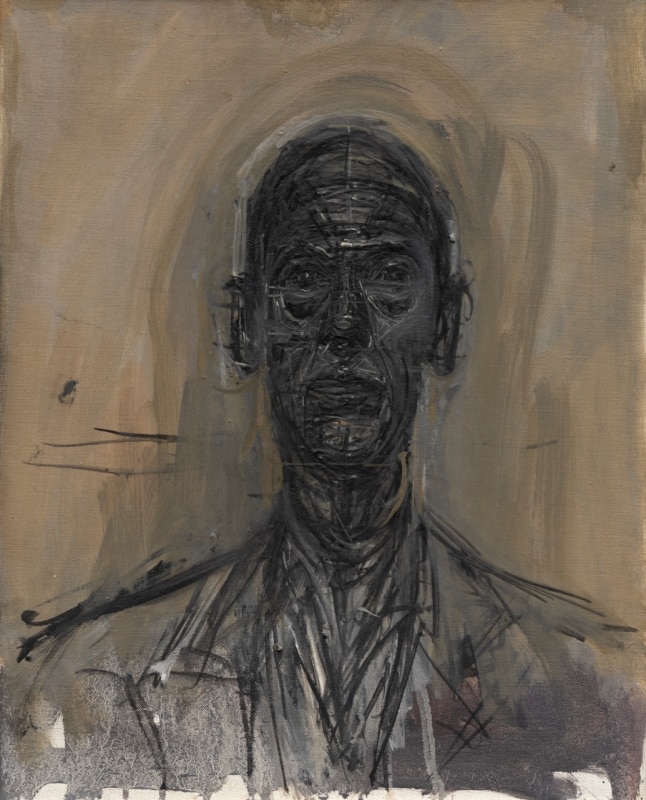
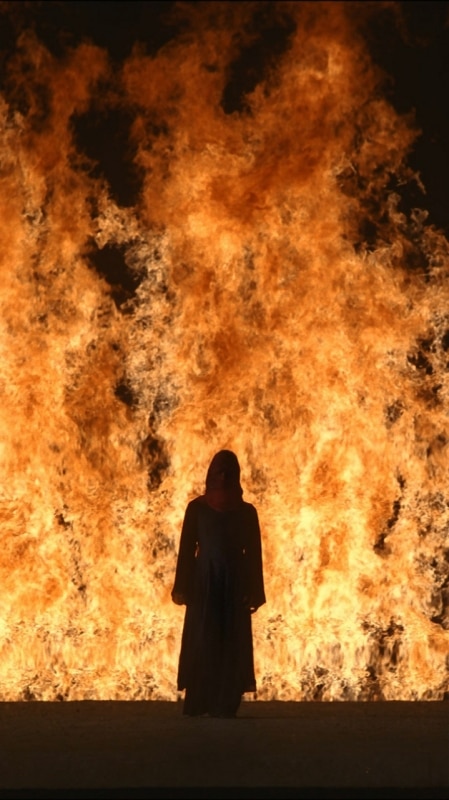
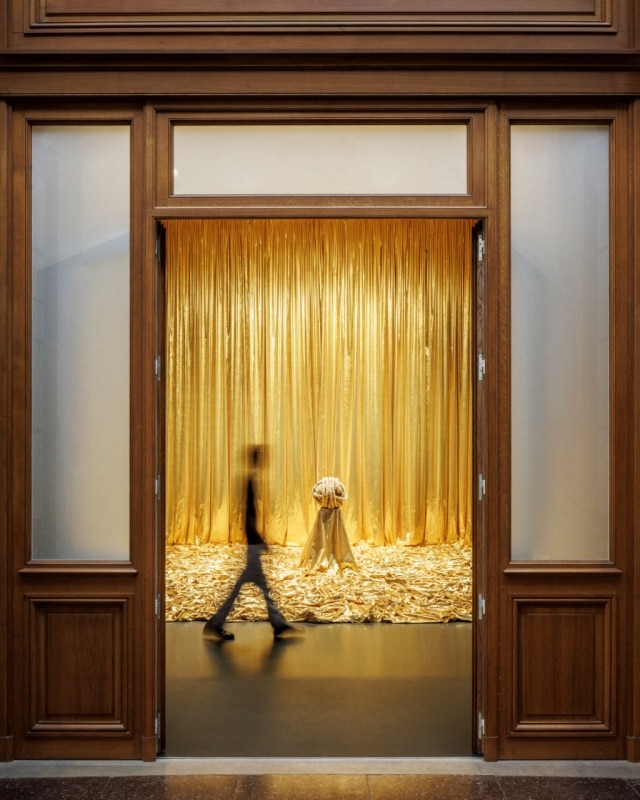
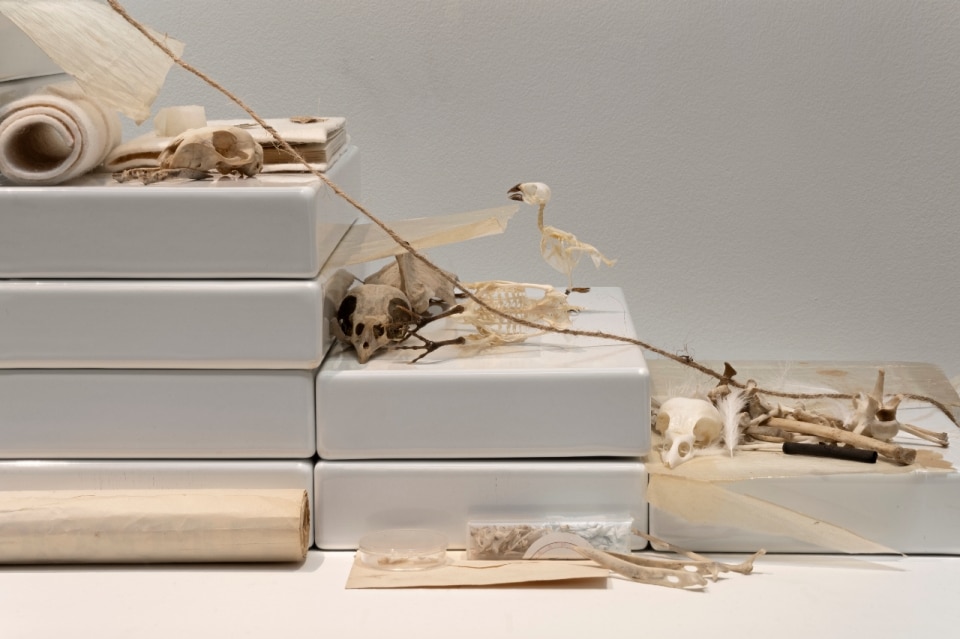
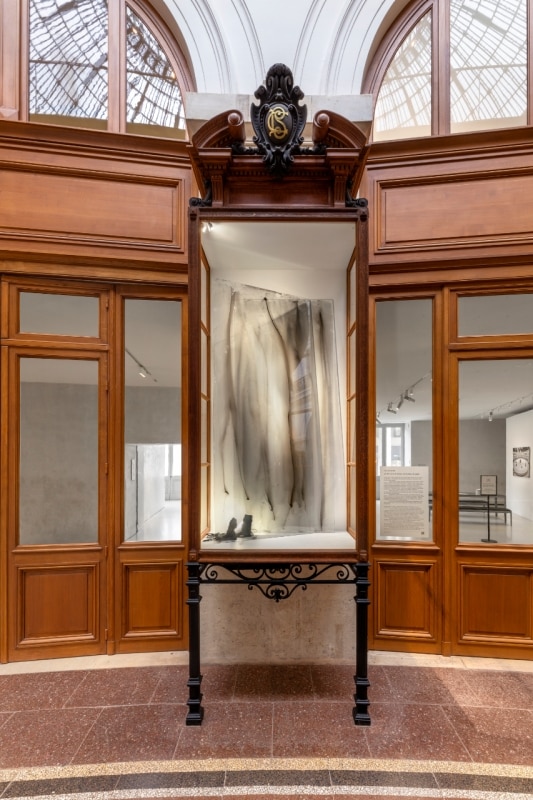
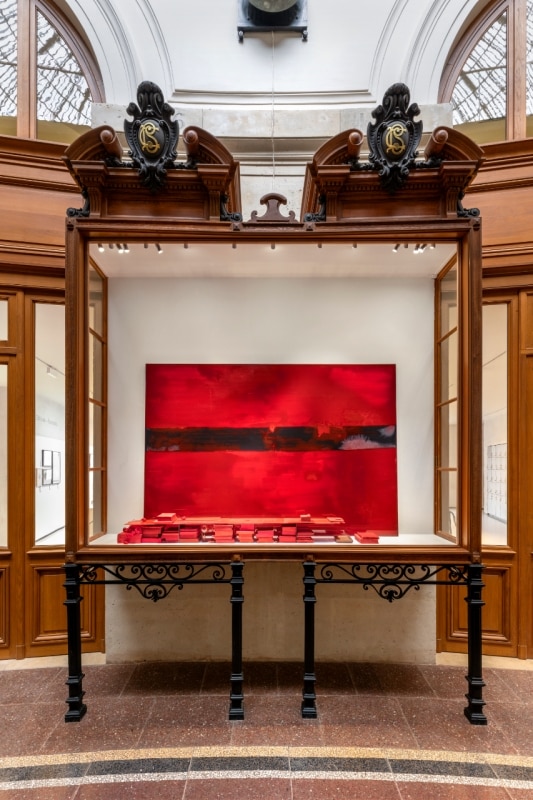
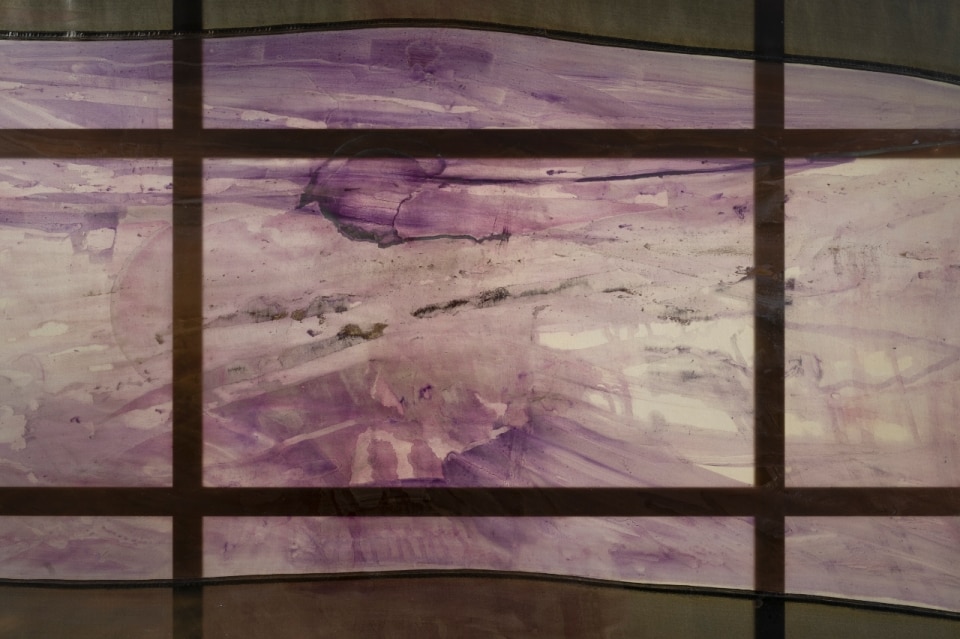
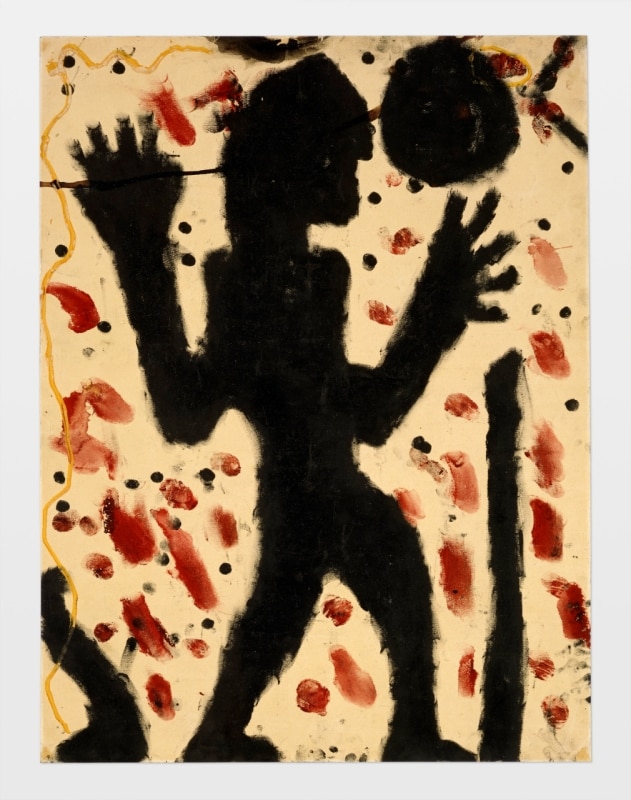
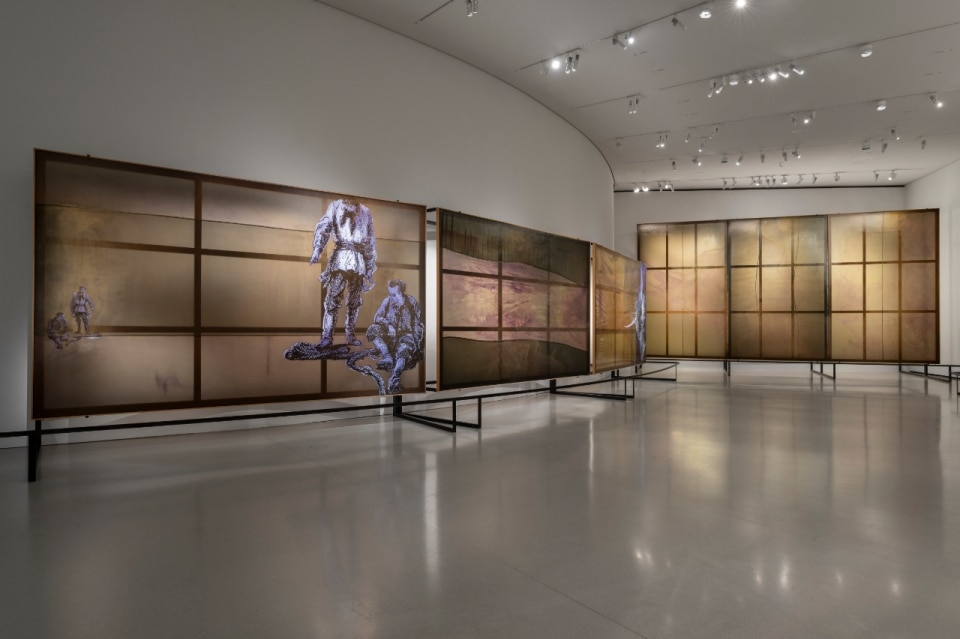
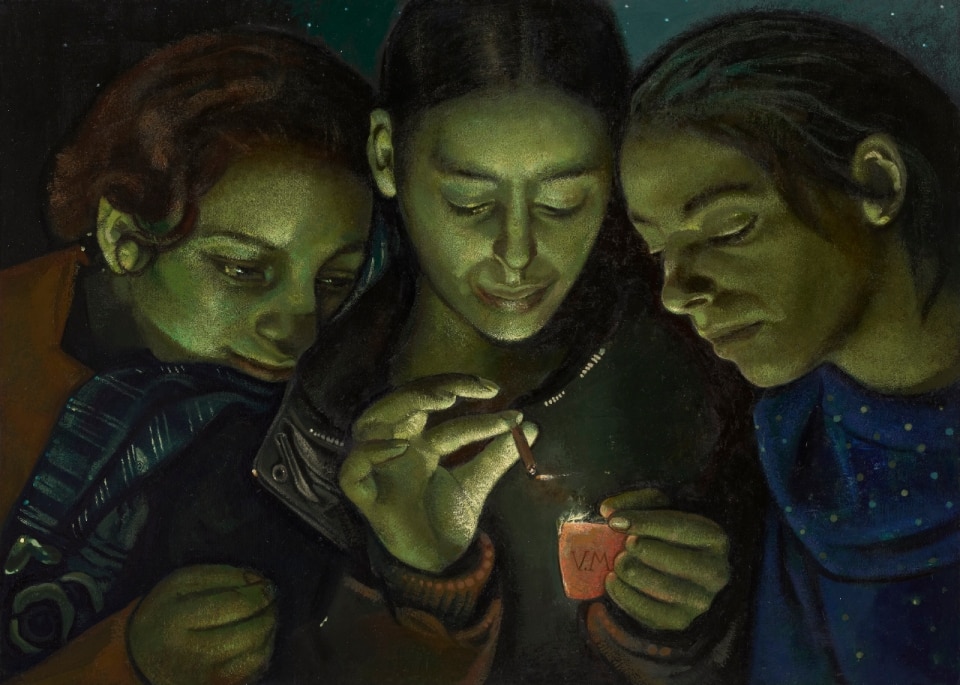
The artists brought together in the exhibition — from Victor Man to Laura Lamiel, from Sigmar Polke to Wolfgang Tillmans, from Bill Viola to James Lee Byars — articulate this oscillation in many forms: painterly, sculptural, cinematic, literal and spiritual. Even the exhibition philosophy of the Bourse de Commerce, which gradually opens its exhibitions rather than presenting them all at once, literally bringing them from invisibility into light, resonates with this theme.
Light as the true material of architecture
Yet it is the Rotonde that most clearly condenses this tension and transforms it into spatial experience. And this is no coincidence. For Tadao Ando light has always been the decisive material of architecture, even more than the concrete that has become its emblem — and which, as he himself notes, “was invented at the end of the nineteenth century in France. It comes from Paris.”
Ando’s cylinder, with its pure form and polished concrete, ceases to be a simple frame and becomes a resonant chamber.
In that first editorial as guest editor of Domus, he wrote: “If you ask me what the archetype of space is, my answer is the volume and direction of light. […] In Western architectural thought, the practice of constructing buildings has historically been marked by the creation of openings in stone blocks to allow light and fresh air to flood darkness. Through this challenge humanity discovered the meaning of light beyond the mere function of illuminating space.”
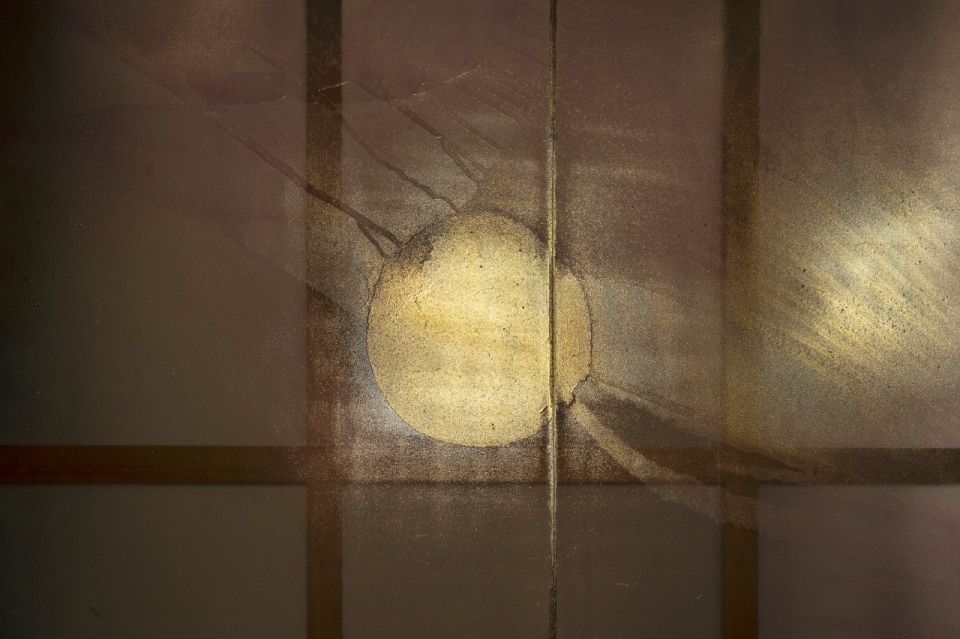
More than an exhibition about chiaroscuro, then, “Claire-obscur” is the moment when the Bourse de Commerce finally reveals the core of Tadao Ando’s most successful recent project. If for the architect “reinforced concrete symbolizes nothingness or emptiness,” here, for once, there is no attempt to fill it. In the Rotonde, between Huyghe’s impenetrable screen and Nakaya’s forthcoming atmospheric indistinction, the concrete cylinder ceases to be only an iconic gesture inserted within a historic monument and asserts itself as what it may have always been: a device for thinking and channeling light, and with it the very act of seeing. Just like the artists in the exhibition, Ando too reveals by concealing.
- Show:
- "Clair-obscur"
- Edited by.:
- Emma Lavigne
- Where:
- Bourse de Commerce, Paris, France
- Dates:
- until August 24, 2026