-
Sections
-
Keywords
Ten famous architectures you may not have realized are turning 50 this year
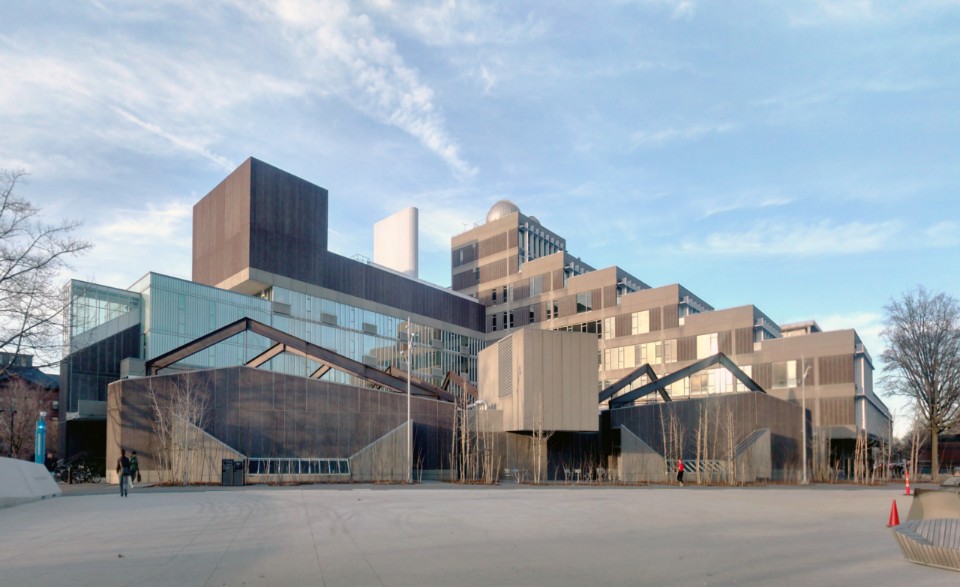
Josep Lluís Sert, Harvard University Science Center, Boston, USA 1973
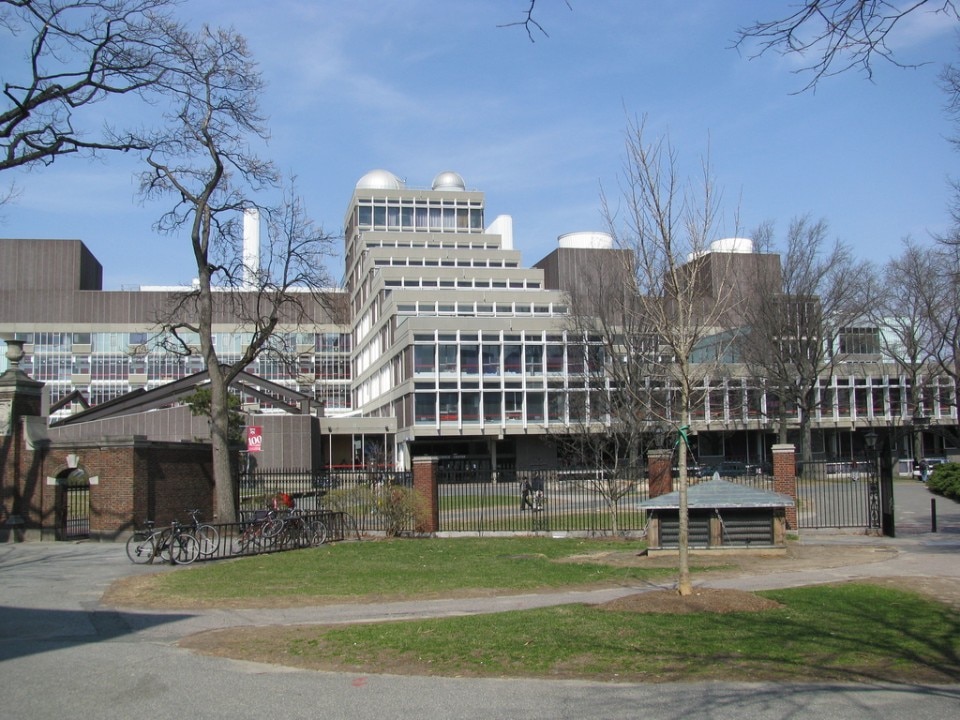
The Harvard University Science Center is the university's main complex of classrooms and laboratories for science and mathematics. In line with the modernist language of the other buildings in the campus designed by Sert, at the time Dean of the Graduate School of Design, the building clearly departs from the consolidated Georgian style of the site's architecture, favoring essential lines and volumes in steel and concrete interrupted by large windows from which natural light filters.
Photo Gunnar Klack on Flickr
Josep Lluís Sert, Harvard University Science Center, Boston, USA 1973
Photo Steve DuBois on Flickr
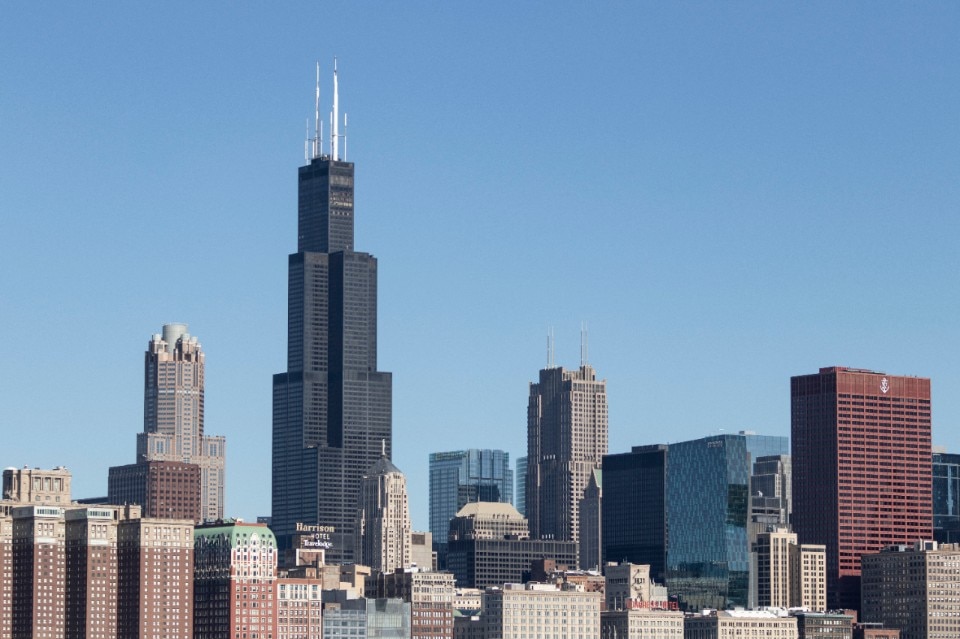
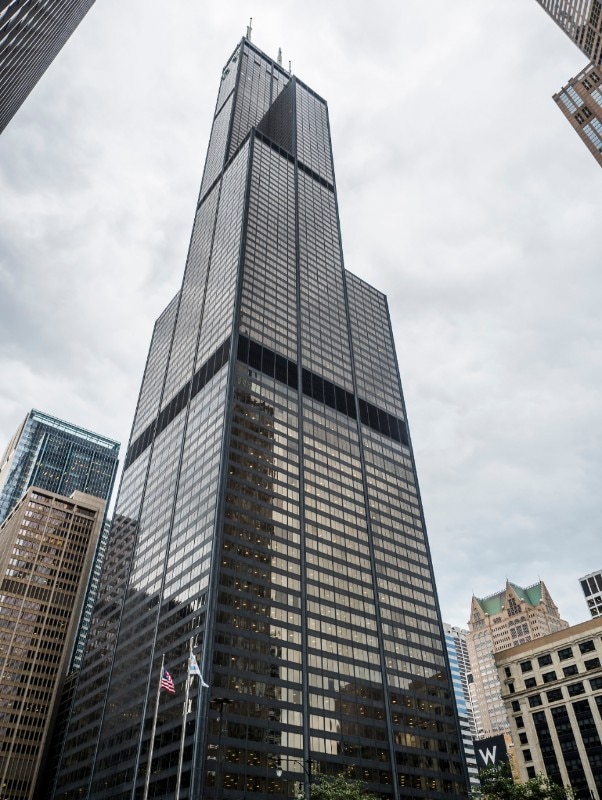
Skidmore, Owings & Merrill, Willis tower (Sears Tower), Chicago, USA 1973
The iconic 110-storey office building – celebrated for decades as the tallest skyscraper in the world – is located in Chicago's Loop, where it represents a highly recognizable landmark. The visible steel structure, flexible floor plan and elegant design have made it a benchmark in skyscraper design. A high-speed elevator catapults tourists to the 103rd floor, where a rooftop terrace offers spectacular city views.
Photo jetcityimage on Adobestock
Skidmore, Owings & Merrill, Willis tower (Sears Tower), Chicago, USA
Photo Rosana from Adobestock
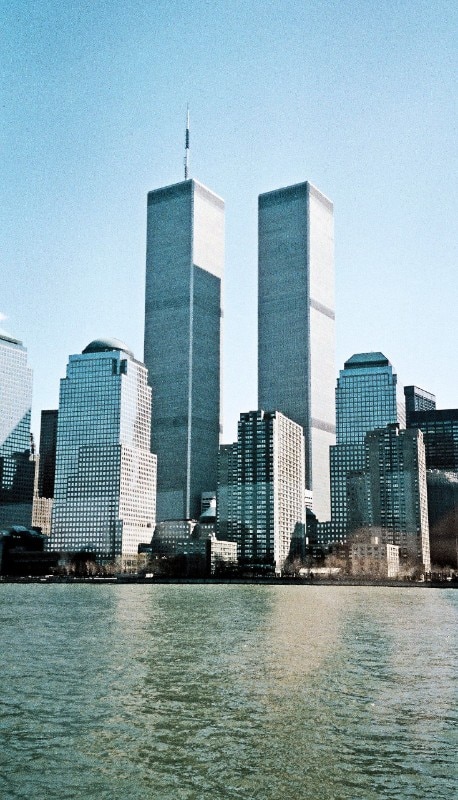
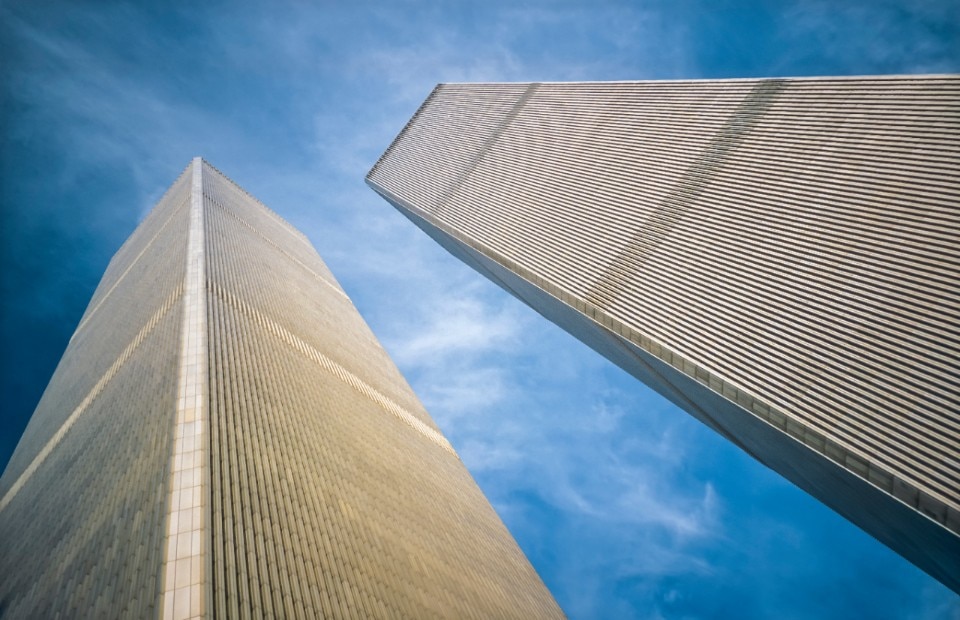
Minoru Yamasaki, World Trade Centre, New York City, USA 1973
With their 417m and 415m height, the Twin towers were the tallest buildings in the world when they opened. The complex, built with the aim of revitalising Lower Manhattan, was inspired by the 1939 New York World's Fair exhibition, called the World Trade Center, based on an idea of global peace pursued – according to the promoters' vision – through trade. The story of their destruction, due to the terrorist attack of 11 September 2001, is sadly well known.
Photo Jim Linwood on Flickr
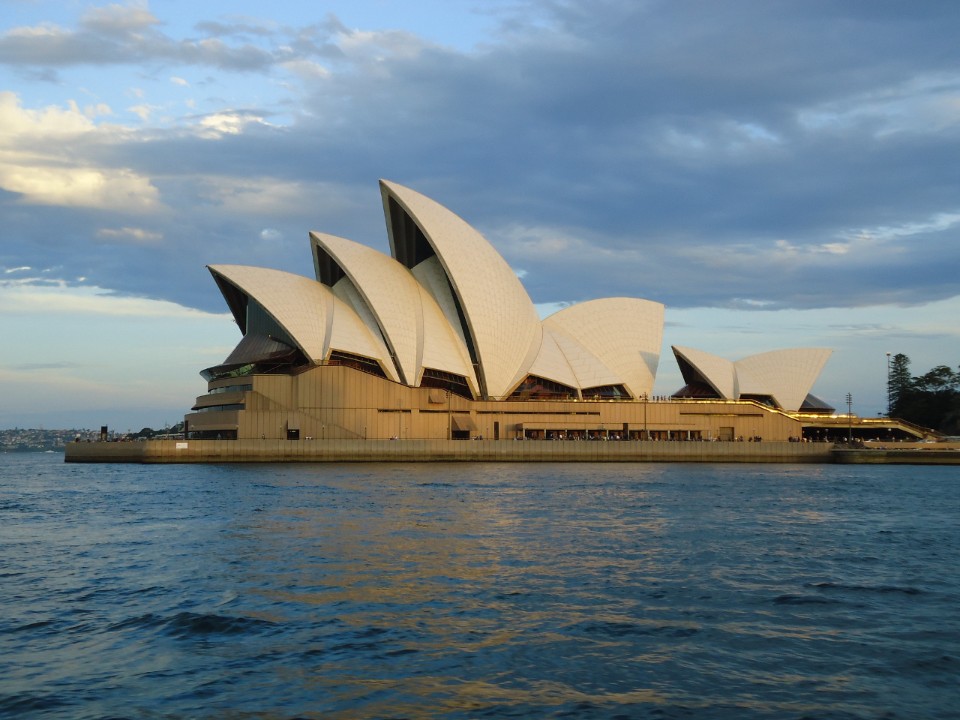
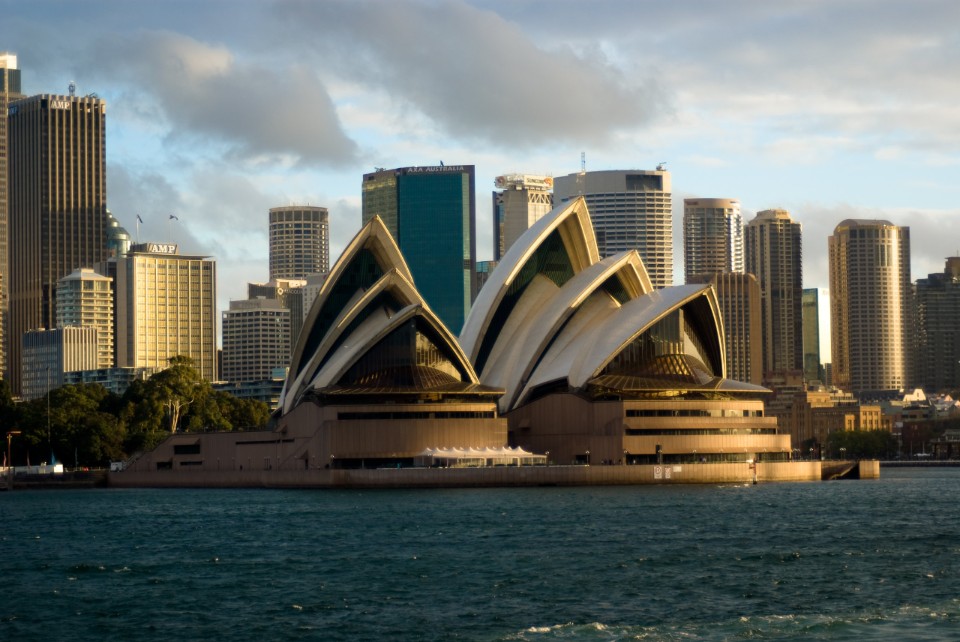
Jørn Utzon, Sydney Opera House, Sydney, Australia 1973
Considered one of the most famous 20th century architectures and an undisputed symbol of Sydney, the complex located in a privileged position in the bay, on a strip of land surrounded by the sea on three sides, is composed by three buildings (the Concert hall for 2,600 seats, the Opera House and the restaurant) arranged on a granite platform. A characteristic element of the complex are the shell roofs, developed after long research and inspired by the segments of an orange, made of prefabricated concrete ribs and covered in white tiles.
Photo Brian Giesen on Flickr
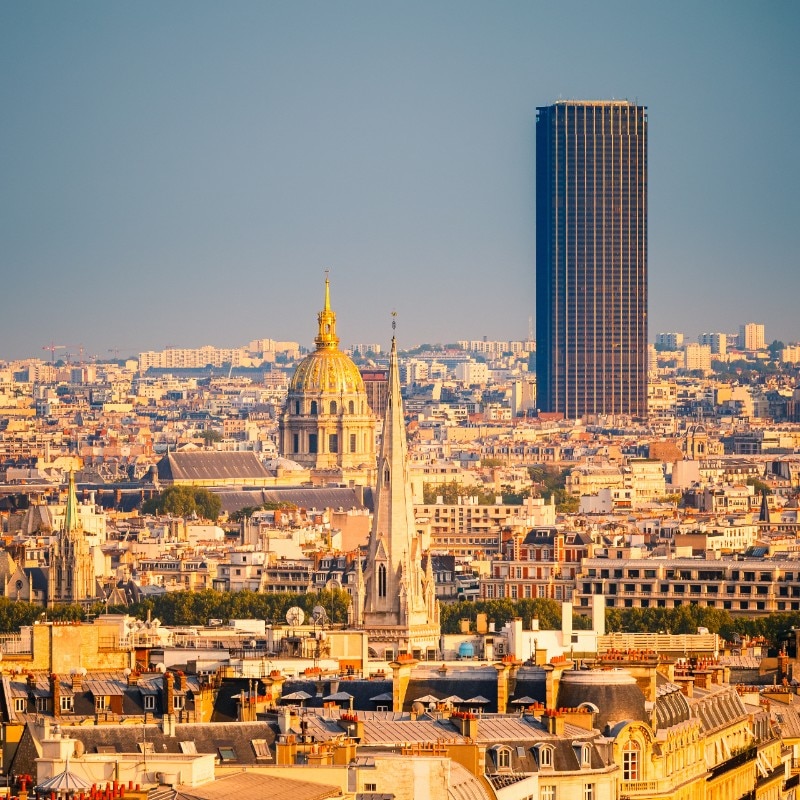
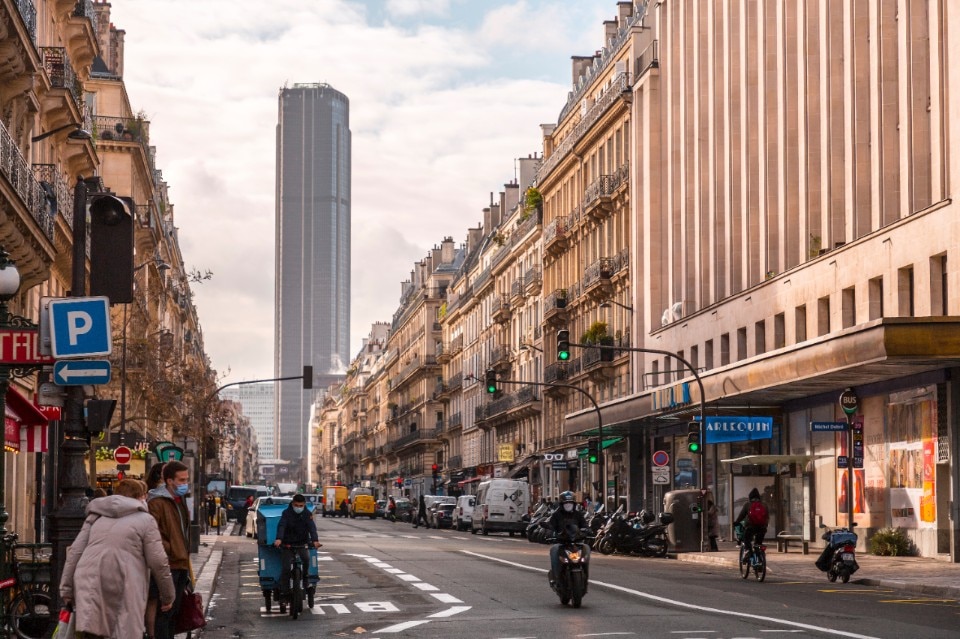
Jean Saubot, Tour Montparnasse, Paris, France 1973
With its 59 floors and a height of 210 m, the Montparnasse Tower was for years the tallest building in France: realized as part of a larger redefinition project for the Maine Montparnasse area, the building would not keep away from heavy criticism because of its massive and out-of-scale volume which, according to detractors, compromised the skyline of haussmannian Paris. The tower, designed by Saubot with Eugène Beaudouin, Urbain Cassan and Louis de Hoÿm de Marien houses offices occupying 52 levels; on the 56th floor, a large tourist attraction panoramic terrace offers a spectacular view of the city.
Photo Sborisov on Adobestock
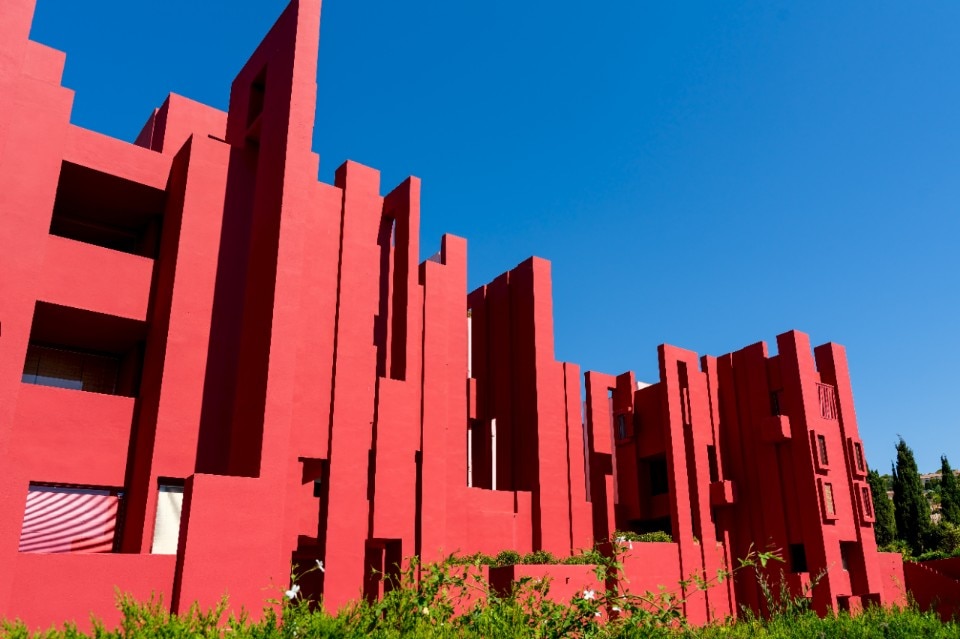
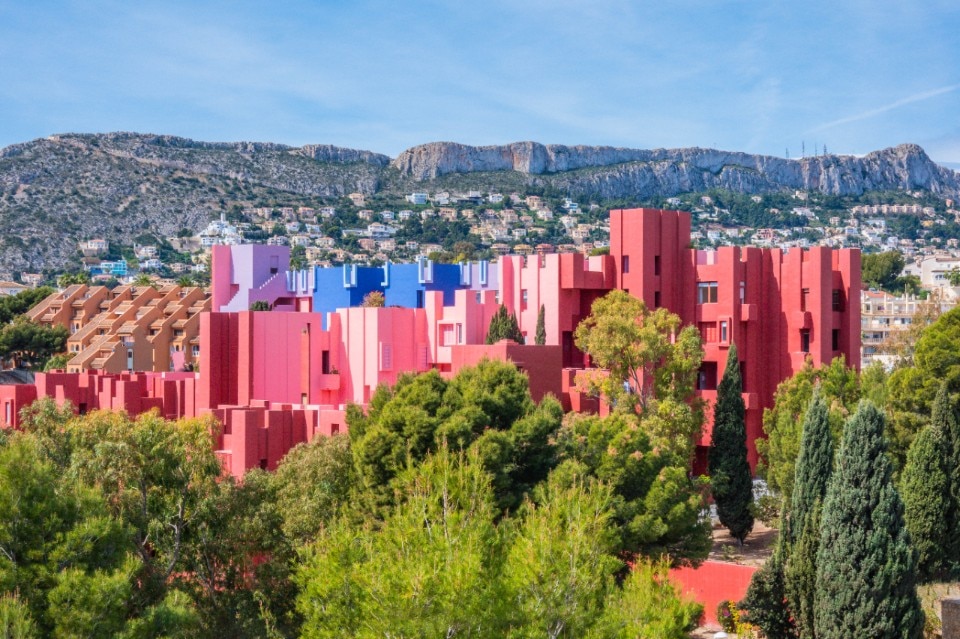
Ricardo Bofill, La Muralla Roja, Calpe, Alicante, Spain 1973
The residential complex for 50 apartments, similar to a fortress emerging from the rocky cliffs, is inspired by the Mediterranean tradition of the Arab casbah of which it reinterprets, in a deconstructivist key, the complex system of intertwining public and private spaces, volumetric intersections and labyrinthine paths between stairs, platforms and bridges. The bright colors, in various shades of red for the facades and blue for the stairs and distribution paths, accentuate the marked contrast with the landscape.
Photo Loes Kieboom on Adobe stock
Ricardo Bofill, La Muralla Roja, Calpe, Alicante, Spain 1973
Photo vejaa on Adobe stock
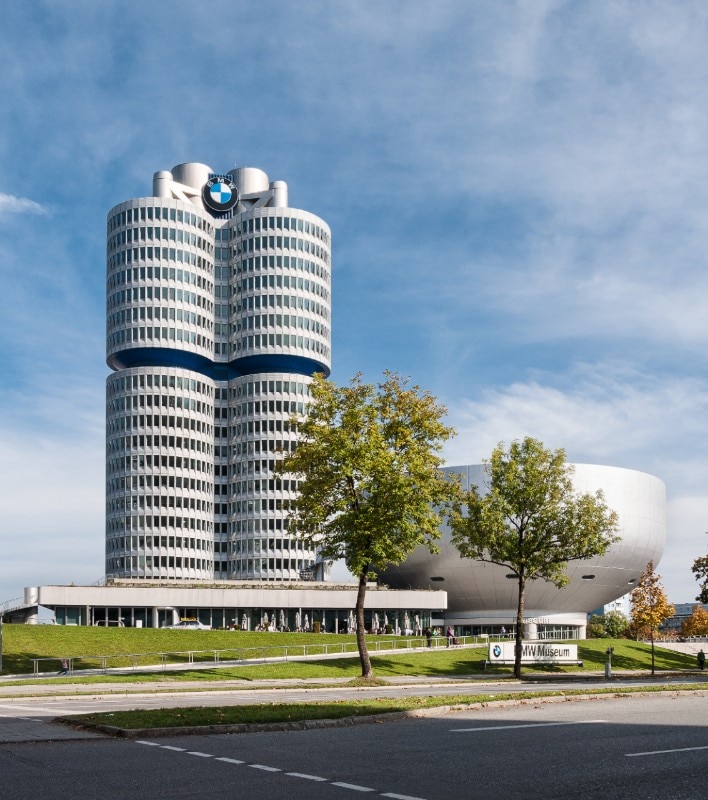
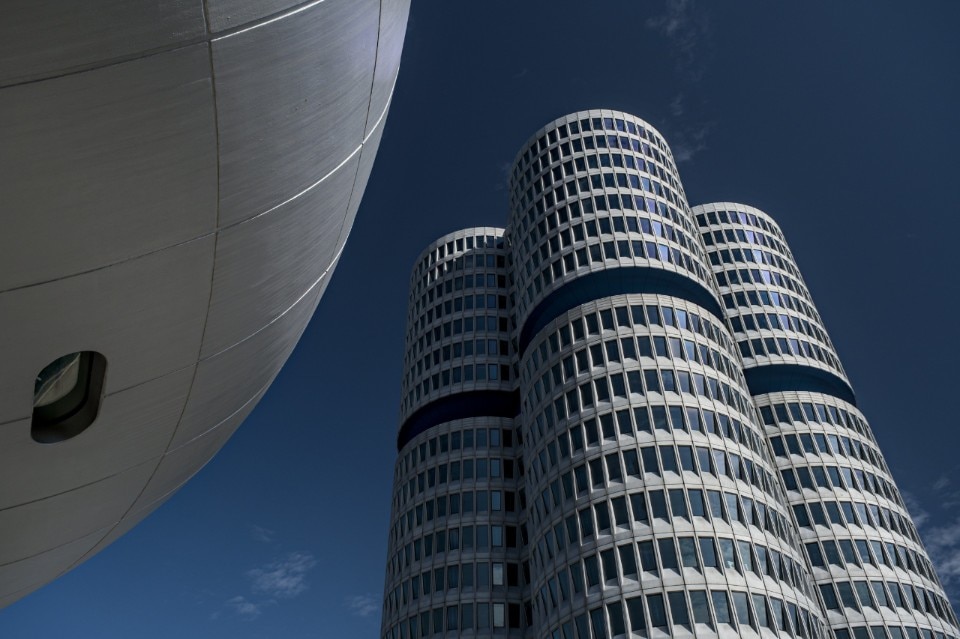
Karl Schwanzer, BMW-Tower, Munich, Germany 1973
The 22-storey BMW Tower, 99.5 m tall, has hosted the headquarters of the namesake automobile company over 40 years, representing its fundamental production elements in architectural shapes: the tower is composed by four vertical concrete cylinders, suspended from the ground and anchored to a central support, reminiscent of the cylinders of an engine, of which the adjacent BMW museum represents the head.
Photo Julian Herzog on wikimedia commons
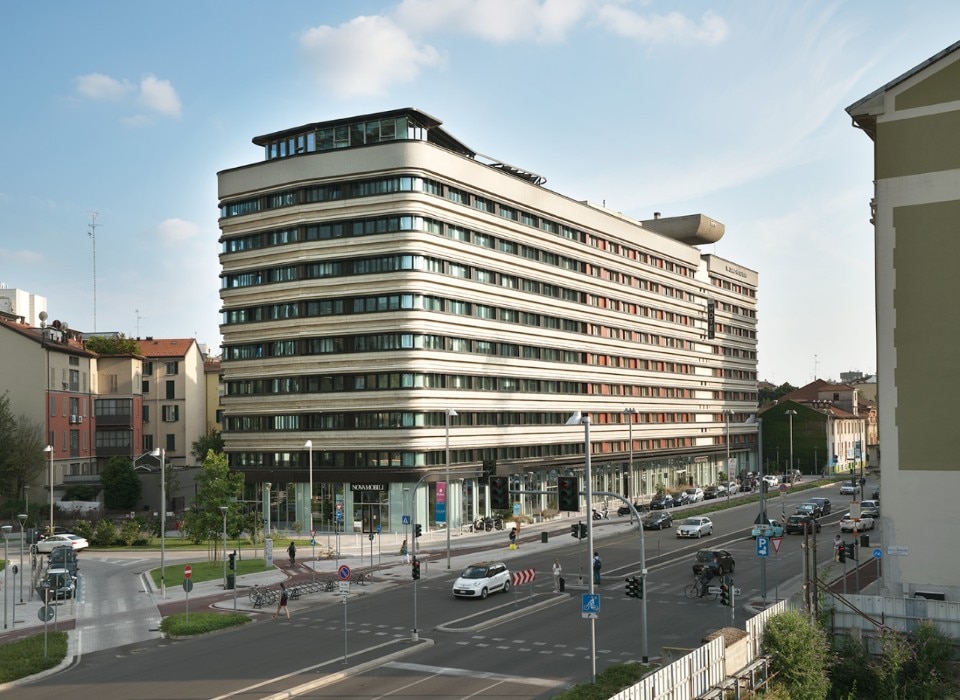
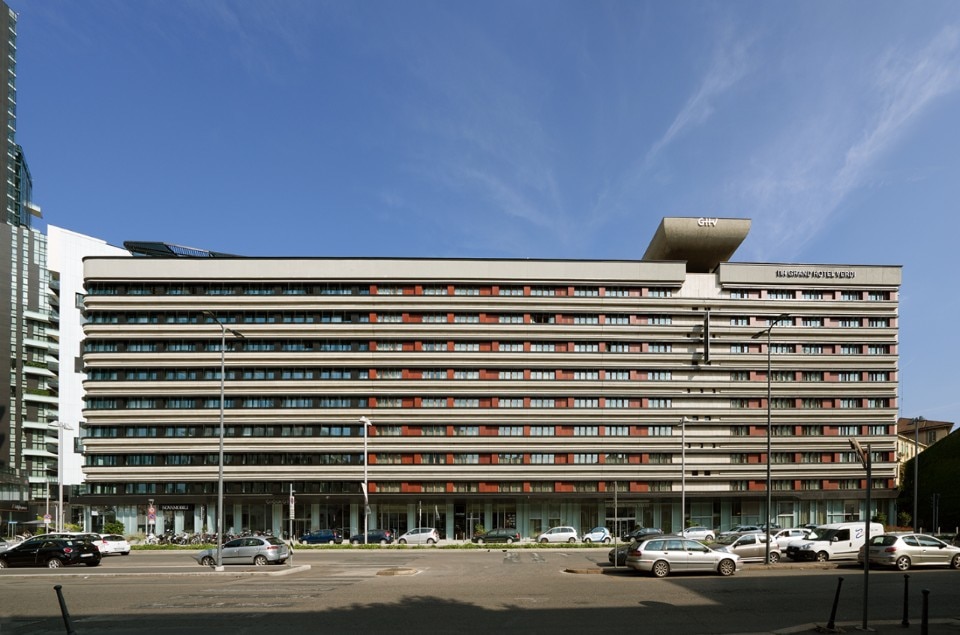
Marco Zanuso and Pietro Crescini, Residence Porta Nuova (Gioiaotto), Milan, Italy
The multifunction complex originally named Residence Porta Nuova is a representative sign of the architectural activity in 1970s Milan, strongly established in the city's historical memory. The reinforced concrete structure is marked by a pronounced horizontal scanning where precast concrete stringcourses delimit continuous steel and glass curtain walls. Park associati studio recently carried out a retrofitting project aiming to interpret the original language with philological correctness and attention to contemporary detail at the same time. The building, renamed Gioiaotto, has earned the first LEED Platinum certification in Milan.
Photo Andrea Martiradonna
Marco Zanuso and Pietro Crescini, Residence Porta Nuova (Gioiaotto), Milan, Italy 1973
Foto Andrea Martiradonna
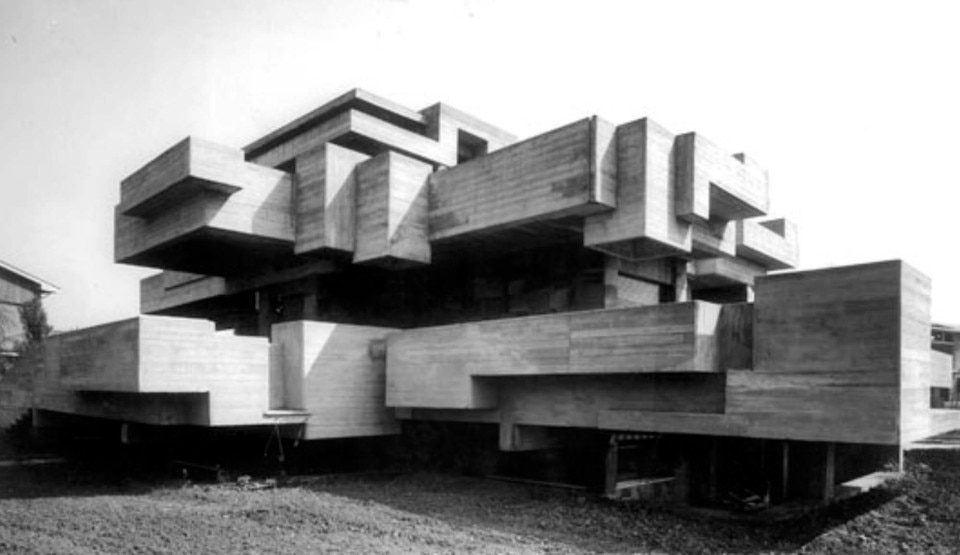
Saverio Busiri Vici, villa Ronconi, Rome, Italy 1973
The building, multifaceted in the deconstruction and articulation of its volumes, is a clear example of a virtuosic and plastic use of concrete, recalling brutalist aesthetics, drawing its expressive force from the rough surfaces marked by the wooden formwork and from the dialectic interaction between projections and recesses. Today visibly altered by several modifications, in its original configuration the villa was the backdrop for some scenes in the film Tenebre (Darkness) by Dario Argento.
Foto courtesy Studio Busiri Vici
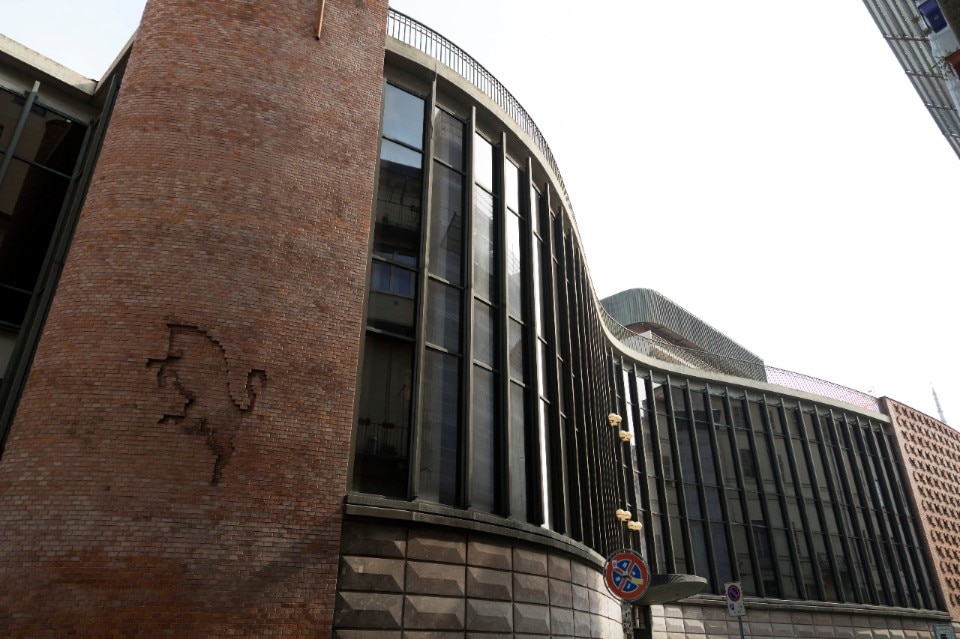
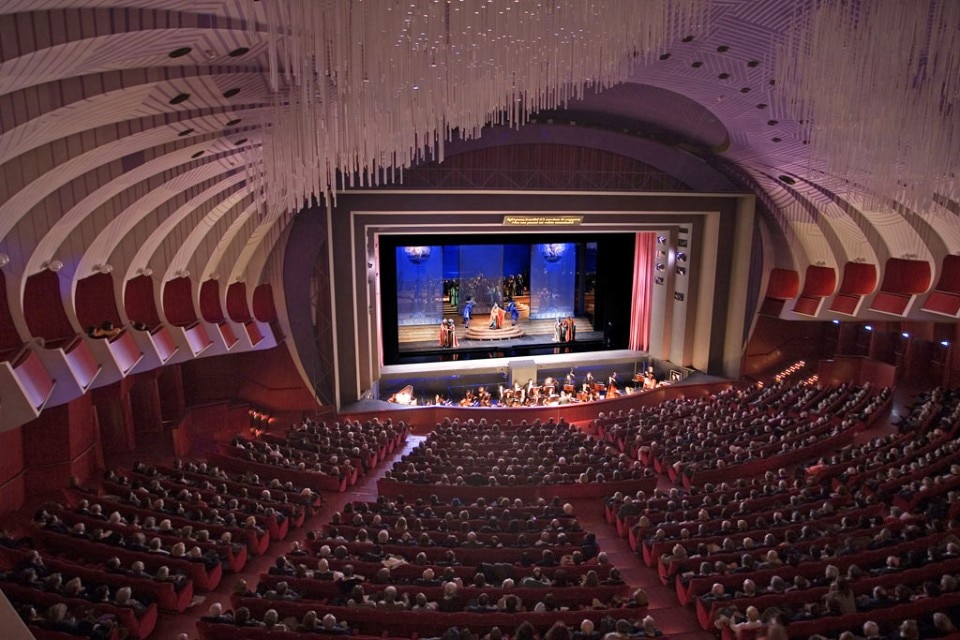
Carlo Mollino, Teatro Regio, Turin, Italy 1973
The new Teatro Regio in Turin, behind Piazza Castello, is Carlo Mollino's last major public project. The building replaced after many years the previous Teatro Reale, destroyed by fire in 1936 and never rebuilt due to the war, with a complex of 8 floors, 4 of which are underground, featuring sinuous forms in concrete, brick, stone and glass, and carefully inserted carefully at the very heart of the historical urban fabric. The interior is characterised by dynamic and evocative spaces, from the luminous foyer over 10 metres high, crossed by aerial walkways and served by monumental staircases and galleries, to the auditorium covered by a thin concrete structure in the form of a hyperbolic paraboloid, from which an internal wooden shell on a double-curved ribbing is suspended. Upgrading and restoration work in 1996, by Gabetti and Isola, Flavio Bruna and Müller BBM, helped preserve the original style and character.

Photo EnginKorlmaz on Adobestock
Carlo Mollino, Teatro Regio, Turin, Italy
Photo Ramella&Giannese - Fondazione Teatro Regio di Torino from wikimedia commons
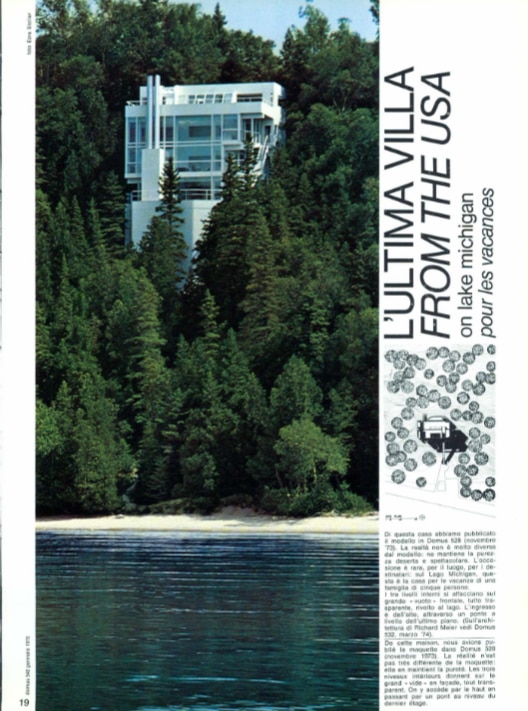
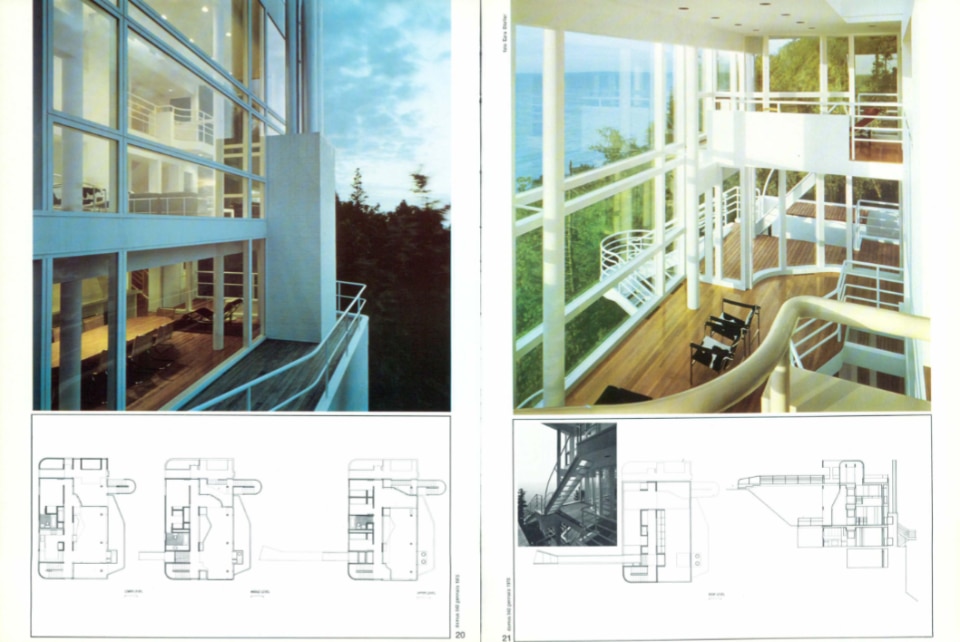
Richard Meier, Douglas House, Harbor Springs, USA
The house, located on a steep slope on the shores of Lake Michigan, develops in height on four floors nestling among the trees. The candid and essential volumes, the concrete, steel and glass structure, the large windows that create an uninterrupted connection between outside and inside are typical expressions of Meier's architectural vocabulary, which seeks a dialogue with the natural landscape through a balanced contrast between immaculate built work and the blue and green tones of context. In the interiors, the light-toned palette of wooden floors and plastered surfaces accentuate the luminosity of the rooms, where Le Corbusier, Mies van der Rohe and Meier furnishings stand out.
Photo from Domus 542, January 1975