-
Sections
-
Keywords
A tour of Bilbao, a city revitalised through architecture
1. The airport
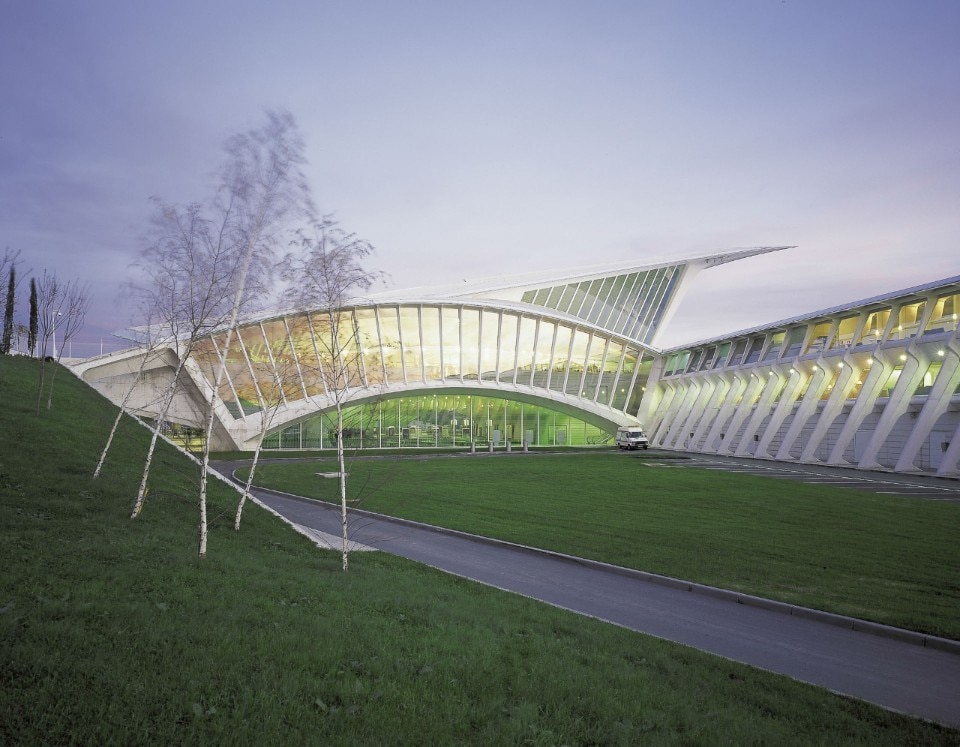
Santiago Calatrava has designed the gateway to the city: La Paloma (from July to October, EasyJet provides a direct flight from Milan). Simulating a bird, the airport has a roof that serves as a façade, recognisable from above and from the surrounding hills. Calatrava has designed the Zubizuri (Basque for white bridge) too. Unmistakable for its shape and (slippery) glass bricks, it links the Ensanche area with Calle Campo de Volantín, one of the city’s favourite walks, which stretches along the banks of the Nervión estuary.
Courtesy ©2022 Santiago Calatrava
2. The subway
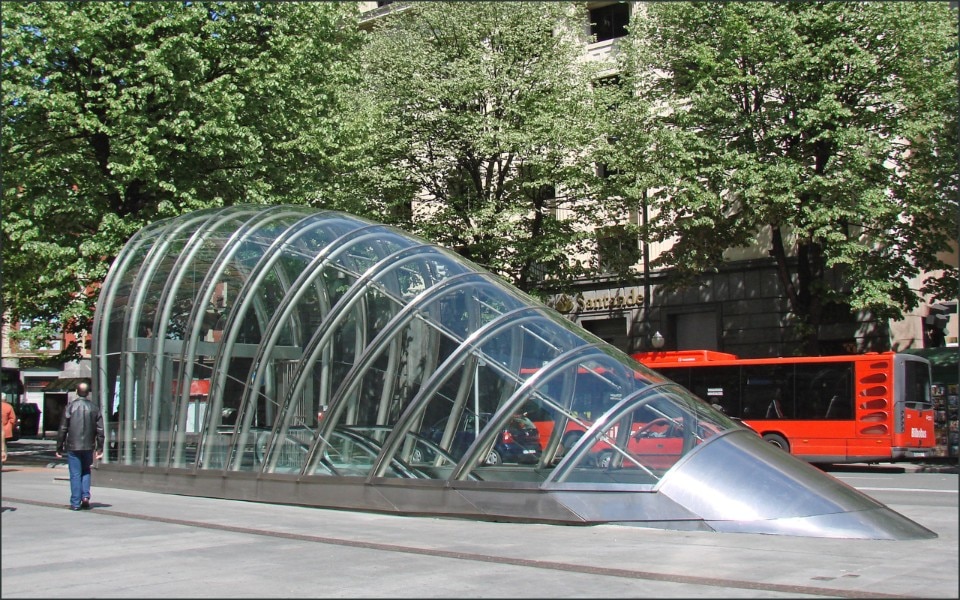
Norman Foster has designed the subway, which not only connects the city but the entire valley, using green energy only. The steel, glass and concrete entrances to the stations are called fosteritos by the inhabitants. The Sarriko station, covered by a glass roof, won the Brunel Prize for railway design in 1998. As the city imposes a 30-kilometre-per-hour limit in order to fight pollution, the Euskotren metro and buses are the perfect solution.
Photo Jean-Pierre Dalbéra
3. Bilbao’s twin towers
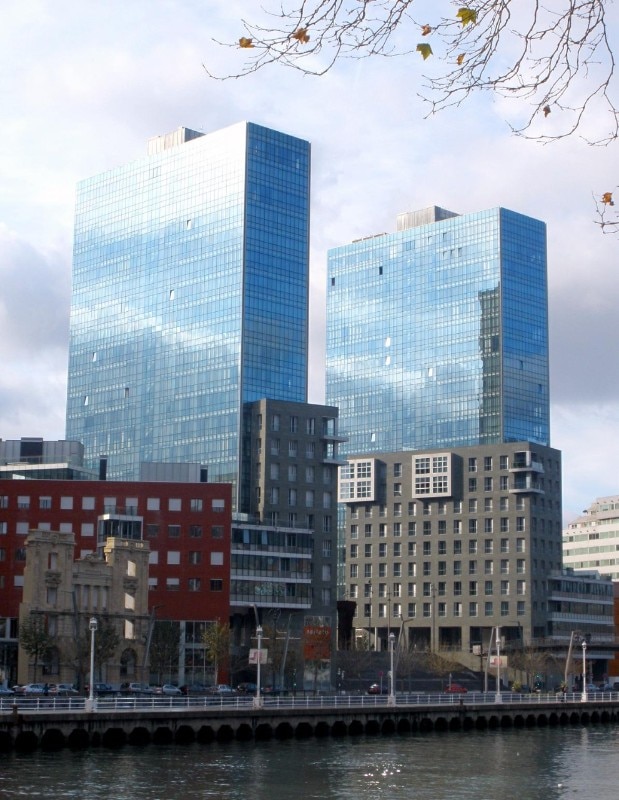
In collaboration with Iñaki Bilbao Aurrekoetxea, Arata Isozaki has designed the 23-storey twin towers and five office buildings of the Isozaki Atea. Brick, glass, steel and natural stone redesign the Uribitarte area, which was once the city’s customs warehouse. A monumental staircase leads up to Calatrava’s bridge.
4. The tallest skyscraper
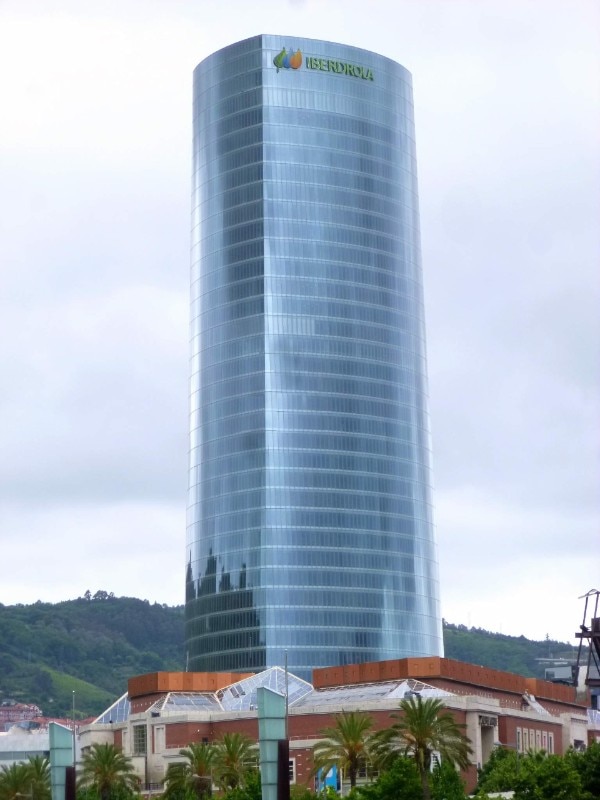
César Pelli has designed the Iberdrola Tower, which has just celebrated its tenth anniversary. It is the tallest skyscraper in the Basque Country – 165 metres high – (visitors are admitted only when exhibitions are organised) and is the symbol of the redevelopment process of Abandoibarra, a former industrial district, which has long been closed to urban use.
Courtesy Zarateman
5. The library
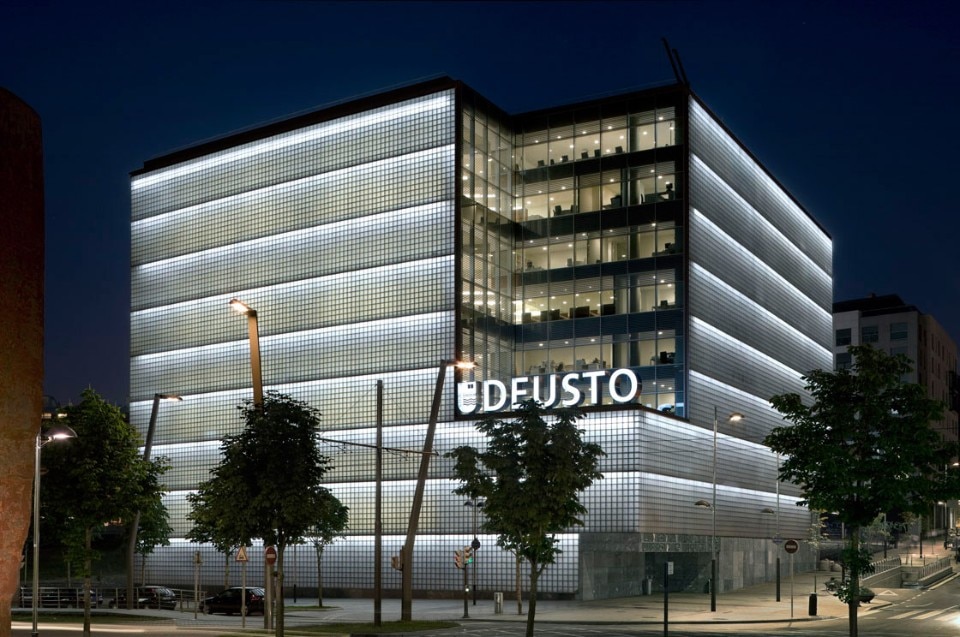
Rafel Moneo has designed the University of Deusto’s library. Made of glass, the building has 10 floors, 5 of which are underground, with almost one million volumes (the largest library in the region). At night, the glass bricks covering the building reflect the greenery it is set in. Nearby is the Paraninfo de la Universidad del País Vasco designed in the shape of an L by Álvaro Siza.
Photo © Duccio Malagamba. Courtesy Rafael Moneo
6. Starck’s transparent swimming pool
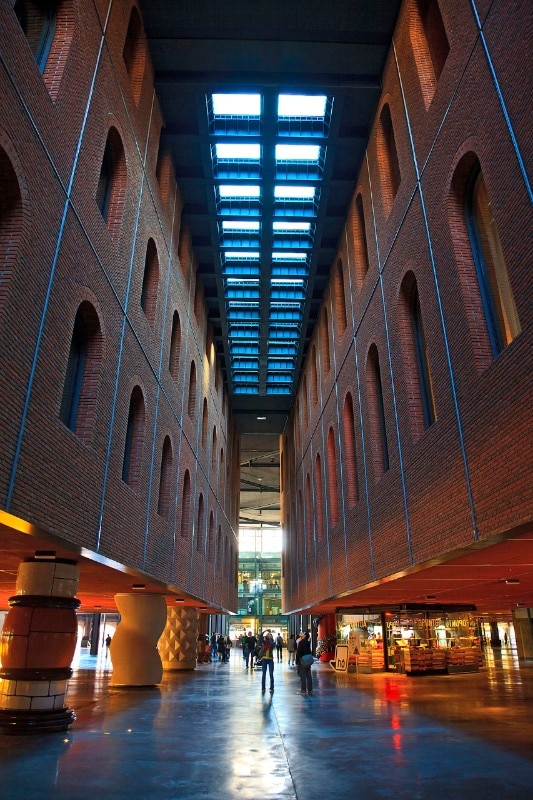
The Alhóndiga, the Art Nouveau wine warehouse designed by Ricardo Bastida and listed by the Basque government in 1999, has changed its name, appearance and use thanks to Philippe Starck. Today it is called Azkuna Zentroa. It rests on 43 artistic columns, and is a centre for cultural (here is the programme of events https://www.azkunazentroa.eus/en/activities/) and sporting activities. On the roof there is a swimming pool with a transparent floor, which allows the swimmers to be seen from below (you can get in with a day pass: €7.05 for the pool, €10.60 for pool+gym).
Photo Tomas Fano
7. The arena
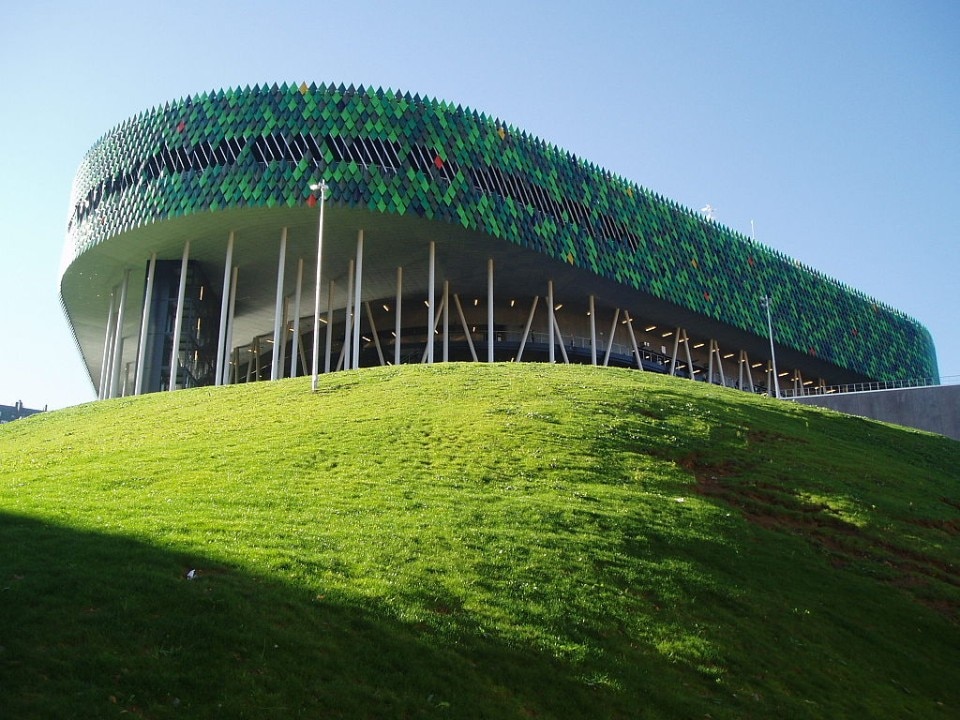
The new architecture has also changed the city’s skyline for sports. The Bilbao Arena, designed by Javier Pérez Uribarri and Nicolás Espinosa, partners in IDOM, rests on Miribilla hill, integrating into the landscape thanks to its green brick roof recalling the foliage of a tree. On the upper floor there is the Bilbao Basketball team area, while on the lower floor there are offices and a swimming pool and gym for the entire neighbourhood.
Courtesy Xabi1980
8. Athletic Stadium
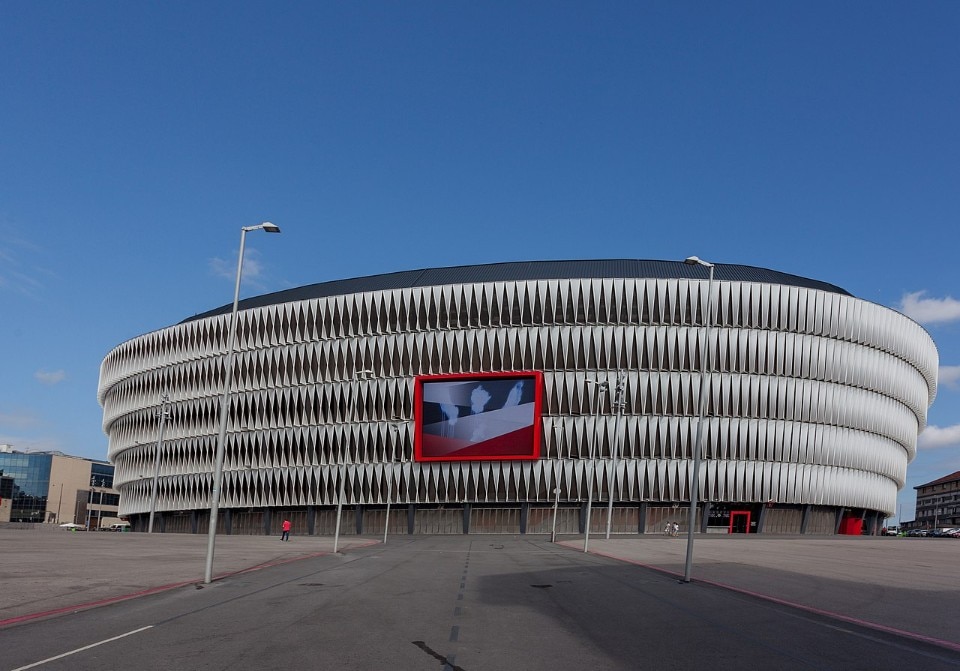
César Azcárate’s San Mamés Stadium (Ensanche neighbourhood) is one of the revolutionary signs of the new Bilbao as well. Built to replace the previous structure, which failed to meet Uefa requirements, it has a double-life façade: the EFTE plastic panels are white in sunlight, but turn red thanks to the 42,000 LEDs that light up in the evening (in short, the official colours of Athletic Bilbao).
Photo Marco Almbauer
9. The museum of the so-called Bilbao effect
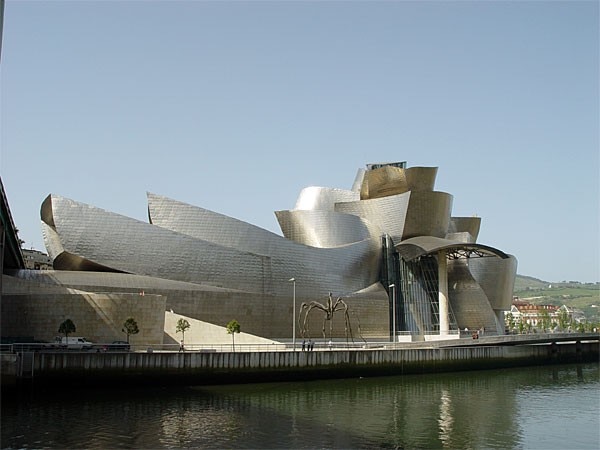
More than a museum, Frank Gehry’s Guggenheim Museum is a sculpture. Its 33,000 titanium flakes that change colour according to the time of day have become the symbol of the city. Costing $100 million and built over four years – from October 1993 to October 1997 – the contemporary art centre occupies an area of 24,000 square metres, 11,000 metres of which are exhibition space. Outside, in addition to Jeff Koons’ Puppy, there are Koons’ Tulips and Louise Bourgeois’ Maman.

Photo Álvaro Ibáñez