-
Sections
-
Keywords
Exploring architecture in 8 contemporary video games
Horizon: Zero Dawn and Horizon: Forbidden West – Aloy, the Machines and the Forbidden West
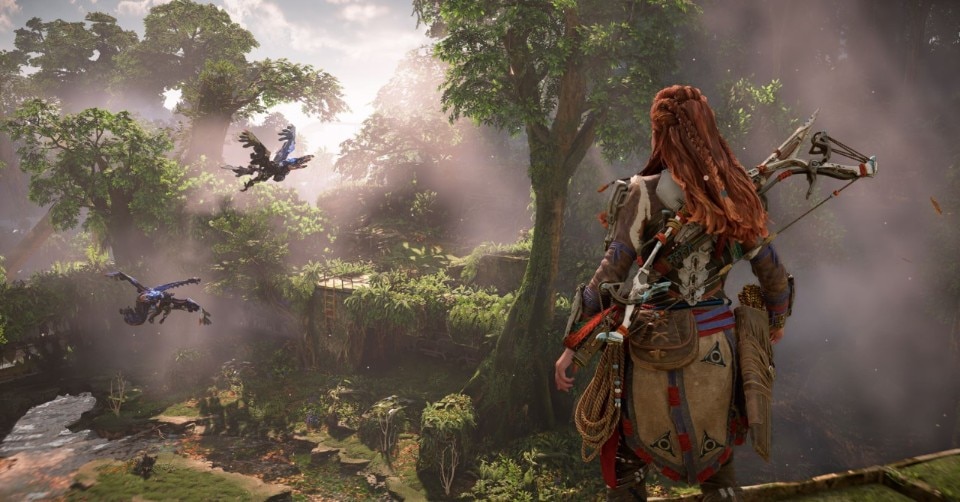
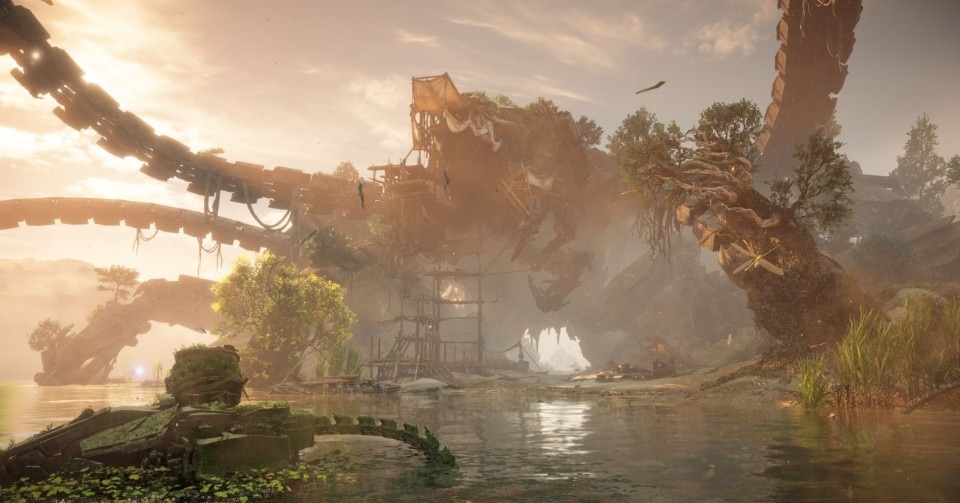
Developed by Guerrilla Games and published by Sony Interactive Entertainment, the Horizon series is a shining example in the contemporary interaction world between protagonist and non-player characters with the setting. Being an open world, that is to say a video game you can move in without practically any limits through every explorable space (once discovered, of course), the possibility to draw objects, find paths and apply strategies within the game map is a key aspect of the experience.
Courtesy Sony
Horizon: Zero Dawn and Horizon: Forbidden West – Aloy, the Machines and the Forbidden West
In this case, the geographical context refers to the theme of the apocalypse, where human beings and machines are forced to live together on a fascinating planet full of secrets in a difficult and unpeaceful way. Aloy, the protagonist of the video game, skilfully moves through several dangers. Apart from the epic battles with the Machines, the exploration of the huge playing area keeps the player glued to the pad. In both open and closed spaces, the physics you move in is a tangible and consistent container with the character, making you constantly feel that thrill underlying all exploration: always putting one step in front of the other, meeting the charm of the unknown.
Courtesy Sony
Elden Ring – The Lightless, the Interregnum and the Ancestral Ring
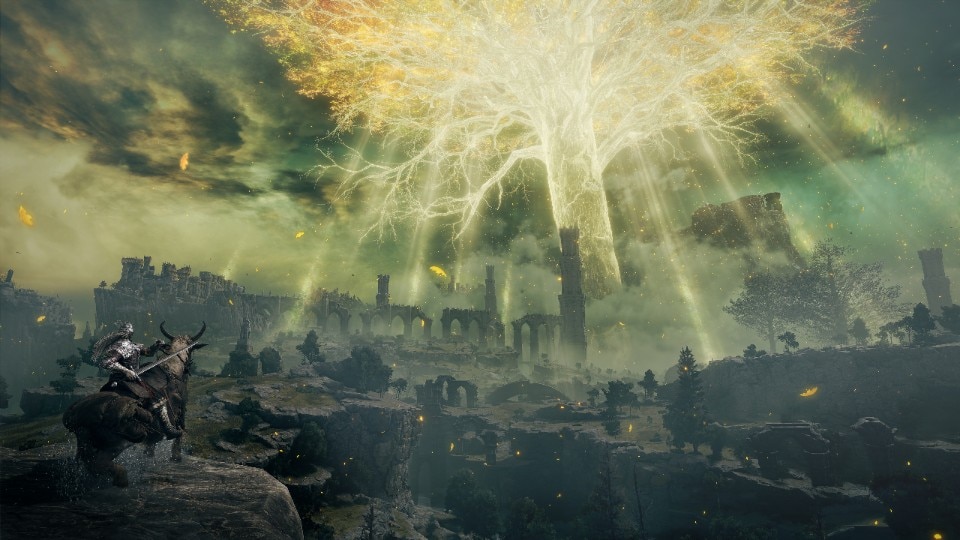
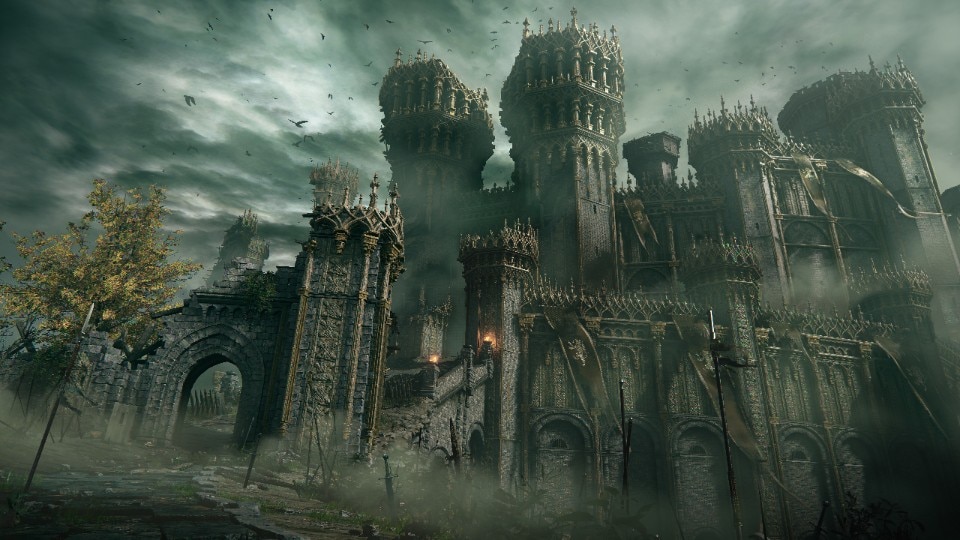
The latest collaboration between developer FromSoftware and Bandai Namco Entertainment, Elden Ring is a highly complex video game. In purely architectural terms, the level design and world building are a marvel for the eyes and a “curse” for the fingers. In fact, the Japanese action RPG production house has made the tactical exploitation of the map for battles (particularly against the fearsome bosses) one of its main strengths.
Courtesy Bandai Namco Entertainment
Elden Ring – The Lightless, the Interregnum and the Ancestral Ring
The labyrinthine parts, the large open spaces, and the multi-level exploitation of the vertical and horizontal map, make the player’s progress very complex and careful. It is necessary to take big risks, remaining at the same time open-mouthed in front of scenarios with a remarkable attention to detail in the design, raising even more the quality bar already seen in the Dark Souls trilogy and in the very recent remake of Demon’s Souls for Play Station 5.
Courtesy Bandai Namco Entertainment
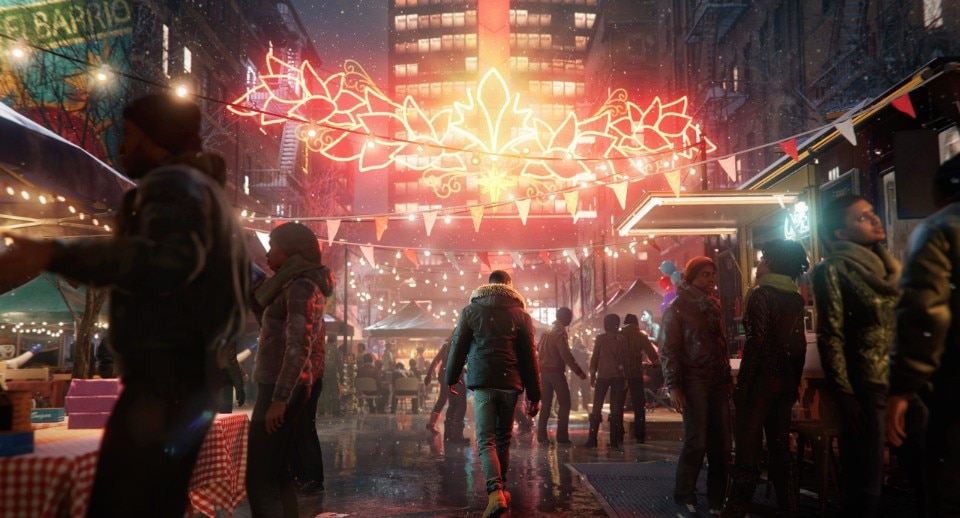
Marvel’s Spider-Man and Marvel’s Spider-Man: Miles Morales – Superheroes, villains and the city watching in awe
In the last decades, flying like Spider-Man is one of the most common dreams among children, just as it has happened in the past during the various media explosions of the American comic book. How come? It is easy to say: beyond the moral characterisation and in terms of writing, Spider-Man is a superhero who has made the three-dimensional exploration of space and freedom of movement his main features, enviable by anyone who wants to move at very high speed among the tallest skyscrapers or among the huge New York’s open spaces. Having been a “playable” character in several video game generations over the past two decades, the “friendly neighbourhood Spider-Man” finds his most suitable home on Play Station 5.
Courtesy Sony
Marvel’s Spider-Man and Marvel’s Spider-Man: Miles Morales – Superheroes, villains and the city watching in awe
Seeing the character twirling with the webs on film, as in the recent Spider-Man: No Way Home, is certainly fascinating, at least as much as reading him between the pages of the comic stories. However, the identification with him reaches important levels when the player can live those evolutions through the “control” of the character, identifying himself or herself with his gestures. Therefore, the urban architecture stops being a background for the adventures, and becomes an important space to be analysed and kept constantly under eye from a strategic point of view: handholds for the web, hiding places and points to trap enemies become strategically fundamental in the interaction among hero, villain and surrounding area.
Courtesy Sony
Marvel’s Spider-Man and Marvel’s Spider-Man: Miles Morales – Superheroes, villains and the city watching in awe
However, what makes the series developed by Insomniac Games and distributed by Sony Interactive Entertainment so “alive”? Probably, it is the ever-changing characterisation of New York City. It seems to lead a normal life until a trouble occurs in any part of the city, and after Spider-Man’s intervention resumes with its daily flow, spontaneously interacting with the character. Faced with such an impressive attention to detail in models, colours and lighting, who would not stop to watch the sunset from the top of the Avengers Tower at least once, before going into freefall again towards the troubles going on in the streets?
Courtesy Sony
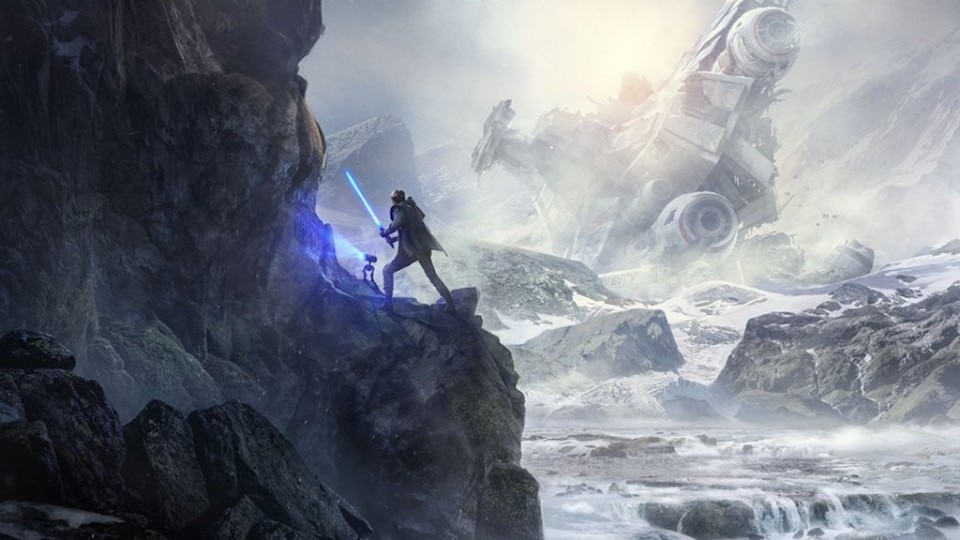
Star Wars Jedi: Fallen Order – The thousand faces of the galaxy far, far, away...
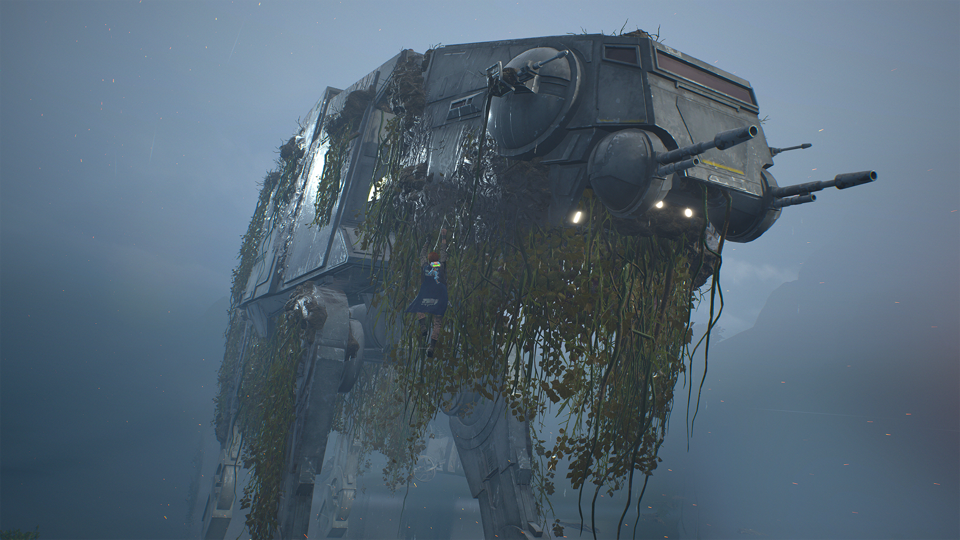
For almost forty-five years, the Star Wars world building first devised by Ralph McQuarrie on indications of George Lucas has set a very high standard to contend with when it comes to fantasy worlds. The prolific film epic has taught us the types of planets that can be explored are sometimes limited in number of generic features (desert, jungle, ice, city, island, underwater, ruined and a few others), but each of them has very unique peculiarities to explore. In the action-adventure video game developed by Respawn Entertainment and published by Electronic Arts for the previous console generation, the entire architectural layout (intended as a more or less urbanised context of interiors and exteriors) is one of the strengths of the experience.
Courtesy Electronic Arts
Star Wars Jedi: Fallen Order – The thousand faces of the galaxy far, far, away...
Cal Kestis, the protagonist of the video game, explores worlds that are diametrically opposed to each other, moving from natural and mystical contexts, full of fantastic creatures, to imperial outposts, passing through planets where death is the master (did someone say Dathomir?) or places where destruction has entirely altered the landscape. While maintaining the labyrinthine and vertical style seen in other souls-like, the curiosity to explore every nook and discover all the secrets makes it possible to appreciate one hundred percent all the places you can visit.
Courtesy Electronic Arts
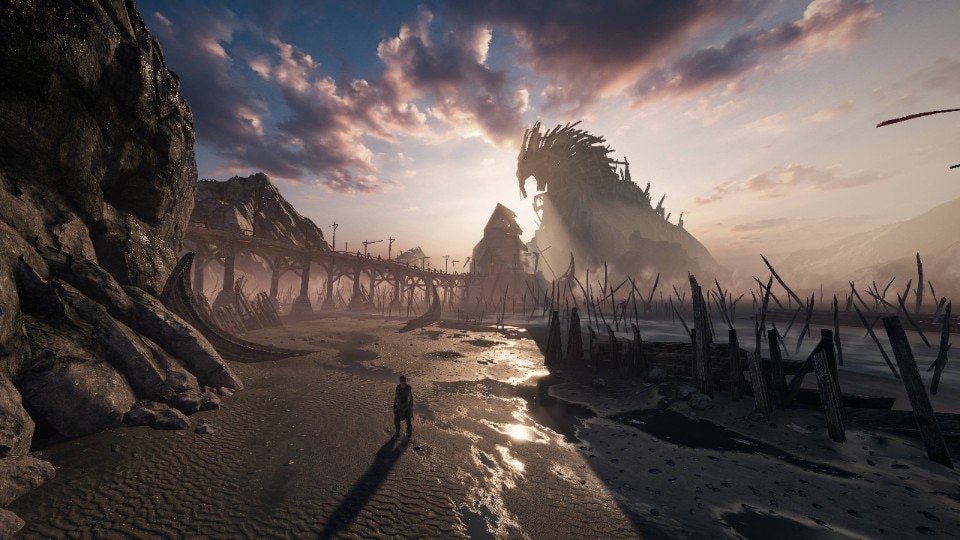
Hellblade: Senua’s Sacrifice – Life and death of Senua in a hostile world
A hack and slash genre video game developed and published by Ninja Theory. The video game allows the player to explore Norse mythology in an extremely immersive way, where the architecture is not only characterised from a visual construction profile, but also from an auditory one. So great was the success of the video game and so important was its peculiarity in the landscape it was proposed in, that the following year (we are talking about 2018) a VR (virtual reality, for those unfamiliar with the terminology) version was published with an even more immersive atmosphere.
Courtesy Ninja Theory
Hellblade: Senua’s Sacrifice – Life and death of Senua in a hostile world
Compared to many other hack and slash video games, what makes it peculiar is precisely the sensory combination. When you handle your pad, you are literally immersed in the same place where Senua is. You listen to the voices in your head and those coming from the outside environment, restoring a three-dimensionality to the spaces that sometimes (deliberately) contrasts with what you see. Who ever said that architecture is only made up of what you can see with your eyes?
Courtesy Ninja Theory
Deathloop
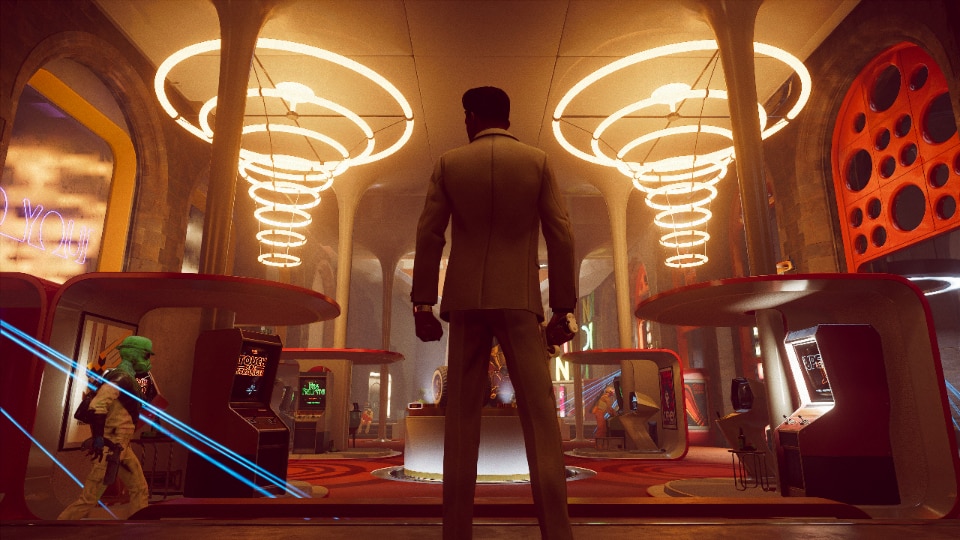
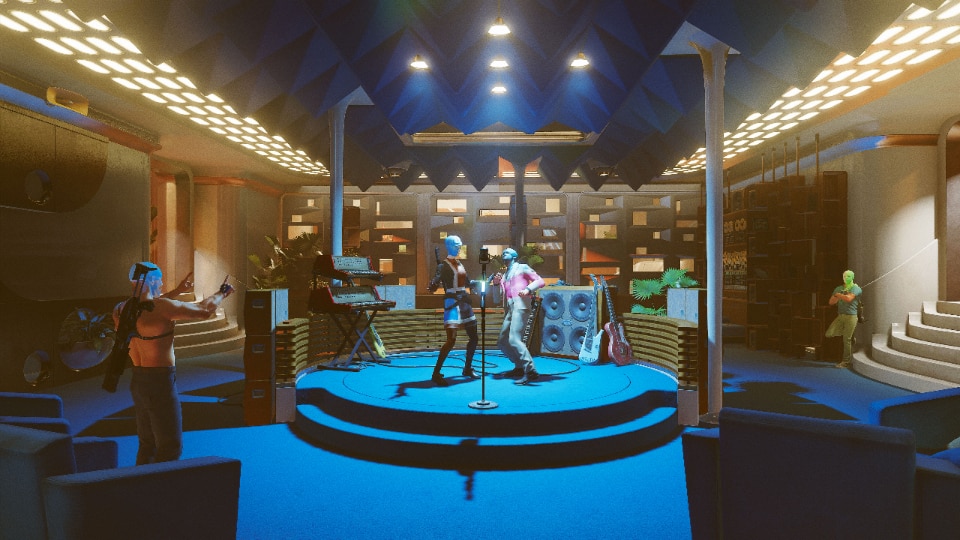
In the new title by French developer Arkane Studios, once again published by Bethesda, we find environments that somehow sound familiar. Place of action is Fristad Rock, a multilevel city divided into four fully explorable zones, designed with that touch suspended between modernism, retro-future and dystopia that also characterizes the previous titles of the Lyon-based studio, whether it’s the claustrophobic interiors of Prey (2017), or the pseudo-steampunk worlds of the two Dishonored (2012 and 2016 respectively). All very stylish, researched, refined, with an approach halfway between a curated animation and the swirl of blood of a Doom.

Courtesy Bethesda Softworks
Deathloop
What’s added here is the time factor: Colt, the protagonist, finds himself embroiled in a story that’s somewhere between Groundhog Day and a Philip Dick tale. The exploration of the game spaces, not vast but extremely detailed, is cyclical, totally set on repetition. The space is always the same, the time variable multiplies the possibilities and scenarios: the same place in the morning will be different from what Colt will find in front of him in the evening, when a big snowfall will fall on the town. The architecture transforms, the paths change. And in the morning everything resets.
Courtesy Bethesda Softworks