


di Alessia Baranello
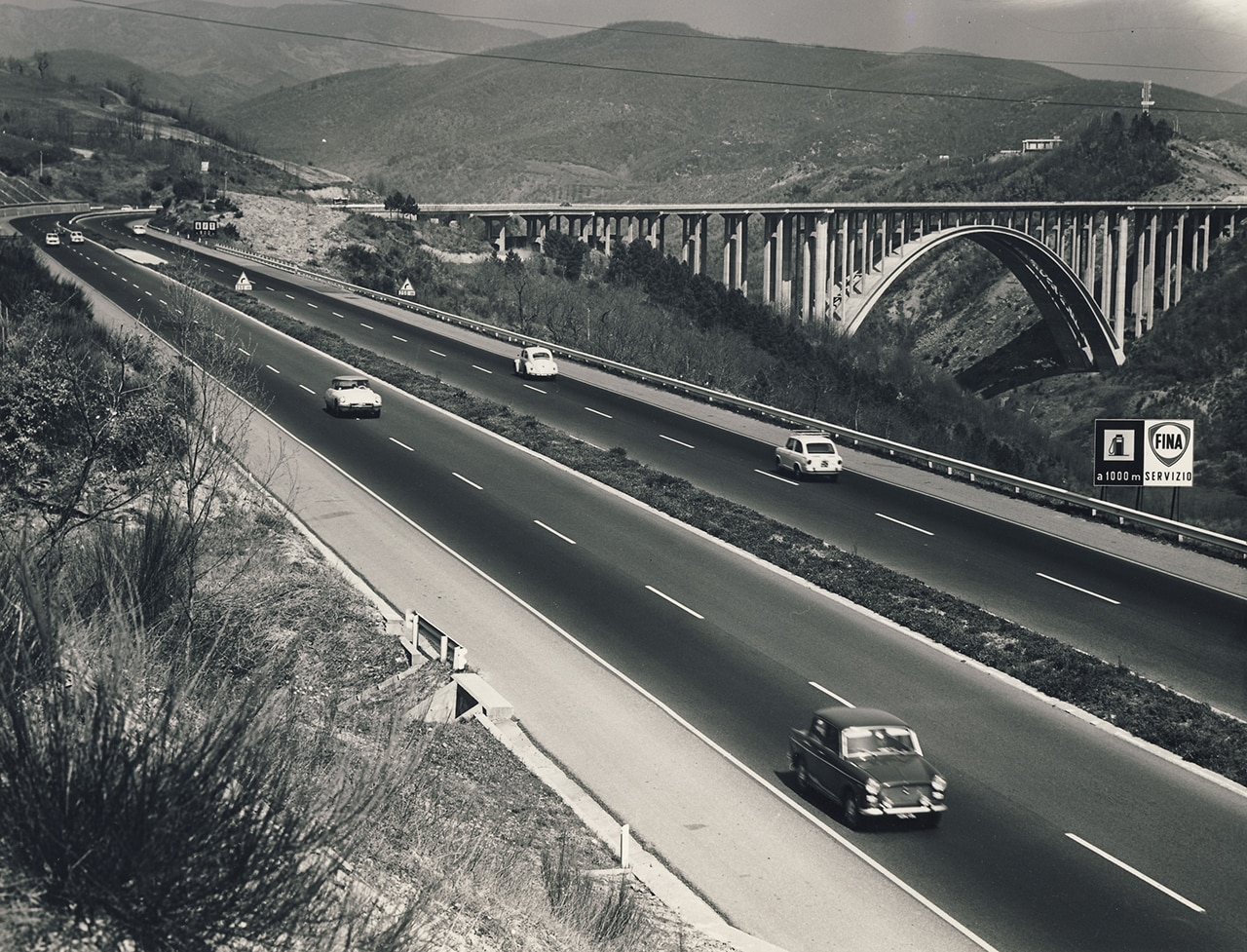
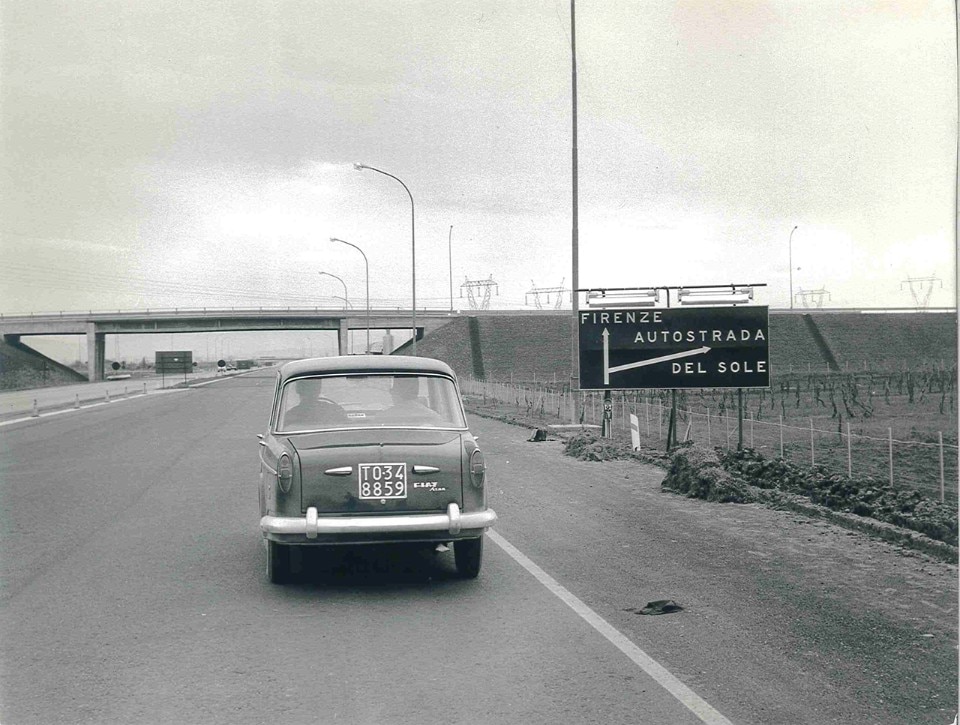
The air conditioning is not enough, so you change radio stations and end up on RTL 102.5. Outside the window, cultivated fields, industrial warehouses, hills and service stations drift by. You are crossing the Autostrada del Sole from north to south, or from south to north, taking part in the secular pilgrimage that has accompanied Italian holidays since the 1960s.
Then, at a certain point, a building appears that you cannot identify. It could be a station designed by Santiago Calatrava, a church by Giovanni Michelucci, a winery carved into a hillside or a monastery that has dominated a valley for almost fifteen hundred years. The Autostrada del Sole, in fact, does not simply connect Milan and Naples. For more than sixty years, it has traced a red thread through some of the most significant works in Italian architectural history.
 View gallery
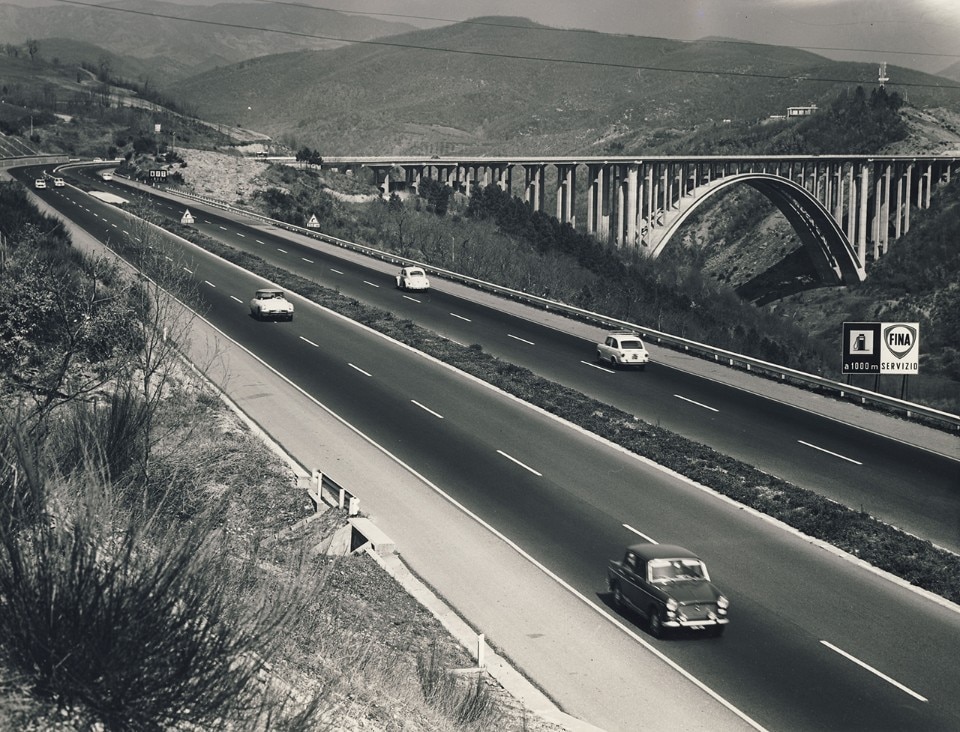


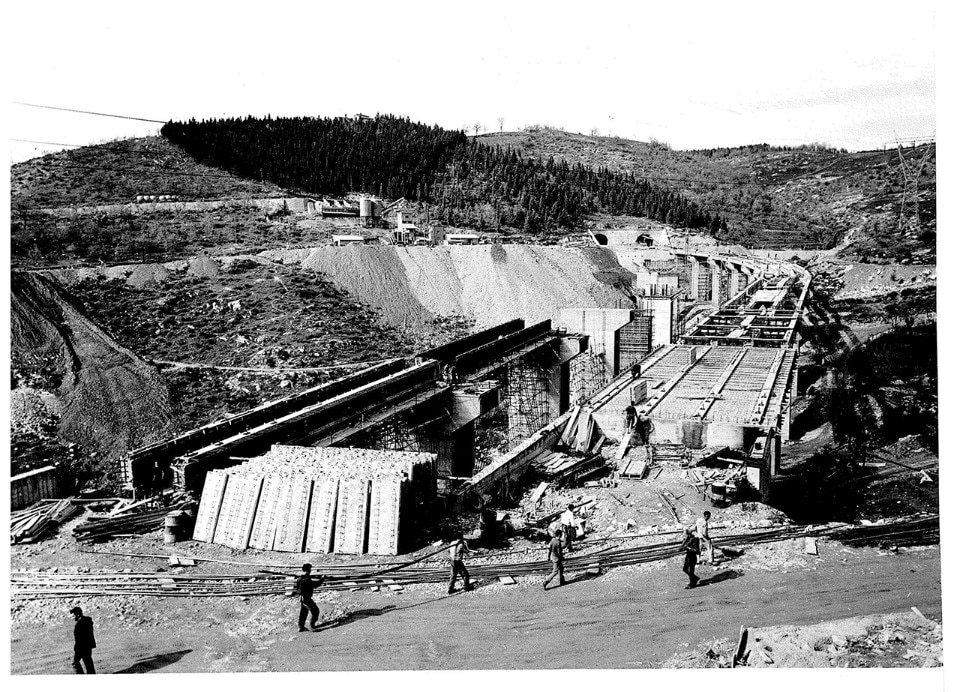
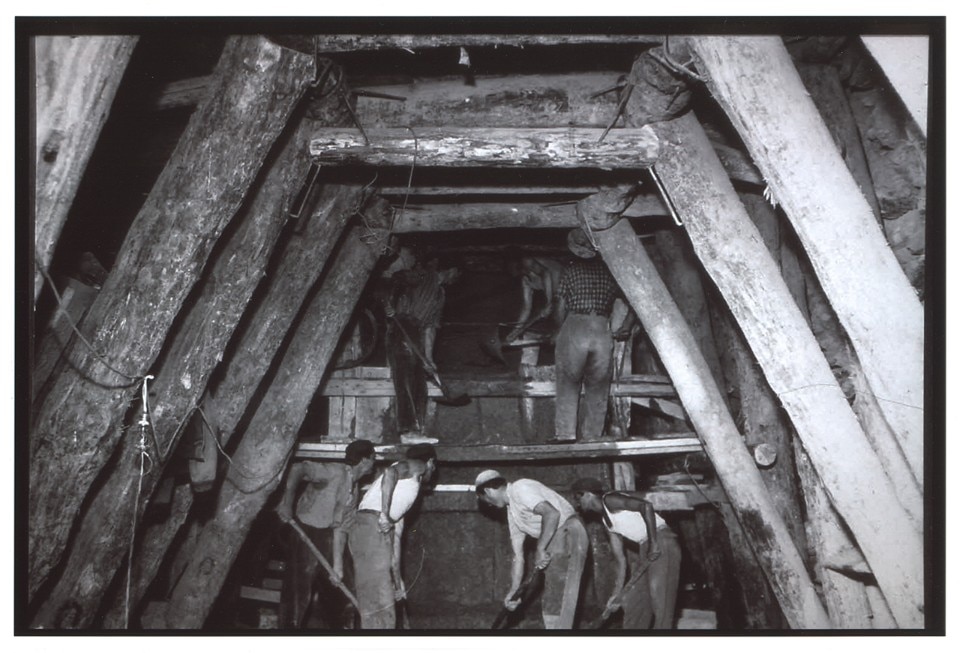
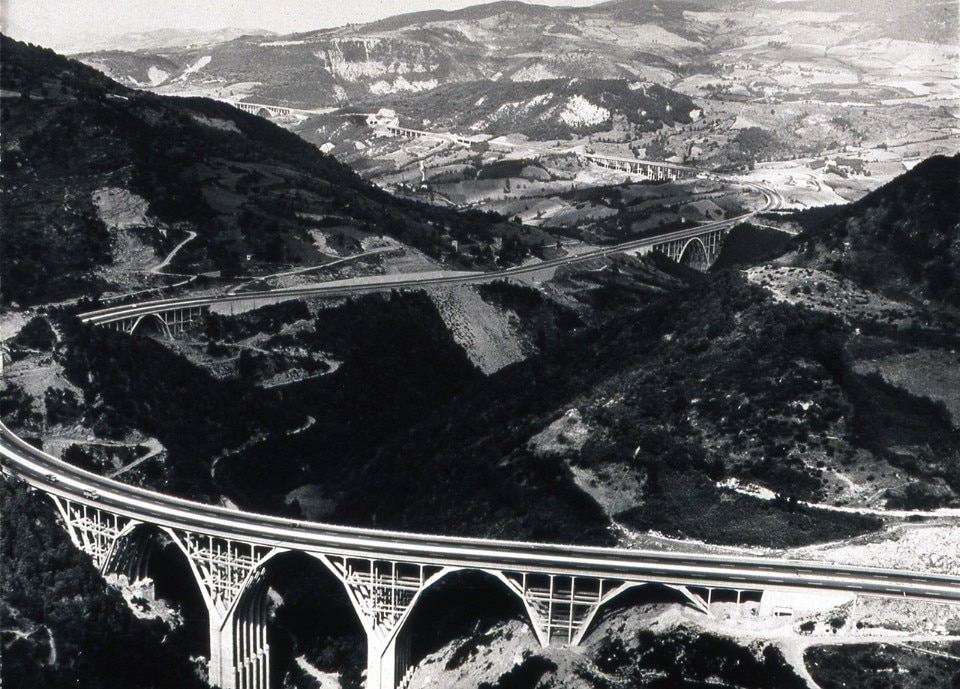
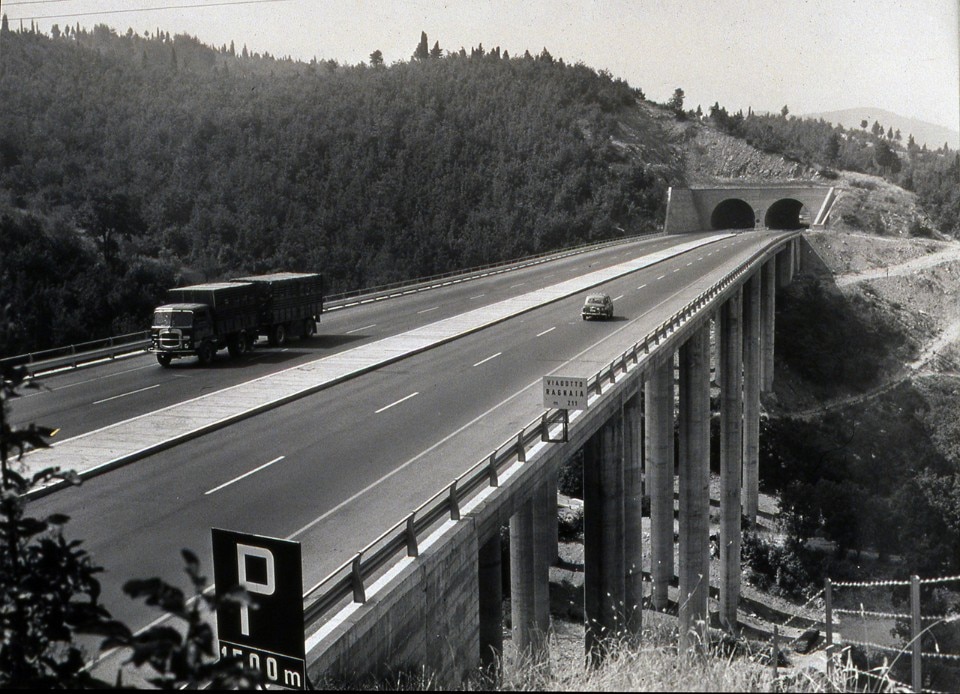
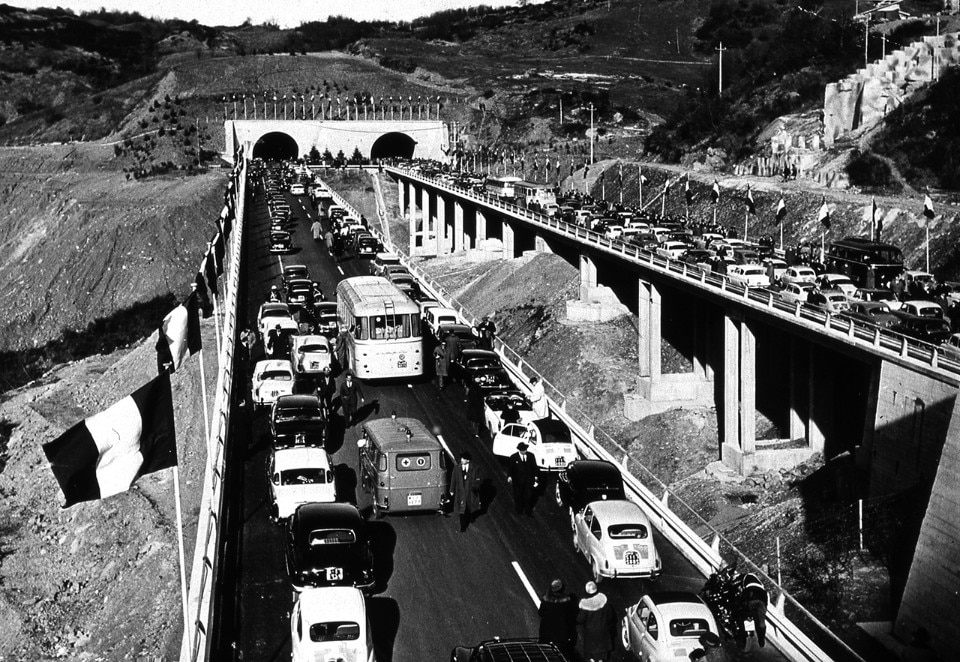
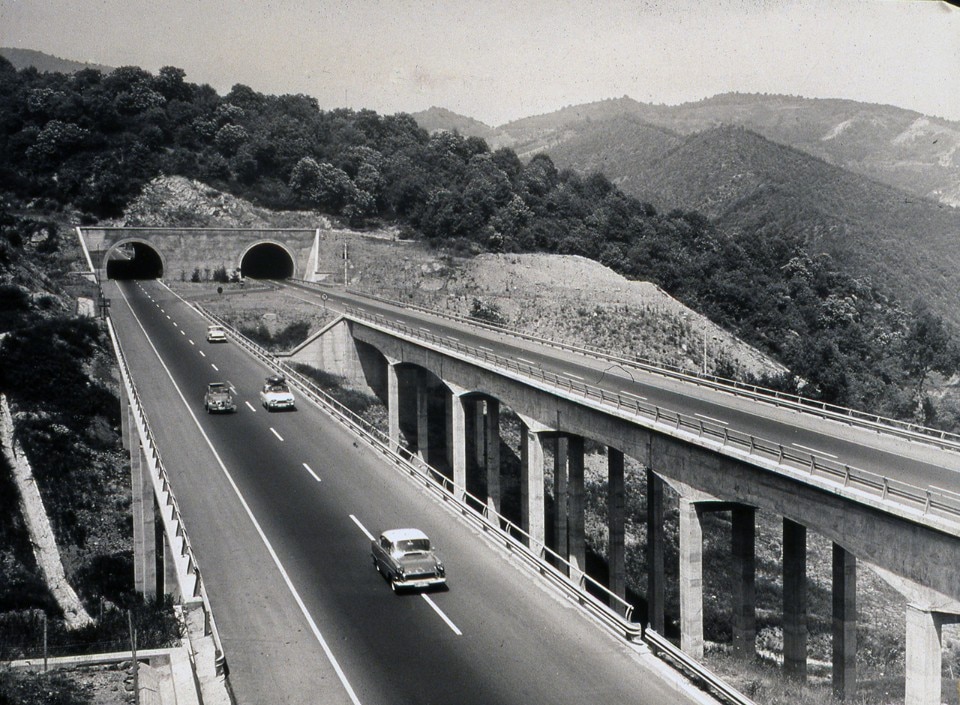
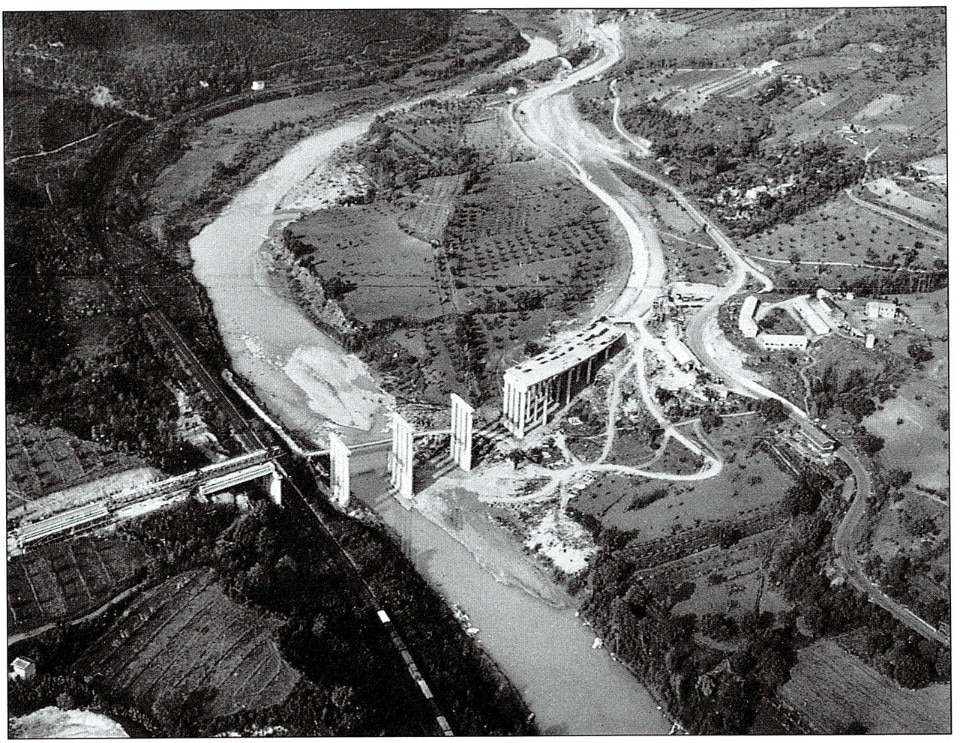
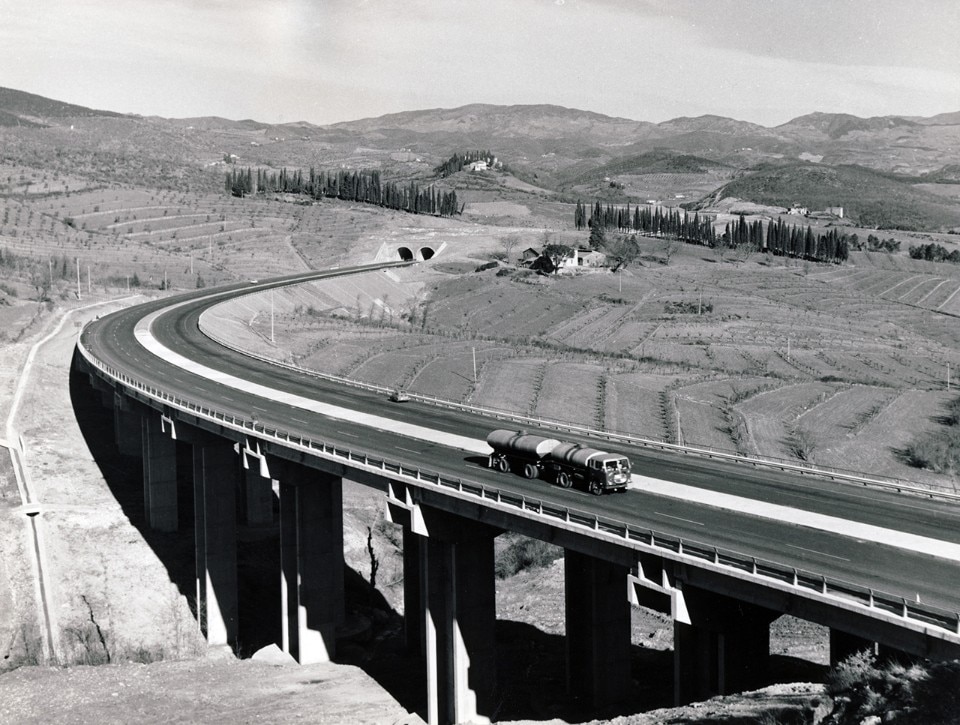
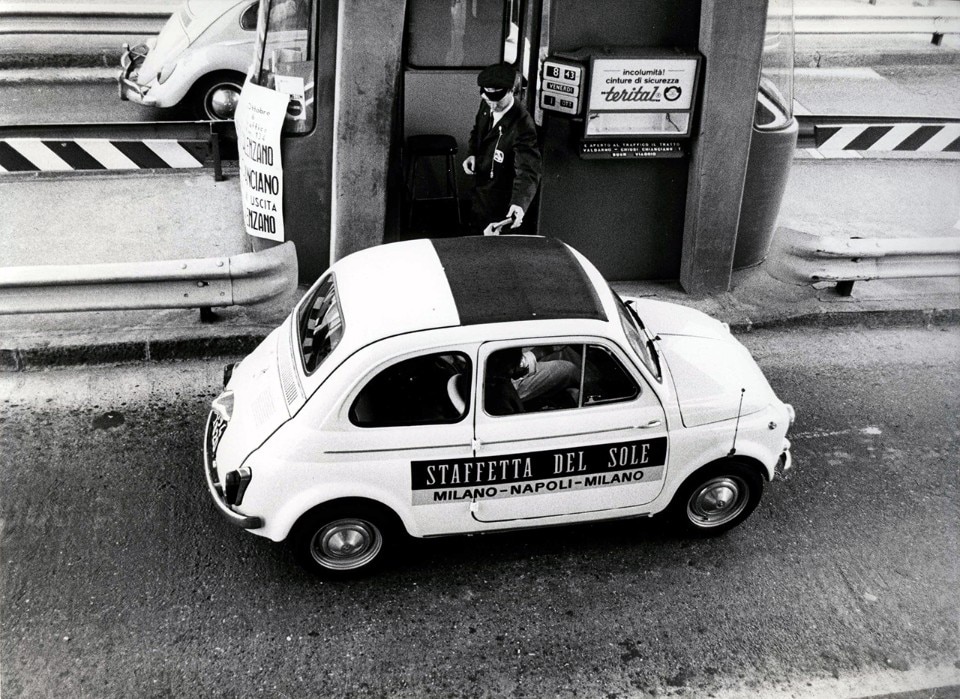
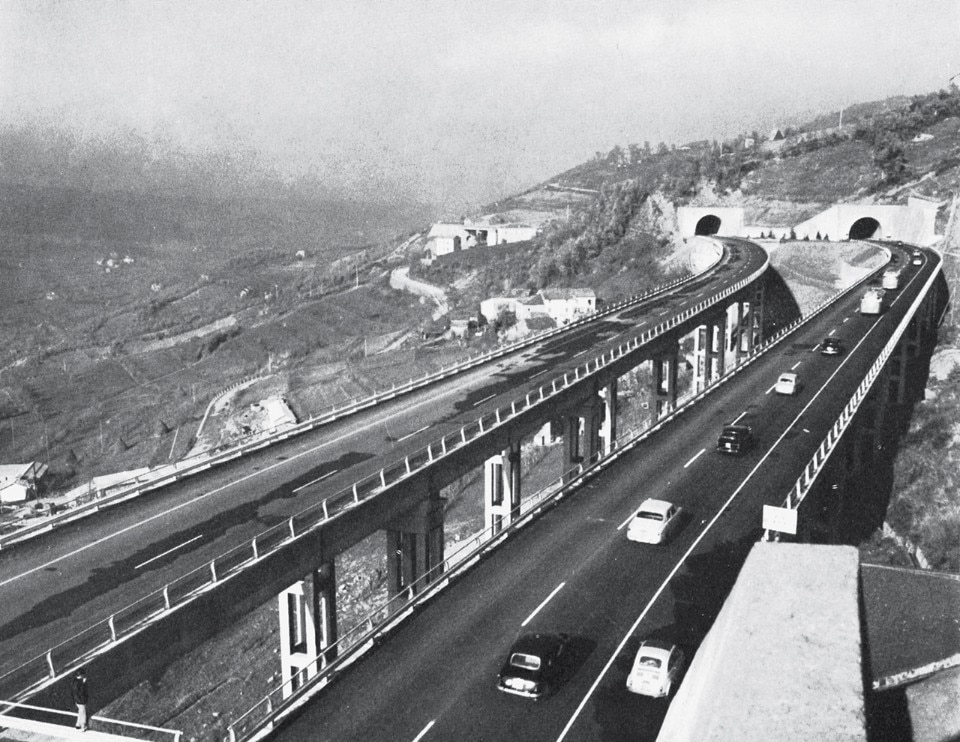
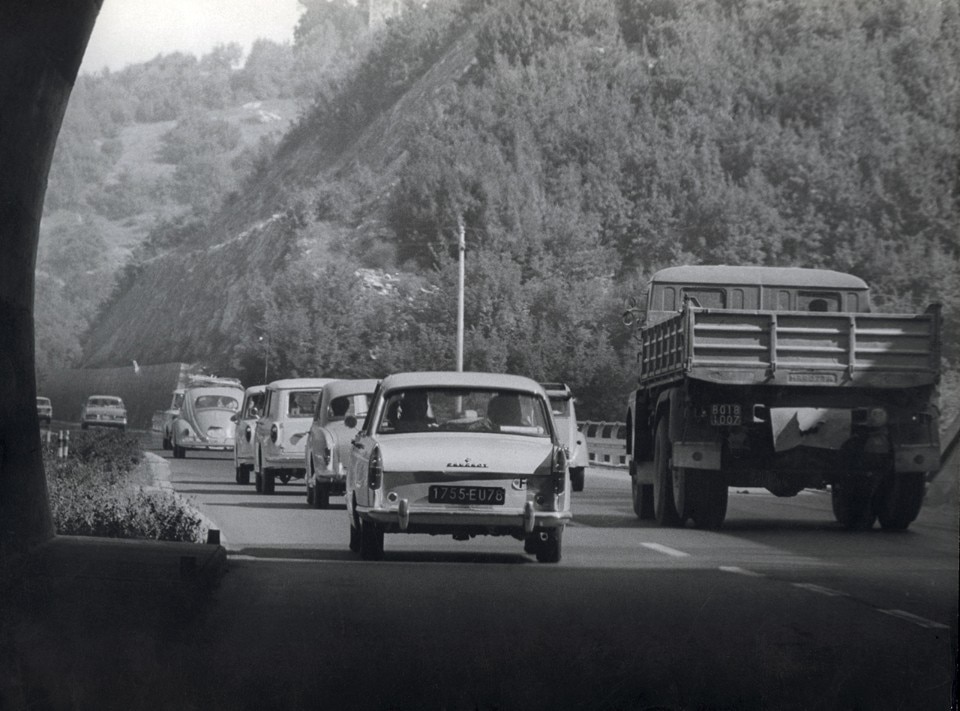
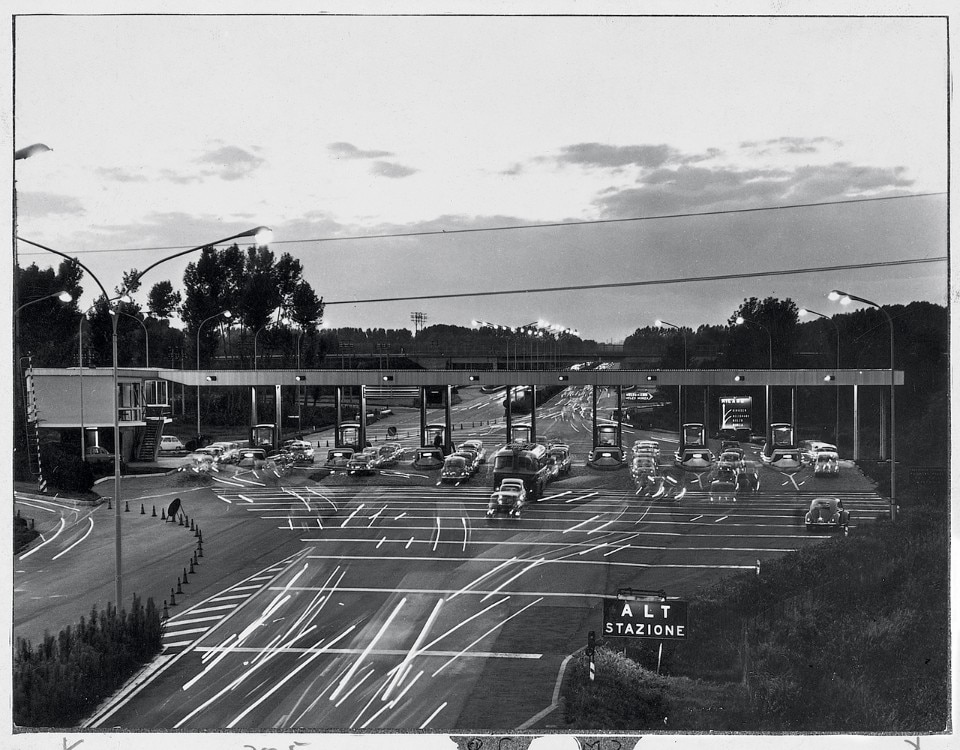
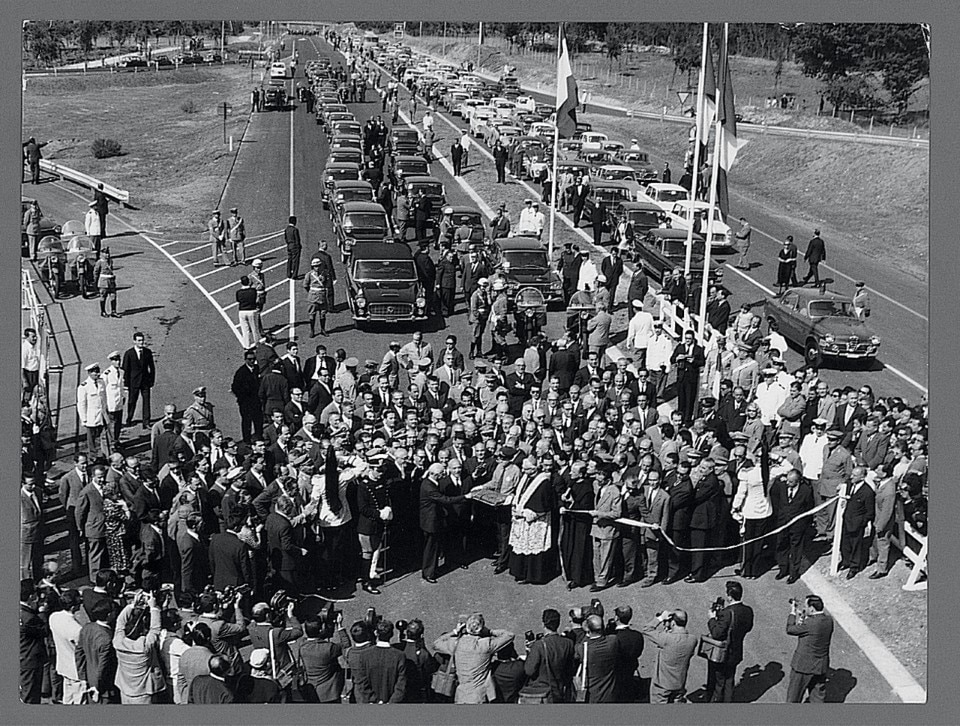
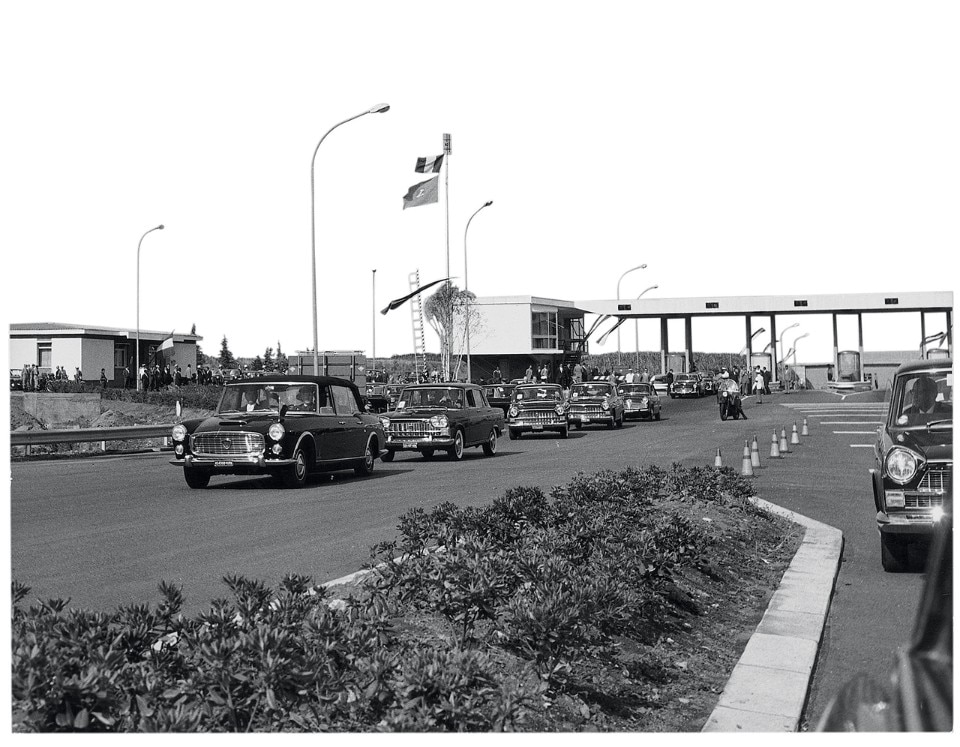
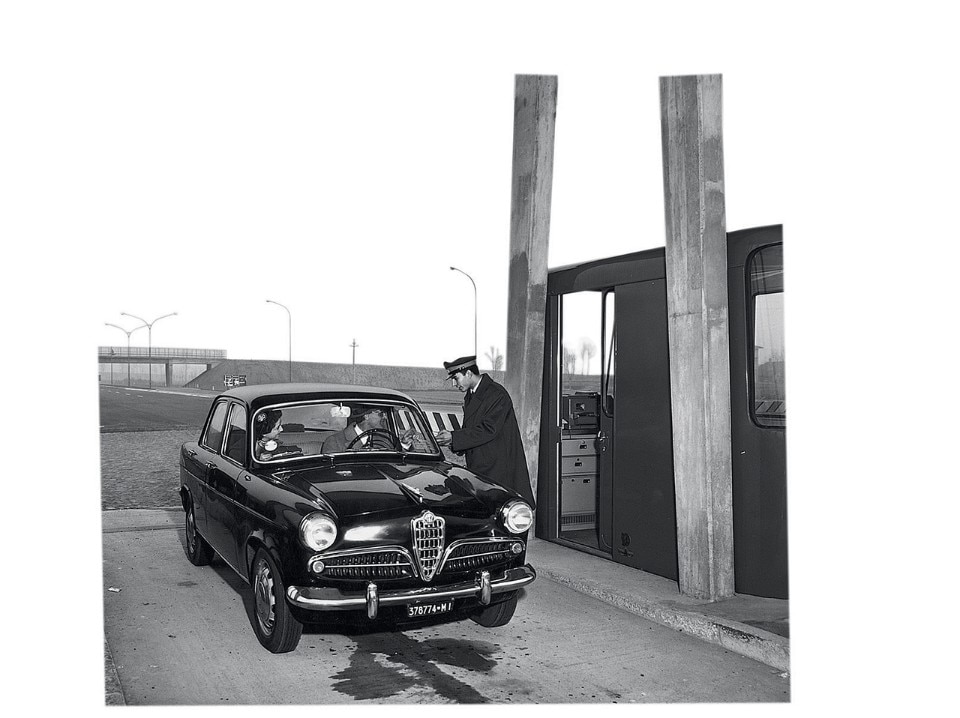
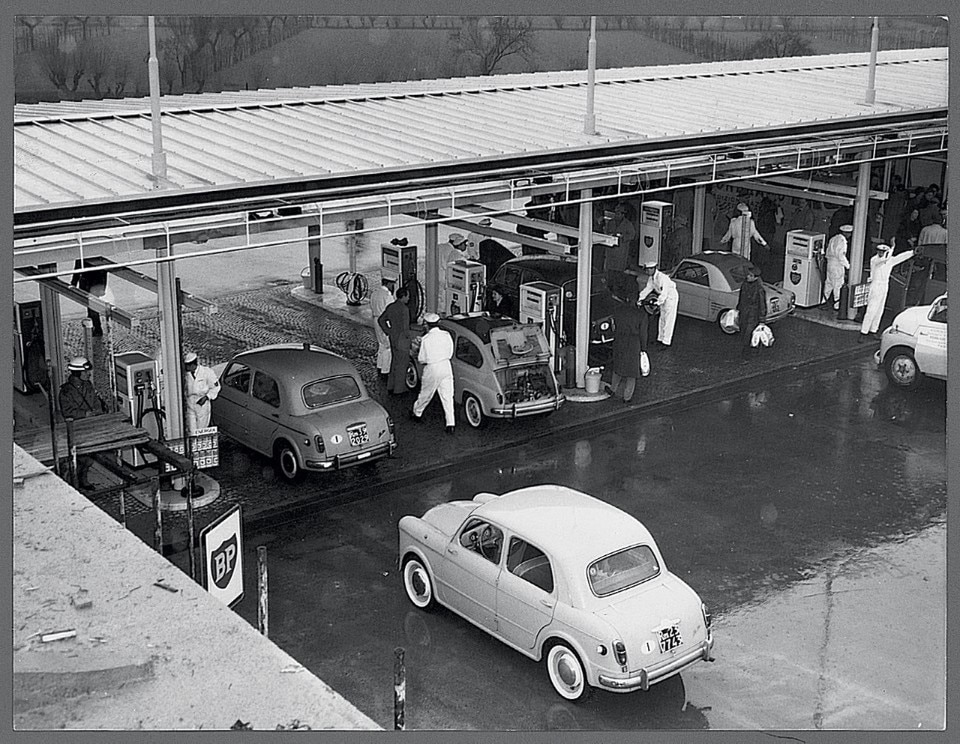
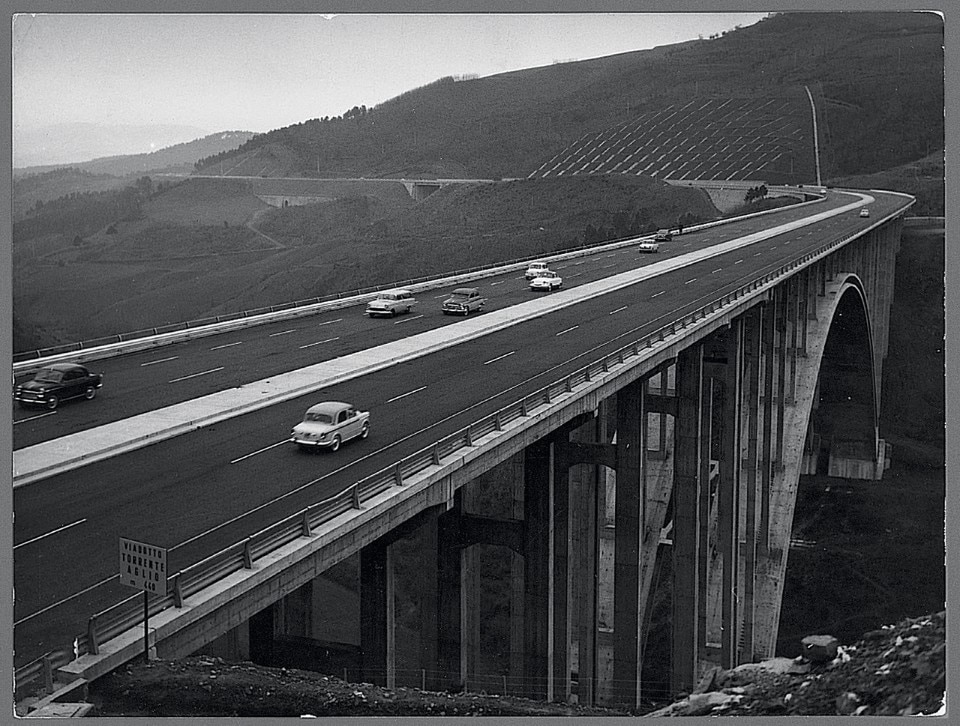
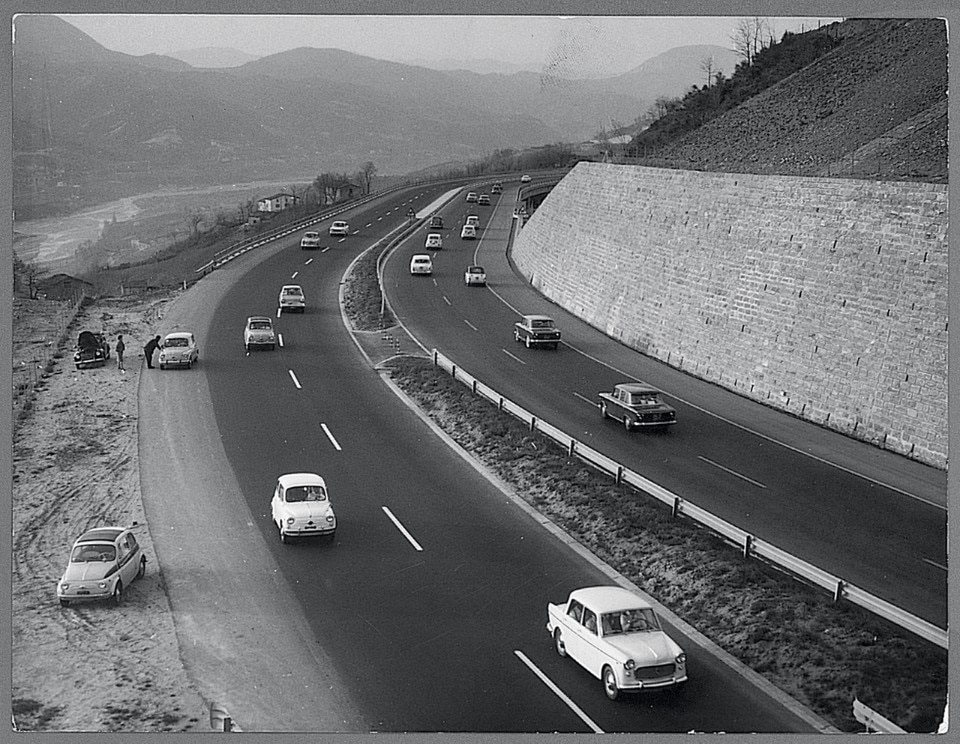
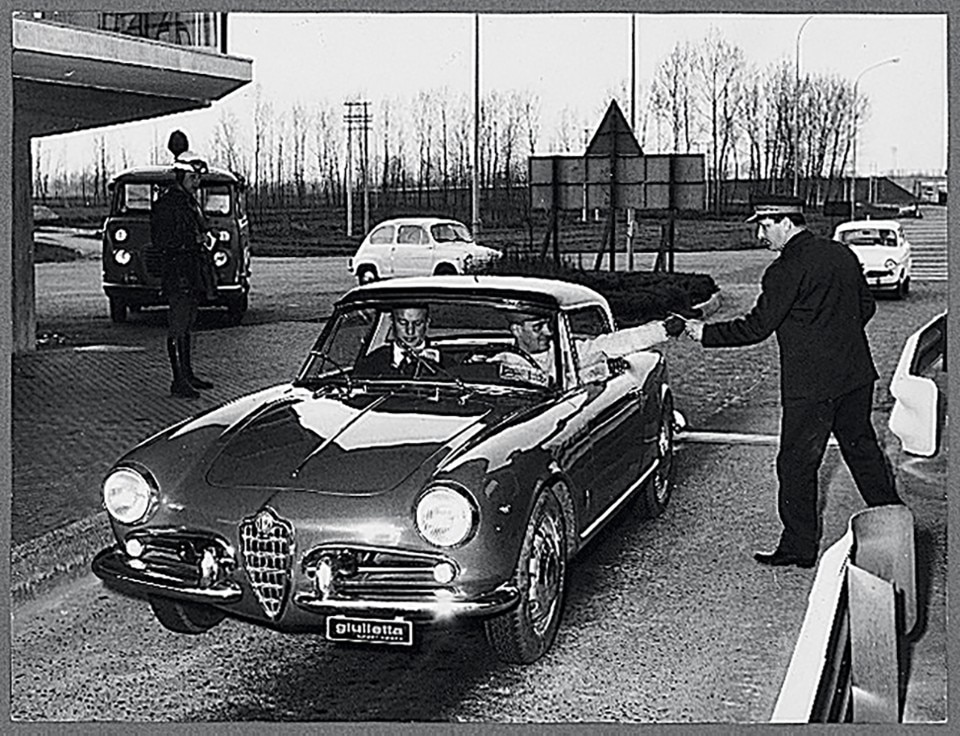
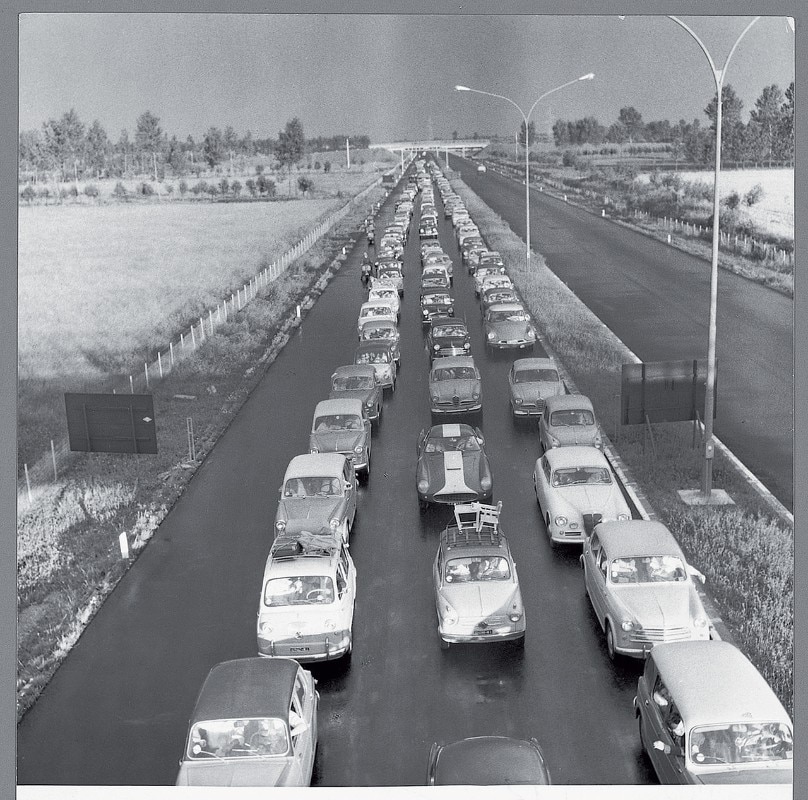
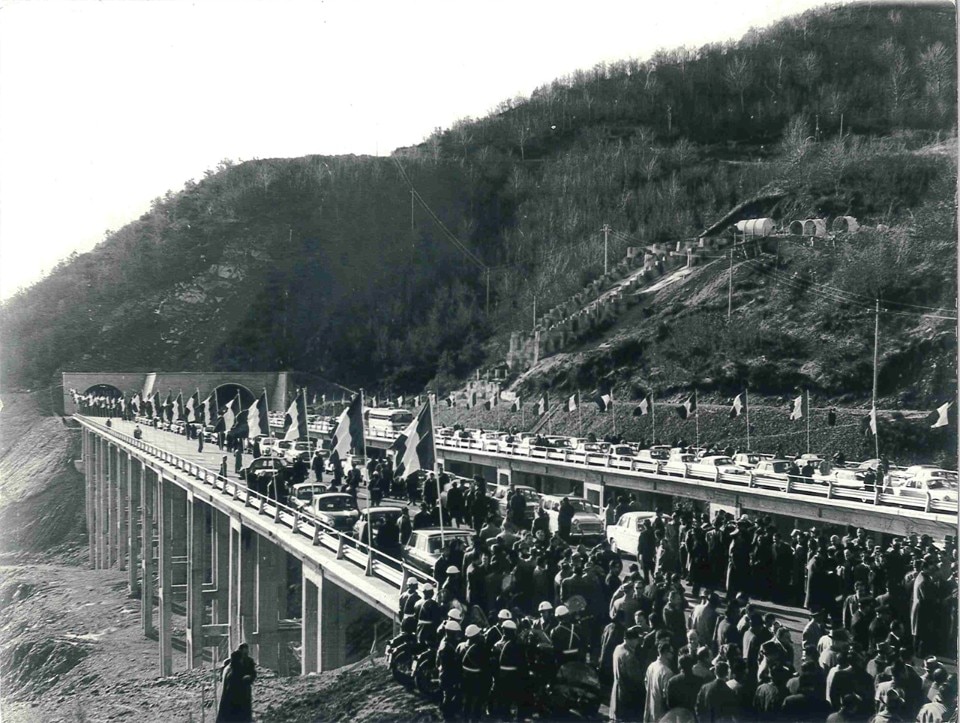
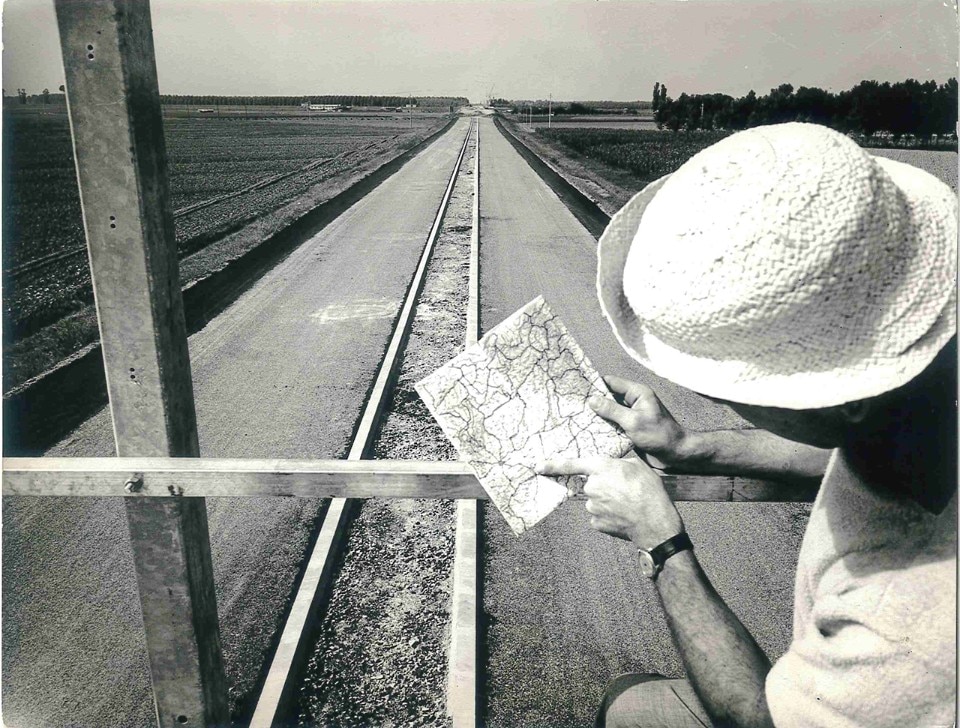
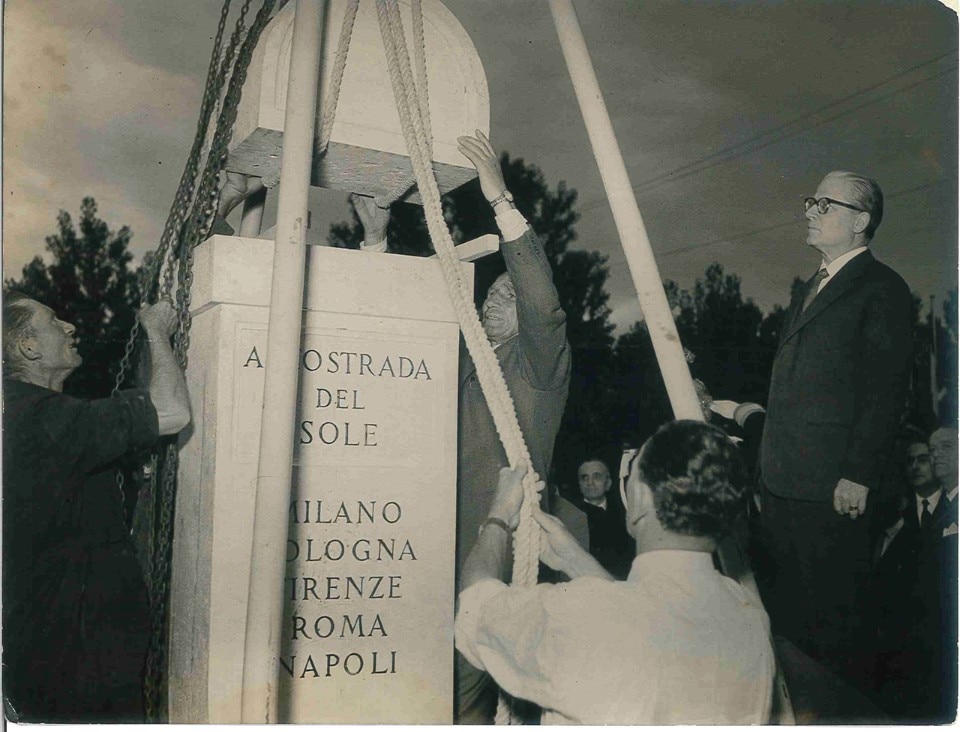
Between churches and motorway service stations from the years of the economic boom, contemporary art museums, industrial citadels, Olympic infrastructure and artificial shopping towns, this guide follows the route of Italy's longest motorway, from Milan to Naples, in search of the architecture glimpsed from the car window and of the buildings that require a short detour from the motorway but are well worth the trip.
The most controversial landmark of the 2026 Winter Olympics
Arena Santa Giulia, David Chipperfield Architects, 2026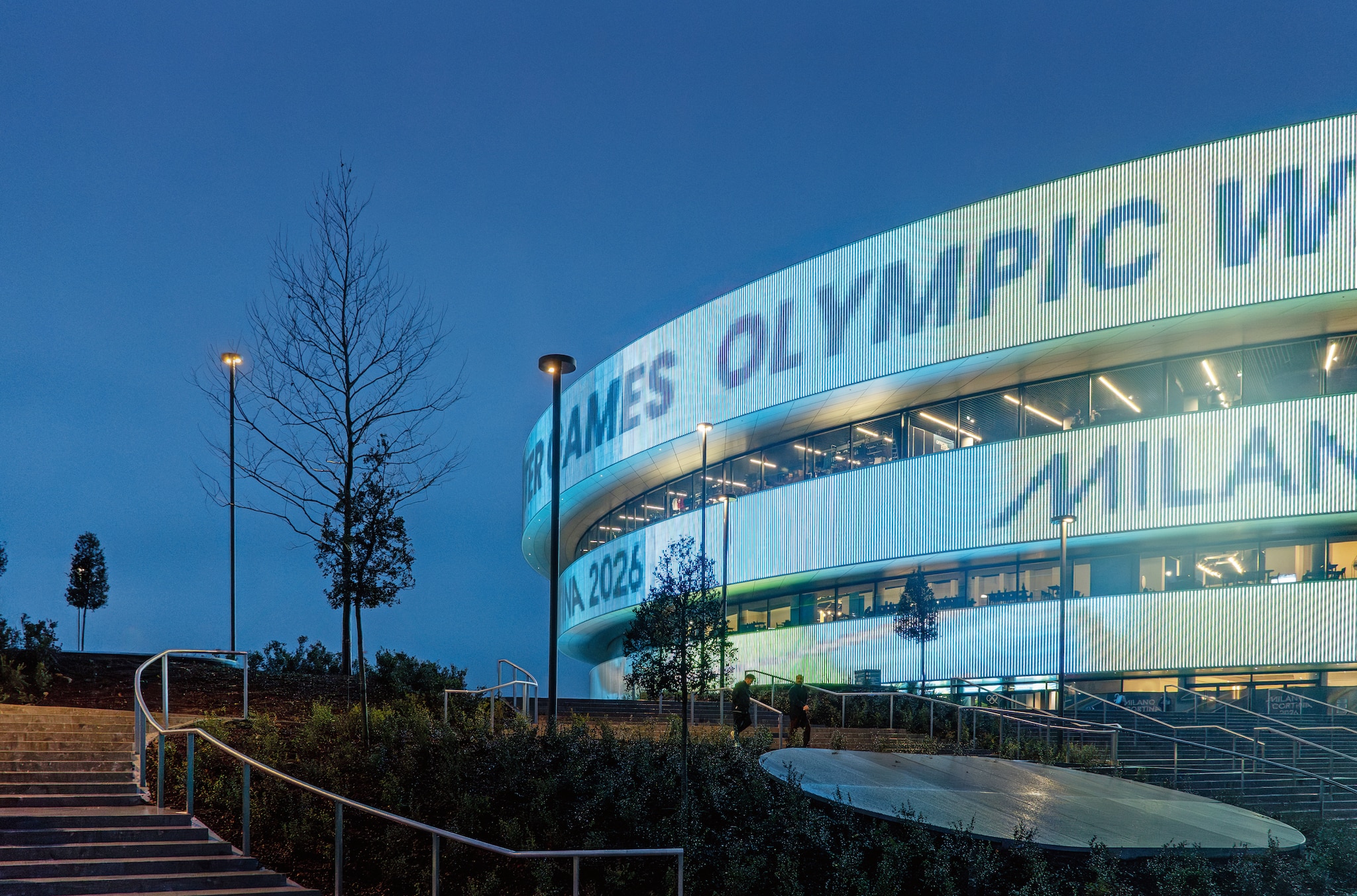 View gallery
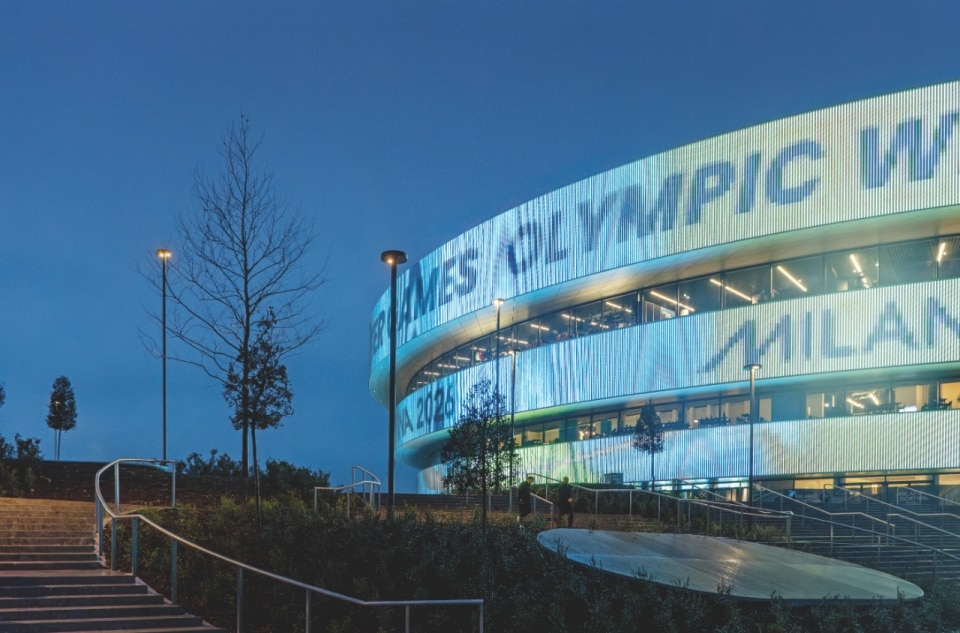
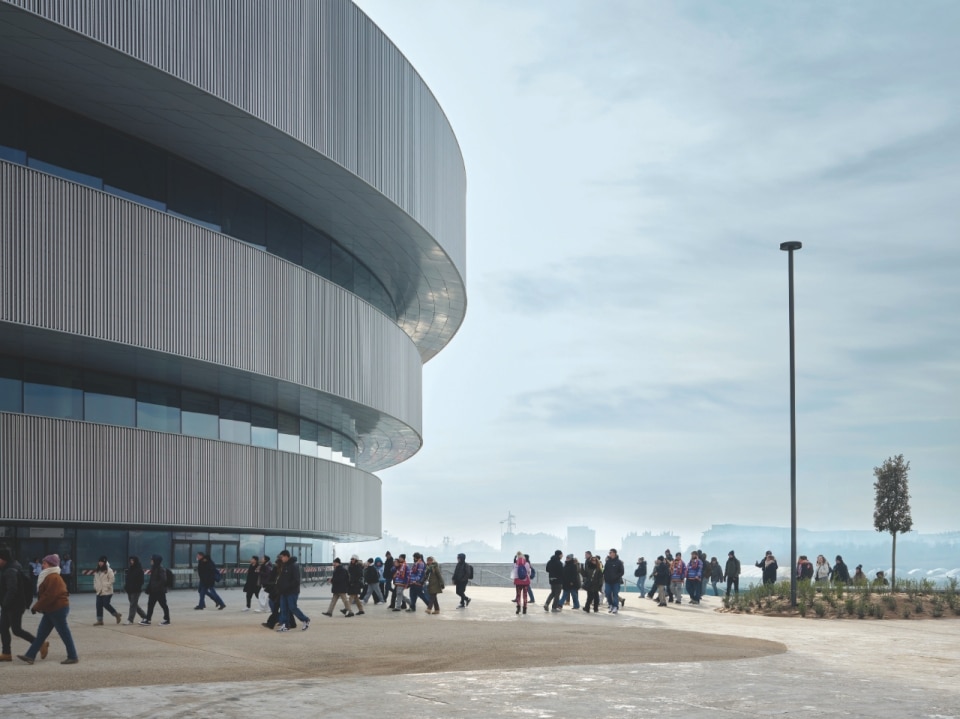
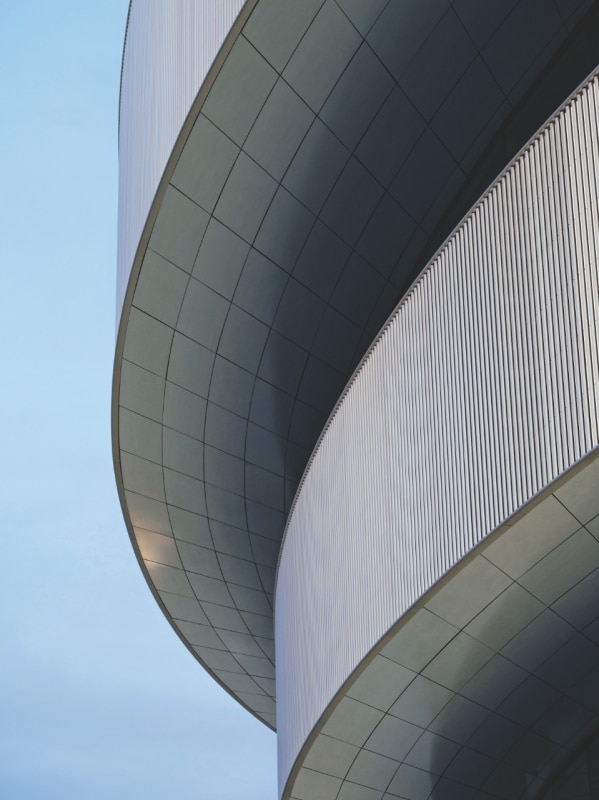
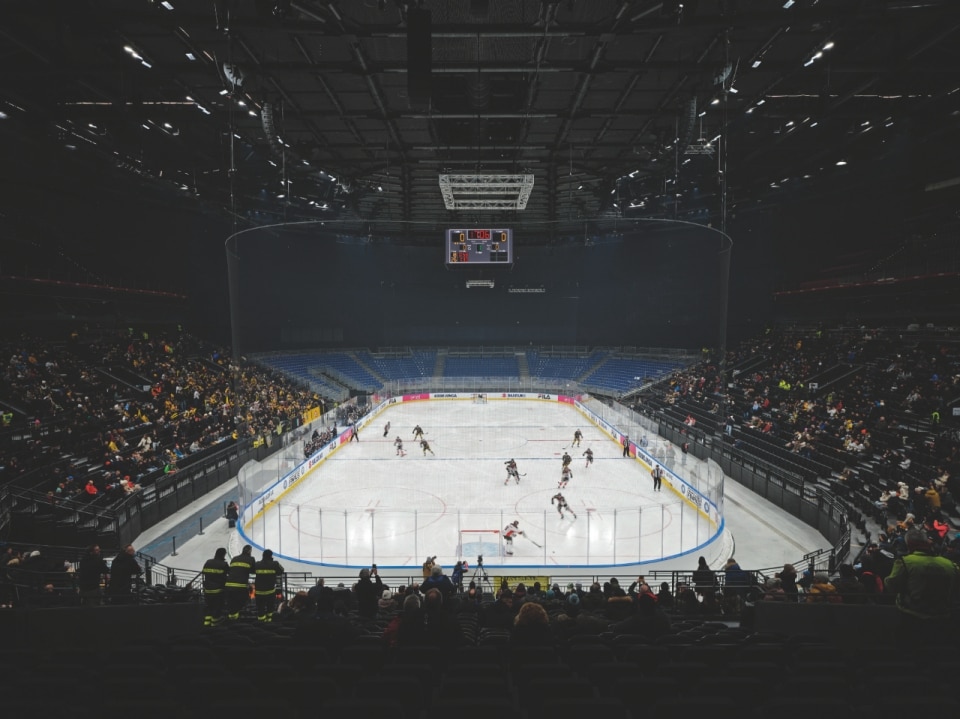
It is the newest addition and some may raise an eyebrow, but Arena Santa Giulia—the landmark that has become a symbol of the unsustainability of the Milan Cortina 2026 Winter Olympics—deserves to be the first entry in our guide. Not so much because of its architectural value as for what it represents within the broader context of Milan's urban transformations. With its three tiers, 16,000 seats and design by David Chipperfield, Arena Santa Giulia is currently the largest sports arena in Italy. Located outside the city centre, about two kilometres from the A1, it stands in a district that was once industrial and peripheral and is now being transformed, thanks to a regeneration project by Mario Cucinella Architects, into one of Milan's new green hubs.
The station that looks like a whale skeleton
Reggio Emilia AV Mediopadana station, Santiago Calatrava, 2013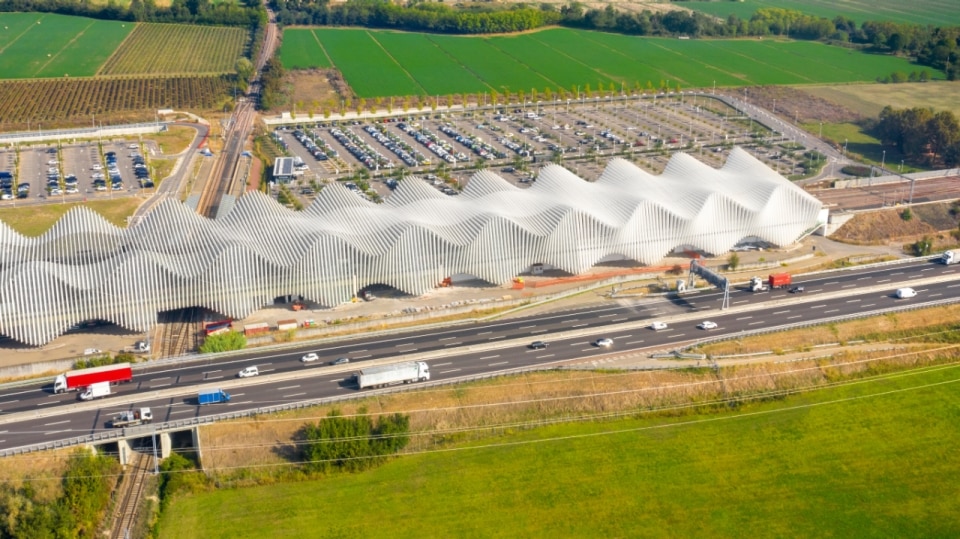
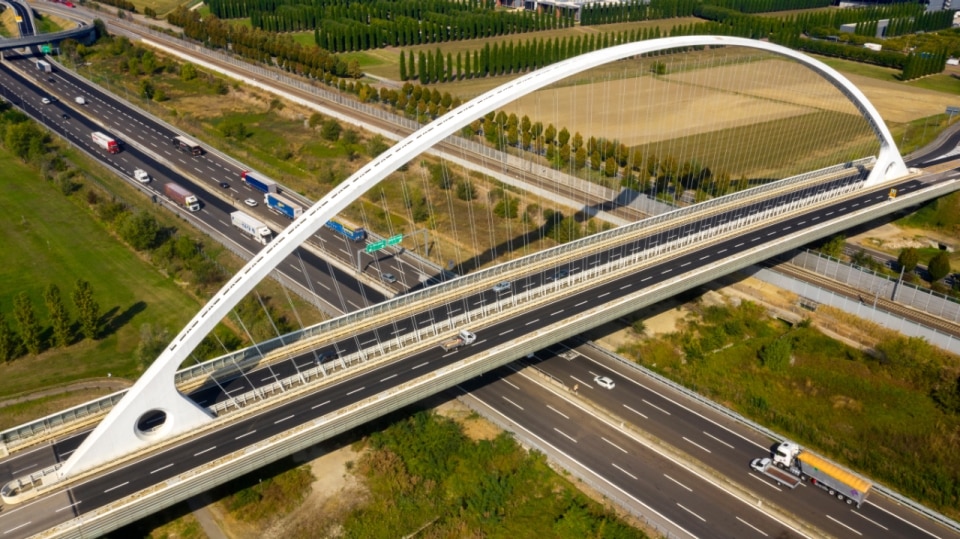
A large white skeleton runs parallel to the motorway and, from the car window, seems to move like a wave across the Po Valley. This is the Mediopadana high-speed station, designed by Santiago Calatrava and completed in 2013 on the outskirts of Reggio Emilia. Stretching for 480 metres and composed of a sequence of white steel ribs, the station is the centrepiece of the group of works that the Spanish architect designed at the entrance to the province, alongside the three bridges over the Autostrada del Sole and the motorway toll station. Commissioned by local authorities in the early 2000s, the project stemmed from an unusual ambition for a region that was still little known outside its productive system: to transform the motorway and the railway into a new gateway to the city.
Europe’s first bridge service station
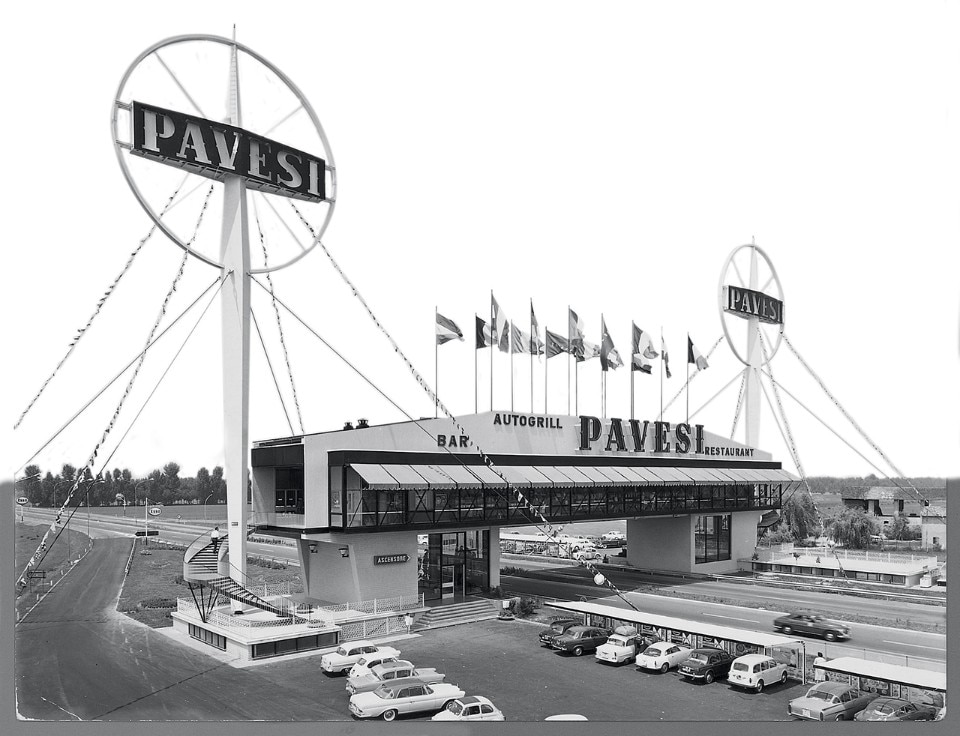
Pavesi Autogrill of Fiorenzuola d’Arda, Angelo Bianchetti, 1959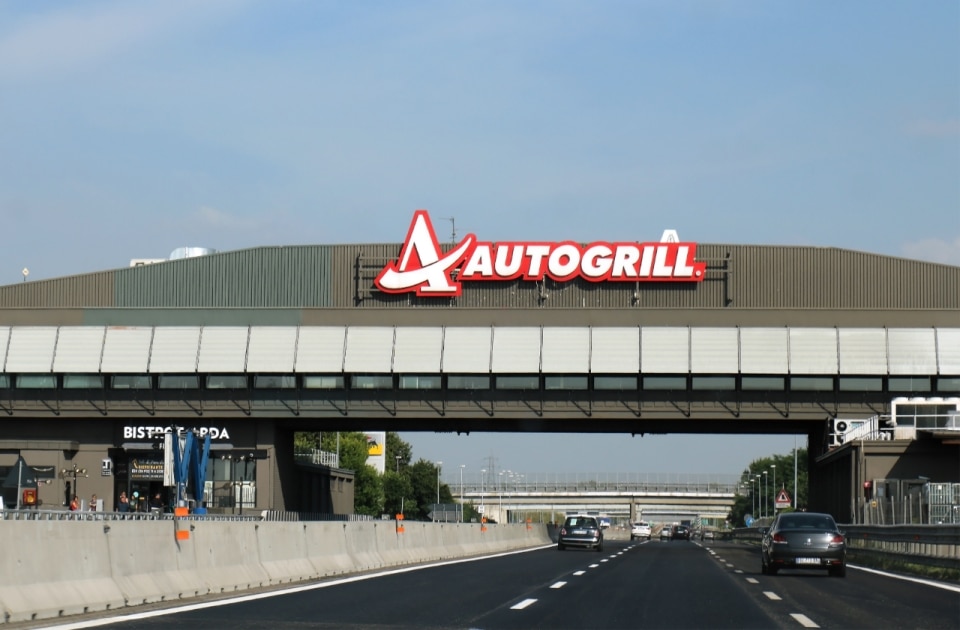
Even before the Autostrada del Sole was completed, Italy had already begun building the monuments of its new car culture: motorway service stations. One of the most famous stands in Fiorenzuola d’Arda, in the province of Piacenza. The Pavesi Autogrill of Fiorenzuola d’Arda was Europe’s first bridge service station. Designed by Angelo Bianchetti for Pavesi and inaugurated in 1959, it literally spans the motorway, allowing drivers travelling in both directions to stop in the same building. The Pavesi Autogrill appeared in magazines, postcards and advertising campaigns of the period celebrating the country’s new mobility, becoming one of the most recognisable images of Italy’s economic boom. Today it has been updated and transformed to adapt to the evolution of motorway dining, but it continues to dominate the A1 carriageway.
Aldo Rossi’s rationalist city of the dead
San Cataldo Cemetery, Aldo Rossi and Gianni Braghieri, 1984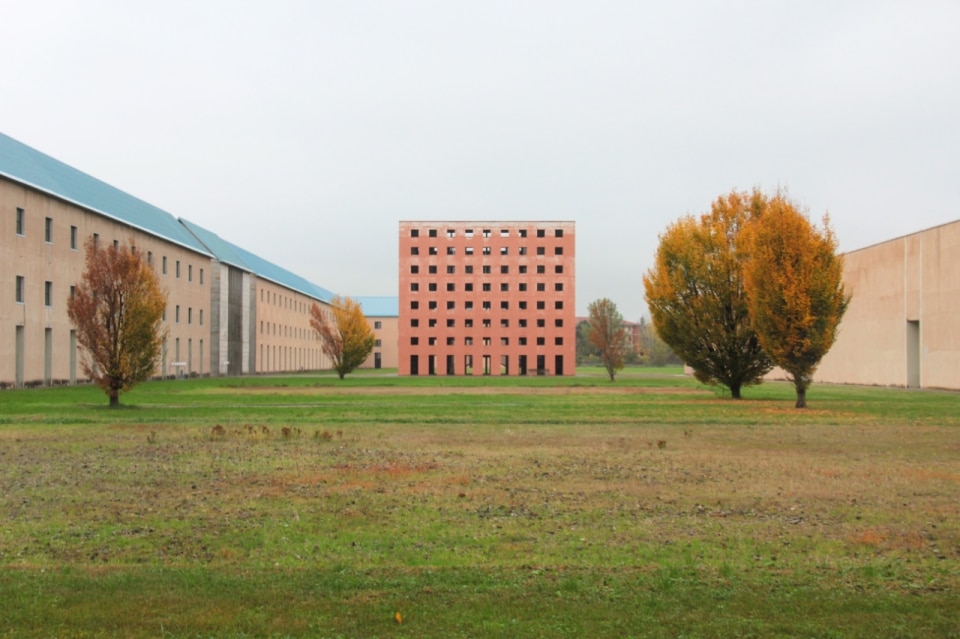
It looks like a painting by Giorgio de Chirico, but it is in fact a cemetery designed by Aldo Rossi and Gianni Braghieri on the outskirts of Modena, in Emilia-Romagna, five kilometres from the Modena Nord exit. Divided between the nineteenth-century cemetery, the Jewish cemetery and the new extension designed by the two architects between 1971 and 1984, the San Cataldo complex is one of the most intriguing detours in this guide. More than a cemetery, Rossi imagined a true “city of the dead”: a sequence of porticoes, pathways and essential geometric volumes that translated into architecture the reflections he developed during the same years in his seminal book, The Architecture of the City. At the centre of the complex stands the celebrated terracotta-coloured cubic ossuary, an empty house punctuated by square openings repeated to infinity.
Not an industrial complex but a museum of architecture
Ferrari Citadel, Renzo Piano, Massimiliano Fuksas, Jean Nouvel, Marco Visconti and Luigi Sturchio, 1997–present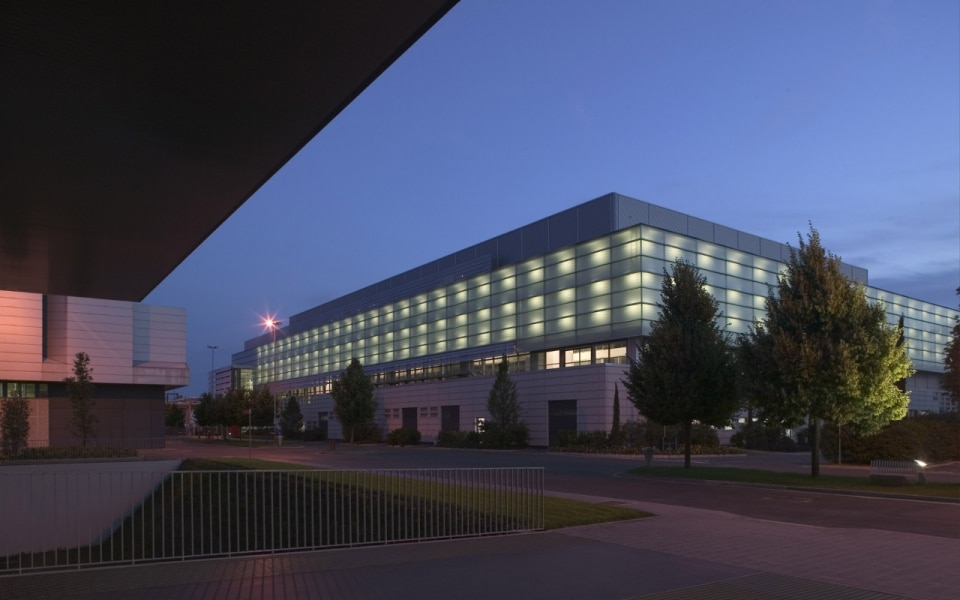
Renzo Piano, Massimiliano Fuksas, Jean Nouvel, Marco Visconti and Luigi Sturchio: this is not a shortlist for an architecture prize but the group of designers involved, from the late 1990s to the present, in the creation of the Ferrari Citadel in Maranello, in the province of Modena. Located about fifteen kilometres from the Modena Sud exit, the complex of production facilities, research and development centres, offices and infrastructure belonging to the Prancing Horse brand represents one of the most ambitious industrial transformations of recent decades. Here, almost every building has been entrusted to a starchitect. There is Renzo Piano’s Wind Tunnel, whose forms are inspired by the mechanical components of an engine; Jean Nouvel’s New Mechanical Workshop, which challenges the traditional image of the factory; Massimiliano Fuksas’s Sports Management Centre; and Marco Visconti’s Paint Shop, recognisable for its long metallic façade that reflects the light of the Emilia plain like the bodywork of a car fresh off the assembly line.
A church for motorists
Church of Sant’Angelo al Cantagallo, Melchiorre Bega, 1966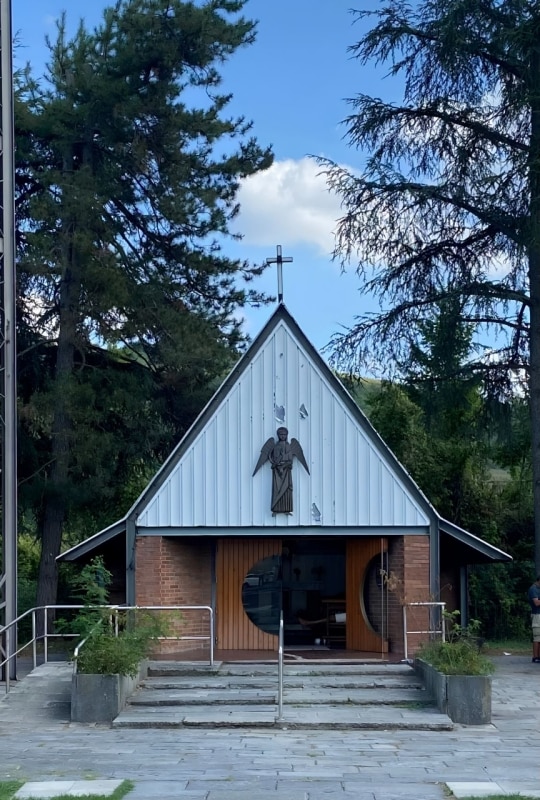
It is one of Italy’s most unusual churches because it stands within a motorway service area. Built in 1966 to a design by Melchiorre Bega inside the Cantagallo service station between Bologna and Florence, the Church of Sant’Angelo al Cantagallo resembles a small Alpine chapel transplanted into the landscape of Italy’s economic boom: an essential volume with a pitched roof and a delicate lattice bell tower emerging among car parks, acceleration lanes and streams of traffic. Its presence tells the story of a particular moment in the history of the Autostrada del Sole. Inaugurated a few years after the completion of the A1 in memory of Angelo Motta, the church grew out of the idea—now almost entirely forgotten—that the motorway could be more than a collection of petrol stations and restaurants, and could instead become a civic infrastructure with spaces for social life, contemplation and even prayer.
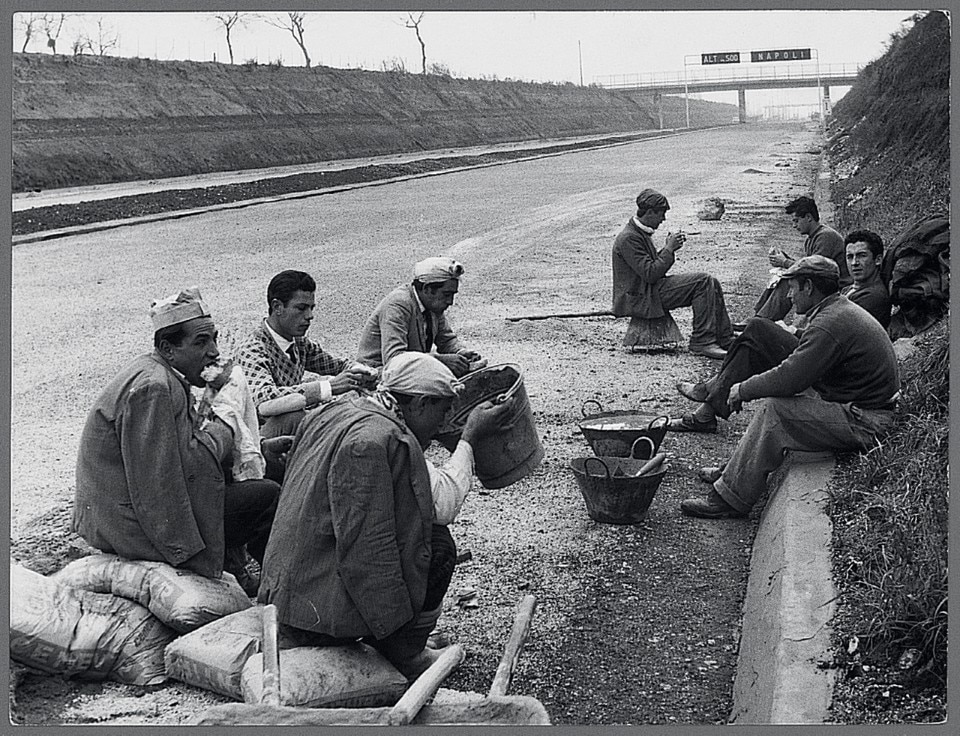
Another church, this time built to commemorate the workers who died constructing the A1
Church of San Giovanni Battista, Giovanni Michelucci, 1964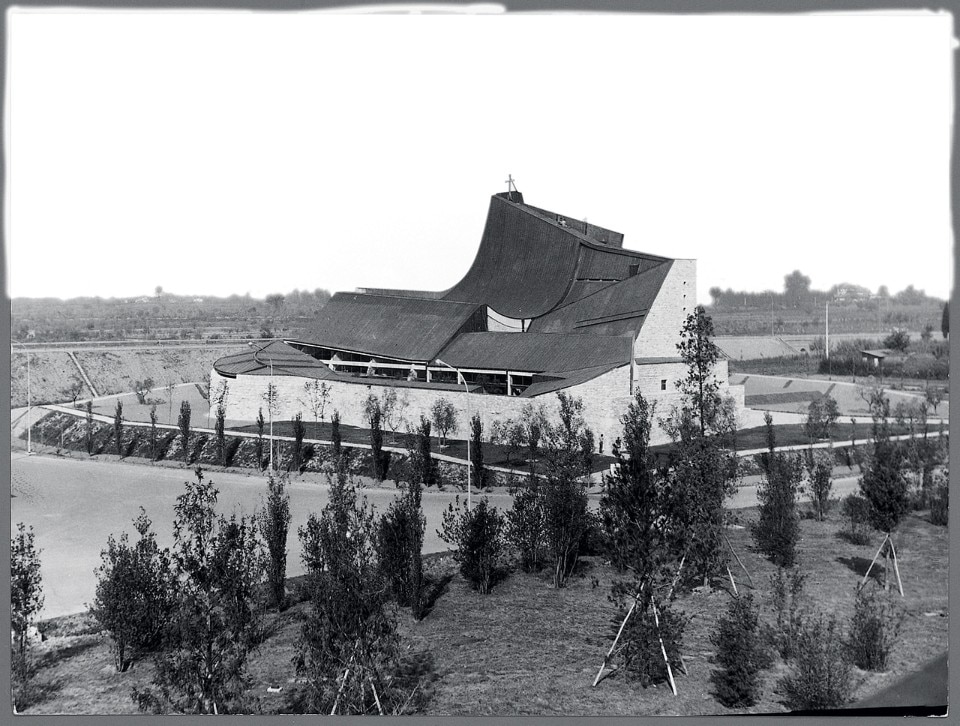
A few kilometres farther south, near Firenze Nord, the Autostrada del Sole encounters another church that is one of the masterpieces of twentieth-century Italian architecture. The Church of San Giovanni Battista, better known as the Church of the Autostrada del Sole, was designed by Giovanni Michelucci between 1960 and 1964 to commemorate the workers who lost their lives during the construction of the A1. Far removed from the monumentality of traditional churches, the building unfolds like a great tent of stone and copper shaped by the wind. Michelucci imagined an open and welcoming structure designed for travellers arriving from every direction and from every social background.
Italy’s first contemporary art museum was born beside the motorway
Centro per l’arte contemporanea Luigi Pecci, Italo Gamberini, 1988; extension by Maurice Nio, 2016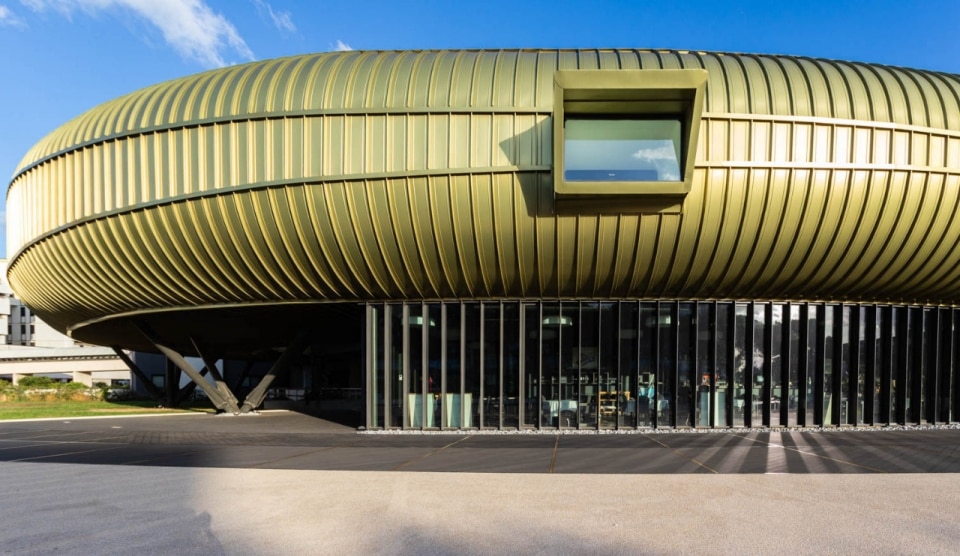
In 1988, the Venice Biennale celebrated its ninety-third anniversary, Arte Povera had conquered the international scene and Alighiero Boetti was at the height of his career. Yet Italy still did not have a museum purpose-built for contemporary art. The first would rise in Prato, just minutes from the motorway, in the heart of one of the country’s most important industrial districts. Opened in 1988 to a design by Italo Gamberini, the Centro per l’arte contemporanea Luigi Pecci was founded at the initiative of textile entrepreneur Enrico Pecci in memory of his son Luigi, and its location says much about Italy in those years: not in the historic centre of a major cultural capital, but in Tuscany’s productive outskirts, among warehouses, ring roads and infrastructure. Since 2016, the museum has been recognisable from afar thanks to the extension designed by Dutch architect Maurice Nio, who wrapped the original building in a large metal ring. The result is an architecture that looks like a spaceship that has landed in the Tuscan plain. And, in a sense, in late-1980s Italy, it truly was.
The invisible winery carved into the Chianti hills
Antinori nel Chianti Classico Winery, Archea Associati, 2013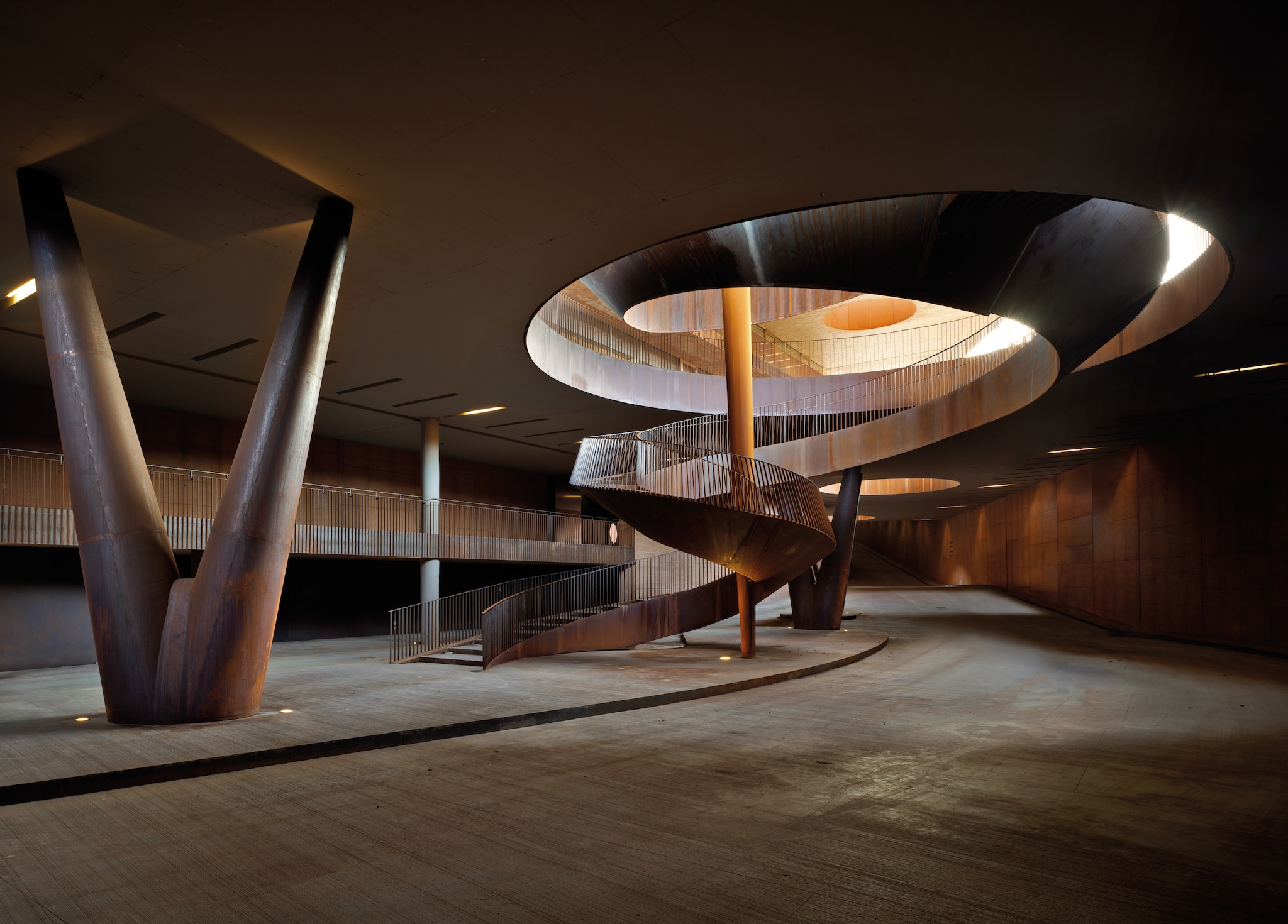 View gallery
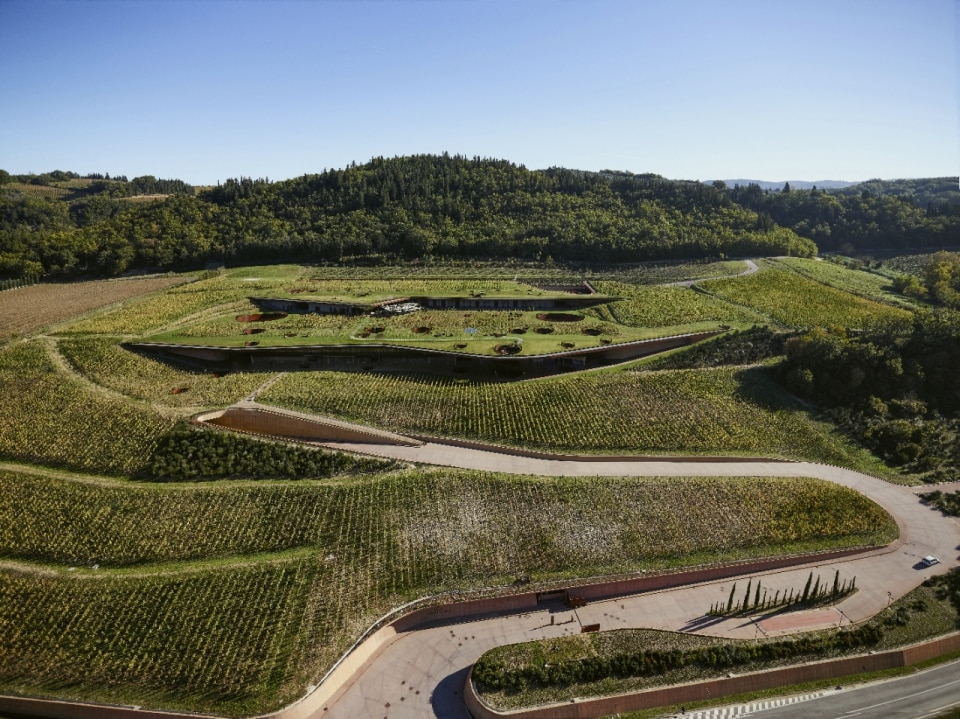
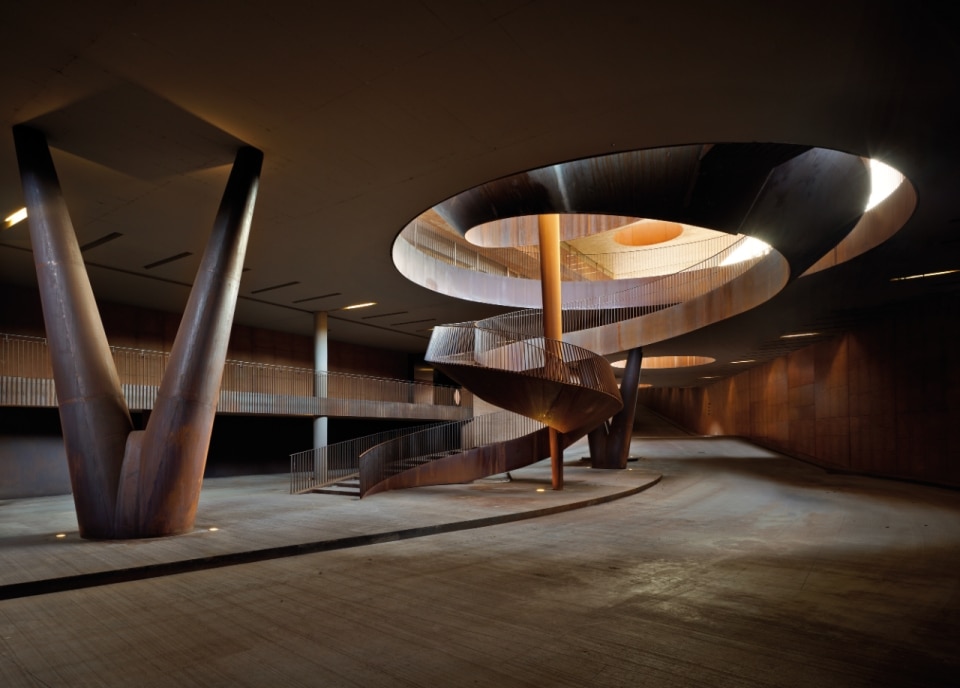
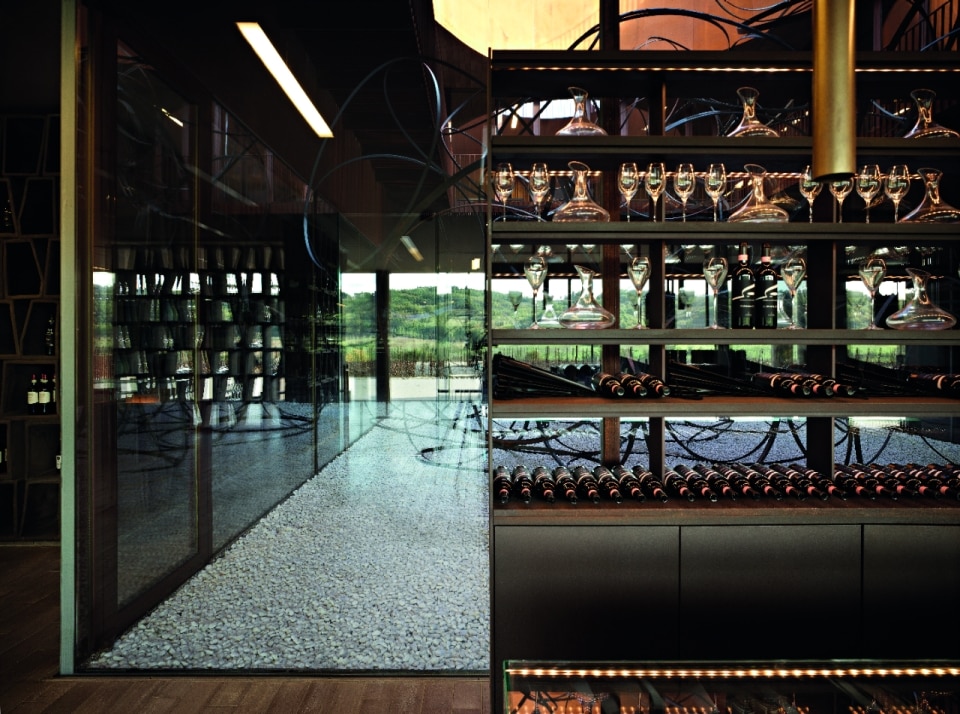
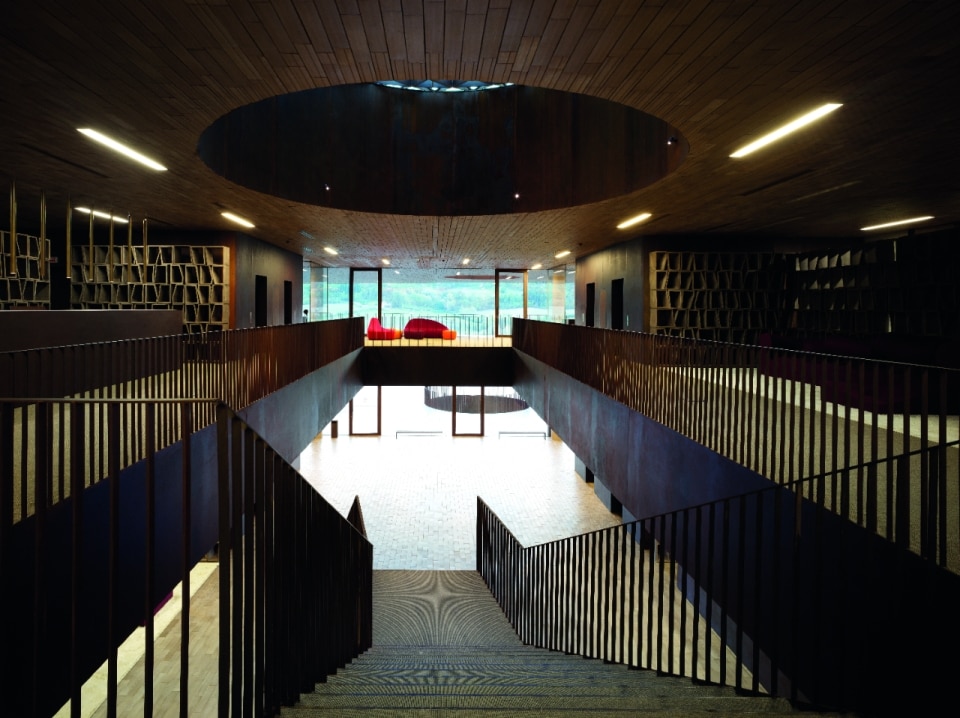
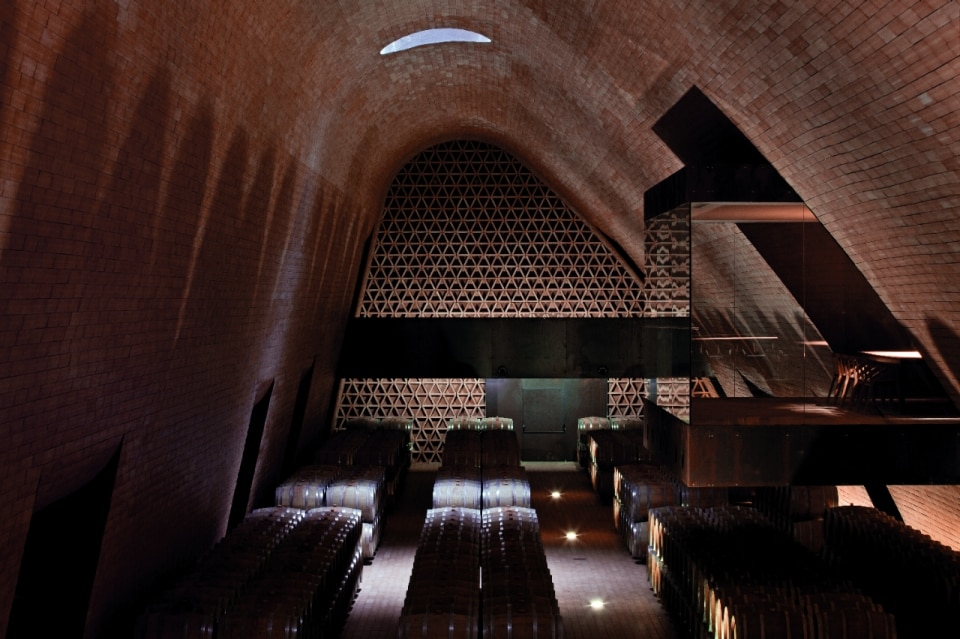
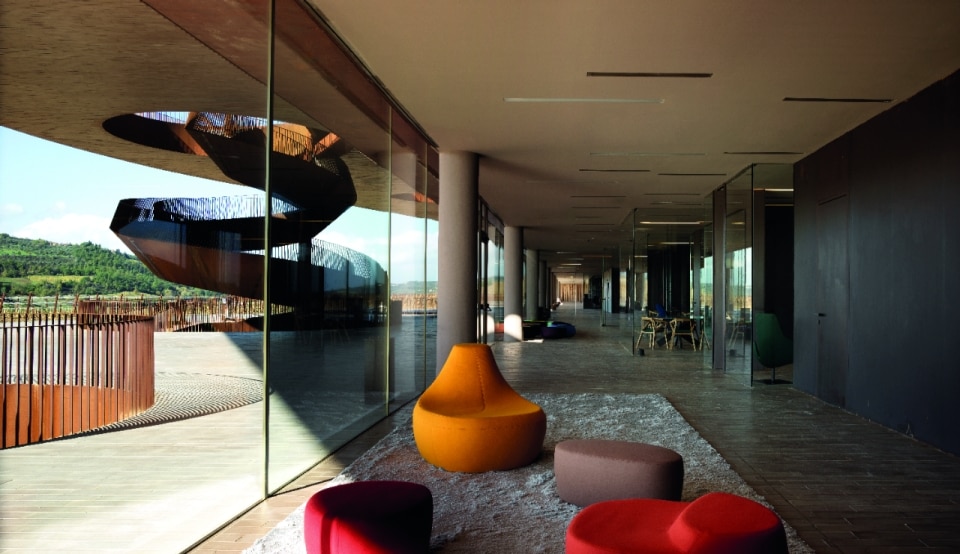
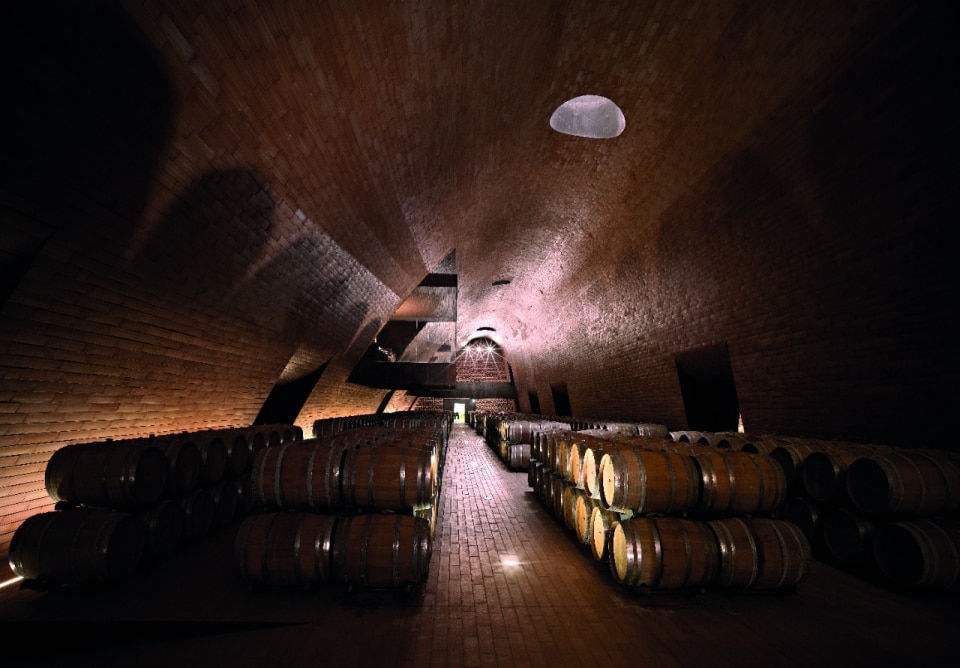
When speaking of camouflaged architecture, one might think of Tadao Ando’s museum on Naoshima, BIG’s Tirpitz Museum hidden among the Danish dunes or Zaha Hadid’s Messner Mountain Museum embedded in the Dolomites. Yet one of the most successful “invisible” buildings of recent years is located in Italy, among the hills of Chianti and just a few minutes from the A1. Designed by Marco Casamonti and Archea Associati for the Antinori family, the Antinori nel Chianti Classico Winery is a structure of nearly 50,000 square metres carved directly into the hillside. Its roofs are planted with vineyards, the materials echo the colours of the earth and the production process follows the natural slope of the terrain. The result is an almost invisible building that has received international recognition and has even been celebrated by The New York Times as one of the most significant architectural destinations in contemporary Tuscany.
The outlet that captures the obsessions of the 2000s
Barberino Designer Outlet, 2006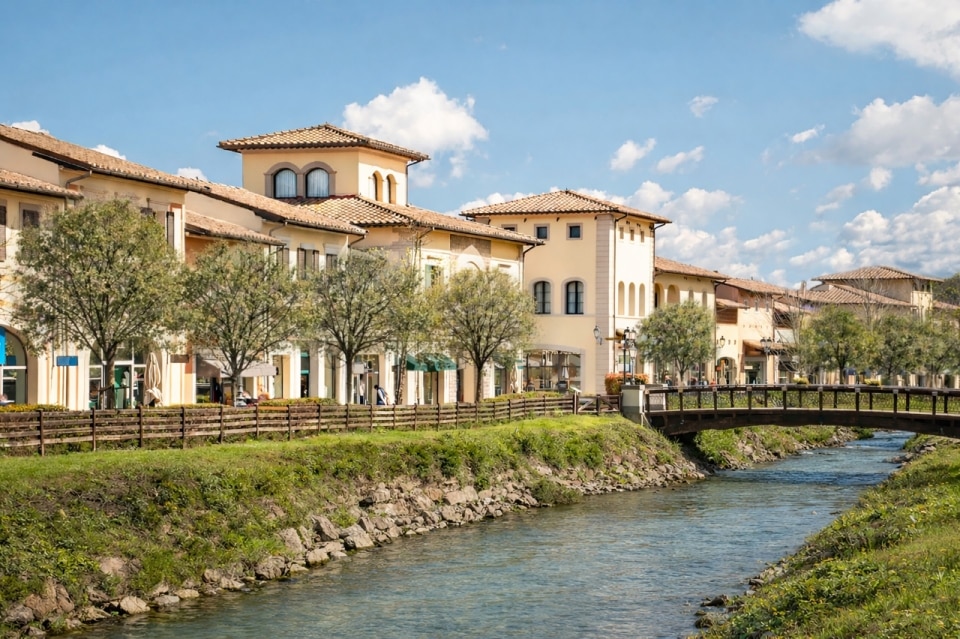
Transforming consumption into an all-encompassing experience through the construction of an artificial town isolated beside the motorway: few places tell the story of the obsessions of the 2000s better than the Barberino Designer Outlet, at the Barberino di Mugello exit, about thirty kilometres north of Florence. If the years of the economic boom produced churches, futuristic service stations and monuments to modernity, the beginning of the new millennium turned the Autostrada del Sole into the ideal setting for a new kind of pilgrimage: shopping. The result is a village inspired by Tuscan and Renaissance architecture, crossed by the River Sieve and punctuated by bridges, squares, courtyards and pedestrian streets that imitate the historic centres of the region.
The Sacro Gra: an infrastructure that became a narrative genre of its own
Grande Raccordo Anulare, 1951-1970
Few Italian infrastructures can claim a filmography and bibliography of their own. The Grande Raccordo Anulare is perhaps the only one to have become a literary and cinematic genre in itself. The ring road has been the subject of documentaries, novels, reportage and essays. It gave its title to Gianfranco Rosi’s Golden Lion-winning documentary Sacro GRA, was explored in Nicolò Bassetti’s reportage and became the landscape of choice for writers, filmmakers and photographers interested in portraying an upside-down Rome, far removed from monuments and postcards. Built from the 1950s onwards to connect the capital with the Autostrada del Sole and the country’s main transport routes, the GRA, with its roughly sixty-eight kilometres of development, is much more than a ring road. It is a narrative device that has, over the decades, revealed the real Rome, with its shopping centres, working-class neighbourhoods, petrol stations, warehouses, airports, abandoned archaeological parks and stretches of countryside—like those described by Pasolini—that survived urban expansion.
For almost twenty years, Italy’s most famous unfinished building
City of Sport of Tor Vergata, Santiago Calatrava, 2007–2025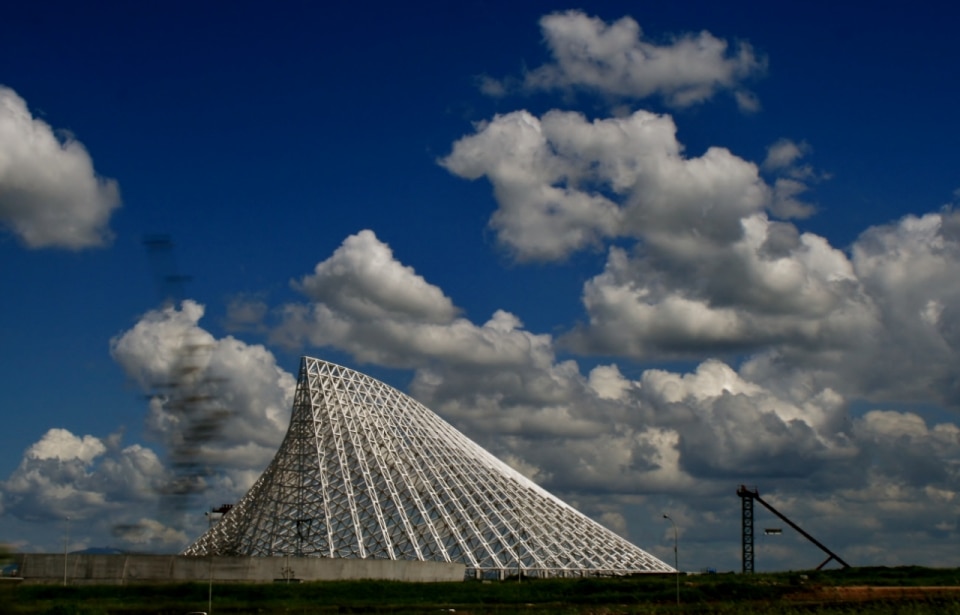
It was originally designed for the 2009 World Aquatics Championships in Rome, then construction was postponed indefinitely and only completed almost twenty years later on the occasion of the Jubilee. With its 75-metre height, Santiago Calatrava’s City of Sport of Tor Vergata was for nearly two decades Italy’s largest unfinished building. Visible from kilometres away and, for a long time, impossible to ignore for anyone travelling along the Roman stretch of the Autostrada del Sole, the so-called “Sail” became the symbol of an ambition suspended in time. The original project envisioned a vast sports complex for the University of Tor Vergata, comprising swimming facilities, arenas and research spaces, all covered by a spectacular white steel and glass structure inspired by the movement of a sail billowing in the wind.
Three white sails in Rome’s suburbs
Church of God the Merciful Father, Richard Meier, 2003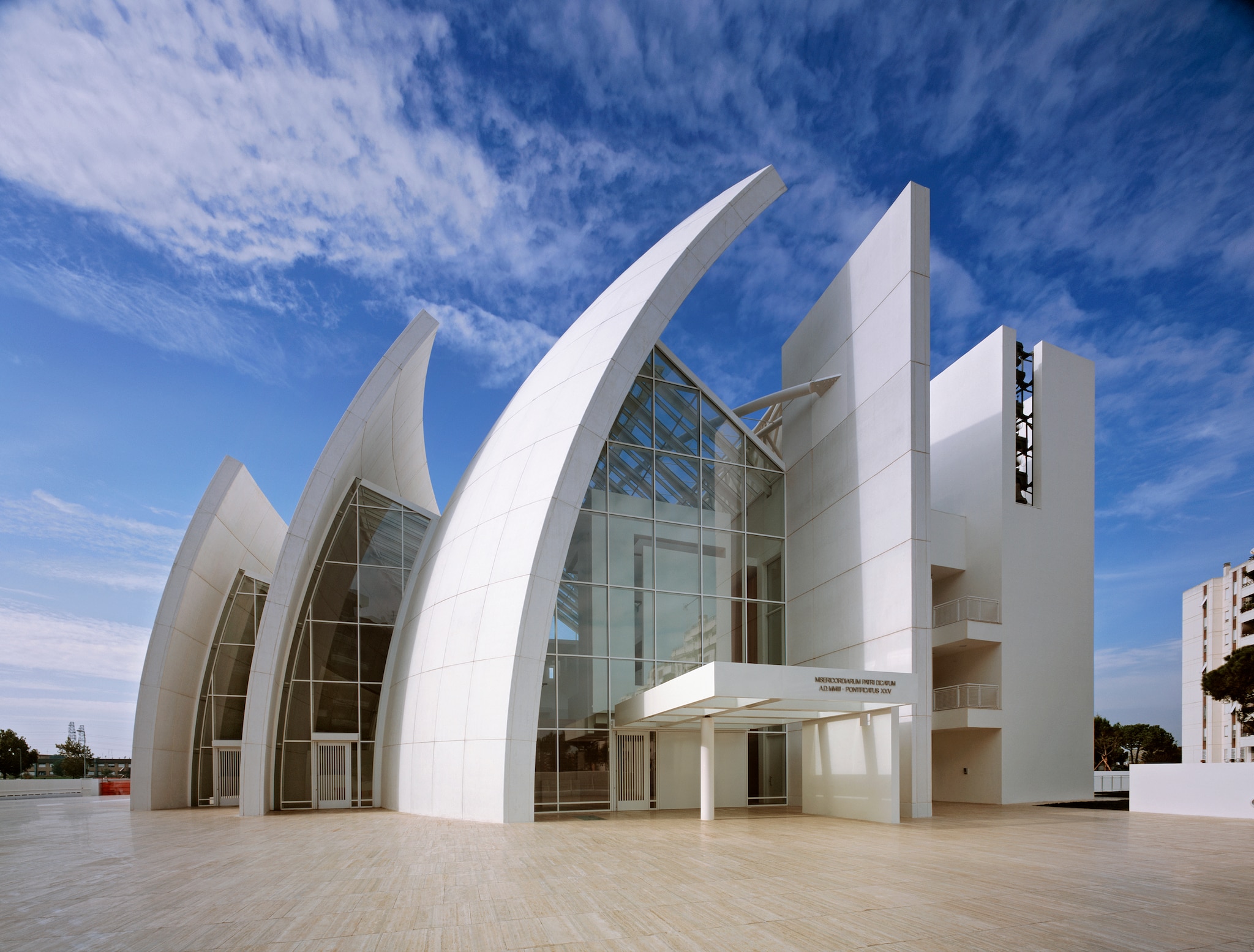 View gallery
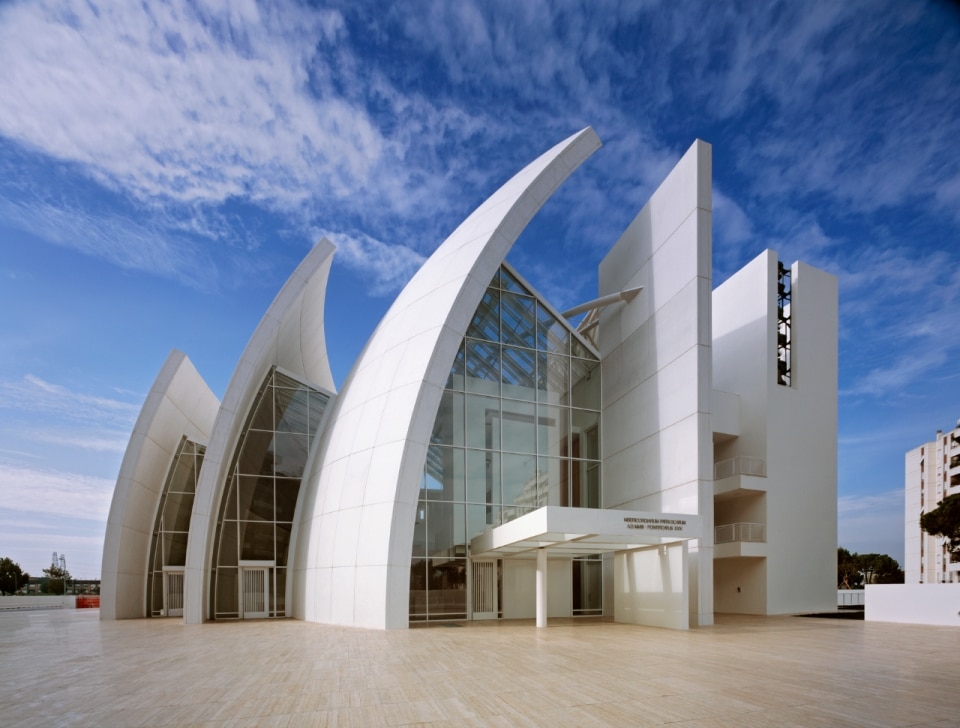
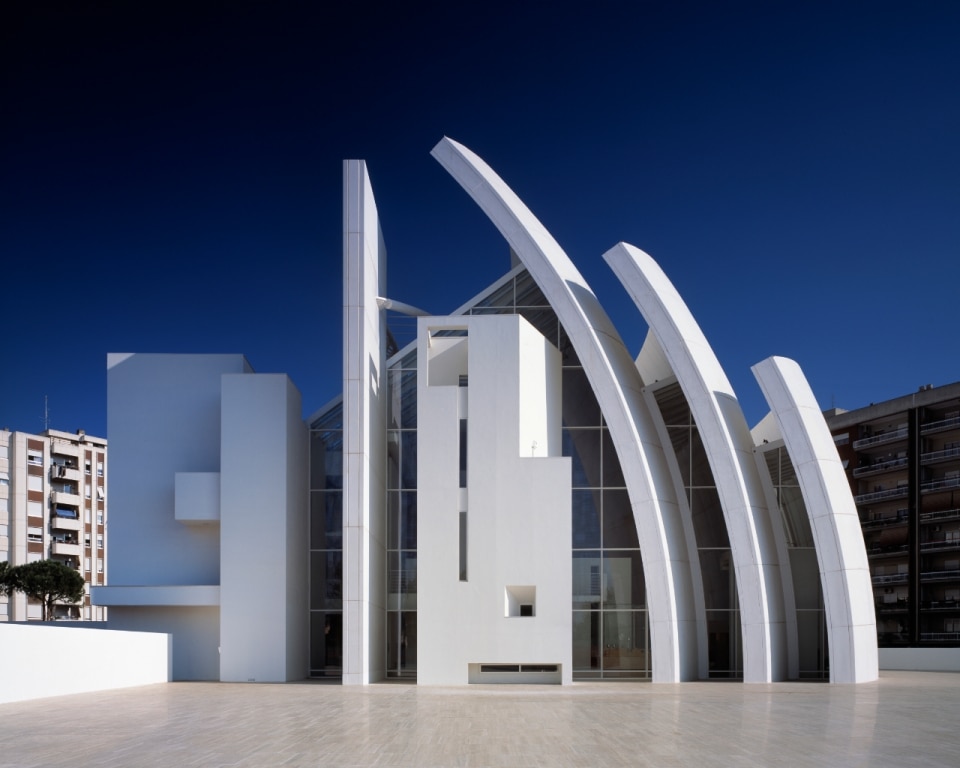
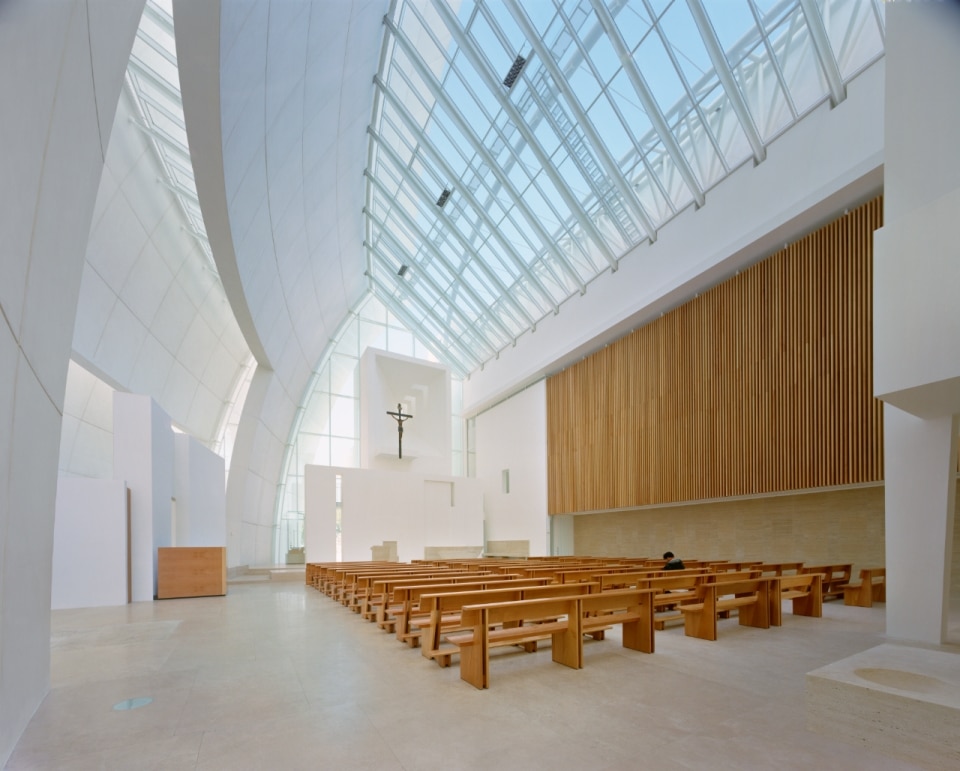
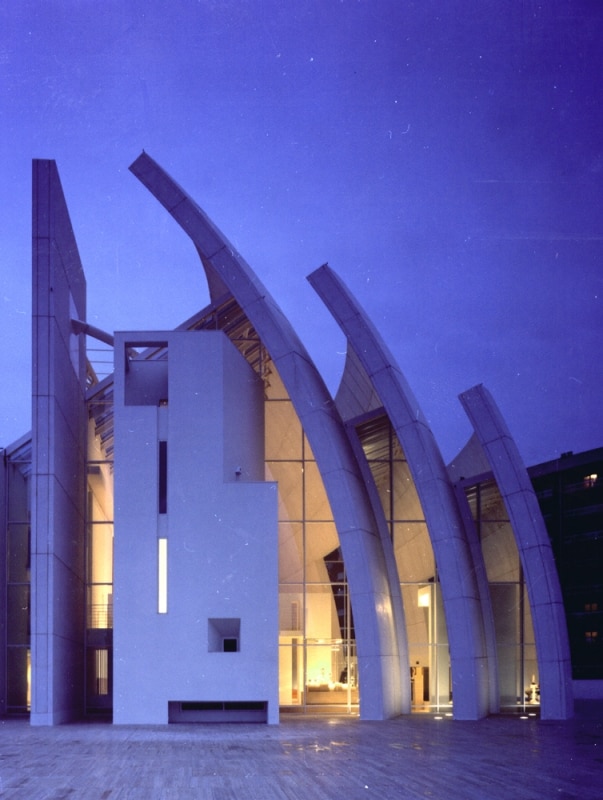
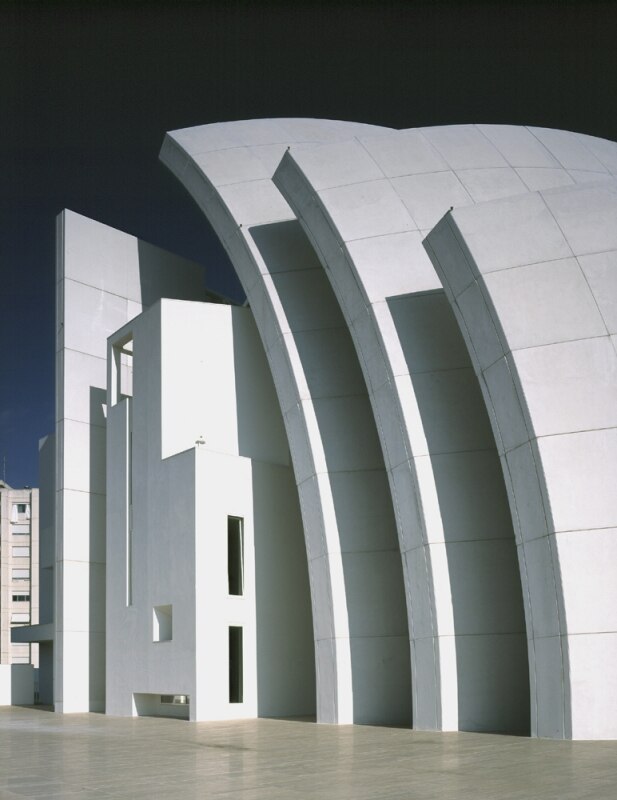
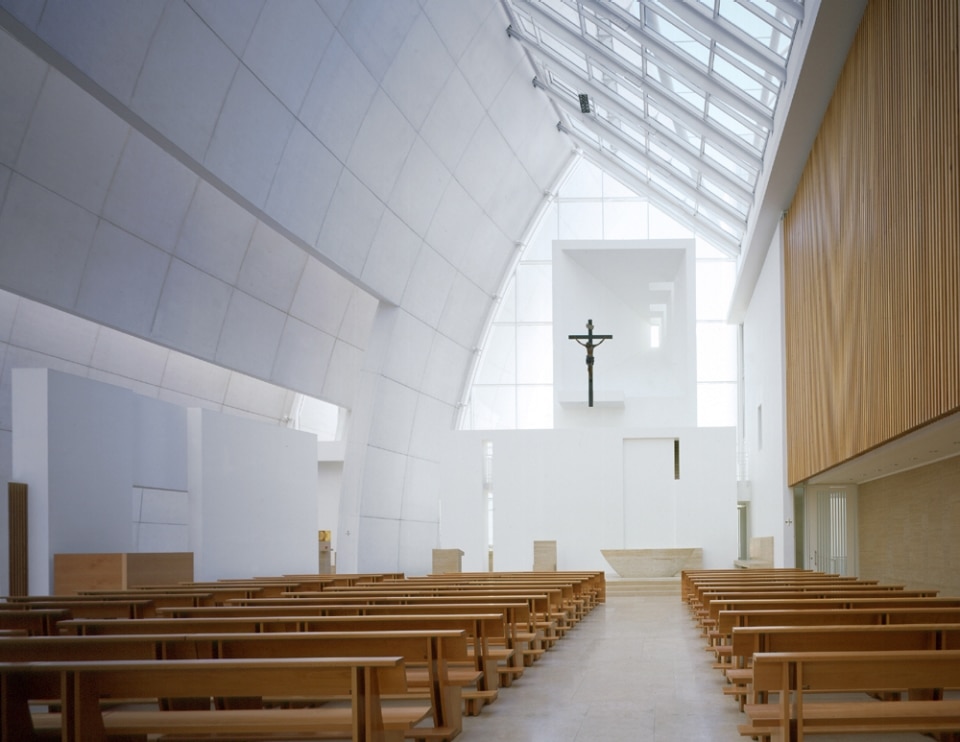
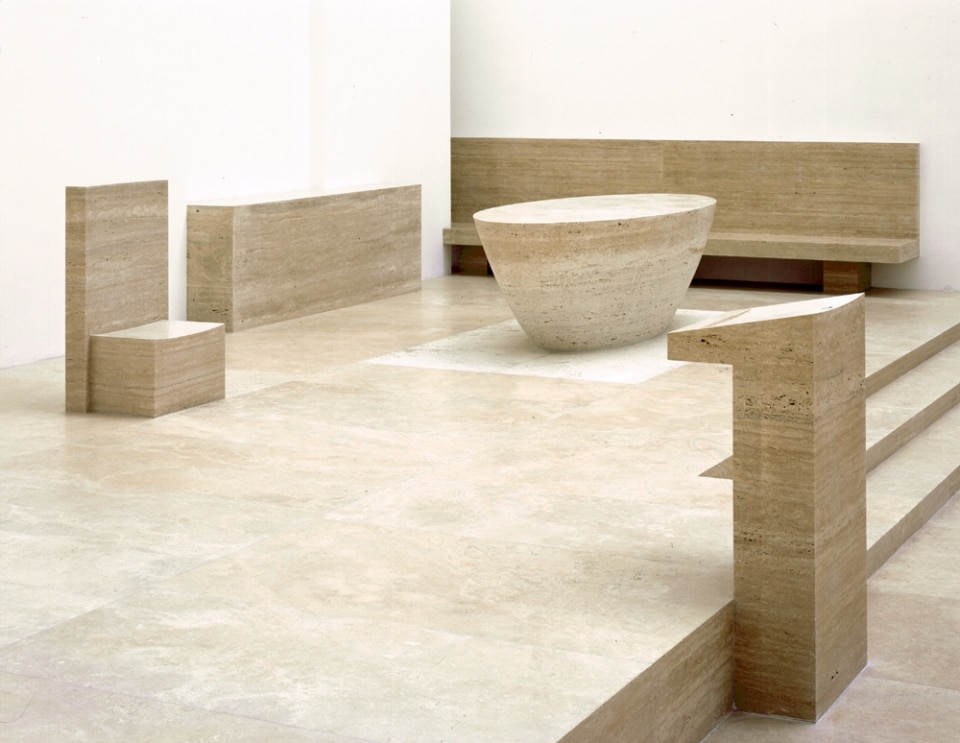
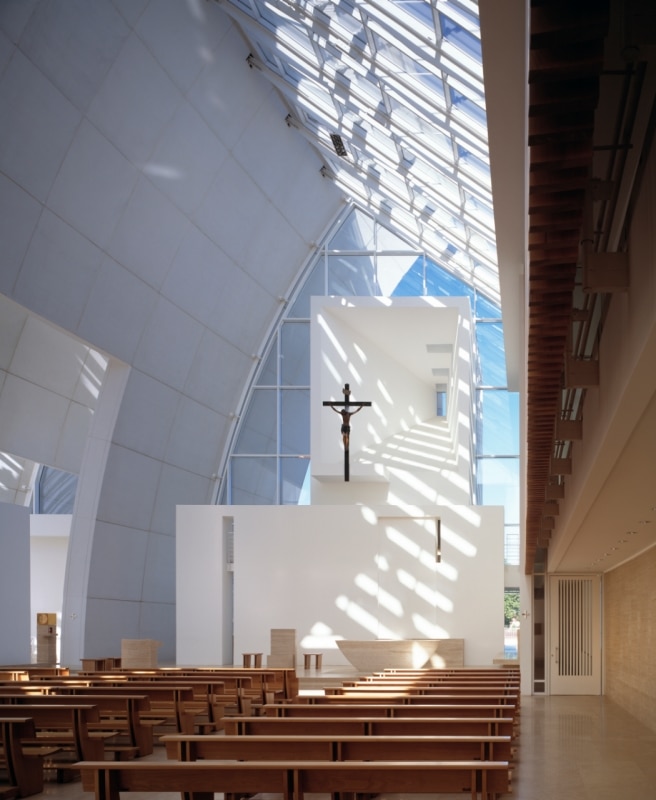
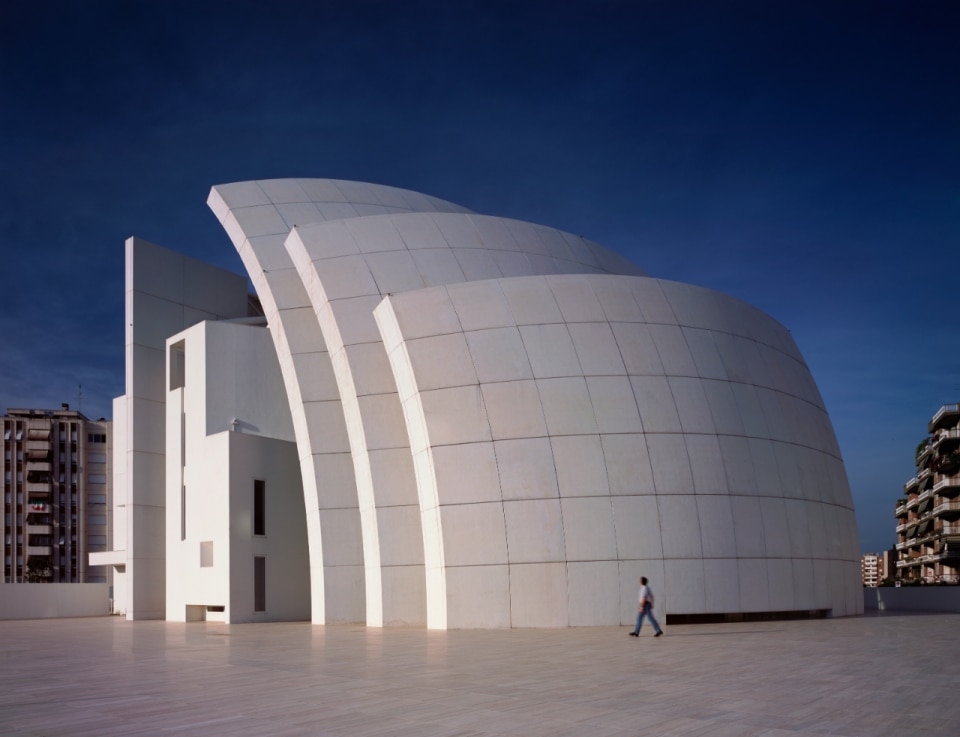
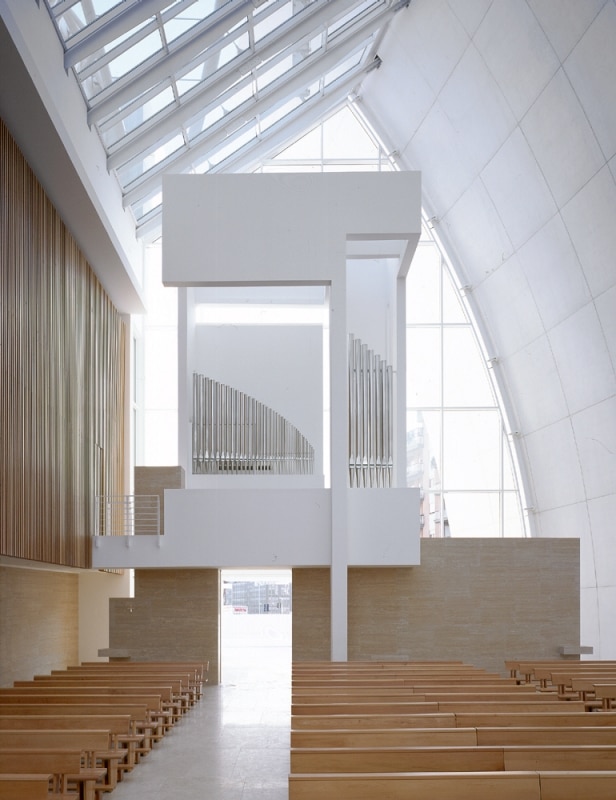
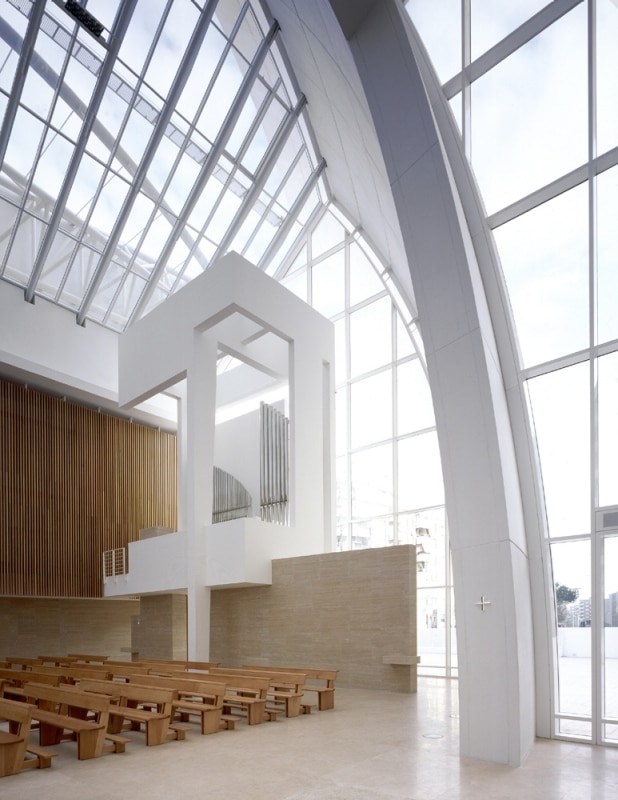
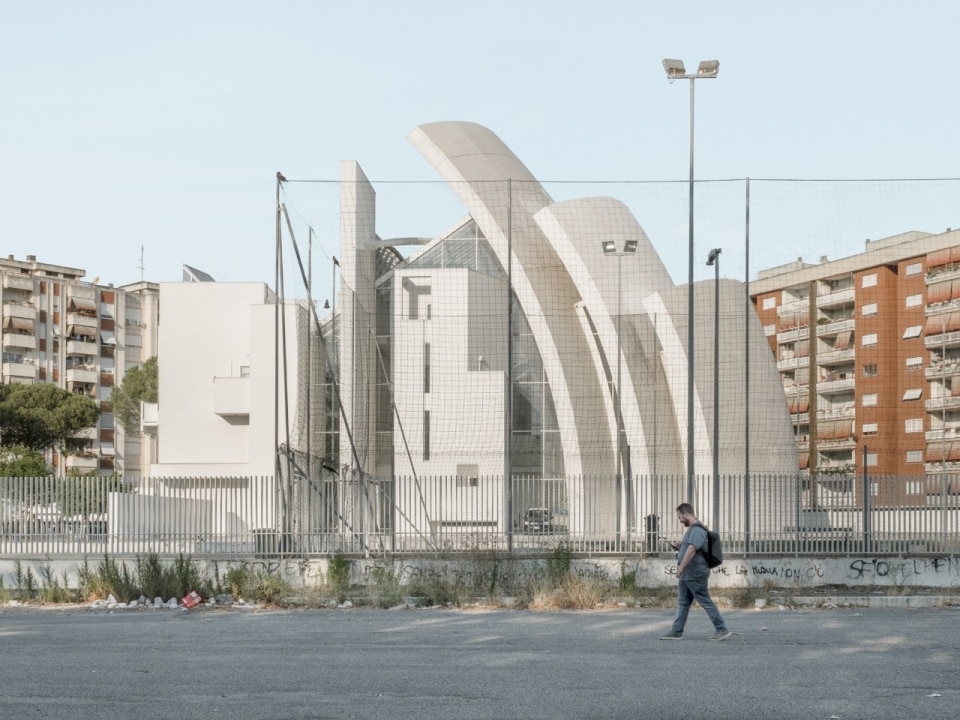
One of the most significant churches of contemporary Italian architecture was built in a suburb that, at the end of the 1990s, seemed to have no reason to attract international attention. Richard Meier’s Church of God the Merciful Father was commissioned as part of the “50 Churches for Rome” programme, launched in anticipation of the Jubilee of 2000 to provide the capital’s peripheral neighbourhoods with places for gathering and community life. Located about eight kilometres from the Autostrada del Sole, in the district of Tor Tre Teste, the building is composed of three large curved shells of white concrete that simultaneously evoke a ship and sails filled with wind. More than a place of worship, it was an attempt to create a new urban centre in a suburb that had grown rapidly during the second half of the twentieth century, entrusting architecture with the task of generating identity and a sense of belonging.
Italy’s greatest monument to postwar reconstruction
Abbey of Montecassino, founded in 529 CE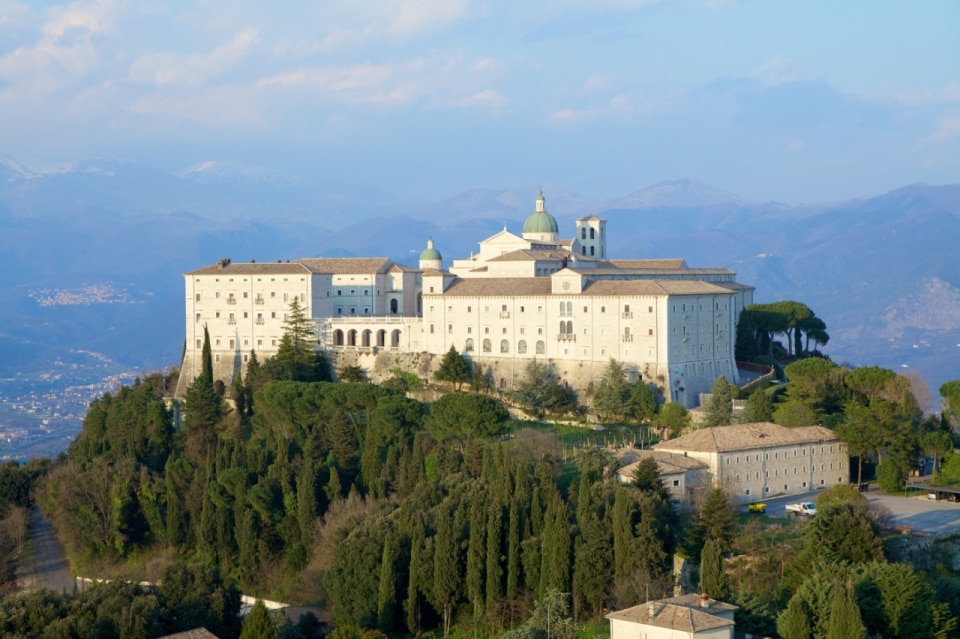
It is one of Europe’s largest monastic complexes and one of the founding places of Western culture. Above all, however, it is one of those buildings that has been destroyed and rebuilt time and again throughout history, becoming an extraordinary stratification of more than fifteen centuries of Italian history. Founded in 529 by Benedict of Nursia on the site of an ancient temple dedicated to Apollo, the Abbey of Montecassino stands 516 metres above sea level, on a hill overlooking the Liri Valley and the routes connecting Rome and Naples. Over the centuries, it was devastated by the Lombards, the Saracens, earthquakes and wars, only to be rebuilt each time. Its most dramatic destruction came on 15 February 1944, when the abbey was razed to the ground by Allied bombing during one of the bloodiest battles of the Second World War. Images of its ruins travelled around the world and transformed Montecassino into one of the symbols of the devastation of war. The building that visitors see today is the result of the great reconstruction effort launched after the conflict and completed in 1964, the very same year in which the A1 motorway was inaugurated.
Zaha Hadid’s futuristic station in Naples
Napoli Afragola High-Speed Station, Zaha Hadid Architects, 2017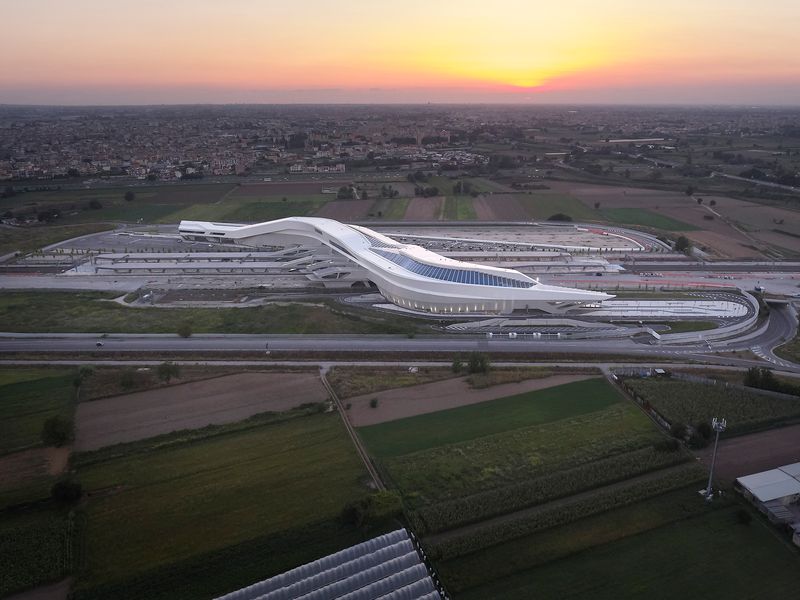 View gallery
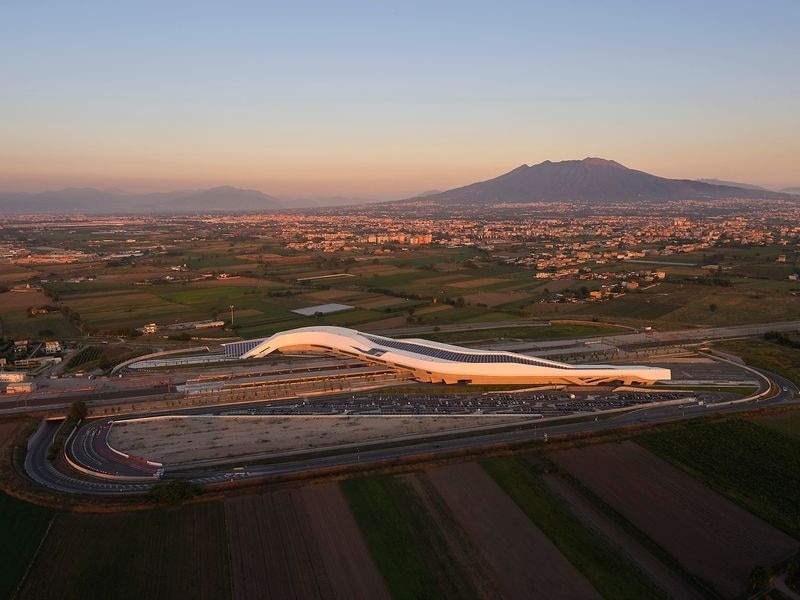
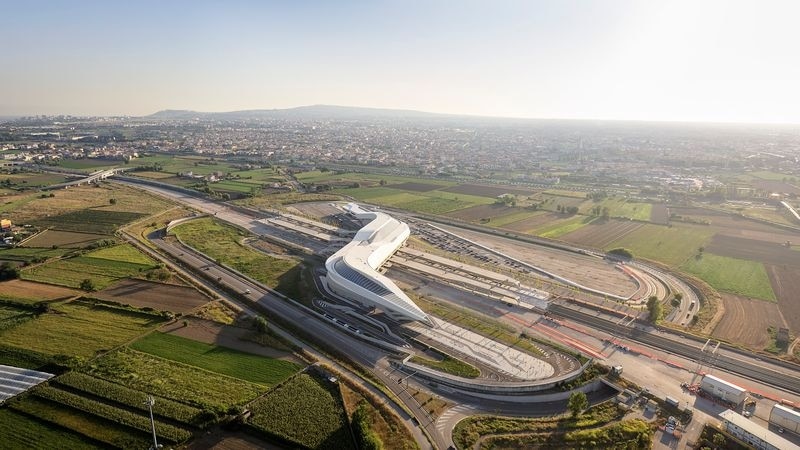
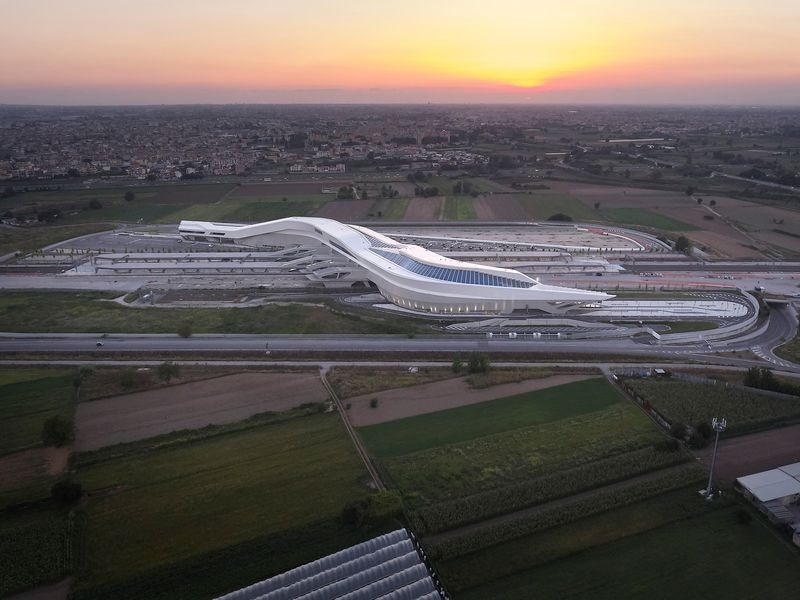
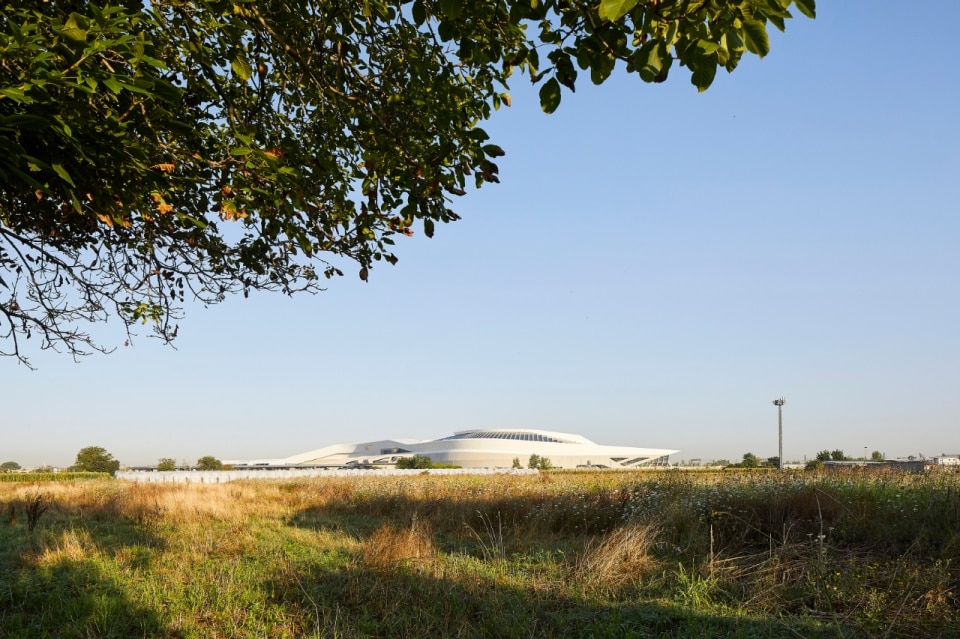
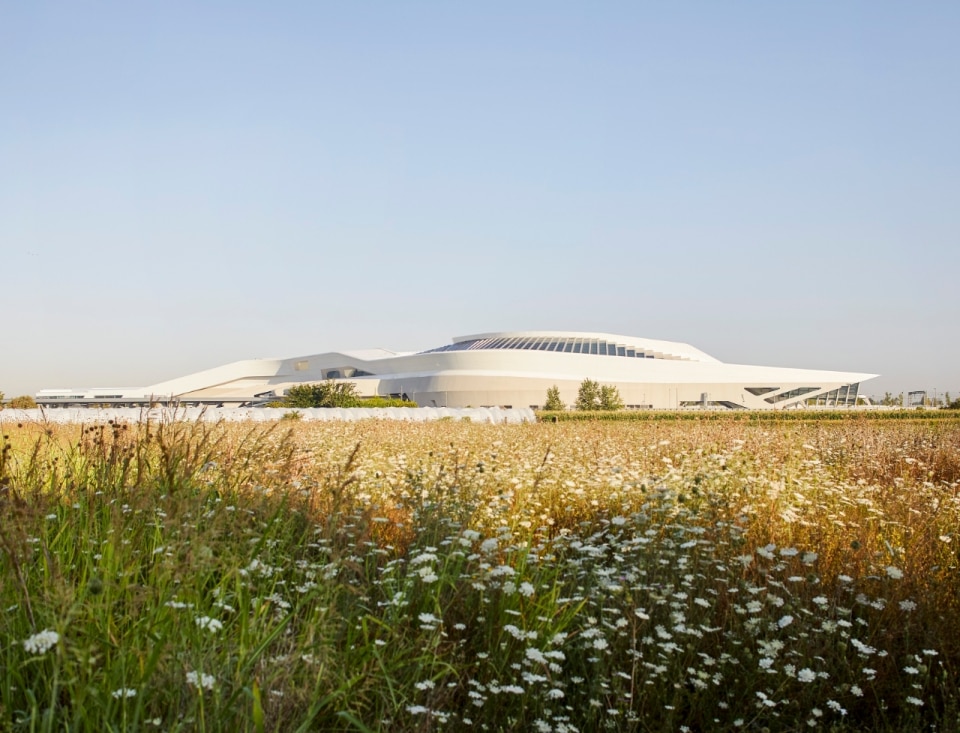
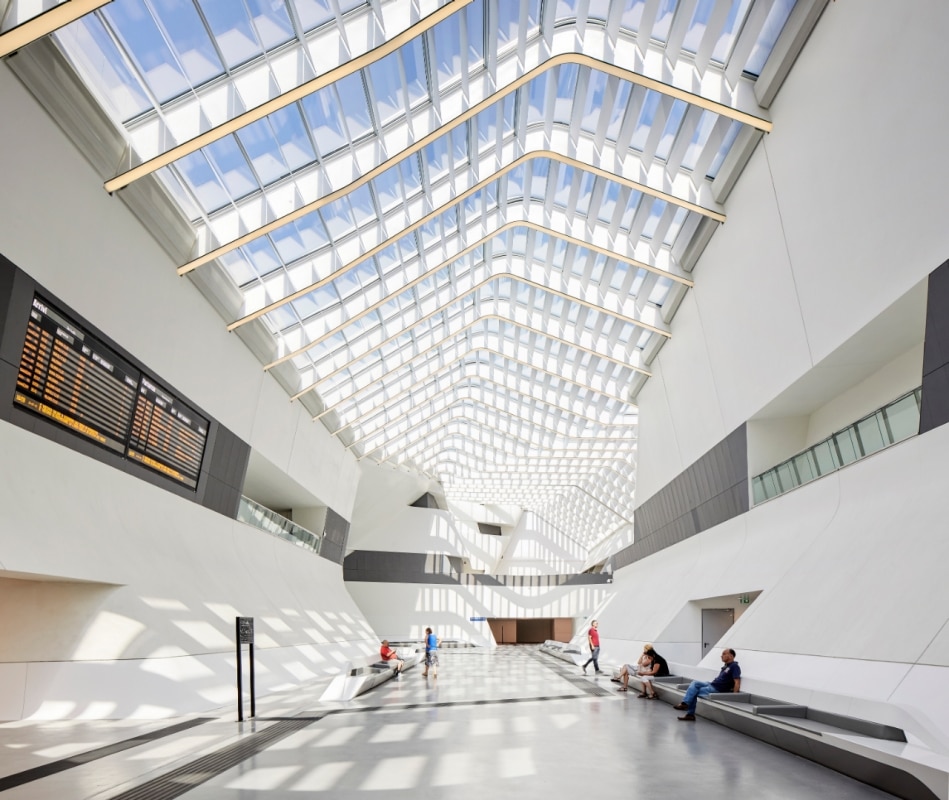
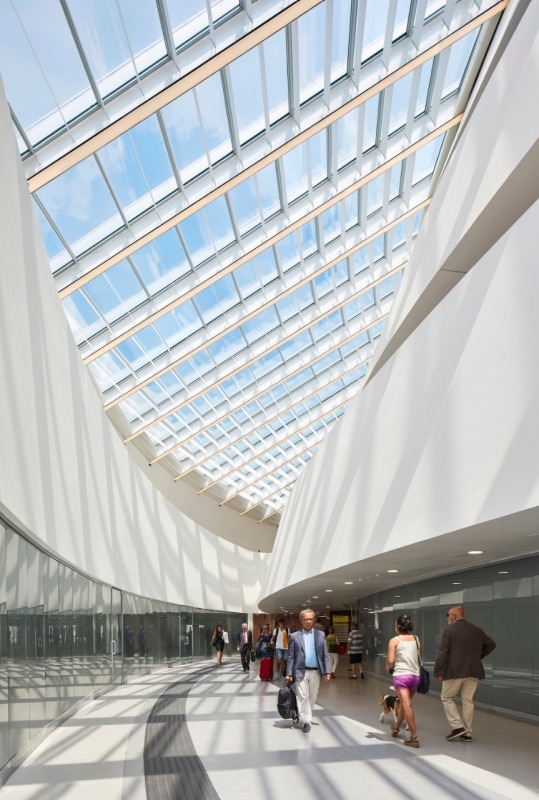
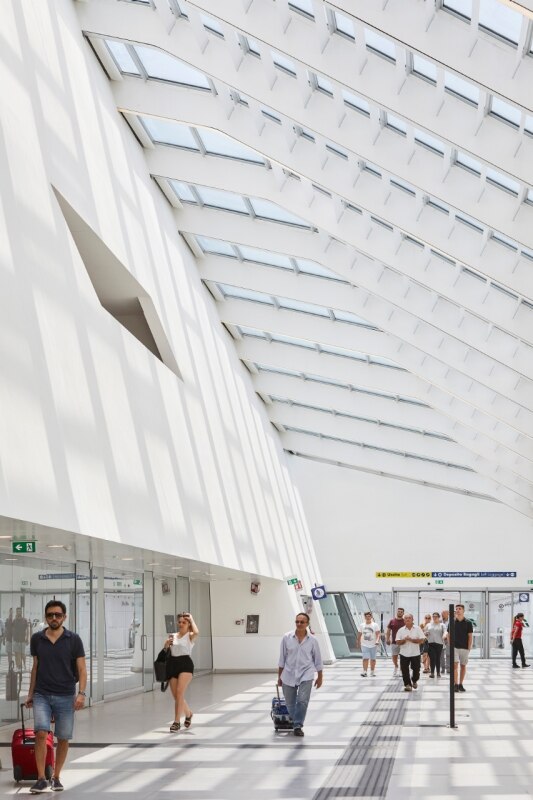
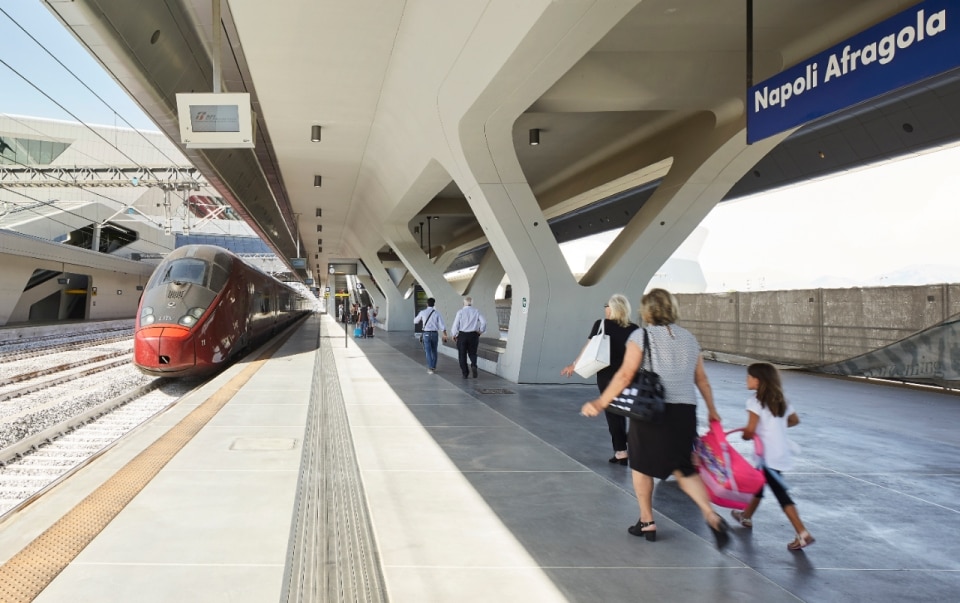
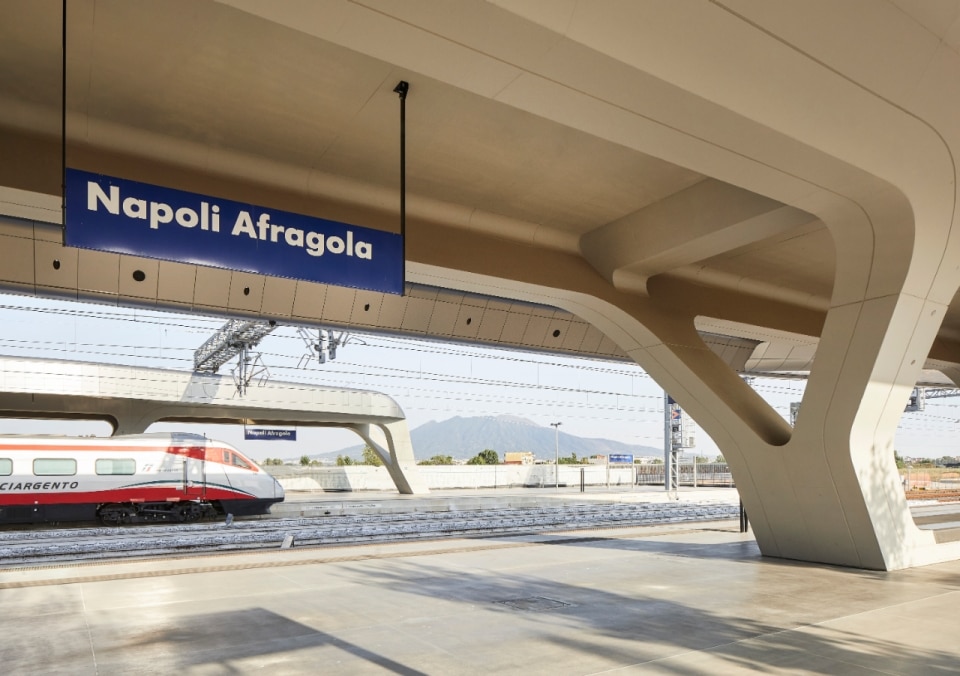
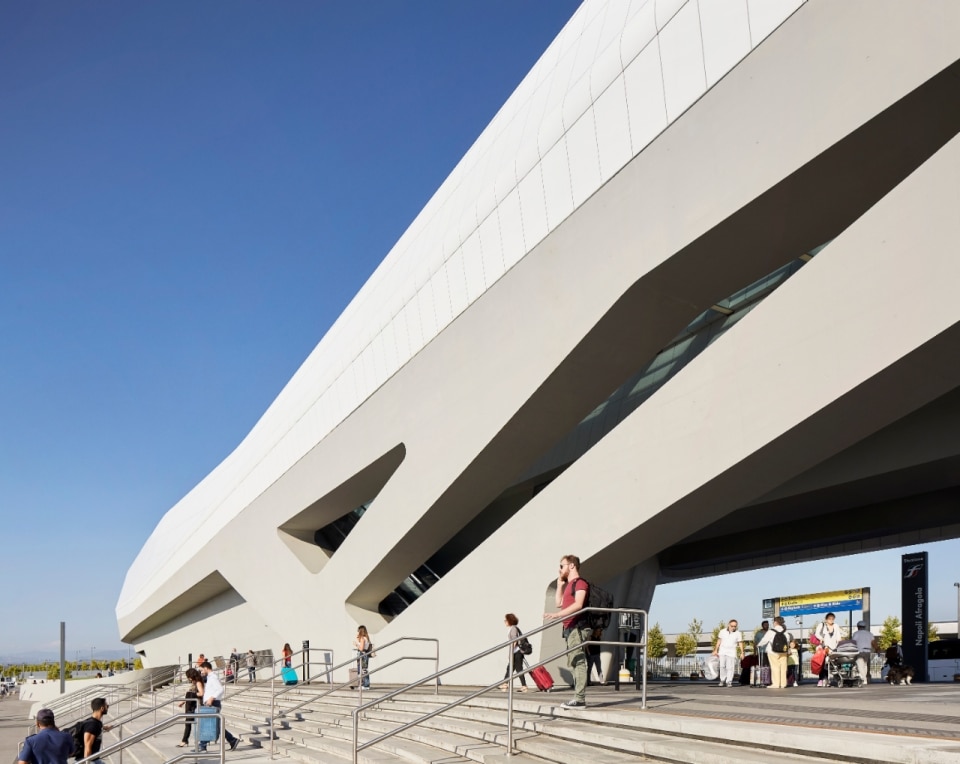
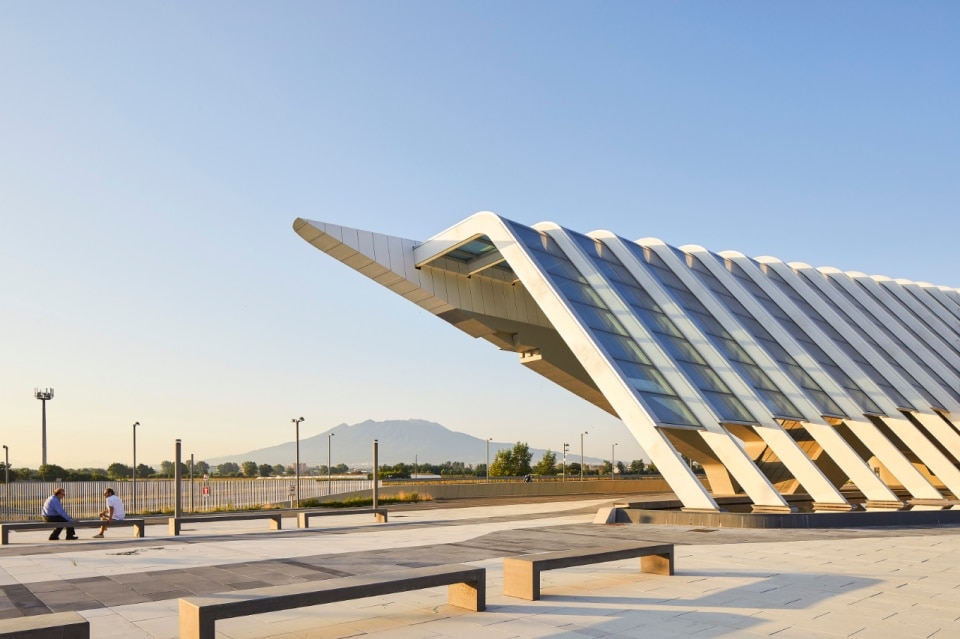
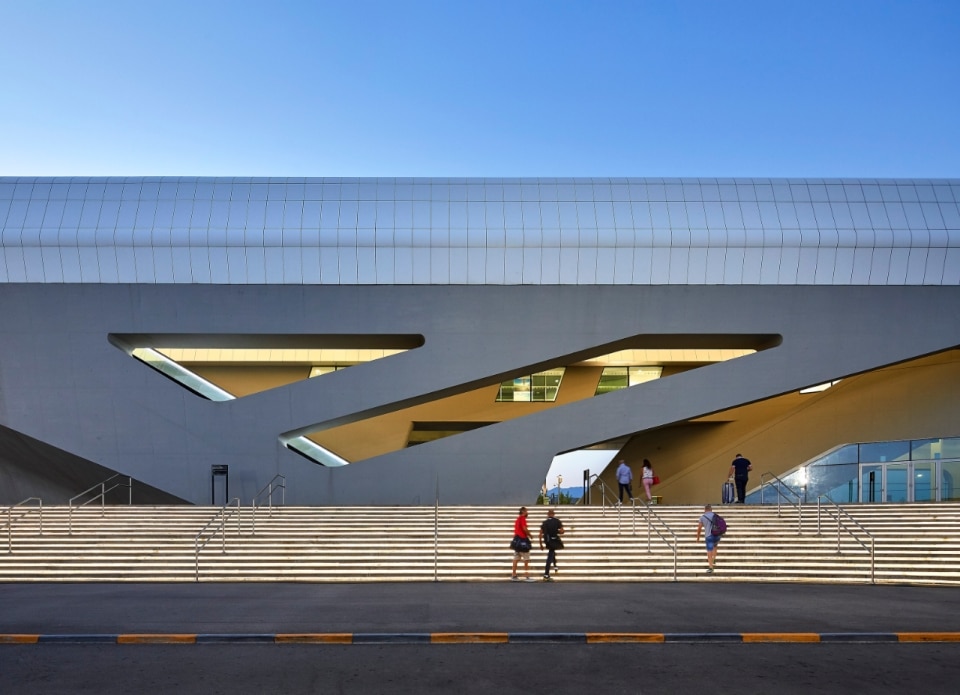
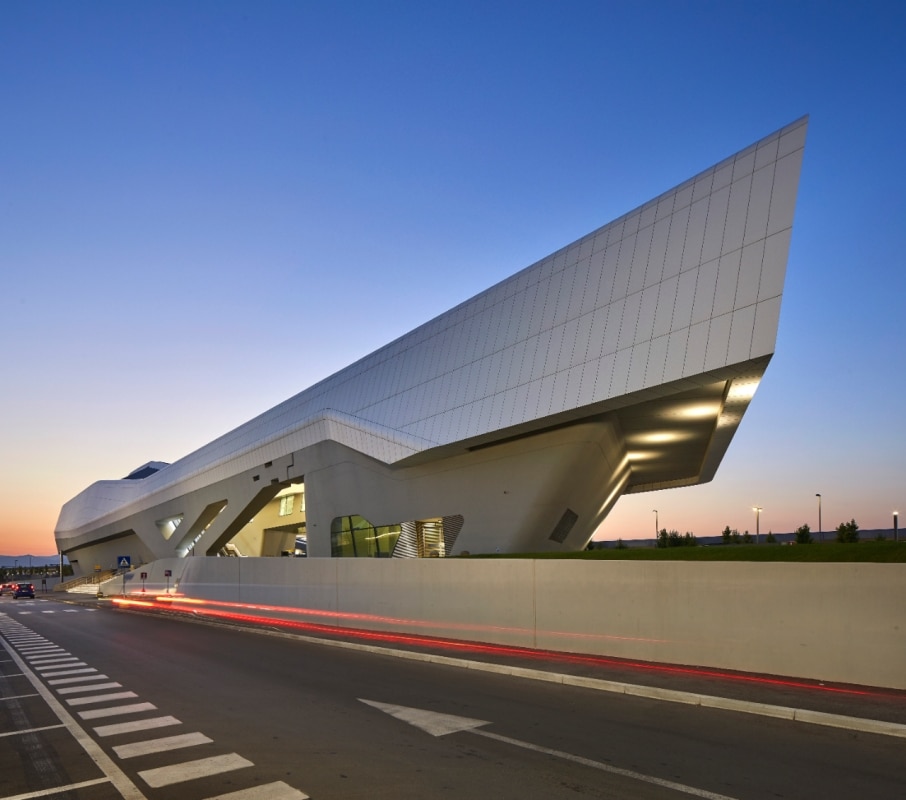
Among the most significant works realised by Zaha Hadid Architects in Italy, the Napoli Afragola high-speed station is much more than a railway infrastructure. Opened in 2017 along Italy’s high-speed rail corridor, just a few minutes from the Autostrada del Sole, it represents one of the most important—and rare—public investments made in southern Italy in recent decades. For the first time, one of contemporary architecture’s most influential practices was commissioned to design a new gateway to southern Italy. The building takes the form of an inhabited bridge more than 400 metres long, spanning the tracks with the fluid and dynamic forms that made the Anglo-Iraqi architect’s language famous. Viewed from the motorway, it appears like an object that has landed from a still-distant future—an especially powerful image in a territory where the relationship between modernisation and large-scale infrastructure has often been complex and unresolved.
Opening image: The Calatrava Bridges in Reggio Emilia, Italy. Photo from Adobe Stock