


By Carla Rizzo
Photo Daniele Ratti
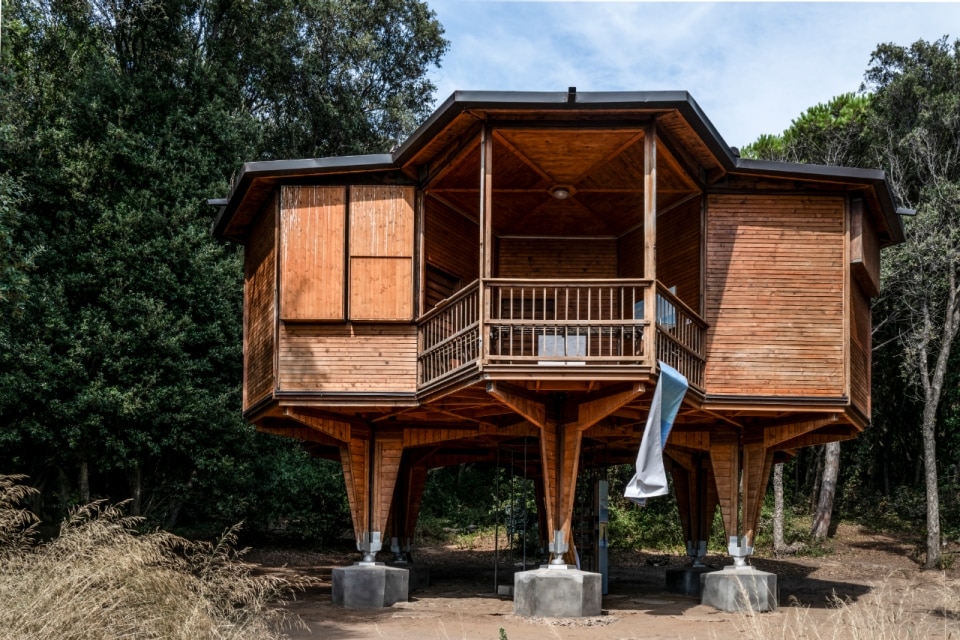
In Baratti, nestled in the lush greenery of the gulf, two seemingly alien presences face each other in the stillness of the landscape, just beyond the cliffside. Resembling sculptural forms, they are in fact two houses designed by Florentine architect Vittorio Giorgini.
Giorgini came of age within the vibrant cultural climate of 1950s and ’60s Florence – he graduated in 1957 – and during his university years began exploring his fascination with the relationship between humans, architecture, and nature. He connected with key figures in Florence’s architectural scene, among them Leonardo Savioli – under whom he served as assistant – and Leonardo Ricci. But it was especially the work of Giovanni Michelucci that inspired him and strengthened a guiding intuition: observing nature and its spontaneous structures as a basis for shaping architectural methods.
A devotee of Leonardo da Vinci’s studies, as well as of water sports like sailing, swimming, and diving, it’s no surprise that when Giorgini discovered Baratti and learned in 1955 of a family plot right on the shoreline, just meters from the sea, the idea of building a summer house there quickly became a necessity—a chance to begin his formal investigation into shapes and their malleability.
Technique over spontaneity: the Esagono House
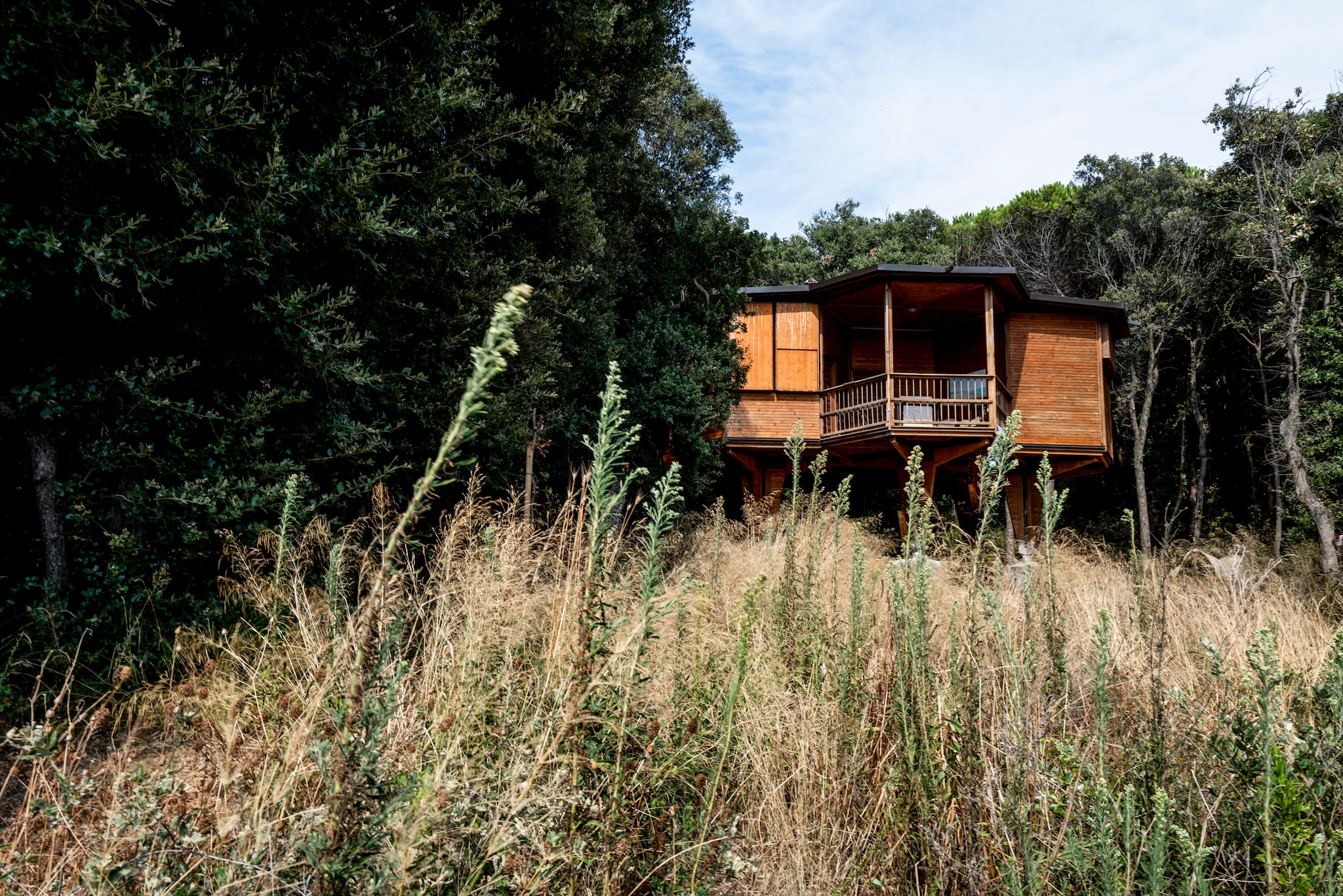
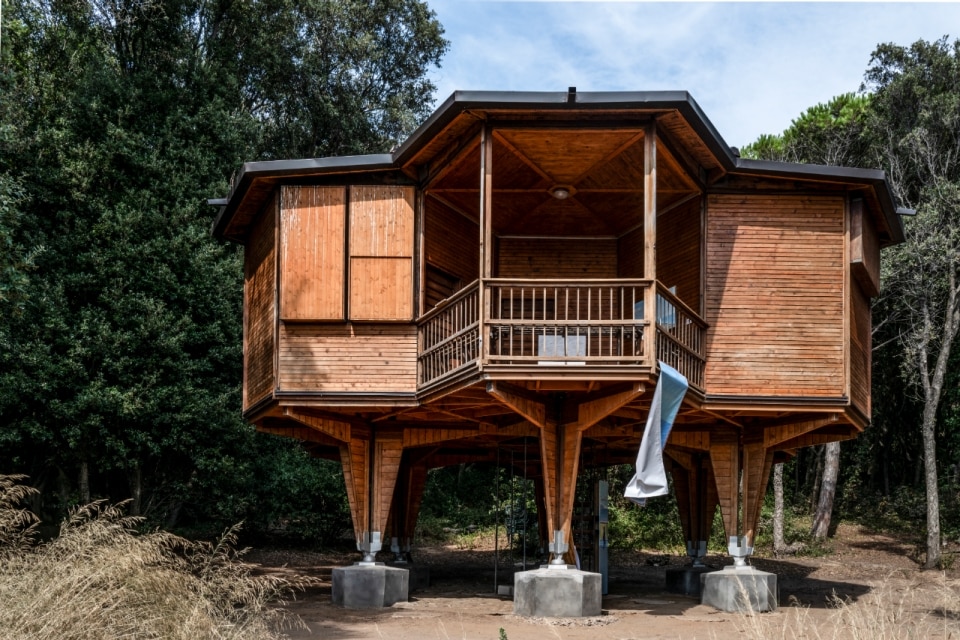
After several months in Rome, Giorgini returned to Florence: finally, a moment to experiment with material and structure. The result took shape in the floor plan of the Esagono House and in an aggregative system of prefabricated hexagonal wooden modules, raised on six conical, cruciform-section pillars that powerfully express structural tension.
 View gallery


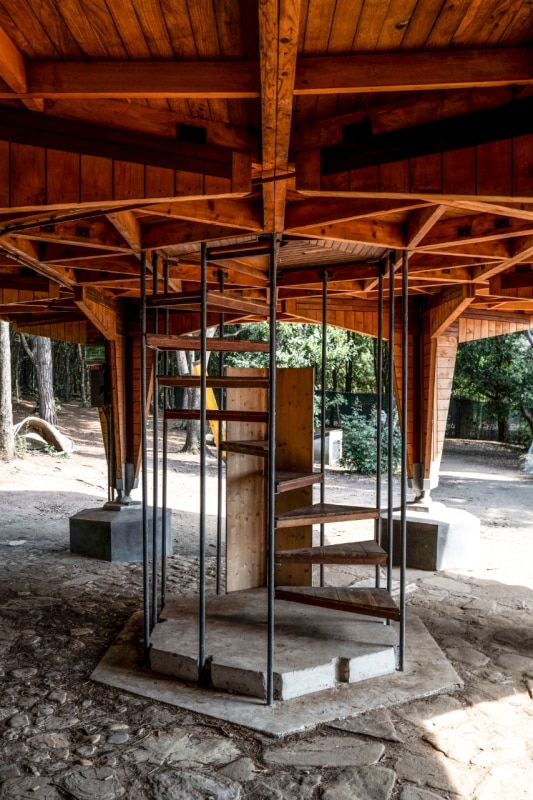
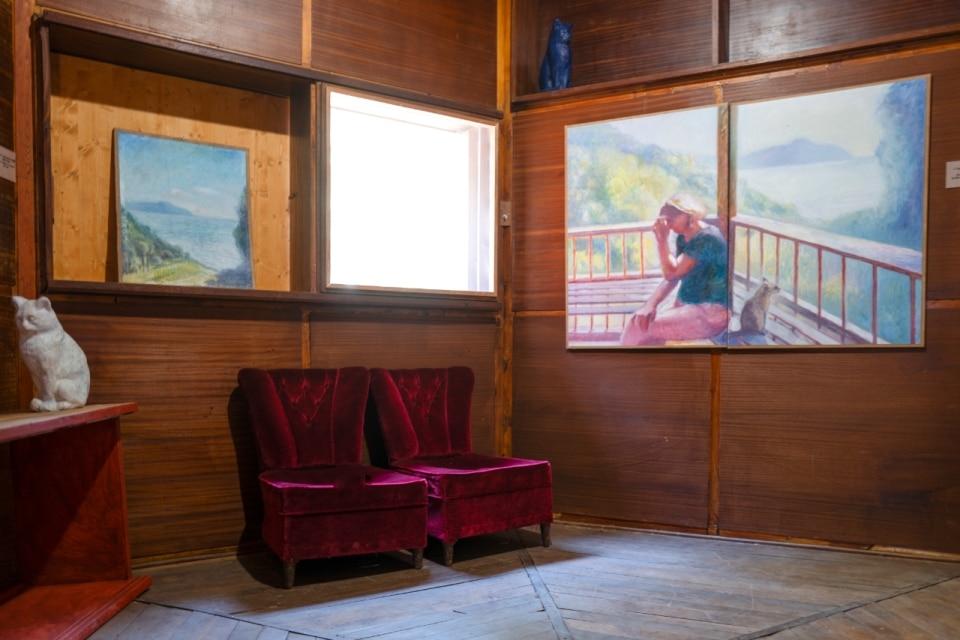
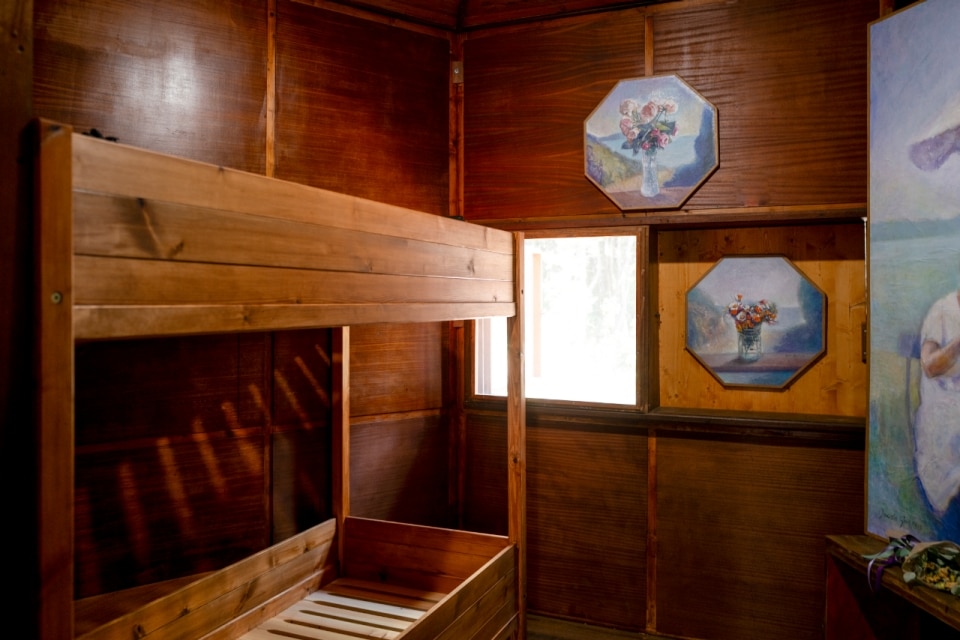
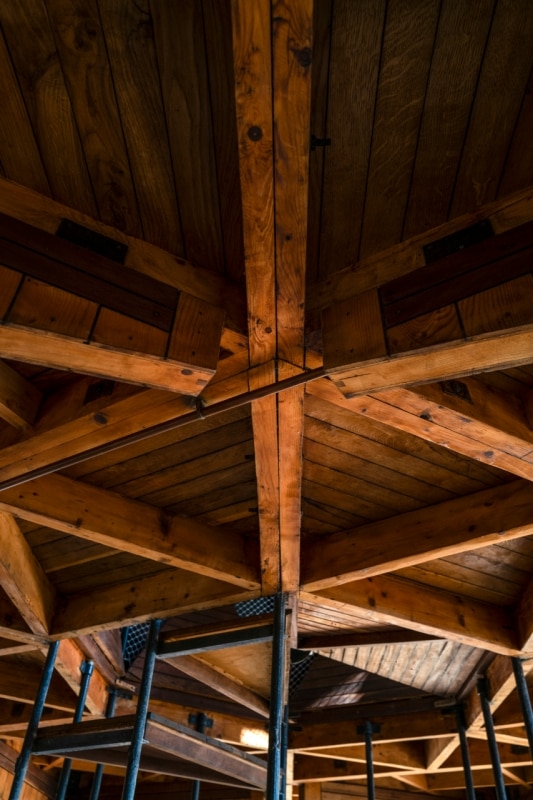
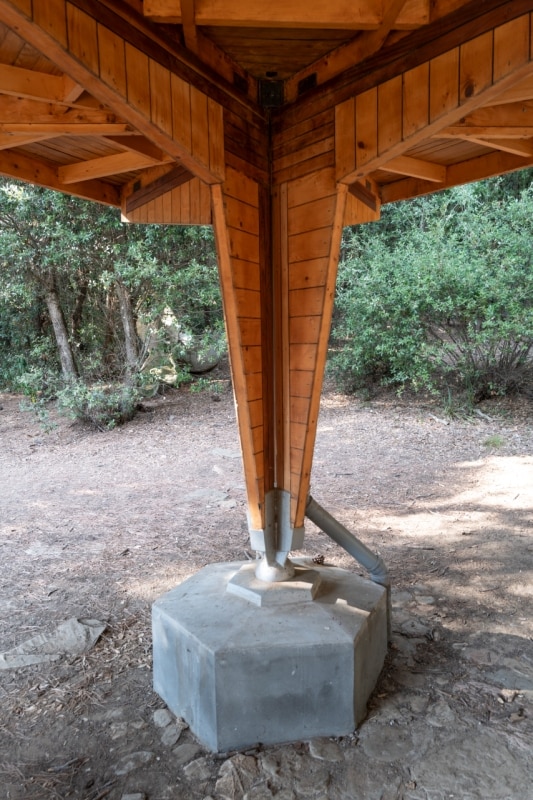
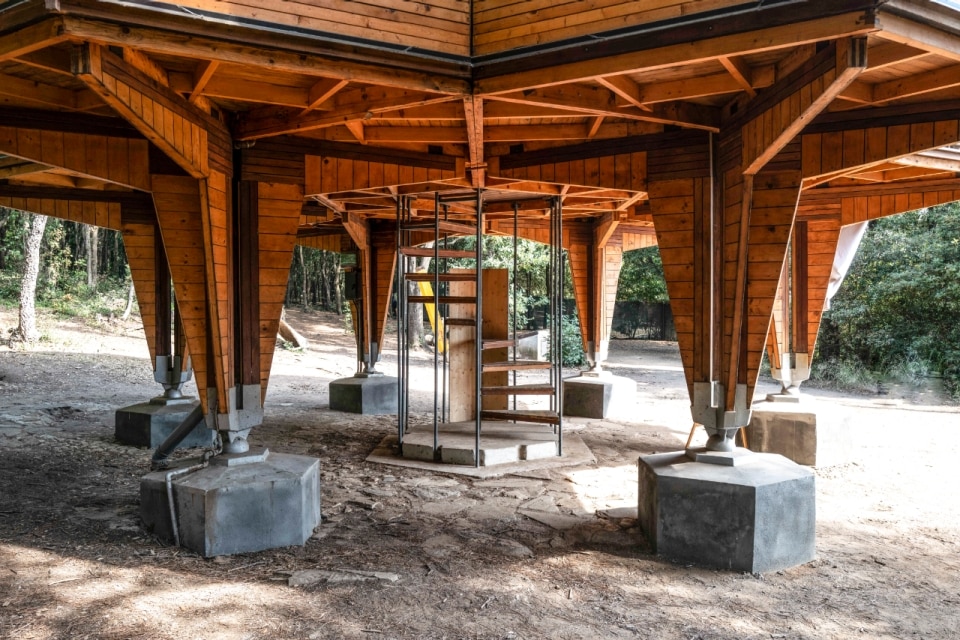
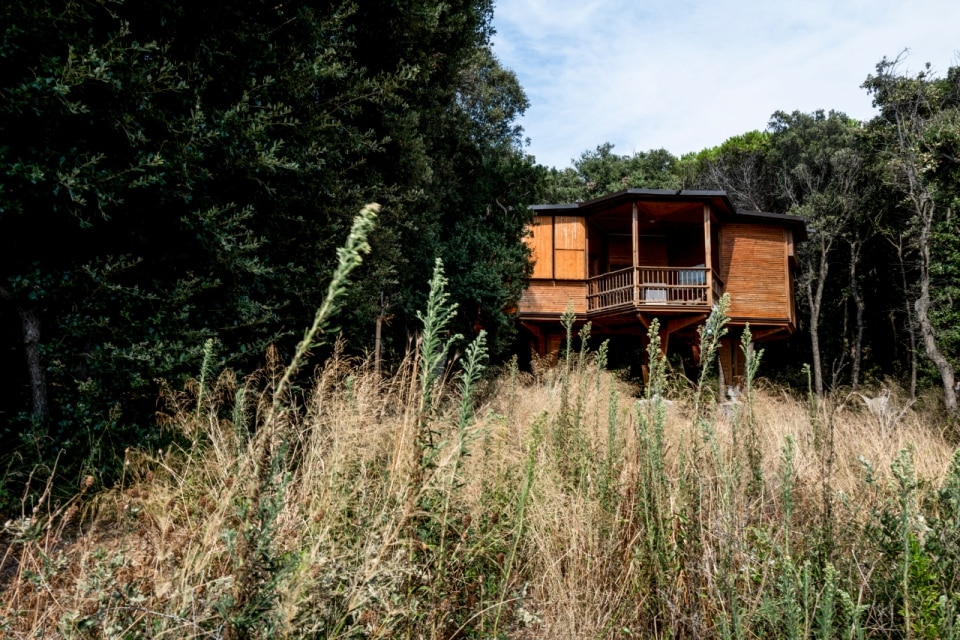
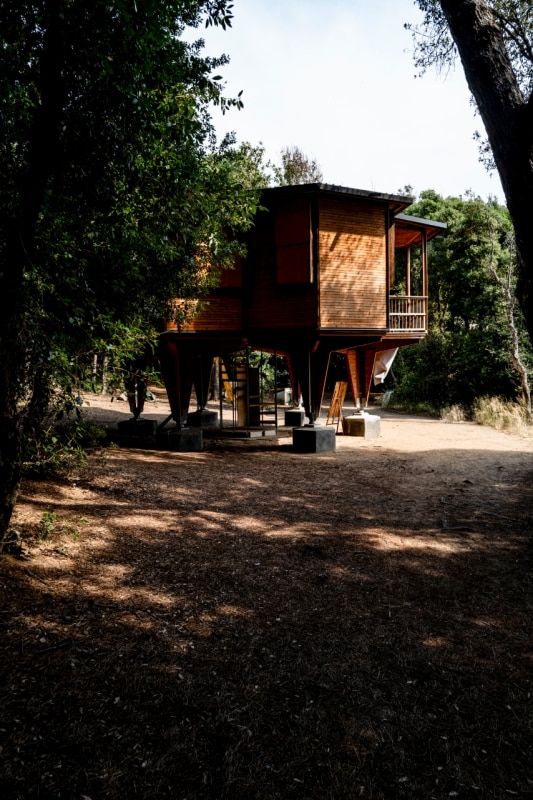
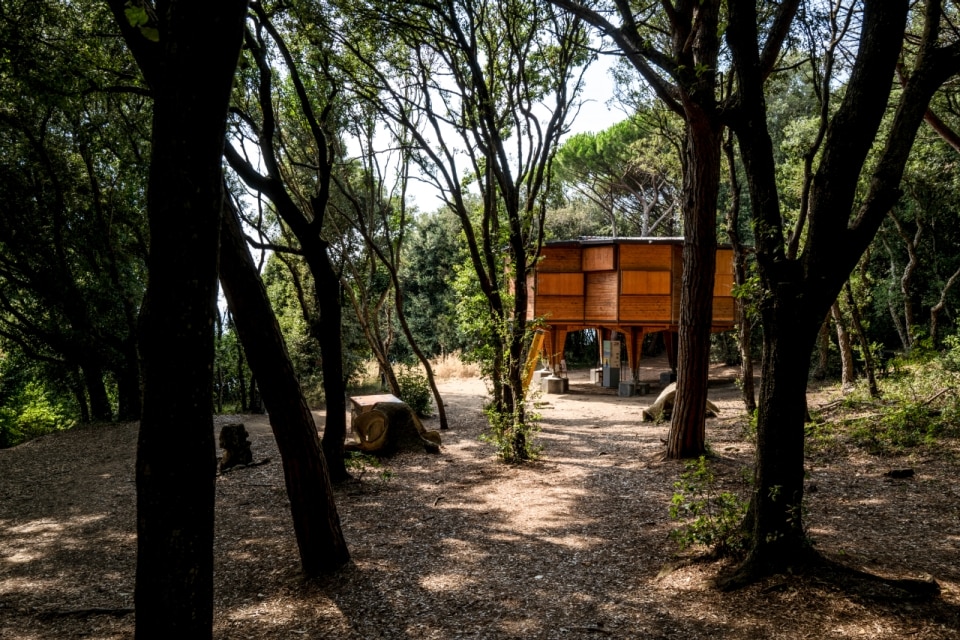
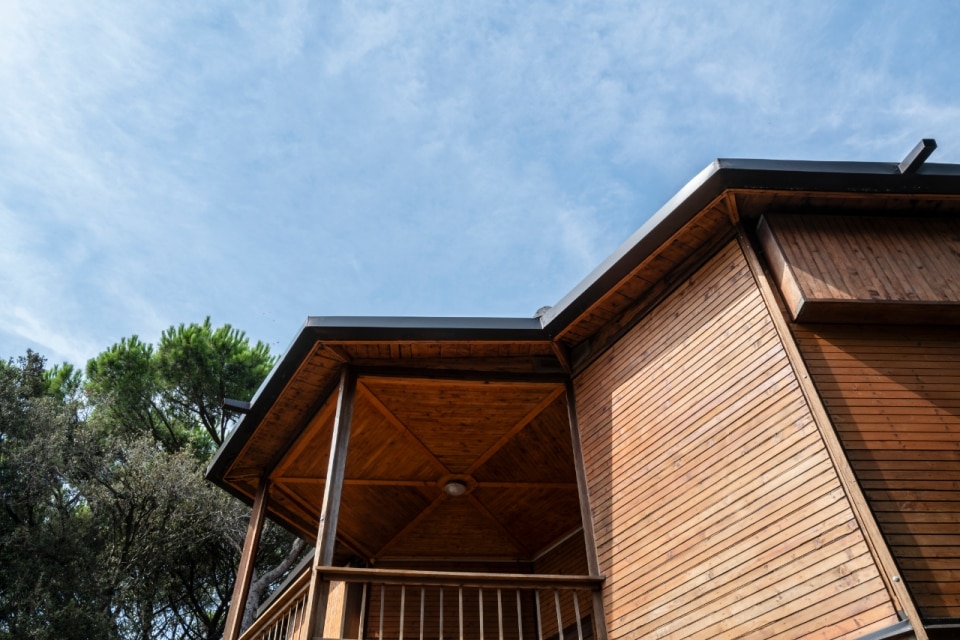
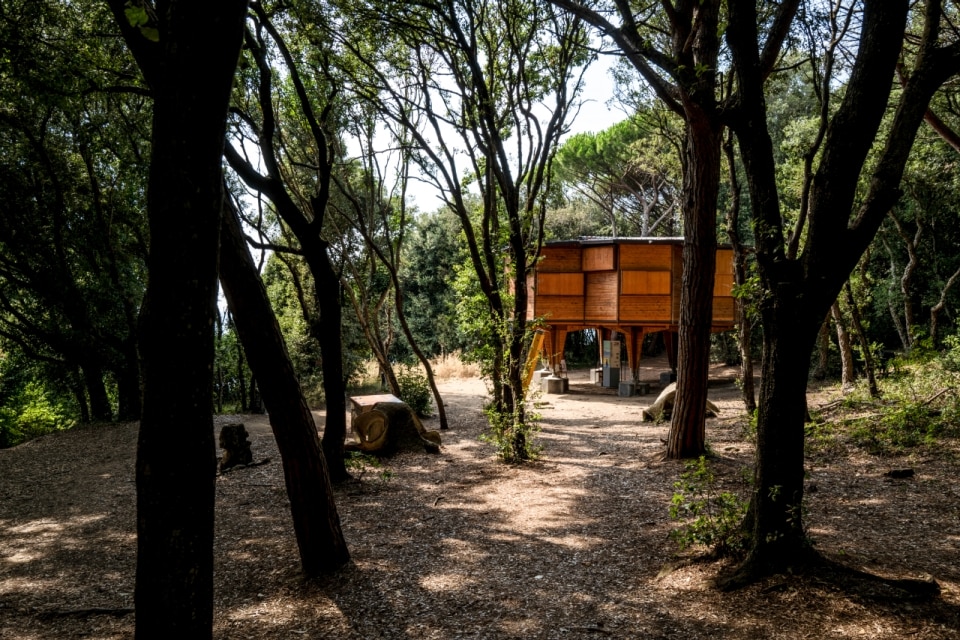
The design attempts to systematize a vernacular architectural language, yet one in which spontaneity yields to technical expertise and its precise control. The detailed study of each prefabricated element, of the interlocking floor-frame system, of the hinges connecting the pillars to their footings, and the many scale models produced – including one at full scale – demonstrate Giorgini’s meticulous approach. This precision also ensured that the house, assembled in a workshop in Peccioli, near Pisa, in 1960, could be dismantled, transported to Baratti, and reassembled in just over a week.
An organic manifesto: the Dinosauro House
A few years later, in 1965, in the same garden as the Esagono House, Giorgini set up two wire-mesh and concrete models to test the construction system and structural behavior of what would become his most renowned project: the Dinosauro House, a manifesto of his architectural philosophy.
It was in Baratti that Giorgini met Como-based industrialist Salvatore Saldarini, who spent summers there with his family. A genuine and lasting friendship formed, and when Saldarini purchased the plot adjacent to the Esagono, the idea of the Dinosauro House began to take shape.
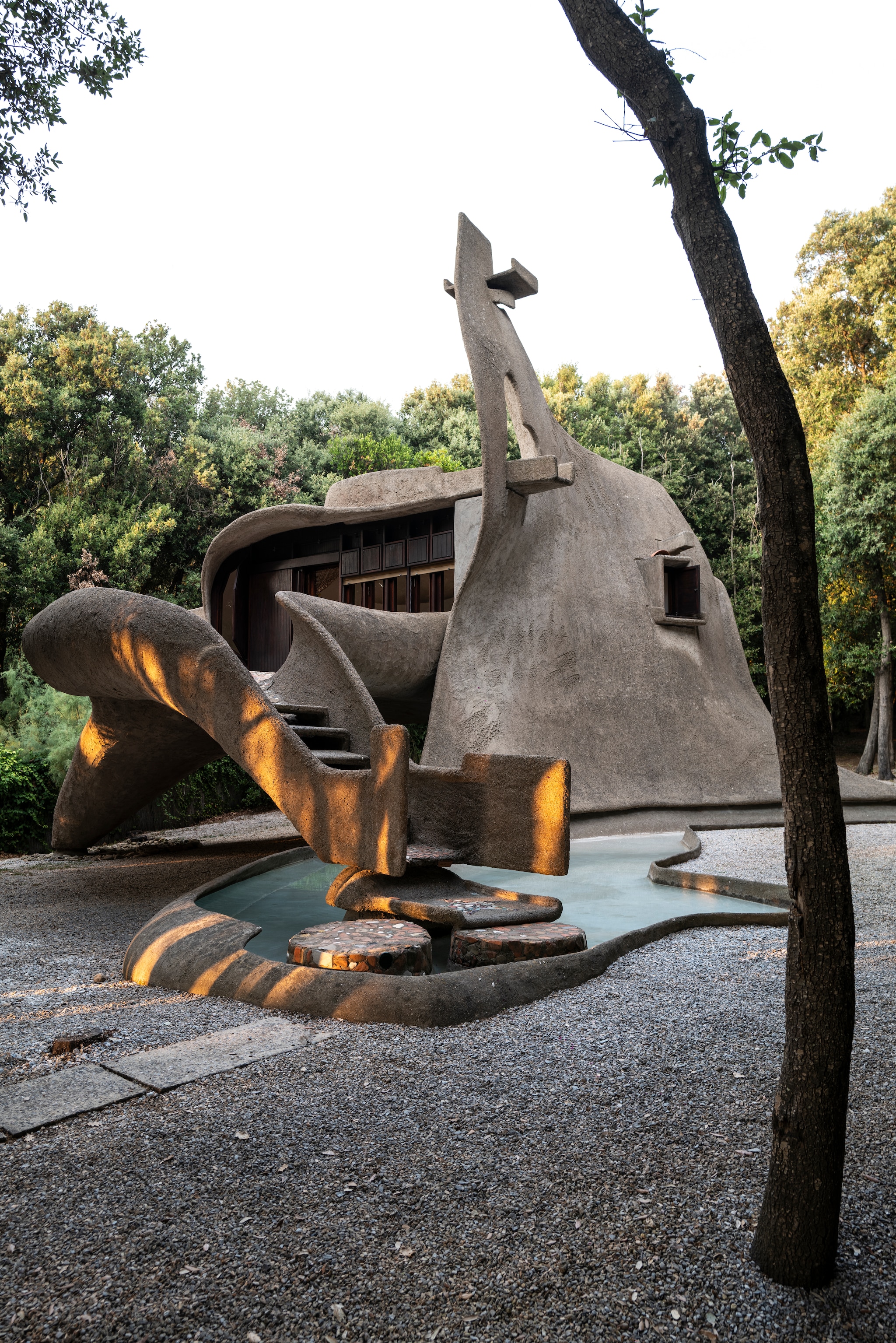
Conceived as a living, zoomorphic structure, with no room for the geometric rigor of the Esagono, the Dinosauro House appears to plunge into the earth, or rise from it as if it were part of the terrain itself.
Conceived as a living, zoomorphic structure, with no room for the geometric rigor of the Esagono, the Dinosauro House appears to plunge into the earth, or rise from it as if it were part of the terrain itself. Its very name suggests the unearthing of a fossil, a prehistoric creature bending down to drink from a pool of water.
Once again, Giorgini embraced a remarkable degree of design freedom: Saldarini proved curious and fully open to letting the architect explore his vision of “technical organicity.”
 View gallery
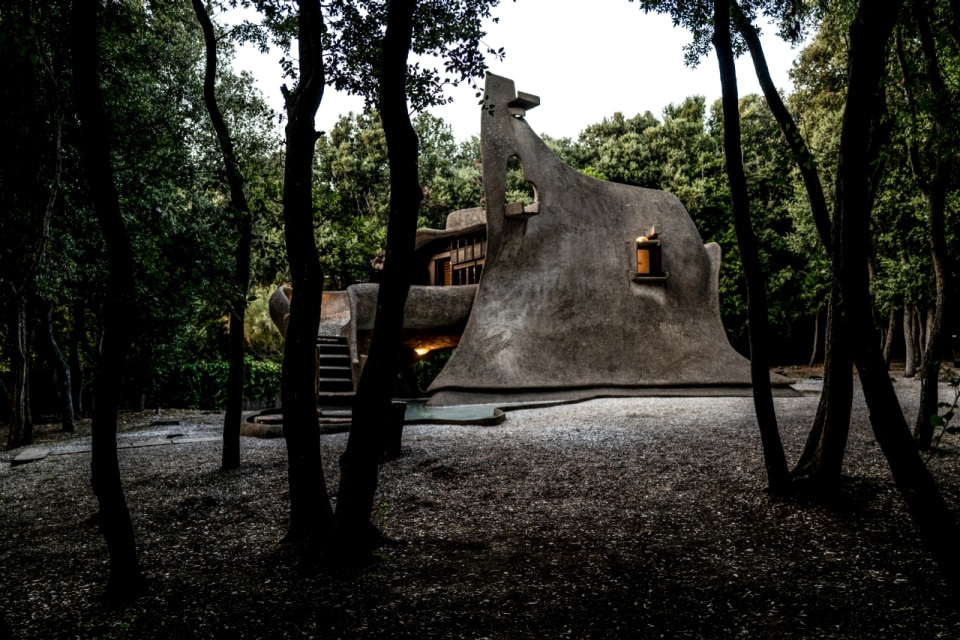
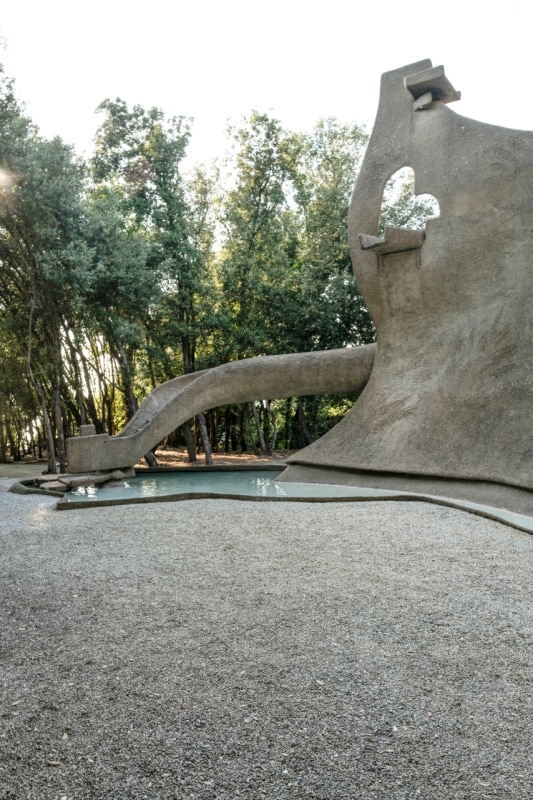
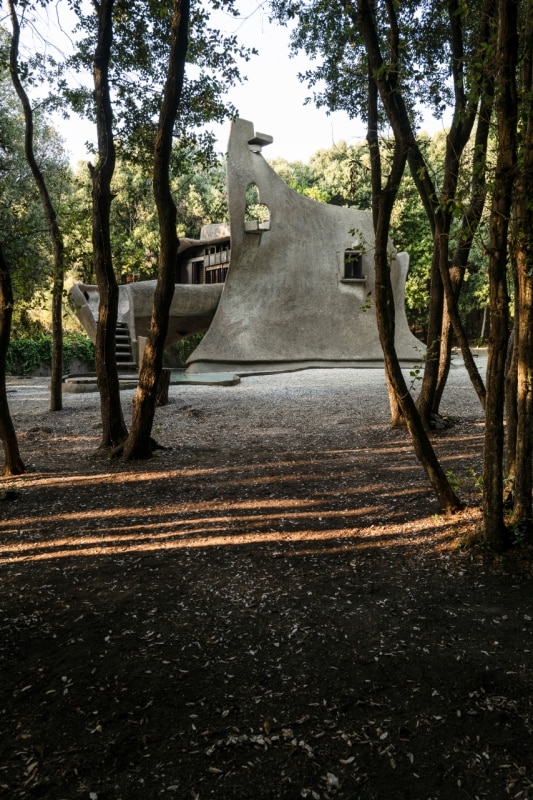
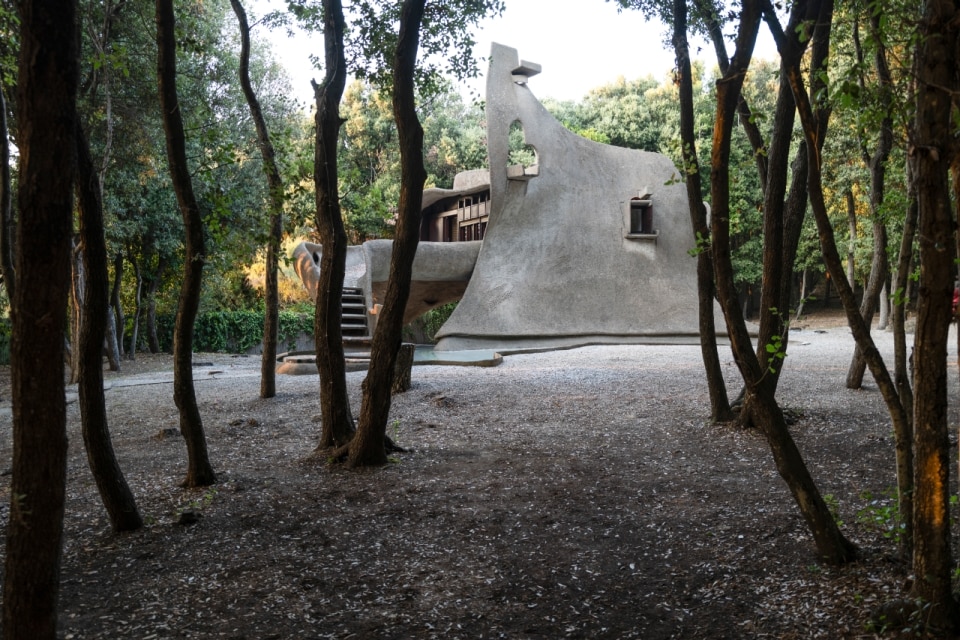
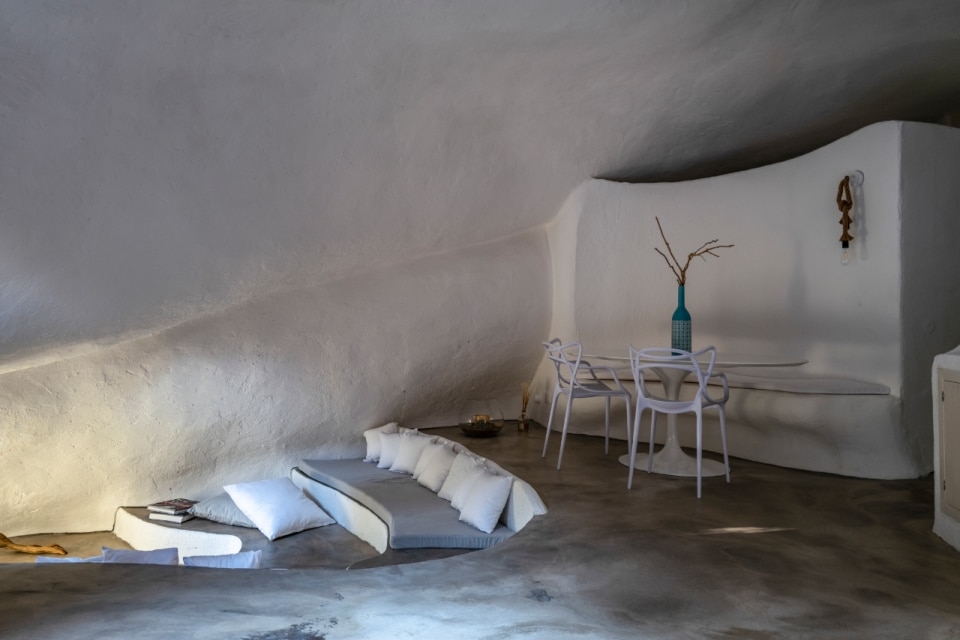
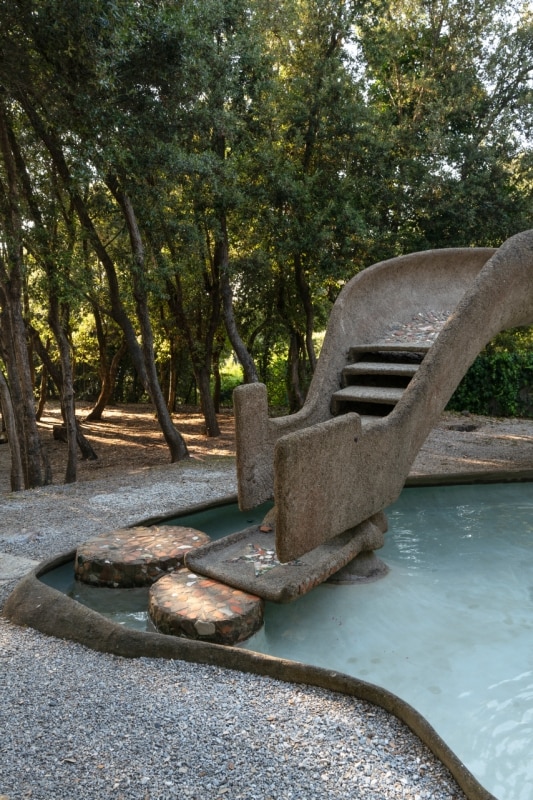
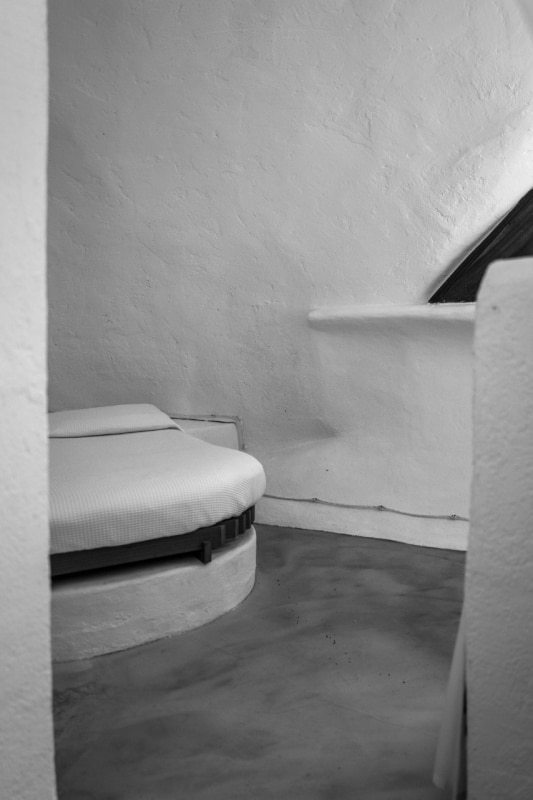
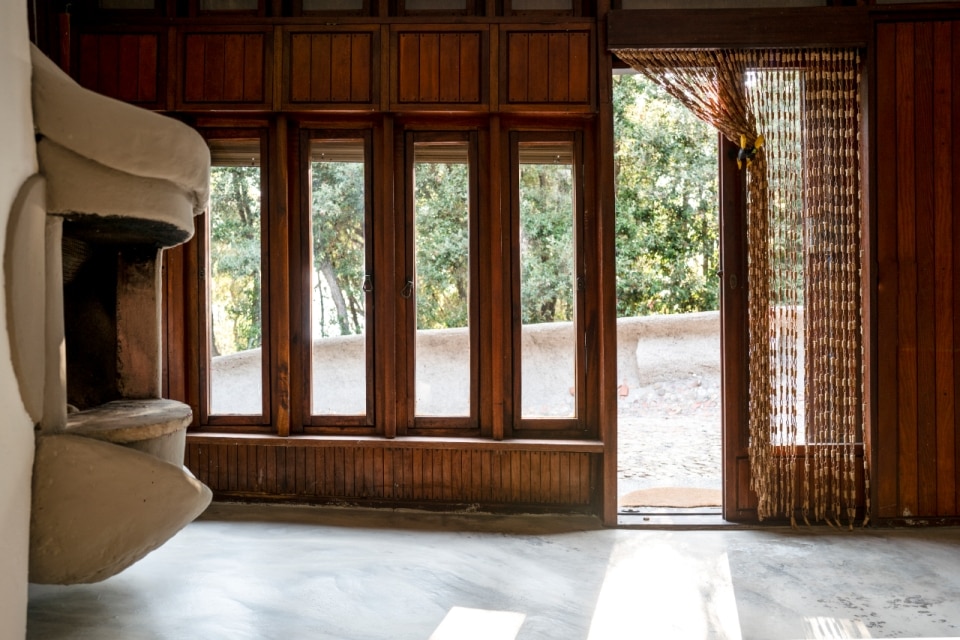
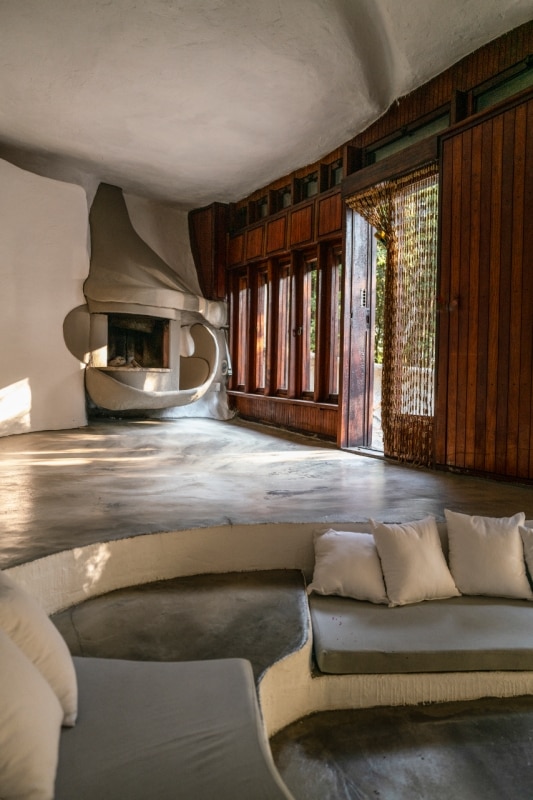
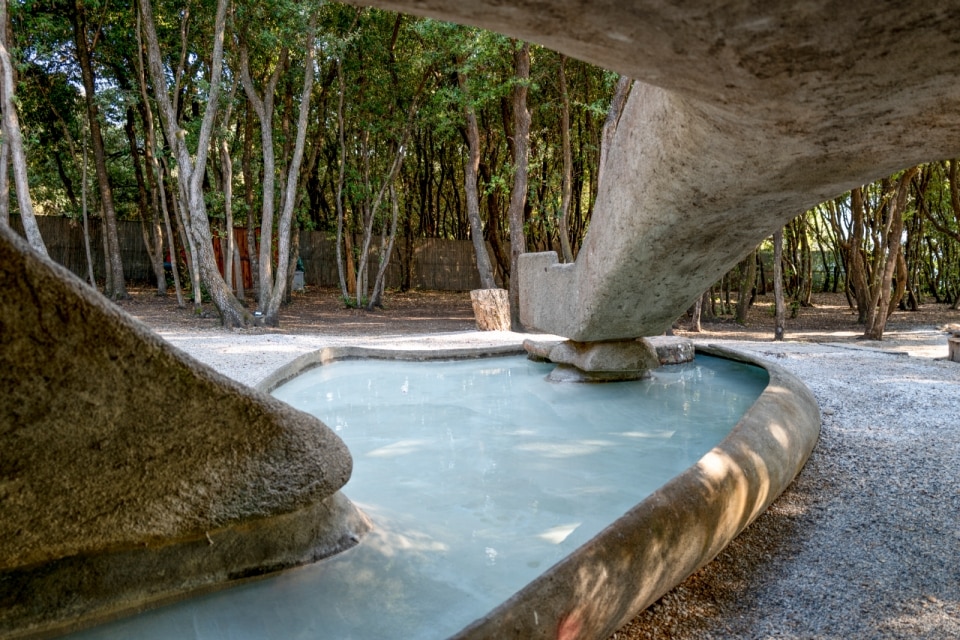
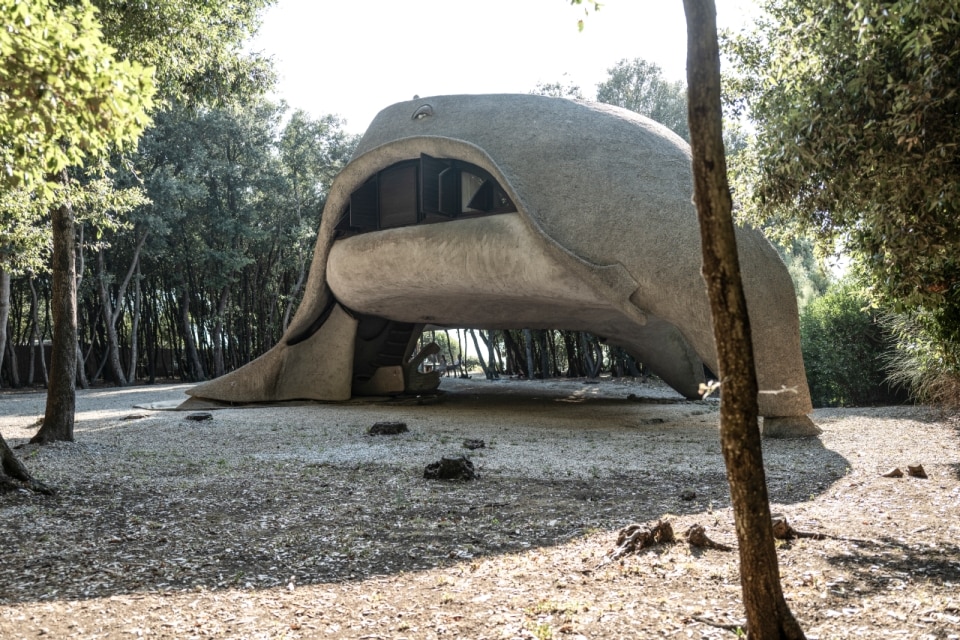
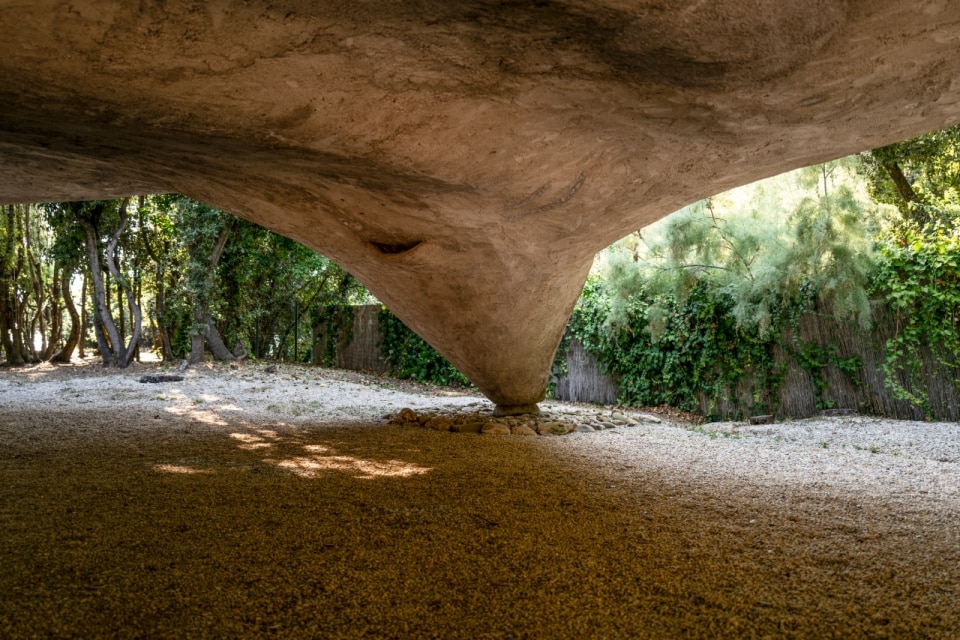
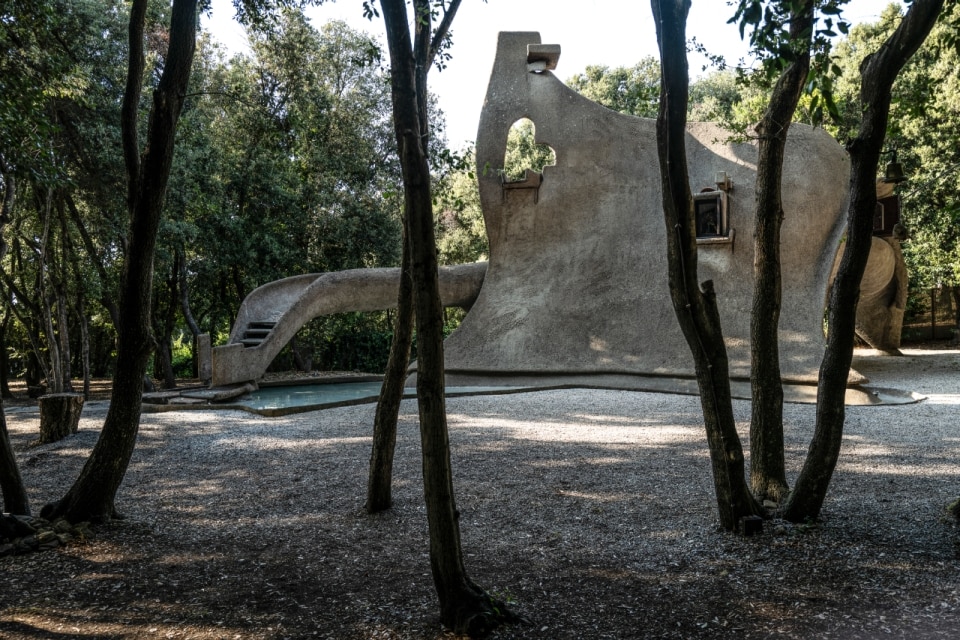
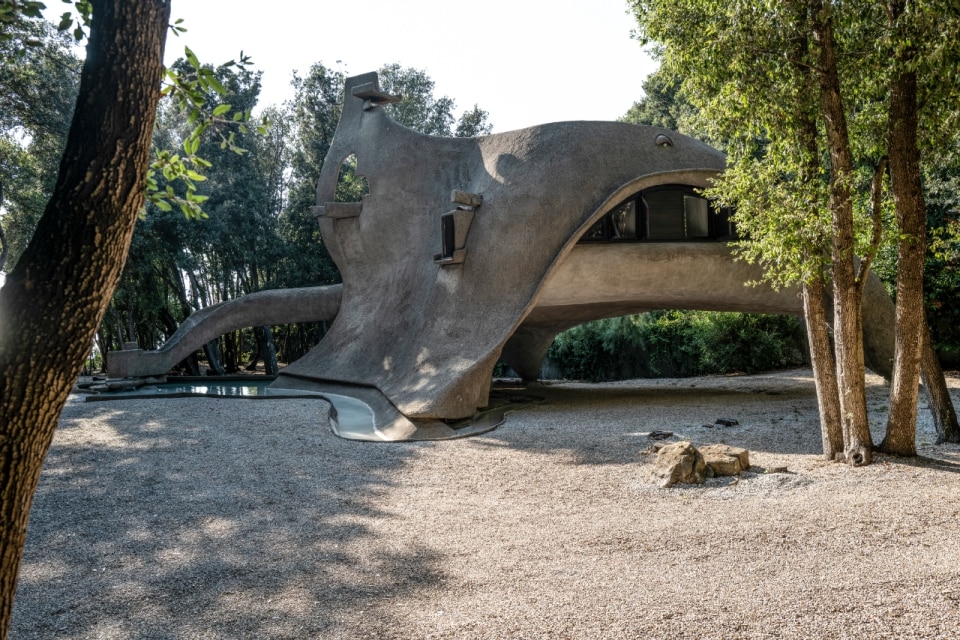
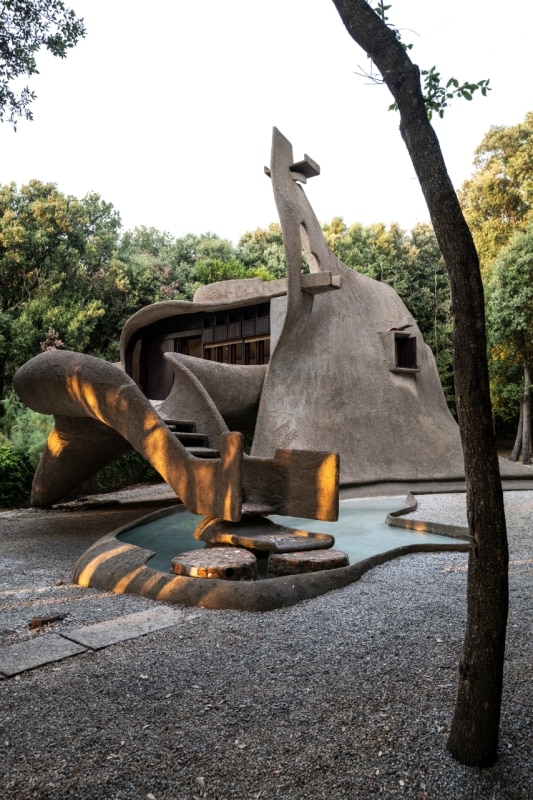
What emerged was what Giorgini called an “isoelastic membrane,” the house’s shell, built using a distinctive method. Standard practice would have required assembling the entire structural mesh first, followed only later by the sprayed concrete. Instead, the Dinosauro grew slowly, piece by piece: modeling and casting advanced in parallel, and the cement mortar – made with local sand and applied with the aid of burlap sacks – hardened gradually, reinforcing the sense that the architecture belonged to its landscape.
In Giorgini’s original vision, the interior layout was meant to follow a flow as free as possible. But as current owner Luca Sgorbini recounts, the development of the spaces remained fairly raw and spontaneous, with the exception of the wooden diaphragm protecting the seaward façade.
After the Dinosauro: New York, abandonment, rebirth
The two houses are deeply linked, both in their origins and in their gradual abandonment. In 1968, Giorgini was invited by New York’s Museum of Modern Art to participate in the group exhibition Architecture and Sculpture. He used the opportunity to distance himself from the Italian critical scene, which had largely overlooked his ideas. He moved to the United States, where he would live until 1996, continuing his research into “Spaziologia” (“space-ology”, the term he adopted in 1965 to define his design thinking) as a professor at New York’s Pratt Institute.
After Giorgini’s departure, and amid a growing divergence in spirit and perspective between the two families who had once lived so closely in their neighboring homes, the Saldarini family also began to loosen their ties to Baratti. Both houses slowly entered a state of decline.
The two houses are deeply linked, both in their origins and in their gradual abandonment.
The Esagono House was used as a summer rental until 1987, then acquired by the local municipality. But it found a new purpose only in 2012, when – after yet another decade of disuse – Giorgini’s passing led to the creation of B.A.Co. Archivio Vittorio Giorgini, the association dedicated to preserving his archive and enhancing the legacy of the structure.
The Dinosauro, meanwhile, was sold in 1977 to Leandro Sgorbini, who adapted the original structure to ensure safer habitation, leveling the internal flooring and subdividing spaces according to the few sketches Giorgini had left behind.
When Luca Sgorbini inherited the Dinosauro, he continued its restoration, reviving the original floor, safeguarding materials, restoring the outdoor basin, and tending the surrounding vegetation. Today, the Sgorbini family opens the Dinosauro to visitors, returning a renewed vitality to the house and ushering in a new chapter for the appreciation and understanding of Giorgini’s work.